

Effects of the multidomain intervention with nutritional supplements on cognition and gut microbiome in early symptomatic Alzheimer’s disease: a randomized controlled trial
Open accessThe DOI matches its Crossref record; 68 of the 69 references it cites were found in a registry or an index; none of the 60 sources its claims cite is checked for support yet.
Abstract
Background: The SoUth Korean study to PrEvent cognitive impaiRment and protect BRAIN health through lifestyle intervention in at-risk elderly people (SUPERBRAIN) is a part of the World-Wide Finnish Geriatric Intervention Study to Prevent Cognitive Impairment and Disability (WW-FINGERS) network. This study aimed to demonstrate the effects of the SUPERBRAIN-based multidomain intervention with nutritional supplements in amyloid positive emission tomography (PET) proven early symptomatic Alzheimer’s disease patients. Methods: Forty-six participants who were diagnosed with mild cognitive impairment or mild dementia and were positive in the amyloid PET study randomized into three groups: group A, the multidomain intervention with nutritional supplements; group B, nutritional supplements only; and a control group. The primary outcome was a change in the Repeatable Battery for the Assessment of Neuropsychological Status (RBANS) total scale index score after an 8-week intervention. Secondary outcomes, including gut microbiome data, were also analyzed. Results: The RBANS total scale index score improved significantly in group A compared with group B (p < 0.032) and compared with the control group (p < 0.001). After intervention, beta diversity of the gut microbiome between group A and the control group increased, and patients in group A were more enriched with Bifidobacterium. Conclusion: SUPERBRAIN-based multidomain intervention with nutritional supplements improves cognition and gut microbiota in patients with early symptomatic Alzheimer’s disease who were amyloid-positive by PET.
Overview
CoChat Summary
TL;DR
In amyloid PET-positive early symptomatic Alzheimer’s disease, an 8-week SUPERBRAIN-based multidomain intervention plus nutritional supplements improved the RBANS total scale index score versus supplements alone or control. It also changed gut microbiome beta diversity and increased Faecalibacterium and Bifidobacterium in the multidomain group, with no adverse events reported.
Key findings
- Primary outcome: adjusted mean change in RBANS total scale index score was 9.00 (95% CI 5.15–12.85) for group A, 1.80 (−2.05–5.65) for group B, and −4.56 (−8.29 to −0.83) for control; overall p < 0.001, effect size f2 = 0.530; group A improved more than group B (p = 0.032) and control (p < 0.001).
- Secondary outcomes: K-MMSE-2 change differed among groups (p = 0.016; A vs. control p = 0.014); SPPB improved in group A vs. group B (p = 0.002) and vs. control (p < 0.001); sit-to-stand improved in group A vs. control (p = 0.032); NQ-E improved in group A vs. group B (p = 0.012) and vs. control (p = 0.014).
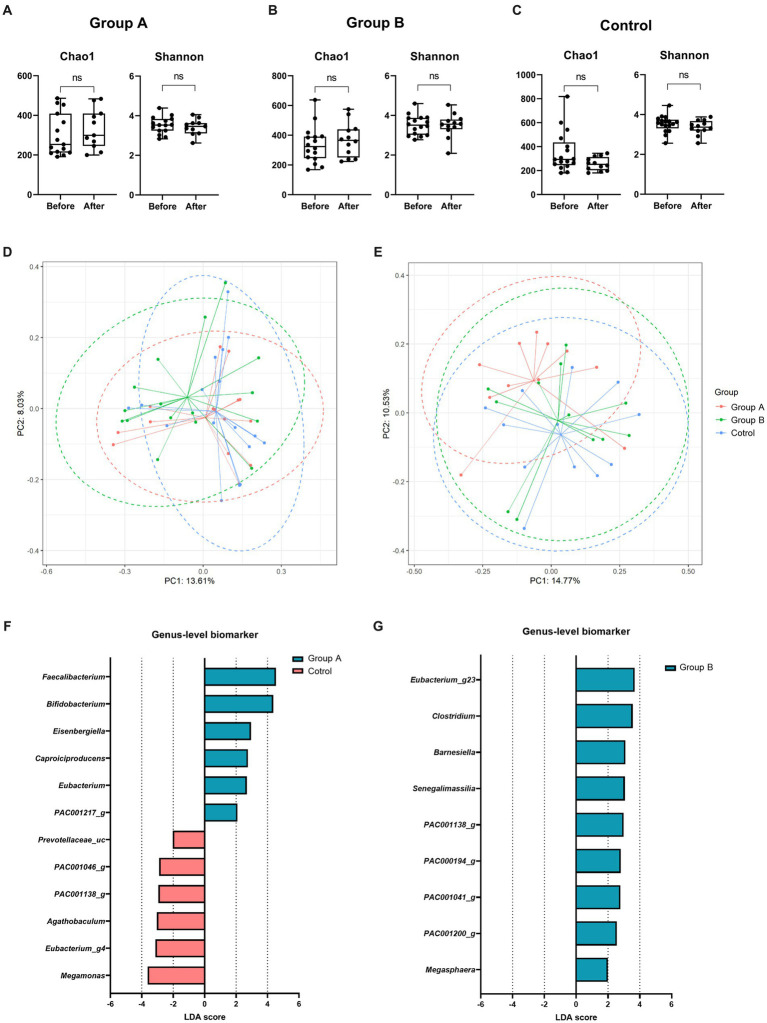
- Gut microbiome: alpha diversity changes were not statistically different; beta diversity after intervention differed among groups (p = 0.033) and between group A and control (p = 0.013); group A was more enriched with Faecalibacterium and Bifidobacterium than control, and group A’s microbiota shifted toward an external healthy control profile.
- Adherence and safety: group A adherence was 96.1% for cognitive program, 94.0% for exercise, 100.0% for vascular risk-factor monitoring, and 100.0% for nutritional guidance; supplement intake adherence was 99.1% in group A and 83.7% in group B; no adverse events were reported.
Methods
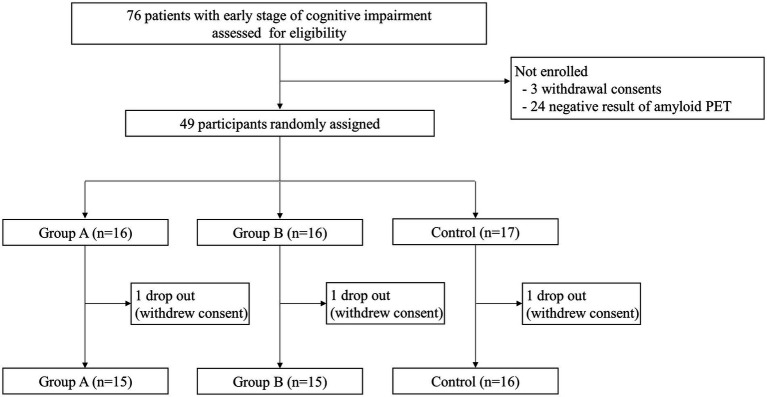
- Single-center, outcome assessor–blinded randomized controlled trial with a three-arm parallel design and 8-week intervention; 49 participants were randomized (group A n = 16, group B n = 16, control n = 17), and 46 completed. Participants were aged 60–85 years with MCI or probable AD dementia, K-MMSE-2 17–27, CDR 0.5–1, CDR-SB 0.5–5, and amyloid PET positivity.
- Group A received a facility-based SUPERBRAIN multidomain intervention (vascular/metabolic risk monitoring, cognitive training, physical exercise, nutritional guidance, motivational enhancement) plus Memory Pack Plus nutritional supplements; group B received supplements only; control received dementia-prevention education and general medical care. Primary outcome was change in RBANS total scale index score from baseline to after intervention.
- Analyses used modified intention-to-treat linear mixed-effect models with Bonferroni-adjusted post hoc comparisons; microbiome analysis used 16S rRNA V3–V4 sequencing, alpha diversity (Chao1, Shannon), beta diversity (generalized UniFrac, PERMANOVA), and linear discriminant analysis effect size.
Limitations
- Stated: the 8-week intervention was short compared with other multidomain trials (8 weeks to 6 years), influenced by ethical concerns and COVID-19 constraints; the sample was small, limiting power for RBANS subdomains and for mild dementia and sex subgroup analyses; there was no multidomain-intervention-alone arm, so it is unknown whether supplements add benefit beyond multidomain intervention alone; EEG data were omitted due to a technical problem; cortisol sampling timing was not strictly controlled.
- Evident: the trial was single-center and small, with lower supplement adherence in group B (83.7%) than group A (99.1%); the control group was a waitlist condition, and participant blinding to supplement/intervention assignment is not clearly described.
Model-written summary. Check it against the paper before relying on it.
Integrity signals
Registry
Cites
Statistics
Figures
Verification
Claims the paper makes
0 Valid · 0 Not valid · 45 Not checked · 108 Own results and interpretations
A result the paper reports from its own data — it cites no other source for it, so there is none to check. The quote shows it is in the paper.
In the paper
“UniFrac distances calculated between the healthy control group and each of the experimental groups also revealed that the distance was notably shorter in group A compared to the other groups (Supplementary material 4F).”
§ Effects of the multidomain intervention with nutritional supplements on cognition and gut microbiome in early symptomatic Alzheimer’s disease: a randomized controlled trial > Results > Exploratory outcomes
plainstates an association- Asserted: passes — The authors put it forward as true.
- Checkable: passes — It can be checked against evidence.
- Load-bearing: unclear — It is unclear whether the paper’s conclusions depend on it.
- Based: passes — The paper gives a reason why it holds.
A result the paper reports from its own data — it cites no other source for it, so there is none to check. The quote shows it is in the paper.
In the paper
“The change in the sit-to-stand time was significantly improved in group A compared with the control group (p = 0.032).”
§ Effects of the multidomain intervention with nutritional supplements on cognition and gut microbiome in early symptomatic Alzheimer’s disease: a randomized controlled trial > Results > Secondary outcomes
plainstates a cause- Asserted: passes — The authors put it forward as true.
- Checkable: passes — It can be checked against evidence.
- Load-bearing: unclear — It is unclear whether the paper’s conclusions depend on it.
- Based: passes — The paper gives a reason why it holds.
A result the paper reports from its own data — it cites no other source for it, so there is none to check. The quote shows it is in the paper.
In the paper
“While patients who received nutritional supplements alone showed a trend toward enhanced cognition compared to those who received no intervention”
§ Effects of the multidomain intervention with nutritional supplements on cognition and gut microbiome in early symptomatic Alzheimer’s disease: a randomized controlled trial > Discussion
hedgedstates a possible cause- Asserted: passes — The authors put it forward as true.
- Checkable: passes — It can be checked against evidence.
- Load-bearing: unclear — It is unclear whether the paper’s conclusions depend on it.
- Based: passes — The paper gives a reason why it holds.
A result the paper reports from its own data — it cites no other source for it, so there is none to check. The quote shows it is in the paper.
In the paper
“There was no significant group difference among mild dementia participants (Supplementary material 5).”
§ Effects of the multidomain intervention with nutritional supplements on cognition and gut microbiome in early symptomatic Alzheimer’s disease: a randomized controlled trial > Results > Subgroup analyses
plain- Asserted: passes — The authors put it forward as true.
- Checkable: passes — It can be checked against evidence.
- Load-bearing: unclear — It is unclear whether the paper’s conclusions depend on it.
- Based: passes — The paper gives a reason why it holds.
A result the paper reports from its own data — it cites no other source for it, so there is none to check. The quote shows it is in the paper.
In the paper
“Additionally, physical fitness was also significantly improved in the participants who received multidomain intervention with nutritional supplements.”
§ Effects of the multidomain intervention with nutritional supplements on cognition and gut microbiome in early symptomatic Alzheimer’s disease: a randomized controlled trial > Discussion
plainstates a cause- Asserted: passes — The authors put it forward as true.
- Checkable: passes — It can be checked against evidence.
- Load-bearing: unclear — It is unclear whether the paper’s conclusions depend on it.
- Based: passes — The paper gives a reason why it holds.
71 more claims
Create a free account to see all 153 claims and to verify the 59 references still open.
- It may state two separate claims as one. 42
- Probably not a substantial claim. 43
Self-check
Percentages, sums and reported differences re-computed from the paper’s own numbers.
Each contradiction between two passages listed here was confirmed by an independent check.
Rated minor: it would not touch a result — a value no result rests on, a p-value that stays on the same side of the significance level, or a conflict that is clerical, resolved elsewhere in the paper, or outside its own findings.
In the paper
§ Effects of the multidomain intervention with nutritional supplements on cognition and gut microbiome in early symptomatic Alzheimer’s disease: a randomized controlled trial > Results > Primary outcome
“control group, −4.56 (−8.29, 0.83)”
§ Effects of the multidomain intervention with nutritional supplements on cognition and gut microbiome in early symptomatic Alzheimer’s disease: a randomized controlled trial > Results > Baseline characteristics of participants
“−4.56 (−8.29, −0.83)”
Rated minor: it would not touch a result — a value no result rests on, a p-value that stays on the same side of the significance level, or a conflict that is clerical, resolved elsewhere in the paper, or outside its own findings.
In the paper
§ Effects of the multidomain intervention with nutritional supplements on cognition and gut microbiome in early symptomatic Alzheimer’s disease: a randomized controlled trial > Discussion
“The improvement in outcomes might be caused by the high adherence rates in our study (>90% in all groups).”
§ Effects of the multidomain intervention with nutritional supplements on cognition and gut microbiome in early symptomatic Alzheimer’s disease: a randomized controlled trial > Results > Adherence and adverse events
“The adherence rate for the intake of nutritional supplements was 99.1% in group A and 83.7% in group B.”
Rated minor: it would not touch a result — a value no result rests on, a p-value that stays on the same side of the significance level, or a conflict that is clerical, resolved elsewhere in the paper, or outside its own findings.
In the paper
§ Effects of the multidomain intervention with nutritional supplements on cognition and gut microbiome in early symptomatic Alzheimer’s disease: a randomized controlled trial > Materials and methods > Participants
“Participants were recruited from individuals who visited the outpatient clinic of Ewha Womans University Seoul Hospital because of cognitive decline from March 2, 2021, to August 13, 2022.”
§ Effects of the multidomain intervention with nutritional supplements on cognition and gut microbiome in early symptomatic Alzheimer’s disease: a randomized controlled trial > Results > Baseline characteristics of participants
“Between October 12, 2020, and November 23, 2021, 76 patients were assessed for eligibility”
Rated minor: it would not touch a result — a value no result rests on, a p-value that stays on the same side of the significance level, or a conflict that is clerical, resolved elsewhere in the paper, or outside its own findings.
In the paper
§ Effects of the multidomain intervention with nutritional supplements on cognition and gut microbiome in early symptomatic Alzheimer’s disease: a randomized controlled trial > Materials and methods > Participants
“Participants were excluded if they had organic brain diseases or degenerative diseases known to be major causes of cognitive decline, including brain tumor, stroke, normal pressure hydrocephalus, Parkinson’s disease, Lewy body dementia, vascular dementia, and autoimmune encephalitis.”
§ Effects of the multidomain intervention with nutritional supplements on cognition and gut microbiome in early symptomatic Alzheimer’s disease: a randomized controlled trial > Results > Baseline characteristics of participants
“| Stroke | 0 (0.0) | 0 (0.0) | 1 (5.9) | 0.383 |”
Cited works that were retracted
Works this paper cites that were later retracted, from the retraction notices publishers deposit. Major when the notice came out before this paper was published.
Rated major: it would touch a result — a value a result rests on, reported and recomputed p-values on opposite sides of the significance level, two passages that conflict with no sign which is right, or a cited work retracted before this paper was published.
In the paper
“Livingston, 2020, Dementia prevention, intervention, and care: 2020 report of the lancet commission, Lancet, 396, 413, 10.1016/s0140-6736(20)30367-6”
Cited work 10.1016/s0140-6736(20)30367-6 · retracted 2023-05-01 · notice 10.1016/s2468-2667(23)00083-x · this paper published 2023-11-02
Citations
Cites
1 retracted
Dementia prevention, intervention, and care: 2020 report of the Lancet Commission
Livingston, G., Huntley, J., Sommerlad, A., Ames, D., Ballard, C., Banerjee, S., Brayne, C., Burns, A., Cohen-Mansfield, J., Cooper, C., et al. (2020) · The Lancet · doi:10.1016/s0140-6736(20)30367-6 · Cited by 10,430
RetractedMcKhann, G. M., Knopman, D. S., Chertkow, H., Hyman, B. T., Jack, C. R., Kawas, C. H., Klunk, W. E., Koroshetz, W. J., Manly, J. J., Mayeux, R., et al. (2011) · Alzheimer's & Dementia · doi:10.1016/j.jalz.2011.03.005 · Cited by 18,657
Albert, M. S., DeKosky, S. T., Dickson, D., Dubois, B., Feldman, H. H., Fox, N. C., Gamst, A., Holtzman, D. M., Jagust, W. J., Petersen, R. C., et al. (2011) · Alzheimer's & Dementia · doi:10.1016/j.jalz.2011.03.008 · Cited by 10,152
The Clinical Dementia Rating (CDR): Current version and scoring rules
Morris, J. C. (1993) · Neurology · doi:10.1212/wnl.43.11.2412-a · Cited by 9,882
Dementia prevention, intervention, and care
Livingston, G., Sommerlad, A., Orgeta, V., Costafreda, S. G., Huntley, J., Ames, D., Ballard, C., Banerjee, S., Burns, A., Cohen-Mansfield, J., et al. (2017) · The Lancet · doi:10.1016/s0140-6736(17)31363-6 · Cited by 6,072
Lecanemab in early Alzheimer's disease
van Dyck, C. H., Swanson, C. J., Aisen, P., Bateman, R. J., Chen, C., Gee, M., Kanekiyo, M., Li, D., Reyderman, L., Cohen, S., et al. (2023) · New England Journal of Medicine · doi:10.1056/nejmoa2212948 · Cited by 5,678
Ngandu, T., Lehtisalo, J., Solomon, A., Levälahti, E., Ahtiluoto, S., Antikainen, R., Bäckman, L., Hänninen, T., Jula, A., Laatikainen, T., et al. (2015) · The Lancet · doi:10.1016/s0140-6736(15)60461-5 · Cited by 3,689
Donanemab in Early Symptomatic Alzheimer Disease: The TRAILBLAZER-ALZ 2 Randomized Clinical Trial
Sims, J. R., Zimmer, J. A., Evans, C. D., Lu, M., Ardayfio, P., Sparks, J., Wessels, A. M., Shcherbinin, S., Wang, H., Monkul Nery, E. S., et al. (2023) · JAMA · doi:10.1001/jama.2023.13239 · Cited by 2,932 · cited 1×
“…conducted in participants with early symptomatic AD, similar to participants in randomized controlled trials of newer disease-modifying therapies (Sims et al., 2023; van Dyck et al., 2023), future studies investigating the effects of combining multidomain interventions with disease-modifying…”
ResultSelf-citationRandolph, C., Tierney, M. C., Mohr, E., & Chase, T. N. (1998) · Journal of Clinical and Experimental Neuropsychology · doi:10.1076/jcen.20.3.310.823 · Cited by 2,519 · cited 1×
“The primary outcome was a change in the total scale index score of the RBANS from baseline to after intervention and using a reference population of Korean adults to normalize the data (Randolph et al., 1998).”
Method2022 Alzheimer's disease facts and figures
(2022) · Alzheimer's & Dementia · doi:10.1002/alz.12638 · Cited by 2,341
Gut microbiome alterations in Alzheimer’s disease
Vogt, N. M., Kerby, R. L., Dill-McFarland, K. A., Harding, S. J., Merluzzi, A. P., Johnson, S. C., Carlsson, C. M., Asthana, S., Zetterberg, H., Blennow, K., et al. (2017) · Scientific Reports · doi:10.1038/s41598-017-13601-y · Cited by 2,137
Dementia: a public health priority
Acosta, D. M., Krishnamoorthy, E. S., Wortmann, M., Prince, M. J., & Saxena, S. (2012) · Cited by 1,955
Neurotransmitter modulation by the gut microbiota
Strandwitz, P. (2018) · Brain Research · doi:10.1016/j.brainres.2018.03.015 · Cited by 1,527 · cited 1×
“The production of aminobutyric acid by some bacteria is a possible mechanism for brain-protective effects (Strandwitz, 2018).”
BackgroundA Practical Guide to Calculating Cohen’s f2, a Measure of Local Effect Size, from PROC MIXED
Selya, A. S., Rose, J. S., Dierker, L. C., Hedeker, D., & Mermelstein, R. J. (2012) · Frontiers in Psychology · doi:10.3389/fpsyg.2012.00111 · Cited by 1,297
Physical Activity, Diet, and Risk of Alzheimer Disease
Scarmeas, N. (2009) · JAMA · doi:10.1001/jama.2009.1144 · Cited by 916
Andrieu, S., Guyonnet, S., Coley, N., Cantet, C., Bonnefoy, M., Bordes, S., Bories, L., Cufi, M.-N., Dantoine, T., Dartigues, J.-F., et al. (2017) · The Lancet Neurology · doi:10.1016/s1474-4422(17)30040-6 · Cited by 838
Hill, N. T. M., Mowszowski, L., Naismith, S. L., Chadwick, V. L., Valenzuela, M., & Lampit, A. (2017) · American Journal of Psychiatry · doi:10.1176/appi.ajp.2016.16030360 · Cited by 782
van Charante, E. P. M., Richard, E., Eurelings, L. S., van Dalen, J.-W., Ligthart, S. A., van Bussel, E. F., Hoevenaar-Blom, M. P., Vermeulen, M., & van Gool, W. A. (2016) · The Lancet · doi:10.1016/s0140-6736(16)30950-3 · Cited by 611
THE INTERNATIONAL CONFERENCE ON HARMONIZATION GOOD CLINICAL PRACTICE GUIDELINE
Dixon, J. R. (1999) · Quality Assurance · doi:10.1080/105294199277860 · Cited by 504 · cited 1×
“The study was conducted in accordance with the International Conference on Harmonization Good Clinical Practices Guidelines (Dixon, 1998).”
MethodFiatarone Singh, M. A., Gates, N., Saigal, N., Wilson, G. C., Meiklejohn, J., Brodaty, H., Wen, W., Singh, N., Baune, B. T., Suo, C., et al. (2014) · Journal of the American Medical Directors Association · doi:10.1016/j.jamda.2014.09.010 · Cited by 424
Drug candidates in clinical trials for Alzheimer’s disease
Hung, S.-Y., & Fu, W.-M. (2017) · Journal of Biomedical Science · doi:10.1186/s12929-017-0355-7 · Cited by 420 · cited 1×
“However, as curative pharmacological treatments for AD dementia are still lacking (Hung and Fu, 2017; Alzheimer’s Association, 2022), nonpharmacological treatments to prevent and modify cognitive impairment have been employed.”
BackgroundDing, J., Davis-Plourde, K. L., Sedaghat, S., Tully, P. J., Wang, W., Phillips, C., Pase, M. P., Himali, J. J., Gwen Windham, B., Griswold, M., et al. (2020) · The Lancet Neurology · doi:10.1016/s1474-4422(19)30393-x · Cited by 312
Efficacy of Souvenaid in Mild Alzheimer's Disease: Results from a Randomized, Controlled Trial
Scheltens, P., Twisk, J. W. R., Blesa, R., Scarpini, E., von Arnim, C. A. F., Bongers, A., Harrison, J., Swinkels, S. H. N., Stam, C. J., de Waal, H., et al. (2012) · Journal of Alzheimer's Disease · doi:10.3233/jad-2012-121189 · Cited by 306
Efficacy of a medical food in mild Alzheimer's disease: A randomized, controlled trial
Scheltens, P., Kamphuis, P. J. G. H., Verhey, F. R. J., Olde Rikkert, M. G. M., Wurtman, R. J., Wilkinson, D., Twisk, J. W. R., & Kurz, A. (2010) · Alzheimer's & Dementia · doi:10.1016/j.jalz.2009.10.003 · Cited by 299
Andrieu, S., Coley, N., Lovestone, S., Aisen, P. S., & Vellas, B. (2015) · The Lancet Neurology · doi:10.1016/s1474-4422(15)00153-2 · Cited by 293 · cited 1×
“…inconsistent results (Hill et al., 2017; de Souto et al., 2018; Radd-Vagenas et al., 2018; Ding et al., 2020), multidomain interventions have emerged as an alternative approach that considers the multifactorial causes of AD dementia (Coley et al., 2008; Scarmeas et al., 2009; Andrieu et al., 2015).”
BackgroundHan, C., Jo, S. A., Jo, I., Kim, E., Park, M. H., & Kang, Y. (2008) · Archives of Gerontology and Geriatrics · doi:10.1016/j.archger.2007.08.012 · Cited by 292
Sherman, D. S., Mauser, J., Nuno, M., & Sherzai, D. (2017) · Neuropsychology Review · doi:10.1007/s11065-017-9363-3 · Cited by 281
Abraham, D., Feher, J., Scuderi, G. L., Szabo, D., Dobolyi, A., Cservenak, M., Juhasz, J., Ligeti, B., Pongor, S., Gomez-Cabrera, M. C., et al. (2019) · Experimental Gerontology · doi:10.1016/j.exger.2018.12.005 · Cited by 260
Soininen, H., Solomon, A., Visser, P. J., Hendrix, S. B., Blennow, K., Kivipelto, M., Hartmann, T., Hallikainen, I., Hallikainen, M., Helisalmi, S., et al. (2017) · The Lancet Neurology · doi:10.1016/s1474-4422(17)30332-0 · Cited by 241
Solomon, A., Turunen, H., Ngandu, T., Peltonen, M., Levälahti, E., Helisalmi, S., Antikainen, R., Bäckman, L., Hänninen, T., Jula, A., et al. (2018) · JAMA Neurology · doi:10.1001/jamaneurol.2017.4365 · Cited by 213
Anderson-Hanley, C., Barcelos, N. M., Zimmerman, E. A., Gillen, R. W., Dunnam, M., Cohen, B. D., Yerokhin, V., Miller, K. E., Hayes, D. J., Arciero, P. J., et al. (2018) · Frontiers in Aging Neuroscience · doi:10.3389/fnagi.2018.00076 · Cited by 187
Cheng, Y., Wu, W., Feng, W., Wang, J., Chen, Y., Shen, Y., Li, Q., Zhang, X., & Li, C. (2012) · BMC Medicine · doi:10.1186/1741-7015-10-30 · Cited by 178
Radd-Vagenas, S., Duffy, S. L., Naismith, S. L., Brew, B. J., Flood, V. M., & Fiatarone Singh, M. A. (2018) · The American Journal of Clinical Nutrition · doi:10.1093/ajcn/nqx070 · Cited by 176
Lam, L. C.-W., Chan, W. C., Leung, T., Fung, A. W.-T., & Leung, E. M.-F. (2015) · PLOS ONE · doi:10.1371/journal.pone.0118173 · Cited by 174
Baek, M. J., Kim, K., Park, Y. H., & Kim, S. (2016) · PLoS ONE · doi:10.1371/journal.pone.0163792 · Cited by 160
Self-citationDementia Prevention: Methodological Explanations for Inconsistent Results
Coley, N., Andrieu, S., Gardette, V., Gillette-Guyonnet, S., Sanz, C., Vellas, B., & Grand, A. (2008) · Epidemiologic Reviews · doi:10.1093/epirev/mxn010 · Cited by 154
Shimada, H., Makizako, H., Doi, T., Park, H., Tsutsumimoto, K., Verghese, J., & Suzuki, T. (2018) · Journal of the American Medical Directors Association · doi:10.1016/j.jamda.2017.09.019 · Cited by 154
Self-citationYágüez, L., Shaw, K. N., Morris, R., & Matthews, D. (2011) · International Journal of Geriatric Psychiatry · doi:10.1002/gps.2510 · Cited by 140
Gavini, F., Cayuela, C., Antoine, J., Lecoq, C., Lefebvre, B., Membré, J., & Neut, C. (2001) · Microbial Ecology in Health and Disease · doi:10.3402/mehd.v13i1.7998 · Cited by 136
Finn, M., & McDonald, S. (2011) · Brain Impairment · doi:10.1375/brim.12.3.187 · Cited by 135
Sah, S. K., Lee, C., Jang, J.-H., & Park, G. H. (2017) · Biochemical and Biophysical Research Communications · doi:10.1016/j.bbrc.2017.08.122 · Cited by 122
Sanguinetti, E., Collado, M. C., Marrachelli, V. G., Monleon, D., Selma-Royo, M., Pardo-Tendero, M. M., Burchielli, S., & Iozzo, P. (2018) · Scientific Reports · doi:10.1038/s41598-018-23261-1 · Cited by 115
Shah, R. C., Kamphuis, P. J., Leurgans, S., Swinkels, S. H., Sadowsky, C. H., Bongers, A., Rappaport, S. A., Quinn, J. F., Wieggers, R. L., Scheltens, P., et al. (2013) · Alzheimer's Research & Therapy · doi:10.1186/alzrt224 · Cited by 112
Combourieu Donnezan, L., Perrot, A., Belleville, S., Bloch, F., & Kemoun, G. (2018) · Mental Health and Physical Activity · doi:10.1016/j.mhpa.2018.06.001 · Cited by 102
Shobeiri, P., Kalantari, A., Teixeira, A. L., & Rezaei, N. (2022) · Biology of Sex Differences · doi:10.1186/s13293-022-00422-6 · Cited by 100
Solomon, A., Stephen, R., Altomare, D., Carrera, E., Frisoni, G. B., Kulmala, J., Molinuevo, J. L., Nilsson, P. M., Ngandu, T., Ribaldi, F., et al. (2021) · Alzheimer s Research & Therapy · doi:10.1186/s13195-021-00875-8 · Cited by 97
Effect of high fat diet on phenotype, brain transcriptome and lipidome in Alzheimer’s model mice
Nam, K. N., Mounier, A., Wolfe, C. M., Fitz, N. F., Carter, A. Y., Castranio, E. L., Kamboh, H. I., Reeves, V. L., Wang, J., Han, X., et al. (2017) · Scientific Reports · doi:10.1038/s41598-017-04412-2 · Cited by 94
Gavini, F., Cayuela, C., Antoine, J.-M., Lecoq, C., Lefebvre, B., Membré, J.-M., & Neut, C. (2001) · Microbial Ecology in Health and Disease · doi:10.1080/089106001750071690 · Cited by 90
Hagovská, M., & Olekszyová, Z. (2016) · Geriatrics & Gerontology International · doi:10.1111/ggi.12593 · Cited by 86
de Souto Barreto, P., Demougeot, L., Vellas, B., & Rolland, Y. (2018) · The Journals of Gerontology: Series A · doi:10.1093/gerona/glx234 · Cited by 85
McMaster, M., Kim, S., Clare, L., Torres, S. J., Cherbuin, N., D’Este, C. A., & Anstey, K. J. (2020) · Journal of the American Geriatrics Society · doi:10.1111/jgs.16762 · Cited by 84
Interchanging Scores Between Clinical Dementia Rating Scale and Global Deterioration Scale
Choi, S. H., Lee, B. H., Kim, S., Hahm, D. S., Jeong, J. H., Yoon, S. J., Jeong, Y., Ha, C. K., & Nab, D. L. (2003) · Alzheimer Disease & Associated Disorders · doi:10.1097/00002093-200304000-00008 · Cited by 69
Self-citationChin, J., Park, J., Yang, S.-J., Yeom, J., Ahn, Y., Baek, M. J., Ryu, H. J., Lee, B. H., Han, N. E., Ryu, K. H., et al. (2018) · Dementia and Neurocognitive Disorders · doi:10.12779/dnd.2018.17.1.11 · Cited by 69
Moon, S. Y., Hong, C. H., Jeong, J. H., Park, Y. K., Na, H. R., Song, H.-S., Kim, B. C., Park, K. W., Park, H. K., Choi, M., et al. (2021) · Aging · doi:10.18632/aging.203213 · Cited by 63
Self-citationCalapai, G., Bonina, F., Bonina, A., Rizza, L., Mannucci, C., Arcoraci, V., Laganà, G., Alibrandi, A., Pollicino, C., Inferrera, S., et al. (2017) · Frontiers in Pharmacology · doi:10.3389/fphar.2017.00776 · Cited by 62
Chung, M.-J., Kwak, T., Kim, H.-Y., Kang, M., Lee, J.-S., Chung, H. R., Kwon, S., Hwang, J., & Choi, Y. (2018) · Journal of Nutrition and Health · doi:10.4163/jnh.2018.51.1.87 · Cited by 53
Multidomain intervention and/or omega‐3 in nondemented elderly subjects according to amyloid status
Delrieu, J., Payoux, P., Carrié, I., Cantet, C., Weiner, M., Vellas, B., & Andrieu, S. (2019) · Alzheimer's & Dementia · doi:10.1016/j.jalz.2019.07.008 · Cited by 45
Kita, M., Kobayashi, K., Obara, K., Koikeda, T., Umeda, S., & Ano, Y. (2019) · Frontiers in Neuroscience · doi:10.3389/fnins.2019.00399 · Cited by 44
Ng, T. P., Ling, L. H. A., Feng, L., Nyunt, M. S. Z., Feng, L., Niti, M., Tan, B. Y., Chan, G., Khoo, S. A., Chan, S. M., et al. (2018) · The Journals of Gerontology: Series A · doi:10.1093/gerona/glx207 · Cited by 40
Taoist tai chi® and memory intervention for individuals with mild cognitive impairment
Fogarty, J. N., Murphy, K. J., McFarlane, B., Montero-Odasso, M., Wells, J., Troyer, A. K., Trinh, D., Gutmanis, I., & Hansen, K. T. (2016) · Journal of Aging and Physical Activity · doi:10.1123/japa.2014-0062 · Cited by 39
Park, H. K., Jeong, J. H., Moon, S. Y., Park, Y. K., Hong, C. H., Na, H. R., Song, H.-S., Lee, S. M., Choi, M., Park, K. W., et al. (2020) · Journal of Clinical Neurology · doi:10.3988/jcn.2020.16.2.292 · Cited by 38
Self-citationPhillips, R., Qi, G., Collinson, S. L., Ling, A., Feng, L., Cheung, Y. B., & Ng, T.-P. (2015) · The Clinical Neuropsychologist · doi:10.1080/13854046.2015.1107137 · Cited by 35
Freilich, B. M., & Hyer, L. A. (2007) · Psychological Reports · doi:10.2466/pr0.101.1.119-129 · Cited by 30
Tortosa-Martínez, J., Clow, A., Caus-Pertegaz, N., González-Caballero, G., Abellán-Miralles, I., & Saenz, M. J. (2015) · Journal of Aging and Physical Activity · doi:10.1123/japa.2014-0006 · Cited by 25
Ng, P. E. M., Nicholas, S. O., Wee, S. L., Yau, T. Y., Chan, A., Chng, I., Yap, L. K. P., & Ng, T. P. (2021) · Scientific Reports · doi:10.1038/s41598-021-83408-5 · Cited by 24
Moon, S. Y., Kim, S., Choi, S. H., Hong, C. H., Park, Y. K., Na, H. R., Song, H.-S., Park, H. K., Choi, M., Lee, S. M., et al. (2022) · Neurotherapeutics · doi:10.1007/s13311-022-01276-x · Cited by 23
Self-citationOh, H., Min, U.-G., Jang, H.-J., Kim, N., Lim, J., Chalita, M., & Chun, J. (2022) · The Journal of Microbiology · doi:10.1007/s12275-022-1526-0 · Cited by 23
Self-citationRisk Reduction of Cognitive Decline and Dementia: WHO Guidelines
(2019) · PubMed · Cited by 8
Risk Reduction of Cognitive Decline and Dementia WHO Guidelines
Zheng, L. (2019) · UNSWorks (University of New South Wales, Sydney, Australia)
Research works printed but not linked: 1
- World Health Organization. Global action plan on the public health response to dementia 2017–2025. Geneva: World Health Organization; (2017).
Cited by
Fekete, M., Lehoczki, A., Major, D., Fazekas‐Pongor, V., Csípő, T., Tarantini, S., Csizmadia, Z., & Varga, J. T. (2024) · Nutrients · doi:10.3390/nu16060789 · Cited by 103
Thunborg, C., Wang, R., Rosenberg, A., Sindi, S., Andersen, P., Andrieu, S., Broersen, L. M., Coley, N., Couderc, C., Duval, C. Z., et al. (2024) · Alzheimer s Research & Therapy · doi:10.1186/s13195-024-01468-x · Cited by 44
“Outside Europe, reported domain-specific adherence rates for FINGER-based multidomain lifestyle interventions ranged from 33 to 100% in the 6-month SINGER trial (Singapore) [32] and from 94 to 100% in the 8-week SUPERBRAIN trial (South Korea) [33].”
BackgroundMoon, S. Y., Park, Y. K., Jeong, J. H., Hong, C. H., Jung, J., Na, H. R., Cho, S. H., Kim, H. S., Song, H., Choi, M., et al. (2025) · Alzheimer s & Dementia · doi:10.1002/alz.14517 · Cited by 37
Self-citationCho, S. H., Kang, H. J., Park, Y. K., Moon, S. Y., Hong, C. H., Na, H. R., Song, H., Choi, M., Jeong, S., Park, H. K., et al. (2024) · Dementia and Neurocognitive Disorders · doi:10.12779/dnd.2024.23.1.30 · Cited by 18
Self-citationBaek, H.-I., Kwon, S.-Y., Noh, H.-J., Son, S. Y., Joo, J. C., & Park, S. J. (2025) · Nutrients · doi:10.3390/nu17203313 · Cited by 17
“Additionally, recent research has demonstrated a significant association between intervention compliance and cognitive improvement [50,81].”
Metadata
- Authors
- Lee, E. H., Kim, G. H., Park, H. K., Kang, H. J., Park, Y. K., Lee, H. A., Hong, C. H., Moon, S. Y., Kang, W., Oh, H.-S., Yoon, H.-J., Choi, S. H., & Jeong, J. H.
- Affiliations
- Ewha Womans University (KR)
- University College London (GB)
- Kyung Hee University (KR)
- Ewha Womans University Mokdong Hospital (KR)
- Ajou University (KR)
- Inha University (KR)
- Corresponding author
- Choi, Seong Hye
- Jeong, Jee Hyang
- ORCID
- Venue
- Frontiers in Aging Neuroscience
- Publisher
- Frontiers Media SA
- Published
- 2023-11-02
- Volume
- 15
- Pages
- 1266955-1266955
- ISSN
- 1663-4365 (ISSN-L)
- PMC
- PMC10652389
- OpenAlex
- W4388232249
- Semantic Scholar
- 10cbe3fa7cd4842e3883cf8fcb72edfe0668409b
- Cited by
- 30
- References
- 67
- Citations by year
- 2026: 14 · 2025: 8 · 2024: 7 · 2023: 1
- FWCI
- 4.13
- Type
- journal article
- Language
- en
- Open access
- gold
- doi.org
- Licence
- Locations
- Frontiers in Aging Neuroscience (publishedVersion, cc-by)
- PubMed Central (publishedVersion, cc-by)
- PubMed (publishedVersion)
- UCL Discovery (University College London) (submittedVersion, cc-by)
- AJOU Open Repository (Ajou University) (submittedVersion)
- DOAJ (DOAJ: Directory of Open Access Journals) (submittedVersion)
- Funders
- National Research Foundation (NRF-2020M3E5D2A01084721)
- Korea Health Industry Development Institute (CRC22011-600, HU21C0016, HU20C0271, NRF-2020M3E5D2A01084721)
- National Research Foundation of Korea (NRF2020M3E5D2A01084721, HU21C0016, 2020M3E5D2A01084721, CRC22011-600, 2018M3C7A1057137, NRF-2018M3C7A1057137)
- National Research Council of Science and Technology (HU21C0016, CRC22011‐600, NRF-2020M3E5D2A01084721)
- Ministry of Science and ICT, South Korea (NRF-2020M3E5D2A01084721, 2022-0-00448, HU21C0016, NRF-2018M3C7A1057137)
- Institute for Information and Communications Technology Promotion (2022‐0‐00448, 2022-, No. 2022-0-00448)
- Topics
- Health Sciences › Medicine › Psychiatry and Mental health › Dementia and Cognitive Impairment Research
- Life Sciences › Neuroscience › Cellular and Molecular Neuroscience › Alzheimer's disease research and treatments
- Health Sciences › Medicine › Public Health, Environmental and Occupational Health › Nutritional Studies and Diet
- Keywords
- Alzheimer's disease, multidomain intervention, dietary supplements, gut microbiota, cognition, amyloid PET, mild cognitive impairment, mild dementia, Bifidobacterium, beta diversity, lifestyle intervention
About these checks
Registry, retraction, Cites and statistics results are computed, not judged, with one exception: a printed reference that no index lists is read once by a model before it counts as a citation error. Claims are extracted by a model and kept only when their quote appears verbatim in the text; each cited source is then checked, with a model’s help, for whether it says what the claim relies on. Those verdicts can be wrong — read the claim’s quote and the cited source before relying on one.
A language model drew the claims from the paper on 2026-11-27, under version 3 of the claim definition (model deepseek-v4.1-flash, prompt extract-v3).
A second model labelled each claim on 2026-11-27 (model jev-1.13-20260917, definition revision gold-guideline-v0.2).
Statistics and arithmetic are recomputed, not judged.
Confidence bands are shown only for fields calibrated on our annotated test set. None is calibrated yet, so no band is shown.
What counts as a claim ›How we measure confidence ›How we check this ›
Are you an author, or do you see a problem with this page? Request a review
Data sources
Bibliographic data: Semantic Scholar, OpenAlex, Crossref.
Contains information from the Semantic Scholar Academic Graph Datasets, made available under the ODC Attribution License (ODC-BY 1.0).
Semantic Scholar’s data is described in: Kinney, R., et al. (2023). The Semantic Scholar Open Data Platform. arXiv:2301.10140.
