

The DOI matches its Crossref record; 61 of the 62 references it cites were found in a registry or an index.
Decoding of four movement directions using hybrid NIRS-EEG brain-computer interface
Open accessAbstract
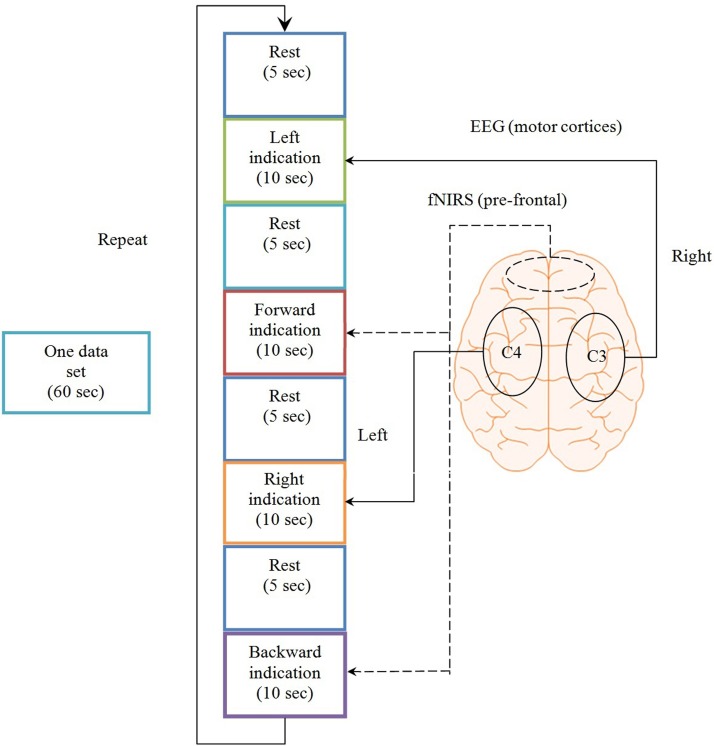
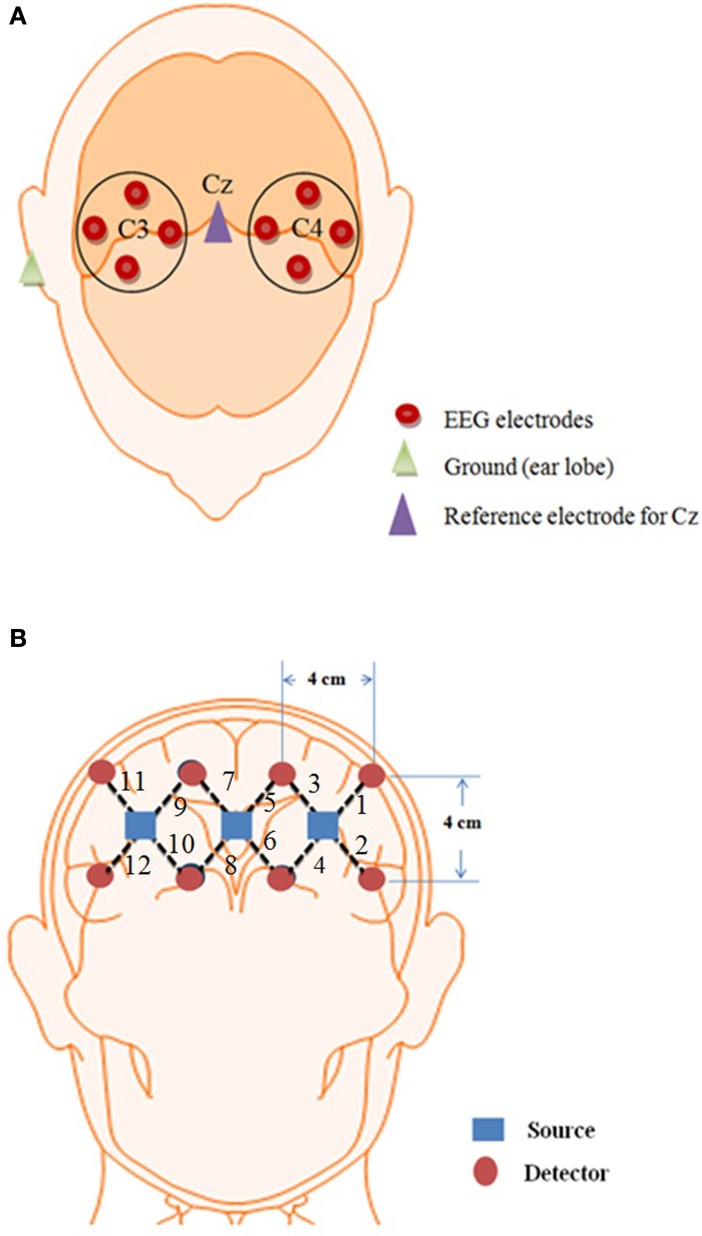
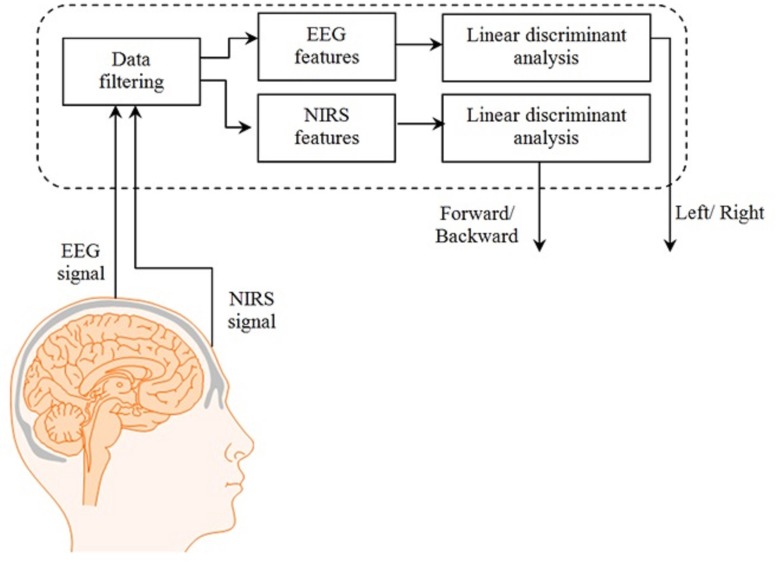
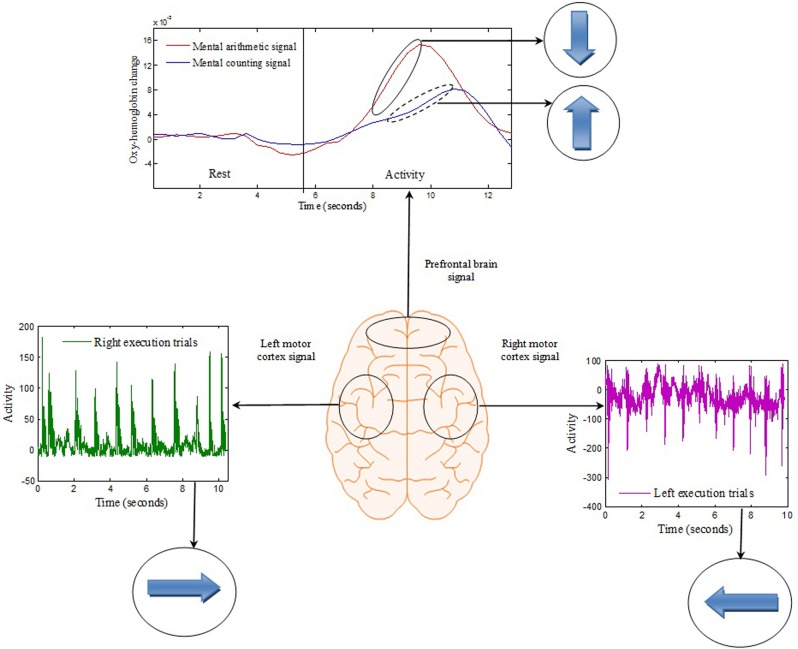
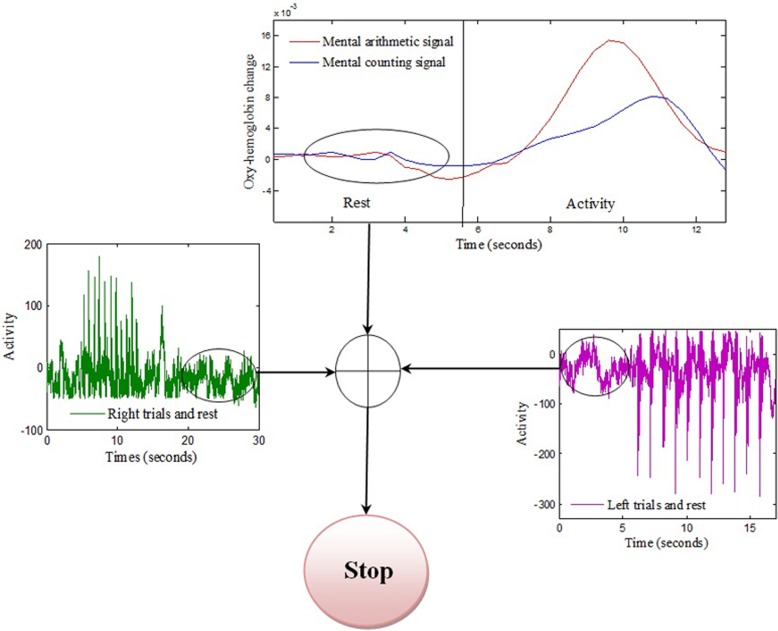
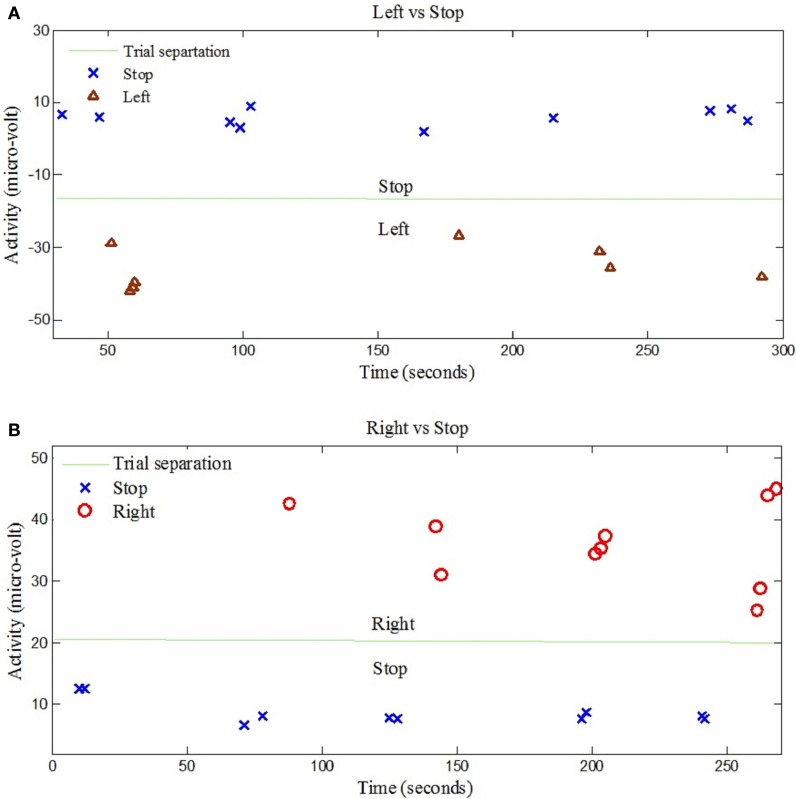
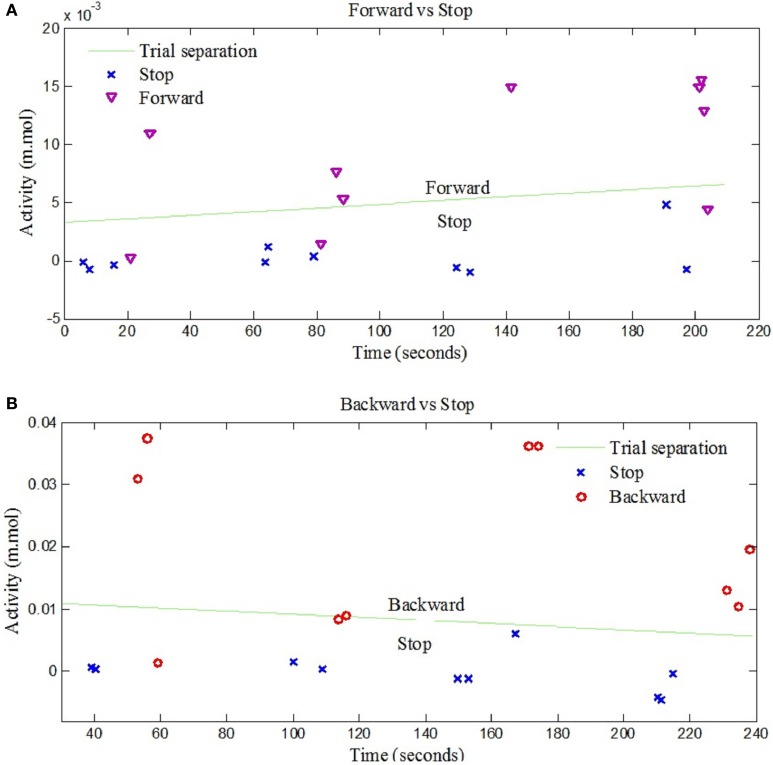
The hybrid brain-computer interface (BCI)'s multimodal technology enables precision brain-signal classification that can be used in the formulation of control commands. In the present study, an experimental hybrid near-infrared spectroscopy-electroencephalography (NIRS-EEG) technique was used to extract and decode four different types of brain signals. The NIRS setup was positioned over the prefrontal brain region, and the EEG over the left and right motor cortex regions. Twelve subjects participating in the experiment were shown four direction symbols, namely, "forward," "backward," "left," and "right." The control commands for forward and backward movement were estimated by performing arithmetic mental tasks related to oxy-hemoglobin (HbO) changes. The left and right directions commands were associated with right and left hand tapping, respectively. The high classification accuracies achieved showed that the four different control signals can be accurately estimated using the hybrid NIRS-EEG technology.
Overview
The claims and statistics of this paper haven’t been checked yet.
Run the check — free, no account needed. It reads the open-access text and checks the sources it cites.
Integrity signals
Registry
Cites
Statistics
Figures
Verification
Claims the paper makes
The claims and statistics of this paper haven’t been checked yet.
Run the check — free, no account needed. It reads the open-access text and checks the sources it cites.
Claims other papers make about this one
Each is checked against this paper’s own text: does it say what the citing paper says it does?
The cited source doesn’t support the claim as written.
In the citing paper
“The current BCI systems do not have the ability to decode movement intention, instead they use imagination based tasks for control (Hong and Nguyen, 2014; Khan et al., 2014; Hong et al., 2015).”
From Selectivity and Longevity of Peripheral-Nerve and Machine Interfaces: A Review. (2017) · cites this paper as Khan et al., 2014
Checked by a reasoning model — may be wrong.
Experimental — accuracy not yet measured
Self-check
Percentages, sums and reported differences re-computed from the paper’s own numbers.
The self-check needs the paper’s full text.
Citations
Cites
Delorme, A., & Makeig, S. (2004) · Journal of Neuroscience Methods · doi:10.1016/j.jneumeth.2003.10.009 · Cited by 24,371
Electroencephalography—Basic principles, clinical applications and related fields
(1982) · Journal of the Autonomic Nervous System · doi:10.1016/0165-1838(82)90067-4 · Cited by 3,449
A review of classification algorithms for EEG-based brain–computer interfaces
Lotte, F., Congedo, M., Lécuyer, A., Lamarche, F., & Arnaldi, B. (2007) · Journal of Neural Engineering · doi:10.1088/1741-2560/4/2/r01 · Cited by 2,665
Brain Computer Interfaces, a Review
Nicolas-Alonso, L. F., & Gomez-Gil, J. (2012) · Sensors · doi:10.3390/s120201211 · Cited by 2,143
Electroencephalography: Basic Principles, Clinical Applications and Related Fields
Torres, F. (1983) · Archives of Neurology · doi:10.1001/archneur.1983.04050030085025 · Cited by 1,825
Control of a two-dimensional movement signal by a noninvasive brain-computer interface in humans
Wolpaw, J. R., & McFarland, D. J. (2004) · Proceedings of the National Academy of Sciences · doi:10.1073/pnas.0403504101 · Cited by 1,512
Jurcak, V., Tsuzuki, D., & Dan, I. (2007) · NeuroImage · doi:10.1016/j.neuroimage.2006.09.024 · Cited by 1,500
Cerebral location of international 10–20 system electrode placement
Homan, R. W., Herman, J. H., & Purdy, P. D. (1987) · Electroencephalography and Clinical Neurophysiology · doi:10.1016/0013-4694(87)90206-9 · Cited by 1,444
EEG signal classification using PCA, ICA, LDA and support vector machines
Subaşı, A., & Gürsoy, M. İ. (2010) · Expert Systems with Applications · doi:10.1016/j.eswa.2010.06.065 · Cited by 1,255
NIRS-SPM: Statistical parametric mapping for near-infrared spectroscopy
Ye, J., Tak, S., JANG, K., JUNG, J., & JANG, J. (2008) · NeuroImage · doi:10.1016/j.neuroimage.2008.08.036 · Cited by 1,201
Research works printed but not linked: 2
- Lin, 2012, Wireless brian-computer interface for electric wheelcahirs with EEG and eye-blinking signals, Int. J. Innovat. Comput. Inform. Control, 8, 6011
- Turnip, 2012, Classifying mental activities from EEG-P300 signals using adaptive neural network, Int. J. Innovat. Comput. Inform. Control, 8, 6429
Cited by
Sorted by citations
fNIRS-based brain-computer interfaces: a review
Naseer, N., & Hong, K.-S. (2015) · Frontiers in Human Neuroscience · doi:10.3389/fnhum.2015.00003 · Cited by 988
Brain-Machine Interfaces: From Basic Science to Neuroprostheses and Neurorehabilitation
Lebedev, M., & Nicolelis, M. A. L. (2017) · Physiological Reviews · doi:10.1152/physrev.00027.2016 · Cited by 695
Sleep Stage Classification Using EEG Signal Analysis: A Comprehensive Survey and New Investigation
Aboalayon, K. A. I., Faezipour, M., Almuhammadi, W. S., & Moslehpour, S. (2016) · Entropy · doi:10.3390/e18090272 · Cited by 387
Mental stress assessment using simultaneous measurement of EEG and fNIRS
Al-Shargie, F., Kiguchi, M., Badruddin, N., Dass, S. C., Hani, A. F. M., & Tang, T. B. (2016) · Biomedical Optics Express · doi:10.1364/boe.7.003882 · Cited by 293
Feature Extraction and Classification Methods for Hybrid fNIRS-EEG Brain-Computer Interfaces
Hong, K., Khan, M. J., & Hong, M. J. (2018) · Frontiers in Human Neuroscience · doi:10.3389/fnhum.2018.00246 · Cited by 287
Metadata
- Authors
- Khan, M. J., Hong, M. J., & Hong, K.-S.
- Affiliations
- Pusan National University (KR)
- Columbia University (US)
- Corresponding author
- Hong, Keum-Shik
- Venue
- Frontiers in Human Neuroscience
- Publisher
- Frontiers Media SA
- Published
- 2014-04-28
- Volume
- 8
- Pages
- 244-244
- ISSN
- 1662-5161 (ISSN-L)
- PMC
- PMC4009438
- OpenAlex
- W1974893143
- Cited by
- 280
- References
- 62
- Citations by year
- 2026: 4 · 2025: 3 · 2024: 6 · 2023: 7 · 2022: 14 · 2021: 31 · 2020: 30 · 2019: 32 · 2018: 42 · 2017: 40 · 2016: 32 · 2015: 31 · 2014: 8
- FWCI
- 20.63
- Type
- journal article
- Language
- en
- Open access
- gold
- doi.org
- Licence
- cc-by
- Locations
- Frontiers in Human Neuroscience (publishedVersion, cc-by)
- Europe PMC (PubMed Central) (publishedVersion, cc-by)
- PubMed Central (publishedVersion, cc-by)
- PubMed (publishedVersion)
- DOAJ (DOAJ: Directory of Open Access Journals) (submittedVersion, cc-by-sa)
- Funders
- National Research Foundation
- National Research Foundation of Korea
- Ministry of Education, Science and Technology
- Topics
- Life Sciences › Neuroscience › Cognitive Neuroscience › EEG and Brain-Computer Interfaces
- Health Sciences › Medicine › Radiology, Nuclear Medicine and Imaging › Optical Imaging and Spectroscopy Techniques
- Physical Sciences › Computer Science › Human-Computer Interaction › Gaze Tracking and Assistive Technology
- Keywords
- hybrid brain-computer interface, near-infrared spectroscopy, EEG, prefrontal cortex, motor cortex, oxyhemoglobin, hand tapping, brain signal classification
About these checks
Registry, retraction, Cites and statistics results are computed, not judged, with one exception: a printed reference that no index lists is read once by a model before it counts as a citation error. Claims are extracted by a model and kept only when their quote appears verbatim in the text; each cited source is then checked, with a model’s help, for whether it says what the claim relies on. Those verdicts can be wrong — read the claim’s quote and the cited source before relying on one.
Statistics and arithmetic are recomputed, not judged.
Confidence bands are shown only for fields calibrated on our annotated test set. None is calibrated yet, so no band is shown.
What counts as a claim ›How we measure confidence ›How we check this ›
Are you an author, or do you see a problem with this page? Request a review
