

The DOI matches its Crossref record; 322 of the 325 references it cites were found in a registry or an index.
Brain Computer Interfaces, a Review
Open accessAbstract
A brain-computer interface (BCI) is a hardware and software communications system that permits cerebral activity alone to control computers or external devices. The immediate goal of BCI research is to provide communications capabilities to severely disabled people who are totally paralyzed or ‘locked in’ by neurological neuromuscular disorders, such as amyotrophic lateral sclerosis, brain stem stroke, or spinal cord injury. Here, we review the state-of-the-art of BCIs, looking at the different steps that form a standard BCI: signal acquisition, preprocessing or signal enhancement, feature extraction, classification and the control interface. We discuss their advantages, drawbacks, and latest advances, and we survey the numerous technologies reported in the scientific literature to design each step of a BCI. First, the review examines the neuroimaging modalities used in the signal acquisition step, each of which monitors a different functional brain activity such as electrical, magnetic or metabolic activity. Second, the review discusses different electrophysiological control signals that determine user intentions, which can be detected in brain activity. Third, the review includes some techniques used in the signal enhancement step to deal with the artifacts in the control signals and improve the performance. Fourth, the review studies some mathematic algorithms used in the feature extraction and classification steps which translate the information in the control signals into commands that operate a computer or other device. Finally, the review provides an overview of various BCI applications that control a range of devices.
Overview
The claims and statistics of this paper haven’t been checked yet.
Free: it reads the open-access text and checks the first 5 claims that cite a source we can check. Create a free account to check every claim.
Integrity signals
Registry
Cites
Statistics
Figures
Verification
Claims the paper makes
The claims and statistics of this paper haven’t been checked yet.
Free: it reads the open-access text and checks the first 5 claims that cite a source we can check. Create a free account to check every claim.
Claims other papers make about this one
Each is checked against this paper’s own text: does it say what the citing paper says it does?
The source backs part of the claim, not all of it — or backs it for a different population, condition or comparison.
In the citing paper
“Noninvasive EEG based BCI could potentially serve the needs of a large population10.”
From Noninvasive Electroencephalogram Based Control of a Robotic Arm for Reach and Grasp Tasks (2016) · cites this paper as [10]
Experimental — accuracy not yet measuredThe cited source says what the claim attributes to it.
In the citing paper
“this response can be used as a neural signal in EEG-based brain-computer interfaces (BCIs), enabling direct communication between the brain and surroundings without the involvement of peripheral nerves or muscles (Nicolas-Alonso and Gomez-Gil, 2012).”
From A Lightweight Multi-Scale Convolutional Neural Network for P300 Decoding: Analysis of Training Strategies and Uncovering of Network Decision (2021) · cites this paper as Nicolas-Alonso and Gomez-Gil, 2012
The check wasn’t confident either way, so it gives no verdict — never disputed.
In the citing paper
“Among others, external influences such as stress, emotion, and work impact these metrics and can be used to infer those [162].”
From A Survey on Measuring Cognitive Workload in Human-Computer Interaction (2023) · cites this paper as [162]
Experimental — accuracy not yet measured
Self-check
Percentages, sums and reported differences re-computed from the paper’s own numbers.
The self-check needs the paper’s full text.
Citations
Cites
A Tutorial on Support Vector Machines for Pattern Recognition
Burges, C. J. C. (1998) · Data Mining and Knowledge Discovery · doi:10.1023/a:1009715923555 · Cited by 16,429 · cited 1×
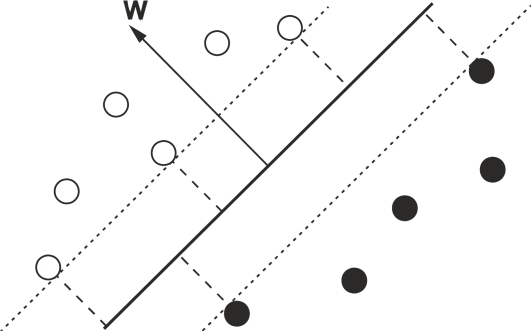
“However, in contrast to LDA, SVM selects the hyperplanes that maximize the margins, that is, the distance between the nearest training samples and the hyperplanes [236].”
MethodAn Information-Maximization Approach to Blind Separation and Blind Deconvolution
Bell, A. J., & Sejnowski, T. J. (1995) · Neural Computation · doi:10.1162/neco.1995.7.6.1129 · Cited by 8,986 · cited 1×
“Finally, s(t) and A are obtained from x(t) by means of certain algorithms, such as Infomax [162] or further modification of the Infomax [163].”
MethodBrain–computer interfaces for communication and control
Wolpaw, J. R., Birbaumer, N., McFarland, D. J., Pfurtscheller, G., & Vaughan, T. M. (2002) · Clinical Neurophysiology · doi:10.1016/s1388-2457(02)00057-3 · Cited by 7,927 · cited 2×
“Furthermore, BCI systems require real-time signal processing, and up until recently the requisite technology either did not exist or was extremely expensive [2].”
BackgroundEvent-related EEG/MEG synchronization and desynchronization: basic principles
Pfurtscheller, G., & Lopes da Silva, F. H. (1999) · Clinical Neurophysiology · doi:10.1016/s1388-2457(99)00141-8 · Cited by 7,328 · cited 1×
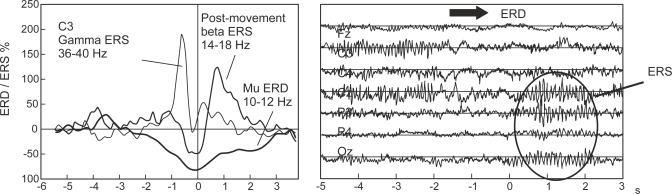
“Both rhythms are associated in such a way that some beta rhythms are harmonic mu rhythms, although some beta rhythms may also be independent [139].”
BackgroundStatistical pattern recognition: a review
Jain, A. K., Duin, P. W., & Mao, J. (2000) · IEEE Transactions on Pattern Analysis and Machine Intelligence · doi:10.1109/34.824819 · Cited by 6,767 · cited 1×
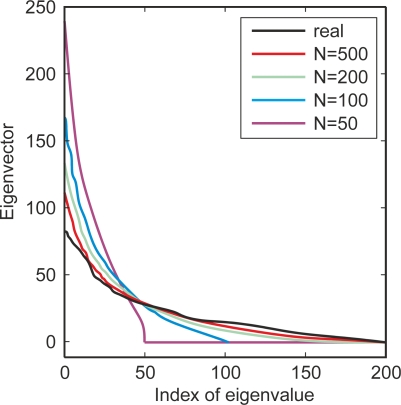
“training data needed to offer good results increases exponentially with the dimensionality of the feature vector [223].”
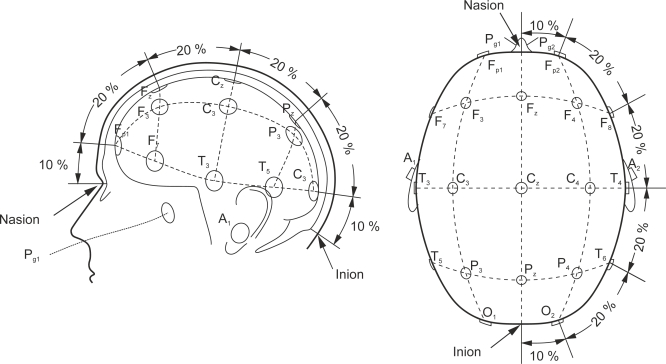
BackgroundThe ten-twenty electrode system of the international federation
Jasper, H. H. (1958) · Electroencephalography and Clinical Neurophysiology · Cited by 6,567
Neurophysiological investigation of the basis of the fMRI signal
Logothetis, N. K., Pauls, J., Augath, M., Trinath, T., & Oeltermann, A. (2001) · Nature · doi:10.1038/35084005 · Cited by 6,551 · cited 1×
“a correspondence between both does exist [86].”
Frequency Dependence of Signal Power and Spatial Reach of the Local Field Potential
Leski, S., Lindén, H., Tetzlaff, T., Pettersen, K. H., & Einevoll, G. T. (2013) · PubMed · doi:10.18154/rwth-conv-084442 · Cited by 3,639
Neuronal ensemble control of prosthetic devices by a human with tetraplegia
Hochberg, L. R., Serruya, M. D., Friehs, G. M., Mukand, J. A., Saleh, M., Caplan, A. H., Branner, A., Chen, D., Penn, R. D., & Donoghue, J. P. (2006) · Nature · doi:10.1038/nature04970 · Cited by 3,295 · cited 1×
“[287] implanted BrainGate sensors in the primary motor cortex of a tetraplegic patient to control a cursor.”
BackgroundFarwell, L. A., & Donchin, E. (1988) · Electroencephalography and Clinical Neurophysiology · doi:10.1016/0013-4694(88)90149-6 · Cited by 3,228 · cited 5×
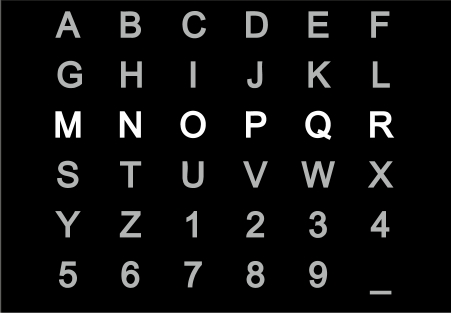
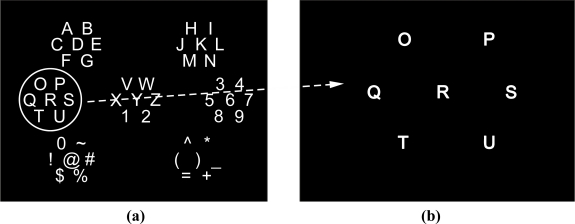
“A typical application of a BCI based on visual P300 evoked potentials comprises a matrix of letters, numbers, or other symbols or commands [123,127,128].”
BackgroundInfluential
Research works printed but not linked: 3
- Steven, L., and Giulio, T. (2009). The Neurology of Consciousness, Academic Press.
- Mellinger, 2007, An MEG-based brain-computer interface (BCI), Neuroimage, 36, 581, 10.1016/j.neuroimage.2007.03.019 · DOI · Paper page
- Tangermann, M., Krauledat, M., Grzeska, K., Sagebaum, M., Blankertz, B., Vidaurre, C., and Müller, K. (2008). Playing Pinball with non-invasive BCI. Proc. NIPS, 1641–1648.
Cited by
EEGNet: a compact convolutional neural network for EEG-based brain-computer interfaces
Lawhern, V. J., Solon, A. J., Waytowich, N. R., Gordon, S. M., Hung, C. P., & Lance, B. J. (2018) · Journal of Neural Engineering · doi:10.1088/1741-2552/aace8c · Cited by 5,115
“processing stages [3]: a data collection stage, where neural data is recorded; a signal processing stage, where the recorded data is preprocessed and cleaned; a feature extraction stage, where meaningful information is extracted from the neural data; a classification stage, where a decision is interpreted from the dat…”
BackgroundEEGNet: A Compact Convolutional Network for EEG-based Brain-Computer Interfaces
Lawhern, V. J., Solon, A. J., Waytowich, N. R., Gordon, S. M., Hung, C. P., & Lance, B. J. (2016) · arXiv · doi:10.48550/arxiv.1611.08024 · Cited by 5,105
“processing stages [3]: a data collection stage, where neural data is recorded; a signal processing stage, where the recorded data is preprocessed and cleaned; a feature extraction stage, where meaningful information is extracted from the neural data; a classification stage, where a decision is interpreted from the dat…”
BackgroundThe grand challenges of Science Robotics
Yang, G.-Z., Bellingham, J., Dupont, P. E., Fischer, P., Floridi, L., Full, R., Jacobstein, N., Kumar, V., McNutt, M., Merrifield, R., et al. (2018) · Science Robotics · doi:10.1126/scirobotics.aar7650 · Cited by 1,177
“Beyond their clinical use, BCIs also have emerging applications in neuroer-gonomics, communication and control, education and self-regulation, as well as games and entertainment ( 72 ).”
BackgroundfNIRS-based brain-computer interfaces: a review
Naseer, N., & Hong, K.-S. (2015) · Frontiers in Human Neuroscience · doi:10.3389/fnhum.2015.00003 · Cited by 988
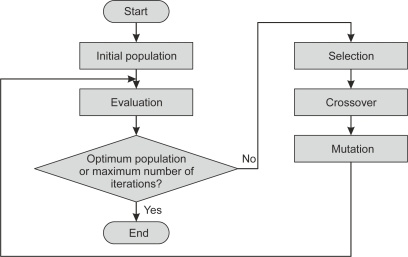
“For more details on genetic algorithms, please see Pernkopf and O’Leary (2001) and Nicolas-Alonso and Gomez-Gil (2012).”
MethodA comprehensive review of EEG-based brain–computer interface paradigms
Abiri, R., Borhani, S., Sellers, E. W., Jiang, Y., & Zhao, X. (2019) · Journal of Neural Engineering · doi:10.1088/1741-2552/aaf12e · Cited by 946
Metadata
- Authors
- Nicolas-Alonso, L. F., & Gomez-Gil, J.
- Affiliations
- Universidad de Valladolid (ES)
- Department of Signal Theory, Communications and Telematics Engineering, University of Valladolid, Valladolid 47011, Spain
- Corresponding author
- Nicolas-Alonso, Luis Fernando
- Venue
- Sensors
- Publisher
- MDPI AG
- Published
- 2012-01-31
- Volume
- 12
- Issue
- 2
- Pages
- 1211-1279
- ISSN
- 1424-8220 (ISSN-L)
- PMC
- PMC3304110
- OpenAlex
- W2128909182
- Cited by
- 2,143
- References
- 325
- Citations by year
- 2026: 137 · 2025: 186 · 2024: 178 · 2023: 181 · 2022: 201 · 2021: 220 · 2020: 185 · 2019: 185 · 2018: 177 · 2017: 134 · 2016: 118 · 2015: 91 · 2014: 78 · 2013: 48 · 2012: 20
- FWCI
- 5.81
- Type
- journal article
- Language
- en
- Open access
- gold
- doi.org
- Licence
- Locations
- Sensors (publishedVersion, cc-by)
- PubMed Central (publishedVersion, cc-by)
- PubMed (publishedVersion)
- Hispana (publishedVersion, cc-by)
- DOAJ (DOAJ: Directory of Open Access Journals) (submittedVersion, cc-by-sa)
- University of Valladolid Documentary Repository (University of Valladolid) (submittedVersion, cc-by)
- Topics
- Life Sciences › Neuroscience › Cognitive Neuroscience › EEG and Brain-Computer Interfaces
- Physical Sciences › Computer Science › Human-Computer Interaction › Gaze Tracking and Assistive Technology
- Physical Sciences › Engineering › Biomedical Engineering › Muscle activation and electromyography studies
- Keywords
- brain-computer interface, neuroimaging, electrophysiological signals, signal preprocessing, artifact removal, feature extraction, brain signal classification, paralysis, locked-in syndrome, amyotrophic lateral sclerosis, spinal cord injury, brain-computer interface applications
- MeSH terms
- Algorithms, Brain, Electroencephalography, Humans, Man-Machine Systems, Pattern Recognition, Automated, Signal Processing, Computer-Assisted, Transducers, User-Computer Interface
About these checks
Registry, retraction, Cites and statistics results are computed, not judged, with one exception: a printed reference that no index lists is read once by a model before it counts as a citation error. Claims are extracted by a model and kept only when their quote appears verbatim in the text; each cited source is then checked, with a model’s help, for whether it says what the claim relies on. Those verdicts can be wrong — read the claim’s quote and the cited source before relying on one.
Statistics and arithmetic are recomputed, not judged.
Confidence bands are shown only for fields calibrated on our annotated test set. None is calibrated yet, so no band is shown.
What counts as a claim ›How we measure confidence ›How we check this ›
Are you an author, or do you see a problem with this page? Request a review
How to cite
Cite CoChat for the checks on this page, and the paper for its own findings.
- This page
- CoChat. (2026). Citation check: Brain Computer Interfaces, a Review. https://app.cochat.ai/papers/10.3390/s120201211
- The paper
- Nicolas-Alonso, L. F., & Gomez-Gil, J. (2012). Brain Computer Interfaces, a Review. Sensors. https://doi.org/10.3390/s120201211
Data sources
Bibliographic data: Semantic Scholar, OpenAlex, Crossref.
Contains information from the Semantic Scholar Academic Graph Datasets, made available under the ODC Attribution License (ODC-BY 1.0).
Semantic Scholar’s data is described in: Kinney, R., et al. (2023). The Semantic Scholar Open Data Platform. arXiv:2301.10140.
