

On closed loop brain stimulation systems for improving the quality of life of patients with neurological disorders
Open accessThe DOI matches its Crossref record; 190 of the 190 references it cites were found in a registry or an index.
Abstract
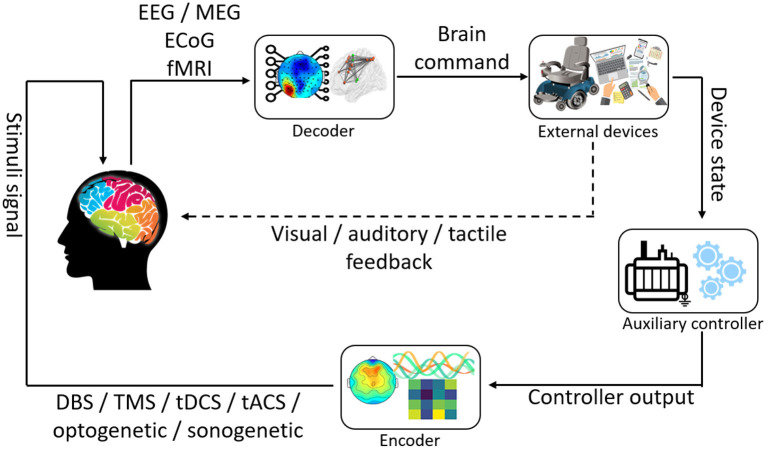
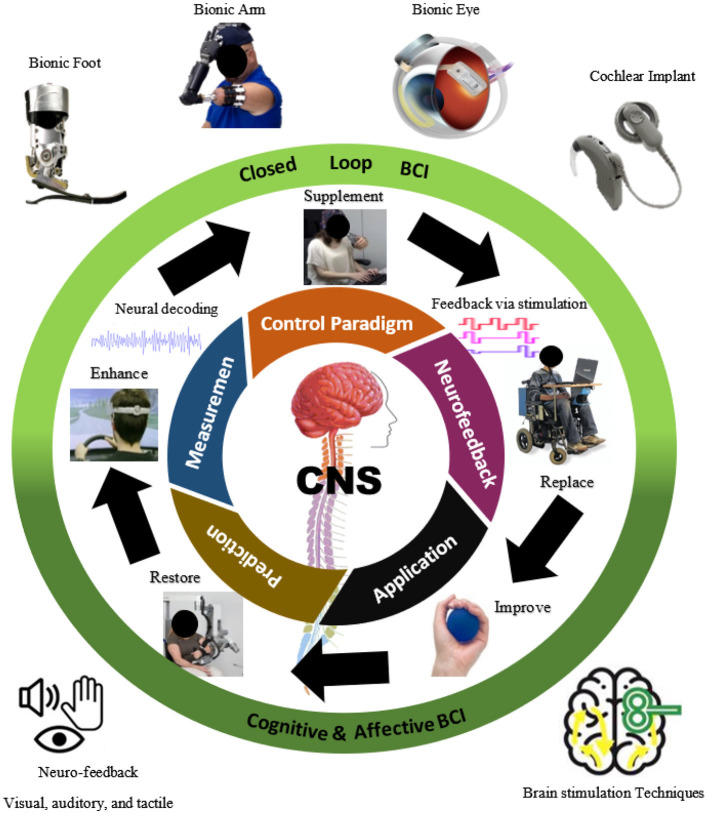
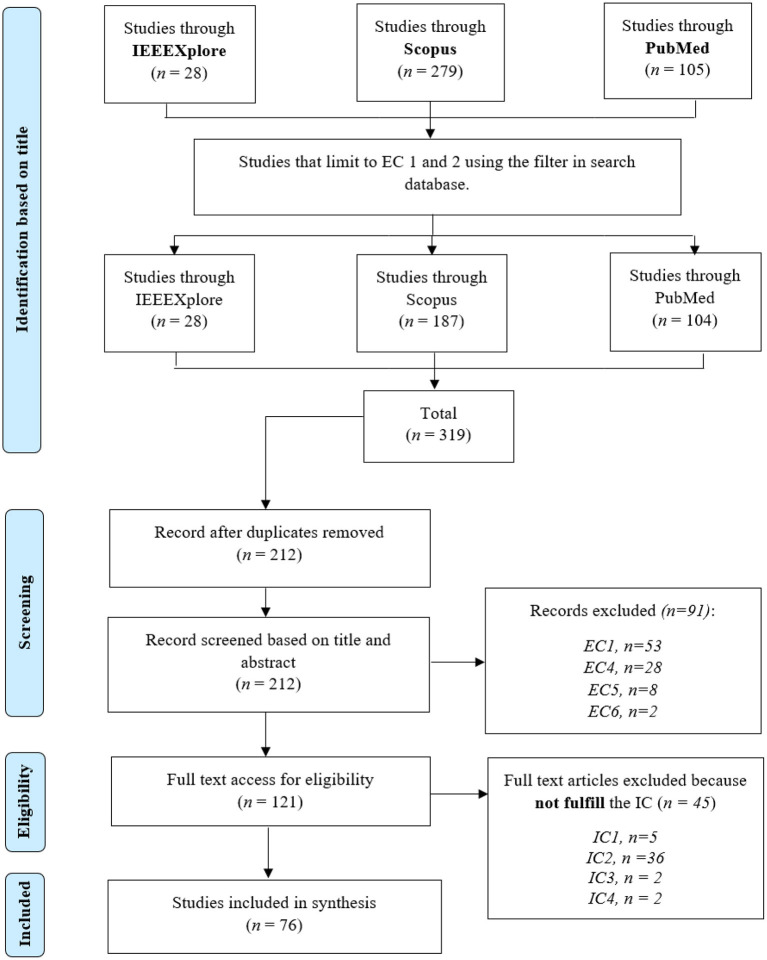
Emerging brain technologies have significantly transformed human life in recent decades. For instance, the closed-loop brain-computer interface (BCI) is an advanced software-hardware system that interprets electrical signals from neurons, allowing communication with and control of the environment. The system then transmits these signals as controlled commands and provides feedback to the brain to execute specific tasks. This paper analyzes and presents the latest research on closed-loop BCI that utilizes electric/magnetic stimulation, optogenetic, and sonogenetic techniques. These techniques have demonstrated great potential in improving the quality of life for patients suffering from neurodegenerative or psychiatric diseases. We provide a comprehensive and systematic review of research on the modalities of closed-loop BCI in recent decades. To achieve this, the authors used a set of defined criteria to shortlist studies from well-known research databases into categories of brain stimulation techniques. These categories include deep brain stimulation, transcranial magnetic stimulation, transcranial direct-current stimulation, transcranial alternating-current stimulation, and optogenetics. These techniques have been useful in treating a wide range of disorders, such as Alzheimer's and Parkinson's disease, dementia, and depression. In total, 76 studies were shortlisted and analyzed to illustrate how closed-loop BCI can considerably improve, enhance, and restore specific brain functions. The analysis revealed that literature in the area has not adequately covered closed-loop BCI in the context of cognitive neural prosthetics and implanted neural devices. However, the authors demonstrate that the applications of closed-loop BCI are highly beneficial, and the technology is continually evolving to improve the lives of individuals with various ailments, including those with sensory-motor issues or cognitive deficiencies. By utilizing emerging techniques of stimulation, closed-loop BCI can safely improve patients' cognitive and affective skills, resulting in better healthcare outcomes.
Overview
The claims and statistics of this paper haven’t been checked yet.
Free: it reads the open-access text and checks the first 5 claims that cite a source we can check. Create a free account to check every claim.
Integrity signals
Registry
Cites
Statistics
Figures
Verification
Claims the paper makes
The claims and statistics of this paper haven’t been checked yet.
Free: it reads the open-access text and checks the first 5 claims that cite a source we can check. Create a free account to check every claim.
Claims other papers make about this one
Each is checked against this paper’s own text: does it say what the citing paper says it does?
The check wasn’t confident either way, so it gives no verdict — never disputed.
In the citing paper
“However, this method has limitations, it takes hours of calibration and isn't feasible in situations where BCIs need to work right out of the box (Lebreton et al., 2019; Belkacem et al., 2023).”
From Transfer learning for EEG-based BCIs: a comparative evaluation and optimization of data alignment methods (2026) · cites this paper as Belkacem et al., 2023
Experimental — accuracy not yet measured
Self-check
Percentages, sums and reported differences re-computed from the paper’s own numbers.
The self-check needs the paper’s full text.
Citations
Cites
Dermyshi, E., Wang, Y., Yan, C., Hong, W., Qiu, G., Gong, X., & Zhang, T. (2017) · Neonatology · doi:10.1159/000454668 · Cited by 24,451
Liberati, A., Altman, D. G., Tetzlaff, J., Mulrow, C., Gøtzsche, P. C., Ioannidis, J. P. A., Clarke, M., Devereaux, P. J., Kleijnen, J., & Moher, D. (2009) · Journal of Clinical Epidemiology · doi:10.1016/j.jclinepi.2009.06.006 · Cited by 10,578
Brain–computer interfaces for communication and control
Wolpaw, J. R., Birbaumer, N., McFarland, D. J., Pfurtscheller, G., & Vaughan, T. M. (2002) · Clinical Neurophysiology · doi:10.1016/s1388-2457(02)00057-3 · Cited by 7,927
Frequency Dependence of Signal Power and Spatial Reach of the Local Field Potential
Leski, S., Lindén, H., Tetzlaff, T., Pettersen, K. H., & Einevoll, G. T. (2013) · PubMed · doi:10.18154/rwth-conv-084442 · Cited by 3,639
Brain Computer Interfaces, a Review
Nicolas-Alonso, L. F., & Gomez-Gil, J. (2012) · Sensors · doi:10.3390/s120201211 · Cited by 2,143 · cited 1×
“EEG is the most popular and preferred technique in this regard (Nicolas-Alonso and Gomez-Gil, 2012) as it is economical and portable, and can even be measured”
BackgroundControl of a two-dimensional movement signal by a noninvasive brain-computer interface in humans
Wolpaw, J. R., & McFarland, D. J. (2004) · Proceedings of the National Academy of Sciences · doi:10.1073/pnas.0403504101 · Cited by 1,512
Deep brain stimulation: current challenges and future directions
Lozano, A. M., Lipsman, N., Bergman, H., Brown, P., Chabardes, S., Chang, J. W., Matthews, K., McIntyre, C. C., Schlaepfer, T. E., Schulder, M., et al. (2019) · Nature Reviews Neurology · doi:10.1038/s41582-018-0128-2 · Cited by 1,450
Adaptive deep brain stimulation in advanced Parkinson disease.
Little, S., Pogosyan, A., Neal, S., Zavala, B., Zrinzo, L., Hariz, M., Foltynie, T., Limousin, P., Ashkan, K., FitzGerald, J., et al. (2013) · Annals of Neurology · doi:10.1002/ana.23951 · Cited by 1,374
Responsive cortical stimulation for the treatment of medically intractable partial epilepsy
Morrell, M. J. (2011) · Neurology · doi:10.1212/wnl.0b013e3182302056 · Cited by 1,282 · cited 2×
“, 2013; Johnson andWilson, 2018); and cortical (Morrell, 2011; Heck et al., 2014; Sun and Morrell, 2014; Lee et al., 2015) and subcortical structures (Salanova et al.”
BackgroundSonuga-Barke, E. J. S., Brandeis, D., Cortese, S., Daley, D., Ferrin, M., Holtmann, M., Stevenson, J., Danckaerts, M., van der Oord, S., Döpfner, M., et al. (2013) · American Journal of Psychiatry · doi:10.1176/appi.ajp.2012.12070991 · Cited by 1,167 · cited 1×
“It is important to note, though, that not all studies have found neurofeedback to be effective, and some have found its effects to be either temporary or restricted (Sonuga-Barke et al., 2013).”
Background
Research works printed but not linked: 2
- Lotte F. (2012). On the need for alternative feedback training approaches for BCI,” in Berlin Brain-Computer Interface Workshop, Berlin.
- Suresh S. A. (2020). A study on bionic eye technology. Int. J. Res. Eng. Sci. Manage. 3.
Cited by
Bioelectronic Implantable Devices for Physiological Signal Recording and Closed‐Loop Neuromodulation
Oh, S., Jekal, J., Liu, J., Kim, J., Park, J., Lee, T., & Jang, K. (2024) · Advanced Functional Materials · doi:10.1002/adfm.202403562 · Cited by 114
Khorev, V. S., Kurkin, S., Badarin, A., Antipov, V. M., Николаевна, П. Е., Andreev, A. V., Grubov, V., Drapkina, O. M., Kiselev, A. R., & Hramov, A. E. (2024) · Journal of Integrative Neuroscience · doi:10.31083/j.jin2307125 · Cited by 67
Madathil, N. T., Dankar, F. K., Gergely, M., Belkacem, A. N., & Alrabaee, S. (2025) · Computational and Structural Biotechnology Journal · doi:10.1016/j.csbj.2025.06.009 · Cited by 76
“Recent developments in brain data analytics have been largely focused on integrating brain computer interfaces (BCI), neuromodulation, and FL to create secure, efficient, and personalized neurotechnological systems for treating neurological disorders or enhancing cognitive functions [13,14].”
Self-citationHassan, Y. M., Wanas, A., Ali, A. A., & El-Sayed, W. M. (2025) · Journal of Nanobiotechnology · doi:10.1186/s12951-025-03719-x · Cited by 60
“Over time, these systems could serve as personal decision-support engines, guiding clinicians in treatment selection, dosing, and timing [72], ( Fig.”
Saway, B. F., Palmer, C., Hughes, C. L., Triano, M. J., Suresh, R. E., Gilmore, J., George, M. S., Kautz, S. A., & Rowland, N. C. (2024) · Neurotherapeutics · doi:10.1016/j.neurot.2024.e00337 · Cited by 58
“Moreover, there has been rapid development of therapeutic neurostimulation in the form of brain-computer interfaces (BCIs), which utilizes real-time analysis of brain states to enable automatic adjustment of stimulation parameters [7].”
BackgroundThe Role and Applications of Artificial Intelligence in the Treatment of Chronic Pain
Meier, T. A., Refahi, M. S., Hearne, G., Restifo, D., Munoz‐Acuna, R., ROSEN, G. L., & Woloszynek, S. (2024) · Current Pain and Headache Reports · doi:10.1007/s11916-024-01264-0 · Cited by 46
Ramadan, R. Α., & Altamimi, A. B. (2024) · Health and Technology · doi:10.1007/s12553-024-00822-1 · Cited by 36
“Transfer Learning and Generalization [71] Transfer learning is a machine learning technique famous for learning from previous tasks or activities.”
Ongoing EEG artifact correction using blind source separation
Ille, N., Nakao, Y., Yano, S., Taura, T., Ebert, A., Bornfleth, H., Asagi, S., Kozawa, K., Itabashi, I., Sato, T., et al. (2024) · Clinical Neurophysiology · doi:10.1016/j.clinph.2023.12.133 · Cited by 40
Pothukuchi, A. S., Memon, N., Mallikarjunaradhya, V., & Logeshwaran, J. (2023) · International Conference On Smart Technologies For Smart Nation (SmartTechCon) · doi:10.1109/smarttechcon57526.2023.10391621 · Cited by 27
“Another benefit of the non-invasive technique is the potential for doctors to use it regularly for diagnosis and in providing a more comprehensive plan for recovery from stroke [5].”
BackgroundOptimization of Deep Learning Models to Predict Lung Cancer Using Chest X-Ray Images
Alzaidi, E. R. (2024) · International Academic Journal of Science and Engineering · doi:10.71086/iajse/v11i1/iajse1140 · Cited by 31
A Review of the Definition and Significance of the Brain Health
Alsufieva, A. A., & Aleeva, D. (2023) · Journal of Biomedical and Sustainable Healthcare Applications · doi:10.53759/0088/jbsha202303013 · Cited by 24
“Belkacem, Jamil, Khalid, and Alnajjar [17]have previously emphasized the potential of this research direction to provide novel opportunities for investigating prevalent neurological disorders and gaining a broader understanding of the human brain.”
Cantillo-Negrete, J., Rodríguez-García, M. E., Carrillo‐Mora, P., Arias-Carrión, Ó., Ortega‐Robles, E., Galicia-Alvarado, M. A., Valdés-Cristerna, R., Ramirez-Nava, A. G., Hernández-Arenas, C., Quinzaños-Fresnedo, J., et al. (2025) · Frontiers in Neuroscience · doi:10.3389/fnins.2025.1579988 · Cited by 29
Williams, C., Anik, F. I., Hasan, M. M., Rodriguez-Cardenas, J., Chowdhury, A., Tian, S., He, S., & Sakib, N. (2025) · JMIR Biomedical Engineering · doi:10.2196/72218 · Cited by 29
Li, J., Zhang, W., Liao, Y., Qiu, Y., Zhu, Y., Zhang, X., & Wang, C. (2025) · Physics of Life Reviews · doi:10.1016/j.plrev.2025.08.007 · Cited by 21
Lim, M. J. R., Lo, Y. T., Tan, Y. Y., Lin, H.-Y., Wang, Y., Tan, D., Wang, E., Ma, Y. Y. N., Ng, J. J. W., Jefree, R. A., et al. (2025) · Journal of Neural Engineering · doi:10.1088/1741-2552/adb88e · Cited by 21
Ghosh, S., Sindhujaa, P., Kesavan, D. K., Gulyás, B. Z., & Máthé, D. (2025) · Surgeries · doi:10.3390/surgeries6030050 · Cited by 17
“BCIs assist in real-time electrophysiological monitoring, ensuring critical functional regions are preserved during resection [32].”
Optogenetic Brain–Computer Interfaces
Tang, F., Yan, F., Zhong, Y., Li, J., Gong, H., & Li, X. (2024) · Bioengineering · doi:10.3390/bioengineering11080821 · Cited by 19
“These techniques can be broadly categorized into two main types: electro-magnetic stimulation [12,13], ultrasound stimulation [14,15] and light stimulation [16].”
BackgroundBiradar, S., Suresh, C., Nanjundeshwara, N., & Raghavan, R. (2024) · Advances in medical diagnosis, treatment, and care (AMDTC) book series · doi:10.4018/979-8-3693-7728-4.ch001 · Cited by 12
The contribution of EEG to assess and treat motor disorders in multiple sclerosis
Bardel, B., Ayache, S. S., & Lefaucheur, J. (2024) · Clinical Neurophysiology · doi:10.1016/j.clinph.2024.03.024 · Cited by 13
Multimodal EEG-fNIRS Seizure Pattern Decoding Using Vision Transformer
Damseh, R., Hireche, A., Sirpal, P., & Belkacem, A. N. (2024) · IEEE Open Journal of the Computer Society · doi:10.1109/ojcs.2024.3500032 · Cited by 8
“Electroencephalogram (EEG) is an non-invasive brain measurement for analyzing and diagnosing the neurodegenerative and psychiatric diseases [3], [4], [5], including epilepsy, where it can help in studying and monitoring epileptic activity.”
Self-citationBuilding resilience when neural implants are abandoned
Kouvas, G., Coenen, C., Hommrich, D., Stieglitz, T., Elger, B. S., & Jotterand, F. (2025) · Nature Medicine · doi:10.1038/s41591-025-03772-x · Cited by 7
Yasen, A., Sun, W., Gong, Y., & Xu, G. (2025) · Clinical Neurophysiology · doi:10.1016/j.clinph.2025.2111383 · Cited by 8
A Horizon Scan of Neurotechnology Innovations
Haston, S., Gill, S., Twentyman, K., Green, E., Agbeleye, O., Eastaugh, C., Craig, D., Gonzalez-Moral, S. G., & Mkwashi, A. (2025) · International Journal of Environmental Research and Public Health · doi:10.3390/ijerph22050811 · Cited by 6
“An increase in the market acceptability of brain stimulation has also been reported [7].”
The tracking umbrella: Diverse interpretations under a common neural term
Molinaro, N. (2025) · Annals of the New York Academy of Sciences · doi:10.1111/nyas.70033 · Cited by 9
“75,76 These approaches may not only refine individual tracking estimates but also bridge the gap between neural and behavioral measures.”
Delcamp, C., Chalard, A., Srinivasan, R., & Cramer, S. C. (2024) · Frontiers in Neuroscience · doi:10.3389/fnins.2024.1415134 · Cited by 8
Si, J.-Y., Lin, Z.-Y., Gan, D.-G., Zhang, X., Liu, Y., Hu, Y.-X., Bao, Y.-P., Wang, X.-Q., Sun, H., Yu, X., et al. (2025) · World Journal of Psychiatry · doi:10.5498/wjp.v15.i8.107593 · Cited by 6
Brain State-Dependent Non-Invasive Neurostimulation with EEG Feedback: Achievements and Prospects
Fedotchev, A. I., & Zemlyanaya, A. A. (2023) · Современные технологии в медицине · doi:10.17691/stm2023.15.5.04 · Cited by 4
Personalizing brain stimulation: continual learning for sleep spindle detection
Sobral, M., Jourde, H. R., Bajestani, S. E. M., Coffey, E. B. J., & Beltrame, G. (2025) · Journal of Neural Engineering · doi:10.1088/1741-2552/adebb1 · Cited by 5
Luo, Y., Liu, X., & Yang, M. (2026) · Frontiers in Rehabilitation Sciences · doi:10.3389/fresc.2026.1666530 · Cited by 6
Neural Manifold Constraint for Spike Prediction Models Under Behavioral Reinforcement
Wu, S., Zhang, X., & Wang, Y. (2024) · IEEE Transactions on Neural Systems and Rehabilitation Engineering · doi:10.1109/tnsre.2024.3435568 · Cited by 5
“These prostheses record upstream neural activity and deliver electrical stimulations to downstream cortical areas [1], [2], [3], [4].”
BackgroundWu, S., Song, Z., Zhang, X., Huang, Y., Chen, S., Shen, X., Tan, J., Li, M., Wang, Z., Chen, Y., et al. (2026) · Nature Computational Science · doi:10.1038/s43588-025-00915-5 · Cited by 6
“A neural prosthesis can partially induce similar functionalities of disconnected brain areas by delivering biomimetic model outputs as electrical stimulation 1,2 .”
Knežević, S. (2025) · SANAMED · doi:10.5937/sanamed0-54685 · Cited by 3
Ahmed, S. G., Ambali Parambil, M. M., Damseh, R., Bouktif, S., Alnajjar, F., & Belkacem, A. N. (2026) · Frontiers in Systems Neuroscience · doi:10.3389/fnsys.2026.1840121 · Cited by 2
Self-citationA Novel Stimulus Artifact Suppression System With Fast Template Subtraction
Liu, Y., Chang, Q., Li, X., & Liu, X. (2025) · IEEE Transactions on Biomedical Circuits and Systems · doi:10.1109/tbcas.2025.3591110 · Cited by 3
“C LOSED-LOOP neuroprosthetic systems have demonstrated clinical significance in many domains, such as: therapeutic interventions for pharmacoresistant neurological disorders (exemplified by epilepsy and Parkinson’s disease) [1], and retinal prostheses for vision restoration [2].”
Neural Interfaces for Robotics and Prosthetics: Current Trends
Sarkar, S., & Alqasemi, R. M. (2025) · Journal of Sensor and Actuator Networks · doi:10.3390/jsan14060105 · Cited by 3
Wang, Z. H., Liu, X., Xie, J., & Lin, Y. (2026) · Frontiers in Neuroscience · doi:10.3389/fnins.2026.1758767 · Cited by 2
“EPs are also increasingly integrated into brain–computer interface (BCI) paradigms and closed-loop neuromodulation systems, where they serve not only as outcome measures but also as control signals that directly shape therapeutic stimulation or task diÿculty (Belkacem et al., 2023).”
Improving Industrial Quality Control by Machine Learning Techniques
Alzaidi, E. R. (2024) · Journal La Multiapp · doi:10.37899/journallamultiapp.v5i4.1537 · Cited by 2
“Neural networks are used to imitate the processes carried out by the human brain in processing data and making decisions (Belkacem et al., 2023).”
On Neurodevelopmental Disorder based on Brain Computer Interface for Enhancing the Learning Process
Jamil, N., Alawa, O. S., Manar, S. M., Alaidarous, S. A., Adam, A. S., Eldemerdash, S. A., & Belkacem, A. N. (2023) · IEEE Frontiers in Education Conference (FIE) · doi:10.1109/fie58773.2023.10343434 · Cited by 4
“In addition, BCI technology has been used to help people with ADHD control their attention and focus [18].”
BackgroundMethodSelf-citationLeón, S. E. D., Higham, S. J., Jung, Y. J., Tong, W., & Garrett, D. J. (2024) · Bioengineering & Translational Medicine · doi:10.1002/btm2.10742 · Cited by 3
The classification of walking and phases of gait using EEG: a scoping review protocol.
Ryan, C., & Lennon, O. C. (2025) · F1000Research · doi:10.12688/f1000research.164750.1 · Cited by 1
tDCS and neurofeedback in ADHD treatment
Bernadotte, A., & Zinchenko, O. O. (2025) · Frontiers in Systems Neuroscience · doi:10.3389/fnsys.2025.1444283 · Cited by 5
Deshmukh, S. A., Deshmukh, N. N., & Borkar, A. (2025) · International Journal of Community Medicine and Public Health · doi:10.18203/2394-6040.ijcmph20252940 · Cited by 1
Brain computer interface: a survey
Boyapati, Y. M., Noshin, A., Wahid, S. R., & Khan, A. A. (2025) · Elsevier eBooks · doi:10.1016/b978-0-443-41624-8.00021-8 · Cited by 1
Zhang, N., Tang, X., Li, X., Jiang, G., Wang, Y., & Li, X. (2025) · Biomedical Signal Processing and Control · doi:10.1016/j.bspc.2025.109234 · Cited by 1
Dong, R., Chen, Y., Garg, R., Averbeck, S. R., Wun, C., Unegbu, P., Shankar, S., Ahmad, S. M., Jung, J., Zahed, M. A., et al. (2026) · Biosensors and Bioelectronics · doi:10.1016/j.bios.2026.118620 · Cited by 2
İpek, B. M., & Akıncı, E. N. (2026) · AI & Society · doi:10.1007/s00146-026-02964-4 · Cited by 3
“Closed-loop designs (Belkacem et al. 2023; Chen (Chen 2015); Koyama et al. 2010) further enhance control by pairing decoding with somatosensory feedback to stabilise performance.”
Gayathri, T., Manjula, G., Kenchannavar, H. H., Sudha, D., Jankatti, S. K., Kaur, R., & Venkateswarlu, B. (2026) · Scientific Reports · doi:10.1038/s41598-026-47627-y · Cited by 3
“Fourth, quantum-inspired EEG learning is appealing yet limited in its breadth; it requires systematic integration with current deep temporal learning and explainability to provide a foundation for patient-specific discrimination (Saranya and Menaka 4 ; Belkacem et al. 16 ; Chai et al. 15 .”
Brain–Computer Interfaces: The Dawn of a New Era in Disease Treatment
Feng, Y., Zhang, W., Chen, J., Wu, H., Wu, L., Qiu, Y., Deng, X., Zhu, C., Chen, Y., Zhao, Z., et al. (2026) · Exploration · doi:10.1002/exp.20250452 · Cited by 2
Closed-Loop Neurotechnologies, Agency and Mental Interference
Tesink, V., Douglas, T., Forsberg, L., Ligthart, S., & Meynen, G. (2026) · AJOB Neuroscience · doi:10.1080/21507740.2026.2678800 · Cited by 3
A tentative closed-loop system for rehabilitation by using tDCS and EEG
Xiong, G., Li, F., Liu, J., Zhang, T., Zhang, H., & Yang, C. (2025) · International Conference on Biomedical Engineering and Applications (ICBEA) · doi:10.1109/icbea66055.2025.00015 · Cited by 1
“Over recent years, brain-computer interfaces (BCIs) and closed-loop brain stimulation systems have gained significant research interest due to their potential in treating various neurological conditions [2].”
Growth Rate Manipulation of Brain Organoid Using Mini RFID Chip
Jones, E. C., Henry, M., Rajput, D., Reed, R., Frazier, T., Inyang, E., Hossain, S., Cho, M., & Jefferson, F. (2023) · International Supply Chain Technology Journal · doi:10.20545/isctj.v09.i07.01 · Cited by 1
Potential of Brain-Computer Interfaces in Dementia
Rostami, M., Mokari, N., Shariaty, F., & Gelgor, A. (2023) · International Conference on Electrical Engineering and Photonics (EExPolytech) · doi:10.1109/eexpolytech58658.2023.10318757 · Cited by 1
“Brain-Computer Interfaces (BCIs) has emerged as promising tools for bridging the gap between the brain and external devices, offering new possibilities for communication, cognitive assessment, and therapeutic interventions in individuals with dementia [6, 7].”
BackgroundChae, T. S., Jeong, J., Tang, K. W. K., Moscoso-Barrera, W. D., Baird, B., Wei, X.-X., Millán, J. D. R., & Wang, H. (2025) · bioRxiv (Cold Spring Harbor Laboratory) · doi:10.1101/2025.09.22.677765 · Cited by 2
Brain-Computer Interfaces Can Significantly Improve The Quality of Life for Aged People - A Review
Mire, S. K., & Sahu, D. K. (2023) · Journal of Angiotherapy · doi:10.25163/angiotherapy.729414
Analysis of the Definition and Significance of the Brain Health
Li, C. (2024) · Journal of Biomedical and Sustainable Healthcare Applications · doi:10.53759/0088/jbsha202404003
Alzaidi, E. R. (2024) · International Journal of Scientific Research in Science and Technology · doi:10.32628/ijsrst2411596
Transcranial Direct Current Stimulation and Executive Function in Athletes: A Comprehensive ReviewPreprint
Ghayebzadeh, S. (2024) · Qeios · doi:10.32388/2r9wu4
Hamaguchi, T. (2024) · リハビリテーション医学 : 日本リハビリテーション医学会誌 · doi:10.2490/jjrmc.61.1202
Closed-Loop Mu-Rhythm Brain–Computer Interface for Neuroadaptive Control of the Chrome Dinosaur GamePreprint
Rivera, M., Tamang, A., & Dorjee, L. (2025) · doi:10.31224/4555
Karthikha, R., Muthulakshmi, S., Jamal, D. N., & Devi, P. (2024) · IEEE-EMBS Conference on Biomedical Engineering and Sciences · doi:10.1109/iecbes61011.2024.10991333
“Research has demonstrated the significance of the beta band in comprehending Parkinson's disease symptoms, as evidenced by studies conducted by [5][6][15].”
Palabıyık, A. A. (2025) · SDÜ Tıp Fakültesi Dergisi · doi:10.17343/sdutfd.1672514
Design Elements in Brain-Computer Interface for Working Memory: A Decade Review
Nurlatifah, I., Nayan, N. M., & Ali, N. M. (2025) · Lecture notes in computer science · doi:10.1007/978-981-95-3808-9_6 · Cited by 1
Behavior-Reinforced Latent Alignment for Generating Functional Neural Spike Patterns *
Wu, S., Zhang, X., & Wang, Y. (2025) · International Joint Conference on Neural Networks (IJCNN) · doi:10.1109/ijcnn64981.2025.11228048
On Ethical and Eco-Societal Implications of Brain Computer Interfaces
Abdallah, A. M., Rafique, S. H., Alderei, M. S., & Belkacem, A. N. (2025) · International Conference on Signal Processing and Information Security (ICSPIS) · doi:10.1109/icspis67605.2025.11318316
Self-citationShahrezaei, A., Malak, J. S., Dashti, L., Marjaei, S., & Nasirinezhad, F. (2026) · SN Comprehensive Clinical Medicine · doi:10.1007/s42399-025-02234-2 · Cited by 1
“…that integrate genomic variants (e.g., CYP2D6), metabolomic profiles, and clinical comorbidities can opti - mise analgesic choice and dosing reducing adverse events and cognitive side-effects by an estimated ~ 30% in high-risk cohorts [86]– [87]. models between developers and clinicians [97].”
On Harnessing EEG Signals for the Comprehensive Assessment of Neurological Disorders: A Review
Unnisa, Z., Tariq, A., Din, I., & Belkacem, A. N. (2026) · IEEE Transactions on Cognitive and Developmental Systems · doi:10.1109/tcds.2026.3673111
Self-citationAdvances in Nanostructured Electrodes for Next‐Generation Bioelectronic Interfaces
Krishnamoorthy, U., & Jayasheela, M. (2026) · ChemPhysChem · doi:10.1002/cphc.202500690
Barazorda, E. J., BANDARA, D. S. V., & Arata, J. (2025) · International Convention on Rehabilitation Engineering & Assistive Technology · doi:10.1109/i-create67590.2025.11478108
“Complementing these advances, Brain-Computer Interfaces (BCIs) are a rapidly evolving technology that translates brain activity into control signals for external devices [5].”
Brain-Computer Interfaces Technologies for Neurorehabilitation in Neurodegenerative Conditions
Aggarwal, A., Pradhan, S., & Sharma, A. (2026) · IGI Global eBooks · doi:10.4018/979-8-3373-6816-0.ch005
The classification of walking and phases of gait using EEG: a scoping review
Ryan, C., White, C., & Lennon, O. C. (2026) · Journal of NeuroEngineering and Rehabilitation · doi:10.1186/s12984-026-02076-6 · Cited by 1
“BCI technology most often employs electroencephalography (EEG) as it is non-invasive, portable, lower in cost than other technologies [12, 16] and in more recent years wireless.”
Varieties and dynamics of cognitive extensions via AI systems
Cassinadri, G., & Bianchini, F. (2026) · Cognitive Systems Research · doi:10.1016/j.cogsys.2026.101507
Neuromodulation in sleep disorders
Qatanany, B., Uzma, N., Nizam, A., Kaur, S., Kamali, A., & Nami, M. (2026) · Progress in brain research · doi:10.1016/bs.pbr.2026.07.012
Bypass Injury with Memristive Intelligence: A Hardware-First Approach to Neural Repair
Matveeva, M., Mishchenko, M. A., Fedulina, A., Bolshakov, D. I., Bordanov, I., Владимирович, К. Л., Taran, D., Shchanikov, S., Mikhaylov, A. N., & Kazantsev, V. (2026) · BioNanoScience · doi:10.1007/s12668-026-02873-2
Music-evoked EEG signals for mental health assessment using two- and three-class classification
Belkacem, A. N., Hireche, A., Ali, N. F., Atef, M., Hamid, A. A. R. M., Elfadel, I. M., & Jelinek, H. F. (2026) · Frontiers in Systems Neuroscience · doi:10.3389/fnsys.2026.1886805
Self-citationPersonalized and Adaptive Neurocognitive Healthcare Systems
Kaif, M., Halder, P., Pandey, N. K., & Kumar, B. (2026) · Advances in computational intelligence and robotics book series · doi:10.4018/979-8-2600-0462-3.ch003
Zhou, L., Zhang, N., Wang, Z., Liu, W., & Li, M. (2026) · ACS Polymers Au · doi:10.1021/acspolymersau.6c00133
Ma, Y., Li, Y., Zhang, S., Liang, L., & Li, G. (2026) · Neural Networks · doi:10.1016/j.neunet.2026.109693
Huang, H., Ruan, P., Wang, Y., Liu, Z., Wu, Y., Zhang, Z., Jiang, X., & Fu, P. (2026) · Parkinsonism & Related Disorders · doi:10.1016/j.parkreldis.2026.109001
Sharma, A., Sharma, M., & Ekhtiari, H. (2026) · Progress in brain research · doi:10.1016/bs.pbr.2026.09.001
Recent Advances in Clinical Neuromodulation for Brain Disorders
刘秀云, Du, Y., Guo, Q., Li, S., Wang, W., Peng, R., Zhao, Z., Song, X., Zhi, H., Li, H., et al. (2026) · Engineering · doi:10.1016/j.eng.2026.10.011
Liu, W., Fan, Y., Ma, P., Song, T., Liu, B., Liu, K., & Tan, Y. (2026) · ALPHA PSYCHIATRY · doi:10.31083/ap48750
Metadata
- Authors
- Belkacem, A. N., Jamil, N., Khalid, S., & Alnajjar, F.
- Affiliations
- United Arab Emirates University (AE)
- Corresponding author
- Belkacem, Abdelkader Nasreddine
- Alnajjar, Fady
- Venue
- Frontiers in Human Neuroscience
- Publisher
- Frontiers Media SA
- Published
- 2023-03-23
- Volume
- 17
- Pages
- 1085173-1085173
- ISSN
- 1662-5161 (ISSN-L)
- PMC
- PMC10076878
- OpenAlex
- W4360616832
- Cited by
- 80
- References
- 189
- Citations by year
- 2026: 24 · 2025: 29 · 2024: 19 · 2023: 8
- FWCI
- 3.01
- Type
- journal article
- Language
- en
- Open access
- gold
- doi.org
- Licence
- Locations
- Frontiers in Human Neuroscience (publishedVersion, cc-by)
- PubMed Central (publishedVersion, cc-by)
- PubMed (publishedVersion)
- DOAJ (DOAJ: Directory of Open Access Journals) (submittedVersion, cc-by-sa)
- Funders
- United Arab Emirates University
- Topics
- Life Sciences › Neuroscience › Cognitive Neuroscience › EEG and Brain-Computer Interfaces
- Life Sciences › Neuroscience › Neurology › Transcranial Magnetic Stimulation Studies
- Life Sciences › Neuroscience › Cellular and Molecular Neuroscience › Neuroscience and Neural Engineering
- Keywords
- brain stimulation, deep brain stimulation, transcranial magnetic stimulation, transcranial direct current stimulation, transcranial alternating current stimulation, optogenetics, sonogenetics, neurodegenerative diseases, Parkinson's disease, Alzheimer's disease, dementia, depression, quality of life
About these checks
Registry, retraction, Cites and statistics results are computed, not judged, with one exception: a printed reference that no index lists is read once by a model before it counts as a citation error. Claims are extracted by a model and kept only when their quote appears verbatim in the text; each cited source is then checked, with a model’s help, for whether it says what the claim relies on. Those verdicts can be wrong — read the claim’s quote and the cited source before relying on one.
Statistics and arithmetic are recomputed, not judged.
Confidence bands are shown only for fields calibrated on our annotated test set. None is calibrated yet, so no band is shown.
What counts as a claim ›How we measure confidence ›How we check this ›
Are you an author, or do you see a problem with this page? Request a review
Data sources
Bibliographic data: Semantic Scholar, OpenAlex, Crossref.
Contains information from the Semantic Scholar Academic Graph Datasets, made available under the ODC Attribution License (ODC-BY 1.0).
Semantic Scholar’s data is described in: Kinney, R., et al. (2023). The Semantic Scholar Open Data Platform. arXiv:2301.10140.
