

The DOI matches its Crossref record; 164 of the 166 references it cites were found in a registry or an index.
HMGB1: A Common Biomarker and Potential Target for TBI, Neuroinflammation, Epilepsy, and Cognitive Dysfunction
Open accessAbstract
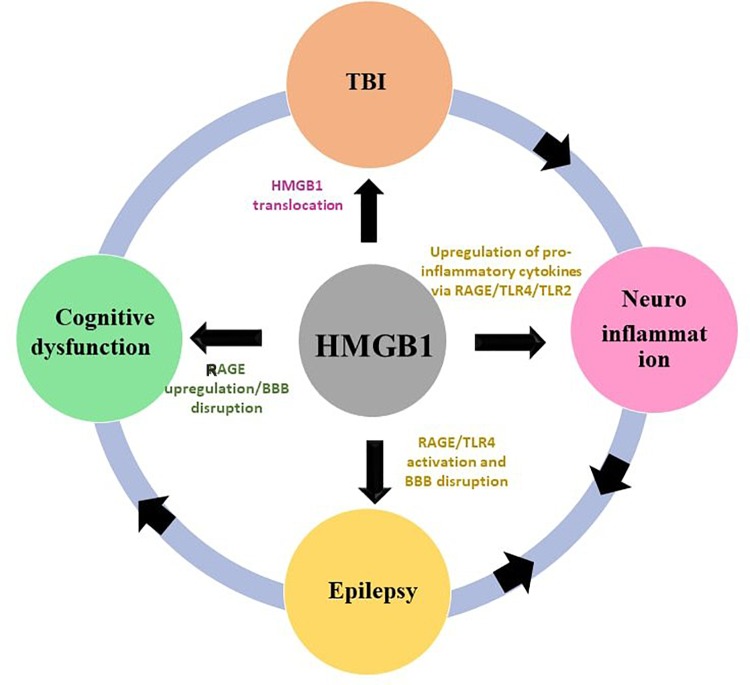
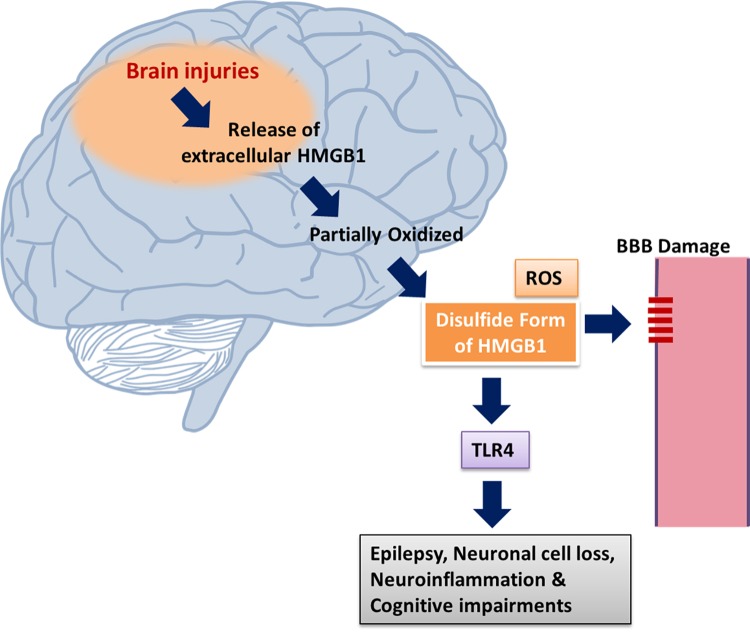
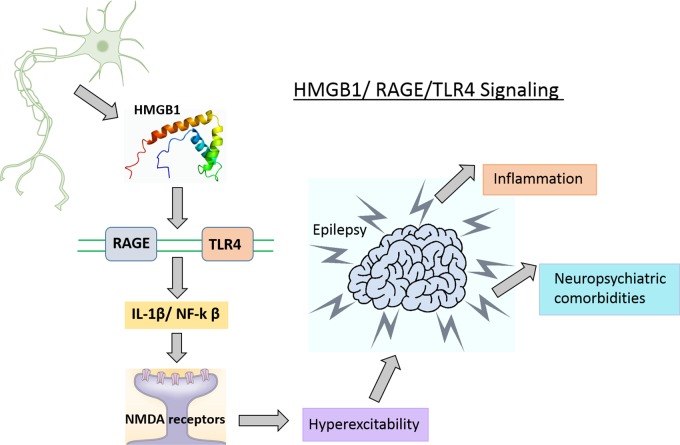
High mobility group box protein 1 (HMGB1) is a ubiquitous nuclear protein released by glia and neurons upon inflammasome activation and activates receptor for advanced glycation end products (RAGE) and toll-like receptor (TLR) 4 on the target cells. HMGB1/TLR4 axis is a key initiator of neuroinflammation. In recent days, more attention has been paid to HMGB1 due to its contribution in traumatic brain injury (TBI), neuroinflammatory conditions, epileptogenesis, and cognitive impairments and has emerged as a novel target for those conditions. Nevertheless, HMGB1 has not been portrayed as a common prognostic biomarker for these HMGB1 mediated pathologies. The current review discusses the contribution of HMGB1/TLR4/RAGE signaling in several brain injury, neuroinflammation mediated disorders, epileptogenesis and cognitive dysfunctions and in the light of available evidence, argued the possibilities of HMGB1 as a common viable biomarker of the above mentioned neurological dysfunctions. Furthermore, the review also addresses the result of preclinical studies focused on HMGB1 targeted therapy by the HMGB1 antagonist in several ranges of HMGB1 mediated conditions and noted an encouraging result. These findings suggest HMGB1 as a potential candidate to be a common biomarker of TBI, neuroinflammation, epileptogenesis, and cognitive dysfunctions which can be used for early prediction and progression of those neurological diseases. Future study should explore toward the translational implication of HMGB1 which can open the windows of opportunities for the development of innovative therapeutics that could prevent several associated HMGB1 mediated pathologies discussed herein.
Overview
The claims and statistics of this paper haven’t been checked yet.
Run the check — free, no account needed. It reads the open-access text and checks the sources it cites.
Integrity signals
Registry
Cites
Statistics
Figures
Verification
Claims the paper makes
The claims and statistics of this paper haven’t been checked yet.
Run the check — free, no account needed. It reads the open-access text and checks the sources it cites.
Claims other papers make about this one
Each is checked against this paper’s own text: does it say what the citing paper says it does?
The source backs part of the claim, not all of it — or backs it for a different population, condition or comparison.
In the citing paper
“elevated HMGB1 levels are found in the brain and CSF of AD patients and aged rodents and correlate with disease severity. 88 , 89 , 90”
From Senescence, brain inflammation, and oligomeric tau drive cognitive decline in Alzheimer's disease: Evidence from clinical and preclinical studies (2024) · cites this paper as [90]
Experimental — accuracy not yet measured
Self-check
Percentages, sums and reported differences re-computed from the paper’s own numbers.
The self-check needs the paper’s full text.
Citations
Cites
1 retracted
Molecular isoforms of high-mobility group box 1 are mechanistic biomarkers for epilepsy
Walker, L. E., Frigerio, F., Ravizza, T., Ricci, E., Tse, K., Jenkins, R. E., Sills, G. J., Jorgensen, A., Porcu, L., Thippeswamy, T., et al. (2017) · Journal of Clinical Investigation · doi:10.1172/jci92001 · Cited by 102
RetractedAmyloid oligomers exacerbate tau pathology in a mouse model of tauopathy
Selenica, M.-L. B., Brownlow, M., Jimenez, J. P., Lee, D. C., Pena, G., Dickey, C. A., Gordon, M. N., & Morgan, D. (2013) · Neurodegenerative Diseases · doi:10.1159/000337230 · Cited by 10,359
From inflammation to sickness and depression: when the immune system subjugates the brain
Dantzer, R., O'Connor, J. C., Freund, G. G., Johnson, R. W., & Kelley, K. W. (2008) · Nature Reviews Neuroscience · doi:10.1038/nrn2297 · Cited by 7,395
Neuroinflammation in Alzheimer's disease
Heneka, M. T., Carson, M. J., Khoury, J. E., Landreth, G. E., Brosseron, F., Feinstein, D. L., Jacobs, A. H., Wyss-Coray, T., Vitorica, J., Ransohoff, R. M., et al. (2015) · The Lancet Neurology · doi:10.1016/s1474-4422(15)70016-5 · Cited by 6,226
Compston, A., & Coles, A. J. (2008) · The Lancet · doi:10.1016/s0140-6736(08)61620-7 · Cited by 4,699
Intestinal microbiota metabolism of l-carnitine, a nutrient in red meat, promotes atherosclerosis
Koeth, R. A., Wang, Z., Levison, B. S., Buffa, J. A., Org, E., Sheehy, B. T., Britt, E. B., Fu, X., Wu, Y., Li, L., et al. (2013) · Nature Medicine · doi:10.1038/nm.3145 · Cited by 4,386
Release of chromatin protein HMGB1 by necrotic cells triggers inflammation
Scaffidi, P., Misteli, T., & Bianchi, M. E. (2002) · Nature · doi:10.1038/nature00858 · Cited by 4,221
HMG-1 as a Late Mediator of Endotoxin Lethality in Mice
Wang, H., Bloom, O., Zhang, M., Vishnubhakat, J. M., Ombrellino, M., Che, J., Frazier, A., Yang, H., Ivanova, S., Borovikova, L. V., et al. (1999) · Science · doi:10.1126/science.285.5425.248 · Cited by 3,386
Yang, Y., Li, S., Yang, Q., Shi, Y., Zheng, M., Liu, Y., Chen, F., Song, G., Xu, H., Wan, T., et al. (2014) · Cellular Physiology and Biochemistry · doi:10.1159/000358696 · Cited by 3,263
High-mobility group box 1 protein (HMGB1): nuclear weapon in the immune arsenal
Lotze, M. T., & Tracey, K. J. (2005) · Nature reviews. Immunology · doi:10.1038/nri1594 · Cited by 2,490
Research works printed but not linked: 1
- Mohamed, 2017, Biochemical and apoptotic biomarkers as indicators of time elapsed since death in experimentally induced traumatic brain injury., SM J. Forensic Res. Criminol., 1
Cited by
Sorted by citations
Items 101–200 of 310
Killingsworth, L. B., & Spudich, S. (2022) · Seminars in Immunopathology · doi:10.1007/s00281-022-00953-5 · Cited by 25
Ma, Q., Zhang, Z., Shim, J., Venkatraman, T. N., Lascola, C. D., Quiñones, Q. J., Mathew, J. P., Terrando, N., & Podgoreanu, M. V. (2019) · Frontiers in Neuroscience · doi:10.3389/fnins.2019.00608 · Cited by 25
Huang, Q., Liu, J., Shi, Z., & Zhu, X. (2020) · Cellular and Molecular Biology · doi:10.14715/cmb/2020.66.3.6 · Cited by 24
mTORC1-Dependent and GSDMD-Mediated Pyroptosis in Developmental Sevoflurane Neurotoxicity
Wang, W., Wan-Qing, Y., Qi-Yun, H., Liu, Y.-S., Qian, S., Jin-Tao, L., Hui, M., Fang, C., & Hui-Ling, Y. (2022) · Molecular Neurobiology · doi:10.1007/s12035-022-03070-4 · Cited by 24
Deng, L., Ma, M., Li, S., Zhou, L., Ye, S., Wang, J., Yang, Q., & Xiao, C. (2022) · Ecotoxicology and Environmental Safety · doi:10.1016/j.ecoenv.2022.114329 · Cited by 24
Xin, Y., Wang, J., Chu, T., Zhou, Y., Liu, C., & Xu, A. (2022) · Brain Sciences · doi:10.3390/brainsci12121732 · Cited by 27
Ved, R., Sharouf, F., Harari, B., Muzaffar, M. W., Manivannan, S., Ormonde, C. F. G., Gray, W., & Zaben, M. (2021) · Scientific Reports · doi:10.1038/s41598-021-84932-0 · Cited by 25
Pathological Targets for Treating Temporal Lobe Epilepsy: Discoveries From Microscale to Macroscale
You, J., Huang, H., Chan, C. T. Y., & Li, L. (2022) · Frontiers in Neurology · doi:10.3389/fneur.2021.779558 · Cited by 24
Koutsodendris, N., Blumenfeld, J. R., Agrawal, A., Traglia, M., Yip, O., Rao, A. T., Kim, M. J., Nelson, M. R., Wang, Y.-H., Grone, B. P., et al. (2023) · Cell Reports · doi:10.1016/j.celrep.2023.113252 · Cited by 25
Paeonol attenuates inflammation by confining HMGB1 to the nucleus
Miao, J., Zhong, J., Lan, J. X., Ye, S., Ye, P., Li, S., You, A., Chen, X., Liu, X., & Li, H. (2021) · Journal of Cellular and Molecular Medicine · doi:10.1111/jcmm.16319 · Cited by 22
Alasmari, F. F., Alhaddad, H., Wong, W., Bell, R. L., & Sari, Y. (2020) · Biomolecules · doi:10.3390/biom10071030 · Cited by 21
Alsaegh, H. Z., Eweis, H., Kamel, F. O., & Alrafiah, A. (2021) · Pharmaceuticals · doi:10.3390/ph14040380 · Cited by 22
Kamiya, N., & Kim, H. K. W. (2020) · JBMR Plus · doi:10.1002/jbm4.10429 · Cited by 20
Niche Cells Crosstalk In Neuroinflammation After Traumatic Brain Injury
Jia, Y., Wang, G., Ye, Y., Kang, E., Chen, H., Guo, Z., & He, X. (2020) · International Journal of Biological Sciences · doi:10.7150/ijbs.52169 · Cited by 20
LPS Primes Brain Responsiveness to High Mobility Group Box-1 Protein
Peek, V., Harden, L. M., Damm, J., Aslani, F., Leisengang, S., Roth, J., Gerstberger, R., Meurer, M., von Köckritz‐Blickwede, M., Schulz, S., et al. (2021) · Pharmaceuticals · doi:10.3390/ph14060558 · Cited by 21
Role of high mobility group box protein 1 in depression: A mechanistic and therapeutic perspective
Wang, S., Guan, Y., Zhu, Y., & Wang, M. (2022) · World Journal of Psychiatry · doi:10.5498/wjp.v12.i6.779 · Cited by 20
Vitali, R., Mancuso, A. B., Palone, F., Pioli, C., Cesi, V., Negroni, A., Cucchiara, S., Oliva, S., Carissimi, C., Laudadio, I., et al. (2023) · International Journal of Molecular Sciences · doi:10.3390/ijms24087096 · Cited by 20
Gandasasmita, N., Li, J., Loane, D. J., & Semple, B. D. (2023) · Journal of Neurotrauma · doi:10.1089/neu.2023.0453 · Cited by 23
The Potential Therapeutic Role of the HMGB1-TLR Pathway in Epilepsy
Wang, S., Guan, Y., & Li, T. (2020) · Current Drug Targets · doi:10.2174/1389450121999200729150443 · Cited by 21
Paudel, Y. N., Othman, I., & Shaikh, M. F. (2021) · Frontiers in Pharmacology · doi:10.3389/fphar.2020.613009 · Cited by 20
Self-citationZhao, Y., Zhou, Y., & Chen, J. (2023) · Chinese Journal of Traumatology · doi:10.1016/j.cjtee.2023.08.003 · Cited by 21
High Mobility Group Box Protein (HMGB1): A Potential Therapeutic Target for Diabetic Encephalopathy
Dash, U. K., Mazumdar, D., & Singh, S. (2024) · Molecular Neurobiology · doi:10.1007/s12035-024-04081-z · Cited by 20
Ghosh, D., Singh, A., Kumar, A., & Sinha, N. (2022) · Immunologic Research · doi:10.1007/s12026-022-09295-8 · Cited by 19
HMGB1: Different secretion pathways with pivotal role in epilepsy and major depressive disorder
Shokr, M. M., & Eladawy, R. M. (2025) · Neuroscience · doi:10.1016/j.neuroscience.2025.02.023 · Cited by 18
Koh, H. J., & Joo, J. D. (2025) · Biomedicines · doi:10.3390/biomedicines13020506 · Cited by 18
Makris, G., Chouliaras, G. L., Apostolakou, F., Papageorgiou, C., Chrousos, G. P., Papassotiriou, I., & Pervanidou, P. (2021) · Children · doi:10.3390/children8060478 · Cited by 18
Wang, W., Yi, W.-Q., Liu, Y., Hu, Q., Qian, S., Liu, J., Mao, H. Z., Cai, F., & Yang, H. (2022) · Neuroscience · doi:10.1016/j.neuroscience.2022.11.005 · Cited by 18
Zhang, J., Hom, K., Zhang, C., Nasr, M., Gerzanich, V., Zhang, Y., Tang, Q., Xue, F., Simard, J. M., & Zhao, Y. (2024) · Pathogens · doi:10.3390/pathogens13010075 · Cited by 24
Sevoflurane-induced cognitive decline in aged mice: Involvement of toll-like receptors 4
Fei, X., Wang, J., Wu, Y., Dong, N., & Sheng, Z.-Y. (2020) · Brain Research Bulletin · doi:10.1016/j.brainresbull.2020.08.030 · Cited by 18
The Involvement of RAGE and Its Ligands during Progression of ALS in SOD1 G93A Transgenic Mice
Nowicka, N., Szymanska, K., Juranek, J. K., Zglejc‐Waszak, K., Korytko, A., Załęcki, M., Chmielewska‐Krzesińska, M., Wa̧sowicz, K., & Wojtkiewicz, J. (2022) · International Journal of Molecular Sciences · doi:10.3390/ijms23042184 · Cited by 18
Endogenous Ligands of TLR4 in Microglia: Potential Targets for Related Neurological Diseases
Chen, B., & Di, B. (2024) · Current Drug Targets · doi:10.2174/0113894501316051240821060249 · Cited by 16
Dysbiosis in gastrointestinal pathophysiology: Role of the gut microbiome in Gulf War Illness
Slevin, E., 小山, 幸., Harrison, K., Wan, Y., Klaunig, J. E., Wu, C., Shetty, A. K., & Meng, F. (2023) · Journal of Cellular and Molecular Medicine · doi:10.1111/jcmm.17631 · Cited by 16
Neuroinflammation catching nanobubbles for microglia-neuron unit modulation against epilepsy
Wang, X., Liu, Y., Li, M., Ju, Y., Tang, J., Chen, T., Lin, X., Gu, N., & Yang, F. (2023) · Biomaterials · doi:10.1016/j.biomaterials.2023.122302 · Cited by 17
Mao, Q., Liang, B., Leng, Z., Ma, W., Chen, Y., & Xie, Y. (2024) · Brain Research Bulletin · doi:10.1016/j.brainresbull.2024.111086 · Cited by 18
Frank, M. G., Baratta, M. V., Zhang, K., Fallon, I. P., Pearson, M. A., Liu, G., Hutchinson, M. R., Watkins, L. R., Goldys, E. M., & Maier, S. F. (2020) · Brain Behavior and Immunity · doi:10.1016/j.bbi.2020.07.042 · Cited by 16
Ismael, S., & Ishrat, T. (2021) · NeuroMolecular Medicine · doi:10.1007/s12017-021-08687-7 · Cited by 16
An overview about neurological diseases in India – A theranostics approach
Vellingiri, B. (2023) · Aging and Health Research · doi:10.1016/j.ahr.2023.100177 · Cited by 16
Wenzel, T. J., Kwong, E. H., Bajwa, E., & Klegeris, A. (2020) · CNS & Neurological Disorders - Drug Targets · doi:10.2174/1871527319666200702143719 · Cited by 16
Traumatic Brain Injury and Immunological Outcomes: the double-edged Killer
Datta, S., Lin, F., Jones, L., Pingle, S. C., Kesari, S., & Ashili, S. (2023) · Future Science OA · doi:10.2144/fsoa-2023-0037 · Cited by 15
Ngadimon, I. W., Seth, E. A., & Shaikh, M. F. (2024) · Frontiers in Bioscience-Landmark · doi:10.31083/j.fbl2906229 · Cited by 15
Self-citationTao, S., Sun, J., Hao, F., Tang, W., Li, X., Guo, D. L., & Liu, X. (2020) · Journal of Stroke and Cerebrovascular Diseases · doi:10.1016/j.jstrokecerebrovasdis.2020.104644 · Cited by 15
Synthesis of 3-O-Sulfated Heparan Sulfate Oligosaccharides Using 3-O-Sulfotransferase Isoform 4
Li, J., Su, G., Xu, Y., Arnold, K., Pagadala, V., Wang, C., & Liu, J. (2021) · ACS Chemical Biology · doi:10.1021/acschembio.1c00474 · Cited by 15
Shi, L., Liu, S., Chen, J., Wang, H., & Wang, Z. (2024) · Neural Regeneration Research · doi:10.4103/nrr.nrr-d-24-00810 · Cited by 15
IL-1β and HMGB1 in Epileptogenesis: Recent Advances and Clinical Translation
Geng, H., Sha, L., & Chen, L. (2025) · Pharmaceuticals · doi:10.3390/ph18101522 · Cited by 14
Meta-analysis of HMGB1 levels in the cerebrospinal fluid and serum of patients with epilepsy
Chen, Y., Chen, X., & Liang, Y. (2023) · Neurological Sciences · doi:10.1007/s10072-023-06720-0 · Cited by 14
Travaglianti, S., Alotaibi, A., Wong, W., Abou-Gharbia, M. A., Childers, W. E., & Sari, Y. (2024) · Brain Research Bulletin · doi:10.1016/j.brainresbull.2024.110935 · Cited by 14
Soytürk, H., Önal, C., Kılıç, Ü., Türkoğlu, Ş. A., & Ayaz, E. (2024) · Journal of Cellular and Molecular Medicine · doi:10.1111/jcmm.18542 · Cited by 14
The Cannabinoid Receptor 1 Reverse Agonist AM251 Ameliorates Radiation-Induced Cognitive Decrements
Parihar, V. K., Syage, A. R., Flores, L., Lilagan, A., Allen, B. D., Angulo, M. C., Song, J., Smith, S. M., Arechavala, R. J., Giedzinski, E., et al. (2021) · Frontiers in Cellular Neuroscience · doi:10.3389/fncel.2021.668286 · Cited by 14
Zhao, Y., Wei, X., Li, W., Shan, C., Song, J., & Zhang, M. (2020) · BioMed Research International · doi:10.1155/2020/5946205 · Cited by 14
Innate immune activation and neuroinflammatory pathways in Epilepsy
Solanki, P., & Jha, S. (2025) · Cytokine & Growth Factor Reviews · doi:10.1016/j.cytogfr.2025.06.009 · Cited by 17
Role of astrocytes in the pathogenesis of perinatal brain injury
Li, L., Cui, X., Zhu, B., Zhou, L., Guo, Y., Liu, T., & Shi, Y. (2025) · Molecular Medicine · doi:10.1186/s10020-025-01328-w · Cited by 16
Gulmammadli, N., Konukoğlu, D., Kurtuluş, E. M., Tezen, D., Erbay, M. İ., & Bozluolçay, M. (2022) · Current Alzheimer Research · doi:10.2174/1567205020666221226140721 · Cited by 13
Sarkar, S. (2024) · Naunyn-Schmiedeberg s Archives of Pharmacology · doi:10.1007/s00210-024-03595-6 · Cited by 13
Xu, B., Chandrasekar, A., Heuvel, F. O., Powerski, M. J., Nowak, A. J., Noack, L., Omari, J., Huber-Lang, M. S., Roselli, F., & Relja, B. (2020) · International Journal of Molecular Sciences · doi:10.3390/ijms21218181 · Cited by 13
Fast Maturation of Splenic Dendritic Cells Upon TBI Is Associated With FLT3/FLT3L Signaling
Zhang, J., Li, Z., Chandrasekar, A., Li, S., Ludolph, A. C., Boeckers, T. M., Huber-Lang, M. S., Roselli, F., & Heuvel, F. O. (2022) · Frontiers in Immunology · doi:10.3389/fimmu.2022.824459 · Cited by 14
An overview of high-mobility group box 1, a potent pro-inflammatory cytokine in asthma
Kianian, F., Kadkhodaee, M., Sadeghipour, H. R., Karimian, S. M., & Seifi, B. (2020) · Journal of Basic and Clinical Physiology and Pharmacology · doi:10.1515/jbcpp-2019-0363 · Cited by 13
Masai, K., Kuroda, K., Isooka, N., Kikuoka, R., Murakami, S., Kamimai, S., Wang, D., Liu, K., Miyazaki, I., Nishibori, M., et al. (2021) · Neurotoxicity Research · doi:10.1007/s12640-021-00402-5 · Cited by 13
Gut Microbes Regulate Innate Immunity and Epilepsy
Zhang, L., Li, S., Tai, Z., Yu, C., & Xu, Z. (2022) · Frontiers in Neuroscience · doi:10.3389/fnins.2022.870197 · Cited by 11
Tian, Y., Wang, S., Tong, W., Wang, H., Zhang, Y., & Teng, B. (2023) · International Immunopharmacology · doi:10.1016/j.intimp.2023.111234 · Cited by 12
Seol, S.-I., Davaanyam, D., Oh, S.-A., Lee, E. H., Han, P., Kim, S., & Lee, J.-K. (2024) · Cells · doi:10.3390/cells13020189 · Cited by 15
Chi, G., Lu, J., He, T., Wang, Y., Zhou, X., Zhang, Y., & Qiu, L. (2024) · Scientific Reports · doi:10.1038/s41598-024-72947-2 · Cited by 12
Insights into the Impact of Gold Nanoclusters Au10SG10 on Human Microglia.
Maysinger, D., Maršić, Ž. S., Gran, E. R., Shobo, A., Macairan, J.-R., Zhang, I., Bakulić, M. P., Antoine, R., Multhaup, G., & Bonačić-Koutecký, V. (2022) · ACS Chemical Neuroscience · doi:10.1021/acschemneuro.1c00621 · Cited by 10
de Assis, P. M., Fávero, A., Menegasso, J. F., Meinel, R. S., Marion, G. M., Nunes, V. S., Goliatt, P. V. Z. C., da Silva, A. D., Dutra, R. C., & Raposo, N. R. B. (2020) · Life Sciences · doi:10.1016/j.lfs.2020.117538 · Cited by 12
Potential Biomarkers of impulsivity in mild traumatic brain injury: A pilot study
Cardoso, M. G. D. F., de Barros, J. L. V. M., de Queiroz, R. A. B., Rocha, N. P., Silver, C., da Silva, A. S., da Silva, E. W. M., Roque, I. G., Carvalho, J. D. L., dos Santos, L. F., et al. (2023) · Behavioural Brain Research · doi:10.1016/j.bbr.2023.114457 · Cited by 11
Peng, R., Zuo, S., Li, X., Huang, Y., Chen, S., Zou, X., Long, H., Chen, M., Yang, Y., Yuan, H., et al. (2024) · iScience · doi:10.1016/j.isci.2024.108834 · Cited by 11
Ye, X., She, F.-Z., Yu, D., Wu, L.-Q., Tang, Y. J., Wu, B.-Z., Dong, S.-W., Dai, J.-M., Zhou, X., Liu, Z.-G., et al. (2024) · BMC Pediatrics · doi:10.1186/s12887-024-04533-4 · Cited by 10
Zhu, M., Ying, Q., Wang, L., Zhou, R., & Mei, Y. (2024) · BMC Geriatrics · doi:10.1186/s12877-024-05543-8 · Cited by 10
Cynthia Marie-claire, A., Courtin, C., Curis, E., Bouaziz-Amar, É., Laplanche, J., Jacob, A., Étain, B., Blanchard, A., & Bellivier, F. (2019) · Journal of Neuroimmunology · doi:10.1016/j.jneuroim.2019.576993 · Cited by 10
Koo, Y., Kim, H., Yun, T., Jung, D., Kang, J., Chang, D., Na, K., Yang, M., & Kang, B. (2020) · Journal of Veterinary Internal Medicine · doi:10.1111/jvim.15940 · Cited by 10
Li, X., Pierre, K., Yang, Z., Nguyen, L. T., Johnson, G., Venetucci, J., Torres, I., Lucke-Wold, B. P., Shi, Y., Boutté, A. M., et al. (2021) · Neurotrauma Reports · doi:10.1089/neur.2021.0006 · Cited by 10
Plasma Kallikrein as a Modulator of Liver Injury/Remodeling
Ahmed, I. A., Jaffa, M. A., Moussa, M., Hatem, D., El‐Achkar, G. A., Sayegh, R. A., Karam, M., Hamade, E., Habib, A., & Jaffa, A. A. (2021) · Frontiers in Pharmacology · doi:10.3389/fphar.2021.715111 · Cited by 10
Impact of SARS-CoV-2 on Host Factors Involved in Mental Disorders
Rhoades, R. E., Solomon, S., Johnson, C., & Teng, S. (2022) · Frontiers in Microbiology · doi:10.3389/fmicb.2022.845559 · Cited by 9
Li, X.-L., Wang, S., Tang, C., Ma, H.-W., Cheng, Z., Zhao, M., Sun, W.-J., Wang, X.-F., Wang, M.-Y., Li, T., et al. (2022) · ASN NEURO · doi:10.1177/17590914221136662 · Cited by 9
Lin, T., Jiang, C., Sheng, L., Wan, L., Fan, W., Li, J.-C., Sun, X., Xu, C., Hu, L., Wu, X.-F., et al. (2023) · Neural Regeneration Research · doi:10.4103/1673-5374.366490 · Cited by 9
Sterile Inflammation, Potential Target in Aneurysmal Subarachnoid Hemorrhage
Chaudhry, S. R., Lehečka, M., Niemela, M. R., & Muhammad, S. (2018) · World Neurosurgery · doi:10.1016/j.wneu.2018.12.061 · Cited by 9
Immune Alterations Following Neurological Disorders: A Comparison of Stroke and Seizures
Ruhnau, J., Tennigkeit, J., Ceesay, S., Koppe, C., Muszelewski, M., Grothe, S., Flöel, A., Süße, M., Dressel, A., von Podewils, F., et al. (2020) · Frontiers in Neurology · doi:10.3389/fneur.2020.00425 · Cited by 9
Shahsavani, N., Alizadeh, A., Kataria, H., & Karimi‐Abdolrezaee, S. (2021) · Experimental Neurology · doi:10.1016/j.expneurol.2021.113817 · Cited by 8
Sun, J., Wang, G., Wang, H., Hua, F., Song, Z., Jin, Z., Liu, J., Xin, H., & Zhang, M. (2022) · NPG Asia Materials · doi:10.1038/s41427-021-00352-6 · Cited by 9
Zhu, M., Mei, Y., Zhou, R., Wang, L., & Zhang, X. (2023) · BMC Geriatrics · doi:10.1186/s12877-023-04514-9 · Cited by 8
Joe, Y., Jun, J. H., Oh, J. E., & Lee, J. R. (2024) · Korean Journal of Anesthesiology · doi:10.4097/kja.23796 · Cited by 8
Zou, Y., Wu, Y., An, W., Nie, H., Hui, S., Liu, C., & Deng, T. (2024) · Advances in Clinical and Experimental Medicine · doi:10.17219/acem/189227 · Cited by 8
Khrieba, M. O., Hegazy, S. K., Fathi, W., & El-Haggar, S. M. (2025) · International Immunopharmacology · doi:10.1016/j.intimp.2025.114689 · Cited by 8
Autophagy and Cell Death in Alzheimer’s, Parkinson’s and Prion Diseases
Ribarič, S., & Ribarič, I. M. (2019) · IntechOpen eBooks · doi:10.5772/intechopen.86706 · Cited by 9
de Liyis, B. G., Tandy, S. G., Endira, J. F., Putri, K. A., & Utami, D. K. I. (2022) · The Egyptian Journal of Neurology Psychiatry and Neurosurgery · doi:10.1186/s41983-022-00557-8 · Cited by 9
Menteşe, A., Demir, S., Yuluğ, E., Küçük, H., Alemdar, N. T., Demir, E. A., & Aliyazıcıoğlu, Y. (2024) · Reproductive Toxicology · doi:10.1016/j.reprotox.2024.108661 · Cited by 8
High Mobility Group Box 1 Ameliorates Cognitive Impairment in the 3×Tg-AD Mouse Model
Zhang, J. C., Hua, X., Gu, J., Chen, F., Gu, J., Gong, C., Liu, F., & Dai, C. (2020) · Journal of Alzheimer s Disease · doi:10.3233/jad-191110 · Cited by 8
Tepebaşı, M. Y., Aşçı, H., Koşar, P. A., Dinçer, E. N., Selçuk, E., Kolay, Ö., & Huseynov, I. (2025) · Molecular Neurobiology · doi:10.1007/s12035-025-04764-1 · Cited by 7
Sun, M., Yuan, Z., Li, M., Ji, X., Huang, L., Yang, Y., Qiu, X., Zhang, S., Jiang, X., Lv, Q., et al. (2025) · Phytomedicine · doi:10.1016/j.phymed.2025.156770 · Cited by 7
“Targeting Neuroimmune Pathways in Epilepsy: Advances in Mechanisms and Emerging Therapeutics”
Ravikumar, M., Uvarajan, D., & Durairaj, B. (2025) · Neurochemical Research · doi:10.1007/s11064-025-04489-6 · Cited by 7
Dong, L., Jiang, N., Bai, J., Li, Y., Song, Z., Liu, X., & Zhang, C. (2023) · Neurochemical Research · doi:10.1007/s11064-023-03997-7 · Cited by 7
Mousazadeh, B., Sharebiani, H., Taheri, H., Valizedeh, N., & Fazeli, B. (2019) · Clinical and Molecular Allergy · doi:10.1186/s12948-019-0114-2 · Cited by 7
Circulating HMGB1 in acute ischemic stroke and its association with post-stroke cognitive impairment
Liu, Z., Yang, W., Chen, J., & Wang, Q. (2024) · PeerJ · doi:10.7717/peerj.17309 · Cited by 6
Shen, P., Zhang, L., Jiang, X., Raj, R., Yu, B., & Zhang, J. (2024) · Fitoterapia · doi:10.1016/j.fitote.2024.106280 · Cited by 8
Zhao, K., Xiang, L., Yang, S., Chen, X., Yang, X., Dong, J., Wu, S., Yang, S., Zhang, M., & Hu, W. (2025) · CNS Neuroscience & Therapeutics · doi:10.1111/cns.70406 · Cited by 6
Pi, W., Cao, L., Wang, Q., Yong, V. W., Yang, L., & Xue, M. (2026) · Brain Hemorrhages · doi:10.1016/j.hest.2026.03.002 · Cited by 6
Marcatti, M., Labastida, J. A., Tang, T. Z., Ahmad, A., Payne, C. K., Schwartz, N., Villarreal, P., Solomon, O. D., Vargas, G., Wu, P., et al. (2026) · Proceedings of the National Academy of Sciences of the United States of America · doi:10.1073/pnas.2527009123 · Cited by 6
Jung, H., Youn, D. H., Park, J. J., & Jeon, J. P. (2023) · Life · doi:10.3390/life13040881 · Cited by 6
Fan, W., Yuan, W., Ding, X., & Zhu, L. (2021) · Virulence · doi:10.1080/21505594.2021.1926409 · Cited by 6
Zeylan, M. E., Senyuz, S., Picón-Pagès, P., García-Elías, A., Tajes, M., Muñoz, F. J., Oliva, B., García‐Ojalvo, J., Barbu, E., Vicente, R., et al. (2024) · Journal of Proteome Research · doi:10.1021/acs.jproteome.3c00289 · Cited by 8
Yang, L., Wang, J., Wang, X., Li, B., Zhao, D., Li, C., Li, C., Cui, Y., Chen, Q., Yang, Y., et al. (2026) · Free Radical Biology and Medicine · doi:10.1016/j.freeradbiomed.2026.01.022 · Cited by 5
Metadata
- Authors
- Paudel, Y. N., Shaikh, M. F., Chakraborti, A., Kumari, Y., Aledo-Serrano, Á., Aleksovska, K., Alvim, M. K. M., & Othman, I.
- Affiliations
- Monash University Malaysia (MY)
- University of Alabama at Birmingham (US)
- Ss. Cyril and Methodius University in Skopje (MK)
- Universidade Estadual de Campinas (UNICAMP) (BR)
- Corresponding author
- Shaikh, Mohd. Farooq
- ORCID
- Venue
- Frontiers in Neuroscience
- Publisher
- Frontiers Media SA
- Published
- 2018-09-11
- Volume
- 12
- Pages
- 628-628
- ISSN
- 1662-453X (ISSN-L)
- PMC
- PMC6142787
- OpenAlex
- W2889849480
- Cited by
- 311
- References
- 166
- Citations by year
- 2026: 38 · 2025: 29 · 2024: 36 · 2023: 33 · 2022: 56 · 2021: 45 · 2020: 53 · 2019: 19 · 2018: 2
- FWCI
- 3.87
- Type
- journal article
- Language
- en
- Open access
- gold
- doi.org
- Locations
- Frontiers in Neuroscience (publishedVersion, cc-by)
- Europe PMC (PubMed Central) (publishedVersion, cc-by)
- PubMed Central (publishedVersion, cc-by)
- PubMed (publishedVersion)
- Monash University Research Portal (Monash University) (submittedVersion, cc-by)
- Charles Sturt University Research Output (CRO) (submittedVersion, cc-by)
- DOAJ (DOAJ: Directory of Open Access Journals) (submittedVersion, cc-by-sa)
- Funders
- Monash University
- Monash University Malaysia
- Jaypee University of Information Technology
- Topics
- Life Sciences › Biochemistry, Genetics and Molecular Biology › Clinical Biochemistry › Advanced Glycation End Products research
- Life Sciences › Neuroscience › Neurology › Neuroinflammation and Neurodegeneration Mechanisms
- Health Sciences › Medicine › Clinical Neurology › Traumatic Brain Injury and Neurovascular Disturbances
- Keywords
- HMGB1, traumatic brain injury, neuroinflammation, epileptogenesis, cognitive impairment, TLR4, RAGE, inflammasome, prognostic factors, neuroinflammatory disorders
About these checks
Registry, retraction, Cites and statistics results are computed, not judged, with one exception: a printed reference that no index lists is read once by a model before it counts as a citation error. Claims are extracted by a model and kept only when their quote appears verbatim in the text; each cited source is then checked, with a model’s help, for whether it says what the claim relies on. Those verdicts can be wrong — read the claim’s quote and the cited source before relying on one.
Statistics and arithmetic are recomputed, not judged.
Confidence bands are shown only for fields calibrated on our annotated test set. None is calibrated yet, so no band is shown.
What counts as a claim ›How we measure confidence ›How we check this ›
Are you an author, or do you see a problem with this page? Request a review
