

The DOI matches its Crossref record; 339 of the 343 references it cites were found in a registry or an index.
Clusterin in Alzheimer’s Disease: Mechanisms, Genetics, and Lessons From Other Pathologies
Open accessAbstract
Clusterin (CLU) or APOJ is a multifunctional glycoprotein which has been implicated in several physiological and pathological states, including Alzheimer’s disease (AD). With a prominent extracellular chaperone function, additional roles have been discussed for clusterin, including lipid transport and immune modulation, and it is involved in pathways common to several diseases such as cell death and survival, oxidative stress, and proteotoxic stress. Although clusterin is normally a secreted protein, it has also been found intracellularly under certain stress conditions. Multiple hypotheses have been proposed regarding the origin of intracellular clusterin, including specific biogenic processes leading to alternative transcripts and protein isoforms, but these lines of research are incomplete and contradictory. Current consensus is that intracellular clusterin is most likely to have exited the secretory pathway at some point or to have re-entered the cell after secretion. Clusterin’s relationship with amyloid beta (Aβ) has been of great interest to the AD field, including clusterin’s apparent role in altering Aβ aggregation and/or clearance. Additionally, clusterin has been more recently identified as a mediator of Aβ toxicity, as evidenced by the neuroprotective effect of CLU knockdown and knockout in rodent and human iPSC-derived neurons. CLU is also the third most significant genetic risk factor for late onset AD and several variants have been identified in CLU. Although the exact contribution of these variants to altered AD risk is unclear, some have been linked to altered CLU expression at both mRNA and protein levels, altered cognitive and memory function, and altered brain structure. The apparent complexity of clusterin’s biogenesis, the lack of clarity over the origin of the intracellular clusterin species, and the number of pathophysiological functions attributed to clusterin have all contributed to the challenge of understanding the role of clusterin in AD pathophysiology. Here we highlight clusterin’s relevance to AD by discussing the evidence linking clusterin to AD, as well as drawing parallels on how the role of clusterin in other diseases and pathways may help us understand its biological function(s) in association with AD.
Overview
The claims and statistics of this paper haven’t been checked yet.
Run the check — free, no account needed. It reads the open-access text and checks the sources it cites.
Integrity signals
Registry
Cites
Statistics
Figures
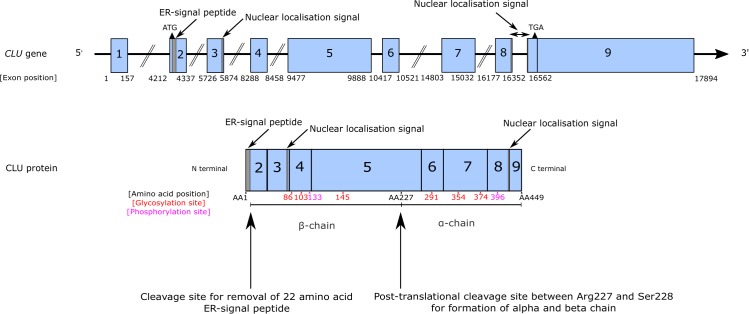
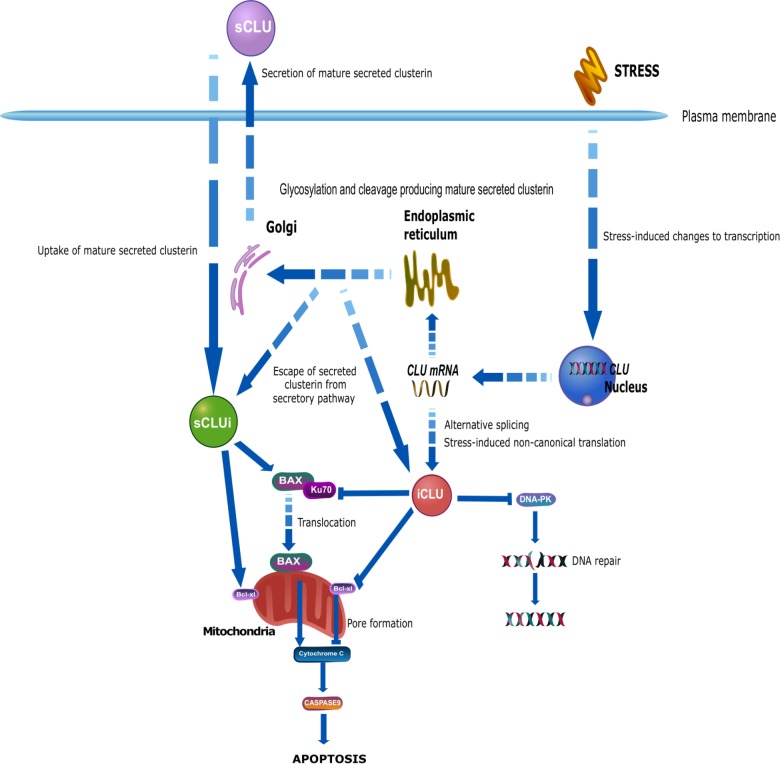
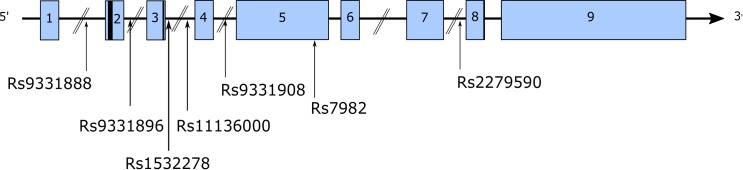
Verification
Claims the paper makes
The claims and statistics of this paper haven’t been checked yet.
Run the check — free, no account needed. It reads the open-access text and checks the sources it cites.
Claims other papers make about this one
Each is checked against this paper’s own text: does it say what the citing paper says it does?
The source backs part of the claim, not all of it — or backs it for a different population, condition or comparison.
In the citing paper
“Similarly, several genes reported to be involved in Aβ catabolism, such as RAB5A, RAB11A, CLU, and LRP2 (49–53), were also down-regulated in AD monocytes, suggesting the impaired Aβ catabolism in AD monocytes.”
From Understanding monocyte-driven neuroinflammation in Alzheimer’s disease using human cortical organoid microphysiological systems (2025) · cites this paper as [52]
Experimental — accuracy not yet measuredThe cited source says what the claim attributes to it.
In the citing paper
“Genetic variants of many of the differentially expressed genes identified in this study, such as CLU and APOE, have been associated with increased Alzheimer’s disease risk58,59.”
From mTORC1 drives cell-autonomous astrocyte reactivity in tuberous sclerosis (2026) · cites this paper as [58]
Self-check
Percentages, sums and reported differences re-computed from the paper’s own numbers.
The self-check needs the paper’s full text.
Citations
Cites
Corder, E. H., Saunders, A. M., Strittmatter, W. J., Schmechel, D. E., Gaskell, P. C., Small, G. W., Roses, A. D., Haines, J. L., & Pericak-Vance, M. A. (1993) · Science · doi:10.1126/science.8346443 · Cited by 9,429
Oxidants, oxidative stress and the biology of ageing
Finkel, T., & Holbrook, N. J. (2000) · Nature · doi:10.1038/35041687 · Cited by 9,413
Finding the missing heritability of complex diseases
Manolio, T. A., Collins, F. S., Cox, N. J., Goldstein, D. B., Hindorff, L. A., Hunter, D. J., McCarthy, M. I., Ramos, E. M., Cardon, L. R., Chakravarti, A., et al. (2009) · Nature · doi:10.1038/nature08494 · Cited by 8,336
Mitochondrial Dysfunction and Oxidative Stress in Neurodegenerative Diseases
Lin, M. T., & Beal, M. F. (2006) · Nature · doi:10.1038/nature05292 · Cited by 6,455
O'Leary, N. A., Wright, M. W., Brister, J. R., Ciufo, S., Haddad, D., McVeigh, R., Rajput, B., Robbertse, B., Smith-White, B., Ako-Adjei, D., et al. (2016) · Nucleic Acids Research · doi:10.1093/nar/gkv1189 · Cited by 6,357
Neuroinflammation in Alzheimer's disease
Heneka, M. T., Carson, M. J., Khoury, J. E., Landreth, G. E., Brosseron, F., Feinstein, D. L., Jacobs, A. H., Wyss-Coray, T., Vitorica, J., Ransohoff, R. M., et al. (2015) · The Lancet Neurology · doi:10.1016/s1474-4422(15)70016-5 · Cited by 6,226
Cillà, S. D., Farruggio, S., Vujosevic, S., Raina, G., Filippini, D. A., Gatti, V., Clemente, N., Mary, D., Vezzola, D., Casini, G., et al. (2017) · Cellular Physiology and Biochemistry · doi:10.1159/000479441 · Cited by 5,154
2016 Alzheimer's disease facts and figures
Alzheimer's Association (2016) · Alzheimer's & Dementia · doi:10.1016/j.jalz.2016.03.001 · Cited by 5,069
Zhang, Y., Chen, K., Sloan, S. A., Bennett, M. L., Scholze, A. R., O'Keeffe, S., Phatnani, H. P., Guarnieri, P., Caneda, C., Ruderisch, N., et al. (2014) · The Journal of Neuroscience · doi:10.1523/jneurosci.1860-14.2014 · Cited by 4,875
The BCL-2 protein family: opposing activities that mediate cell death
Youle, R. J., & Strasser, A. (2007) · Nature Reviews Molecular Cell Biology · doi:10.1038/nrm2308 · Cited by 4,806
Research works printed but not linked: 2
- Biffi, 2010, Genetic variation and neuroimaging measures in AD., Arch. Neurol., 67, 677, 10.1001/archneurol.2010.108.Genetic · DOI
- Guerreiro, 2013, TREM2 variants in Alzheimer’s disease., N. Engl. J. Med., 368, 117, 10.1056/NEJMoa1211851 · DOI · Paper page
Cited by
Sorted by citations
Items 301–381 of 381
Aya, B. Y., Shehata, R. R., Alaa, A.-E. S., Amira, K. A., Fatma, A.-E. S., & Gomaa, A. S. (2021) · Egyptian Journal of Dermatology and Venerology · doi:10.4103/ejdv.ejdv_7_21 · Cited by 1
Dem-Aging: autophagy-related pathologies and the “two faces of dementia”
Gammaldi, N., Doccini, S., Bernardi, S., Marchese, M., Cecchini, M. G., Ceravolo, R., Rapposelli, S., Ratto, G., Rocchiccioli, S., Pezzini, F., et al. (2023) · Neurogenetics · doi:10.1007/s10048-023-00739-3 · Cited by 1
Role of Apolipoproteins in Neurodegenerative Diseases
KAÇAMAK, P., & Elmas, Ç. (2023) · Journal of Gazi University Health Sciences Institute · doi:10.59124/guhes.1383395 · Cited by 1
Singh, V., & Mishra, V. N. (2021) · Biomedical and Biotechnology Research Journal (BBRJ) · doi:10.4103/bbrj.bbrj_180_21 · Cited by 1
Shafi, V., & Siddiqui, I. (2024) · Research Square · doi:10.21203/rs.3.rs-4408464/v1 · Cited by 1
Oosterlynck, M., Leroux, É., Namasivayam, B., Bouillet, T., Caillierez, R., Loyens, A., Mazur, D., Perbet, R., Lefebvre, C., Aboulouard, S., et al. (2025) · Research Square · doi:10.21203/rs.3.rs-6242794/v1 · Cited by 1
Lee, H., Sun, H., Cao, X., Karaahmet, B., Li, Z., Ulrich-Klein, H., Taga, M. F., Wang, G., Jager, P. L. D., Bennett, D. A., et al. (2025) · bioRxiv (Cold Spring Harbor Laboratory) · doi:10.1101/2025.09.24.678397 · Cited by 1
Ravikumar, V., Maddox, A., Kulkarni, R., Hara, T., Rao, A. U. K., & Al‐Holou, W. N. (2025) · bioRxiv (Cold Spring Harbor Laboratory) · doi:10.1101/2025.10.17.683110 · Cited by 1
Zhang, Q., Yue, Y., & Zheng, R. (2022) · PubMed Central · doi:10.1097/cm9.0000000000002065
A novel bioinformatics approach to reveal the role of circadian oscillations in AD developmentPreprint
Ji, Z., Shang, D., Kim, P., Yang, M., Wu, S., Zhao, W., Kim, E., Wirianto, M., Chen, Z., Yoo, S. H., et al. (2020) · bioRxiv (Cold Spring Harbor Laboratory) · doi:10.1101/2020.07.16.207357 · Cited by 1
Banerjee, S., Ghoshal, S., Clemence, G., DeMars, K. M., Yang, C., Niehoff, M. L., Nguyen, A. D., Jayanth, P., Hoelscher, B. A., Xu, F., et al. (2021) · Research Square · doi:10.21203/rs.3.rs-99159/v2
Fiani, B., Covarrubias, C., & Jarrah, R. M. (2021) · Cureus · doi:10.7759/cureus.16003
Alzheimer’s disease as a syndrome of overloaded amyloidic synaptic tagging in memory networksPreprint
Murphy, N. (2021) · OSF Preprints (OSF Preprints) · doi:10.31219/osf.io/7gsaz
Candesartan treatment preserves learning and working memory in female TgF344-AD ratsPreprint
Sinon, C. G., Carter, K., Ma, J., Bagchi, P., Zhang, X., Williams, P.-J. C., Dammer, E. B., Seyfried, N. T., García, P. S., Sutliff, R. L., et al. (2022) · bioRxiv (Cold Spring Harbor Laboratory) · doi:10.1101/2022.06.14.496112
Bace1 regulates expression of Clusterin in astrocytes for enhancing clearance of β-amyloid peptidesPreprint
Yan, R., Zhou, J., Singh, N., Galske, J., Hudobenko, J., & Hu, X. (2022) · Research Square · doi:10.21203/rs.3.rs-2042855/v1
Brain cross-omics integration in Alzheimer’s diseasePreprint
Eteleeb, A. M., Novotny, B. C., Soriano‐Tárraga, C., Sohn, C., Dhungel, E., Brase, L., Nallapu, A., Buss, J., Farias, F., Bergmann, K., et al. (2022) · medRxiv · doi:10.1101/2022.12.10.22283295
Yao, R., Ren, M., Dong, H., Wang, H., Jia, W., Ding, X., Fu, K., Wang, A., Zhu, X., Gong, L., et al. (2023) · medRxiv · doi:10.1101/2023.06.19.23291631
A Brief Review on Alzheimer’s Disease
Suvitha, D., Dhivya, P., Saraswathy, T., & Ahamed Nisha, K. (2023) · International Journal of Pharmacy and Pharmaceutical Research · doi:10.25166/ijppr.2023.27.2.66
Phosphatidylcholine-Plasmalogen-Oleic Acid Reduces BACE1 Expression in Human SH-SY5Y Cells
Okabayashi, H., Yasuda, M., Nii, C., Sugishita, R., Fukushima, K., Yuasa, K., Kotoura, S., & Fujino, H. (2024) · Biological and Pharmaceutical Bulletin · doi:10.1248/bpb.b23-00787
Ren, X.-J., Zhang, M., Zhao, H., & Shi, Z. (2024) · Research Square · doi:10.21203/rs.3.rs-3974859/v1
Güncel Biyokimya Çalışmaları VII
Atıcı, Y., Ökten, Z., Kasebi, S., Arıkan, B. S., Erdem, M., Kıran, T. R., Yağız, A. K., Aktolun, B., Demirağcı, Y. G., Kara, H., et al. (2024) · Akademisyen Kitabevi eBooks · doi:10.37609/akya.3109
Nameni, F., Akbari, G., Hadavand, V., Entezari, H., Molaii, S., & Ghadami, N. (2024) · Jentashapir Journal of Cellular and Molecular Biology · doi:10.5812/jjcmb-146344
Soundararajan, A., & Pattabiraman, P. P. (2024) · Methods in molecular biology · doi:10.1007/978-1-0716-3902-3_14
Genetic and Nongenetic Risk Factors for Dementia
Khosravi, S., Masoudi, M., & Tarki, A. (2024) · Nutritional neurosciences · doi:10.1007/978-981-97-4117-5_2
Untangling the Genetic Threads of Alzheimer's: Insights into Risk Factors and Biomarkers
Naiyeri, A., Moqadami, A., & Khalaj‐Kondori, M. (2025) · Current Gene Therapy · doi:10.2174/0115665232338503241227111640
Role of Genomics and Proteomics in Alzheimer’s Disease
Thriveni, A., Radhika, K. T., Anuhya, A., bhargavi, D. M. V., & Sumakanth, M. (2025) · INTERANTIONAL JOURNAL OF SCIENTIFIC RESEARCH IN ENGINEERING AND MANAGEMENT · doi:10.55041/ijsrem44128
Co-Deposited Proteins in Alzheimer’s Disease as a Potential Treasure Trove for Drug Repurposing
Apostolakou, A. E., Douska, D. E., Litou, Z. I., Trougakos, I. P., & Iconomidou, V. A. (2025) · Molecules · doi:10.3390/molecules30081736
Mitochondrial Dysfunction in Alzheimer’s Disease: A Comprehensive Review of Synaptopathy Mechanisms
Yoon, S. (2025) · IntechOpen eBooks · doi:10.5772/intechopen.1009341
An explorative analysis of plasma biomarkers associated with cerebral amyloid angiopathyPreprint
Ersoezlue, E., Meyer, F., Preis, L., Arslan, O., Gref, D., Droste, L., Hellmann‐Regen, J., & Initiative, T. A. D. N. (2025) · medRxiv · doi:10.1101/2025.09.03.25334994
Molecular chaperone and chaperone-based therapeutic approaches for Alzheimer’s disease
Anand, T., & Kumar, A. (2025) · Advances in protein chemistry and structural biology · doi:10.1016/bs.apcsb.2025.11.006
Chen, F., Swartzlander, D. B., Ghosh, A., Fryer, J. D., Wang, B., & Zheng, H. (2021) · Figshare · doi:10.6084/m9.figshare.13671113
Additional file 6 of Astrocyte-derived clusterin suppresses amyloid formation in vivo
Wojtas, A., Sens, J. P., Kang, S. S., Baker, K. E., Berry, T. J., Kurti, A., Daughrity, L. M., Jansen‐West, K. R., Dickson, D. W., Petrucelli, L., et al. (2020) · Figshare · doi:10.6084/m9.figshare.13297453
Nordengen, K., Kirsebom, B.-E., Richter, G., Pålhaugen, L., Gísladóttir, B., Siafarikas, N., Nakling, A. E., Rongve, A., Bråthen, G., Grøntvedt, G. R., et al. (2024) · Figshare · doi:10.6084/m9.figshare.26653528
Ceyzériat, K., Zilli, T., Millet, P., Koutsouvelis, N., Dipasquale, G., Fossey, C., Cailly, T., Fabis, F., Frisoni, G. B., Garibotto, V., et al. (2023) · Figshare · doi:10.6084/m9.figshare.22605007
Tang, L., Wang, Z.-B., Ma, L.-Z., Cao, X., Tan, L., & Tan, M.-S. (2023) · Figshare · doi:10.6084/m9.figshare.22600172
Additional file 2 of Astrocyte-derived clusterin suppresses amyloid formation in vivo
Wojtas, A., Sens, J. P., Kang, S. S., Baker, K. E., Berry, T. J., Kurti, A., Daughrity, L. M., Jansen‐West, K. R., Dickson, D. W., Petrucelli, L., et al. (2020) · Figshare · doi:10.6084/m9.figshare.13297441
Additional file 1 of Astrocyte-derived clusterin suppresses amyloid formation in vivo
Wojtas, A., Sens, J. P., Kang, S. S., Baker, K. E., Berry, T. J., Kurti, A., Daughrity, L. M., Jansen‐West, K. R., Dickson, D. W., Petrucelli, L., et al. (2020) · Figshare · doi:10.6084/m9.figshare.13297438
Phochantachinda, S., Chantong, B., Reamtong, O., & Chatchaisak, D. (2021) · Figshare · doi:10.6084/m9.figshare.13668053
Nordengen, K., Kirsebom, B.-E., Richter, G., Pålhaugen, L., Gísladóttir, B., Siafarikas, N., Nakling, A. E., Rongve, A., Bråthen, G., Grøntvedt, G. R., et al. (2024) · Figshare · doi:10.6084/m9.figshare.26653531
Additional file 3 of Astrocyte-derived clusterin suppresses amyloid formation in vivo
Wojtas, A., Sens, J. P., Kang, S. S., Baker, K. E., Berry, T. J., Kurti, A., Daughrity, L. M., Jansen‐West, K. R., Dickson, D. W., Petrucelli, L., et al. (2020) · Figshare · doi:10.6084/m9.figshare.13297444
Ali, M., Archer, D. B., Gorijala, P., Western, D., Timsina, J., Fernandez, M., Wang, T.-C., Satizábal, C. L., Yang, Q., Beiser, A., et al. (2024) · Figshare · doi:10.6084/m9.figshare.26585304
Phochantachinda, S., Chantong, B., Reamtong, O., & Chatchaisak, D. (2021) · Figshare · doi:10.6084/m9.figshare.13668050
Ceyzériat, K., Zilli, T., Millet, P., Koutsouvelis, N., Dipasquale, G., Fossey, C., Cailly, T., Fabis, F., Frisoni, G. B., Garibotto, V., et al. (2023) · Figshare · doi:10.6084/m9.figshare.22605010
Additional file 4 of Astrocyte-derived clusterin suppresses amyloid formation in vivo
Wojtas, A., Sens, J. P., Kang, S. S., Baker, K. E., Berry, T. J., Kurti, A., Daughrity, L. M., Jansen‐West, K. R., Dickson, D. W., Petrucelli, L., et al. (2020) · Figshare · doi:10.6084/m9.figshare.13297447
Nordengen, K., Kirsebom, B.-E., Richter, G., Pålhaugen, L., Gísladóttir, B., Siafarikas, N., Nakling, A. E., Rongve, A., Bråthen, G., Grøntvedt, G. R., et al. (2024) · Figshare · doi:10.6084/m9.figshare.26653534
Phochantachinda, S., Chantong, B., Reamtong, O., & Chatchaisak, D. (2021) · Figshare · doi:10.6084/m9.figshare.13668059
Additional file 5 of Astrocyte-derived clusterin suppresses amyloid formation in vivo
Wojtas, A., Sens, J. P., Kang, S. S., Baker, K. E., Berry, T. J., Kurti, A., Daughrity, L. M., Jansen‐West, K. R., Dickson, D. W., Petrucelli, L., et al. (2020) · Figshare · doi:10.6084/m9.figshare.13297450
Additional file 1 of Clusterin ameliorates tau pathology in vivo by inhibiting fibril formation
Wojtas, A., Carlomagno, Y., Sens, J. P., Kang, S. S., Jensen, T. D., Kurti, A., Baker, K. E., Berry, T. J., Phillips, V. R., Castanedes, M. C., et al. (2020) · Figshare · doi:10.6084/m9.figshare.13316710
Bonaterra‐Pastra, A., Solé, M., Lope‐Piedrafita, S., Lucas-Parra, M., Castellote, L., Marazuela, P., Pancorbo, O., Rodríguez‐Luna, D., & Hernández‐Guillamón, M. (2024) · Figshare · doi:10.6084/m9.figshare.26391677
Additional file 7 of Astrocyte-derived clusterin suppresses amyloid formation in vivo
Wojtas, A., Sens, J. P., Kang, S. S., Baker, K. E., Berry, T. J., Kurti, A., Daughrity, L. M., Jansen‐West, K. R., Dickson, D. W., Petrucelli, L., et al. (2020) · Figshare · doi:10.6084/m9.figshare.13297456
Huang, J., Rehman, H., Doan, C., Stein, T. D., Mez, J., Ang, T. F. A., Tao, Q., Au, R., Farrer, L. A., Zhang, X., et al. (2026) · Neurobiology of Disease · doi:10.1016/j.nbd.2026.107257
Cholerton, B., Godrich, D., Pasteris, J., Rivero, J., Martin, E. R., Kunkle, B. W., Naj, A. C., Hamilton‐Nelson, K. L., Wang, H., Lee, W., et al. (2026) · medRxiv · doi:10.64898/2026.01.22.26344634
Quantitative proteomics identifies clusterin as a novel biomarker for atherosclerosis
Ding, D., Zhang, Y., Zhang, L., Zheng, X., Niu, M., Jia, Y., Li, X. H., Chen, H., Guo, C., Jiang, T., et al. (2026) · Animal Models and Experimental Medicine · doi:10.1002/ame2.70143
Madduri, A. V., Ellis, R. J., Lakhani, C. M., Bennett, D. A., & Patel, C. J. (2026) · medRxiv · doi:10.64898/2026.01.31.26345282
Xie, J., Zhu, J., Zhou, C., & Yao, J. (2026) · bioRxiv (Cold Spring Harbor Laboratory) · doi:10.64898/2026.02.09.704987
Can Nutrition Modulate the Progression of Alzheimer’s Disease? A Narrative Review
Jankowski, W. M., Fichna, J., & Tarasiuk, A. (2026) · Current Nutrition Reports · doi:10.1007/s13668-026-00733-9
Co-expression network multivariate regression
Lee, H., Pan, Y., & Chen, S. (2026) · Briefings in Bioinformatics · doi:10.1093/bib/bbag125
Molecular mechanisms of action of MT-MMPs involved in the pathogenesis of Alzheimer’s disease
García‐González, L. (2020) · theses.fr (ABES) · doi:10.70675/a04672c0z1f4az472ezbcd5zbea446eac50c
Rôle du stress oxydant dans le remodelage cardiaque induit par l'obésité
Masri, Y. E. (2024) · theses.fr (ABES) · doi:10.70675/8079719dzd619z4251z9b8fz80e07d39e6c9
Gene Therapy and RNA-Based Innovations for Management of Alziemer's
Tiwari, J., Anand, P., Kumar, D., & Singh, S. N. (2026) · BENTHAM SCIENCE PUBLISHERS eBooks · doi:10.2174/9798898814953126010011
Abuhassan, Q., Ardah, M. T., Menon, S. V., Maharana, L., Inbathamizh, L., Mukherjee, G., Sinha, A., Khodzhiyeva, S., & Initiative, A. D. N. (2026) · Acta Neurologica Belgica · doi:10.1007/s13760-026-03070-4
An exploratory analysis of plasma biomarkers associated with cerebral amyloid angiopathy
Ersözlü, E., Meyer, F., Preis, L., Arslan, O., Gref, D., Droste, L., Hellmann‐Regen, J., & Initiative, T. A. D. N. (2026) · Neurobiology of Aging · doi:10.1016/j.neurobiolaging.2026.04.004
Gupta, N., Dautle, M., Zhang, S., & Chen, Y. (2026) · Advanced Intelligent Discovery · doi:10.1002/aidi.202500247
Yu, G., Thorpe, A. L., Zeng, Q., Wang, E., Goate, A., Cai, D., Wang, M., & Zhang, B. (2026) · Alzheimer s & Dementia · doi:10.1002/alz.71463 · Cited by 5
Holzhausen, F., Spitzenberg, C., Pauly, D., & Baeumner, A. J. (2026) · Talanta · doi:10.1016/j.talanta.2026.130079
Ren, L., Luo, X.-Q., Mi, F., & Yu, C. (2026) · Neuroscience · doi:10.1016/j.neuroscience.2026.06.009
Das, A., Bisen, V., Dhurandhar, Y., Bodakhe, S. H., Varma, A. K., Misra, G., & Namdeo, K. P. (2026) · Current Oncology Reports · doi:10.1007/s11912-026-01805-3
Li, H., Li, Y., Liang, W., Wu, L., Han, C., Ren, Q., Liu, X., Cai, Y., & Wang, Z. (2026) · The FASEB Journal · doi:10.1096/fj.202601699rr
Alzheimer's disease and nutrition: Focus on the impact of hyperhomocysteinemia
Clément, G., Hansmannel, F., Hopes, L., Bossenmeyer‐Pourié, C., & Renaud, M. (2026) · Journal of Alzheimer s Disease · doi:10.1177/13872877261471813
Preclinical assessment of intravenous human ficolin-2 administration for Alzheimer's disease
Huang, X., Liu, Y., Miao, Q., Zhang, H., Tang, X., Feng, B., Zhang, L., Dan, T., Tian, L., Cong, P., et al. (2026) · Genes & Diseases · doi:10.1016/j.gendis.2026.102391
Rawal, P., Moon, H.-J., Nguyen, V., Khatri, S., Larson, M. A., Vivian, J. C., Saido, T. C., & Zhao, L. (2026) · bioRxiv (Cold Spring Harbor Laboratory) · doi:10.64898/2026.07.30.741791
Clusterin as a biomarker for Alzheimer’s disease
Alpidovskaya, O. V., & Tikhonov, B. V. (2026) · S S Korsakov Journal of Neurology and Psychiatry · doi:10.17116/jnevro202612607122
The chaperone Clusterin participates in α-Synuclein neuropathology in Parkinson’s disease brainPreprint
Pizzi, S., Zanchi, G., Calogero, A. M., Mazzetti, S., Filippini, A., Carini, G., Mutti, V., Ramazzina, I., Cimignolo, I., Corti, C., et al. (2026) · Research Square · doi:10.21203/rs.3.rs-10625001/v1
Zhao, K., Dai, S., Zhang, Y., Liu, G., Gu, P., Lin, C., Thompson, P. M., Leow, A., Huang, H., He, L., et al. (2026) · Frontiers in Radiology · doi:10.3389/fradi.2026.1912277 · Cited by 4
Clusterin as a therapeutic agent: Bridging the gap in brain and eye research
Zaman, B., Soundararajan, A., Pattabiraman, P. P., & Fouda, A. Y. (2026) · Pharmacology & Therapeutics · doi:10.1016/j.pharmthera.2026.109108
Shao, B., Ren, S., Chen, Q., Wang, H.-D., Li, S., Jiang, H., Sun, C., Ye, K., Shi, G.-G., & Wang, H. (2026) · Tissue and Cell · doi:10.1016/j.tice.2026.103935
Karakelle, N. A., Göçer, S., Eruyar, E., Atıcı, Y., & Yildirim, M. C. (2026) · Brain Sciences · doi:10.3390/brainsci16090977
Molecular and genetic basis of alzheimer’s disease and emerging treatment Modalities
Varshney, H., & Siddique, Y. H. (2026) · Neurodegenerative Disease Management · doi:10.1080/17582024.2026.2739332
A genome-wide association study of cognitive impairment in a Chinese cohort of 1,040 individuals
Wang, M. H., Zhang, Y., Sun, R., Li, F., Zhang, T., Gu, X., Lou, J., Cao, L., Su, S., Zheng, H., et al. (2026) · Human Genetics · doi:10.1007/s00439-026-02887-6
Metadata
- Authors
- Foster, E. M., Dangla-Valls, A., Lovestone, S., Ribe, E. M., & Buckley, N. J.
- Affiliations
- University of Oxford (GB)
- Corresponding author
- Buckley, Noel J.
- Venue
- Frontiers in Neuroscience
- Publisher
- Frontiers Media SA
- Published
- 2019-02-28
- Volume
- 13
- Pages
- 164-164
- ISSN
- 1662-453X (ISSN-L)
- PMC
- PMC6403191
- OpenAlex
- W2920516237
- Cited by
- 381
- References
- 343
- Citations by year
- 2026: 41 · 2025: 50 · 2024: 56 · 2023: 62 · 2022: 54 · 2021: 52 · 2020: 55 · 2019: 11
- FWCI
- 4.10
- Type
- journal article
- Language
- en
- Open access
- gold
- doi.org
- Licence
- Locations
- Frontiers in Neuroscience (publishedVersion, cc-by)
- Europe PMC (PubMed Central) (publishedVersion, cc-by)
- PubMed Central (publishedVersion, cc-by)
- PubMed (publishedVersion)
- DOAJ (DOAJ: Directory of Open Access Journals) (submittedVersion, cc-by-sa)
- UCL Discovery (University College London) (submittedVersion)
- Funders
- AstraZeneca
- Fundación Alfonso Martín Escudero
- South London and Maudsley NHS Foundation Trust
- Wellcome Trust
- Alzheimer's Society
- National Institute for Health and Care Research
- Bupa Foundation
- Medical Research Council (1246016)
- Topics
- Health Sciences › Medicine › Oncology › Clusterin in disease pathology
- Life Sciences › Neuroscience › Cellular and Molecular Neuroscience › Alzheimer's disease research and treatments
- Health Sciences › Medicine › Psychiatry and Mental health › Dementia and Cognitive Impairment Research
- Keywords
- clusterin, Alzheimer's disease, amyloid-beta, protein isoforms, late-onset Alzheimer's disease, amyloid-beta aggregation, amyloid-beta clearance, neuroprotection, oxidative stress, proteotoxic stress, extracellular chaperones, lipid transport, immunomodulation, secretory pathway
About these checks
Registry, retraction, Cites and statistics results are computed, not judged, with one exception: a printed reference that no index lists is read once by a model before it counts as a citation error. Claims are extracted by a model and kept only when their quote appears verbatim in the text; each cited source is then checked, with a model’s help, for whether it says what the claim relies on. Those verdicts can be wrong — read the claim’s quote and the cited source before relying on one.
Statistics and arithmetic are recomputed, not judged.
Confidence bands are shown only for fields calibrated on our annotated test set. None is calibrated yet, so no band is shown.
What counts as a claim ›How we measure confidence ›How we check this ›
Are you an author, or do you see a problem with this page? Request a review
