

The DOI matches its Crossref record; 339 of the 343 references it cites were found in a registry or an index.
Clusterin in Alzheimer’s Disease: Mechanisms, Genetics, and Lessons From Other Pathologies
Open accessAbstract
Clusterin (CLU) or APOJ is a multifunctional glycoprotein which has been implicated in several physiological and pathological states, including Alzheimer’s disease (AD). With a prominent extracellular chaperone function, additional roles have been discussed for clusterin, including lipid transport and immune modulation, and it is involved in pathways common to several diseases such as cell death and survival, oxidative stress, and proteotoxic stress. Although clusterin is normally a secreted protein, it has also been found intracellularly under certain stress conditions. Multiple hypotheses have been proposed regarding the origin of intracellular clusterin, including specific biogenic processes leading to alternative transcripts and protein isoforms, but these lines of research are incomplete and contradictory. Current consensus is that intracellular clusterin is most likely to have exited the secretory pathway at some point or to have re-entered the cell after secretion. Clusterin’s relationship with amyloid beta (Aβ) has been of great interest to the AD field, including clusterin’s apparent role in altering Aβ aggregation and/or clearance. Additionally, clusterin has been more recently identified as a mediator of Aβ toxicity, as evidenced by the neuroprotective effect of CLU knockdown and knockout in rodent and human iPSC-derived neurons. CLU is also the third most significant genetic risk factor for late onset AD and several variants have been identified in CLU. Although the exact contribution of these variants to altered AD risk is unclear, some have been linked to altered CLU expression at both mRNA and protein levels, altered cognitive and memory function, and altered brain structure. The apparent complexity of clusterin’s biogenesis, the lack of clarity over the origin of the intracellular clusterin species, and the number of pathophysiological functions attributed to clusterin have all contributed to the challenge of understanding the role of clusterin in AD pathophysiology. Here we highlight clusterin’s relevance to AD by discussing the evidence linking clusterin to AD, as well as drawing parallels on how the role of clusterin in other diseases and pathways may help us understand its biological function(s) in association with AD.
Overview
The claims and statistics of this paper haven’t been checked yet.
Run the check — free, no account needed. It reads the open-access text and checks the sources it cites.
Integrity signals
Registry
Cites
Statistics
Figures
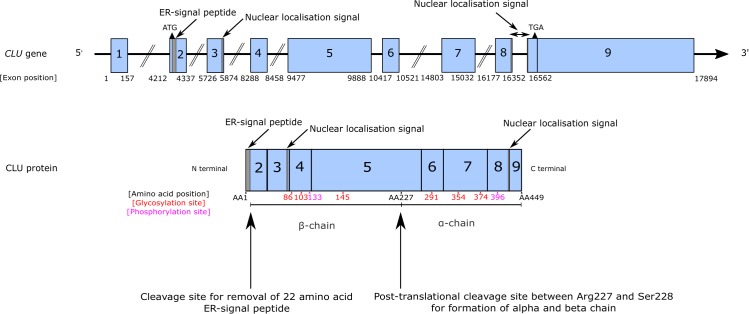
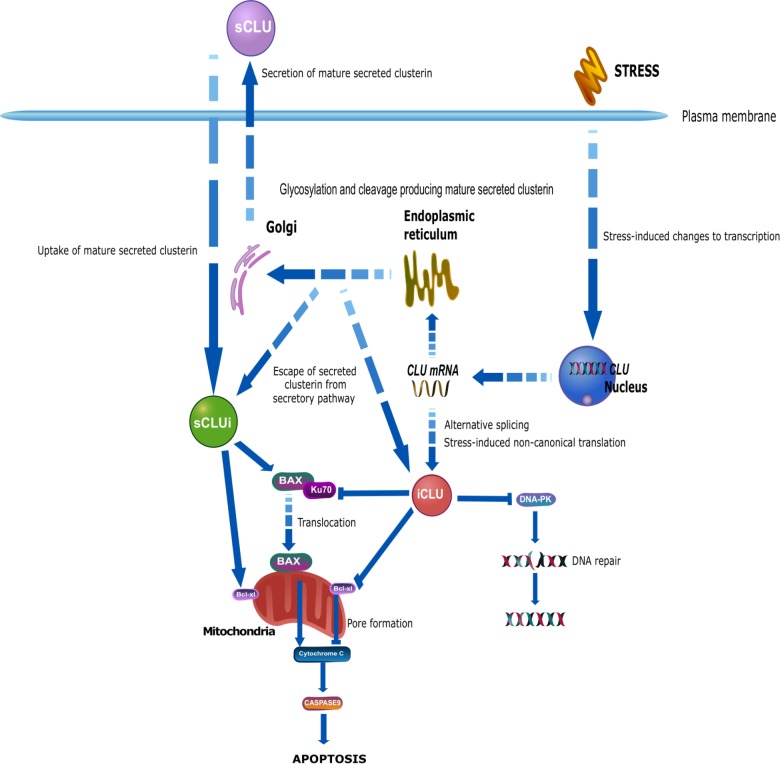
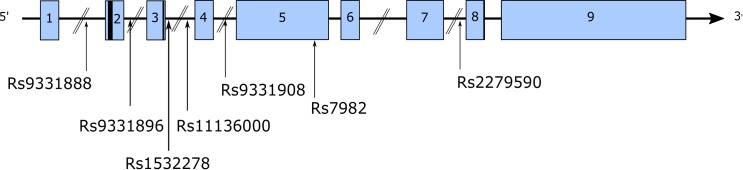
Verification
Claims the paper makes
The claims and statistics of this paper haven’t been checked yet.
Run the check — free, no account needed. It reads the open-access text and checks the sources it cites.
Claims other papers make about this one
Each is checked against this paper’s own text: does it say what the citing paper says it does?
The source backs part of the claim, not all of it — or backs it for a different population, condition or comparison.
In the citing paper
“Similarly, several genes reported to be involved in Aβ catabolism, such as RAB5A, RAB11A, CLU, and LRP2 (49–53), were also down-regulated in AD monocytes, suggesting the impaired Aβ catabolism in AD monocytes.”
From Understanding monocyte-driven neuroinflammation in Alzheimer’s disease using human cortical organoid microphysiological systems (2025) · cites this paper as [52]
Experimental — accuracy not yet measuredThe cited source says what the claim attributes to it.
In the citing paper
“Genetic variants of many of the differentially expressed genes identified in this study, such as CLU and APOE, have been associated with increased Alzheimer’s disease risk58,59.”
From mTORC1 drives cell-autonomous astrocyte reactivity in tuberous sclerosis (2026) · cites this paper as [58]
Self-check
Percentages, sums and reported differences re-computed from the paper’s own numbers.
The self-check needs the paper’s full text.
Citations
Cites
Corder, E. H., Saunders, A. M., Strittmatter, W. J., Schmechel, D. E., Gaskell, P. C., Small, G. W., Roses, A. D., Haines, J. L., & Pericak-Vance, M. A. (1993) · Science · doi:10.1126/science.8346443 · Cited by 9,429
Oxidants, oxidative stress and the biology of ageing
Finkel, T., & Holbrook, N. J. (2000) · Nature · doi:10.1038/35041687 · Cited by 9,413
Finding the missing heritability of complex diseases
Manolio, T. A., Collins, F. S., Cox, N. J., Goldstein, D. B., Hindorff, L. A., Hunter, D. J., McCarthy, M. I., Ramos, E. M., Cardon, L. R., Chakravarti, A., et al. (2009) · Nature · doi:10.1038/nature08494 · Cited by 8,336
Mitochondrial Dysfunction and Oxidative Stress in Neurodegenerative Diseases
Lin, M. T., & Beal, M. F. (2006) · Nature · doi:10.1038/nature05292 · Cited by 6,455
O'Leary, N. A., Wright, M. W., Brister, J. R., Ciufo, S., Haddad, D., McVeigh, R., Rajput, B., Robbertse, B., Smith-White, B., Ako-Adjei, D., et al. (2016) · Nucleic Acids Research · doi:10.1093/nar/gkv1189 · Cited by 6,357
Neuroinflammation in Alzheimer's disease
Heneka, M. T., Carson, M. J., Khoury, J. E., Landreth, G. E., Brosseron, F., Feinstein, D. L., Jacobs, A. H., Wyss-Coray, T., Vitorica, J., Ransohoff, R. M., et al. (2015) · The Lancet Neurology · doi:10.1016/s1474-4422(15)70016-5 · Cited by 6,226
Cillà, S. D., Farruggio, S., Vujosevic, S., Raina, G., Filippini, D. A., Gatti, V., Clemente, N., Mary, D., Vezzola, D., Casini, G., et al. (2017) · Cellular Physiology and Biochemistry · doi:10.1159/000479441 · Cited by 5,154
2016 Alzheimer's disease facts and figures
Alzheimer's Association (2016) · Alzheimer's & Dementia · doi:10.1016/j.jalz.2016.03.001 · Cited by 5,069
Zhang, Y., Chen, K., Sloan, S. A., Bennett, M. L., Scholze, A. R., O'Keeffe, S., Phatnani, H. P., Guarnieri, P., Caneda, C., Ruderisch, N., et al. (2014) · The Journal of Neuroscience · doi:10.1523/jneurosci.1860-14.2014 · Cited by 4,875
The BCL-2 protein family: opposing activities that mediate cell death
Youle, R. J., & Strasser, A. (2007) · Nature Reviews Molecular Cell Biology · doi:10.1038/nrm2308 · Cited by 4,806
Research works printed but not linked: 2
- Biffi, 2010, Genetic variation and neuroimaging measures in AD., Arch. Neurol., 67, 677, 10.1001/archneurol.2010.108.Genetic · DOI
- Guerreiro, 2013, TREM2 variants in Alzheimer’s disease., N. Engl. J. Med., 368, 117, 10.1056/NEJMoa1211851 · DOI · Paper page
Cited by
Sorted by citations
Comprehensive Review on Alzheimer’s Disease: Causes and Treatment
Breijyeh, Z., & Karaman, R. (2020) · Molecules · doi:10.3390/molecules25245789 · Cited by 2,789
Involvement of Lipids in Alzheimer’s Disease Pathology and Potential Therapies
Chew, H., Solomon, V. A., & Fonteh, A. N. (2020) · Frontiers in Physiology · doi:10.3389/fphys.2020.00598 · Cited by 353
Exercise benefits on Alzheimer’s disease: State-of-the-science
Valenzuela, P. L., Castillo-García, A., Morales, J. S., de la Villa, P., Hampel, H., Emanuele, E., Lista, S., & Lucia, A. (2020) · Ageing Research Reviews · doi:10.1016/j.arr.2020.101108 · Cited by 337
Bryois, J., Calini, D., Macnair, W., Foo, L., Urich, E., Ortmann, W., Iglesias, V. A., Selvaraj, S., Nutma, E., Marzin, M., et al. (2022) · Nature Neuroscience · doi:10.1038/s41593-022-01128-z · Cited by 311
Lipid and Lipoprotein Metabolism in Microglia
Loving, B. A., & Bruce, K. D. (2020) · Frontiers in Physiology · doi:10.3389/fphys.2020.00393 · Cited by 255
Intrinsically Disordered Proteins: An Overview
Trivedi, R., & Nagarajaram, H. A. (2022) · International Journal of Molecular Sciences · doi:10.3390/ijms232214050 · Cited by 277
Extracellular protein components of amyloid plaques and their roles in Alzheimer’s disease pathology
Rahman, M. M., & Lendel, C. (2021) · Molecular Neurodegeneration · doi:10.1186/s13024-021-00465-0 · Cited by 260
Cholesterol and Alzheimer’s Disease; From Risk Genes to Pathological Effects
Feringa, F. M., & van der Kant, R. (2021) · Frontiers in Aging Neuroscience · doi:10.3389/fnagi.2021.690372 · Cited by 226
Holstege, H., Hulsman, M., Charbonnier, C., Grenier-Boley, B., Quenez, O., Grozeva, D., van Rooij, J. G. J., Sims, R., Ahmad, S., Amin, N., et al. (2022) · Nature Genetics · doi:10.1038/s41588-022-01208-7 · Cited by 226
Microglial Phagocytosis: A Disease-Associated Process Emerging from Alzheimer’s Disease Genetics
Podleśny-Drabiniok, A., Marcora, E., & Goate, A. M. (2020) · Trends in Neurosciences · doi:10.1016/j.tins.2020.10.002 · Cited by 211
Zhang, W., Xu, C., Sun, J., Shen, H., Wang, J., & Yang, C. (2022) · Acta Pharmaceutica Sinica B · doi:10.1016/j.apsb.2022.01.008 · Cited by 221
Peripheral inflammatory biomarkers in Alzheimer’s disease: a brief review
Park, J., Han, S.-H., & Mook‐Jung, I. (2020) · BMB Reports · doi:10.5483/bmbrep.2020.53.1.309 · Cited by 206
Alzheimer’s Disease: Exploring the Landscape of Cognitive Decline
Tenchov, R., Sasso, J. M., & Zhou, Q. A. (2024) · ACS Chemical Neuroscience · doi:10.1021/acschemneuro.4c00339 · Cited by 170
Cellular Senescence: From Mechanisms to Current Biomarkers and Senotherapies
Lucas, V., Cavadas, C., & Aveleira, C. A. (2023) · Pharmacological Reviews · doi:10.1124/pharmrev.122.000622 · Cited by 172
Multicellular communities are perturbed in the aging human brain and Alzheimer’s disease
Cain, A., Taga, M., McCabe, C., Green, G. S., Hekselman, I., White, C. C., Lee, D. I., Gaur, P., Rozenblatt-Rosen, O., Zhang, F., et al. (2023) · Nature Neuroscience · doi:10.1038/s41593-023-01356-x · Cited by 142
Inflammation, Extracellular Matrix Remodeling, and Proteostasis in Tumor Microenvironment
Marozzi, M., Parnigoni, A., Negri, A., Viola, M., Vigetti, D., Passi, A. G., Karousou, E. G., & Rizzi, F. (2021) · International Journal of Molecular Sciences · doi:10.3390/ijms22158102 · Cited by 144
Wang, Q., Shen, Y., Wang, X., Fu, S., Zhang, X., Zhang, Y., & Wang, R. (2020) · Aging · doi:10.18632/aging.102645 · Cited by 135
The role of innate immunity in Alzheimer's disease
Ennerfelt, H. E., & Lukens, J. R. (2020) · Immunological Reviews · doi:10.1111/imr.12896 · Cited by 124
Gao, Q., Wang, Y., Wang, X., Fu, S., Zhang, X., Wang, R., & Zhang, X. (2019) · Aging · doi:10.18632/aging.102352 · Cited by 119
Lü, Y., Bu, F., Wang, F., Liu, L., Zhang, S., Wang, G., & Hu, X. (2023) · Translational Neurodegeneration · doi:10.1186/s40035-023-00341-5 · Cited by 128
Xu, J., Mao, C., Hou, Y., Luo, Y., Binder, J. L., Zhou, Y., Bekris, L. M., Shin, J., Hu, M., Wang, F., et al. (2022) · Cell Reports · doi:10.1016/j.celrep.2022.111717 · Cited by 115
Clusterin: Always protecting. Synthesis, function and potential issues
Rodríguez‐Rivera, C., García, M. M., Álvarez, M. M., González‐Martín, C., & Goicoechea, C. (2020) · Biomedicine & Pharmacotherapy · doi:10.1016/j.biopha.2020.111174 · Cited by 113
Molecular Chaperones: A Double-Edged Sword in Neurodegenerative Diseases
Tittelmeier, J., Nachman, E., & Nussbaum-Krammer, C. I. (2020) · Frontiers in Aging Neuroscience · doi:10.3389/fnagi.2020.581374 · Cited by 114
Chen, F., Swartzlander, D. B., Ghosh, A., Fryer, J. D., Wang, B., & Zheng, H. (2021) · Molecular Neurodegeneration · doi:10.1186/s13024-021-00426-7 · Cited by 103
Lipoproteins in the Central Nervous System: From Biology to Pathobiology
Raulin, A.-C., Martens, Y. A., & Bu, G. (2022) · Annual Review of Biochemistry · doi:10.1146/annurev-biochem-032620-104801 · Cited by 89
Song, S., Lee, J. U., Jeon, M. J., Kim, S., & Sim, S. J. (2022) · Biosensors and Bioelectronics · doi:10.1016/j.bios.2021.113864 · Cited by 88
Friend, Foe or Both? Immune Activity in Alzheimer’s Disease
Frost, G. R., Jonas, L. A., & Li, Y. (2019) · Frontiers in Aging Neuroscience · doi:10.3389/fnagi.2019.00337 · Cited by 88
Body Fluid Biomarkers for Alzheimer’s Disease—An Up-To-Date Overview
Bălașa, A. F., Chircov, C., & Grumezescu, A. M. (2020) · Biomedicines · doi:10.3390/biomedicines8100421 · Cited by 86
Apolipoprotein J is a hepatokine regulating muscle glucose metabolism and insulin sensitivity
Seo, J. A., Kang, M., Yang, W.-M., Hwang, W. M., Kim, S. S., Hong, S. H., Heo, J.-I., Vijyakumar, A., de Moura, L. P., Üner, A. G., et al. (2020) · Nature Communications · doi:10.1038/s41467-020-15963-w · Cited by 83
Ximerakis, M., Holton, K. M., Giadone, R. M., Ozek, C., Saxena, M., Santiago, S., Adiconis, X., Dionne, D. A., Nguyễn, L., Shah, K. M., et al. (2023) · Nature Aging · doi:10.1038/s43587-023-00373-6 · Cited by 81
The Links between Cardiovascular Diseases and Alzheimer's Disease
Leszek, J., Вячеславовна, М. Е., Belousov, D. M., Koutsouraki, E., Szczechowiak, K., Kobusiak−Prokopowicz, M., Mysiak, A., Diniz, B. S., Somasundaram, S. G., Kirkland, C. E., et al. (2020) · Current Neuropharmacology · doi:10.2174/1570159x18666200729093724 · Cited by 93
Wainberg, M., Andrews, S. J., & Tripathy, S. J. (2023) · Alzheimer s Research & Therapy · doi:10.1186/s13195-023-01244-3 · Cited by 83
The extracellular chaperone Clusterin enhances Tau aggregate seeding in a cellular model
Yuste‐Checa, P., Trinkaus, V. A., Riera-Tur, I., Imamoglu, R., Schaller, T., Wang, H., Dudanova, I., Hipp, M. S., Bracher, A., & Hartl, F. U. (2021) · Nature Communications · doi:10.1038/s41467-021-25060-1 · Cited by 78
Al‐Dalahmah, O., Argenziano, M., Kannan, A., Mahajan, A., Furnari, J. L., Paryani, F., Boyett, D. M., Save, A., Humala, N., Khan, F., et al. (2023) · Nature Communications · doi:10.1038/s41467-023-38186-1 · Cited by 75
Smit, T., Deshayes, N. A. C., Borchelt, D. R., Kamphuis, W., Middeldorp, J., & Hol, E. M. (2021) · Glia · doi:10.1002/glia.23981 · Cited by 71
The Brain–Gut Axis, an Important Player in Alzheimer and Parkinson Disease: A Narrative Review
Caradonna, E., Nemni, R., Bifone, A., Gandolfo, P., Costantino, L., Giordano, L., Mormone, E., Macula, A., Cuomo, M., Difruscolo, R., et al. (2024) · Journal of Clinical Medicine · doi:10.3390/jcm13144130 · Cited by 80
ABCA7 and the altered lipidostasis hypothesis of Alzheimer's disease
Lyssenko, N. N., & Praticò, D. (2020) · Alzheimer s & Dementia · doi:10.1002/alz.12220 · Cited by 67
Metabolic Regulation of Glia and Their Neuroinflammatory Role in Alzheimer's Disease
Kumari, P., Sood, A., & Fernandes, V. (2021) · Cellular and Molecular Neurobiology · doi:10.1007/s10571-021-01147-7 · Cited by 68
Guo, P., Gong, W., Li, Y., Liu, L., Yan, R., Wang, Y., Zhang, Y., & Yuan, Z. (2022) · BMC Medicine · doi:10.1186/s12916-022-02404-2 · Cited by 68
Brain high-throughput multi-omics data reveal molecular heterogeneity in Alzheimer’s disease
Eteleeb, A. M., Novotny, B. C., Tarraga, C. S., Sohn, C., Dhungel, E., Brase, L., Nallapu, A., Buss, J., Farias, F., Bergmann, K., et al. (2024) · PLOS Biology · doi:10.1371/journal.pbio.3002607 · Cited by 64
Astrocyte-derived clusterin suppresses amyloid formation in vivo
Wojtas, A., Sens, J. P., Kang, S. S., Baker, K. E., Berry, T. J., Kurti, A., Daughrity, L. M., Jansen‐West, K. R., Dickson, D. W., Petrucelli, L., et al. (2020) · Molecular Neurodegeneration · doi:10.1186/s13024-020-00416-1 · Cited by 66
The Dual Roles of Clusterin in Extracellular and Intracellular Proteostasis
Satapathy, S., & Wilson, M. R. (2021) · Trends in Biochemical Sciences · doi:10.1016/j.tibs.2021.01.005 · Cited by 65
Jasiecki, J., Targońska, M., & Wasąg, B. (2021) · International Journal of Molecular Sciences · doi:10.3390/ijms22042033 · Cited by 67
Complement-mediated synapse loss in Alzheimer’s disease: mechanisms and involvement of risk factors
Wen, L., Bi, D., & Shen, Y. (2023) · Trends in Neurosciences · doi:10.1016/j.tins.2023.11.010 · Cited by 64
Jackson, R. J., Rose, J., Tulloch, J., Henstridge, C., Smith, C., & Spires-Jones, T. L. (2019) · Brain Communications · doi:10.1093/braincomms/fcz003 · Cited by 69
Secreted Chaperones in Neurodegeneration
Chaplot, K., Jarvela, T. S., & Lindberg, I. (2020) · Frontiers in Aging Neuroscience · doi:10.3389/fnagi.2020.00268 · Cited by 63
Large multi-ethnic genetic analyses of amyloid imaging identify new genes for Alzheimer disease
Ali, M., Archer, D. B., Gorijala, P., Western, D., Timsina, J., Fernández, M. V., Wang, T.-C., Satizabal, C. L., Yang, Q., Beiser, A. S., et al. (2023) · Acta Neuropathologica Communications · doi:10.1186/s40478-023-01563-4 · Cited by 54
Belonwu, S., Li, Y., Bunis, D. G., Rao, A. A., Solsberg, C. W., Tang, A., Fragiadakis, G. K., Dubal, D. B., Oskotsky, T., & Sirota, M. (2021) · Molecular Neurobiology · doi:10.1007/s12035-021-02591-8 · Cited by 55
Exercise mimetics: a novel strategy to combat neuroinflammation and Alzheimer’s disease
Zhao, R. (2024) · Journal of Neuroinflammation · doi:10.1186/s12974-024-03031-9 · Cited by 64
Clusterin ameliorates tau pathology in vivo by inhibiting fibril formation
Wojtas, A., Carlomagno, Y., Sens, J. P., Kang, S. S., Jensen, T. D., Kurti, A., Baker, K. E., Berry, T. J., Phillips, V. R., Castanedes, M. C., et al. (2020) · Acta Neuropathologica Communications · doi:10.1186/s40478-020-01079-1 · Cited by 53
Altered oligodendroglia and astroglia in chronic traumatic encephalopathy
Chancellor, K. B., Chancellor, S. E., Duke-Cohan, J. E., Huber, B. R., Stein, T. D., Alvarez, V. E., Okaty, B. W., Dymecki, S. M., & McKee, A. C. (2021) · Acta Neuropathologica · doi:10.1007/s00401-021-02322-2 · Cited by 51
Prospective biomarkers of Alzheimer’s disease: A systematic review and meta-analysis
Li, R., Ma, Y., Tan, L., & Yu, J. (2022) · Ageing Research Reviews · doi:10.1016/j.arr.2022.101699 · Cited by 54
Clusterin as modulator of carcinogenesis: A potential avenue for targeted cancer therapy
Praharaj, P. P., Patra, S., Panigrahi, D. P., Patra, S. K., & Bhutia, S. K. (2020) · Biochimica et Biophysica Acta (BBA) - Reviews on Cancer · doi:10.1016/j.bbcan.2020.188500 · Cited by 49
Chaperones—A New Class of Potential Therapeutic Targets in Alzheimer’s Disease
Batko, J., Antosz, K., Miśków, W., Pszczołowska, M., Walczak, K., & Leszek, J. (2024) · International Journal of Molecular Sciences · doi:10.3390/ijms25063401 · Cited by 50
Extracellular clusterin limits the uptake of α‐synuclein fibrils by murine and human astrocytes
Filippini, A., Mutti, V., Faustini, G., Longhena, F., Ramazzina, I., Rizzi, F., Kaganovich, A., Roosen, D. A., Landeck, N., Duffy, M. F., et al. (2020) · Glia · doi:10.1002/glia.23920 · Cited by 49
The role of genetic risk factors of Alzheimer’s disease in synaptic dysfunction
Fu, W.-Y., & Ip, N. Y. (2023) · Seminars in Cell & Developmental Biology · doi:10.1016/j.semcdb.2022.07.011 · Cited by 48
Moreira, G. G., Cantrelle, F., Quezada, A., Carvalho, F. S., Cristóvão, J. S., Sengupta, U., Puangmalai, N., Carapeto, A. P., Rodrigues, M. S., Cardoso, I., et al. (2021) · Nature Communications · doi:10.1038/s41467-021-26584-2 · Cited by 48
Bridging systemic metabolic dysfunction and Alzheimer’s disease: the liver interface
Song, D., Yang, L., Yang, L.-L., Luo, Y., & Yao, X. (2025) · Molecular Neurodegeneration · doi:10.1186/s13024-025-00849-6 · Cited by 53
Clusterin transduces Alzheimer-risk signals to amyloidogenesis
Liu, X., Che, R., Liang, W., Zhang, Y., Wu, L., Han, C., Lu, H., Song, W., Wu, Y., & Wang, Z. (2022) · Signal Transduction and Targeted Therapy · doi:10.1038/s41392-022-01157-x · Cited by 45
Zhang, Q., Ma, C., Chin, L., Pan, S., & Li, L. (2024) · Science Advances · doi:10.1126/sciadv.adk6911 · Cited by 47
Complement in Neurologic Disease
Propson, N. E., Gedam, M., & Zheng, H. (2020) · Annual Review of Pathology Mechanisms of Disease · doi:10.1146/annurev-pathol-031620-113409 · Cited by 45
Chaperoning shape-shifting tau in disease
Ryder, B. D., Wydorski, P. M., Hou, Z., & Joachimiak, Ł. A. (2022) · Trends in Biochemical Sciences · doi:10.1016/j.tibs.2021.12.009 · Cited by 44
Lipid-Binding Proteins in Brain Health and Disease
Corraliza-Gómez, M., Sánchez, D., & Ganfornina, M. D. (2019) · Frontiers in Neurology · doi:10.3389/fneur.2019.01152 · Cited by 43
Protein Oxidation in Aging and Alzheimer’s Disease Brain
Rukhsana Sultana, A., & Butterfield, D. A. (2024) · Antioxidants · doi:10.3390/antiox13050574 · Cited by 43
The role and function of CLU in cancer biology and therapy
Zhang, Y., Lv, X., Chen, L., & Liu, Y. (2022) · Clinical and Experimental Medicine · doi:10.1007/s10238-022-00885-2 · Cited by 40
BACE1 regulates expression of Clusterin in astrocytes for enhancing clearance of β-amyloid peptides
Zhou, J., Singh, N., Galske, J., Hudobenko, J., Hu, X., & Yan, R. (2023) · Molecular Neurodegeneration · doi:10.1186/s13024-023-00611-w · Cited by 39
Lorenzo, D. D. (2024) · ChemMedChem · doi:10.1002/cmdc.202400180 · Cited by 46
Duarte, A. C., Furtado, A., Hrynchak, M. V., Costa, A. R., Talhada, D., Gonçalves, I., Lemos, M. C., Quintela, T., & Santos, C. R. A. (2020) · International Journal of Molecular Sciences · doi:10.3390/ijms21186813 · Cited by 40
Multi-cellular communities are perturbed in the aging human brain and Alzheimer’s disease
Cain, A., Taga, M., McCabe, C., Green, G., Hekselman, I., White, C. C., Lee, D. I., Gaur, P., Rozenblatt-Rosen, O., Zhang, F., et al. (2020) · doi:10.1101/2020.12.22.424084 · Cited by 143
Influence of genetic and cardiometabolic risk factors in Alzheimer’s disease
Pasqualetti, G., Thayanandan, T., & Edison, P. (2022) · Ageing Research Reviews · doi:10.1016/j.arr.2022.101723 · Cited by 39
The chaperone Clusterin in neurodegeneration−friend or foe?
Yuste‐Checa, P., Bracher, A., & Hartl, F. U. (2022) · BioEssays · doi:10.1002/bies.202100287 · Cited by 37
D. Bruce, K., Tang, M., Reigan, P., & H. Eckel, R. (2020) · International Journal of Molecular Sciences · doi:10.3390/ijms21218338 · Cited by 36
Coskuner‐Weber, O., & Uversky, V. N. (2019) · Progress in molecular biology and translational science · doi:10.1016/bs.pmbts.2019.05.007 · Cited by 35
The Role of Genetic, Environmental, and Dietary Factors in Alzheimer’s Disease: A Narrative Review
Mertaş, B., & Boşgelmez, İ. İ. (2025) · International Journal of Molecular Sciences · doi:10.3390/ijms26031222 · Cited by 35
Banerjee, S., Ghoshal, S., Clemence, G., DeMars, K. M., Yang, C., Niehoff, M. L., Nguyen, A. D., Jayanth, P., Hoelscher, B., Xu, F., et al. (2021) · npj Aging and Mechanisms of Disease · doi:10.1038/s41514-021-00076-5 · Cited by 36
Insights into the changes in the proteome of Alzheimer disease elucidated by a meta-analysis
Haytural, H., Benfeitas, R., Schedin‐Weiss, S., Bereczki, E., Rezeli, M., Unwin, R. D., Wang, X., Dammer, E. B., Johnson, E. C. B., Seyfried, N. T., et al. (2021) · Scientific Data · doi:10.1038/s41597-021-01090-8 · Cited by 34
Jang, Y. O., Ahn, H., Dao, T. N. T., Hong, J., Shin, W., Lim, Y., Chung, S. J., Lee, J., Liu, H., Koo, B., et al. (2023) · Biomaterials Research · doi:10.1186/s40824-023-00353-2 · Cited by 32
Shepherd, C. E., Affleck, A. J., Bahar, A. Y., Carew‐Jones, F., & Halliday, G. M. (2019) · Neurobiology of Aging · doi:10.1016/j.neurobiolaging.2019.10.025 · Cited by 32
Tian, Y., Xiao, Y., Geng, T., Sun, C., Gu, J., Tang, K., Liu, B., Liu, Y., & Fa, S. (2020) · Biology of the Cell · doi:10.1111/boc.202000030 · Cited by 32
García‐Viñuales, S., Sciacca, M. F. M., Lanza, V., Santoro, A. M., Grasso, G., Tundo, G. R., Sbardella, D., Coletta, M., Grasso, G., Rosa, C. L., et al. (2021) · Chemistry and Physics of Lipids · doi:10.1016/j.chemphyslip.2021.105072 · Cited by 34
Tobeh, N. S., & Bruce, K. D. (2023) · Frontiers in Aging Neuroscience · doi:10.3389/fnagi.2023.1259012 · Cited by 35
Chen, C., Shu, Y., Yan, C., Li, H., Huang, Z., Shen, S., Liu, C., Jiang, Y., Huang, S., Wang, Z., et al. (2024) · Nature Communications · doi:10.1038/s41467-024-52142-7 · Cited by 33
Kacperczyk, M., Kmieciak, A., & Kratz, E. M. (2021) · International Journal of Molecular Sciences · doi:10.3390/ijms22137197 · Cited by 29
The Down-Regulation of Clusterin Expression Enhances the αSynuclein Aggregation Process
Lenzi, C., Ramazzina, I., Russo, I., Filippini, A., Bettuzzi, S., & Rizzi, F. (2020) · International Journal of Molecular Sciences · doi:10.3390/ijms21197181 · Cited by 28
Butyrylcholinesterase–Protein Interactions in Human Serum
Jasiecki, J., Szczoczarz, A., Cysewski, D., Lewandowski, K. C., Skowron, P. M., Waleron, K., & Wasąg, B. (2021) · International Journal of Molecular Sciences · doi:10.3390/ijms221910662 · Cited by 28
Rabaneda‐Bueno, R., Mena‐Montes, B., Torres‐Castro, S., Torres‐Carrillo, N., & Torres-Carrillo, N. M. (2021) · Genes · doi:10.3390/genes12121959 · Cited by 30
Local genetic correlations exist among neurodegenerative and neuropsychiatric diseases
Reynolds, R. H., Wagen, A. Z., Lona‐Durazo, F., Scholz, S. W., Shoai, M., Hardy, J., Taliun, S. A. G., & Ryten, M. (2023) · npj Parkinson s Disease · doi:10.1038/s41531-023-00504-1 · Cited by 28
Genetic Insights into the Impact of Complement in Alzheimer’s Disease
Torvell, M., Carpanini, S. M., Daskoulidou, N., Byrne, R. A. J., Sims, R., & Morgan, B. P. (2021) · Genes · doi:10.3390/genes12121990 · Cited by 29
Yang, L., Luo, X., Hua, Z., Xue, X., Wang, X., Pang, M., Wang, T., Lü, A., & Liu, Y. (2023) · International Journal of Biological Sciences · doi:10.7150/ijbs.86475 · Cited by 30
Anand, C., Abdelnour, F., Sipes, B. S., Ma, D., Maia, P. D., Torok, J., & Raj, A. (2025) · Brain · doi:10.1093/brain/awaf179 · Cited by 29
Deiminated proteins and extracellular vesicles - Novel serum biomarkers in whales and orca
Magnadóttir, B., Onganer, P. U., Kraev, I., Svansson, V., Hayes, P. M., & Lange, S. (2020) · Comparative Biochemistry and Physiology Part D Genomics and Proteomics · doi:10.1016/j.cbd.2020.100676 · Cited by 27
Clusterin: a multifaceted protein in the brain
Zhao, L., Moon, H.-J., & Herring, S. K. (2020) · Neural Regeneration Research · doi:10.4103/1673-5374.301013 · Cited by 26
Simaeys, D. V., Fuente, A. D. L., Zilio, S., Zoso, A., Kuznetsova, V. Е., Alcazar, O., Buchwald, P., Grilli, A., Caroli, J., Bicciato, S., et al. (2022) · Nature Communications · doi:10.1038/s41467-022-29377-3 · Cited by 26
Fareed, M. M., Qasmi, M., Aziz, S., Völker, E., Förster, C. Y., & Shityakov, S. (2022) · Biomolecules · doi:10.3390/biom12101452 · Cited by 25
Clusterin is a Potential Therapeutic Target in Alzheimer’s Disease
Palihati, N., Tang, Y., Yin, Y., Yu, D., Liu, G., Quan, Z., Ni, J., Yan, Y., & Qing, H. (2023) · Molecular Neurobiology · doi:10.1007/s12035-023-03801-1 · Cited by 25
Neumann, A., Küçükali, F., Bos, I., Vos, S. J. B., Engelborghs, S., Pooter, T. D., Joris, G., Rijk, P. D., Roeck, E. E. D., Tsolaki, M., et al. (2022) · Molecular Psychiatry · doi:10.1038/s41380-022-01437-6 · Cited by 23
Self-citationAmyloid futures in the expanding pathology of brain aging and dementia
Thorwald, M. A., Silva, J. A., Head, E., & Finch, C. E. (2022) · Alzheimer s & Dementia · doi:10.1002/alz.12896 · Cited by 24
Role of Body-Fluid Biomarkers in Alzheimer’s Disease Diagnosis
Nguyen, T. T., Ta, Q. T. H., Nguyen, T. K. O., Nguyen, T. K. O., & Giau, V. V. (2020) · Diagnostics · doi:10.3390/diagnostics10050326 · Cited by 25
Deciphering the Role of WNT Signaling in Metabolic Syndrome–Linked Alzheimer’s Disease
Ali, A., Ali, A., Ahmad, W., Ahmad, N., Khan, S. I., Nuruddin, S. M., & Husain, I. (2019) · Molecular Neurobiology · doi:10.1007/s12035-019-01700-y · Cited by 24
de Boer, E. C. W., van Mourik, A. G., & Jongerius, I. (2020) · Frontiers in Immunology · doi:10.3389/fimmu.2020.578069 · Cited by 24
Metadata
- Authors
- Foster, E. M., Dangla-Valls, A., Lovestone, S., Ribe, E. M., & Buckley, N. J.
- Affiliations
- University of Oxford (GB)
- Corresponding author
- Buckley, Noel J.
- Venue
- Frontiers in Neuroscience
- Publisher
- Frontiers Media SA
- Published
- 2019-02-28
- Volume
- 13
- Pages
- 164-164
- ISSN
- 1662-453X (ISSN-L)
- PMC
- PMC6403191
- OpenAlex
- W2920516237
- Cited by
- 381
- References
- 343
- Citations by year
- 2026: 41 · 2025: 50 · 2024: 56 · 2023: 62 · 2022: 54 · 2021: 52 · 2020: 55 · 2019: 11
- FWCI
- 4.10
- Type
- journal article
- Language
- en
- Open access
- gold
- doi.org
- Licence
- Locations
- Frontiers in Neuroscience (publishedVersion, cc-by)
- Europe PMC (PubMed Central) (publishedVersion, cc-by)
- PubMed Central (publishedVersion, cc-by)
- PubMed (publishedVersion)
- DOAJ (DOAJ: Directory of Open Access Journals) (submittedVersion, cc-by-sa)
- UCL Discovery (University College London) (submittedVersion)
- Funders
- AstraZeneca
- Fundación Alfonso Martín Escudero
- South London and Maudsley NHS Foundation Trust
- Wellcome Trust
- Alzheimer's Society
- National Institute for Health and Care Research
- Bupa Foundation
- Medical Research Council (1246016)
- Topics
- Health Sciences › Medicine › Oncology › Clusterin in disease pathology
- Life Sciences › Neuroscience › Cellular and Molecular Neuroscience › Alzheimer's disease research and treatments
- Health Sciences › Medicine › Psychiatry and Mental health › Dementia and Cognitive Impairment Research
- Keywords
- clusterin, Alzheimer's disease, amyloid-beta, protein isoforms, late-onset Alzheimer's disease, amyloid-beta aggregation, amyloid-beta clearance, neuroprotection, oxidative stress, proteotoxic stress, extracellular chaperones, lipid transport, immunomodulation, secretory pathway
About these checks
Registry, retraction, Cites and statistics results are computed, not judged, with one exception: a printed reference that no index lists is read once by a model before it counts as a citation error. Claims are extracted by a model and kept only when their quote appears verbatim in the text; each cited source is then checked, with a model’s help, for whether it says what the claim relies on. Those verdicts can be wrong — read the claim’s quote and the cited source before relying on one.
Statistics and arithmetic are recomputed, not judged.
Confidence bands are shown only for fields calibrated on our annotated test set. None is calibrated yet, so no band is shown.
What counts as a claim ›How we measure confidence ›How we check this ›
Are you an author, or do you see a problem with this page? Request a review
