

The DOI matches its Crossref record; 11 of the 11 references it cites were found in a registry or an index.
Fears and Perception of the Impact of COVID-19 on Patients With Lung Cancer: A Mono-Institutional Survey
Open accessAbstract
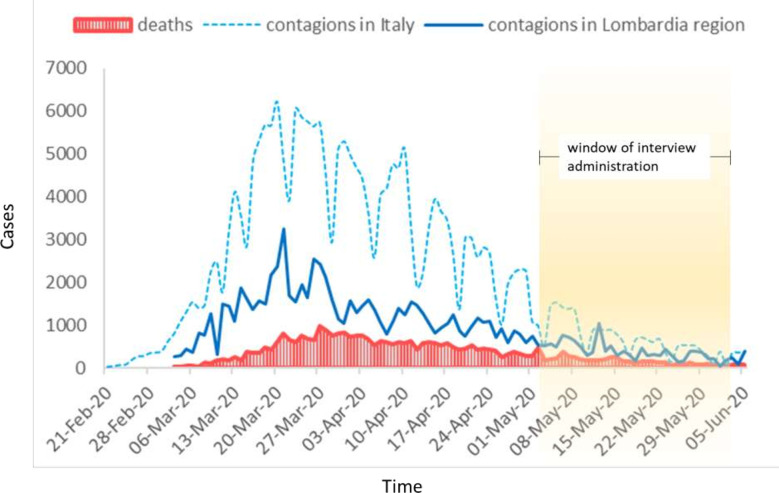
In February 2020, Italy became one of the first countries to be plagued by the SARS-CoV-2 pandemic, COVID-19. In March 2020, the Italian government decreed a lockdown for the whole country, which overturned communication systems, hospital organization, and access to patients and their relatives and carers. This issue had a particular regard for cancer patients. Our Thoracic Oncology Division therefore reorganized patient access in order to reduce the risk of contagion and, at the same time, encourage the continuation of treatment. Our staff contacted all patients to inform them of any changes in treatment planning, check that they were taking safety measures, and ascertain their feelings and whether they had any COVID-19 symptoms. To better understand patients' fears and expectations of during the pandemic period, we created a nine-question interview, administered from April to May 2020 to 156 patients with lung cancer. Patients were classified by age, sex, comorbidity, disease stage, prior treatment, and treatment type. The survey showed that during the pandemic period some patients experienced fear of COVID-19, in particular: women (55% vs. 33%), patients with comorbidities (24% vs. 9%), and patients who had already received prior insult (radiotherapy or surgery) on the lung (30% vs. 11%). In addition, the patients who received oral treatment at home or for whom intravenous treatment was delayed, experienced a sense of relief (90% and 72% respectively). However, only 21% of the patients were more afraid of COVID-19 than of their cancer, in particular patients with long-term (> 12 months) vs. short-term cancer diagnosis (28% vs. 12.5%, respectively). Furthermore, the quarantine period or even just the lockdown period alone, worsened the quality of life of some patients (40%), especially those in oral treatment (47%). Our data demonstrate how lung cancer patients are more afraid of their disease than of a world pandemic. Also this interview indirectly highlights the clinician's major guiding principle in correctly and appropriately managing not just the patient's expectations of their illness and its treatment, but also and especially of the patient's fears.
Overview
The claims and statistics of this paper haven’t been checked yet.
Run the check — free, no account needed. It reads the open-access text and checks the sources it cites.
Integrity signals
Registry
Cites
Statistics
Figures
Verification
Claims the paper makes
The claims and statistics of this paper haven’t been checked yet.
Run the check — free, no account needed. It reads the open-access text and checks the sources it cites.
Claims other papers make about this one
Each is checked against this paper’s own text: does it say what the citing paper says it does?
The cited source doesn’t support the claim as written.
In the citing paper
“79% of patients in one study reported being more afraid of their cancer than of COVID-19 [26].”
From The Psychosocial Impact of COVID-19 on Older Adults with Cancer: A Rapid Review (2022) · cites this paper as [26]
Checked by a reasoning model — may be wrong.
Experimental — accuracy not yet measuredThe cited source doesn’t support the claim as written.
In the citing paper
“Factors associated with increased distress related to COVID-19 included being a woman (gender) (55%) (p < 0.001), presence of comorbidities (24%), being unpartnered, having received radiotherapy or surgery for lung cancer (30%), actively receiving intravenous treatment (72%) (p = 0.02), or receiving oral treatment not in their residence (90%), and being younger than 60 or aged 60–70 (p < 0.001) [2”
From The Psychosocial Impact of COVID-19 on Older Adults with Cancer: A Rapid Review (2022) · cites this paper as [26]
Checked by a reasoning model — may be wrong.
Experimental — accuracy not yet measuredThe source backs part of the claim, not all of it — or backs it for a different population, condition or comparison.
In the citing paper
“Interestingly, those with more severe side effects and short-term cancer diagnosis focused on cancer-related concerns, whereas patients with long-term cancer diagnosis (>12 months) and those receiving ongoing treatment emphasized the threat of COVID-19 [26,27].”
From The Psychosocial Impact of COVID-19 on Older Adults with Cancer: A Rapid Review (2022) · cites this paper as [26]
Experimental — accuracy not yet measuredThe source backs part of the claim, not all of it — or backs it for a different population, condition or comparison.
In the citing paper
“Both qualitative and quantitative literature conducted during the pandemic suggested a decrease in general QoL [21,26] and emotional functioning [20] during the COVID-19 lockdown and quarantine period.”
From The Psychosocial Impact of COVID-19 on Older Adults with Cancer: A Rapid Review (2022) · cites this paper as [26]
Experimental — accuracy not yet measured
The source backs part of the claim, not all of it — or backs it for a different population, condition or comparison.
In the citing paper
“Factors associated with increased distress related to COVID-19 included being a woman (gender) (55%) (p < 0.001), presence of comorbidities (24%), being unpartnered, having received radiotherapy or surgery for lung cancer (30%), actively receiving intravenous treatment (72%) (p = 0.02), or receiving oral treatment not in their residence (90%), and being younger than 60 or aged 60–70 (p < 0.001) [2”
From The Psychosocial Impact of COVID-19 on Older Adults with Cancer: A Rapid Review (2022) · cites this paper as [26]
Experimental — accuracy not yet measuredThe cited source says what the claim attributes to it.
In the citing paper
“Factors associated with increased distress related to COVID-19 included being a woman (gender) (55%) (p < 0.001), presence of comorbidities (24%), being unpartnered, having received radiotherapy or surgery for lung cancer (30%), actively receiving intravenous treatment (72%) (p = 0.02), or receiving oral treatment not in their residence (90%), and being younger than 60 or aged 60–70 (p < 0.001) [2”
From The Psychosocial Impact of COVID-19 on Older Adults with Cancer: A Rapid Review (2022) · cites this paper as [26]
The cited source says what the claim attributes to it.
In the citing paper
“Factors associated with increased distress related to COVID-19 included being a woman (gender) (55%) (p < 0.001), presence of comorbidities (24%), being unpartnered, having received radiotherapy or surgery for lung cancer (30%), actively receiving intravenous treatment (72%) (p = 0.02), or receiving oral treatment not in their residence (90%), and being younger than 60 or aged 60–70 (p < 0.001) [2”
From The Psychosocial Impact of COVID-19 on Older Adults with Cancer: A Rapid Review (2022) · cites this paper as [26]
The check wasn’t confident either way, so it gives no verdict — never disputed.
In the citing paper
“Older adults above the age of 65 had better QoL scores and relatively fewer fears surrounding COVID-19 compared to their younger counterparts [20,22,23,26].”
From The Psychosocial Impact of COVID-19 on Older Adults with Cancer: A Rapid Review (2022) · cites this paper as [26]
Experimental — accuracy not yet measuredThe check wasn’t confident either way, so it gives no verdict — never disputed.
In the citing paper
“Factors associated with increased distress related to COVID-19 included being a woman (gender) (55%) (p < 0.001), presence of comorbidities (24%), being unpartnered, having received radiotherapy or surgery for lung cancer (30%), actively receiving intravenous treatment (72%) (p = 0.02), or receiving oral treatment not in their residence (90%), and being younger than 60 or aged 60–70 (p < 0.001) [2”
From The Psychosocial Impact of COVID-19 on Older Adults with Cancer: A Rapid Review (2022) · cites this paper as [26]
Experimental — accuracy not yet measured
Self-check
Percentages, sums and reported differences re-computed from the paper’s own numbers.
The self-check needs the paper’s full text.
Citations
Cites
Chen, N., Zhou, M., Dong, X., Qu, J., Gong, F., Han, Y., Qiu, Y., Wang, J., Liu, Y., Wei, Y., et al. (2020) · The Lancet · doi:10.1016/s0140-6736(20)30211-7 · Cited by 21,415
Clinical impact of COVID-19 on patients with cancer (CCC19): a cohort study
Kuderer, N. M., Choueiri, T. K., Shah, D. P., Shyr, Y., Rubinstein, S. M., Rivera, D. R., Shete, S., Hsu, C.-Y., Desai, A., de Lima Lopes, G., et al. (2020) · The Lancet · doi:10.1016/s0140-6736(20)31187-9 · Cited by 1,726
Berlin, D., Gulick, R. M., & Martínez, F. J. (2020) · New England Journal of Medicine · doi:10.1056/nejmcp2009575 · Cited by 1,477
Garassino, M. C., Whisenant, J. G., Huang, L., Trama, A., Torri, V., Agustoni, F., Baena, J., Banna, G. L., Berardi, R., Bettini, A., et al. (2020) · The Lancet Oncology · doi:10.1016/s1470-2045(20)30314-4 · Cited by 620
Do patients with cancer have a poorer prognosis of COVID-19? An experience in New York City
Miyashita, H., Mikami, T., Chopra, N., Yamada, T., Вячеславович, Ч. С., Rizk, D., & Cruz, C. (2020) · Annals of Oncology · doi:10.1016/j.annonc.2020.04.006 · Cited by 377
ESMO Management and treatment adapted recommendations in the COVID-19 era: Lung cancer
Passaro, A., Addeo, A., von Garnier, C., Blackhall, F. H., Planchard, D., Felip, E., Dziadziuszko, R., de Marinis, F., Reck, M., Bouchaab, H., et al. (2020) · ESMO Open · doi:10.1136/esmoopen-2020-000820 · Cited by 130
Treatment Guidance for Patients With Lung Cancer During the Coronavirus 2019 Pandemic
Dingemans, A. C., Soo, R. A., Jazieh, A. R., Rice, S. J., Kim, Y. T., Teo, L., Warren, G. W., Xiao, S., Smit, E. F., Aerts, J. G. J. V., et al. (2020) · Journal of Thoracic Oncology · doi:10.1016/j.jtho.2020.05.001 · Cited by 97
Testing for COVID-19 in lung cancer patients
Passaro, A., Peters, S., Mok, T. S. K., Attili, I., Mitsudomi, T., & de Marinis, F. (2020) · Annals of Oncology · doi:10.1016/j.annonc.2020.04.002 · Cited by 70
Cancer Patients and Risk of Mortality for COVID-19
Curigliano, G. (2020) · Cancer Cell · doi:10.1016/j.ccell.2020.07.006 · Cited by 49
Ghosh, J., Ganguly, S., Mondal, D., Pandey, P., Dabkara, D., & Biswas, B. (2020) · JCO Global Oncology · doi:10.1200/go.20.00172 · Cited by 47
Cited by
Sorted by citations
Experiences of frontline nurse managers during the COVID‐19: A qualitative study
Vázquez‐Calatayud, M., Regaira‐Martínez, E., Rumeu-Casares, C., Paloma‐Mora, B., Esain, A., & Oroviogoicoechea, C. (2021) · Journal of Nursing Management · doi:10.1111/jonm.13488 · Cited by 98
Fear of COVID-19 and Related Factors in Emergency Department Patients
Sürme, Y., Özmen, N., & Arık, B. E. (2021) · International Journal of Mental Health and Addiction · doi:10.1007/s11469-021-00575-2 · Cited by 59
Counting the social, psychological, and economic costs of COVID-19 for cancer patients
Kirby, A. M., Drummond, F. J., Lawlor, A., & Murphy, A. (2022) · Supportive Care in Cancer · doi:10.1007/s00520-022-07178-0 · Cited by 27
The Psychosocial Impact of COVID-19 on Older Adults with Cancer: A Rapid Review
Verma, R., Kilgour, H. M., & Haase, K. R. (2022) · Current Oncology · doi:10.3390/curroncol29020053 · Cited by 19
“Both qualitative and quantitative literature conducted during the pandemic suggested a decrease in general QoL [21,26] and emotional functioning [20] during the COVID-19 lockdown and quarantine period.”
BackgroundInfluentialCancer patient perspective in the arena of COVID‐19 pandemic
Ballatore, Z., Merloni, F., Ranallo, N., Bastianelli, L., Vitarelli, F., Cantini, L., Ricci, G., Ferretti, B., Alessandroni, P., Prete, M. D., et al. (2021) · Psycho-Oncology · doi:10.1002/pon.5774 · Cited by 19
The Influence of COVID-19 on New Lung Cancer Diagnoses, by Stage and Treatment, in Northern Italy
Mangone, L., Marinelli, F., Bisceglia, I., Filice, A., Leonibus, L. D., Rapicetta, C., & Paci, M. (2023) · Biology · doi:10.3390/biology12030390 · Cited by 19
Impact of the COVID-19 pandemic on referral to and delivery of gynecologic oncology care
Bruce, S. F., Huysman, B. C., Bharucha, J., Massad, L. S., Mullen, M. M., Hagemann, A. R., Fuh, K. C., McCourt, C. K., Thaker, P. H., Khabele, D., et al. (2022) · Gynecologic Oncology Reports · doi:10.1016/j.gore.2022.100928 · Cited by 15
Montalto, F. I., Ippolito, M., Noto, A., Madotto, F., Gelardi, F., Savatteri, P., Giarratano, A., Cortegiani, A., the SIAARTI Study Group, Brescia, F., et al. (2021) · Journal of Anesthesia Analgesia and Critical Care · doi:10.1186/s44158-021-00022-7 · Cited by 13
Duong, T. L., Lee, N., Kim, Y., & Kim, Y. (2021) · Translational Lung Cancer Research · doi:10.21037/tlcr-21-746 · Cited by 13
Ugas, M. A., Samoil, D., Avery, L. M., Berlín, A., Giuliani, M., Papadakos, T. J., Quartey, N. K., & Papadakos, J. (2021) · Cancer · doi:10.1002/cncr.33976 · Cited by 11
Impact of coronavirus disease 2019 on lung cancer patients: A meta-analysis
Wang, L., Wang, Y., Cheng, X., Li, X., & Li, J. (2022) · Translational Oncology · doi:10.1016/j.tranon.2022.101605 · Cited by 10
Casà, C., Dinapoli, L., Marconi, E., Chiesa, S., Cornacchione, P., Bartoli, F. B., Bracci, S., Salvati, A., Scalise, S., Colloca, G. A., et al. (2023) · Frontiers in Public Health · doi:10.3389/fpubh.2023.1056307 · Cited by 7
Gerasia, R., Mamone, G., Amato, S., Cucchiara, A., Gallo, G. S., Tafaro, C., Fiorello, G., Caruso, C., & Miraglia, R. (2022) · La radiologia medica · doi:10.1007/s11547-022-01454-z · Cited by 6
Pumphrey, I., Serventi, F., Kahakwa, A., Massawe, A., Henke, A., & Henke, O. (2023) · BMJ Open · doi:10.1136/bmjopen-2022-069142 · Cited by 4
Fear of Returning to Face-to-Face Classes in Times of COVID-19: A Cross-Country Comparison
Leite, M., Fernandes, J. M. D. D. S., Carvalho, K., Pina-Zallio, M., Verza, R., & Gonçalves, M. (2023) · Journal of School and Educational Psychology · doi:10.47602/josep.v3i1.25 · Cited by 4
Gabanelli, P., Monzani, D., Fiabane, E., Quaquarini, E., Frascaroli, M., Balletti, E., Bernardo, A., Teragni, C., Grossi, F., Pravettoni, G., et al. (2022) · Psychology and Health · doi:10.1080/08870446.2022.2065275 · Cited by 3
The burden of COVID-19 death for different cancer types: a large population-based study
Mo, Y., Wei, D., Chen, X., Zhang, Z., Huo, W., Wu, M., Chen, D., & Yu, J. (2025) · Journal of Global Health · doi:10.7189/jogh.15.04046 · Cited by 2
Saha, P., Sheikh, J., Hebbar, M., Sundar, S. S., & Lanceley, A. (2022) · European Journal of Cancer Care · doi:10.1111/ecc.13682 · Cited by 2
Greteman, B., Garcia, C., Kahl, A. R., Gryzlak, B. M., Chrischilles, E. A., Charlton, M. E., & Nash, S. H. (2023) · Oncology · doi:10.1159/000533408 · Cited by 2
Ciuró, A. H., Castillo‐Pérez, I., Lazo, A., Santiago, M. G., López‐López, L., Ortíz‐Rubio, A., & Valenza, M. C. (2022) · Healthcare · doi:10.3390/healthcare10030448 · Cited by 1
Bao, K. K. H., Cheung, K. M., Chow, J. C., Leung, C. W. L., & Wong, K.-H. (2023) · Hong Kong Medical Journal · doi:10.12809/hkmj219326 · Cited by 1
Chemotherapy delays among cancer patients in Iran during COVID-19 pandemic
Rast, M., Fadavi, P., Nojomi, M., Hatami, D., Ansari, K., Ahmadi, S. A. Y., & Tehrani‐Banihashemi, A. (2024) · BMC Public Health · doi:10.1186/s12889-024-19780-4 · Cited by 2
Kronik Hastalığı Olan ve Olmayan Bireylerde KOVİD-19 Korkusu
Okur, E., & Şentürk, A. Y. (2025) · Celal Bayar Üniversitesi Sağlık Bilimleri Enstitüsü Dergisi · doi:10.34087/cbusbed.1509052 · Cited by 1
COVID-19 and Lung Cancer: Strengthening the Prevention Component and Improving the Prognosis
(2021) · Indian Journal of Respiratory Care · doi:10.4103/ijrc.ijrc_2_21
Kvalita života onkologických pacientov počas pandémie Covid-19: prehľadová štúdia
Spoločenskovedný ústav CSPV SAV, S., & Havrillová, D. (2022) · Ceskoslovenska psychologie · doi:10.51561/cspsych.66.4.383
Difficulties Experienced by Cancer Patients in the Covid-19 Pandemic
Yakar, H. K., Oğuz, S., Güneş, C., Turak, E., Ketenci, E., Combaş, H. S., Yıldız, H., & Köse, M. (2022) · Kocaeli Medical Journal · doi:10.5505/ktd.2022.45202
Metadata
- Authors
- Catania, C., Spitaleri, G., Del Signore, E., Attili, I., Radice, D., Stati, V., Gianoncelli, L., Morganti, S., & de Marinis, F.
- Affiliations
- European Institute of Oncology (IT)
- University of Milan (IT)
- Corresponding author
- Catania, Chiara
- ORCID
- Venue
- Frontiers in Oncology
- Publisher
- Frontiers Media SA
- Published
- 2020-10-14
- Volume
- 10
- Pages
- 584612-584612
- ISSN
- 2234-943X (ISSN-L)
- PMC
- PMC7591454
- OpenAlex
- W3093320574
- Cited by
- 26
- References
- 11
- Citations by year
- 2025: 2 · 2024: 1 · 2023: 6 · 2022: 10 · 2021: 7
- FWCI
- 2.08
- Type
- journal article
- Language
- en
- Open access
- gold
- doi.org
- Licence
- Locations
- Frontiers in Oncology (publishedVersion, cc-by)
- PubMed Central (publishedVersion, cc-by)
- PubMed (publishedVersion)
- IRIS Research product catalog (Sapienza University of Rome) (submittedVersion, cc-by)
- DOAJ (DOAJ: Directory of Open Access Journals) (submittedVersion, cc-by-sa)
- Funders
- Ministero della Salute ("5 x 1000".)
- Topics
- Health Sciences › Medicine › Oncology › COVID-19 and healthcare impacts
- Social Sciences › Psychology › Clinical Psychology › COVID-19 and Mental Health
- Health Sciences › Medicine › Oncology › Cancer survivorship and care
- Keywords
- COVID-19 pandemic, lung cancer, patient fear, lockdown, quality of life, comorbidities, oral cancer treatment, treatment delay, gender differences, patient expectations, infection risk
About these checks
Registry, retraction, Cites and statistics results are computed, not judged, with one exception: a printed reference that no index lists is read once by a model before it counts as a citation error. Claims are extracted by a model and kept only when their quote appears verbatim in the text; each cited source is then checked, with a model’s help, for whether it says what the claim relies on. Those verdicts can be wrong — read the claim’s quote and the cited source before relying on one.
Statistics and arithmetic are recomputed, not judged.
Confidence bands are shown only for fields calibrated on our annotated test set. None is calibrated yet, so no band is shown.
What counts as a claim ›How we measure confidence ›How we check this ›
Are you an author, or do you see a problem with this page? Request a review
