

Knowledge, attitudes, and practices towards artificial intelligence among young pediatricians: A nationwide survey in France
Open accessThe DOI matches its Crossref record; 20 of the 20 references it cites were found in a registry or an index.
Abstract
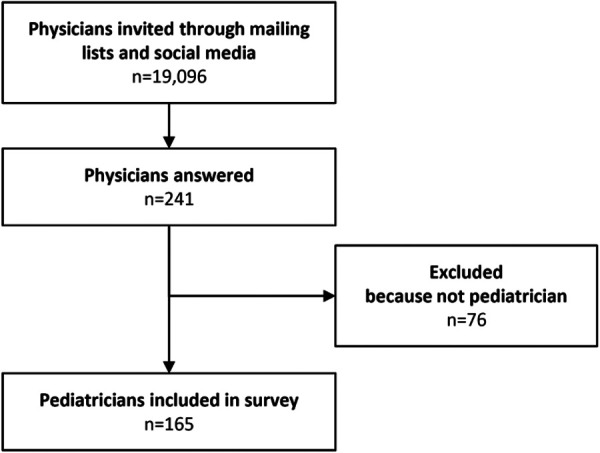
Objective: To assess the knowledge, attitudes, and practices (KAP) towards artificial intelligence (AI) among young pediatricians in France. Methods: We invited young French pediatricians to participate in an online survey. Invitees were identified through various email listings and social media. We conducted a descriptive analysis and explored whether survey responses varied according to respondents’ previous training in AI and level of clinical experience (i.e., residents vs. experienced doctors). Results: In total, 165 French pediatricians participated in the study (median age 27 years, women 78%, residents 64%). While 90% of participants declared they understood the term “artificial intelligence”, only 40% understood the term “deep learning”. Most participants expected AI would lead to improvements in healthcare (e.g., better access to healthcare, 80%; diagnostic assistance, 71%), and 86% declared they would favor implementing AI tools in pediatrics. Fifty-nine percent of respondents declared seeing AI as a threat to medical data security and 35% as a threat to the ethical and human dimensions of medicine. Thirty-nine percent of respondents feared losing clinical skills because of AI, and 6% feared losing their job because of AI. Only 5% of respondents had received specific training in AI, while 87% considered implementing such programs would be necessary. Respondents who received training in AI had significantly better knowledge and a higher probability of having encountered AI tools in their medical practice ( p < 0.05 for both). There was no statistically significant difference between residents’ and experienced doctors’ responses. Conclusion: In this survey, most young French pediatricians had favorable views toward AI, but a large proportion expressed concerns regarding the ethical, societal, and professional issues linked with the implementation of AI.
Overview
The claims and statistics of this paper haven’t been checked yet.
Free: it reads the open-access text and checks the first 5 claims that cite a source we can check. Create a free account to check every claim.
Integrity signals
Registry
Cites
Statistics
Figures
Verification
Claims the paper makes
The claims and statistics of this paper haven’t been checked yet.
Free: it reads the open-access text and checks the first 5 claims that cite a source we can check. Create a free account to check every claim.
Claims other papers make about this one
Each is checked against this paper’s own text: does it say what the citing paper says it does?
The source backs part of the claim, not all of it — or backs it for a different population, condition or comparison.
In the citing paper
“Overall system-wide benefits for patients are seen in an improved access to healthcare services [32, 59, 60, 71], for instance by establishing remote support for patients [34], and by improving population health indicators by supporting measures of disease prevention and health promotion [79].”
From Healthcare professionals’ perspectives on artificial intelligence in patient care: a systematic review of hindering and facilitating factors on different levels (2025) · cites this paper as [71]
Experimental — accuracy not yet measured
Self-check
Percentages, sums and reported differences re-computed from the paper’s own numbers.
The self-check needs the paper’s full text.
Citations
Cites
Dermatologist-level classification of skin cancer with deep neural networks
Esteva, A., Kuprel, B., Novoa, R. A., Ko, J., Swetter, S. M., Blau, H. M., & Thrun, S. (2017) · Nature · doi:10.1038/nature21056 · Cited by 14,362 · cited 1×
“For example, with image recognition techniques such as convolutional neural networks, AI may help clinicians detect fractures on x-rays (4), diabetic retinopathy on digital fundus images (5), skin cancer (6), and genetic diseases on facial images (7).”
High-performance medicine: the convergence of human and artificial intelligence
Topol, E. J. (2019) · Nature Medicine · doi:10.1038/s41591-018-0300-7 · Cited by 10,450
Gulshan, V., Peng, L., Coram, M., Stumpe, M. C., Wu, D., Narayanaswamy, A., Venugopalan, S., Widner, K., Madams, T., Cuadros, J., et al. (2016) · JAMA · doi:10.1001/jama.2016.17216 · Cited by 7,697 · cited 1×
“For example, with image recognition techniques such as convolutional neural networks, AI may help clinicians detect fractures on x-rays (4), diabetic retinopathy on digital fundus images (5), skin cancer (6), and genetic diseases on facial images (7).”
Semantic Information Processing
Minsky, M. (1968) · Virtual Defense Library (Ministerio de Defensa) · Cited by 2,193
Identifying facial phenotypes of genetic disorders using deep learning
Gurovich, Y., Hanani, Y., Bar, O., Nadav, G., Fleischer, N., Gelbman, D., Basel-Salmon, L., Krawitz, P. M., Kamphausen, S. B., Zenker, M., et al. (2019) · Nature Medicine · doi:10.1038/s41591-018-0279-0 · Cited by 739 · cited 1×
“For example, with image recognition techniques such as convolutional neural networks, AI may help clinicians detect fractures on x-rays (4), diabetic retinopathy on digital fundus images (5), skin cancer (6), and genetic diseases on facial images (7).”
Evaluation and accurate diagnoses of pediatric diseases using artificial intelligence
Liang, H., Tsui, B. Y., Ni, H., Valentim, C. C. S., Baxter, S. L., Liu, G., Cai, W., Kermany, D. S., Sun, X., Chen, J., et al. (2019) · Nature Medicine · doi:10.1038/s41591-018-0335-9 · Cited by 659 · cited 1×
“Beyond convolutional neural networks, other AI-enabled diagnostic applications include, for instance, improvement in diagnosing autism (8), identification of child abuse from medical records (9), and natural language processing systems to assist clinicians with detecting rare conditions (10).”
Sit, C., Srinivasan, R., Amlani, A., Muthuswamy, K., Azam, A., Monzon, L., & Poon, D. S. (2020) · Insights into Imaging · doi:10.1186/s13244-019-0830-7 · Cited by 507
Artificial Intelligence in Fracture Detection: A Systematic Review and Meta-Analysis
Kuo, R. Y. L., Harrison, C., Curran, T.-A., Jones, B., Freethy, A., Cussons, D., Stewart, M., Collins, G. S., & Furniss, D. (2022) · Radiology · doi:10.1148/radiol.211785 · Cited by 365
Laï, M.-C., Brian, M., & Mamzer, M.-F. (2020) · Journal of Translational Medicine · doi:10.1186/s12967-019-02204-y · Cited by 294
Artificial intelligence and the future of psychiatry: Insights from a global physician survey
Doraiswamy, P. M., Blease, C., & Bodner, K. (2020) · Artificial Intelligence in Medicine · doi:10.1016/j.artmed.2019.101753 · Cited by 253
Cited by
Henzler, D., Schmidt, S., Koçar, A., Herdegen, S., Lindinger, G. L., Maris, M. T., Bak, M. A. R., Willems, D. L., Tan, H. L., Lauerer, M., et al. (2025) · BMC Health Services Research · doi:10.1186/s12913-025-12664-2 · Cited by 54
“Overall system-wide benefits for patients are seen in an improved access to healthcare services [32, 59, 60, 71], for instance by establishing remote support for patients [34], and by improving population health indicators by supporting measures of disease prevention and health promotion [79].”
InfluentialOluwadiya, K. S., Adeoti, A. O., Agodirin, S. O., Nottidge, T. E., Usman, M. I., Gali, M. B., Onyemaechi, N. O., Ramat, A. M., Adedire, A., & Zakari, L. Y. (2023) · Nigerian Postgraduate Medical Journal · doi:10.4103/npmj.npmj_186_23 · Cited by 51
Kharroubi, S. A., Tannir, I., Hassan, R. A. E., & Ballout, R. (2024) · Education Sciences · doi:10.3390/educsci14080863 · Cited by 60
Habib, M. M., Hoodbhoy, Z., & Siddiqui, M. A. R. (2024) · PLOS Digital Health · doi:10.1371/journal.pdig.0000443 · Cited by 41
Bodani, N., Lal, A., Maqsood, A., Altamash, S., Ahmed, N., & Heboyan, A. (2023) · Sage Open · doi:10.1177/21582440231211079 · Cited by 38
“A study conducted on pediatricians about their knowledge and attitudes toward artificial intelligence demonstrated their serious concerns regarding ethical, and professional issues for its implementation (Perrier et al., 2022).”
BackgroundRetractedAllam, R. M., Abdelfatah, D., Khalil, M. I. M., Elsaieed, M. M., & Desouky, E. D. E. (2024) · BMC Medical Education · doi:10.1186/s12909-024-06201-8 · Cited by 39
“%) of students disapproved of the claim that physicians in general could be replaced in the near future, also study by Perrier et al. (2022) [36], who reported only 6% of participants expressed their fear of losing their job because of AI and the same low proportion was also found in study by…”
ResultAlabbad, F. A., Almeneessier, A. S., Alshalan, M. H., & Aljarba, M. N. (2025) · Journal of Family Medicine and Primary Care · doi:10.4103/jfmpc.jfmpc_1812_24 · Cited by 31
Adapting to Industry 4.0 in France: Essential Competencies for a Future-Ready Workforce
Turcato, C. R. P., Pedroso, B., Arnold, M., & Picinin, C. T. (2024) · Administrative Sciences · doi:10.3390/admsci14120322 · Cited by 28
Healthcare ethics and artificial intelligence: a UK doctor survey
Warrington, D. J., & Holm, S. (2024) · BMJ Open · doi:10.1136/bmjopen-2024-089090 · Cited by 28
Dubois, C., Eigen, D., Delmas, E., Einfalt, M., Lemaçon, C., Berteloot, L., Bossuyt, P. M., Drummond, D., Scherdel, P., Simon, F., et al. (2024) · BMJ · doi:10.1136/bmj-2023-076703 · Cited by 23
Self-citationALruwail, B., Alshalan, A., Thirunavukkarasu, A., Alibrahim, A., Alenezi, A. M., & Aldhuwayhi, T. Z. A. (2025) · Journal of Multidisciplinary Healthcare · doi:10.2147/jmdh.s499902 · Cited by 22
Mariano, M. E. M., Shahin, M. A. H., Ancheta, S. J., Vijayan, M., Dossary, N. M. A., Ojaimi, S. F. A., Qudah, S. A. A., & Harbi, H. F. A. (2025) · Social Sciences & Humanities Open · doi:10.1016/j.ssaho.2025.101384 · Cited by 27
Aggarwal, K., Ravi, R., & Yerraguntla, K. (2025) · Intelligence-Based Medicine · doi:10.1016/j.ibmed.2025.100214 · Cited by 20
The social anatomy of AI anxiety: gender, generations, and technological exposure
Uğur, N. G., & Dursun, F. (2025) · Frontiers in Psychiatry · doi:10.3389/fpsyt.2025.1641546 · Cited by 19
“Li and Huang (19) emphasize privacy and ethical concerns as dominant factors fueling public anxiety, particularly within healthcare contexts, where fears of compromised patient-provider relationships, misdiagnoses, and breaches of data security prevail (20 – 22).”
Abomhara, M., Nweke, L. O., Yayilgan, S. Y., Comparin, D., Teyras, K., & de Labriolle, S. (2024) · International Journal of Information Security · doi:10.1007/s10207-024-00905-0 · Cited by 9
Santamaria-Orleans, A., Ortiz-González, L., Pérez-Hernández, M., & Coronel‐Rodríguez, C. (2025) · JMIR Pediatrics and Parenting · doi:10.2196/75310 · Cited by 6
“The questions in this section were developed with input from experts and inspired by recent findings in the field [24].”
Venkatesan, K., Asiri, Y., Muralidharan, P., Sivadasan, D., Elfadil, H., Alharthi, N. M., Osman, H. A., Alavudeen, S. S., Khan, N. A., Easwaran, V., et al. (2026) · Frontiers in Public Health · doi:10.3389/fpubh.2026.1736417 · Cited by 5
Alzamel, L. G., Hassouneh, L., & Jallad, S. T. (2026) · BMC Medical Education · doi:10.1186/s12909-026-09053-6 · Cited by 6
KİREMİT, B. Y., Şener, İ., & Tabak, K. C. (2026) · Psychology Health & Medicine · doi:10.1080/13548506.2025.2607660 · Cited by 4
Alrasheeday, A., Alhawsawi, A. A., Alshammari, B., Alkubati, S. A., Aouicha, W., Tlili, M. A., Alharbi, A., Siam, B. G. A. E., Mahmoud, S. K. M., Elamin, B. A., et al. (2026) · Nursing Reports · doi:10.3390/nursrep16050154 · Cited by 4
“The measurement instruments used in this study were adapted from the previously validated scales [15,16,21].”
Güzeloğlu, E., Ateş, B., Aydın, F., Kök, S., Dağ, H., & Arıca, V. (2026) · BMC Pediatrics · doi:10.1186/s12887-026-07088-8 · Cited by 3
“Only 5% of participants had received specialized AI training, but those who did exhibited significantly higher knowledge levels and were more likely to use AI tools in their medical practices [21].”
Karaarslan, D., & Ergın, E. (2025) · International Journal of Human-Computer Interaction · doi:10.1080/10447318.2025.2534063 · Cited by 2
“Artificial Intelligence (AI)-based health technologies are promising (Perrier et al., 2022).”
Tyagi, M., Ravi, R., Rao, S., Kamath, N., & Soans, S. T. (2025) · PLoS ONE · doi:10.1371/journal.pone.0338314 · Cited by 3
“These studies, conducted across specialties such as dermatology [8], psychiatry [9], radiology [10,11], pediatrics [12], surgery [13], and among medical students and residents [14–16], generally report limited knowledge and training but a high level of interest in AI’s potential applications.”
Daus, Z., Howard, M., Reeder, S. C., Foster, E., Ge, Z., Sparrow, R., & Kwan, P. (2026) · Health and Technology · doi:10.1007/s12553-026-01066-x · Cited by 3
Chen, Z., Shu, J., Wang, D., Erlian, S. U. N., Wang, B., Qi, L., Zhang, H., Han, S., Wu, Y., & Wang, G. (2026) · International Journal of Medical Informatics · doi:10.1016/j.ijmedinf.2026.106476 · Cited by 3
Knowledge Towards Artificial Intelligence among Physical Therapists Working in Pakistan
Afzal, M. T., Mehreen, F., Ali, N., Aftab, R., Habib, I., & Ahmed, M. R. (2025) · THE THERAPIST (Journal of Therapies & Rehabilitation Sciences) · doi:10.54393/tt.v6i1.245 · Cited by 1
The use of artificial intelligence in paediatric postgraduate medical education: A scoping review
Nadarajah, A., Malekzadeh, G., & Ratnapalan, S. (2025) · Paediatrics & Child Health · doi:10.1093/pch/pxaf054 · Cited by 2
Beazon, N. A. B., Figueroa, N. D. R., Neri, J. V. T., Oblimar, C. V., Razon, M. A. S., Acoba, L. P., & Cruz, D. M. (2025) · International Conference on Artificial Intelligence and Big Data (ICAIBD) · doi:10.1109/icaibd64986.2025.11082039 · Cited by 1
“Despite this lack of detailed knowledge, 49% of the participants expressed a willingness to embrace AI tools in pediatrics, indicating a generally positive view of AI, even when there is limited understanding of AI terminology [20].”
Eabenson, S., Gudadinni, M. R., Yadavannavar, M. C., Udgiri, R. S., & Rangoli, A. M. (2026) · International Journal of Community Medicine and Public Health · doi:10.18203/2394-6040.ijcmph20260697 · Cited by 1
Artificial Intelligence in Practice: BCBAs’ Attitudes, Concerns, and Needs
Meadan, H., Alqunaysi, R., Xia, Y. R., Loya, M. R. M., & Xiong, J. (2026) · Education and Treatment of Children · doi:10.1007/s43494-026-00180-9 · Cited by 3
Scholz, F., Sahakian, T. S., GÜVEN, N., Renkema, M., Shulzhenko, E., Cuijpers, C., Schouten, G., Wouters, E., & de Vries, E. (2026) · The International Journal of Human Resource Management · doi:10.1080/09585192.2026.2711067 · Cited by 3
RapidAI for Stroke Detection and AI Implementation Review
CDA-AMC (2024) · Canadian Journal of Health Technologies · doi:10.51731/cjht.2024.1032 · Cited by 1
Cha, M., Zhang, Q., Yu, L., Wang, H., Luo, E., Huang, N. T., Qing, W., Yang, W., Luo, M., Du, Y., et al. (2025) · Health Science Reports · doi:10.1002/hsr2.71393
“This observation fits with the findings of Hamedani Z et al. and Perrier E et al. [12, 13], which showed that higher levels of literacy and higher job titles are usually linked with awareness of AI technology.”
Tekoäly terveydenhuollossa : ammattilaisten käsityksiä
Venho, E. (2025) · Theseus (Ammattikorkeakoulujen) · Cited by 1
Bozsoy, M. İ., & Sarıyer, M. N. (2025) · Dil Konuşma ve Yutma Araştırmaları Dergisi · doi:10.58563/dkyad-2025.83.1
Li, X., Wu, X., Yang, Y., & Li, H. L. (2026) · International Journal of Clinical Practice · doi:10.1155/ijcp/1389568
Manager, K. J. O. M., Muslim, T., Al-Ali, B. A., & Mohammed, H. R. (2026) · Karbala Journal of Medicine · doi:10.70863/karbalajm.v19i1.6195
“The average age of participants was 36.30 years, which is comparable to studies in Saudi Arabia [7] and Pakistan [8], but higher than in France and lower than in Iran [9].”
InfluentialMohamed, N. A., Ali, S. O., Ramadan, O. M. E., Farghaly, S. M., Elkhider, E. E., & Zaky, M. E. (2026) · BMC Nursing · doi:10.1186/s12912-026-04706-9
“It was adapted from studies [18, 19] and structured into two sections: the first on the expected benefits of AI in academic education (7 questions) and the second on students’ fears toward AI (5 questions).”
Healthcare Professionals’ Experiences of Artificial Intelligence in Healthcare
Komulainen, M. (2026) · UEF eRepo (University of Eastern Finland)
Yulianto, Y., Junaidi, J., & Saryono, U. (2025) · Enrichment Journal of Management · doi:10.35335/enrichment.v15i4.2372
Bal, H. I., Díllí, D., Köle, M. T., & Avcı, Y. E. (2026) · Journal of Health Sciences and Medicine · doi:10.32322/jhsm.2010095
Metadata
- Authors
- Perrier, E., Rifai, M., Terzic, A., Dubois, C., & Cohen, J. F.
- Affiliations
- Université Paris-Saclay (FR)
- Inserm (FR)
- Hôpital Necker-Enfants Malades (FR)
- Corresponding author
- Cohen, Jérémie F.
- Venue
- Frontiers in Pediatrics
- Publisher
- Frontiers Media SA
- Published
- 2022-12-23
- Volume
- 10
- Pages
- 1065957-1065957
- ISSN
- 2296-2360 (ISSN-L)
- PMC
- PMC9816325
- OpenAlex
- W4312176305
- Cited by
- 37
- References
- 20
- Citations by year
- 2026: 12 · 2025: 14 · 2024: 9 · 2023: 2
- FWCI
- 1.88
- Type
- journal article
- Language
- en
- Open access
- gold
- doi.org
- Licence
- Locations
- Frontiers in Pediatrics (publishedVersion, cc-by)
- PubMed Central (publishedVersion, cc-by)
- PubMed (publishedVersion)
- DOAJ (DOAJ: Directory of Open Access Journals) (submittedVersion, cc-by-sa)
- Topics
- Health Sciences › Medicine › Health Informatics › Artificial Intelligence in Healthcare and Education
- Physical Sciences › Computer Science › Artificial Intelligence › Ethics and Social Impacts of AI
- Physical Sciences › Computer Science › Artificial Intelligence › Artificial Intelligence Applications
- Keywords
- artificial intelligence, pediatricians, knowledge, attitudes and practices, deep learning, AI training, medical residents, clinical experience, medical ethics, medical data security, fear of job loss, clinical skills, AI implementation
About these checks
Registry, retraction, Cites and statistics results are computed, not judged, with one exception: a printed reference that no index lists is read once by a model before it counts as a citation error. Claims are extracted by a model and kept only when their quote appears verbatim in the text; each cited source is then checked, with a model’s help, for whether it says what the claim relies on. Those verdicts can be wrong — read the claim’s quote and the cited source before relying on one.
Statistics and arithmetic are recomputed, not judged.
Confidence bands are shown only for fields calibrated on our annotated test set. None is calibrated yet, so no band is shown.
What counts as a claim ›How we measure confidence ›How we check this ›
Are you an author, or do you see a problem with this page? Request a review
Data sources
Bibliographic data: Semantic Scholar, OpenAlex, Crossref.
Contains information from the Semantic Scholar Academic Graph Datasets, made available under the ODC Attribution License (ODC-BY 1.0).
Semantic Scholar’s data is described in: Kinney, R., et al. (2023). The Semantic Scholar Open Data Platform. arXiv:2301.10140.
