

The DOI matches its Crossref record; 119 of the 119 references it cites were found in a registry or an index.
Immune-mediated hepatitis induced by immune checkpoint inhibitors: Current updates and future perspectives
Abstract
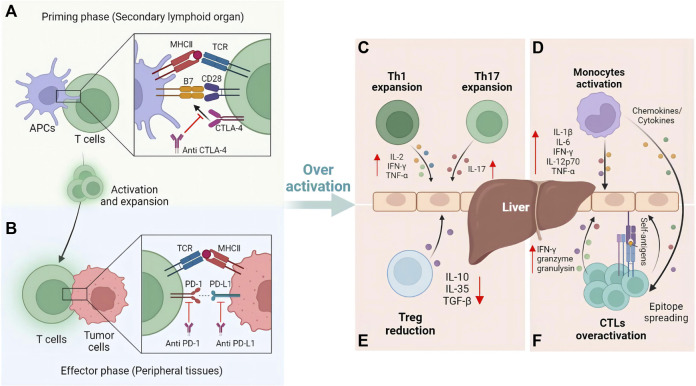
In recent years, cancer immunotherapy has made remarkable achievements. Immune checkpoint inhibitors (ICIs) have been used successfully in several types of cancer in the past decade. However, expanded indication and increased use of Immune checkpoint inhibitors have resulted in increased reports of toxicity called immune-related adverse events (irAEs). Due to the unique immunological characteristics of the liver, a hepatic immune-related adverse events has also been reported, which is usually termed Immune-mediated hepatitis (IMH). So far, it is generally considered that the mechanism of IMH induced by Immune checkpoint inhibitors is mainly the overactivation of T cells. It has been reported that the incidence of IMH ranges from 1% to 15%. Because of the lack of specific markers, a diagnosis of exclusion of IMH is critical. Although most IMH is mild and recoverable, several death cases have been reported, which has been increasingly concerned. This review summarizes the current understanding of the pathophysiology, epidemiology, diagnosis, management and prognosis of IMH caused by Immune checkpoint inhibitors. It also discusses the controversial issues in IMH, such as the role of liver biopsy, grading criteria, risk factors, rational treatment strategies with steroids, and the timing of Immune checkpoint inhibitors rechallenging, which may provide helpful information for IMH in future clinical practice.
Overview
The claims and statistics of this paper haven’t been checked yet.
Run the check — free, no account needed. It reads the open-access text and checks the sources it cites.
Integrity signals
Registry
Cites
Statistics
Figures
Verification
Claims the paper makes
The claims and statistics of this paper haven’t been checked yet.
Run the check — free, no account needed. It reads the open-access text and checks the sources it cites.
Claims other papers make about this one
Each is checked against this paper’s own text: does it say what the citing paper says it does?
In the citing paper
“Immune-mediated liver injury from checkpoint inhibitors (ILICIs) is an increasingly recognized cause of liver injury with an incidence of 5%–10%.41–43”
From The contemporary epidemiology, causes, and management of drug-induced liver injury (2026) · cites this paper as [41]
Self-check
Percentages, sums and reported differences re-computed from the paper’s own numbers.
The self-check needs the paper’s full text.
Citations
Cites
PD-1 and PD-L1 Immune Checkpoint Blockade to Treat Breast Cancer
Hartkopf, A. D., Taran, F.-A., Wallwiener, M., Walter, C. B., Krämer, B., Grischke, E.-M., & Brucker, S. Y. (2016) · Breast Care · doi:10.1159/000453569 · Cited by 30,845
Improved Survival with Ipilimumab in Patients with Metastatic Melanoma
Hodi, F. S., O'Day, S. J., McDermott, D. F., Weber, R. W., Sosman, J. A., Haanen, J. B., Gonzalez, R., Robert, C., Schadendorf, D., Hassel, J. C., et al. (2010) · New England Journal of Medicine · doi:10.1056/nejmoa1003466 · Cited by 15,155
Atezolizumab plus bevacizumab in unresectable hepatocellular carcinoma
Finn, R. S., Qin, S., Ikeda, M., Galle, P. R., Ducreux, M., Kim, T.-Y., Kudo, M., Breder, V., Merle, P., Kaseb, A. O., et al. (2020) · New England Journal of Medicine · doi:10.1056/nejmoa1915745 · Cited by 7,470
Pembrolizumab versus Ipilimumab in Advanced Melanoma
Robert, C., Schachter, J., Long, G. V., Arance, A., Grob, J. J., Mortier, L., Daud, A., Carlino, M. S., McNeil, C., Lotem, M., et al. (2015) · New England Journal of Medicine · doi:10.1056/nejmoa1503093 · Cited by 5,887
Overall Survival with Combined Nivolumab and Ipilimumab in Advanced Melanoma
Wolchok, J. D., Chiarion-Sileni, V., Gonzalez, R., Rutkowski, P., Grob, J.-J., Cowey, C. L., Lao, C. D., Wagstaff, J., Schadendorf, D., Ferrucci, P. F., et al. (2017) · New England Journal of Medicine · doi:10.1056/nejmoa1709684 · Cited by 5,357 · cited 1×
“Meanwhile, compared to monotherapy, combined immunotherapy has higher incidence in most of irAEs and more than 60% of patients treated with combined therapy have been reported to occur severe irAEs (Wolchok et al., 2017; Esfahani et al., 2019).”
BackgroundEl-Khoueiry, A. B., Sangro, B., Yau, T., Crocenzi, T. S., Kudo, M., Hsu, C., Kim, T.-Y., Choo, S.-P., Trojan, J., Welling, T. H., et al. (2017) · The Lancet · doi:10.1016/s0140-6736(17)31046-2 · Cited by 4,280
Vignali, D. A. A., Collison, L. W., & Workman, C. J. (2008) · Nature Reviews Immunology · doi:10.1038/nri2343 · Cited by 3,463
Wang, D. Y., Salem, J.-E., Cohen, J. V., Chandra, S., Menzer, C., Ye, F., Zhao, S., Das, S., Beckermann, K. E., Ha, L., et al. (2018) · JAMA Oncology · doi:10.1001/jamaoncol.2018.3923 · Cited by 2,674
Zhu, A. X., Finn, R. S., Edeline, J., Cattan, S., Ogasawara, S., Palmer, D., Verslype, C., Zagonel, V., Fartoux, L., Vogel, A., et al. (2018) · The Lancet Oncology · doi:10.1016/s1470-2045(18)30351-6 · Cited by 2,479
Tumor and Microenvironment Evolution during Immunotherapy with Nivolumab
Riaz, N., Havel, J. J., Makarov, V., Desrichard, A., Urba, W. J., Sims, J. S., Hodi, F. S., Martín-Algarra, S., Mandal, R., Sharfman, W. H., et al. (2017) · Cell · doi:10.1016/j.cell.2017.09.028 · Cited by 2,401
Research works printed but not linked: 1
- 2017, Common terminology criteria for adverse events version 5.0
Cited by
New advances in the study of PD-1/PD-L1 inhibitors-induced liver injury
Yue, M., Li, C., & Li, G. (2024) · International Immunopharmacology · doi:10.1016/j.intimp.2024.111799 · Cited by 12
The contemporary epidemiology, causes, and management of drug-induced liver injury
Swanson, L., & Fontana, R. J. (2026) · Hepatology Communications · doi:10.1097/hc9.0000000000001011
Metadata
- Authors
- Liu, Z., Zhu, Y., Xie, H., & Zou, Z.
- Venue
- Frontiers in Pharmacology
- Publisher
- Frontiers Media SA
- Published
- 2023-01-09
- Volume
- 13
- ISSN
- 1663-9812
- PMC
- PMC9868416
- Cited by
- 77
- References
- 119
- Funders
- National Natural Science Foundation of China (81670527)
About these checks
Registry, retraction, Cites and statistics results are computed, not judged, with one exception: a printed reference that no index lists is read once by a model before it counts as a citation error. Claims are extracted by a model and kept only when their quote appears verbatim in the text; each cited source is then checked, with a model’s help, for whether it says what the claim relies on. Those verdicts can be wrong — read the claim’s quote and the cited source before relying on one.
Statistics and arithmetic are recomputed, not judged.
Confidence bands are shown only for fields calibrated on our annotated test set. None is calibrated yet, so no band is shown.
What counts as a claim ›How we measure confidence ›How we check this ›
Are you an author, or do you see a problem with this page? Request a review
Data sources
Bibliographic data: Semantic Scholar, OpenAlex, Crossref.
Contains information from the Semantic Scholar Academic Graph Datasets, made available under the ODC Attribution License (ODC-BY 1.0).
Semantic Scholar’s data is described in: Kinney, R., et al. (2023). The Semantic Scholar Open Data Platform. arXiv:2301.10140.
