

The DOI matches its Crossref record; 35 of the 35 references it cites were found in a registry or an index; none of the 1 sources its claims cite is checked for support yet.
A New Method to Improve Running Economy and Maximal Aerobic Power in Athletes: Endurance Training With Periodic Carbon Monoxide Inhalation
Open accessAbstract
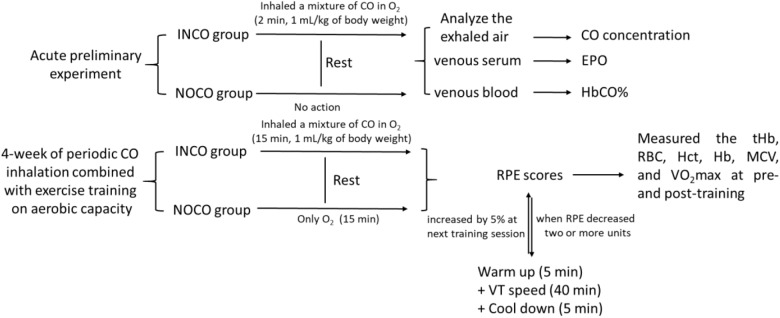
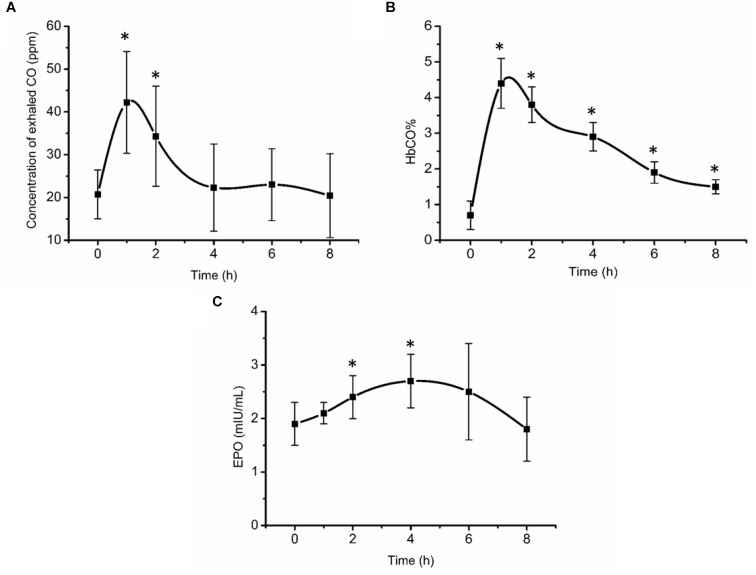
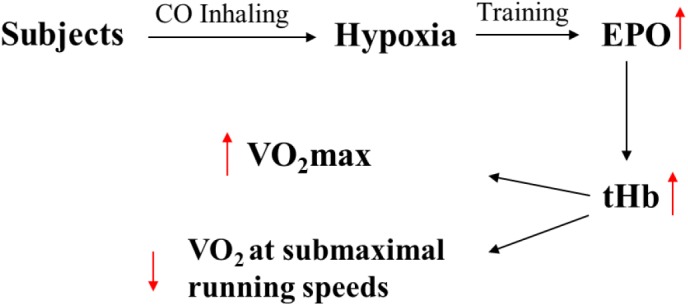
Background: Altitude training stimulates erythropoietin hormone (EPO) release and increases blood hemoglobin (Hb) mass, which may result in improved oxygen (O2) transport capacity. It was hypothesized in the present study that periodic inhalation of carbon monoxide (CO) might elicit similar physiological adaptations compared to altitude training. Methods: Twelve male college student athletes, who were well-trained soccer players, participated. They performed a four-week treadmill-training program, 5 times a week. Participants were randomly assigned into an experimental group with inhaling CO (INCO) (1 mL/kg body weight for 2 minutes) in O2 (4 L) before all training sessions and a control group without inhaling CO (NOCO). CO and EPO concentrations in venous blood were first measured acutely at the 1st, 2nd, 4th, 6th, and 8th hour after INCO, and total hemoglobin mass (tHb), running economy and VO2max were measured before and after the four weeks training intervention. Results: HbCO% increased from 0.7 to 4.4% (P<0.05) after 1 h of CO inhalation and EPO increased from 1.9 to 2.7 mIU/mL after 4 h post CO inhalation (P<0.05) acutely before the intervention. After the training, the tHb and VO2max in the INCO group increased significantly by 3.7 and 2.7%, respectively, while no significant differences were observed in the NOCO condition. O2 uptake at given submaximal speeds declined by approximately 4% in the INCO group. Conclusion: Acutely, EPO increased sharply post CO inhalation, peaking at 4 h post inhalation. 4-weeks of training with CO inhalation before exercise sessions improved tHb and VO2max as well as running economy, suggesting that moderate CO inhalation could be a new method to improve the endurance performance in athletes.
Overview
CoChat Summary
TL;DR
In 12 well-trained male soccer players, periodic inhalation of a low dose of carbon monoxide before treadmill training increased erythropoietin acutely and improved total hemoglobin, VO2max, and running economy after 4 weeks. The authors propose CO inhalation as a practical sea-level method to mimic some altitude-training adaptations, while emphasizing safety and the need for further research.
Key findings
- Acute CO inhalation increased blood HbCO% from 0.7 to 4.4% after 1 h and raised serum EPO, which peaked at 4 h post inhalation at 2.7 mIU/mL, an increase of 42.1% from baseline.
- After 4 weeks, the INCO group significantly increased tHb by 3.7%, RCV by 5.3%, PV by 6.8%, and BV by 6.2%; the NOCO group showed no significant changes.
- VO2max increased significantly in INCO by 2.4% absolute and 2.7% relative, while NOCO showed no significant change (0.1% relative).
- O2 uptake at submaximal running speeds of 8, 10, and 12 km/h declined significantly in INCO by 3.7, 3.6, and 5.4%, respectively, indicating improved running economy; RBC, Hct, Hb, and MCV did not differ significantly pre- to post-training.
Methods
- Twelve healthy young adult male soccer players from Beijing Sport University, living at low altitude, non-smokers, with more than 10 years of sport training, were randomly assigned to INCO (n = 6) or NOCO (n = 6).
- The study had an acute phase measuring exhaled CO, blood HbCO%, and EPO before and at 1, 2, 4, 6, and 8 h after one CO inhalation (1 mL/kg body weight in 4 L O2 for 2 min), followed by a 4-week treadmill-training program five times per week, 50 min per session, with CO or O2 inhaled 15 min before each session.
- Outcomes included EPO by ELISA, HbCO and exhaled CO, tHb and blood volumes by CO-rebreathing, VO2max by incremental treadmill test, and running economy at 8, 10, and 12 km/h; analyses used repeated-measures and 2-way ANOVA with Student-Newman-Keuls post hoc tests, P < 0.05, and effect sizes.
Limitations
- The paper states that the sample was small and included only football players, so findings should be extended to larger groups and other sport disciplines.
- The paper states that CO breathing can be dangerous and should only be performed in a well-controlled laboratory with close monitoring of exhaled and blood CO and access to first aid.
- The paper also notes that no direct comparison to altitude training was performed, CO clearance during exercise was not determined, and mechanistic explanations for improved running economy remain speculative; the text does not report blinding of participants or assessors.
Model-written summary. Check it against the paper before relying on it.
Integrity signals
Registry
Cites
Statistics
Figures
Verification
Claims the paper makes
0 Valid · 0 Not valid · 1 Not checked · 28 Own results and interpretations
A result the paper reports from its own data — it cites no other source for it, so there is none to check. The quote shows it is in the paper.
In the paper
“The VO2max in the INCO group was significantly higher (P < 0.05) post-training when compared to the NOCO group.”
§ A New Method to Improve Running Economy and Maximal Aerobic Power in Athletes: Endurance Training With Periodic Carbon Monoxide Inhalation > Results > Maximal Aerobic Power After 4 Weeks of Training
plainn = 6 ·- Asserted: passes — The authors put it forward as true.
- Checkable: passes — It can be checked against evidence.
- Load-bearing: passes — The paper’s conclusions depend on it.
- Based: passes — The paper gives a reason why it holds.
A result the paper reports from its own data — it cites no other source for it, so there is none to check. The quote shows it is in the paper.
In the paper
“Post-training, a significant (P < 0.05) increase was observed in tHb (3.7%, ES = 0.76), RCV (5.3%, ES = 2.14), PV (6.8%, ES = 6.34), and BV (6.2%, ES = 39.45) in the INCO group.”
§ A New Method to Improve Running Economy and Maximal Aerobic Power in Athletes: Endurance Training With Periodic Carbon Monoxide Inhalation > Results > Exercise Training and CO Inhalation
plainstates a causen = 6 ·- Asserted: passes — The authors put it forward as true.
- Checkable: passes — It can be checked against evidence.
- Load-bearing: passes — The paper’s conclusions depend on it.
- Based: passes — The paper gives a reason why it holds.
A result the paper reports from its own data — it cites no other source for it, so there is none to check. The quote shows it is in the paper.
In the paper
“After the training, the tHb and VO2max in the INCO group increased significantly by 3.7 and 2.7%, respectively, while no significant differences were observed in the NOCO condition.”
- Also stated in: § Exercise Training and CO Inhalation · plain
“Post-training, a significant (P < 0.05) increase was observed in tHb (3.7%, ES = 0.76), RCV (5.3%, ES = 2.14), PV (6.8%, ES = 6.34), and BV (6.2%, ES = 39.45) in the INCO group.”
- Also stated in: § Discussion · plain
“increased subjects’ tHb (3.7%), plasma (6.8%), and whole blood volume (6.2%), VO2max (2.7%), and running economy (4%).”
§ A New Method to Improve Running Economy and Maximal Aerobic Power in Athletes: Endurance Training With Periodic Carbon Monoxide Inhalation > Abstract > Results
plainstates a causen = 6 ·- Asserted: passes — The authors put it forward as true.
- Checkable: passes — It can be checked against evidence.
- Load-bearing: passes — The paper’s conclusions depend on it.
- Based: passes — The paper gives a reason why it holds.
- Also stated in: § Exercise Training and CO Inhalation · plain
A result the paper reports from its own data — it cites no other source for it, so there is none to check. The quote shows it is in the paper.
In the paper
“O2 uptake at given submaximal speeds declined by approximately 4% in the INCO group.”
- Also stated in: § Maximal Aerobic Power After 4 Weeks of Training · plain
“At submaximal running speeds (8, 10, and 12 km/h), absolute/relative O2 uptake of both the INCO and NOCO group appears to be lower post-training, as shown in Table 5. However, the decrease was only significant in the INCO group (3.7, 3.6, and 5.4%, ES = 0.61, 0.48, and 0.63, respectively) (P < 0.05).”
§ A New Method to Improve Running Economy and Maximal Aerobic Power in Athletes: Endurance Training With Periodic Carbon Monoxide Inhalation > Abstract > Results
plainstates a causen = 6 ·- Asserted: passes — The authors put it forward as true.
- Checkable: passes — It can be checked against evidence.
- Load-bearing: passes — The paper’s conclusions depend on it.
- Based: passes — The paper gives a reason why it holds.
- Also stated in: § Maximal Aerobic Power After 4 Weeks of Training · plain
A result the paper states — it cites no source for it, so there is none to check. The quote shows it is in the paper.
In the paper
“Inhalation of CO (1 mL/kg BW) in normoxia stimulates EPO secretion in well-trained male soccer players.”
§ A New Method to Improve Running Economy and Maximal Aerobic Power in Athletes: Endurance Training With Periodic Carbon Monoxide Inhalation > Conclusion
plainstates a cause- Asserted: passes — The authors put it forward as true.
- Checkable: passes — It can be checked against evidence.
- Load-bearing: passes — The paper’s conclusions depend on it.
- Based: passes — The paper gives a reason why it holds.
14 more claims
Create a free account to see all 29 claims and to verify the 1 reference still open.
- The quote only partly states this claim. 2
- It may state two separate claims as one. 7
- Probably not a substantial claim. 3
Claims other papers make about this one
Each is checked against this paper’s own text: does it say what the citing paper says it does?
In the citing paper
“Periodic inhalation of carbon monoxide (CO) at rest has been shown to mimic the effects of hypoxic training (Wang et al., 2019) and living at high altitude (Schmidt et al., 2020), with additive benefits when combined with natural high‐altitude exposure (Urianstad et al., 2024).”
From Effect of live‐high, train‐low strategy induced by chronic low‐dose carbon monoxide exposure on haematological parameters and performance in trained individuals (2026) · cites this paper as Wang et al., 2019
In the citing paper
“For example, the lack of statistical indicators (i.e., lack of information on main- and interaction effects), as in the study by Wang et al. (2019), could call into question the true effect of the application, at least when combined with exercise.”
From Low-dose carbon monoxide inhalation to increase total hemoglobin mass and endurance performance: scientific evidence and implications (2024) · cites this paper as Wang et al., 2019
In the citing paper
“Wang et al. reported that inhaling a CO bolus (1 mL/kg body mass) five times a week prior to treadmill training increased tHb-mass by 3.7% in trained soccer players (VO2max 58 mL/min/kg), although a 2.8% increase was also observed in the control group (Wang et al., 2019).”
From Low-dose carbon monoxide inhalation to increase total hemoglobin mass and endurance performance: scientific evidence and implications (2024) · cites this paper as Wang et al., 2019
Self-check
Percentages, sums and reported differences re-computed from the paper’s own numbers.
Each contradiction between two passages listed here was confirmed by an independent check.
Rated minor: it would not touch a result — a value no result rests on, a p-value that stays on the same side of the significance level, or a conflict that is clerical, resolved elsewhere in the paper, or outside its own findings.
In the paper
“| Hct (%) | 0.41 ± 0.02 | 0.42 ± 0.01 | 0.50 | 0.42 ± 0.02 | 0.42 ± 0.03 | 0 |”
§ A New Method to Improve Running Economy and Maximal Aerobic Power in Athletes: Endurance Training With Periodic Carbon Monoxide Inhalation > Results > Exercise Training and CO Inhalation
Reported 0.41 · recomputed 41.443773
Rated minor: it would not touch a result — a value no result rests on, a p-value that stays on the same side of the significance level, or a conflict that is clerical, resolved elsewhere in the paper, or outside its own findings.
In the paper
§ A New Method to Improve Running Economy and Maximal Aerobic Power in Athletes: Endurance Training With Periodic Carbon Monoxide Inhalation > Conclusion
“Inhaling 1 mL/kg CO prior to training sessions (five times/week for 4 weeks) increases PV, BV, RBC, tHb, running economy, and VO2max post-training”
§ A New Method to Improve Running Economy and Maximal Aerobic Power in Athletes: Endurance Training With Periodic Carbon Monoxide Inhalation > Results > Exercise Training and CO Inhalation
“There were no differences between pretest and posttest in RBC, Hct, Hb, and MCV.”
Cited works that were retracted
Works this paper cites that were later retracted, from the retraction notices publishers deposit. Major when the notice came out before this paper was published.
A note, not an issue: for example, a cited work that was retracted only after this paper was published, which its authors could not have known.
In the paper
“Suliman, 2007, A new activating role for CO in cardiac mitochondrial biogenesis., J. Cell Sci., 120, 299, 10.1242/jcs.03318”
Cited work 10.1242/jcs.03318 · retraction date not known · this paper published 2019-06-06
Citations
Cites
1 retracted
RETRACTED: A new activating role for CO in cardiac mitochondrial biogenesis
Suliman, H. B., Carraway, M. S., Tatro, L. G., & Piantadosi, C. A. (2006) · Journal of Cell Science · doi:10.1242/jcs.03318 · Cited by 213
RetractedTargeting Hypoxia-Inducible Factors for the Treatment of Anemia in Chronic Kidney Disease Patients
Locatelli, F., Fishbane, S. N., Block, G. A., & Macdougall, I. C. (2017) · American Journal of Nephrology · doi:10.1159/000455166 · Cited by 4,836
Factors affecting running economy in trained distance runners
Saunders, P. U., Pyne, D. B., Telford, R. D., & Hawley, J. A. (2004) · Sports Medicine · doi:10.2165/00007256-200434070-00005 · Cited by 975
Regulation of erythropoiesis by hypoxia-inducible factors
Haase, V. H. (2013) · Blood Reviews · doi:10.1016/j.blre.2012.12.003 · Cited by 787
Levine, B. D., & Stray-Gundersen, J. (1997) · Journal of Applied Physiology · doi:10.1152/jappl.1997.83.1.102 · Cited by 560
The optimised CO-rebreathing method: a new tool to determine total haemoglobin mass routinely
Schmidt, W., & Prommer, N. (2005) · European Journal of Applied Physiology · doi:10.1007/s00421-005-0050-3 · Cited by 335
Erythrocyte and the Regulation of Human Skeletal Muscle Blood Flow and Oxygen Delivery
González‐Alonso, J., Olsen, D. B., & Saltin, B. (2002) · Circulation Research · doi:10.1161/01.res.0000044939.73286.e2 · Cited by 331
Rate of erythropoietin formation in humans in response to acute hypobaric hypoxia
Eckardt, K., Boutellier, U., Kurtz, A., Schopen, M., Koller, E. A., & Bauer, C. (1989) · Journal of Applied Physiology · doi:10.1152/jappl.1989.66.4.1785 · Cited by 309
Individual variation in response to altitude training
Chapman, R. F., Stray-Gundersen, J., & Levine, B. D. (1998) · Journal of Applied Physiology · doi:10.1152/jappl.1998.85.4.1448 · Cited by 283
Live high:train low increases muscle buffer capacity and submaximal cycling efficiency
Gore, C. J., Hahn, A., Aughey, R. J., Martin, D. T., Ashenden, M., Clark, S. A., GARNHAM, A. P., Roberts, A. D., Slater, G., & McKenna, M. J. (2001) · Acta Physiologica Scandinavica · doi:10.1046/j.1365-201x.2001.00906.x · Cited by 274
Research works printed but not linked: 1
- Cohen, 1988, Statistical Power Analysis for the Behavioural Sciences
Cited by
Chronic Exposure to Low-Dose Carbon Monoxide Alters Hemoglobin Mass and V˙O2max
SCHMIDT, W. F. J., HOFFMEISTER, T., HAUPT, S., SCHWENKE, D., WACHSMUTH, N. B., & BYRNES, W. C. (2020) · Medicine & Science in Sports & Exercise · doi:10.1249/mss.0000000000002330 · Cited by 39
The relationship between hemoglobin and V˙O2max: A systematic review and meta-analysis
Webb, K. L., Gorman, E. K., Morkeberg, O. H., Klassen, S. A., Regimbal, R. J., Wiggins, C. C., Joyner, M. J., Hammer, S. M., & Senefeld, J. W. (2023) · PLoS ONE · doi:10.1371/journal.pone.0292835 · Cited by 36
Compelling Evidence: A Critical Update on the Therapeutic Potential of Carbon Monoxide
Bauer, N., Mao, Q., Vashistha, A., Seshadri, A. J., Du, Y. N., Otterbein, L. E., Tan, C., de Caestecker, M. P., & Wang, B. (2025) · Medicinal Research Reviews · doi:10.1002/med.22116 · Cited by 33
Urianstad, T., Villanova, S., Odden, I., Hansen, J., Mølmen, K. S., Porcelli, S., Rønnestad, B. R., & Cardinale, D. A. (2024) · Journal of Applied Physiology · doi:10.1152/japplphysiol.00469.2024 · Cited by 19
Gatterer, H., Dünnwald, T., Woyke, S., Faulhaber, M., Schumacher, Y. O., & Schobersberger, W. (2024) · Frontiers in Physiology · doi:10.3389/fphys.2024.1490205 · Cited by 13
DiMarco, K. G., Chapman, C. L., Weiser, N. E., Matsell, E. R., Lucernoni, K. M., Chacon, S., Grivette, M. M. B., Halliwill, J. R., Lovering, A. T., & Minson, C. T. (2024) · Experimental Physiology · doi:10.1113/ep091923 · Cited by 12
Wang, J., Guan, H., Hostrup, M., ROWLANDS, D. S., González‐Alonso, J., & Jensen, J. (2021) · Journal of Science in Sport and Exercise · doi:10.1007/s42978-021-00133-1 · Cited by 10
Self-citationThe HO-1/CO System and Mitochondrial Quality Control in Skeletal Muscle
Gasier, H. G., Suliman, H. B., & Piantadosi, C. A. (2021) · Exercise and Sport Sciences Reviews · doi:10.1249/jes.0000000000000277 · Cited by 9
Villanova, S., Porcelli, S., Ekström, L., & Cardinale, D. A. (2026) · Experimental Physiology · doi:10.1113/ep093005 · Cited by 5
Lipolysis gone rogue: the HSL connection in feeding cancer
Hemadri, K., Subramanian, P., Aravindan, S., Periyasamy, L., & Aravindan, N. (2025) · Cell Biology and Toxicology · doi:10.1007/s10565-025-10098-4 · Cited by 5
Carbon Monoxide Rebreathing as a Doping Method—A Toxic Debate
Faiss, R., & Krumm, B. (2024) · Drug Testing and Analysis · doi:10.1002/dta.3807 · Cited by 5
Carbon monoxide inhalation for performance: dancing with the devil?
Minson, C. T., & Joyner, M. J. (2024) · Journal of Applied Physiology · doi:10.1152/japplphysiol.00767.2024 · Cited by 3
Repeated Carbon Monoxide Inhalation in Sports: A New Frontier or a Dangerous Gamble?
Sperlich, B., Holmberg, H., Martín-Rincón, M., Skattebo, Ø., Burr, J. F., Hallén, J., Boushel, R., & Calbet, J. A. L. (2024) · Scandinavian Journal of Medicine and Science in Sports · doi:10.1111/sms.70005 · Cited by 5
Xu, Y., Xu, N., Wang, R., Li, W., Ho, I. M. K., Poon, E. T., Liu, W., & Liu, H. (2025) · Annals of Human Biology · doi:10.1080/03014460.2025.2566327 · Cited by 4
Carbon monoxide inhalation as a potential aid to enhance aerobic endurance
Bezuglov, E., Evgeniy, A. Z., Kapralova, E., Elizaveta, R., Vladimir, S., Malyakin, G. I., Sadkovaya, O., Talibov, O. B., Baymeeva, N. V., Vartapetov, M., et al. (2024) · Medical Gas Research · doi:10.4103/mgr.medgasres-d-24-00021 · Cited by 4
Carbon monoxide inhalation to increase haemoglobin mass: a canary in a coal mine for sport?
Dugan, C., & Hennigar, S. R. (2025) · British Journal of Sports Medicine · doi:10.1136/bjsports-2024-109240 · Cited by 2
Tobacco smoking: A stimulus for blood volume expansion
Sotiridis, A., Dardamanis-Aidonas, C., Makris, A., Loukas, I., Geladas, N., & Koskolou, M. (2026) · Respiratory Physiology & Neurobiology · doi:10.1016/j.resp.2025.104505 · Cited by 1
Perović, A., Juričić, G., Bratičević, M. N., Tomicic, N., Žarak, M., & Dumić, J. (2026) · Medicine & Science in Sports & Exercise · doi:10.1249/mss.0000000000004007 · Cited by 1
Tripp, T. R., Caswell, A. M., Edgett, B. A., & MacInnis, M. J. (2025) · Applied Physiology, Nutrition, and Metabolism · doi:10.1139/apnm-2025-0115
Islam, S., & Husein, M. (2026) · Pamukkale Journal of Sport Sciences · doi:10.54141/psbd.1776590
Carbon monoxide and other “tricks” in sports: does the winner take it all?
HEINONEN, I. H. A. (2026) · Frontiers in Sports and Active Living · doi:10.3389/fspor.2026.1847660
Self-citationTalarowski, K., Talarek, K., Pluta, W., Tylec, P., Bryl, J., Milaniuk, R., Pacek, A., Daniszewski, S., Czerny, I., Ściubak, A., et al. (2026) · Quality in Sport · doi:10.12775/qs.2026.74.75254
Metadata
- Authors
- Wang, J., Ji, Y., Zhou, L., Xiang, Y., Heinonen, I., & Zhang, P.
- Affiliations
- Beijing Sport University (CN)
- Shanxi Medical University (CN)
- Yan'an University (CN)
- University of Turku (FI)
- East Stroudsburg University (US)
- Corresponding author
- Wang, Jun
- Xiang, Yang
- Venue
- Frontiers in Physiology
- Publisher
- Frontiers Media SA
- Published
- 2019-06-06
- Volume
- 10
- Pages
- 701-701
- ISSN
- 1664-042X (ISSN-L)
- PMC
- PMC6562501
- OpenAlex
- W2960401235
- Cited by
- 22
- References
- 35
- Citations by year
- 2026: 5 · 2025: 6 · 2024: 7 · 2023: 1 · 2021: 2 · 2020: 1
- FWCI
- 0.50
- Type
- journal article
- Language
- en
- Open access
- gold
- doi.org
- Licence
- Locations
- Frontiers in Physiology (publishedVersion, cc-by)
- PubMed (publishedVersion)
- PubMed Central (publishedVersion, cc-by)
- UTUPub (University of Turku) (submittedVersion)
- DOAJ (DOAJ: Directory of Open Access Journals) (submittedVersion, cc-by-sa)
- Topics
- Health Sciences › Medicine › Physiology (medical) › Cardiovascular and exercise physiology
- Health Sciences › Medicine › Physiology (medical) › High Altitude and Hypoxia
- Life Sciences › Biochemistry, Genetics and Molecular Biology › Molecular Biology › Heme Oxygenase-1 and Carbon Monoxide
- Keywords
- carbon monoxide inhalation, running economy, maximal aerobic capacity, endurance training, erythropoietin, hemoglobin mass, oxygen consumption, altitude training, soccer players, endurance performance
About these checks
Registry, retraction, Cites and statistics results are computed, not judged, with one exception: a printed reference that no index lists is read once by a model before it counts as a citation error. Claims are extracted by a model and kept only when their quote appears verbatim in the text; each cited source is then checked, with a model’s help, for whether it says what the claim relies on. Those verdicts can be wrong — read the claim’s quote and the cited source before relying on one.
A language model drew the claims from the paper on 2026-11-13, under version 3 of the claim definition (model deepseek-v4.1-flash, prompt extract-v3).
A second model labelled each claim on 2026-11-13 (model jev-1.13-20260917, definition revision gold-guideline-v0.2).
Statistics and arithmetic are recomputed, not judged.
Confidence bands are shown only for fields calibrated on our annotated test set. None is calibrated yet, so no band is shown.
What counts as a claim ›How we measure confidence ›How we check this ›
Are you an author, or do you see a problem with this page? Request a review
Data sources
Bibliographic data: Semantic Scholar, OpenAlex, Crossref.
Contains information from the Semantic Scholar Academic Graph Datasets, made available under the ODC Attribution License (ODC-BY 1.0).
Semantic Scholar’s data is described in: Kinney, R., et al. (2023). The Semantic Scholar Open Data Platform. arXiv:2301.10140.
