

Transcriptomic analysis reveals mechanisms for the different drought tolerance of sweet potatoes
Open accessThe DOI matches its Crossref record; 64 of the 64 references it cites were found in a registry or an index.
Abstract
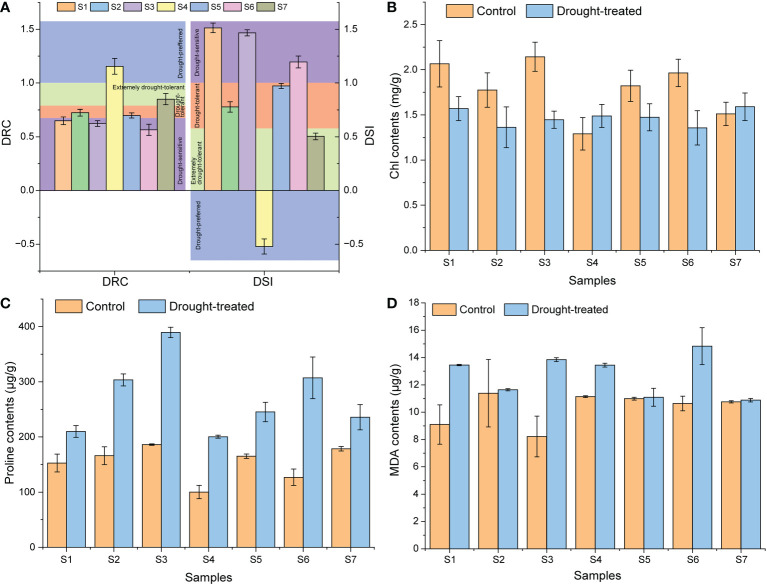
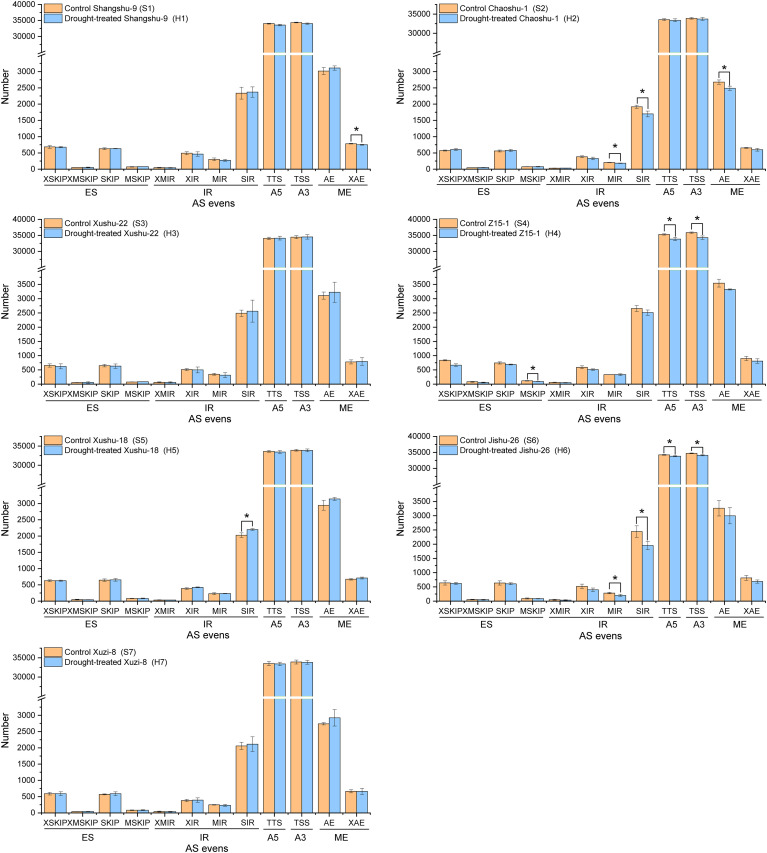
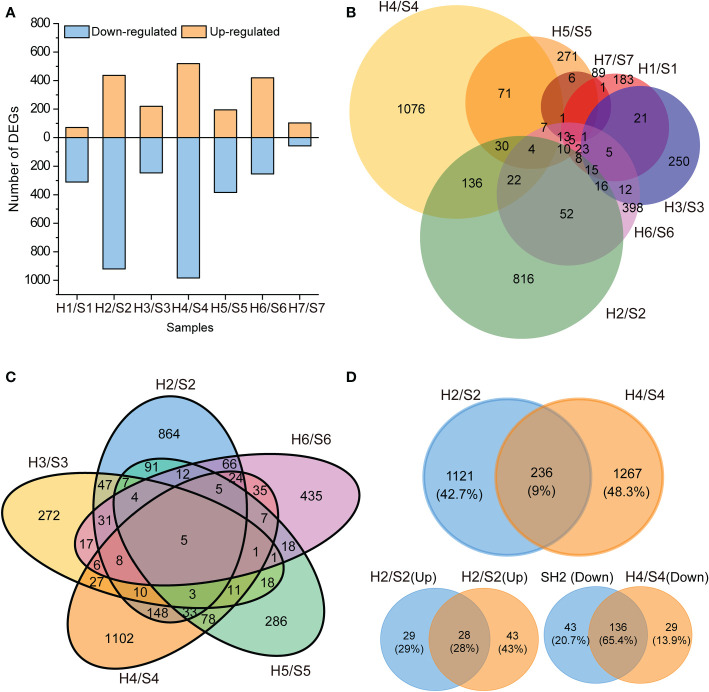
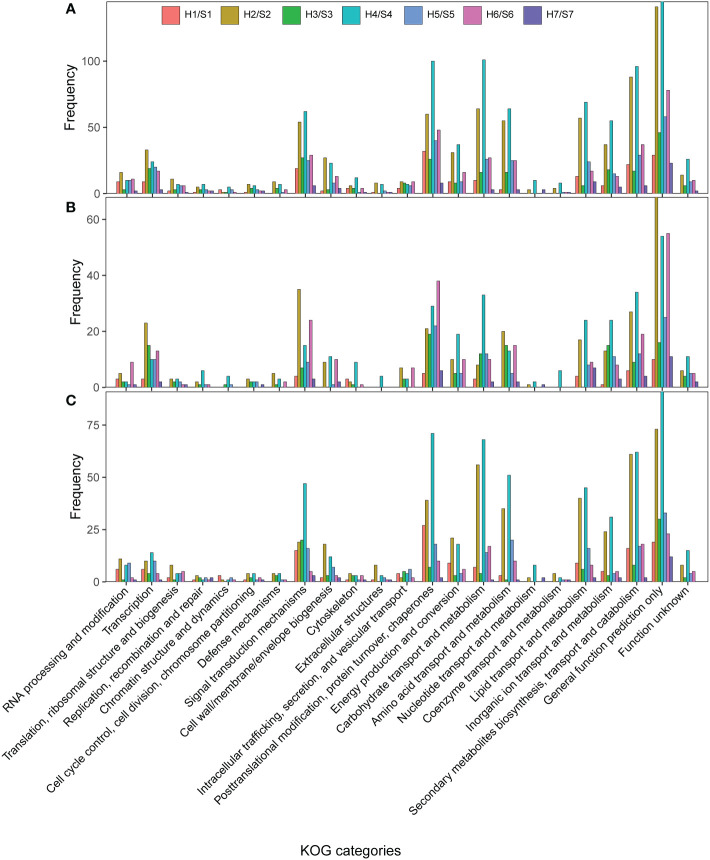
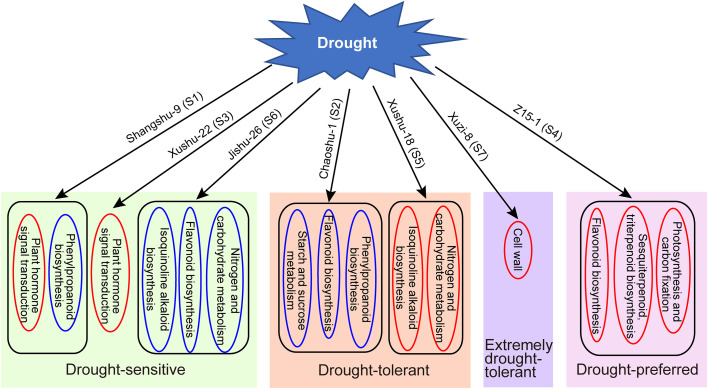
Drought is a common environmental stress with great negative impacts on plant growth, development and geographical distribution as well as agriculture and food production. Sweet potato is characterized by starchy, fresh and pigmented tuber, and is regarded as the seventh most important food crop. However, there has been no comprehensive study of the drought tolerance mechanism of different sweet potato cultivars to date. Here, we studied the mechanism for drought response of seven sweet potato drought-tolerant cultivars using the drought coefficients, physiological indicators and transcriptome sequencing. The seven sweet potato cultivars were classified into four groups of drought tolerance performance. A large number of new genes and transcripts were identified, with an average of about 8000 new genes per sample. Alternative splicing events in sweet potato, which were dominated by first exon and last exon alternative splicing, were not conserved among different cultivars and not significantly affected by drought stress. Furthermore, different drought-tolerance mechanisms were revealed through differentially expressed gene analysis and functional annotation. Two drought-sensitive cultivars, Shangshu-9 and Xushu-22, mainly resisted drought stress by up-regulating plant signal transduction. The other drought-sensitive cultivar Jishu-26 responded to drought stress by down-regulating isoquinoline alkaloid biosynthesis and nitrogen/carbohydrate metabolism. In addition, the drought-tolerant cultivar Chaoshu-1 and drought-preferred cultivar Z15-1 only shared 9% of differentially expressed genes, as well as many opposite metabolic pathways in response to drought. They mainly regulated flavonoid and carbohydrate biosynthesis/metabolism in response to drought, while Z15-1 increased photosynthesis and carbon fixation capacity. The other drought-tolerant cultivar Xushu-18 responded to drought stress by regulating the isoquinoline alkaloid biosynthesis and nitrogen/carbohydrate metabolism. The extremely drought-tolerant cultivar Xuzi-8 was almost unaffected by drought stress and responded to drought environment only by regulating the cell wall. These findings provide important information for the selection of sweet potatoes for specific purposes.
Overview
The claims and statistics of this paper haven’t been checked yet.
Free: it reads the open-access text and checks the first 5 claims that cite a source we can check. Create a free account to check every claim.
Integrity signals
Registry
Cites
Statistics
Figures
Verification
Claims the paper makes
The claims and statistics of this paper haven’t been checked yet.
Free: it reads the open-access text and checks the first 5 claims that cite a source we can check. Create a free account to check every claim.
Self-check
Percentages, sums and reported differences re-computed from the paper’s own numbers.
The self-check needs the paper’s full text.
Citations
Cites
Rapid determination of free proline for water-stress studies
Bates, L. S., Waldren, R. P., & Teare, I. D. (1973) · Plant and Soil · doi:10.1007/bf00018060 · Cited by 20,967
The KEGG resource for deciphering the genome
Kanehisa, M. (2004) · Nucleic Acids Research · doi:10.1093/nar/gkh063 · Cited by 5,104 · cited 9×
“Corrected isoforms were searched against NCBI non-redundant (NR), NCBI nucleotide sequence (NT), Swiss-Prot (a manually annotated and reviewed protein sequence database), Cluster of Orthologous Groups (KOG/COG) (Tatusov et al., 2000) and Kyoto Encyclopedia of Genes and Genomes (KEGG) (Kanehisa et al., 2004) databases…”
MethodInfluentialDEGseq: an R package for identifying differentially expressed genes from RNA-seq data
Wang, L., Feng, Z., Wang, X., Wang, X., & Zhang, X. (2010) · Bioinformatics · doi:10.1093/bioinformatics/btp612 · Cited by 4,553 · cited 1×
“Differentially expressed genes (DEGs) were detected in the different samples according to the fold change (FC) of the FPKM values using DESeq (Wang et al., 2009).”
MethodThe COG database: a tool for genome-scale analysis of protein functions and evolution
Tatusov, R. L. (2000) · Nucleic Acids Research · doi:10.1093/nar/28.1.33 · Cited by 4,520 · cited 1×
“Corrected isoforms were searched against NCBI non-redundant (NR), NCBI nucleotide sequence (NT), Swiss-Prot (a manually annotated and reviewed protein sequence database), Cluster of Orthologous Groups (KOG/COG) (Tatusov et al., 2000) and Kyoto Encyclopedia of Genes and Genomes (KEGG) (Kanehisa et al.”
MethodHigh-throughput functional annotation and data mining with the Blast2GO suite
Gotz, S., Garcia-Gomez, J. M., Terol, J., Williams, T. D., Nagaraj, S. H., Nueda, M. J., Robles, M., Talon, M., Dopazo, J., & Conesa, A. (2008) · Nucleic Acids Research · doi:10.1093/nar/gkn176 · Cited by 4,423
Mao, X., Cai, T., Olyarchuk, J. G., & Wei, L. (2005) · Bioinformatics · doi:10.1093/bioinformatics/bti430 · Cited by 3,828 · cited 1×
“php) (Mao et al., 2005), and HMMER software was used to search the Pfam database (Mistry et al.”
MethodAbiotic stress responses in plants
Zhang, H., Zhu, J., Gong, Z., & Zhu, J.-K. (2022) · Nature Reviews Genetics · doi:10.1038/s41576-021-00413-0 · Cited by 2,166
Challenges in homology search: HMMER3 and convergent evolution of coiled-coil regions
Mistry, J., Finn, R. D., Eddy, S. R., Bateman, A., & Punta, M. (2013) · Nucleic Acids Research · doi:10.1093/nar/gkt263 · Cited by 1,660 · cited 1×
“, 2005), and HMMER software was used to search the Pfam database (Mistry et al., 2013).”
MethodPlant adaptations to the combination of drought and high temperatures
Zandalinas, S. I., Mittler, R., Balfagón, D., Arbona, V., & Gómez‐Cadenas, A. (2018) · Physiologia Plantarum · doi:10.1111/ppl.12540 · Cited by 1,179
Nakashima, K., Yamaguchi-Shinozaki, K., & Shinozaki, K. (2014) · Frontiers in Plant Science · doi:10.3389/fpls.2014.00170 · Cited by 891 · cited 1×
“In plants, ABA is accumulated under osmotic stress caused by drought, and plays a key role in stress response and tolerance (Nakashima et al., 2014).”
Background
Research works printed but not linked: 1
- Zhou Z.-l. Tang J. Jin P. Liu E.-l. Cao Q.-h. Zhao D.-l.. (2016). Identification of drought resistance and effect of soil drought on physiological characteristics of sweetpotato. Southwest China J. Agric. Sci. (China) 5, 1052– 1056. doi: 10.16213/j.cnki. scjas.2016.05.011 · doi:10.16213/j.cnki
Cited by
Sweet Potato as a Key Crop for Food Security under the Conditions of Global Climate Change: A Review
Сапахова, З., Raissova, N., Дауров, Д., Zhapar, K., Даурова, А., Zhigailov, A. V., Жамбакин, К., & Шамекова, М. (2023) · Plants · doi:10.3390/plants12132516 · Cited by 176
“This, in turn, is important for improving the productivity and yield quality of sweet potato and other crops [41].”
BackgroundInfluentialZong, J., Chen, P., Luo, Q., Gao, J., Qin, R., Wu, C., Lv, Q., Zhao, T., & Fu, Y. (2023) · International Journal of Molecular Sciences · doi:10.3390/ijms241814398 · Cited by 27
“The other two indexes of S27, which is a recognized drought-resistant variety [25], were also at a high level.”
BackgroundDesign and control of a side dense transplanting machine for sweet potato seedlings on mulch film
Zhang, W., Zhu, Q., Zhang, T., Liu, H., & Mu, G. (2024) · Computers and Electronics in Agriculture · doi:10.1016/j.compag.2024.109193 · Cited by 19
Jian, Y., Gao, C., Shang, Y., Qin, J., Duan, S., Bian, C., & Li, G. (2024) · Plant Stress · doi:10.1016/j.stress.2024.100665 · Cited by 15
Shi, C., Guo, F., Sun, Y., Han, J., Zheng, X., Zhang, J., Qin, C., Tan, Z., Lin, J., & Wang, J. (2024) · Environmental and Experimental Botany · doi:10.1016/j.envexpbot.2024.105677 · Cited by 14
Yin, T., Song, C., Li, H., Wang, S., Wei, W., Meng, J., & Liu, Q. (2025) · Plants · doi:10.3390/plants14152383 · Cited by 17
“Furthermore, the expression trends of key genes such as CYP75B1 and IF7MAT observed in our study are consistent with previous transcriptomic and metabolomic reports in sweet potato and related species [22,36,37].”
Cappetta, E., Regno, C. D., Ceccacci, S., Monti, M. C., Spinelli, L., Conte, M., D'Anna, C., Alfieri, M., Vietri, M., Costa, A., et al. (2024) · Plant Cell & Environment · doi:10.1111/pce.15306 · Cited by 10
“…with functional and regulatory roles in the underlying mechanisms of the plant's abiotic stress response (Cao et al. 2016; Kamali and Singh 2023; Liu et al. 2023), which have revealed its complexity, involving changes in the protein metabolism, transcriptional and post-transcriptional…”
Liu, Y., Sheng, J., Yang, J., & Li, X. (2025) · Applied Sciences · doi:10.3390/app15052575 · Cited by 7
Cheng, P., Kong, F., Han, Y., Liu, X., & Xia, J. (2024) · Genes · doi:10.3390/genes15070948 · Cited by 8
“Sweet potato cultivars with different drought tolerance performances showed distinct mechanisms for their response to drought stress [12].”
BackgroundInfluentialMakhubu, F. N., Siviya, L. E., Rauwane, M. E., LAURIE, S. M., Madala, N. E., & Figlan, S. (2025) · Plants · doi:10.3390/plants14223532 · Cited by 6
“In one study, for example, Liu et al. [31] analyzed seven Chinese sweet potato cultivars with varying drought tolerance levels and reported distinct metabolic responses between tolerant and sensitive cultivars.”
Lu, P., Chen, J., Liu, H., Zhu, X., Ma, Z., Huang, X. S., Zhang, W., Jiang, H., Liao, H., & Zhou, J. (2025) · Environmental Monitoring and Assessment · doi:10.1007/s10661-025-14841-6 · Cited by 4
“…factors linked to water availability were critical for C. chinensis and C. deltoidea , as evidenced by sharp declines in suitability when bio14 fell below 14 mm. Water shortage can limit CO 2 uptake, cause oxidative damage, and impair accumulation of isoquinoline alkaloid (Liu et al., 2023).”
Bhatta, U. K., Standish, J. R., Baars, O., & Quesada-Ocampo, L. M. (2025) · Phytopathology · doi:10.1094/phyto-01-25-0031-r · Cited by 4
Lee, H., Shim, S., Chung, M., Lee, T., Park, W., Kim, T. H., Lee, K. H., Woo, K. S., Nam, S., Kim, M. Y., et al. (2024) · Frontiers in Genetics · doi:10.3389/fgene.2024.1419399 · Cited by 2
“RNA sequencing of this complex genome sequence and performing gene annotation has helped identify genes linked to starch, anthocyanin, and carotenoid biosynthesis, and drought tolerance (Kou et al., 2020; Yoon et al., 2022; Liu et al., 2023).”
BackgroundLow CO2 concentration, a key environmental factor for developing plateau adapted rapeseed
Liu, S., Tang, L., Fu, J., Zhao, C., Zhang, Y., Yin, M., Wang, M., Wang, R., & Zhao, Y. (2024) · Biotechnology for Biofuels and Bioproducts · doi:10.1186/s13068-024-02481-w · Cited by 1
“In addition, decreased yield of rice [8], maize [9], and potatoes [10] has been reported as a consequence of covariantized photosynthesis under stress conditions.”
BackgroundSelf-citationLei, L., Meng, X., Wang, W., Li, H., Zhou, X., & Zhu, J. (2025) · Agronomy · doi:10.3390/agronomy15112529 · Cited by 1
Han, P., Di, X., Gao, B., Han, J., Li, Y., Deng, X., Tan, Z., Zhang, J., & Wang, J. (2025) · Journal of soil science and plant nutrition · doi:10.1007/s42729-025-02795-0 · Cited by 1
“By 2050, soil salinization and alkalization are projected to threaten nearly half of the world’s arable land (Liu et al. 2023a, b).”
Sultana, R., Chakroborty, N., Afrin, J., Ali, Y., Mou, S. J., Naher, J., & Robin, A. H. K. (2026) · New Zealand Journal of Botany · doi:10.1002/nzb2.70054 · Cited by 1
Donyina, G. A., Opoku, V. A., Szarvas, A., Parbi, B., Salifu, F. R., Kovács, F., & Monostori, T. (2026) · Discover Plants. · doi:10.1007/s44372-026-00490-7 · Cited by 1
“Genes associated with antioxidant defense, osmotic adjustment, and stress-responsive proteins are often upregulated after BAP application [20].”
Case Study on Molecular Breeding for Drought-Resistant Sweet Potato Varieties
Ying, X., Lu, Y., Shi, S., Zhao, L., & Shi, J. T. (2025) · Molecular Plant Breeding · doi:10.5376/mpb.2025.16.0008
Kou, J., Su, Y., Lei, T., Hou, S., Jiali, T., Li, M., Zhang, S., Ding, X., Li, Q., & Xiao, J. (2025) · Agronomy · doi:10.3390/agronomy15030735
Genetics and breeding approach of mitigation of abiotic stress in underground vegetable crops
Negi, H., Bhatt, A., Roy, D., Mangal, V., Thakare, V. S., Sood, S., Thakur, A. K., & Singh, R. (2025) · Elsevier eBooks · doi:10.1016/b978-0-443-23961-8.00016-4
Sweet Potato (Ipomoea batatas (L.) Lam) Genetic Resources
Pati, K., Giri, A. K., Chauhan, V. B. S., Gowda, K. H., Arutselvan, R., Nedunchezhiyan, M., & Laxminarayana, K. (2025) · Handbooks of Crop Diversity : Conservation and Use of Plant Genetic Resources · doi:10.1007/978-981-97-8949-8_45
Wang, M., Wang, B., Liu, Y., Zhang, X., Guo, J., Zhang, T., Zhang, W., & Shi, L. (2025) · Acta Physiologiae Plantarum · doi:10.1007/s11738-025-03807-3
“Previous studies have shown that wheat and sweet potato participate in the defense response to drought by accumulating flavonoids (Liu et al. 2023; Ma et al. 2014).”
Case Study of Sweet Potato Breeding for Enhanced Agronomic Traits
Yu, X., Shen, N., Shi, J. T., Zhao, L., & Zhu, Y. (2024) · Plant Gene and Trait · doi:10.5376/pgt.2024.15.0030
Yang, Y., Li, H., Wang, R., Li, J., Li, L., Li, J., Ou, L., Li, J., Zhang, C., Wang, L., et al. (2025) · Plant Cell Tissue and Organ Culture (PCTOC) · doi:10.1007/s11240-025-03105-3
“Since metabolites accumulate differently, the KEGG database can associate them with particular metabolic pathways (Gray et al. 2012 ; Gillani et al. 2022; Liu et al. 2023b).”
Liu, S., Tang, L., Fu, J., Zhao, C., Zhang, Y., Yin, M., Wang, M., Wang, R., & Zhao, Y. (2024) · Figshare · doi:10.6084/m9.figshare.26683720
Self-citationHuo, R., Khan, I. A., Shi, J., Li, X., Cui, X., Dai, S., Wang, X., Zhang, H., Li, Z., & Liu, Z. (2026) · Plants · doi:10.3390/plants15162507
“Despite its relatively strong tolerance, prolonged exposure to these stresses can severely impair growth, storage root development, and yield [26].”
Self-citationLuo, Z., Liu, R., Xu, L., Yu, Y., Lu, Z., He, Z., Wang, Y., Wang, X., Xiang, L., Xu, Y., et al. (2026) · Plants · doi:10.3390/plants15203119
“Based on previously screened results [34], this study unequivocally established that a novel MYB-type TF IbMYB11 plays a critical positive regulatory role in sweet potato drought resistance.”
Self-citationLi, M., & jianli, Z. (2025) · Molecular Plant Breeding · doi:10.5376/mpb.2025.16.0032
Metadata
- Authors
- Liu, E., Xu, L., Luo, Z., Li, Z., Zhou, G., Gao, H., Fang, F., Tang, J., Zhao, Y., Zhou, Z., & Jin, P.
- Affiliations
- Xinjiang Academy of Agricultural Sciences (CN)
- Adsen Biotechnology Co. Ltd. (China) (CN)
- Sweet Potato Research Institute (CN)
- Corresponding author
- Zhou, Zhilin
- Jin, Ping
- Venue
- Frontiers in Plant Science
- Publisher
- Frontiers Media SA
- Published
- 2023-03-16
- Volume
- 14
- Pages
- 1136709-1136709
- ISSN
- 1664-462X (ISSN-L)
- PMC
- PMC10060965
- OpenAlex
- W4327618223
- Cited by
- 25
- References
- 64
- Citations by year
- 2026: 4 · 2025: 12 · 2024: 7 · 2023: 2
- FWCI
- 4.10
- Type
- journal article
- Language
- en
- Open access
- gold
- doi.org
- Licence
- Locations
- Frontiers in Plant Science (publishedVersion, cc-by)
- PubMed Central (publishedVersion, cc-by)
- PubMed (publishedVersion)
- DOAJ (DOAJ: Directory of Open Access Journals) (submittedVersion, cc-by-sa)
- Topics
- Life Sciences › Agricultural and Biological Sciences › Plant Science › Plant Stress Responses and Tolerance
- Life Sciences › Agricultural and Biological Sciences › Plant Science › Genetics and Plant Breeding
- Life Sciences › Agricultural and Biological Sciences › Plant Science › Genetic and Environmental Crop Studies
- Keywords
- Ipomoea batatas, drought tolerance, drought tolerance mechanisms, cultivar classification, alternative splicing, differentially expressed genes, isoquinoline alkaloid biosynthesis, flavonoid biosynthesis, carbohydrate metabolism, nitrogen metabolism, photosynthesis, CO2 fixation, cell wall regulation, signal transduction, drought response
About these checks
Registry, retraction, Cites and statistics results are computed, not judged, with one exception: a printed reference that no index lists is read once by a model before it counts as a citation error. Claims are extracted by a model and kept only when their quote appears verbatim in the text; each cited source is then checked, with a model’s help, for whether it says what the claim relies on. Those verdicts can be wrong — read the claim’s quote and the cited source before relying on one.
Statistics and arithmetic are recomputed, not judged.
Confidence bands are shown only for fields calibrated on our annotated test set. None is calibrated yet, so no band is shown.
What counts as a claim ›How we measure confidence ›How we check this ›
Are you an author, or do you see a problem with this page? Request a review
Data sources
Bibliographic data: Semantic Scholar, OpenAlex, Crossref.
Contains information from the Semantic Scholar Academic Graph Datasets, made available under the ODC Attribution License (ODC-BY 1.0).
Semantic Scholar’s data is described in: Kinney, R., et al. (2023). The Semantic Scholar Open Data Platform. arXiv:2301.10140.
