

The DOI matches its Crossref record; 1 of the 1 references it cites were found in a registry or an index.
How climate change-related abiotic factors affect the production of industrial valuable compounds in Lamiaceae plant species: a review
Abstract
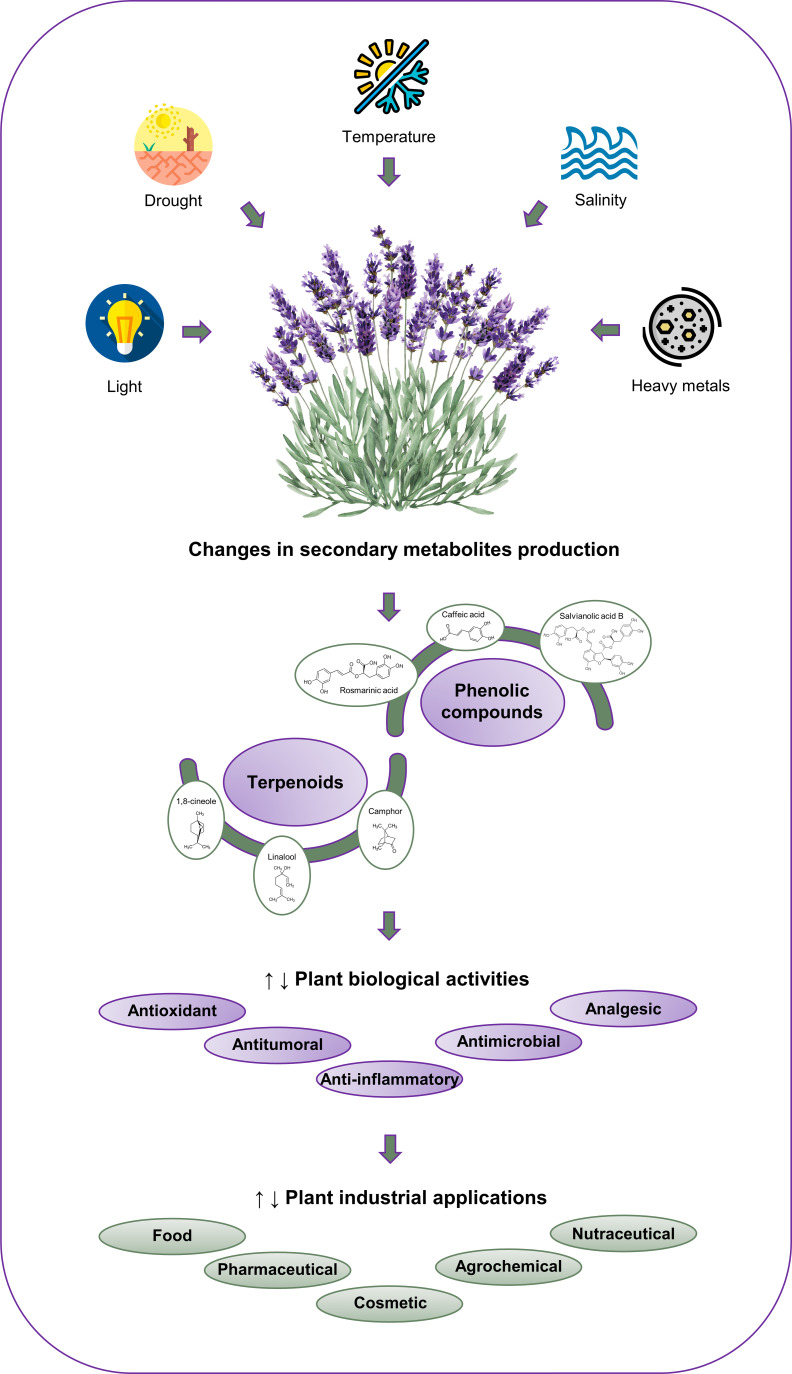
The interest in medicinal and aromatic plants (MAPs) has increased significantly in recent years, driven by the growing demand for natural products. MAPs are a valuable source of secondary metabolites, which renders them useful to a number of industries, including cosmetics, pharmaceuticals, and food. The Lamiaceae family includes economically important MAPs that produce valuable secondary metabolites such as essential oils (EOs) and phenolic compounds (PCs). The quantity and quality of these secondary metabolites are affected by abiotic stress factors. In a climate change scenario, the Lamiaceae is one of the most affected families, especially due to its wide distribution in the Mediterranean region. In the present study, the most common climate-related environmental stress factors, namely, drought, salinity, temperature, light, and heavy metals, were reviewed and discussed in order to assess their impact on the chemical profiles of EOs and PCs, as well as on the biological properties (antioxidant, antibacterial, antimelanogenic, pest-repellent, and UV-protective) of Lamiaceae species. It can be posited that these stresses typically act as a catalyst for the secondary metabolism of these plants, resulting in increased production of EO compounds (e.g., 1,8-cineole, linalool, camphor, borneol, and limonene) and PCs (e.g., rosmarinic, caffeic, and salvianolic acids) and subsequent enhancement of their biological activities. In view of the industrial applications of these bioactive compounds, it is of interest to explore the changes in secondary metabolism induced by environmental factors as it is possible to increase the accumulation of valuable secondary metabolites.
Overview
The claims and statistics of this paper haven’t been checked yet.
Run the check — free, no account needed. It reads the open-access text and checks the sources it cites.
Integrity signals
Registry
Cites
Statistics
Figures
Verification
Claims the paper makes
The claims and statistics of this paper haven’t been checked yet.
Run the check — free, no account needed. It reads the open-access text and checks the sources it cites.
Claims other papers make about this one
Each is checked against this paper’s own text: does it say what the citing paper says it does?
In the citing paper
“Similar results have been observed in other plants such as oregano, basil, and lavender, where environmental factors like soil type, climate, and water availability significantly influence the chemical composition of essential oils [30].”
From Thermal processing and geographical origin as drivers of terpenoids variation in Anethum graveolens L. essential oils: A biplot analysis (2025) · cites this paper as [30]
Self-check
Percentages, sums and reported differences re-computed from the paper’s own numbers.
The self-check needs the paper’s full text.
Citations
Cites
Effects of Cd, Pb, and Cu on growth and essential oil contents in dill, peppermint, and basil
Zheljazkov, V. D., Craker, L. E., & Xing, B. (2006) · Environmental and Experimental Botany · doi:10.1016/j.envexpbot.2005.06.008 · Cited by 241
Research works printed but not linked: 164
- Açıkgöz, 2020, Establishment of cell suspension cultures of Ocimum basilicum L. and enhanced production of pharmaceutical active ingredients, Ind. Crops Prod., 148, 10.1016/j.indcrop.2020.112278 · DOI
- Açıkgöz, 2021, Effects of sorbitol on the production of phenolic compounds and terpenoids in the cell suspension cultures of Ocimum basilicum L, Biologia, 76, 395, 10.2478/s11756-020-00581-0 · DOI
- Affholder, 2013, Transfer of metals and metalloids from soil to shoots in wild rosemary (Rosmarinus officinalis L.) growing on a former lead smelter site: Human exposure risk, Sci. Total Environ., 219, 10.1016/j.scitotenv.2013.02.086 · DOI
- Afshari, 2022, Changes in physiological, phytochemical traits and gene expression of two Perovskia species in response to water deficit, Scientia Hortic., 293, 10.1016/j.scienta.2021.110747 · DOI
- Akbari, 2018, Cold tolerance, productivity and phytochemical diversity in sweet basil (Ocimum basilicum L.) accessions, Ind. Crops Prod., 124, 677, 10.1016/j.indcrop.2018.08.048 · DOI
- Alavi-Samani, 2015, Growth, yield, chemical composition, and antioxidant activity of essential oils from two thyme species under foliar application of jasmonic acid and water deficit conditions, Hortic. Environ. Biotechnol., 56, 411, 10.1007/s13580-015-0117-y · DOI
- Albergaria, 2020, The effect of water deficit stress on the composition of phenolic compounds in medicinal plants, South Afr. J. Bot., 131, 12, 10.1016/j.sajb.2020.02.002 · DOI
- Al-Huqail, 2020, Effects of climate temperature and water stress on plant growth and accumulation of antioxidant compounds in sweet basil (Ocimum basilicum L.) leafy vegetable, Scientifica, 2020, 10.1155/2020/3808909 · DOI
- Amaki, 2011, Effects of light quality on the growth and essential oil content in Sweet basil, Acta Hortic., 907, 91, 10.17660/ActaHortic.2011.907.9 · DOI
- An, 2021, Recent updates on bioactive properties of linalool, Food Funct., 12, 10370, 10.1039/D1FO02120F · DOI
- Arpanahi, 2020, Arbuscular mycorrhizal fungi inoculation improve essential oil and physiological parameters and nutritional values of Thymus daenensis Celak and Thymus vulgaris L. under normal and drought stress conditions, Eur. J. Soil Biol., 100, 10.1016/j.ejsobi.2020.103217 · DOI
- Assaf, 2022, Effect of plant growth regulators and salt stress on secondary metabolite composition in Lamiaceae species, South Afr. J. Bot., 144, 480, 10.1016/j.sajb.2021.10.030 · DOI
- Avasiloaiei, 2023, On the Future Perspectives of Some Medicinal Plants within Lamiaceae Botanic Family Regarding Their Comprehensive Properties and Resistance against Biotic and Abiotic Stresses, Genes, 14, 10.3390/genes14050955 · DOI
- Azimychetabi, 2021, Cadmium stress alters the essential oil composition and the expression of genes involved in their synthesis in peppermint (Mentha piperita L.), Ind. Crops Prod., 168, 10.1016/j.indcrop.2021.113602 · DOI
- Azimzadeh, 2023, Physiological, biochemical, and antioxidant responses of oregano subspecies (Origanum vulgare L. ssp. gracile and ssp. vulgare) to NaCl stress, Acta Physiol. Plant, 46, 14, 10.1007/s11738–023-03636–2 · DOI
- Aziz, 2008, Influence of salt stress on growth and essential oil production in peppermint, pennyroyal, and apple mint, J. Herbs Spices Med. Plants, 14, 77, 10.1080/10496470802341375 · DOI
- Baâtour, 2009, Salt effects on the growth, mineral nutrition, essential oil yield and composition of marjoram (Origanum majorana), Acta Physiol. Plant, 32, 45, 10.1007/s11738–009-0374–4 · DOI
- Baâtour, 2011, Salt effects on Origanum majorana fatty acid and essential oil composition, J. Sci. Food Agric., 91, 2613, 10.1002/jsfa.4495 · DOI
- Baâtour, 2012, Effect of growth stages on phenolics content and antioxidant activities of shoots in sweet marjoram (Origanum majorana L.) varieties under salt stress, AJB, 11, 16486, 10.5897/AJB12.1722 · DOI
- Bahcesular, 2020, Seed priming with melatonin effects on growth, essential oil compounds and antioxidant activity of basil (Ocimum basilicum L.) under salinity stress, Ind. Crops Prod., 146, 10.1016/j.indcrop.2020.112165 · DOI
- Barbosa, 2021, Effects of light intensity on the anatomical structure, secretory structures, histochemistry and essential oil composition of Aeollanthus suaveolens Mart. ex Spreng. (Lamiaceae), Biochem. System. Ecol., 95, 10.1016/j.bse.2021.104224 · DOI
- Bekhradi, 2015, Effects of salt stress on physiological and postharvest quality characteristics of different Iranian genotypes of basil, Hortic. Environ. Biotechnol., 56, 777, 10.1007/s13580-015-1095-9 · DOI
- Belaqziz, 2009, Salt stress effects on germination, growth and essential oil content of an endemic thyme species in Morocco (Thymus maroccanus Ball.), J. Appl. Sci. Res., 5, 858
- Bernstein, 2010, Salinity-induced changes in essential oil, pigments and salts accumulation in sweet basil (Ocimum basilicum) in relation to alterations of morphological development, Ann. Appl. Biol., 156, 167, 10.1111/j.1744-7348.2009.00376.x · DOI
- Bettaieb, 2011, Drought effects on polyphenol composition and antioxidant activities in aerial parts of Salvia officinalis L, Acta Physiol. Plant, 33, 1103, 10.1007/s11738-010-0638-z · DOI
- Bettaieb, 2009, Water deficit effects on Salvia officinalis fatty acids and essential oils composition, Scientia Hortic., 120, 271, 10.1016/j.scienta.2008.10.016 · DOI
- Bidgoli, 2019, Salinity stress and PGPR effects on essential oil changes in Rosmarinus officinalis L, Agric. Food Secur., 8, 10.1186/s40066–018-0246–5 · DOI
- Bistgani, 2019, Effect of salinity stress on the physiological characteristics, phenolic compounds and antioxidant activity of Thymus vulgaris L. and Thymus daenensis Celak, Ind. Crops Prod., 135, 311, 10.1016/j.indcrop.2019.04.055 · DOI
- Bonacina, 2017, Changes in growth, oxidative metabolism and essential oil composition of lemon balm (Melissa officinalis L.) subjected to salt stress, Aust. J. Crop Sci., 11, 1665, 10.21475/ajcs.17.11.12.pne921 · DOI
- Böszörményi, 2020, The effect of light on plastid differentiation, chlorophyll biosynthesis, and essential oil composition in rosemary (Rosmarinus officinalis) leaves and cotyledons, Front. Plant Sci., 10.3389/fpls.2020.00196 · DOI
- Butcher, 2016, Soil salinity: A threat to global food security, Agron. J., 108, 2189, 10.2134/agronj2016.06.0368 · DOI
- Cai, 2021, 1,8-Cineole: a review of source, biological activities, and application, J. Asian Nat. Prod. Res., 23, 938, 10.1080/10286020.2020.1839432 · DOI
- Caser, 2019, Drought stress adaptation modulates plant secondary metabolite production in Salvia dolomitica Codd, Ind. Crops Prod., 129, 85, 10.1016/j.indcrop.2018.11.068 · DOI
- Caser, 2018, Ecophysiological and phytochemical responses of Salvia sinaloensis Fern. to drought stress, Plant Growth Regul., 84, 383, 10.1007/s10725-017-0349-1 · DOI
- Chai, 2023, Enhancing rosmarinic acid production and regulating enzyme activity in Melissa officinalis L. using spectrally tunable light-emitting diodes, Ind. Crops Prod., 204, 10.1016/j.indcrop.2023.117332 · DOI
- Chakrabartty, 2022, Exploration of lamiaceae in cardio vascular diseases and functional foods: medicine as food and food as medicine, Front. Pharmacol., 13, 10.3389/fphar.2022.894814 · DOI
- Chang, 2008, Solar irradiance level alters the growth of basil (Ocimum basilicum L.) and its content of volatile oils, Environ. Exp. Bot., 63, 216, 10.1016/j.envexpbot.2007.10.017 · DOI
- Chang, 2009, Enhanced UV-B radiation alters basil (Ocimum basilicum L.) growth and stimulates the synthesis of volatile oils, JHF, 1, 27, 10.5897/JHF.9000049 · DOI
- Chen, 2013, Camphor—A fumigant during the black death and a coveted fragrant wood in ancient Egypt and Babylon—A review, Molecules, 18, 5434, 10.3390/molecules18055434 · DOI
- Cheng, 2018, Changes in the physiological characteristics and baicalin biosynthesis metabolism of Scutellaria baicalensis Georgi under drought stress, Ind. Crops Prod., 122, 473, 10.1016/j.indcrop.2018.06.030 · DOI
- Chrysargyris, 2019, Cultivation strategy to improve chemical profile and anti-oxidant activity of Sideritis perfoliata L. subsp. perfoliata, Ind. Crops Prod., 140, 10.1016/j.indcrop.2019.111694 · DOI
- Chrysargyris, 2016, Effects of water stress on lavender and sage biomass production, essential oil composition and biocidal properties against Tetranychus urticae (Koch), Scientia Hortic., 213, 96, 10.1016/j.scienta.2016.10.024 · DOI
- Chrysargyris, 2019, Salinity and cation foliar application: Implications on essential oil yield and composition of hydroponically grown spearmint plants, Scientia Hortic., 256, 10.1016/j.scienta.2019.108581 · DOI
- Chrysargyris, 2018, Physiological and biochemical responses of lavandula angustifolia to salinity under mineral foliar application, Front. Plant Sci., 9, 10.3389/fpls.2018.00489 · DOI
- Chrysargyris, 2019, The combined and single effect of salinity and copper stress on growth and quality of Mentha spicata plants, J. Hazard. Mater., 368, 584, 10.1016/j.jhazmat.2019.01.058 · DOI
- Çoban, 2016, Brassinosteroid effects on some physical and biochemical properties and secondary metabolite accumulation in peppermint (Mentha piperita L.) under salt stress, Ind. Crops Prod., 86, 251, 10.1016/j.indcrop.2016.03.049 · DOI
- Cordovilla, 2014, Effects of salinity and the interaction between thymus vulgaris and lavandula angustifolia on growth, ethylene production and essential oil contents, J. Plant Nutr., 37, 875, 10.1080/01904167.2013.873462 · DOI
- Das, 2024, Unveiling the dual nature of heavy metals: stressors and promoters of phenolic compound biosynthesis in Basilicum polystachyon (L.) moench in vitro, Plants, 13, 10.3390/plants13010098 · DOI
- Degner, 2009, Chapter 26 - health benefits of traditional culinary and medicinal mediterranean plants, 541, 10.1016/B978-0-12-374228-5.00026-3 · DOI
- Diab, 2022, The potential of lamiaceae herbs for mitigation of overweight, obesity, and fatty liver: studies and perspectives, Molecules, 27, 10.3390/molecules27155043 · DOI
- Dörr, 2019, Influence of leaf temperature and blue light on the accumulation of rosmarinic acid and other phenolic compounds in Plectranthus scutellarioides (L.), Environ. Exp. Bot., 167, 10.1016/j.envexpbot.2019.103830 · DOI
- El-Esawi, 2017, Salicylic acid-regulated antioxidant mechanisms and gene expression enhance rosemary performance under saline conditions, Front. Physiol., 8, 10.3389/fphys.2017.00716 · DOI
- Elhindi, 2016, Effect of foliar-applied iron and zinc on growth rate and essential oil in sweet basil (Ocimum basilicum L.) under saline conditions, Progr Nutr., 18, 288
- Es-sbihi, 2021, Improving salinity tolerance in Salvia officinalis L. by foliar application of salicylic acid, Chem. Biol. Technol. Agric., 8, 25, 10.1186/s40538–021-00221-y · DOI
- Farsaraei, 2020, Changes in growth and essential oil composition of sweet basil in response of salinity stress and superabsorbents application, Scientia Hortic., 271, 10.1016/j.scienta.2020.109465 · DOI
- Fattahi, 2019, Effects of cadmium and lead on seed germination, morphological traits, and essential oil composition of sweet basil (Ocimum basilicum L.), Ind. Crops Prod., 138, 10.1016/j.indcrop.2019.111584 · DOI
- Fletcher, 2005, Heat stress reduces the accumulation of rosmarinic acid and the total antioxidant capacity in spearmint (Mentha spicata L), J. Sci. Food Agric., 85, 2429, 10.1002/jsfa.2270 · DOI
- García-Caparrós, 2019, Effects of drought stress on biomass, essential oil content, nutritional parameters, and costs of production in six lamiaceae species, Water, 11, 10.3390/w11030573 · DOI
- Ghaffari, 2019, Variation in the primary and secondary metabolites derived from the isoprenoid pathway in the Perovskia species in response to different wavelengths generated by light emitting diodes (LEDs), Ind. Crops Prod., 140, 10.1016/j.indcrop.2019.111592 · DOI
- Gonçalves, 2020, Chapter 11 - Aromatic plants: A source of compounds with antioxidant and neuroprotective effects, 155, 10.1016/B978-0-12-817780-8.00011-6 · DOI
- Gonçalves, 2023, Influence of biotic and abiotic factors on the production and composition of essential oils, 69, 10.1002/9781119829614.ch4 · DOI
- Grzeszczuk, 2018, Changes in photosynthetic pigments, total phenolic content, and antioxidant activity of salvia coccinea buc’hoz ex etl. Induced by exogenous salicylic acid and soil salinity, Molecules, 23, 10.3390/molecules23061296 · DOI
- Hassanpouraghdam, 2011, NaCl salinity and Zn foliar application influence essential oil composition of basil (Ocimum basilicum L.), Acta agriculturae Slovenica, 97, 93, 10.14720/aas.2011.97.2 · DOI
- Hassiotis, 2014, Environmental and developmental factors affect essential oil production and quality of Lavandula angustifolia during flowering period, Ind. Crops Prod., 62, 359, 10.1016/j.indcrop.2014.08.048 · DOI
- Hosseinabadi, 2024, Essential oil variation in Melissa officinalis L. cultivated under industrial field conditions: effects of different harvesting times and plant materials, J. Essent. Oil Bear. Plants., 27, 285, 10.1080/0972060X.2024.2304581 · DOI
- Hosseini, 2020, Morphological, antioxidant enzyme activity and secondary metabolites accumulation in response of polyethylene glycol-induced osmotic stress in embryo-derived plantlets and callus cultures of Salvia leriifolia, Plant Cell Tiss Organ Cult, 140, 143, 10.1007/s11240-019-01718-z · DOI
- Israel, 2022, Significance of arbuscular mycorrhizal fungi in mitigating abiotic environmental stress in medicinal and aromatic plants: A review, Foods, 11, 10.3390/foods11172591 · DOI
- Jan, 2018, Developing stress-tolerant plants through in vitro tissue culture: family brassicaceae, 327, 10.1007/978-3-319-78283-6_10 · DOI
- Jelali, 2011, Salinity effects on growth, essential oil yield and composition and phenolic compounds content of marjoram (origanum Majorana L.) leaves, J. Food Biochem., 35, 1443, 10.1111/jfbc.2011.35.issue-5 · DOI
- Jezler, 2015, Pb and Cd on growth, leaf ultrastructure and essential oil yield mint (Mentha arvensis L.), Cienc. Rural, 45, 392, 10.1590/0103-8478cr20130966 · DOI
- Kamalizadeh, 2019, Drought stress and TiO2 nanoparticles affect the composition of different active compounds in the Moldavian dragonhead plant, Acta Physiol. Plant, 41, 21, 10.1007/s11738-019-2814-0 · DOI
- Karalija, 2022, Influence of climate-related environmental stresses on economically important essential oils of mediterranean salvia sp, Front. Plant Sci., 13, 10.3389/fpls.2022.864807 · DOI
- Khalil, 2018, Foliar spraying of salicylic acid induced accumulation of phenolics, increased radical scavenging activity and modified the composition of the essential oil of water stressed Thymus vulgaris L, Plant Physiol. Biochem., 123, 65, 10.1016/j.plaphy.2017.12.007 · DOI
- Khalvandi, 2019, Essential oil of peppermint in symbiotic relationship with Piriformospora indica and methyl jasmonate application under saline condition, Ind. Crops Prod., 127, 195, 10.1016/j.indcrop.2018.10.072 · DOI
- Khare, 2020, Plant secondary metabolites synthesis and their regulations under biotic and abiotic constraints, J. Plant Biol., 63, 203, 10.1007/s12374-020-09245-7 · DOI
- Khlebnikova, 2022, Flavonoid accumulation in an aseptic culture of summer savory (Satureja hortensis L.), Plants, 11, 10.3390/plants11040533 · DOI
- Khojasteh, 2020, Powerful plant antioxidants: A new biosustainable approach to the production of rosmarinic acid, Antioxidants, 9, 10.3390/antiox9121273 · DOI
- Kilic, 2017, Effects of cadmium-induced stress on essential oil production, morphology and physiology of lemon balm (Melissa officinalis L., Lamiaceae), Appl. Ecol. Env. Res., 15, 1653, 10.15666/aeer/1503_16531669 · DOI
- Kougioumoutzis, 2022, Climate change impacts and extinction risk assessment of nepeta representatives (Lamiaceae) in Greece, Sustainability, 14, 10.3390/su14074269 · DOI
- Kulak, 2020, Recurrent drought stress effects on essential oil profile of Lamiaceae plants: An approach regarding stress memory, Ind. Crops Prod., 154, 10.1016/j.indcrop.2020.112695 · DOI
- Kulak, 2020, Changes in growth parameter and essential oil composition of sage (Salvia officinalis L.) leaves in response to various salt stresses, Ind. Crops Prod., 145, 10.1016/j.indcrop.2019.112078 · DOI
- Kulbat-Warycha, 2020, Response to stress and allergen production caused by metal ions (Ni, Cu and Zn) in oregano (Origanum vulgare L.) plants, J. Biotechnol., 324, 171, 10.1016/j.jbiotec.2020.10.025 · DOI
- Kumar, 2020, Elevated CO2 and temperature influence key proteins and metabolites associated with photosynthesis, antioxidant and carbon metabolism in Picrorhiza kurroa, J. Proteomics, 219, 10.1016/j.jprot.2020.103755 · DOI
- Kumar, 2017, Effect of elevated [CO2] and temperature on growth, physiology and essential oil composition of Salvia sclarea L. in the western Himalayas, J. Appl. Res. Med. Aromat. Plants, 6, 22, 10.1016/j.jarmap.2017.01.001 · DOI
- Kumari, 2011, Comparative analysis of essential oil composition and oil containing glands in Ocimum sanctum L. (Holy basil) under ambient and supplemental level of UV-B through gas chromatography–mass spectrometry and scanning electron microscopy, Acta Physiol. Plant, 33, 1093, 10.1007/s11738-010-0637-0 · DOI
- Lajayer, 2017, Comparison of copper and zinc effects on growth, micro- and macronutrients status and essential oil constituents in pennyroyal (Mentha pulegium L.), Braz. J. Bot., 40, 379, 10.1007/s40415-016-0353-0 · DOI
- Lehner, 2018, Future risk of record-breaking summer temperatures and its mitigation, Climatic Change, 146, 363, 10.1007/s10584-016-1616-2 · DOI
- Lianopoulou, 2014, Traits of seasonal dimorphism associated with adaptation to cold stress in Origanum dictamnus L. (Lamiaceae), J. Biol. Research-Thessaloniki, 21, 10.1186/2241-5793-21-17 · DOI
- Lianopoulou, 2014, Effects of chilling stress on leaf morphology, anatomy, ultrastructure, gas exchange, and essential oils in the seasonally dimorphic plant Teucrium polium (Lamiaceae), Acta Physiol. Plant, 36, 2271, 10.1007/s11738-014-1605-x · DOI
- Liu, 2011, Effect of drought stress on growth and accumulation of active constituents in Salvia miltiorrhiza Bunge, Ind. Crops Prod., 33, 84, 10.1016/j.indcrop.2010.09.006 · DOI
- Llorens-Molina, 2017, Effect of drought stress on essential oil composition of Thymus vulgaris L. (Chemotype 1, 8-cineole) from wild populations of Eastern Iberian Peninsula, J. Essential Oil Res., 29, 145, 10.1080/10412905.2016.1211561 · DOI
- Luis, 2007, Enhanced carnosic acid levels in two rosemary accessions exposed to cold stress conditions, J. Agric. Food Chem., 55, 8062, 10.1021/jf0712393 · DOI
- Ma, 2021, [Research progress of natural borneol resources], Zhongguo Zhong Yao Za Zhi, 46, 57, 10.19540/j.cnki.cjcmm.20200915.609 · DOI
- Mahajan, 2020, Understanding the consequence of environmental stress for accumulation of secondary metabolites in medicinal and aromatic plants, J. Appl. Res. Med. Aromat. Plants, 18, 10.1016/j.jarmap.2020.100255 · DOI
- Mamadalieva, 2017, Aromatic medicinal plants of the lamiaceae family from Uzbekistan: ethnopharmacology, essential oils composition, and biological activities, Medicines (Basel), 4, 10.3390/medicines4010008 · DOI
- Mansinhos, 2022, Response of thymus lotocephalus in vitro cultures to drought stress and role of green extracts in cosmetics, Antioxidants, 11, 1475, 10.3390/antiox11081475 · DOI
- Mansinhos, 2022, Impact of Temperature on Phenolic and Osmolyte Contents in In Vitro Cultures and Micropropagated Plants of Two Mediterranean Plant Species, Lavandula viridis and Thymus lotocephalus, Plants, 11, 3516, 10.3390/plants11243516 · DOI
- Manukyan, 2013, Effects of PAR and UV-B radiation on herbal yield, bioactive compounds and their antioxidant capacity of some medicinal plants under controlled environmental conditions, Photochem. Photobiol., 89, 406, 10.1111/j.1751-1097.2012.01242.x · DOI
- Manukyan, 2019, Secondary metabolites and their antioxidant capacity of Caucasian endemic thyme (Thymus transcaucasicus Ronn.) as affected by environmental stress, J. Appl. Res. Med. Aromat. Plants, 13, 10.1016/j.jarmap.2019.100209 · DOI
- Marchev, 2021, Rosmarinic acid - From bench to valuable applications in food industry, Trends Food Sci. Technol., 117, 182, 10.1016/j.tifs.2021.03.015 · DOI
- Marsh, 2014, Effect of light, methyl jasmonate and cyclodextrin on production of phenolic compounds in hairy root cultures of Scutellaria lateriflora, Phytochemistry, 107, 50, 10.1016/j.phytochem.2014.08.020 · DOI
- Masoudniaragh, 2021, Using halloysite nanotubes as carrier for proline to alleviate salt stress effects in sweet basil (Ocimum basilicum L.), Scientia Hortic., 285, 10.1016/j.scienta.2021.110202 · DOI
- Masyita, 2022, Terpenes and terpenoids as main bioactive compounds of essential oils, their roles in human health and potential application as natural food preservatives, Food Chem. X, 13, 10.1016/j.fochx.2022.100217 · DOI
- McAllister, 2015, Topical analgesic medications, 99, 10.1007/978-1-4939-2462-2_15 · DOI
- Mishra, 2022, Evaluation of phytoremediation potential of aromatic plants: A systematic review, J. Appl. Res. Med. Aromat. Plants, 31, 10.1016/j.jarmap.2022.100405 · DOI
- Mohammadi, 2018, Exogenous putrescine changes redox regulations and essential oil constituents in field-grown Thymus vulgaris L. under well-watered and drought stress conditions, Ind. Crops Prod., 122, 119, 10.1016/j.indcrop.2018.05.064 · DOI
- Mohammadzadeh, 2021, Biochemical responses of mycorrhizal-inoculated Lamiaceae (Lavender, Rosemary and Thyme) plants to drought: a field study, Soil Sci. Plant Nutr., 67, 41, 10.1080/00380768.2020.1851144 · DOI
- Mok, 2023, Understanding climate change and heavy metals in coastal areas: A macroanalysis assessment, Water, 15, 10.3390/w15050891 · DOI
- Morshedloo, 2017, Effect of prolonged water stress on essential oil content, compositions and gene expression patterns of mono- and sesquiterpene synthesis in two oregano (Origanum vulgare L.) subspecies, Plant Physiol. Biochem., 111, 119, 10.1016/j.plaphy.2016.11.023 · DOI
- Moshrefi-Araghi, 2023, Screening of distributed horsemint (Mentha longifolia L.) accessions for agricultural drought tolerance based on biological responses, Acta Physiol. Plant, 45, 130, 10.1007/s11738–023-03605–9 · DOI
- Moustakas, 2022, Early drought stress warning in plants: color pictures of photosystem II photochemistry, Climate, 10, 10.3390/cli10110179 · DOI
- Nabi, 2021, Responses of in vitro cell cultures to elicitation: regulatory role of jasmonic acid and methyl jasmonate: a review, In Vitro Cell.Dev.Biol.-Plant, 57, 341, 10.1007/s11627-020-10140-6 · DOI
- Nagegowda, 2020, Advances in biosynthesis, regulation, and metabolic engineering of plant specialized terpenoids, Plant Sci., 294, 10.1016/j.plantsci.2020.110457 · DOI
- Nguyen, 2022, Biosynthesis of essential oil compounds in Ocimum tenuiflorum is induced by abiotic stresses, Plant Biosyst. - Int. J. Dealing all Aspects Plant Biol., 156, 353, 10.1080/11263504.2020.1857870 · DOI
- Noor, 2022, Biomedical features and therapeutic potential of rosmarinic acid, Arch. Pharm. Res., 45, 205, 10.1007/s12272-022-01378-2 · DOI
- Olfa, 2016, Chemical content, antibacterial and antioxidant properties of essential oil extract from Tunisian Origanum majorana L. cultivated under saline condition, Pak J. Pharm. Sci., 29, 1951
- Oueslati, 2010, Physiological and antioxidant responses of Mentha pulegium (Pennyroyal) to salt stress, Acta Physiologiae Plantarum, 32, 289, 10.1007/s11738-009-0406-0 · DOI
- Patrignani, 2021, Lamiaceae in the treatment of cardiovascular diseases, Front. Biosci. (Landmark Ed), 26, 612, 10.2741/4909 · DOI
- Petrova, 2022, Catmint (Nepeta nuda L.) phylogenetics and metabolic responses in variable growth conditions, Front. Plant Sci., 13, 10.3389/fpls.2022.866777 · DOI
- Pirbalouti, 2017, Effects of foliar of the application chitosan and reduced irrigation on essential oil yield, total phenol content and antioxidant activity of extracts from green and purple basil, Acta Scientiarum Polonorum - Hortorum Cultus, 16, 177, 10.24326/asphc · DOI
- Pirbalouti, 2014, Salicylic acid affects growth, essential oil and chemical compositions of thyme (Thymus daenensis Celak.) under reduced irrigation, Plant Growth Regul., 72, 289, 10.1007/s10725-013-9860-1 · DOI
- Pistelli, 2019, Accumulation of rosmarinic acid and behaviour of ROS processing systems in Melissa officinalis L. under heat stress, Ind. Crops Prod., 138, 10.1016/j.indcrop.2019.111469 · DOI
- Prasad, 2011, Heavy metals and arbuscular mycorrhizal (AM) fungi can alter the yield and chemical composition of volatile oil of sweet basil (Ocimum basilicum L.), Biol. Fertil Soils, 47, 853, 10.1007/s00374-011-0590-0 · DOI
- Prasad, 2010, Effect of chromium and lead on yield, chemical composition of essential oil, and accumulation of heavy metals of mint species, Commun. Soil Sci. Plant Anal., 41, 2170, 10.1080/00103624.2010.504798 · DOI
- Radwan, 2017, Impact of drought stress on specialised metabolism: Biosynthesis and the expression of monoterpene synthases in sage (Salvia officinalis), Phytochemistry, 141, 20, 10.1016/j.phytochem.2017.05.005 · DOI
- Raffo, 2020, Effect of light intensity and water availability on plant growth, essential oil production and composition in Rosmarinus officinalis L, Eur. Food Res. Technol., 246, 167, 10.1007/s00217-019-03396-9 · DOI
- Rahman, 2022, Medicinal plant sources and traditional healthcare practices of forest-dependent communities in and around Chunati Wildlife Sanctuary in southeastern Bangladesh, Environ. Sustainability, 5, 207, 10.1007/s42398-022-00230-z · DOI
- Rai, 2004, Effect of chromium accumulation on photosynthetic pigments, oxidative stress defense system, nitrate reduction, proline level and eugenol content of Ocimum tenuiflorum L, Plant Sci., 167, 1159, 10.1016/j.plantsci.2004.06.016 · DOI
- Raja, 2012, Medicinally potential plants of labiatae (Lamiaceae) family: an overview, Res. J. Med. Plants, 6, 203, 10.3923/rjmp.2012.203.213 · DOI
- Ramezani, 2020, The effects of water deficit on the expression of monoterpene synthases and essential oils composition in Salvia ecotypes, Physiol. Mol. Biol. Plants, 26, 2199, 10.1007/s12298-020-00892-1 · DOI
- Rastogi, 2019, Ocimum metabolomics in response to abiotic stresses: Cold, flood, drought and salinity, PloS One, 14, 10.1371/journal.pone.0210903 · DOI
- Razavizadeh, 2019, Physiological and morphological analyses of Thymus vulgaris L. in vitro cultures under polyethylene glycol (PEG)-induced osmotic stress, In Vitro Cell.Dev.Biol.-Plant, 55, 342, 10.1007/s11627-019-09979-1 · DOI
- Rouphael, 2019, Chemical eustress elicits tailored responses and enhances the functional quality of novel food perilla frutescens, Molecules, 24, 10.3390/molecules24010185 · DOI
- Sá, 2015, Phytoaccumulation and effect of lead on yield and chemical composition of Mentha crispa essential oil, Desalination Water Treat, 53, 3007, 10.1080/19443994.2013.874716 · DOI
- Sabzalian, 2014, High performance of vegetables, flowers, and medicinal plants in a red-blue LED incubator for indoor plant production, Agron. Sustain. Dev., 34, 879, 10.1007/s13593-014-0209-6 · DOI
- Safarian, 2023, Mentha piperita L. demonstrates a potential tolerance at molecular and biochemical level to Pb stress: New perspectives, South Afr. J. Bot., 159, 635, 10.1016/j.sajb.2023.06.035 · DOI
- Said-Al Ahl, 2019, Biomass production and essential oil composition of Thymus vulgaris in response to water stress and harvest time, J. Essential Oil Res., 31, 63, 10.1080/10412905.2018.1518794 · DOI
- Said-Al Ahl, 2010, Effect of water stress and potassium humate on the productivity of organo plant using saline and fresh water irrigation, Ozean J. Appl. Sci., 3, 125
- Sakalauskaitė, 2012, Supplementary UV-B irradiation effects on basil (Ocimum basilicum L.) growth and phytochemical properties, J. Food Agric. Environ., 10, 342
- Sarmoum, 2019, Effect of salinity and water stress on the essential oil components of rosemary (Rosmarinus officinalis L.), Agronomy, 9, 10.3390/agronomy9050214 · DOI
- Scagel, 2019, Salinity from NaCl changes the nutrient and polyphenolic composition of basil leaves, Ind. Crops Prod., 127, 119, 10.1016/j.indcrop.2018.10.048 · DOI
- Senji, 2018, The impact of cold stress on genes expression pattern of mono- and sesquiterpene biosynthesis and their contents in Ocimum basilicum L, Phytochemistry, 156, 250, 10.1016/j.phytochem.2018.09.006 · DOI
- Sharma, 2019, Response of phenylpropanoid pathway and the role of polyphenols in plants under abiotic stress, Molecules, 24, 10.3390/molecules24132452 · DOI
- Siddiqui, 2013, Arsenic accumulation in Ocimum spp. and its effect on growth and oil constituents, Acta Physiol. Plant, 35, 1071, 10.1007/s11738-012-1145-1 · DOI
- Stancheva, 2009, Essential oil variation of salvia officinalis (L.), grown on heavy metals polluted soil, Biotechnol. Biotechnol. Equip., 23, 373, 10.1080/13102818.2009.10818442 · DOI
- Szabó, 2017, Stress-induced changes of growth, yield and bioactive compounds in lemon balm cultivars, Plant Physiol. Biochem., 119, 170, 10.1016/j.plaphy.2017.07.019 · DOI
- Szekely-Varga, 2020, Antioxidant responses to drought and salinity in Lavandula angustifolia Mill, Not Bot. Horti Agrobo, 48, 1980, 10.15835/nbha48412150 · DOI
- Szekely-Varga, 2020, Effects of drought and salinity on two commercial varieties of lavandula angustifolia mill, Plants, 9, 10.3390/plants9050637 · DOI
- Taarit, 2009, Plant growth, essential oil yield and composition of sage (Salvia officinalis L.) fruits cultivated under salt stress conditions, Ind. Crops Prod., 30, 333, 10.1016/j.indcrop.2009.06.001 · DOI
- Taarit, 2011, Physiological changes and essential oil composition of clary sage (Salvia sclarea L.) rosette leaves as affected by salinity, Acta Physiol. Plant, 33, 153, 10.1007/s11738-010-0532-8 · DOI
- Tamokou, 2017, Chapter 8 - antimicrobial activities of african medicinal spices and vegetables, 207, 10.1016/B978-0-12-809286-6.00008-X · DOI
- Tang, 2014, Simultaneous quantitative and qualitative analysis of flavonoids from ultraviolet-B radiation in leaves and roots of scutellaria baicalensis georgi using LC-UV-ESI-Q/TOF/MS, J. Anal. Methods Chem., 2014, e643879, 10.1155/2014/643879 · DOI
- Tarchoune, 2013, Essential oil and volatile emissions of basil (Ocimum basilicum) leaves exposed to NaCl or Na2SO4 salinity, J. Plant Nutr. Soil Sci., 176, 748, 10.1002/jpln.201200278 · DOI
- Tit, 2023, Antioxidant activity of essential oils, Antioxidants, 12, 10.3390/antiox12020383 · DOI
- Tomou, 2022, Sustainable diets & medicinal aromatic plants in Greece: Perspectives towards climate change, Food Chem., 374, 10.1016/j.foodchem.2021.131767 · DOI
- Tounekti, 2008, NaCl stress affects growth and essential oil composition in rosemary (Rosmarinus officinalis L.), J. Hortic. Sci. Biotechnol., 83, 267, 10.1080/14620316.2008.11512379 · DOI
- Vafadar, 2020, Melatonin and calcium modulate the production of rosmarinic acid, luteolin, and apigenin in Dracocephalum kotschyi under salinity stress, Phytochemistry, 177, 10.1016/j.phytochem.2020.112422 · DOI
- Valifard, 2017, Salinity effects on phenolic content and antioxidant activity of salvia macrosiphon, Iran J. Sci. Technol. Trans. Sci., 41, 295, 10.1007/s40995-016-0022-y · DOI
- Valifard, 2014, Effects of salt stress on volatile compounds, total phenolic content and antioxidant activities of Salvia mirzayanii, South Afr. J. Bot., 93, 92, 10.1016/j.sajb.2014.04.002 · DOI
- Valifard, 2019, Effect of salt stress on terpenoid biosynthesis in Salvia mirzayanii: from gene to metabolite, J. Hortic. Sci. Biotechnol., 94, 389, 10.1080/14620316.2018.1505443 · DOI
- Valizadeh-Kamran, 2019, Effects of foliar application of methanol on some physiological characteristics of Lavandula stoechas L. under NaCl salinity conditions, J. Plant Nutr., 42, 261, 10.1080/01904167.2018.1554677 · DOI
- Vojodi Mehrabani, 2017, Zinc sulfate foliar application effects on some physiological characteristics and phenolic and essential oil contents of lavandula stoechas L. Under sodium chloride (NaCl) salinity conditions, Commun. Soil Sci. Plant Anal., 48, 1860, 10.1080/00103624.2017.1406105 · DOI
- Zielińska, 2019, Effect of LED illumination and amino acid supplementation on phenolic compounds profile in Agastache rugosa in vitro cultures, Phytochem. Lett., 31, 12, 10.1016/j.phytol.2019.02.029 · DOI
- Zielińska, 2020, LED illumination and plant growth regulators’ effects on growth and phenolic acids accumulation in Moluccella laevis L. in vitro cultures, Acta Physiol. Plant, 42, 72, 10.1007/s11738–020-03060-w · DOI
Cited by
Farmanpour Kalalagh, K., Mohebodini, M., Sabaghnia, N., Beyraghdar Kashkooli, A., & Esmaeili, H. (2025) · PLOS One · doi:10.1371/journal.pone.0327018 · Cited by 4
Metadata
- Authors
- Mansinhos, I., Gonçalves, S., & Romano, A.
- Venue
- Frontiers in Plant Science
- Publisher
- Frontiers Media SA
- Published
- 2024-07-10
- Volume
- 15
- ISSN
- 1664-462X
- PMC
- PMC11266143
- Cited by
- 82
- References
- 1
About these checks
Registry, retraction, Cites and statistics results are computed, not judged, with one exception: a printed reference that no index lists is read once by a model before it counts as a citation error. Claims are extracted by a model and kept only when their quote appears verbatim in the text; each cited source is then checked, with a model’s help, for whether it says what the claim relies on. Those verdicts can be wrong — read the claim’s quote and the cited source before relying on one.
Statistics and arithmetic are recomputed, not judged.
Confidence bands are shown only for fields calibrated on our annotated test set. None is calibrated yet, so no band is shown.
What counts as a claim ›How we measure confidence ›How we check this ›
Are you an author, or do you see a problem with this page? Request a review
