

The DOI matches its Crossref record; 125 of the 126 references it cites were found in a registry or an index.
Problematic assumptions have slowed down depression research: why symptoms, not syndromes are the way forward
Open accessAbstract
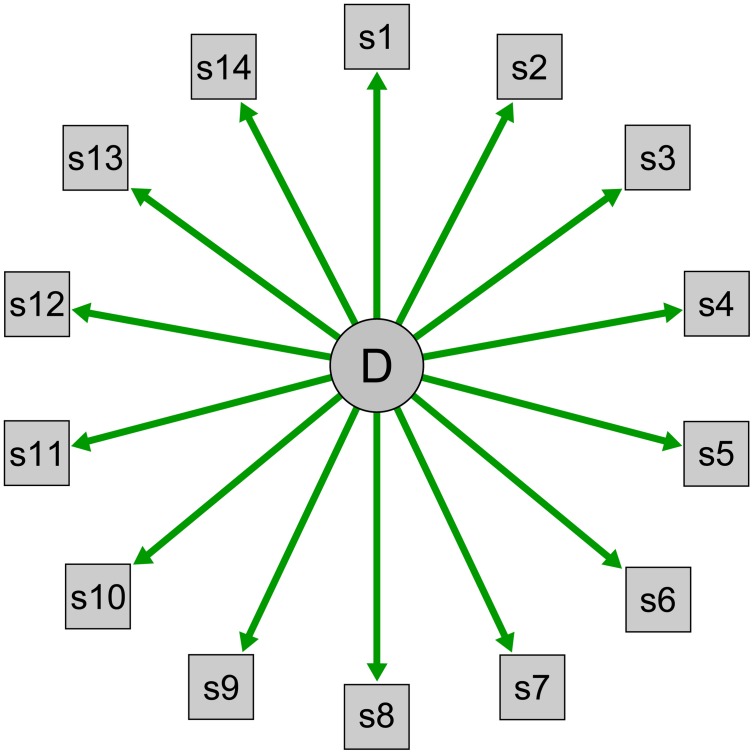
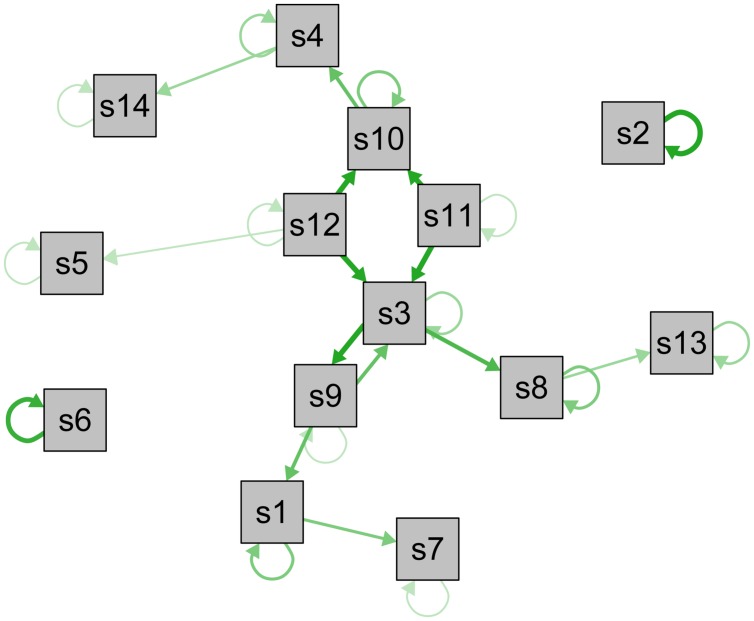
Major depression (MD) is a highly heterogeneous diagnostic category. Diverse symptoms such as sad mood, anhedonia, and fatigue are routinely added to an unweighted sum-score, and cutoffs are used to distinguish between depressed participants and healthy controls. Researchers then investigate outcome variables like MD risk factors, biomarkers, and treatment response in such samples. These practices presuppose that (1) depression is a discrete condition, and that (2) symptoms are interchangeable indicators of this latent disorder. Here I review these two assumptions, elucidate their historical roots, show how deeply engrained they are in psychological and psychiatric research, and document that they contrast with evidence. Depression is not a consistent syndrome with clearly demarcated boundaries, and depression symptoms are not interchangeable indicators of an underlying disorder. Current research practices lump individuals with very different problems into one category, which has contributed to the remarkably slow progress in key research domains such as the development of efficacious antidepressants or the identification of biomarkers for depression. The recently proposed network framework offers an alternative to the problematic assumptions. MD is not understood as a distinct condition, but as heterogeneous symptom cluster that substantially overlaps with other syndromes such as anxiety disorders. MD is not framed as an underlying disease with a number of equivalent indicators, but as a network of symptoms that have direct causal influence on each other: insomnia can cause fatigue which then triggers concentration and psychomotor problems. This approach offers new opportunities for constructing an empirically based classification system and has broad implications for future research.
Overview
The claims and statistics of this paper haven’t been checked yet.
Run the check — free, no account needed. It reads the open-access text and checks the sources it cites.
Integrity signals
Registry
Cites
Statistics
Figures
Verification
Claims the paper makes
The claims and statistics of this paper haven’t been checked yet.
Run the check — free, no account needed. It reads the open-access text and checks the sources it cites.
Claims other papers make about this one
Each is checked against this paper’s own text: does it say what the citing paper says it does?
In the citing paper
“From the homo- geneity assumption, the comorbidity (17) and heterogeneity (18,19) problems emerge and limit psychiatric research (20–26).”
From Methods and challenges for assessing heterogeneity (2020) · cites this paper as [23]
Self-check
Percentages, sums and reported differences re-computed from the paper’s own numbers.
The self-check needs the paper’s full text.
Citations
Cites
Diagnostic and Statistical Manual of Mental Disorders
Williams, J. B. W., & First, M. B. (2013) · Oxford University Press eBooks · doi:10.1093/acrefore/9780199975839.013.104 · Cited by 109,845
An inventory for measuring depression
BECK, A. T. (1961) · Archives of General Psychiatry · doi:10.1001/archpsyc.1961.01710120031004 · Cited by 38,032
Hamilton, M. (1960) · Journal of Neurology, Neurosurgery & Psychiatry · doi:10.1136/jnnp.23.1.56 · Cited by 32,817
Structural Equations with Latent Variables
Bollen, K. A. (1989) · Wiley series in probability and statistics · doi:10.1002/9781118619179 · Cited by 17,944
Structural Equations with Latent Variables.
Clogg, C. C., & Bollen, K. A. (1991) · Contemporary Sociology A Journal of Reviews · doi:10.2307/2072165 · Cited by 17,475
(1954) · Cited by 15,935
Kessler, R. C., Chiu, W. T., Demler, O., & Walters, E. E. (2005) · Archives of General Psychiatry · doi:10.1001/archpsyc.62.6.617 · Cited by 12,052
Cognitive Therapy for Depression
(2012) · PsycEXTRA Dataset · doi:10.1037/e675542012-001 · Cited by 9,678
Diagnostic and Statistical Manual of Mental Disorders
Siegel, L. J., & Fletcher‐Janzen, E. (2008) · Wiley eBooks · doi:10.1002/9780470373699.speced0655 · Cited by 8,467
Kessler, R. C., Berglund, P., Demler, O., Jin, R., Koretz, D., Merikangas, K. R., Rush, A. J., Walters, E. E., & Wang, P. S. (2003) · JAMA · doi:10.1001/jama.289.23.3095 · Cited by 7,988
Research works printed but not linked: 6
- Brooks, 2013, Heroes of uncertainty., New York Times.
- Ereshefsky, 2007, Species, The Stanford Encyclopedia of Philosophy
- Grebb, 2009, Introduction and considerations for a brain-based diagnostic system in psychiatry, Comprehensive Textbook of Psychiatry, 1
- Hooper, 2008, Structural equation modeling: guidelines for determining model fit., Electron. J. Bus. Res. Methods, 6, 53
- Insel, 2013, Transforming Diagnosis.
- Kupfer, 2013, Field Trial Results Guide DSM Recommendations. Huffingt. Post.
Cited by
Sorted by citations
A tutorial on regularized partial correlation networks
Epskamp, S., & Fried, E. I. (2018) · Psychological Methods · doi:10.1037/met0000167 · Cited by 2,918
Self-citationCan network analysis transform psychopathology?
McNally, R. J. (2016) · Behaviour Research and Therapy · doi:10.1016/j.brat.2016.06.006 · Cited by 1,072
Mental disorders as networks of problems: a review of recent insights
Fried, E. I., van Borkulo, C. D., Cramer, A. O. J., Boschloo, L., Schoevers, R. A., & Borsboom, D. (2016) · Social Psychiatry and Psychiatric Epidemiology · doi:10.1007/s00127-016-1319-z · Cited by 1,144
Self-citationMoving Forward: Challenges and Directions for Psychopathological Network Theory and Methodology
Fried, E. I., & Cramer, A. O. J. (2017) · Perspectives on Psychological Science · doi:10.1177/1745691617705892 · Cited by 1,015
Self-citationNetwork analysis of depression and anxiety symptom relationships in a psychiatric sample
Beard, C., Millner, A. J., Forgeard, M. J. C., Fried, E. I., Hsu, K. J., Treadway, M. T., Leonard, C. V., Kertz, S. J., & Björgvinsson, T. (2016) · Psychological Medicine · doi:10.1017/s0033291716002300 · Cited by 929
Self-citation
Metadata
- Authors
- Fried, E. I.
- Affiliations
- KU Leuven (BE)
- Corresponding author
- Fried, Eiko I.
- ORCID
- Fried, Eiko I.
- Venue
- Frontiers in Psychology
- Publisher
- Frontiers Media SA
- Published
- 2015-03-23
- Volume
- 6
- Pages
- 309-309
- ISSN
- 1664-1078 (ISSN-L)
- PMC
- PMC4369644
- OpenAlex
- W2168432043
- Cited by
- 367
- References
- 126
- Citations by year
- 2026: 25 · 2025: 32 · 2024: 42 · 2023: 57 · 2022: 39 · 2021: 37 · 2020: 35 · 2019: 24 · 2018: 21 · 2017: 22 · 2016: 25 · 2015: 8
- FWCI
- 3.27
- Type
- journal article
- Language
- en
- Open access
- gold
- doi.org
- Licence
- cc-by
- Locations
- Frontiers in Psychology (publishedVersion, cc-by)
- Europe PMC (PubMed Central) (publishedVersion, cc-by)
- PubMed Central (publishedVersion, cc-by)
- PubMed (publishedVersion)
- Lirias (KU Leuven) (submittedVersion, other-oa)
- DOAJ (DOAJ: Directory of Open Access Journals) (submittedVersion, cc-by-sa)
- Topics
- Social Sciences › Psychology › Experimental and Cognitive Psychology › Mental Health Research Topics
- Social Sciences › Psychology › Experimental and Cognitive Psychology › Anxiety, Depression, Psychometrics, Treatment, Cognitive Processes
- Health Sciences › Medicine › Pharmacology (medical) › Treatment of Major Depression
- Keywords
- major depressive disorder, diagnostic heterogeneity, symptom clusters, anhedonia, fatigue, insomnia, biomarkers, antidepressant drug development, anxiety disorders, psychiatric classification, research assumptions
About these checks
Registry, retraction, Cites and statistics results are computed, not judged, with one exception: a printed reference that no index lists is read once by a model before it counts as a citation error. Claims are extracted by a model and kept only when their quote appears verbatim in the text; each cited source is then checked, with a model’s help, for whether it says what the claim relies on. Those verdicts can be wrong — read the claim’s quote and the cited source before relying on one.
Statistics and arithmetic are recomputed, not judged.
Confidence bands are shown only for fields calibrated on our annotated test set. None is calibrated yet, so no band is shown.
What counts as a claim ›How we measure confidence ›How we check this ›
Are you an author, or do you see a problem with this page? Request a review
