

The DOI matches its Crossref record; 17 of the 17 references it cites were found in a registry or an index.
The Use of Eye-Movement Desensitization Reprocessing (EMDR) Therapy in Treating Post-traumatic Stress Disorder—A Systematic Narrative Review
Open accessAbstract
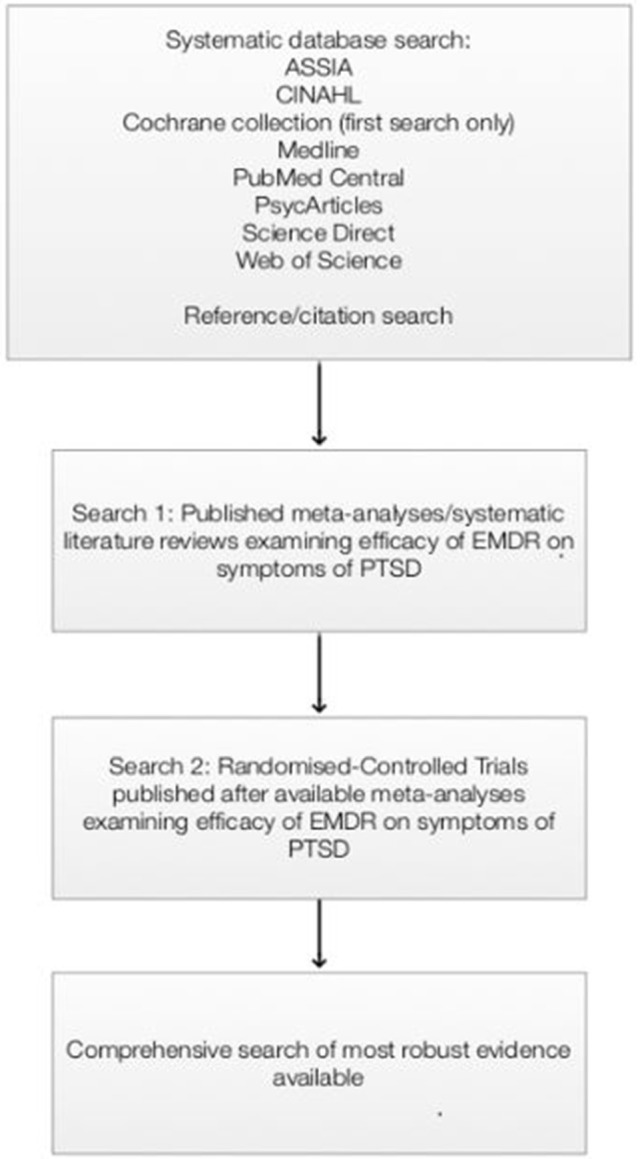
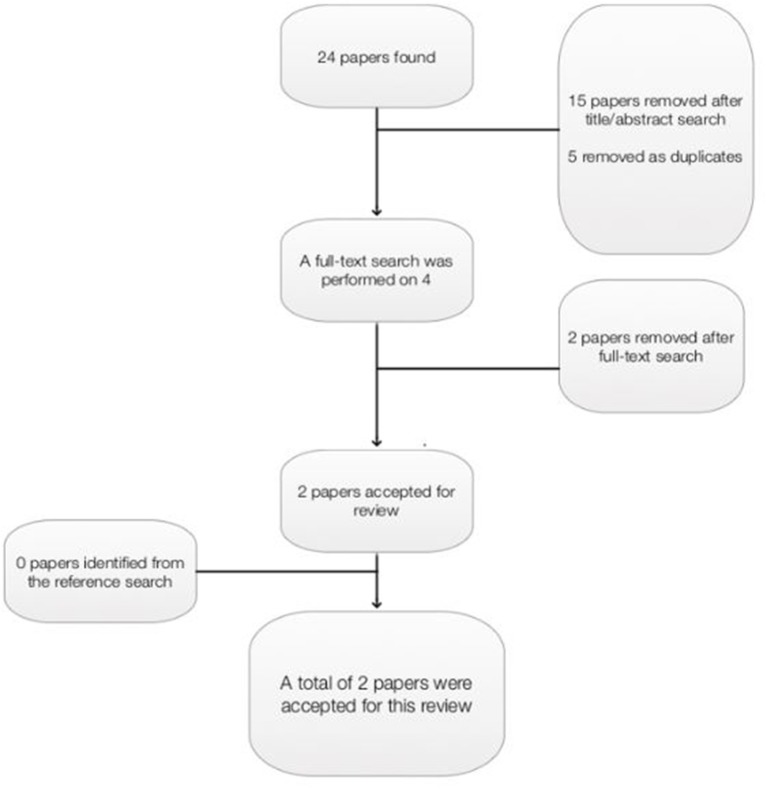
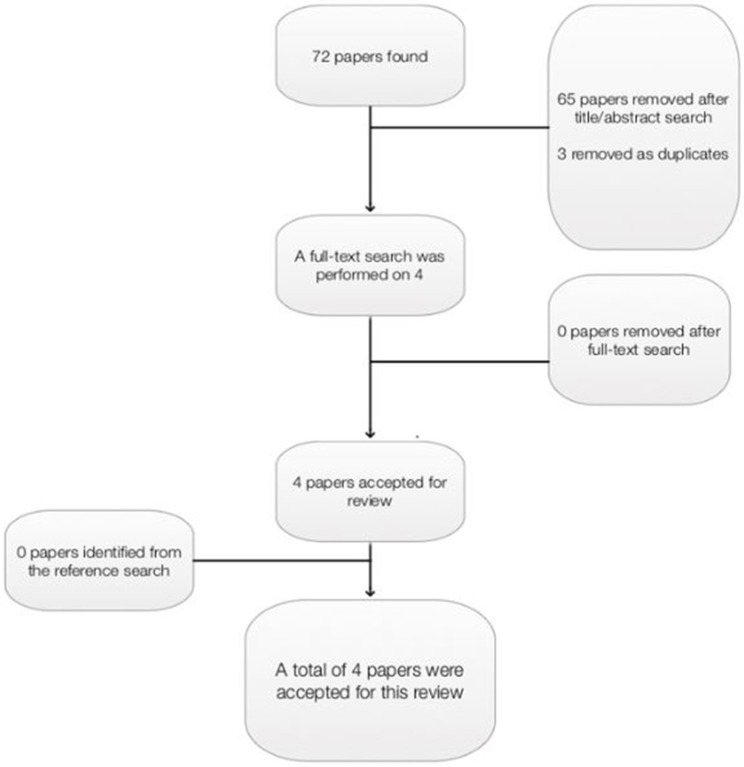
Aim: There is an extensive body of research examining the efficacy of Eye-Movement Desensitisation Reprocessing (EMDR) therapy in treatment of Post-Traumatic Stress Disorder (PTSD). This systematic narrative review aimed to systematically, and narratively, review robust evidence from Randomised-Controlled Trials examining the efficacy of EMDR therapy. Method: Eight databases were searched to identify studies relevant to the study aim. Two separate systematic searches of published, peer-reviewed evidence were carried out, considering relevant studies published prior to April 2017. After exclusion of all irrelevant, or non-robust, studies, a total of two meta-analyses and four Randomised-Controlled Trials were included for review. Results: Data from meta-analyses and Randomised-Controlled Trials included in this review evidence the efficacy of EMDR therapy as a treatment for PTSD. Specifically, EMDR therapy improved PTSD diagnosis, reduced PTSD symptoms, and reduced other trauma-related symptoms. EMDR therapy was evidenced as being more effective than other trauma treatments, and was shown to be an effective therapy when delivered with different cultures. However, limitations to the current evidence exist, and much current evidence relies on small sample sizes and provides limited follow-up data. Conclusions: This systematic narrative review contributes to the current evidence base, and provides recommendations for practice and future research. This review highlights the need for additional research to further examine the use of EMDR therapy for PTSD in a range of clinical populations and cultural contexts.
Overview
The claims and statistics of this paper haven’t been checked yet.
Run the check — free, no account needed. It reads the open-access text and checks the sources it cites.
Integrity signals
Registry
Cites
Statistics
Figures
Verification
Claims the paper makes
The claims and statistics of this paper haven’t been checked yet.
Run the check — free, no account needed. It reads the open-access text and checks the sources it cites.
Claims other papers make about this one
Each is checked against this paper’s own text: does it say what the citing paper says it does?
The source backs part of the claim, not all of it — or backs it for a different population, condition or comparison.
In the citing paper
“Scholarly investigations have demonstrated that EMDR therapy exhibits a markedly superior efficacy in ameliorating symptoms of PTSD in comparison to control conditions and alternative interventions, such as CBT [72].”
From Clinical Efficacy of Psychotherapeutic Interventions for Post-Traumatic Stress Disorder in Children and Adolescents: A Systematic Review and Analysis. (2024) · cites this paper as [72]
Experimental — accuracy not yet measured
Self-check
Percentages, sums and reported differences re-computed from the paper’s own numbers.
The self-check needs the paper’s full text.
Citations
Cites
Bias in meta-analysis detected by a simple, graphical test
Egger, M., Smith, G. D., Schneider, M., & Minder, C. (1997) · BMJ · doi:10.1136/bmj.315.7109.629 · Cited by 56,722
Felitti, V. J., Anda, R. F., Nordenberg, D., Williamson, D. F., Spitz, A. M., Edwards, V., Koss, M. P., & Marks, J. S. (1998) · American Journal of Preventive Medicine · doi:10.1016/s0749-3797(98)00017-8 · Cited by 18,943
Operating characteristics of a rank correlation test for publication bias
Begg, C. B., & Mazumdar, M. (1994) · Biometrics · doi:10.2307/2533446 · Cited by 16,955
Child abuse: Adolescent records vs. adult recall
Femina, D. D., Yeager, C. A., & Lewis, D. O. (1990) · Child Abuse & Neglect · doi:10.1016/0145-2134(90)90033-p · Cited by 8,820
Cochrane Handbook for Systematic Reviews of Interventions
Tarsilla, M. (2010) · Journal of MultiDisciplinary Evaluation · doi:10.56645/jmde.v6i14.284 · Cited by 5,232
Hierarchy of evidence: a framework for ranking evidence evaluating healthcare interventions
Evans, D. (2003) · Journal of Clinical Nursing · doi:10.1046/j.1365-2702.2003.00662.x · Cited by 993
Psychological therapies for chronic post-traumatic stress disorder (PTSD) in adults
Bisson, J. I., Roberts, N. P., Andrew, M., Cooper, R., & Lewis, C. (2013) · Cochrane Database of Systematic Reviews · doi:10.1002/14651858.cd003388.pub4 · Cited by 829
Shapiro, F. (2014) · The Permanente Journal · doi:10.7812/tpp/13-098 · Cited by 373
Ironson, G. H., Freund, B., Strauss, J. L., & Williams, J. G. (2001) · Journal of Clinical Psychology · doi:10.1002/jclp.1132 · Cited by 315
Chen, Y.-R., Hung, K.-W., Tsai, J.-C., Chu, H., Chung, M.-H., Chen, S.-R., Liao, Y.-M., Ou, K.-L., Chang, Y.-C., & Chou, K.-R. (2014) · PLoS ONE · doi:10.1371/journal.pone.0103676 · Cited by 222
Research works printed but not linked: 3
- CASP Systematic Review Checklist [online]
- FarrellD. P. Trans-generational trauma and EMDR therapy. BACP Journal-Private Practice Winter Edition2016
- Shapiro, 1995, Eye Movement Desensitisation and Reprocessing: Basic Principles, Protocols, and Procedures
Cited by
Sorted by citations
Items 101–145 of 145
La cura del paziente COVID-19 ospedalizzato: dai nuovi bisogni agli interventi psicologico-clinici
Borghi, L., Andrighi, E., Cassardo, C., Valentini, T., & Vegni, E. A. M. (2022) · RICERCHE DI PSICOLOGIA · doi:10.3280/rip2022oa14386
Hassan, S. (2022) · Springer eBooks · doi:10.1007/978-3-030-62059-2_395
Eficacia de la musicoterapia en un caso de duelo patológico
Martín, J. A. S., González, D. J. G., & Cahill, M. F. (2022) · Revista de Investigación en Musicoterapia · doi:10.15366/rim2022.6.003
Barazzone, N., Santos, I., McGowan, J. F., Crowley, M., Chamberlain, A. R., & Donaghay‐Spire, E. G. (2023) · Journal of EMDR Practice and Research · doi:10.1891/emdr-2022-0053 · Cited by 2
Complex Trauma, Psychosis and COVID-19: A Case Report
Saavedra-Delgado, M. E., Vallina-Alvarado, F., Mawcinitt-Backmann, K., & Toledo-Lozano, C. G. (2023) · Medical Research Archives · doi:10.18103/mra.v11i1.3516
A Typical Psychological Treatment with EMDR
Checa, A. (2022) · Neurology & Neurotherapy Open Access Journal · doi:10.23880/nnoaj-16000171
Žukaitė, B., & Cukanovas, A. (2023) · Health Sciences · doi:10.35988/sm-hs.2023.136
PSYCHOLOGICAL TREATMENT VARIANT WITH EYE MOVEMENT DESENSITIZATION AND REPROCESSING: A CASE REPORT
Checa, A. (2023) · MNJ (Malang Neurology Journal) · doi:10.21776/ub.mnj.2023.009.02.16
Barfety-Servignat, V. (2022) · HAL · doi:10.1016/s0246-0521(22)41754-2
ЗМІНИ СТАНУ ЗДОРОВʼЯ ЛЮДИНИ ПРИ ПОСТТРАВМАТИЧНИХ СТРЕСОВИХ РОЗЛАДАХ
Денефіль, О. В., Мігенько, О. Б., Гомонець, С. Я., & Sverediuk, Y. A. (2024) · Вісник соціальної гігієни та організації охорони здоров я України · doi:10.11603/1681-2786.2023.4.14433
Unveiling the Neuroscientific Underpinnings of Mood and Anxiety Disorders
Institut Pasteur, U. P. C., & Lledo, P. (2023) · Annals of Depression and Anxiety · doi:10.26420/anndepressanxiety.2023.1120
Crossing the Rivers of the Tartarus: The Grief Process among Combat-Related PTSD Patients
Potik, D. (2023) · Psychological Perspectives · doi:10.1080/00332925.2023.2311556 · Cited by 2
Thompson, A. N. (2024) · Urban Social Work · doi:10.1891/usw-2024-0013
From Trauma Informed to Trauma Active
Seaman, P., & Odden, S. (2024) · Nurse Leader · doi:10.1016/j.mnl.2024.12.001
Addo-Yobo, A., Uhl, A., Baloch, R., Stewart, T. K., Parrish, R., Johnson, R., Watkins, R., & Salami, T. K. (2025) · Journal of Police and Criminal Psychology · doi:10.1007/s11896-025-09743-9
Editorial: Present and future of EMDR in clinical psychology and psychotherapy, volume III
Onofri, A., & Hase, M. (2025) · Frontiers in Psychology · doi:10.3389/fpsyg.2025.1581456
Complicaties in de kraamperiode
de Jonge, A., Verhoeven, C. J. M., Jong, E. F., van Dillen, J., & Bakker, P. (2025) · doi:10.1007/978-90-368-3142-0_12
Kantor, V., Weindl, D., Schieß-Jokanovic, J., Verginer, L., Lueger‐Schuster, B., & Knefel, M. (2024) · Figshare · doi:10.6084/m9.figshare.26635650
Kantor, V., Weindl, D., Schieß-Jokanovic, J., Verginer, L., Lueger‐Schuster, B., & Knefel, M. (2023) · Figshare · doi:10.6084/m9.figshare.24499416
Kantor, V., Weindl, D., Schieß-Jokanovic, J., Verginer, L., Lueger‐Schuster, B., & Knefel, M. (2024) · Figshare · doi:10.6084/m9.figshare.26635644
Kantor, V., Weindl, D., Schieß-Jokanovic, J., Verginer, L., Lueger‐Schuster, B., & Knefel, M. (2024) · Figshare · doi:10.6084/m9.figshare.24499476
Kantor, V., Weindl, D., Schieß-Jokanovic, J., Verginer, L., Lueger‐Schuster, B., & Knefel, M. (2024) · Figshare · doi:10.6084/m9.figshare.26635638
Kantor, V., Weindl, D., Schieß-Jokanovic, J., Verginer, L., Lueger‐Schuster, B., & Knefel, M. (2024) · Figshare · doi:10.6084/m9.figshare.26635641
Kantor, V., Weindl, D., Schieß-Jokanovic, J., Verginer, L., Lueger‐Schuster, B., & Knefel, M. (2024) · Figshare · doi:10.6084/m9.figshare.26635647
Wahid, A., Nirwana, H., Hariko, R., Fikri, M. F. M., Choiri, M. F., Putri, K. Y., & Fazria, N. (2025) · Counsenesia Indonesian Journal Of Guidance and Counseling · doi:10.36728/cijgc.v6i2.5880
Ilardi, D. L., Zaidi, A. N., Calderon, J., Choi, J. J., Kasparian, N. A., Pike, N. A., Plotkin, D., Smorra, C., Woodhouse, K., Gurvitz, M. Z., et al. (2026) · Journal of the American Heart Association · doi:10.1161/jaha.125.042921
Usubini, A. G., Manzoni, G. M., Pietrabissa, G., Nicolazzi, C., Caretti, A., Merlini, C., Villa, V., Sartório, A., & Castelnuovo, G. (2026) · Research in Psychotherapy Psychopathology Process and Outcome · doi:10.4081/ripppo.2026.886
Reducing PTSD symptoms through unconscious intervention
Yang, Q., Wang, Y., Liu, C., Zhi, P., Chen, S., Lei, Y., Xue, F., & Zhu, Z. (2026) · Proceedings of the National Academy of Sciences · doi:10.1073/pnas.2521088123
Zaporozhets, O., Lincoln, K., Souza, V. F. D., Lafountain, E., Brea, J., Rizzo, A. A., & Syvak, O. (2026) · Continuing Professional Education Theory and Practice · doi:10.28925/2412-0774.2026.1.2
Eye Movement Desensitization and Reprocessing for Parenting-Related Outcomes: A Scoping Review
Rajeswaran, P., Eapen, V., Lee, C., & Kohlhoff, J. R. (2026) · Journal of EMDR Practice and Research · doi:10.34133/jemdr.0036
Bennett, M. (2026) · Springer eBooks · doi:10.1007/978-981-95-9594-5_7
The Role of Childhood Sexual Abuse on Health and Quality of Life Among Black Sexual Minority Men
Dangerfield, D. T. (2026) · Springer eBooks · doi:10.1007/978-3-032-18233-3_3
Willey, J., McGhee, M., Patterson, D. A., & Ridner, S. (2026) · Clinical Social Work Journal · doi:10.1007/s10615-026-01035-x
Arriazu-Domínguez, M., Martínez-Calderón, J., Matias-Soto, J., & Cano‐García, F. J. (2026) · European Journal of Trauma & Dissociation · doi:10.1016/j.ejtd.2026.100704
Judicial assessment of testimonial reliability after EMDR therapy: a case-series analysis
Pacchioni, F., Flutti, E., Ballabio, M., Giovannelli, M. E., Magatti, C., & Travaini, G. V. (2026) · Frontiers in Psychology · doi:10.3389/fpsyg.2026.1809865
Psychiatric disorders associated with burn injuries
Rivell, M., Fee, K., Willis, A., & Hill, A. E. (2026) · Elsevier eBooks · doi:10.1016/b978-0-323-88389-4.00048-8
Haddad, R. H., Abuejheisheh, A. J., Abuhashish, Y. H., & Hamdan‐Mansour, A. M. (2026) · BMC Nursing · doi:10.1186/s12912-026-05068-y
Psychological Aspects of Pediatric and Congenital Heart Disease
Kasparian, N. A. (2026) · Elsevier eBooks · doi:10.1016/b978-0-443-11851-7.00083-5
Farfan, C. H. V., Monzón, A. I. C., Siancas, L. A. C., & Huari, C. E. C. (2026) · Gaceta Médica Boliviana · doi:10.47993/gmb.v49i1.1198
Kotz, K. J., Gilgoff, R., Krackov, A., Klika, J. B., & Merrick, M. T. (2026) · Children · doi:10.3390/children13091261
Panov, G., & Panova, P. (2026) · Frontiers in Psychiatry · doi:10.3389/fpsyt.2026.1815025
Neuroscience-informed psychoeducation for posttraumatic stress disorder
Aupperle, R. L., El-Shafie, D., & Lavalley, C. A. (2026) · Progress in brain research · doi:10.1016/bs.pbr.2026.09.015
Metadata
- Authors
- Wilson, G., Farrell, D., Barron, I., Hutchins, J., Whybrow, D., & Kiernan, M. D.
- Affiliations
- Northumbria University (GB)
- University of Worcester (GB)
- University of Dundee (GB)
- Cardiff University (GB)
- Corresponding author
- Wilson, Gemma
- Venue
- Frontiers in Psychology
- Publisher
- Frontiers Media SA
- Published
- 2018-06-06
- Volume
- 9
- Pages
- 923-923
- ISSN
- 1664-1078 (ISSN-L)
- PMC
- PMC5997931
- OpenAlex
- W2803696867
- Cited by
- 145
- References
- 17
- Citations by year
- 2026: 19 · 2025: 13 · 2024: 30 · 2023: 25 · 2022: 22 · 2021: 22 · 2020: 10 · 2019: 4
- FWCI
- 1.52
- Type
- journal article
- Language
- en
- Open access
- gold
- doi.org
- Locations
- Frontiers in Psychology (publishedVersion, cc-by)
- Europe PMC (PubMed Central) (publishedVersion, cc-by)
- PubMed Central (publishedVersion, cc-by)
- PubMed (publishedVersion)
- ORCA Online Research @Cardiff (Cardiff University) (acceptedVersion)
- Discovery Research Portal (University of Dundee) (acceptedVersion, cc-by)
- Northumbria Research Link (Northumbria University) (acceptedVersion)
- Worcester Research and Publications (University of Worcester) (submittedVersion)
- DOAJ (DOAJ: Directory of Open Access Journals) (submittedVersion, cc-by-sa)
- Topics
- Social Sciences › Psychology › Clinical Psychology › Posttraumatic Stress Disorder Research
- Social Sciences › Psychology › Clinical Psychology › Psychotherapy Techniques and Applications
- Social Sciences › Psychology › Clinical Psychology › Psychoanalysis and Psychopathology Research
- Keywords
- EMDR, post-traumatic stress disorder, trauma treatment, treatment efficacy, trauma symptoms, randomized controlled trials
About these checks
Registry, retraction, Cites and statistics results are computed, not judged, with one exception: a printed reference that no index lists is read once by a model before it counts as a citation error. Claims are extracted by a model and kept only when their quote appears verbatim in the text; each cited source is then checked, with a model’s help, for whether it says what the claim relies on. Those verdicts can be wrong — read the claim’s quote and the cited source before relying on one.
Statistics and arithmetic are recomputed, not judged.
Confidence bands are shown only for fields calibrated on our annotated test set. None is calibrated yet, so no band is shown.
What counts as a claim ›How we measure confidence ›How we check this ›
Are you an author, or do you see a problem with this page? Request a review
