

The DOI matches its Crossref record; 3 of the 3 references it cites were found in a registry or an index.
Self-Efficacy and Professional Identity Among Freshmen Nursing Students: A Latent Profile and Moderated Mediation Analysis
Abstract
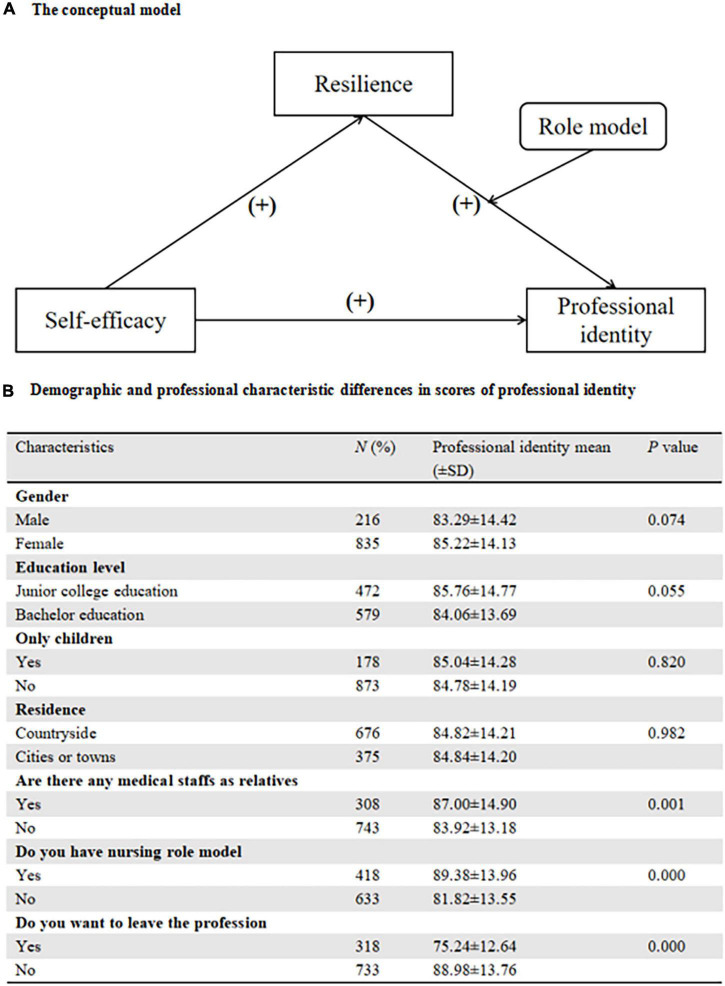
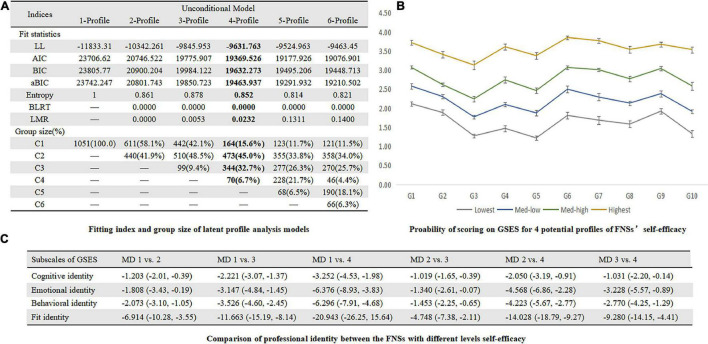
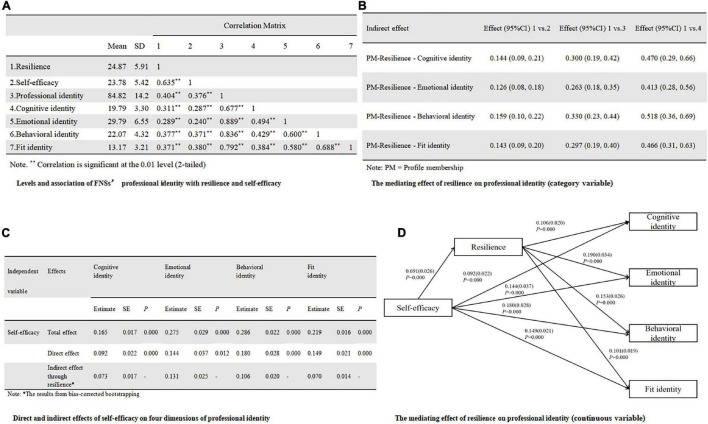
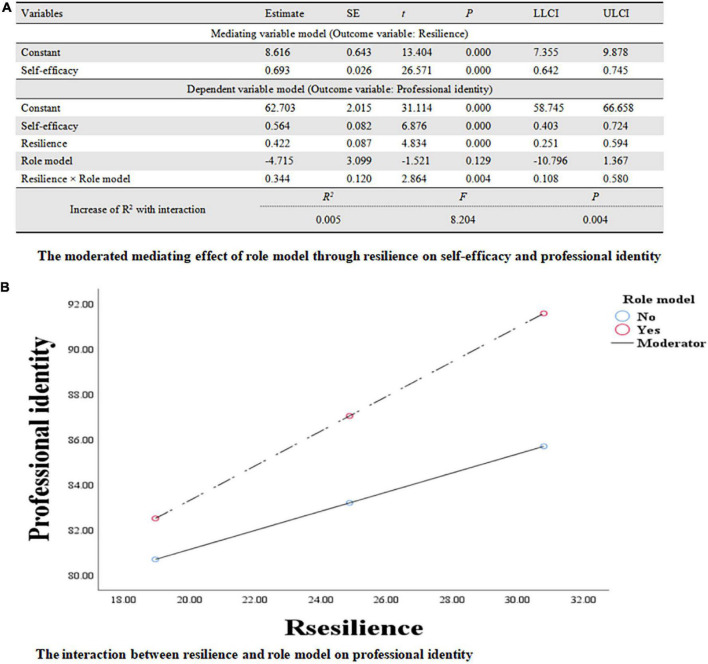
This study was designed to estimate the associations between self-efficacy and professional identity. A total of 1,051 freshmen nursing students (FNSs) from the Be Resilient to Nursing Career (BRNC) program were recruited from four universities between September and November 2020. A latent profile and moderated meditation analysis were performed. Four profiles of self-efficacy were identified and named as Lowest (15.6%), Med-low (45.0%), Med-high (32.7%), and Highest (6.7%). The mediating role of resilience and the moderating effect of role models were also identified. Therefore, self-efficacy, resilience, and role models may be three important factors to professional identity in FNSs and these relationships should be further validated in longitudinal or interventional studies.
Overview
The claims and statistics of this paper haven’t been checked yet.
Run the check — free, no account needed. It reads the open-access text and checks the sources it cites.
Integrity signals
Registry
Cites
Statistics
Figures
Verification
Claims the paper makes
The claims and statistics of this paper haven’t been checked yet.
Run the check — free, no account needed. It reads the open-access text and checks the sources it cites.
Claims other papers make about this one
Each is checked against this paper’s own text: does it say what the citing paper says it does?
In the citing paper
“Evidence indicates that self-efficacy plays a crucial role in developing professional identity among nursing students (Mei et al., 2022) and in linking professional identity with perceived competence (Yao et al., 2021).”
From Effectiveness Of Narrative Therapy In Addressing Psychological Challenges: A Systematic Review Of Randomised Controlled Trials (2026) · cites this paper as Mei et al., 2022
Self-check
Percentages, sums and reported differences re-computed from the paper’s own numbers.
The self-check needs the paper’s full text.
Citations
Cites
Development of a new resilience scale: The Connor-Davidson Resilience Scale (CD-RISC)
Connor, K. M., & Davidson, J. R. T. (2003) · Depression and Anxiety · doi:10.1002/da.10113 · Cited by 11,793
Testing the number of components in a normal mixture
Lo, Y. (2001) · Biometrika · doi:10.1093/biomet/88.3.767 · Cited by 4,640
Yao, Y., Zhao, S., Gao, X., An, Z., Wang, S., Li, H., Li, Y., Gao, L., Lu, L., & Dong, Z. (2018) · BMC Health Services Research · doi:10.1186/s12913-018-3478-y · Cited by 133
Research works printed but not linked: 55
- Bakker, 2018, Physical and mental determinants of dropout and retention among nursing students: protocol of the SPRiNG cohort study., BMC Nurs., 17, 10.1186/s12912-018-0296-9 · DOI
- Bandura, 1997, Self-Efficacy: The Exercise of Control[M].
- Bhattarai, 2020, The relationships among self-efficacy, social support, resilience, and subjective well-being in persons with spinal cord injuries., J. Adv. Nurs., 77, 221, 10.1111/jan.14573 · DOI
- Browne, 2018, Understanding perceptions of nursing professional identity in students entering an Australian undergraduate nursing degree., Nurse Educ. Pract., 32, 90, 10.1016/j.nepr.2018.07.006 · DOI
- Bujang, 2016, Requirements for minimum sample size for sensitivity and specificity analysis., J. Clin. Diagnostic Res., 10, YE01, 10.7860/JCDR/2016/18129.8744 · DOI
- Bulfone, 2016, Nursing student self-efficacy in psychomotor skills., Nurse Educ., 41, E1, 10.1097/nne.0000000000000285 · DOI
- Campbell-Sills, 2007, Psychometric analysis and refinement of the connor–davidson resilience scale (CD-RISC): validation of a 10-item measure of resilience., J. Trauma. Stress, 20, 1019, 10.1002/jts.20271 · DOI · Paper page
- Chen, 2020, Academic self-efficacy. social support, and professional identity among preservice special education teachers in China., Front. Psychol., 11, 10.3389/fpsyg.2020.00374 · DOI
- Chow, 2020, Resilience-building module for undergraduate nursing students: a mixed-methods evaluation., Nurse Educ. Pract., 49, 10.1016/j.nepr.2020.102912 · DOI
- Coulombe, 2016, Profiles of recovery from mood and anxiety disorders: a person-centered exploration of people’s engagement in self-management., Front. Psychol., 7, 10.3389/fpsyg.2016.00584 · DOI
- Eren, 2020, The relation between nursing students’ levels of self-efficacy and caring nurse-patient interaction: a descriptive study., Contemp. Nurse, 56, 185, 10.1080/10376178.2020.1782763 · DOI
- Guo, 2018, Caring characters and professional identity among graduate nursing students in China-A cross sectional study., Nurse Educ. Today, 65, 150, 10.1016/j.nedt.2018.02.039 · DOI
- Hayat, 2021, The mediating role of students’ academic resilience in the relationship between self-efficacy and test anxiety., J. Educ. Health Promot., 31, 10.4103/jehp.jehp_35_21 · DOI
- Hayes, 2017, Introduction To Mediation, Moderation, And Conditional Process Analysis: A Regression-Based Approach.
- Hensel, 2014, Longitudinal study of stress, self-care, and professional identity among nursing students., Nurse Educ., 39, 227, 10.1097/nne.0000000000000057 · DOI
- Jack, 2017, The influence of role models in undergraduate nurse education., J. Clin. Nurs., 26, 4707, 10.1111/jocn.13822 · DOI
- Jackson, 2016, Re-conceptualising graduate employability: the importance of pre-professional identity., Higher Educ. Res. Dev., 35, 925, 10.1080/07294360.2016.1139551 · DOI
- Keener, 2021, Quality of life, resilience, and related factors of nursing students during the COVID-19 pandemic., Nurse Educ., 46, 143, 10.1097/NNE.0000000000000969 · DOI
- Kumfer, 1999, Factors and Processes Contributing To Resilience: The Resilience Framework [M].
- Lopez, 2018, Does building resilience in undergraduate nursing students happen through clinical placements? A qualitative study., Nurse Educ. Today, 67, 1, 10.1016/j.nedt.2018.04.020 · DOI
- Lyu, 2020, The relationship among organizational identity, psychological resilience and work engagement of the first-line nurses in the prevention and control of COVID-19 based on structural equation model., Risk Manag. Healthc. Policy, 13, 2379, 10.2147/RMHP.S254928 · DOI
- Ma, 2021, Resilience mediates the effect of self-efficacy on symptoms of prenatal anxiety among pregnant women: a nationwide smartphone cross-sectional study in China., BMC Pregnancy Childbirth, 21, 10.1186/s12884-021-03911-5 · DOI
- Mohamed Osama, 2018, Role models and professional development in dentistry: an important resource: the views of early career stage dentists at one academic health science centre in England., Eur. J. Dent. Educ., 22, e81, 10.1111/eje.12261 · DOI
- Morgenroth, 2015, The motivational theory of role modeling: how role models influence role aspirants’ goals., Rev. Gen. Psychol., 19, 465, 10.1037/gpr0000059 · DOI
- Morrish, 2017, Emotion regulation in adolescent well-being and positive education., J. Happiness Stud., 19, 1543, 10.1007/s10902-017-9881-y · DOI
- Mussi, 2019, Comparison of stress in freshman and senior nursing students., Rev. Esc. Enferm. USP, 53, 10.1590/s1980-220x2017023503431 · DOI
- Muthén, 2000, Integrating person-centered and variable-centered analyses: growth mixture modeling with latent trajectory classes, Alcohol. Clin. Exp. Res., 24, 882, 10.1111/j.1530-0277.2000.tb02070.x · DOI
- Newnham, 2017, Self-efficacy and barriers to disaster evacuation in Hong Kong., Int. J. Public Health, 62, 1051, 10.1007/s00038-017-1036-8 · DOI
- Nyirenda, 2017, Job satisfaction and attitudes towards nursing care among nurses working at Mzuzu Central Hospital in Mzuzu, Malawi., Malawi Med. J., 28, 10.4314/mmj.v28i4.3 · DOI
- Ohlen, 1998, The professional identity of the nurse: concept analysis and development., J. Adv. Nurs., 28, 720, 10.1046/j.1365-2648.1998.00704.x · DOI
- Paice, 2002, How important are role models in making good doctors?, BMJ, 325, 707, 10.1136/bmj.325.7366.707 · DOI
- Passi, 2016, The impact of positive doctor role modeling., Med. Teach., 38, 1139, 10.3109/0142159x.2016.1170780 · DOI
- Qin, 2009, The Characteristics And Correlation Study Of College Students’ Specialty Identity [Chinese].
- Qiu, 2019, The mediating role of psychological capital on the association between workplace violence and professional identity among Chinese doctors: a cross-sectional study., Psychol. Res. Behav. Manag., 12, 209, 10.2147/prbm.s198443 · DOI
- Rees, 2015, Understanding individual resilience in the workplace: the international collaboration of workforce resilience model., Front. Psychol., 6, 10.3389/fpsyg.2015.00073 · DOI
- Ren, 2021, Relationships of organisational justice, psychological capital and professional identity with job burnout among Chinese nurses: a cross-sectional study., J. Clin. Nurs., 30, 2912, 10.1111/jocn.15797 · DOI
- Sclove, 1987, Application of model-selection criteria to some problems in multivariate analysis., Psychometrika, 52, 333, 10.1007/bf02294360 · DOI
- Shen, 2020, Impact of innovative education on the professionalism of undergraduate nursing students in China., Nurse Educ. Today, 98, 10.1016/j.nedt.2020.104647 · DOI
- Simpson, 2018, Family functioning and adolescent internalizing symptoms: a latent profile analysis., J. Adolesc., 64, 136, 10.1016/j.adolescence.2018.02.004 · DOI
- Slay, 2010, Professional identity construction: using narrative to understand the negotiation of professional and stigmatized cultural identities., Hum. Relat., 64, 85, 10.1177/0018726710384290 · DOI
- Smith, 2017, Stress, resilience and psychological well-being in Chinese undergraduate nursing students., Nurse Educ. Today, 49, 90, 10.1016/j.nedt.2016.10.004 · DOI
- Stephens, 2013, Nursing student resilience: a concept clarification., Nurs. Forum, 48, 125, 10.1111/nuf.12015 · DOI
- Sternszus, 2020, Clinical teachers’ perceptions of their role in professional identity formation., Acad. Med., 95, 1594, 10.1097/acm.0000000000003369 · DOI
- Sun, 2016, The impact of professional identity on role stress in nursing students: a cross-sectional study., Int. J. Nurs. Stud., 63, 1, 10.1016/j.ijnurstu.2016.08.010 · DOI
- Wang, 2001, Reliability and validity of general self-efficacy scale., Chinese J. Appl. Psychol., 7, 37
- Wang, 2019, Investigation and Analysis on the Professional Identity of Nursing Undergraduates in Anhui Province [Chinese].
- Wang, 2019, Professional identity and mental health of rural-oriented tuition-waived medical students in Anhui Province. China., BMC Med. Educ., 19, 10.1186/s12909-019-1603-1 · DOI
- 2020, State of The World’s Nursing 2020: Investing In Education, Jobs And Leadership.
- Wu, 2019, Professional identity and its influencing factors of first-year post-associate degree baccalaureate nursing students: a cross-sectional study., Nurse Educ. Today, 84, 10.1016/j.nedt.2019.104227 · DOI
- Xie, 2020, Relationships among character strengths, self-efficacy, social support, depression, and psychological well-being in hospital nurses., Asian Nurs. Res., 14, 150, 10.1016/j.anr.2020.06.002 · DOI
- Xiong, 2020, The psychological status and self-efficacy of nurses during COVID-19 outbreak: a cross-sectional survey., Inquiry, 57, 10.1177/0046958020957114 · DOI
- Ye, 2017, Validation and application of the Chinese version of the 10-item connor-davidson resilience scale (CD-RISC-10) among parents of children with cancer diagnosis., Eur. J. Oncol. Nurs., 27, 36, 10.1016/j.ejon.2017.01.004 · DOI · Paper page
- Zhang, 1995, Measuring optimistic self-beliefs: a Chinese adaptation of the general self-efficacy scale., Psychologia, 38, 174
- Zhang, 2018, Chinese translation and psychometric testing of the cardiac self-efficacy scale in patients with coronary heart disease in mainland China., Health Qual. Life Outcomes, 16, 10.1186/s12955-018-0872-4 · DOI
- Zhang, 2021, Professional identity of Chinese nursing students during the COVID-19 pandemic outbreak: a nation-wide cross-sectional study., Nurse Educ. Pract., 52, 10.1016/j.nepr.2021.103040 · DOI
Cited by
Sorted by citations
Permatasari, D. P., Windarwati, H. D., & Lestari, R. (2026) · Indigenous: Jurnal Ilmiah Psikologi · doi:10.23917/indigenous.v11i1.13778
Metadata
- Authors
- Mei, X. X., Wang, H. Y., Wu, X. N., Wu, J. Y., Lu, Y. Z., & Ye, Z. J.
- Venue
- Frontiers in Psychology
- Publisher
- Frontiers Media SA
- Published
- 2022-03-03
- Volume
- 13
- ISSN
- 1664-1078
- PMC
- PMC8927723
- Cited by
- 75
- References
- 3
About these checks
Registry, retraction, Cites and statistics results are computed, not judged, with one exception: a printed reference that no index lists is read once by a model before it counts as a citation error. Claims are extracted by a model and kept only when their quote appears verbatim in the text; each cited source is then checked, with a model’s help, for whether it says what the claim relies on. Those verdicts can be wrong — read the claim’s quote and the cited source before relying on one.
Statistics and arithmetic are recomputed, not judged.
Confidence bands are shown only for fields calibrated on our annotated test set. None is calibrated yet, so no band is shown.
What counts as a claim ›How we measure confidence ›How we check this ›
Are you an author, or do you see a problem with this page? Request a review
How to cite
Cite CoChat for the checks on this page, and the paper for its own findings.
- This page
- CoChat. (2026). Citation check: Self-Efficacy and Professional Identity Among Freshmen Nursing Students: A Latent Profile and Moderated Mediation Analysis. https://app.cochat.ai/papers/10.3389/fpsyg.2022.779986
- The paper
- Mei, X. X., Wang, H. Y., Wu, X. N., Wu, J. Y., Lu, Y. Z., & Ye, Z. J. (2022). Self-Efficacy and Professional Identity Among Freshmen Nursing Students: A Latent Profile and Moderated Mediation Analysis. Frontiers in Psychology. https://doi.org/10.3389/fpsyg.2022.779986
