

The in-session discourse of unresolved/disorganized psychotherapy patients: An exploratory study of an attachment classification
Open accessThe DOI matches its Crossref record; 55 of the 56 references it cites were found in a registry or an index; none of the 41 sources its claims cite is checked for support yet.
Abstract
The Unresolved/disorganized (U/d) attachment classification has generated considerable interest among clinicians. This is in part based on its empirical associations with adult mental health, parenting practices, and treatment outcomes. Despite decades of theorizing, however, we have little empirical information regarding how patients with a U/d classification assigned by accredited coders actually behave or speak in psychotherapy sessions. Here, we take a step towards bridging this gap by reporting our observations of the psychotherapy session transcripts of 40 outpatients who were independently classified as U/d on the Adult Attachment Interview (AAI), the gold standard measure of adult attachment research. These patients were extracted from a larger sample of 181 and compared to others without a U/d classification. In this paper, we discuss two different discourse styles associated with a U/d classification. Some U/d patients did not seem to sufficiently elicit the therapist’s endorsement of what they said. For example, they did not justify their claims with examples or explanations, or did not consider others’ intentions or experiences. Other U/d patients were credible, but left the listener uncertain as to the underlying point of their discourse, for example, by glaringly omitting the consequences of their experiences, or interrupting their narratives mid-way. In the discussion, we place these observations in the context of recent thinking on attachment and epistemic trust, and discuss how this study may form the basis for future quantitative studies of psychotherapy.
Overview
CoChat Summary
TL;DR
This exploratory study examined the in-session discourse of 40 psychotherapy outpatients classified unresolved/disorganized (U/d) or Cannot Classify on the Adult Attachment Interview, drawn from a larger sample of 181. It identified six categories of discourse indicators grouped into two tentative subtypes, interpreted as difficulties in fostering the therapist’s epistemic trust.
Key findings
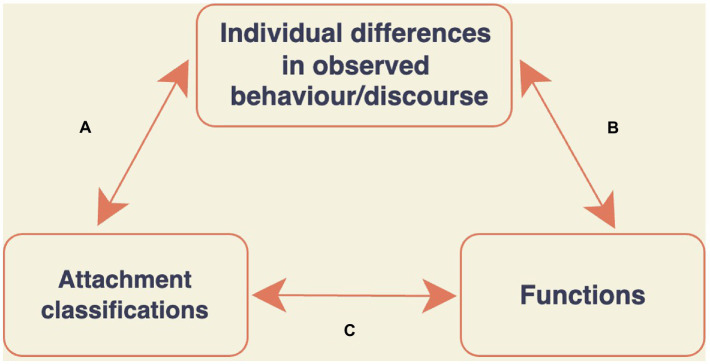
- Six categories of discourse indicators appeared associated with U/d/CC classifications, tentatively grouped into two subtypes: Subtype 1 (statements lacking justification or contradictory; no empathy for others; discounting influence with the therapist) and Subtype 2 (reporting impactful experiences without evaluations/feelings; reporting events incompletely; not responding to therapist exploratory questions). At least 10 different patients exemplified each category.
- Only 9 of the 40 analyzed sessions contained discussion of potentially traumatic events, and the identified indicators emerged beyond discussions of trauma or loss.
- No evidence was found that U/d/CC patients engaged in simultaneous high avoidance and high resistance; PACS Avoidance–Resistance correlations were r = −0.47 in U/d patients and r = −0.50 in non-U/d patients.
- Among U/d patients, mean age was 34.2, 75% were female, 94% were Caucasian, mean education was 15.9 years (SD = 1.0), and 86% had a personality disorder diagnosis; in the total sample, mean age was 32.4, 72.5% were female, 91% were Caucasian, mean education was 16.3 years (SD = 0.79), and 43% had a personality disorder diagnosis. Differences between U/d and non-U/d groups were not significant except for rate of personality disorder.
Methods
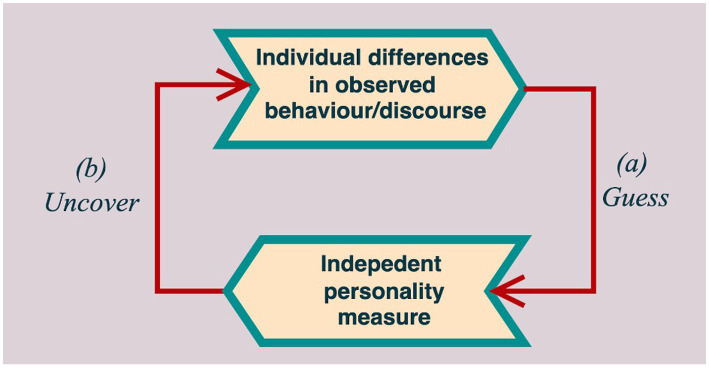
- Exploratory qualitative study using a modified “guess and uncover” method, comparing the single-session discourse of 40 U/d/CC patients against non-U/d patients from a larger N = 181 outpatient sample recruited from Padua, New York, Copenhagen, and Gentofte/Roskilde; the U/d group included patients classified as Cannot Classify.
- All participants had pre-treatment AAI interviews coded by reliable AAI coders; the third therapy session, or nearest available session, was transcribed and coded with the Patient Attachment Coding System (PACS).
- Analysis involved bi-weekly meetings and eight successive group discussion rounds that refined 30 initial discourse indicators into 6 categories and 2 tentative subtypes, illustrated with verbatim, disguised transcript excerpts; no quantitative hypothesis testing was conducted.
Limitations
- Paper-stated: the guess-and-uncover method’s assumption of a 1 = 1 correspondence between observation and criterion risks overfitting; because U/d may be dimensional rather than categorical, excluding indicators found in non-U/d transcripts may make the list non-comprehensive; other variables such as mentalizing cannot be excluded; and the high prevalence of personality disorders means findings may reflect disordered personality functioning rather than U/d alone. Replication with coders blind to AAI classification and rigorous hypothesis testing is needed.
- Evident from the text: the study is exploratory, based on a selected clinical sample, and offers preliminary observations without independent validation or quantitative testing, so the indicators and two-subtype model remain tentative.
Model-written summary. Check it against the paper before relying on it.
Integrity signals
Registry
Cites
Statistics
Figures
Verification
Claims the paper makes
0 Valid · 0 Not valid · 30 Not checked · 85 Own results and interpretations
A result the paper reports from its own data — it cites no other source for it, so there is none to check. The quote shows it is in the paper.
In the paper
“In the indicators grouped in category 4, the patient presents a series of facts without mentioning what they thought about these facts, or what emotions were aroused in them as a consequence.”
§ The in-session discourse of unresolved/disorganized psychotherapy patients: An exploratory study of an attachment classification > Results > Summary of subtype 2
plain- Asserted: passes — The authors put it forward as true.
- Checkable: passes — It can be checked against evidence.
- Load-bearing: passes — The paper’s conclusions depend on it.
- Based: passes — The paper gives a reason why it holds.
A result the paper reports from its own data — it cites no other source for it, so there is none to check. The quote shows it is in the paper.
In the paper
“In other cases, these patients showed no self-consciousness about actions of theirs that may have negative impacts on others”
§ The in-session discourse of unresolved/disorganized psychotherapy patients: An exploratory study of an attachment classification > Results > Sub-Type 1: The patient does not encourage acceptance or endorsement from the therapist
plainSingle case- Asserted: passes — The authors put it forward as true.
- Checkable: passes — It can be checked against evidence.
- Load-bearing: unclear — It is unclear whether the paper’s conclusions depend on it.
- Based: passes — The paper gives a reason why it holds.
A result the paper reports from its own data — it cites no other source for it, so there is none to check. The quote shows it is in the paper.
In the paper
“In this section, we illustrated a second group of features that emerged in the discourses of the U/d patients in our sample.”
§ The in-session discourse of unresolved/disorganized psychotherapy patients: An exploratory study of an attachment classification > Results > Summary of subtype 2
plain- Asserted: passes — The authors put it forward as true.
- Checkable: passes — It can be checked against evidence.
- Load-bearing: passes — The paper’s conclusions depend on it.
- Based: passes — The paper gives a reason why it holds.
A result the paper reports from its own data — it cites no other source for it, so there is none to check. The quote shows it is in the paper.
In the paper
“According to the PACS coding, no cases seemed to simultaneously display high avoidance and high resistance, including those who were classified as U/d in the AAI.”
§ The in-session discourse of unresolved/disorganized psychotherapy patients: An exploratory study of an attachment classification > Materials and methods > Procedure and data analysis
hedged- Asserted: passes — The authors put it forward as true.
- Checkable: passes — It can be checked against evidence.
- Load-bearing: passes — The paper’s conclusions depend on it.
- Based: passes — The paper gives a reason why it holds.
- Rests on an assumption not shown here.
A result the paper reports from its own data — it cites no other source for it, so there is none to check. The quote shows it is in the paper.
In the paper
“Another discourse characteristic that recurred in the U/d patients we analyzed was their tendency to report experiences without recounting how they ended, almost as if they found it difficult to maintain their attention on completing the narratives they are telling.”
§ The in-session discourse of unresolved/disorganized psychotherapy patients: An exploratory study of an attachment classification > Results > Subtype 2: The patient omits “the point” they are trying to make through their communication
plainstates an association- Asserted: passes — The authors put it forward as true.
- Checkable: passes — It can be checked against evidence.
- Load-bearing: passes — The paper’s conclusions depend on it.
- Based: passes — The paper gives a reason why it holds.
51 more claims
Create a free account to see all 115 claims and to verify the 19 references still open.
- It may state two separate claims as one. 29
- Probably not a substantial claim. 37
- The quote only partly states this claim. 1
Citations
Cites
(1978) · Medical Entomology and Zoology · Cited by 12,570
Ambrose, A., Wittgenstein, L., & Anscombe, G. E. M. (1954) · Philosophy and Phenomenological Research · doi:10.2307/2103745 · Cited by 12,192
Security in Infancy, Childhood, and Adulthood: A Move to the Level of Representation
Main, M., Kaplan, N., & Cassidy, J. (1985) · Monographs of the Society for Research in Child Development · doi:10.2307/3333827 · Cited by 4,567
Grice, H. P. (1957) · The Philosophical Review · doi:10.2307/2182440 · Cited by 2,824
Attachment in the preschool years: Theory, research, and intervention.
Greenberg, M. T., Cicchetti, D., & Cummings, E. M. (1990) · University of Chicago Press eBooks · Cited by 2,343
Brown, G., & Yule, G. (1983) · doi:10.1017/cbo9780511805226 · Cited by 1,537
Fearon, R. P., Bakermans-Kranenburg, M. J., Van IJzendoorn, M. H., Lapsley, A.-M., & Roisman, G. I. (2010) · Child Development · doi:10.1111/j.1467-8624.2009.01405.x · Cited by 1,326
The Logic of Scientific Discovery
Popper, K. (2005) · Routledge eBooks · doi:10.4324/9780203994627 · Cited by 1,142
Levy, K. N., Meehan, K. B., Kelly, K. M., Reynoso, J. S., Weber, M., Clarkin, J. F., & Kernberg, O. F. (2006) · Journal of Consulting and Clinical Psychology · doi:10.1037/0022-006x.74.6.1027 · Cited by 817
Main, M., & Cassidy, J. (1988) · Developmental Psychology · doi:10.1037/0012-1649.24.3.415 · Cited by 809 · cited 1×
“Further, following the finding that in the preschool years infant disorganized attachment becomes “organized” by the effort to control the caregiver (Main and Cassidy, 1988), Liotti has proposed that U/d patients are typified in session by their attempts to keep the therapist under control, either by attempting to hum…”
Background
Research works printed but not linked: 5
- Main M. Goldwyn R. Hesse E. (2002). “Adult Attachment Interview”. Coding and Scoring Manual. Unpublished manuscript, University of California, Berkeley.
- Main M. Hesse E. (1992). “ Attaccamento disorganizzato/disorientato nell’infanzia e stati mentali dissociati dei genitori” in Ammaniti M. ed. Stern D. (Gius, Laterza & Figli: Attaccamento e psicoanalisi. Rome), 80– 140.
- Main M. Solomon J. (1986). Discovery of an insecure-disorganized/disoriented attachment pattern, affective development in infancy. Westport, CT, US: Ablex Publishing, 95– 124.
- Slade A. (2016). “ Attachment and adult psychotherapy: theory, research and practice,” in Handbook of Attachment: Theory, Research and Clinical Applications. (3rd Edn). eds. Cassidy J. Shaver P. R. (New York, NY: Guilford Press). 759– 779.
- Sperber D. Wilson D. (1986/1995). Relevance: Communication and cognition. Oxford: Blackwell.
Cited by
Esposito, G., Totaro, S., Maro, A. D., & Passeggia, R. (2024) · Mediterranean Journal of Clinical Psychology · doi:10.13129/2282-1619/mjcp-4041 · Cited by 12
An exploratory study on how attachment classifications manifest in group psychotherapy
Talia, A., Georg, A. K., Siepe, B., Gullo, S., Miller‐Bottome, M., Volkert, J., Neukel, C., Kaess, M., Bempohl, F., Herpertz, S. C., et al. (2022) · Research in Psychotherapy Psychopathology Process and Outcome · doi:10.4081/ripppo.2022.653 · Cited by 6
Self-citationAdapting Short-Term Mentalization-Based Therapy to ICD-11 Personality Disorder in Adolescents
Simonsen, S., Hestbæk, E., & Juul, S. (2023) · Children · doi:10.3390/children10010093 · Cited by 4
Self-citationMary Main: portrait and tribute
Duschinsky, R. (2024) · Attachment & Human Development · doi:10.1080/14616734.2024.2400808 · Cited by 4
Self-citationYdrefelt, E., Björling, P., Freidlitz, J., & Sundström, N. (2025) · Oxford University Press eBooks · doi:10.1093/9780191964343.003.0022 · Cited by 3
Metadata
- Authors
- Talia, A., Taubner, S., Miller-Bottome, M., Muurholm, S. D., Winther, A., Frandsen, F. W., Harpøth, T., Onofri, A., Kongerslev, M. T., Simonsen, S., Poulsen, S., & Duschinsky, R.
- Affiliations
- University of Cambridge (GB)
- Heidelberg University (DE)
- University of Copenhagen (DK)
- Mental Health Services (DK)
- Region Zealand (DK)
- University of Southern Denmark (DK)
- Corresponding author
- Talia, Alessandro
- ORCID
- Venue
- Frontiers in Psychology
- Publisher
- Frontiers Media SA
- Published
- 2022-10-05
- Volume
- 13
- Pages
- 985685-985685
- ISSN
- 1664-1078 (ISSN-L)
- PMC
- PMC9581270
- OpenAlex
- W4301586218
- Semantic Scholar
- a5ea946dbbf270b1395d53aeecbf6602741380ce
- Cited by
- 10
- References
- 56
- Citations by year
- 2026: 2 · 2025: 3 · 2024: 3 · 2023: 1 · 2022: 1
- FWCI
- 1.12
- Type
- journal article
- Language
- en
- Open access
- gold
- doi.org
- Licence
- Locations
- Frontiers in Psychology (publishedVersion, cc-by)
- PubMed Central (publishedVersion, cc-by)
- PubMed (publishedVersion)
- Research at the University of Copenhagen (University of Copenhagen) (publishedVersion, cc-by)
- University of Southern Denmark Research Portal (University of Southern Denmark) (publishedVersion, cc-by)
- DOAJ (DOAJ: Directory of Open Access Journals) (submittedVersion)
- Apollo (University of Cambridge) (submittedVersion, cc-by)
- Apollo (cc-by)
- Apollo
- Funders
- Wellcome Trust (218025/A/19/Z)
- Topics
- Social Sciences › Psychology › Social Psychology › Attachment and Relationship Dynamics
- Social Sciences › Psychology › Clinical Psychology › Psychotherapy Techniques and Applications
- Social Sciences › Psychology › Clinical Psychology › Psychoanalysis and Psychopathology Research
- Keywords
- attachment classification, Adult Attachment Interview, discourse style, epistemic trust, therapist credibility, patient-therapist interaction, narrative coherence
About these checks
Registry, retraction, Cites and statistics results are computed, not judged, with one exception: a printed reference that no index lists is read once by a model before it counts as a citation error. Claims are extracted by a model and kept only when their quote appears verbatim in the text; each cited source is then checked, with a model’s help, for whether it says what the claim relies on. Those verdicts can be wrong — read the claim’s quote and the cited source before relying on one.
A language model drew the claims from the paper on 2026-11-24, under version 3 of the claim definition (model deepseek-v4.1-flash, prompt extract-v3).
A second model labelled each claim on 2026-11-24 (model jev-1.13-20260917, definition revision gold-guideline-v0.2).
Statistics and arithmetic are recomputed, not judged.
Confidence bands are shown only for fields calibrated on our annotated test set. None is calibrated yet, so no band is shown.
What counts as a claim ›How we measure confidence ›How we check this ›
Are you an author, or do you see a problem with this page? Request a review
How to cite
Cite CoChat for the checks on this page, and the paper for its own findings.
- This page
- CoChat. (2026). Citation check: The in-session discourse of unresolved/disorganized psychotherapy patients: An exploratory study of an attachment classification. https://app.cochat.ai/papers/10.3389/fpsyg.2022.985685
- The paper
- Talia, A., Taubner, S., Miller-Bottome, M., Muurholm, S. D., Winther, A., Frandsen, F. W., Harpøth, T., Onofri, A., Kongerslev, M. T., Simonsen, S., Poulsen, S., & Duschinsky, R. (2022). The in-session discourse of unresolved/disorganized psychotherapy patients: An exploratory study of an attachment classification. Frontiers in Psychology. https://doi.org/10.3389/fpsyg.2022.985685
Data sources
Bibliographic data: Semantic Scholar, OpenAlex, Crossref.
Contains information from the Semantic Scholar Academic Graph Datasets, made available under the ODC Attribution License (ODC-BY 1.0).
Semantic Scholar’s data is described in: Kinney, R., et al. (2023). The Semantic Scholar Open Data Platform. arXiv:2301.10140.
