

The DOI matches its Crossref record; 33 of the 34 references it cites were found in a registry or an index.
The benefits of guided imagery on athletic performance: a mixed-methods approach
Open accessAbstract
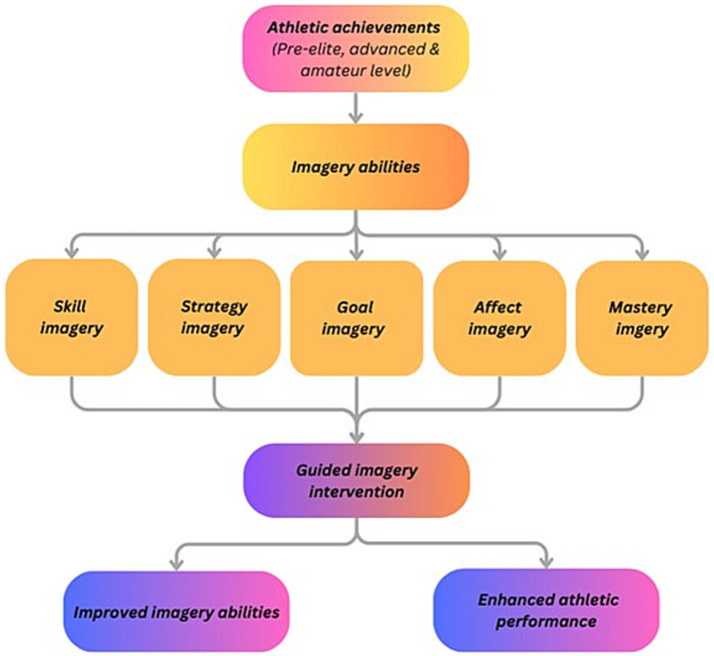
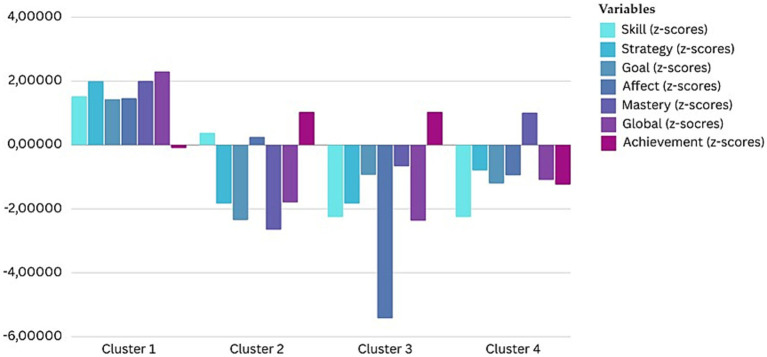
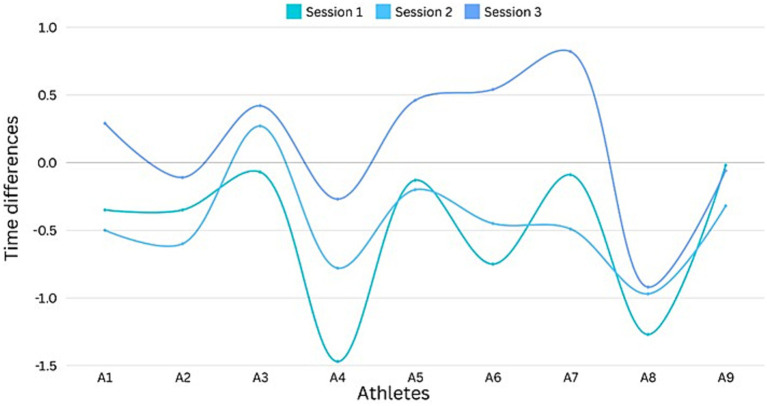
Introduction: Imagery as a psychological skill in sports occupies an essential place in the psychological preparation of athletes and is one of the key factors in realizing an athlete’s potential in competitive sports. It’s role in athlete performance, as well as the differences in its use across various sports and demographic groups, has been a compelling topic in both sports’ science and psychology. This topic has remained relevant in recent years. Aim: This quantitative survey-based and experimental design study aims to first, to determine whether differences in imagery ability profiles, identified through cluster analysis, can characterize differences among athletes with varying levels of athletic achievement. A secondary aim of the study is to evaluate the effect of a guided imagery intervention on imagery abilities and athletic performance. Methods: A total of 500 athletes from different sports, aged M = 21.01 (SD = 2.82), both male and female, completed the Sport Imagery Ability Questionnaire (SIAQ) and provided information regarding their demographics and athletic achievements. In the experimental part of the study, nine alpine skiers were selected to participate in a six-month guided imagery intervention alongside their regular trainings on the ski track to assess the intervention’s impact on performance. Results: The results of K-means cluster analysis on athletic achievements of athletes showed a four-cluster solution that hat emphasized distinctions between the groups and reduced variation within each group. A Multiple Analysis of Covariance revealed that the four cluster groups differ in their imagery abilities. Pre- and post-intervention assessments for the nine alpine skiers were conducted using SIAQ and control training sessions, revealing significant increase in both imagery ability scores and performance indicators (p < 0.05). Conclusion: The research results support recent findings that athletes with higher athletic achievement tend to have stronger imagery abilities. The significant differences observed between the clusters based on athletic achievement levels were confirmed. By using imagery profiling of athletes with an analytical method, this study provides valuable insights into the role of imagery in athletic success, suggesting that tailored imagery training could enhance performance across different levels of athletic achievement.
Overview
The claims and statistics of this paper haven’t been checked yet.
Run the check — free, no account needed. It reads the open-access text and checks the sources it cites.
Integrity signals
Registry
Cites
Statistics
Figures
Verification
Claims the paper makes
The claims and statistics of this paper haven’t been checked yet.
Run the check — free, no account needed. It reads the open-access text and checks the sources it cites.
Claims other papers make about this one
Each is checked against this paper’s own text: does it say what the citing paper says it does?
The source backs part of the claim, not all of it — or backs it for a different population, condition or comparison.
In the citing paper
“Within this framework, SmartACT likely operates through complementary pathways—top-down regulation (ACT), sensorimotor simulation (imagery), and autonomic/attentional tuning (hypnosis)—to yield concurrent gains in motor efficiency and reductions in psychosomatic distress [44,49,50,51,58,59,60,61,62,74,75,76].”
From Effects of the SmartACT Intervention on Motor and Psychological Variables in Adolescent Athletes: A Controlled Trial Using BlazePod and Microgate. (2025) · cites this paper as [74]
Experimental — accuracy not yet measured
Self-check
Percentages, sums and reported differences re-computed from the paper’s own numbers.
The self-check needs the paper’s full text.
Citations
Cites
Statistical Power Analysis for the Behavioral Sciences
Muller, K. E., & Cohen, J. (1989) · Technometrics · doi:10.2307/1270020 · Cited by 99,603
SPSS for Windows Step by Step: A Simple Guide and Reference
Mallery, P., & George, D. (1998) · Cited by 10,312
The PETTLEP Approach to Motor Imagery: A Functional Equivalence Model for Sport Psychologists
Holmes, P. S., & Collins, D. (2001) · Journal of Applied Sport Psychology · doi:10.1080/10413200109339004 · Cited by 809 · cited 2×
“One key theoretical model supporting this is the PETTLEP model, developed by Holmes and Collins (2001), which emphasizes that incorporating guided imagery into realistic practice can effectively enhance athletic performance.”
Sport psychology and performance meta-analyses: A systematic review of the literature
Lochbaum, M. R., Stoner, E., Hefner, T., Cooper, S., Lane, A. M., & Terry, P. C. (2022) · PLoS ONE · doi:10.1371/journal.pone.0263408 · Cited by 257 · cited 2×
“For example, athletes in clusters with lower imagery abilities might require more psychological support, while those in higher-achieving clusters might focus on maintaining their competitive edge (Lochbaum et al., 2022).”
The effects of imagery interventions in sports: a meta-analysis
Simonsmeier, B. A., Andronie, M., Buecker, S., & Frank, C. (2020) · International Review of Sport and Exercise Psychology · doi:10.1080/1750984x.2020.1780627 · Cited by 233
The Role of Imagery in Performance
Cumming, J., & Williams, S. E. (2012) · Oxford University Press eBooks · doi:10.1093/oxfordhb/9780199731763.013.0011 · Cited by 217 · cited 3×
“Cumming and Williams (2012) emphasize that the effectiveness of imagery training is influenced by its frequency, duration and consistency.”
Measuring Athlete Imagery Ability: The Sport Imagery Ability Questionnaire
Williams, S. E., & Cumming, J. (2011) · Journal of Sport and Exercise Psychology · doi:10.1123/jsep.33.3.416 · Cited by 179
Using motor imagery practice for improving motor performance – A review
Ladda, A. M., Lebon, F., & Lotze, M. (2021) · Brain and Cognition · doi:10.1016/j.bandc.2021.105705 · Cited by 165 · cited 2×
“However, recent research has highlighted also the complex relationship between imagery skills and athletic performance (Ladda et al., 2021).”
Lindsay, R. S., Larkin, P., Kittel, A. B., & Spittle, M. (2021) · Physical Education and Sport Pedagogy · doi:10.1080/17408989.2021.1991297 · Cited by 109
Bedir, D., & Erhan, S. E. (2021) · Frontiers in Psychology · doi:10.3389/fpsyg.2020.02073 · Cited by 85
Research works printed but not linked: 5
- Amasiatu, 2013, Mental imagery rehearsal as a psychological technique for enhancing sports performance, Mentalis, 1, 69
- Cumming, 2023, Imagery, 543
- Hartani, 2023, The impact of sport-specific imagery on skill acquisition and performance, Rev. Psicol. Deporte, 32, 29
- Volgemute, 2019, Sport imagery ability questionnaire adaptation, 812
- Welis, 2024, The influence of imagery training and self-confidence on shooting skills in futsal: a two-way ANOVA design, J. Phys. Educ. Sport, 24, 1767, 10.7752/jpes.2024.07197 · DOI
Cited by
Sorted by citations
Sleep and Athletic Performance: A Multidimensional Review of Physiological and Molecular Mechanisms
Kaczmarek, F., Bartkowiak-Wieczorek, J., Matecka, M., Jenczylik, K., Brzezińska, K., Gajniak, P., Marchwiak, S., Kaczmarek, K., Nowak, M., Kmiecik, M., et al. (2025) · Journal of Clinical Medicine · doi:10.3390/jcm14217606 · Cited by 48
Castellar, F., Cavaleri, R., & Herff, S. A. (2025) · Frontiers in Sports and Active Living · doi:10.3389/fspor.2025.1683432 · Cited by 3
Norouzi, E., Hamboushi, L., Ahmadi, A., & Rhodes, J. (2025) · Journal of Imagery Research in Sport and Physical Activity · doi:10.1515/jirspa-2025-0009 · Cited by 2
Timea, B. M., Carmen, C.-B., Nicolae, O. M., Nicola, M., Teodor, G. V., Maria, S. A., Cornelia, P., Hervás-Gómez, C., Florina, G. E., & Dan, M. (2025) · Children · doi:10.3390/children12101338 · Cited by 2
Bridging brain and body: a 3R framework for real-time self-regulation strategies in sport
Yakushina, A. A., Lakičević, N., Leonov, S., Vvedenskiy, S., & Drid, P. (2026) · Frontiers in Psychology · doi:10.3389/fpsyg.2026.1833469 · Cited by 1
Metadata
- Authors
- Volgemute, K., Vazne, Z., & Malinauskas, R.
- Affiliations
- Latvian Academy of Sport Education (LV)
- Corresponding author
- Volgemute, Katrina
- ORCID
- Volgemute, Katrina
- Venue
- Frontiers in Psychology
- Publisher
- Frontiers Media SA
- Published
- 2025-04-11
- Volume
- 16
- Pages
- 1500194-1500194
- ISSN
- 1664-1078 (ISSN-L)
- PMC
- PMC12021890
- OpenAlex
- W4409376882
- Cited by
- 11
- References
- 34
- Citations by year
- 2026: 6 · 2025: 5
- FWCI
- 21.88
- Type
- journal article
- Language
- en
- Open access
- gold
- doi.org
- Licence
- Locations
- Frontiers in Psychology (publishedVersion, cc-by)
- Europe PMC (PubMed Central) (publishedVersion, cc-by)
- PubMed Central (publishedVersion, cc-by)
- PubMed (publishedVersion)
- DOAJ (DOAJ: Directory of Open Access Journals) (submittedVersion, cc-by-sa)
- Topics
- Social Sciences › Psychology › Developmental and Educational Psychology › Sport Psychology and Performance
- Health Sciences › Health Professions › Physical Therapy, Sports Therapy and Rehabilitation › Sports and Physical Education Research
- Health Sciences › Medicine › Orthopedics and Sports Medicine › Sports Performance and Training
- Keywords
- guided imagery, mental imagery, athletic performance, athlete achievement, alpine skiing, sport psychology
About these checks
Registry, retraction, Cites and statistics results are computed, not judged, with one exception: a printed reference that no index lists is read once by a model before it counts as a citation error. Claims are extracted by a model and kept only when their quote appears verbatim in the text; each cited source is then checked, with a model’s help, for whether it says what the claim relies on. Those verdicts can be wrong — read the claim’s quote and the cited source before relying on one.
Statistics and arithmetic are recomputed, not judged.
Confidence bands are shown only for fields calibrated on our annotated test set. None is calibrated yet, so no band is shown.
What counts as a claim ›How we measure confidence ›How we check this ›
Are you an author, or do you see a problem with this page? Request a review
How to cite
Cite CoChat for the checks on this page, and the paper for its own findings.
- This page
- CoChat. (2026). Citation check: The benefits of guided imagery on athletic performance: a mixed-methods approach. https://app.cochat.ai/papers/10.3389/fpsyg.2025.1500194
- The paper
- Volgemute, K., Vazne, Z., & Malinauskas, R. (2025). The benefits of guided imagery on athletic performance: a mixed-methods approach. Frontiers in Psychology. https://doi.org/10.3389/fpsyg.2025.1500194
