

Cytotoxicity and concentration of silver ions released from dressings in the treatment of infected wounds: a systematic review
Open accessThe DOI matches its Crossref record; 51 of the 52 references it cites were found in a registry or an index, and 1 are not checked yet; none of the 103 sources its claims cite is checked for support yet.
Abstract
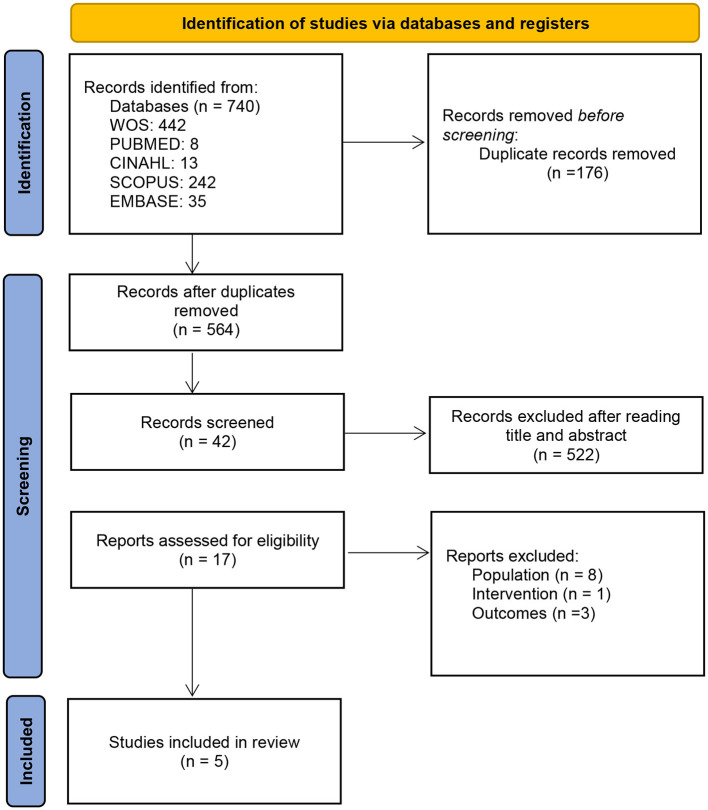
Introduction: Silver-releasing dressings are used in the treatment of infected wounds. Despite their widespread use, neither the amount of silver released nor the potential in vivo toxicity is known. The aim of this study was to evaluate the cytotoxic effects and the amount of silver released from commercially available dressings with infected wounds. Methods: The review was conducted according to the PRISMA statement. The Web of Science, PubMed, Embase, Scopus, and CINAHL databases were searched for studies from 2002 through December 2022. The criteria were as follows: population (human patients with infected wounds); intervention (commercial dressings with clinical silver authorized for use in humans); and outcomes (concentrations of silver ions released into tissues and plasma). Any study based on silver-free dressings, experimental dressings, or dressings not for clinical use in humans should be excluded. According to the type of study, systematic reviews, experimental, quasi-experimental, and observational studies in English, Spanish, or Portuguese were considered. The quality of the selected studies was assessed using the JBI critical appraisal tools. Studies that assessed at least 65% of the included items were included. Data were extracted independently by two reviewers. Results: 740 articles were found and five were finally selected (all of them quasi-experimental). Heterogeneity was found in terms of study design, application of silver dressings, and methods of assessment, which limited the comparability between studies. Conclusion: In vivo comparative studies of clinical dressings for control of infection lack a standardized methodology that allows observation of all the variables of silver performance at local and systemic levels, as well as evaluation of its cytotoxicity. It cannot be concluded whether the assessed concentrations of released silver in commercial dressings for the topical treatment of infected wounds are cytotoxic to skin cells. Systematic review registration: https://www.crd.york.ac.uk/prospero/display_record.php?ID=CRD42022351041, PROSPERO [CRD42022351041].
Checked 2026-11-22 · 1 reference not checked yet
Overview
CoChat Summary
TL;DR
This systematic review of five quasi-experimental studies found wide heterogeneity and no control groups, limiting comparability of silver release from commercial dressings in infected wounds. It could not conclude whether the assessed released silver concentrations are cytotoxic to skin cells.
Key findings
- From 740 records, 5 studies (113 patients; sample sizes 6–46, mean 22.6) met criteria; all were quasi-experimental without control groups and published 2003–2014.
- Blood serum silver concentrations varied by dressing type: nanocrystalline 0.0011–0.735 ppm, metallic <0.0142 ppm, and ionic 0.0004–0.0086 ppm; mean dressing wear time was 13.5 days (range 3–28), and quantification methods were ICPMS (60%), GFAAS (20%), and AAS (20%).
- No study provided specific cytotoxicity data beyond absence of clinical symptoms; 80% exceeded the blood range considered cytotoxic (>0.01 ppm), and only Karlsmark et al. was outside that range but reported liver and kidney deposits with normal function.
- The review could not conclude whether assessed concentrations of released silver from commercial dressings for topical treatment of infected wounds are cytotoxic to skin cells; it also noted quantification was below the bactericidal range and did not account for exudate, wear time, or change frequency.
Methods
- PRISMA systematic review registered in PROSPERO (CRD42022351041); searched Web of Science, PubMed, Embase, Scopus, and CINAHL from 2002 through December 2022 (last search 26 February 2023) for human patients with infected wounds, commercial silver dressings authorized for human use, and outcomes of silver ion concentrations in tissues and plasma.
- Included systematic reviews, experimental, quasi-experimental, and observational studies with more than five patients in English, Spanish, or Portuguese; excluded silver-free, experimental, or non-clinical dressings. Two reviewers independently selected and extracted data, with a third reviewer resolving disagreements; quality was assessed with JBI critical appraisal tools, including studies scoring at least 65% of items.
- Narrative synthesis only; meta-analysis was not conducted because included studies lacked control groups. The search yielded 740 records and 5 included studies.
Limitations
- Paper-stated: all included studies lacked a control group; heterogeneity in sampling, study design, dressing application, assessment methods, and units prevented comparability; no cytotoxic ranges were provided; risks of selection, publication, confounding, detection, and sample-size bias were noted; sample size was not calculated in any study.
- Text-evident: only five studies were included, all quasi-experimental and published 2003–2014, with small samples (6–46), limiting generalizability and statistical power.
- Text-evident: blood measurements may not reflect silver concentrations in the wound bed or exudate where bacterial load is located; only one study reported exudate silver concentration.
Model-written summary. Check it against the paper before relying on it.
Integrity signals
Registry
Cites
Statistics
Figures
Verification
Claims the paper makes
0 Valid · 4 Not valid · 54 Not checked · 44 Own results and interpretations
None of the sources cited for this claim have been checked yet.
In the paper
“The assessment of the concentrations of silver released was performed in all studies using a blood serum sample, giving values between 0.0011 ppm and 0.735 ppm (parts per million) for nanocrystalline silver dressings (33–35), below 0.0142 ppm for metallic silver (36), and 0.0004 ppm−0.0086 ppm for ionic silver (32).”
§ Cytotoxicity and concentration of silver ions released from dressings in the treatment of infected wounds: a systematic review > Results > Pathology
What the sources say
- Not checked yetcites [33] Vlachou E Chipp E Shale E Wilson YT Papini R Moiemen NS. The safety of nanocrystalline silver dressings on burns: a study of systemic silver absorption. Burns. (2007) 33: 979– 85. 10.1016/j.burns.2007.07.014 17959313 source
- Not checked yetcites [34] Wang XQ Kempf M Mott J Chang HE Francis R Liu PY. Silver absorption on burns after the application of ACTICOATTM: data from pediatric patients and a porcine burn model. J Burn Care Res. (2009) 30: 341– 8. 10.1097/BCR.0b013e318198a64c 19165102 source
- Not checked yetcites [35] Moiemen NS Shale E Drysdale KJ Smith G Wilson YT Papini R. Acticoat dressings and major burns: systemic silver absorption. Burns. (2011) 37: 27– 35. 10.1016/j.burns.2010.09.006 20961690 source
- Not checked yetcites [36] Abarca-Buis RF Munguía NM Gonzalez JMM Solís-Arrieta L y Osorio LS Krötzsch E. Silver from polyurethane dressing is delivered by gradient to exudate, tissue, and serum of patients undergoing negative-pressure wound treatment. Adv Skin Wound Care. (2014) 27: 156– 62. 10.1097/01.ASW.0000444849.71374.bc 24637649 source
- Not checked yetcites [32] Karlsmark T Agerslev RH Bendz SH Larsen JR Roed-Petersen J Andersen KE. Clinical performance of a new silver dressing, Contreet Foam, for chronic exuding venous leg ulcers. J Wound Care. (2003) 12: 351– 4. 10.12968/jowc.2003.12.9.26534 14601228 source
plain- Asserted: passes — The authors put it forward as true.
- Checkable: passes — It can be checked against evidence.
- Load-bearing: unclear — It is unclear whether the paper’s conclusions depend on it.
- Based: passes — The paper gives a reason why it holds.
In the paper
“Only Wang et al. (34) indicated that the size of the treated wound was related to higher blood silver concentrations.”
§ Cytotoxicity and concentration of silver ions released from dressings in the treatment of infected wounds: a systematic review > Discussion
What the sources say
- Not checked yetcites [34] Wang XQ Kempf M Mott J Chang HE Francis R Liu PY. Silver absorption on burns after the application of ACTICOATTM: data from pediatric patients and a porcine burn model. J Burn Care Res. (2009) 30: 341– 8. 10.1097/BCR.0b013e318198a64c 19165102 source
hedgedstates an association- Asserted: passes — The authors put it forward as true.
- Checkable: passes — It can be checked against evidence.
- Load-bearing: unclear — It is unclear whether the paper’s conclusions depend on it.
- Based: passes — The paper gives a reason why it holds.
None of the sources cited for this claim have been checked yet.
In the paper
“giving values between 0.0011 ppm and 0.735 ppm (parts per million) for nanocrystalline silver dressings (33–35)”
§ Cytotoxicity and concentration of silver ions released from dressings in the treatment of infected wounds: a systematic review > Results > Pathology
What the sources say
- Not checked yetcites [33] Vlachou E Chipp E Shale E Wilson YT Papini R Moiemen NS. The safety of nanocrystalline silver dressings on burns: a study of systemic silver absorption. Burns. (2007) 33: 979– 85. 10.1016/j.burns.2007.07.014 17959313 source
- Not checked yetcites [34] Wang XQ Kempf M Mott J Chang HE Francis R Liu PY. Silver absorption on burns after the application of ACTICOATTM: data from pediatric patients and a porcine burn model. J Burn Care Res. (2009) 30: 341– 8. 10.1097/BCR.0b013e318198a64c 19165102 source
- Not checked yetcites [35] Moiemen NS Shale E Drysdale KJ Smith G Wilson YT Papini R. Acticoat dressings and major burns: systemic silver absorption. Burns. (2011) 37: 27– 35. 10.1016/j.burns.2010.09.006 20961690 source
plain- Asserted: passes — The authors put it forward as true.
- Checkable: passes — It can be checked against evidence.
- Load-bearing: unclear — It is unclear whether the paper’s conclusions depend on it.
- Based: passes — The paper gives a reason why it holds.
A result the paper reports from its own data — it cites no other source for it, so there is none to check. The quote shows it is in the paper.
In the paper
“Unfortunately, a meta-analysis could not be conducted due to the absence of a control group in the reviewed studies that met the inclusion criteria (involving commercial dressings and the determination of silver in humans with infected wounds).”
§ Cytotoxicity and concentration of silver ions released from dressings in the treatment of infected wounds: a systematic review > Methods > Data synthesis
plainstates a cause- Asserted: passes — The authors put it forward as true.
- Checkable: passes — It can be checked against evidence.
- Load-bearing: passes — The paper’s conclusions depend on it.
- Based: passes — The paper gives a reason why it holds.
A result the paper reports from its own data — it cites no other source for it, so there is none to check. The quote shows it is in the paper.
In the paper
“Heterogeneity was found in terms of study design, application of silver dressings, and methods of assessment, which limited the comparability between studies.”
§ Cytotoxicity and concentration of silver ions released from dressings in the treatment of infected wounds: a systematic review > Abstract > Results
plainstates a cause- Asserted: passes — The authors put it forward as true.
- Checkable: passes — It can be checked against evidence.
- Load-bearing: passes — The paper’s conclusions depend on it.
- Based: passes — The paper gives a reason why it holds.
42 more claims
Create a free account to see all 102 claims and to verify the 100 references still open.
- It may state two separate claims as one. 36
- Probably not a substantial claim. 38
Self-check
Percentages, sums and reported differences re-computed from the paper’s own numbers.
Each contradiction between two passages listed here was confirmed by an independent check.
Rated minor: it would not touch a result — a value no result rests on, a p-value that stays on the same side of the significance level, or a conflict that is clerical, resolved elsewhere in the paper, or outside its own findings.
In the paper
§ Cytotoxicity and concentration of silver ions released from dressings in the treatment of infected wounds: a systematic review > Results > Pathology
“Moiemen et al. (35) | 2nd-3rd degree burns | 50 μg/L −483 μg/L (0.005 ppm−0.483 ppm)”
§ Cytotoxicity and concentration of silver ions released from dressings in the treatment of infected wounds: a systematic review > Results > Pathology
“Wang et al. (34) | 2nd-3rd degree burns | 5.4 μg/L −735 μg/L (0.0054 ppm−0.735 ppm)”
Rated minor: it would not touch a result — a value no result rests on, a p-value that stays on the same side of the significance level, or a conflict that is clerical, resolved elsewhere in the paper, or outside its own findings.
In the paper
§ Cytotoxicity and concentration of silver ions released from dressings in the treatment of infected wounds: a systematic review > Results > Evaluation of the quality
“Vlachou et al. (33) | Quasi-experimental | J | y | y | n | n | y | y | y | y | y | 7 | 7 | 89% |”
§ Cytotoxicity and concentration of silver ions released from dressings in the treatment of infected wounds: a systematic review > Results > Evaluation of the quality
“| | M | y | y | n | n | y | y | y | y | y | 7 | | |”
Rated minor: it would not touch a result — a value no result rests on, a p-value that stays on the same side of the significance level, or a conflict that is clerical, resolved elsewhere in the paper, or outside its own findings.
In the paper
§ Cytotoxicity and concentration of silver ions released from dressings in the treatment of infected wounds: a systematic review > Conclusion
“The assessed studies showed that the quantification of silver release was below the bactericidal range”
§ Cytotoxicity and concentration of silver ions released from dressings in the treatment of infected wounds: a systematic review > Discussion
“Only Abarca-Buis et al. provided data on silver concentrations in exudates (36), obtaining a bactericidal value of 90.1 ppm”
Rated minor: it would not touch a result — a value no result rests on, a p-value that stays on the same side of the significance level, or a conflict that is clerical, resolved elsewhere in the paper, or outside its own findings.
In the paper
§ Cytotoxicity and concentration of silver ions released from dressings in the treatment of infected wounds: a systematic review > Results > Socio-demographic characteristics of patients
“In 4 studies (32–35) the patients were adults aged 17–93 years and Wang et al. (34) were children.”
§ Cytotoxicity and concentration of silver ions released from dressings in the treatment of infected wounds: a systematic review > Results > Study and sample size
“Wang et al. (34) | 46 | 3.9 (0 months-12 years)”
Rated minor: it would not touch a result — a value no result rests on, a p-value that stays on the same side of the significance level, or a conflict that is clerical, resolved elsewhere in the paper, or outside its own findings.
In the paper
§ Cytotoxicity and concentration of silver ions released from dressings in the treatment of infected wounds: a systematic review > Results > Socio-demographic characteristics of patients
“Body mass index in Moiemen et al. (35) (Table 2).”
§ Cytotoxicity and concentration of silver ions released from dressings in the treatment of infected wounds: a systematic review > Results > Study and sample size
“Moiemen et al. (35) | 6 | 37 (22–56) | - | Male: 83.3%”
3 more findings
Create a free account to see every finding of this check.
Citations
Cites
The PRISMA 2020 statement: An updated guideline for reporting systematic reviews
Page, M. J., McKenzie, J. E., Bossuyt, P. M., Boutron, I., Hoffmann, T. C., Mulrow, C. D., Shamseer, L., Tetzlaff, J. M., Akl, E. A., Brennan, S. E., et al. (2021) · BMJ · doi:10.1136/bmj.n71 · Cited by 108,283
JBI Manual for Evidence Synthesis
(2020) · JBI eBooks · doi:10.46658/jbimes-20-01 · Cited by 4,165
Aromataris, E., Fernandez, R., Godfrey, C. M., Holly, C., Khalil, H., & Tungpunkom, P. (2015) · International Journal of Evidence-Based Healthcare · doi:10.1097/xeb.0000000000000055 · Cited by 2,587
History of the Medical Use of Silver
Alexander, J. W. (2009) · Surgical Infections · doi:10.1089/sur.2008.9941 · Cited by 851
PROSPERO: An International Register of Systematic Review Protocols
Schiavo, J. H. (2019) · Medical Reference Services Quarterly · doi:10.1080/02763869.2019.1588072 · Cited by 643
Selection of Appropriate Wound Dressing for Various Wounds
Shi, C., Wang, C., Liu, H., Li, Q., Li, R., Zhang, Y., Liu, Y., Shao, Y., & Wang, J. (2020) · Frontiers in Bioengineering and Biotechnology · doi:10.3389/fbioe.2020.00182 · Cited by 522
Sajid, M., Ilyas, M., Basheer, C., Tariq, M., Daud, M., Baig, N., & Shehzad, F. (2015) · Environmental Science and Pollution Research · doi:10.1007/s11356-014-3994-1 · Cited by 447
Chapter 3: Systematic Reviews of Effectiveness
Tufanaru, C., Munn, Z., Aromataris, E., Campbell, J., & Hopp, L. (2019) · JBI Reviewer's Manual · doi:10.46658/jbirm-17-03 · Cited by 443
Silver dressings: their role in wound management
Leaper, D. J. (2006) · International Wound Journal · doi:10.1111/j.1742-481x.2006.00265.x · Cited by 414
Hadrup, N., Sharma, A. K., & Loeschner, K. (2018) · Regulatory Toxicology and Pharmacology · doi:10.1016/j.yrtph.2018.08.007 · Cited by 348
Research works printed but not linked: 2
- Bujedo Collado J Catalá Valiente A Diéguez Esteban J Erruz Villaplana MJ García Fornieles M Inat Carbonell J. Manual de Actuación Para la Prevención y Tratamiento de las Úlceras por Presión. Valencia: Hospital Clínico Universitario de Valencia, Departamento de Salud (2007).
- European Committee for Standardization (CEN). prEN 17854. Antimicrobial Wound Dressings. Requirements and Test Methods. Brussels: European Committee for Standardization (2022).
Cited by
Wang, Y., Wu, H., Pan, Y., Xiao, Y., Chen, Y., Yang, S., Wang, J., Feng, W., Hu, C., Niu, X.-K., et al. (2025) · Burns & Trauma · doi:10.1093/burnst/tkaf025 · Cited by 52
A Comprehensive Overview of Chronic Wound Infections and Current Treatment Methods
Fakher, S., & Westenberg, D. J. (2025) · Wound Repair and Regeneration · doi:10.1111/wrr.70115 · Cited by 27
Du, Y., Lu, J., Guo, X., Xia, Z., & Ji, S. (2026) · Journal of Functional Biomaterials · doi:10.3390/jfb17010027 · Cited by 22
Jacob, S., Varkey, N. R., & Nair, A. B. (2026) · Pharmaceutics · doi:10.3390/pharmaceutics18030361 · Cited by 21
Zhao, T., Zhen, W., Chen, X. S., & Zhang, J. (2025) · ACS Nano Medicine · doi:10.1021/acsnanomed.5c00046 · Cited by 18
Marić, T., Tanaka, Y., Li, Z., Wu, J., Li, J., Guan, J., & Boisen, A. (2025) · Biomaterials · doi:10.1016/j.biomaterials.2025.123715 · Cited by 15
Gangwar, R., Rao, K. T., Khatun, S., Rengan, A. K., Subrahmanyam, C., & Vanjari, S. R. K. (2025) · Applied Nanoscience · doi:10.1007/s13204-025-03086-x · Cited by 15
Formulating Smart All‐in‐One Chitosan Hydrogel for High Performance Wound Dressing
Lin, C., Muchlis, A. M. G., Chung, R., Huang, S. Y., Martinka, M., Rwei, S., Kareiva, A., Yang, J., & Lin, C. C. (2025) · Advanced Healthcare Materials · doi:10.1002/adhm.202502971 · Cited by 13
Substance-Based Medical Device in Wound Care: Bridging Regulatory Clarity and Therapeutic Innovation
Ianev, D., Mori, M., Vigani, B., Valentino, C., Ruggeri, M., Sandri, G., & Rossi, S. (2025) · Polymers · doi:10.3390/polym18010129 · Cited by 11
Yang, M., Zhang, F., Jing, Z., Wang, W., Feng, G., Liu, X., Wang, L., Wang, C., Liu, L., & Xu, L. (2026) · Chemical Engineering Journal · doi:10.1016/j.cej.2026.174110 · Cited by 9
Chen, Z., Wu, C., Zeng, L., Li, X., Gan, Q., & Wang, H. (2026) · Journal of Clinical Nursing · doi:10.1111/jocn.70300 · Cited by 8
Research progress and prospects of lignin-based hydrogels for wound dressing applications: A review
Huang, Y., Chen, Q., Zhou, J., Xu, J., & Wang, X. (2025) · International Journal of Biological Macromolecules · doi:10.1016/j.ijbiomac.2025.146881 · Cited by 9
Eidan, D. M., Jasim, L. S., AL-Suraify, S. M. T., Othman, M. A.-M., & Khonakdar, H. A. (2025) · International Journal of Biological Macromolecules · doi:10.1016/j.ijbiomac.2025.148858 · Cited by 7
Targeting Biofilms in Chronic Wounds: Emerging Strategies with Antimicrobial Nanocomposites
Guerrero-Rodriguez, I. D., Nguyen, C. M., Nguyen, K. T., & Soto-Garcia, L. F. (2026) · Journal of Functional Biomaterials · doi:10.3390/jfb17060282 · Cited by 8
Group IB Metal‐Based Nanomaterials for Antibacterial Applications
Zhao, X., Wang, H., Sun, Y., Zhang, J., & Liu, H. (2025) · Small Science · doi:10.1002/smsc.202400412 · Cited by 6
Popescu, I., Pelin, I. M., Roșca, I., & Constantin, M. (2025) · Gels · doi:10.3390/gels11060429 · Cited by 5
Jeyaraman, M., Jeyaraman, N., Ramasubramanian, S., Nallakumarasamy, A., Murugan, S., Jayakumar, T., & Muthu, S. (2025) · European Burn Journal · doi:10.3390/ebj6010001 · Cited by 5
Recent developments in zinc oxide-polymer nanocomposites for enhanced wound healing applications
Lababidi, J. M., Ali, S., Shaheen, B. S., & Allam, N. K. (2026) · Biomedical Materials · doi:10.1088/1748-605x/ae3af4 · Cited by 4
Bruwer, F., & Lessing, R. (2024) · Journal of Wound Care · doi:10.12968/jowc.2024.0334 · Cited by 3
Rajput, J. H., Rathi, V., Mukherjee, A., Yadav, P., Gupta, T., Das, B., & Poundarik, A. A. (2025) · Journal of Polymer Science · doi:10.1002/pol.20250368 · Cited by 2
Effect of Antimicrobial Filler on Ethylene-Vinyl Acetate (EVA) Composites Property
Kwieciński, K., Chrószcz-Porębska, M., Barszczewska-Rybarek, I. M., Żmudzki, J., Mertas, A., Jurczyk, S., Popielski, P., & Chladek, G. (2025) · Materials · doi:10.3390/ma18214993 · Cited by 2
Rengasamy, G., Chinnalagu, D. K., & Mahalingam, S. (2025) · International Journal of Biological Macromolecules · doi:10.1016/j.ijbiomac.2025.149398 · Cited by 2
Chouhan, D., Jain, D., Singh, A. K., Jha, A., Londhe, R. D., Mishra, B., & Tiwari, V. (2026) · ACS Applied Bio Materials · doi:10.1021/acsabm.5c02361 · Cited by 2
Al‐Dhubaibi, M. S., Mohammed, G. F., Atef, L. M., Bahaj, S. S., Al‐Dhubaibi, A. M., & Bukhari, A. M. (2026) · Health Science Reports · doi:10.1002/hsr2.72524 · Cited by 2
Ali, M. A., Husnain, S. S., Shah, M. Y., Akram, M., Ansar, F. R., & Hashmi, S. D. (2025) · Indus journal of bioscience research. · doi:10.70749/ijbr.v3i3.918 · Cited by 1
EVALUATION OF SILVER RELEASE FROM DENTAL ALLOYS AND ITS TOXICOLOGICAL EFFECTS
Independent Consultant, C. &. B., Reclaru, L., Forna, N. C., Agop-Forna, D., & Pantea, M. (2025) · Romanian Journal of Oral Rehabilitation · doi:10.62610/rjor.2025.2.17.1 · Cited by 1
Gu, C., Li, G., Zhou, Z., Shi, A., Wu, L., & Cheng, W. (2026) · Discover Nano · doi:10.1186/s11671-026-04432-w · Cited by 1
Myronov, P. F., Duzhyi, I. D., Івахнюк, Т. В., Pshenychnyi, R., Бандура, І., & Holubnycha, V. (2026) · Discover Nano · doi:10.1186/s11671-026-04587-6 · Cited by 1
Research on Silver-Based Wound Dressing: An Ontological Analysis
Dutta, P. K., Syn, T., & Ramaprasad, A. (2026) · Antibiotics · doi:10.3390/antibiotics15050462 · Cited by 2
Fernández-Alonso, F. J., Huerta, J. R. M., J.-J., A.-C., Cruz, A., Cortés‐Llanos, B., de Sousa, C. T., Rubio‐Zuazo, J., Esteban, J., & Manso‐Silván, M. (2026) · Colloids and Surfaces B Biointerfaces · doi:10.1016/j.colsurfb.2026.115915 · Cited by 1
Maji, S., N, S. M., Paramasivam, S., Rajaramon, S., Sujith, S., Solomon, A. P., & Pasupuleti, M. (2026) · Expert Opinion on Drug Delivery · doi:10.1080/17425247.2026.2697993 · Cited by 1
Nandi, S., Zafar, M. S., Alhussain, Z. A., Ahmad, S., Iram, G., & Ahmad, F. (2026) · Archives of Microbiology · doi:10.1007/s00203-026-05035-w · Cited by 1
Self-calibrating Ratiometric Fluorescence Detection of Silver Ions by a White-light-emitting Probe
Fu, W., ZHANG, Y., & Ji, G. (2026) · Journal of Fluorescence · doi:10.1007/s10895-026-04884-4 · Cited by 1
Zhu, J.-L., Yang, Y., Mo, Y., Chen, C.-H., Hald, E., & Sheu, C. (2026) · Polymers · doi:10.3390/polym18212607 · Cited by 1
Daiko, Y., Akiyama, M., Matsuoka, K., Urushihara, D., & Obata, A. (2025) · Journal of Biomedical Materials Research Part A · doi:10.1002/jbm.a.37995
Silver Releasing from Dental Alloys: Cytotoxic and Inflammatory Response in Vitro
Independent Consultant, C. &. B., & Reclaru, L. (2025) · doi:10.63620/mkjcdoc.2025.1037
Navigating The Duality of Silver Nanocomposites: Antimicrobial Promise Versus Cytotoxic Risks
Isah, M., Jumare, F. I., Usman, H. M., Aliero, A. S., & Namadi, S. A. (2025) · Journal of Biochemicals and Phytomedicine · doi:10.34172/jbp.2025.20
Realising the full potential of biocides in the fight against antimicrobial resistance
Wang, Y., Deng, S., Tu, S., Ding, K., Alston, K., Shen, K., Liao, M., Petkov, J. T., McBain, A. J., & Lu, J. R. (2026) · Expert Opinion on Drug Discovery · doi:10.1080/17460441.2026.2633395
Chronic wound malodour as a hidden burden in community nursing practice
Palmer, S. J. (2026) · British Journal of Community Nursing · doi:10.12968/bjcn.2025.0154
Andeden, E. E., Dolanbay, S. N., Avcı, G., & Aslım, B. (2026) · Molecular Biotechnology · doi:10.1007/s12033-026-01579-w
Deng, J., Ke, F., Li, Y., You, X., Liu, Q., Chen, R., Song, C., & Guo, X. (2026) · Applied Organometallic Chemistry · doi:10.1002/aoc.70598
Rapid Evolution of Ionic Silver Resistance in Escherichia Phage T7
Kiki, L. C., Ntonifor, M., LaDelle, W., Morikwe, U. C., Ezeanowai, F. C., McGee, L. W., Ewunkem, A. J., Graves, J. L., & Jeffers-Francis, L. K. (2026) · Microorganisms · doi:10.3390/microorganisms14061243
Rajah, R. R. S. M., Selvam, A. K., & Baskar, D. (2026) · Biochemical and Biophysical Research Communications · doi:10.1016/j.bbrc.2026.154268
Depaepe, G., Jordan, O., Perron, K., & Patrulea, V. (2026) · Elsevier eBooks · doi:10.1016/b978-0-443-26726-0.00016-5
KURK, M. K., & Akçelik, N. (2026) · Biochemical and Biophysical Research Communications · doi:10.1016/j.bbrc.2026.154380
Liu, P., Chen, L., Tian, J., Dan, W. A. N. G., Deng, Y., Jia, X., Cao, Z., & Tong, M. (2026) · Gels · doi:10.3390/gels12090812
Liu, B., Wang, J., Jiang, J., Wang, T., Zhang, J., Liu, X., & Xue, W. (2026) · Medicine · doi:10.1097/md.0000000000050595
Zhang, L., Lei, B., & Zhao, H. (2026) · Bioactive Materials · doi:10.1016/j.bioactmat.2026.08.015
Sadeghi, M. M., Idoudi, S., Kelly, H. M., & Billa, N. (2026) · Pharmaceutics · doi:10.3390/pharmaceutics18091161
Filipović, U., Zore, A., Mlinarić, N. M., Abram, A., Štrukelj, R., Modic, M., Leskovac, A. R., Petrović, S. Ž., Stanić, V., Dahmen, S., et al. (2026) · Molecules · doi:10.3390/molecules31193537
Kusuma, S. A. F. (2026) · International Journal of Nanomedicine · doi:10.2147/ijn.s643386
Rajput, J. H., Sarkar, S. K., Rathi, V., Ashima, Gupta, T., & Poundarik, A. A. (2026) · Macromolecular Bioscience · doi:10.1002/mabi.70276
Khan, A. M., Wendler, J., Zimmermann, Y., Aibibu, D., Wöltje, M., & Cherif, C. (2026) · International Wound Journal · doi:10.1111/iwj.71083
Bioactive Glass Dressings for Infected Wounds: A Systematic Review
Patel, N., Howe, T., Claireaux, H. A., Jones, J. R., & Ramasamy, A. (2026) · International Wound Journal · doi:10.1111/iwj.71097
Research Progress Review of Novel Dressings for Diabetic Foot Ulcers
王, 珂. (2026) · Advances in Clinical Medicine · doi:10.12677/acm.2026.16113704
Alipour, R., Khorshidi, A., Shojaeı, A. F., Mashayekhi, F., & Moghaddam, M. J. M. (2026) · Scientific Reports · doi:10.1038/s41598-026-79470-6
Печникова, Н. А., Yaremenko, A. V., Ntolia, A., Kalis, M., Manglaris, C., Varlamis, S., Choli‐Papadopoulou, T., Diakakis, N. E., Zaspalis, V., Papazoglou, L. G., et al. (2026) · Journal of Functional Biomaterials · doi:10.3390/jfb17110581
Metadata
- Authors
- Sánchez-Gálvez, J., Martínez-Isasi, S., Gómez-Salgado, J., Rumbo-Prieto, J. M., Sobrido-Prieto, M., Sánchez-Hernández, M., García-Martínez, M., & Fernández-García, D.
- Affiliations
- Universidad Espíritu Santo (EC)
- Universidad de León (ES)
- Corresponding author
- Gómez-Salgado, Juan
- Venue
- Frontiers in Public Health
- Publisher
- Frontiers Media SA
- Published
- 2024-02-21
- Volume
- 12
- Pages
- 1331753-1331753
- ISSN
- 2296-2565 (ISSN-L)
- PMC
- PMC10916701
- OpenAlex
- W4392017160
- Cited by
- 57
- References
- 51
- Citations by year
- 2026: 36 · 2025: 20 · 2024: 1
- FWCI
- 4.20
- Type
- journal article
- Language
- en
- Open access
- gold
- doi.org
- Licence
- Locations
- Frontiers in Public Health (publishedVersion, cc-by)
- Buleria (Universidad de León) (publishedVersion, cc-by)
- PubMed Central (publishedVersion, cc-by)
- PubMed (publishedVersion)
- Repositorio Institucional de la Universidad de Huelva (Universidad de Huelva) (publishedVersion)
- Hispana (publishedVersion, cc-by-nc-nd)
- Repositorio Institucional de la Universidad de Huelva (Universidad de Huelva) (publishedVersion, cc-by-nc-nd)
- RIUCAM (submittedVersion, cc-by-nd)
- RUC (Universidade Da Coruña) (submittedVersion, cc-by)
- DOAJ (DOAJ: Directory of Open Access Journals) (submittedVersion, cc-by-sa)
- Topics
- Health Sciences › Medicine › Surgery › Wound Healing and Treatments
- Physical Sciences › Materials Science › Materials Chemistry › Nanoparticles: synthesis and applications
- Health Sciences › Medicine › Surgery › Surgical site infection prevention
- Keywords
- silver dressings, wound infection, silver ion release, cytotoxicity, wound infection treatment, skin cells, wound dressings
- MeSH terms
- Bandages, Humans, Ions, Silver, Wound Infection, Databases, Factual
About these checks
Registry, retraction, Cites and statistics results are computed, not judged, with one exception: a printed reference that no index lists is read once by a model before it counts as a citation error. Claims are extracted by a model and kept only when their quote appears verbatim in the text; each cited source is then checked, with a model’s help, for whether it says what the claim relies on. Those verdicts can be wrong — read the claim’s quote and the cited source before relying on one.
A language model drew the claims from the paper on 2026-11-18, under version 3 of the claim definition (model deepseek-v4.1-flash, prompt extract-v3).
A second model labelled each claim on 2026-11-18 (model jev-1.13-20260917, definition revision gold-guideline-v0.2).
Statistics and arithmetic are recomputed, not judged.
Confidence bands are shown only for fields calibrated on our annotated test set. None is calibrated yet, so no band is shown.
What counts as a claim ›How we measure confidence ›How we check this ›
Are you an author, or do you see a problem with this page? Request a review
Data sources
Bibliographic data: Semantic Scholar, OpenAlex, Crossref.
Contains information from the Semantic Scholar Academic Graph Datasets, made available under the ODC Attribution License (ODC-BY 1.0).
Semantic Scholar’s data is described in: Kinney, R., et al. (2023). The Semantic Scholar Open Data Platform. arXiv:2301.10140.
