

The DOI matches its Crossref record; 18 of the 19 references it cites were found in a registry or an index.
SHAP and LIME: An Evaluation of Discriminative Power in Credit Risk
Open accessAbstract
In credit risk estimation, the most important element is obtaining a probability of default as close as possible to the effective risk. This effort quickly prompted new, powerful algorithms that reach a far higher accuracy, but at the cost of losing intelligibility, such as Gradient Boosting or ensemble methods. These models are usually referred to as “black-boxes”, implying that you know the inputs and the output, but there is little way to understand what is going on under the hood. As a response to that, we have seen several different Explainable AI models flourish in recent years, with the aim of letting the user see why the black-box gave a certain output. In this context, we evaluate two very popular eXplainable AI (XAI) models in their ability to discriminate observations into groups, through the application of both unsupervised and predictive modeling to the weights these XAI models assign to features locally. The evaluation is carried out on real Small and Medium Enterprises data, obtained from official italian repositories, and may form the basis for the employment of such XAI models for post-processing features extraction.
Overview
The claims and statistics of this paper haven’t been checked yet.
Run the check — free, no account needed. It reads the open-access text and checks the sources it cites.
Integrity signals
Registry
Cites
Statistics
Figures
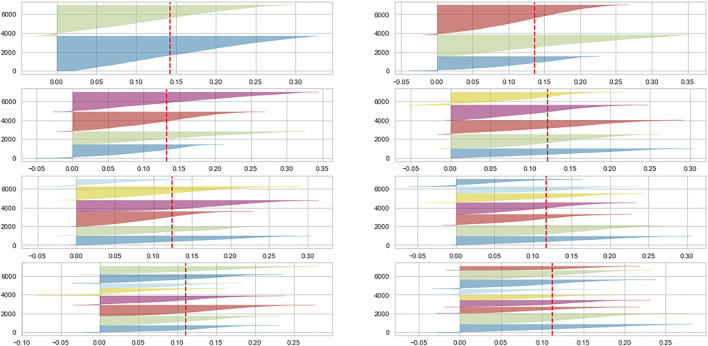
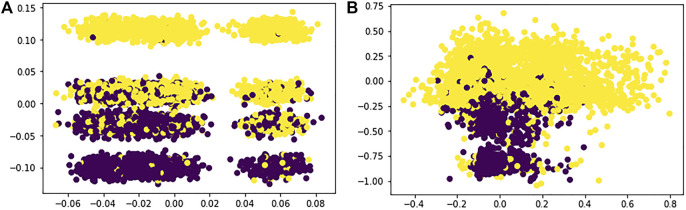
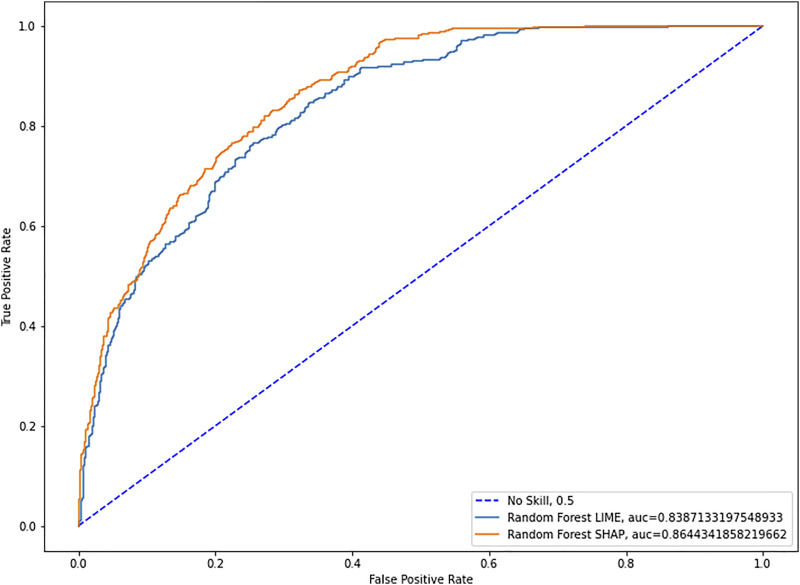
Verification
Claims the paper makes
The claims and statistics of this paper haven’t been checked yet.
Run the check — free, no account needed. It reads the open-access text and checks the sources it cites.
Self-check
Percentages, sums and reported differences re-computed from the paper’s own numbers.
The self-check needs the paper’s full text.
Citations
Cites
Breiman, L. (2001) · Machine Learning · doi:10.1023/a:1010933404324 · Cited by 133,538
XGBoost: A Scalable Tree Boosting System
Chen, T., & Guestrin, C. (2016) · Proceedings of the 22nd ACM SIGKDD International Conference on Knowledge Discovery and Data Mining · doi:10.1145/2939672.2939785 · Cited by 54,569
(1967) · Cited by 23,719
A Unified Approach to Interpreting Model Predictions
Lundberg, S., & Lee, S.-I. (2017) · arXiv · doi:10.48550/arxiv.1705.07874 · Cited by 23,707
Silhouettes: A graphical aid to the interpretation and validation of cluster analysis
Rousseeuw, P. J. (1987) · Journal of Computational and Applied Mathematics · doi:10.1016/0377-0427(87)90125-7 · Cited by 21,392
"Why Should I Trust You?": Explaining the Predictions of Any Classifier
Ribeiro, M. T., Singh, S., & Guestrin, C. (2016) · Proceedings of the 22nd ACM SIGKDD International Conference on Knowledge Discovery and Data Mining · doi:10.1145/2939672.2939778 · Cited by 17,555
On Spectral Clustering: Analysis and an algorithm
Ng, A. Y., Jordan, M. I., & Weiss, Y. (2001) · Cited by 8,159
The use of the area under the ROC curve in the evaluation of machine learning algorithms
Bradley, A. P. (1997) · Pattern Recognition · doi:10.1016/s0031-3203(96)00142-2 · Cited by 7,217
Clustering-based undersampling in class-imbalanced data
Lin, W.-C., Tsai, C.-F., Hu, Y.-H., & Jhang, J.-S. (2017) · Information Sciences · doi:10.1016/j.ins.2017.05.008 · Cited by 832
Explainable Machine Learning in Credit Risk Management
Bussmann, N., Giudici, P., Marinelli, D., & Papenbrock, J. (2020) · Computational Economics · doi:10.1007/s10614-020-10042-0 · Cited by 635
Self-citation
Research works printed but not linked: 1
- Davies, 1979, A Cluster Separation Measure, IEEE Trans. Pattern Anal. Mach. Intell., PAMI-1, 224
Cited by
Sorted by citations
Items 101–200 of 306
Munai, E., Zeng, S., Yuan, Z., Yang, D., Jiang, Y., Wang, Q., Wu, Y., Zhang, Y., & Tao, D. (2024) · Scientific Reports · doi:10.1038/s41598-024-80425-y · Cited by 12
Díaz, G. M., Medina, R. G., & Jiménez, J. A. A. (2025) · Processes · doi:10.3390/pr13010102 · Cited by 10
Mim, M. A., Khatun, M. R., Hossain, M. M., Rahman, W., & Munir, A. (2025) · Algorithms · doi:10.3390/a18010020 · Cited by 10
Xiao, L., Zhao, Y., Li, Y., Yan, M., Liu, Y., Liu, M., & Ning, C. (2025) · European Journal of Radiology · doi:10.1016/j.ejrad.2025.111959 · Cited by 10
Chadaga, K., Prabhu, S., Sampathila, N., Chadaga, R., Bairy, G. M., & Swathi, K. S. (2023) · Journal of Technology in Behavioral Science · doi:10.1007/s41347-023-00343-0 · Cited by 10
Magboo, M. S. A., & Magboo, V. P. C. (2022) · Procedia Computer Science · doi:10.1016/j.procs.2022.09.195 · Cited by 11
Alblooshi, M., Alhajeri, H., Almatrooshi, M., & Alaraj, M. (2024) · International Conference on Artificial Intelligence, Computer, Data Sciences and Applications (ACDSA) · doi:10.1109/acdsa59508.2024.10467573 · Cited by 9
Deep survival analysis for interpretable time-varying prediction of preeclampsia risk
Eberhard, B. W., Gray, K. J., Bates, D. W., & Kovacheva, V. (2024) · Journal of Biomedical Informatics · doi:10.1016/j.jbi.2024.104688 · Cited by 9
A multi-stage HR-in-the-loop approach to enhance fairness perceptions of AI selection systems
Yuan, S., Xing, L., & Zhao, D. (2025) · The International Journal of Human Resource Management · doi:10.1080/09585192.2025.2564235 · Cited by 13
Marshall, S., Blom, P. M., & Spronck, P. H. M. (2022) · International Conference on the Foundations of Digital Games (FDG) · doi:10.1145/3555858.3555859 · Cited by 9
XAI Empowered Dual Band Wi-Fi Based Indoor Localization via Ensemble Learning
Kakisim, A. G., Turgut, Z., & Atmaca, T. (2023) · International Conference on the Network of the Future (NOF) · doi:10.1109/nof58724.2023.10302788 · Cited by 9
An Explainable Computer Vision in Histopathology: Techniques for Interpreting Black Box Model
Bhattacharjee, S., Hwang, Y.-B., Ugli, I. K. K., Sumon, R. I., Kim, H., & Choi, H. (2022) · International Conference on Artificial Intelligence in Information and Communication (ICAIIC) · doi:10.1109/icaiic54071.2022.9722656 · Cited by 10
Forecasting patient demand at urgent care clinics using explainable machine learning
Sušnjak, T., & Maddigan, P. (2023) · CAAI Transactions on Intelligence Technology · doi:10.1049/cit2.12258 · Cited by 8
Time is Not Enough: Time-Frequency based Explanation for Time-Series Black-Box Models
Chung, H., Jo, S., Kwon, Y., & Choi, E. (2024) · ACM International Conference on Information and Knowledge Management (CIKM) · doi:10.1145/3627673.3679844 · Cited by 8
Explainable Vertical Federated Learning for Healthcare: Ensuring Privacy and Optimal Accuracy
Sakib, S. K., & Das, A. B. (2024) · IEEE International Conference on Big Data (BigData) · doi:10.1109/bigdata62323.2024.10825564 · Cited by 8
Tourism demand forecasting with an enhanced interpretability framework
Li, X., Wang, Y., Xie, G., Wang, S., & Law, R. (2025) · Current Issues in Tourism · doi:10.1080/13683500.2025.2466801 · Cited by 9
Machine learning explainability for survival outcome in head and neck squamous cell carcinoma
Alabi, R. O., Mäkitie, A. A., Elmusrati, M. S., Almangush, A., Ehrsson, Y. T., & Laurell, G. F. E. (2025) · International Journal of Medical Informatics · doi:10.1016/j.ijmedinf.2025.105873 · Cited by 8
Jiao, J., An, R., Du, D., & Zhu, M. (2025) · Transportation Research Part A Policy and Practice · doi:10.1016/j.tra.2025.104486 · Cited by 8
Khatun, M. R., Mim, M. A., Tasin, M. M., & Hossain, M. M. (2025) · PLoS ONE · doi:10.1371/journal.pone.0331917 · Cited by 8
Extending Logic Explained Networks to Text Classification
Jain, R., Ciravegna, G., Barbiero, P., Giannini, F., Buffelli, D., & Lió, P. (2022) · Conference on Empirical Methods in Natural Language Processing (EMNLP) · doi:10.18653/v1/2022.emnlp-main.604 · Cited by 8
Chadaga, K., Prabhu, S., Vivekananda Bhat, K., Sampathila, N., Umakanth, S., Chadaga, R., Kumar, G. S. S., & Swathi, K. S. (2023) · Cogent Engineering · doi:10.1080/23311916.2023.2272361 · Cited by 8
Bladder cancer gene expression prediction with explainable algorithms
Kırboğa, K. K. (2023) · Neural Computing and Applications · doi:10.1007/s00521-023-09142-3 · Cited by 8
Explainable AI for Intrusion Prevention: A Review of Techniques and Applications
Chandre, P. R., Vanarote, V., Patil, R. V., Mahalle, P. N., Shinde, G. R., Nimbalkar, M., & Barot, J. (2023) · Lecture notes in networks and systems · doi:10.1007/978-981-99-3758-5_31 · Cited by 8
Huang, A. A., & Huang, S. Y. (2022) · Research Square · doi:10.21203/rs.3.rs-2075948/v1 · Cited by 8
Explainable Machine Learning Method for Open Fault Detection of NPC Inverter Using SHAP and LIME
Al-Kaf, H. A. G., & Lee, K. (2023) · IEEE Conference on Energy Conversion · doi:10.1109/cencon58932.2023.10368888 · Cited by 7
Gebre, R. K., Graff‐Radford, J., Ramanan, V. K., Raghavan, S., Hofrenning, E. I., Przybelski, S. A., Nguyen, A. T., Lesnick, T. G., Gunter, J. L., Algeciras‐Schimnich, A., et al. (2024) · Brain Communications · doi:10.1093/braincomms/fcae300 · Cited by 8
Bulut, C., & Arslan, E. (2025) · Applied Sciences · doi:10.3390/app15105723 · Cited by 7
Chowdhury, S. H., Mamun, M., Shaikat, M. T. A., Hussain, M. I., & Hossain, M. M. (2025) · International Conference on Electrical, Computer and Communication Engineering · doi:10.1109/ecce64574.2025.11013433 · Cited by 6
Jhumka, K., Auzine, M. M., Khan, M. H.-M., Casseem, M. S., Fedally, S. A., & Mungloo-Dilmohamud, Z. (2023) · International Conference on Advances in Artificial Intelligence (ICAAI) · doi:10.1145/3633598.3633604 · Cited by 6
Enhancing stability and interpretability in the study of strength behavior for coarse-grained soils
Zhang, Y., Hua, Y., Zhang, X., He, J., Jia, M., Cao, L., & An, Z. (2024) · Computers and Geotechnics · doi:10.1016/j.compgeo.2024.106333 · Cited by 6
Wang, S., & Chen, Y. (2024) · IEEE International Symposium on the Physical and Failure Analysis of Integrated Circuits (IPFA) · doi:10.1109/ipfa61654.2024.10691196 · Cited by 7
Kumar, R., Srirama, V., Chadaga, K., Muralikrishna, H., Sampathila, N., Prabhu, S., & Chadaga, R. (2024) · IEEE Access · doi:10.1109/access.2024.3516045 · Cited by 7
NATE: Non-pArameTric approach for Explainable credit scoring on imbalanced class
Han, S., & Jung, H. (2024) · PLoS ONE · doi:10.1371/journal.pone.0316454 · Cited by 6
Li, F., Wang, Z., Bian, R., Xue, Z., Cai, J., Zhou, Y., & Wang, Z. (2025) · BMJ Open · doi:10.1136/bmjopen-2024-087427 · Cited by 6
Enhancing Credit Risk Prediction through an Ensemble of Explainable Model
Sun, X., Liu, J., & Zhang, Y. T. (2025) · Journal of Systems Science and Systems Engineering · doi:10.1007/s11518-025-5663-y · Cited by 10
What factors enhance students’ achievement? A machine learning and interpretable methods approach
Mao, H., Khanal, R., Qu, C., Kong, H., & Jiang, T. (2025) · PLoS ONE · doi:10.1371/journal.pone.0323345 · Cited by 8
Credit Card Fraud Detection Through Explainable Artificial Intelligence for Managerial Oversight
Muksalmina, M., Syahyana, A., Hidayatullah, F., Idroes, G. M., & Noviandy, T. R. (2025) · Indatu Journal of Management and Accounting · doi:10.60084/ijma.v3i1.301 · Cited by 6
An Application of Explainable Artificial Intelligence in Credit Scoring
Nguyen, S. P., & Truong, N. Q. (2024) · Studies in systems, decision and control · doi:10.1007/978-3-031-43601-7_21 · Cited by 5
Data-Driven and Mechanistic Soil Modeling for Precision Fertilization Management in Cotton
Iatrou, M., Tziachris, P., Bilias, F., Kekelis, P., Pavlakis, C., Theofilidou, A., Papadopoulos, I., Strouthopoulos, G., Giannopoulos, G., Arampatzis, D. A., et al. (2025) · Nitrogen · doi:10.3390/nitrogen6020029 · Cited by 5
Zulfiker, M. S., Kabir, N., Biswas, A. A., Adan, M. M. I. Y., & Uddin, M. S. (2025) · Applied Soft Computing · doi:10.1016/j.asoc.2025.113813 · Cited by 5
Interpretable Heart Failure Identification Utilizing Auto Machine Learning Tools
Mamun, M., Hussain, M. I., Ali, M. S., Chowdhury, M. S. A., Hossain, M. M., & Chowdhury, S. H. (2025) · International Conference on Next-Generation Computing, IoT and Machine Learning (NCIM) · doi:10.1109/ncim65934.2025.11159854 · Cited by 5
Early autism detection: a review of emerging technologies, biomarkers, and explainable AI approaches
Agrawal, R., & Agrawal, R. (2025) · Molecular Brain · doi:10.1186/s13041-025-01269-9 · Cited by 9
Bahadori, S., & Hassanzadeh, A. (2026) · Expert Systems with Applications · doi:10.1016/j.eswa.2026.131872 · Cited by 6
Mathew, J., Chitra, R., Stephen, C., & Koshy, R. S. (2024) · IEEE International Conference on Interdisciplinary Approaches in Technology and Management for Social Innovation (IATMSI) · doi:10.1109/iatmsi60426.2024.10503250 · Cited by 5
RI2AP: Robust and Interpretable 2D Anomaly Prediction in Assembly Pipelines
Shyalika, C., Roy, K., Prasad, R., Kalach, F. E., Zi, Y., Mittal, P., Narayanan, V., Harik, R., & Sheth, A. (2024) · Sensors · doi:10.3390/s24103244 · Cited by 5
Parziale, M., Yeung, Y. F., Youcef‐Toumi, K., Giglio, M., & Cadini, F. (2025) · Structural Health Monitoring · doi:10.1177/14759217241301288 · Cited by 5
Liu, J., Wang, Y., Deng, C., Hou, F., Jin, Z., Qiao, L., & Wang, G. (2024) · Journal of Loss Prevention in the Process Industries · doi:10.1016/j.jlp.2024.105511 · Cited by 5
A Two‐Stage Interpretable Model to Explain Classifier in Credit Risk Prediction
Wang, L., Yu, Z., Ma, J., Chen, X., & Wu, C. (2025) · Journal of Forecasting · doi:10.1002/for.3288 · Cited by 6
An interpretable machine learning model for predicting p-y curves of monopiles in clay
Li, B., Qi, W., Wang, Y., Gao, F., Jing, L., Wang, S. Y., & He, B. G. (2025) · Ocean Engineering · doi:10.1016/j.oceaneng.2025.123245 · Cited by 4
From Black Box to Clarity: Machine Learning and Agnostic Techniques in Credit Risk Management
Antar, M., Hassan, R., & Barka, D. (2025) · Journal of Corporate Accounting & Finance · doi:10.1002/jcaf.70020 · Cited by 4
Rodrigues, E. M., Baghoussi, Y., & Mendes‐Moreira, J. (2024) · Expert Systems · doi:10.1111/exsy.13674 · Cited by 4
Boosting Credit Risk Data Quality Using Machine Learning and eXplainable AI Techniques
Tiukhova, E., Salcuni, A., Oguz, C., Niglio, M., Storti, G., Forte, F., Baesens, B., & Snoeck, M. (2024) · Communications in computer and information science · doi:10.1007/978-3-031-74643-7_30 · Cited by 4
Early Warning of Companies' Credit Risk Based on Machine Learning
Tan, B., & Lin, Y. (2023) · International Journal of Information Technologies and Systems Approach · doi:10.4018/ijitsa.324067 · Cited by 4
Can ESG Shape Cost of Capital? A Bibliometric Review and Empirical Analysis Through MLPreprint
Bussmann, N., Tanda, A., & Yu, E. P. (2022) · SSRN Electronic Journal · doi:10.2139/ssrn.4173890 · Cited by 4
Developing Explainable Artificial Intelligence Models for Space Science Applications
Agarwal, A. K., Bhardwaj, R., Tiwary, G., Aljohani, A. A., Kawatra, R., & Das, A. (2025) · Space Science & Technology · doi:10.34133/space.0255 · Cited by 3
Louhichi, M., Nesmaoui, R., & Lazaar, M. (2025) · International Journal of Advanced Computer Science and Applications · doi:10.14569/ijacsa.2025.0160770 · Cited by 3
An in-depth analysis of KernelSHAP and SamplingSHAP: assessing robustness, error, and efficiency
Aydoğan, B., & Aytekin, T. (2025) · Knowledge and Information Systems · doi:10.1007/s10115-025-02541-z · Cited by 5
Fire susceptibility assessment in the Carpathians using an interpretable framework
Manczinger, M., Kovács, L., & Kovács, T. (2025) · Scientific Reports · doi:10.1038/s41598-025-10296-4 · Cited by 3
Wang, Y., Wang, J. C., & Chen, H. (2026) · Journal of Translational Medicine · doi:10.1186/s12967-026-07746-6 · Cited by 4
Analyzing Trustworthiness and Explainability in Artificial Intelligence: A Comprehensive Review
Dixit, M., Kansal, I., Khullar, V., Kumar, R., & Kumar, S. (2024) · Recent Advances in Electrical & Electronic Engineering (Formerly Recent Patents on Electrical & Electronic Engineering) · doi:10.2174/0123520965308169240616144800 · Cited by 6
Examining Patients Length of Stay Estimation with Explainable Artificial Intelligence Methods
Arslanoğlu, K., & Karaköse, M. (2024) · Information systems engineering and management · doi:10.1007/978-3-031-71125-1_25 · Cited by 3
Should We Trust the Credit Decisions Provided by Machine Learning Models?
Alonso-Robisco, A., & Carbó, J. M. (2025) · Computational Economics · doi:10.1007/s10614-025-10855-x · Cited by 7
Zhu, J., Wu, X., Yu, L., & Zhang, X. (2025) · Technological and Economic Development of Economy · doi:10.3846/tede.2025.23060 · Cited by 3
Towards White-Box IDS: Integrating Explainability in IoT Ecosystems
Tewari, T., & Singal, G. (2025) · National Conference on Communications · doi:10.1109/ncc63735.2025.10983550 · Cited by 3
Ranković, N., & Ranković, D. (2024) · Journal of theoretical and applied electronic commerce research · doi:10.3390/jtaer19010020 · Cited by 3
Adversarial Robustness and Explainability of Machine Learning Models
Gafur, J., Goddard, S., & Lai, W. (2024) · Practice and Experience in Advanced Research Computing · doi:10.1145/3626203.3670522 · Cited by 3
Explainable artificial intelligence in deep learning neural nets-based digital images analysis
Averkin, A. N., Volkov, E. N., & Yarushev, S. (2024) · Известия Российской академии наук Теория и системы управления · doi:10.31857/s0002338824010122 · Cited by 4
Noviandy, T. R., Idroes, G. M., Suhendra, R., Bakri, T. K., & Idroes, R. (2024) · Infolitika Journal of Data Science · doi:10.60084/ijds.v2i2.237 · Cited by 3
A preliminary investigation of diabetic nephropathy biomarkers through machine learning approaches
Cortese, N., Cutruzzolà, A., Procopio, A., Zaffino, P., Scalzi, C., Gnasso, A., Irace, C., & Cosentino, C. (2024) · IEEE International Conference on Bioinformatics and Biomedicine (BIBM) · doi:10.1109/bibm62325.2024.10821982 · Cited by 3
Artificial Intelligence and Cybersecurity: Challenges, Opportunities, and Defensive Techniques
Akpabio, E. I., & Narad, S. (2025) · Lecture notes in networks and systems · doi:10.1007/978-981-97-9523-9_25 · Cited by 3
Ganesh, K., Chatterjee, A., Riegler, M. A., & Halvorsen, P. (2023) · Research Square · doi:10.21203/rs.3.rs-3114142/v4 · Cited by 3
Explainable AI for Predicting User Behavior in Digital Advertising
Al-Khafaji, A., & Karan, O. (2024) · Lecture notes in networks and systems · doi:10.1007/978-3-031-56728-5_43 · Cited by 2
Audit Program on Artificial Intelligence (AI) driven Credit Risk
Unicredit, Palma, V. A. D., Maria, A. D., Unicredit, Foschini, D., Unicredit, Frasca, V., Unicredit, Girardi, D., & Unicredit (2025) · Risk Management Magazine · doi:10.47473/2020rmm0149 · Cited by 2
Chen, X., Zhu, B., Jiang, H., Lan, H., Xie, C., Lin, H., Chen, Y., & Chen, H. (2025) · Medicine · doi:10.1097/md.0000000000042781 · Cited by 2
Hua, S., Li, C., Wang, Y., Liang, Y., Xu, S., Kong, J., Gong, H., Dong, R., Lin, Y., Xu, L., et al. (2025) · BMC Anesthesiology · doi:10.1186/s12871-025-03259-9 · Cited by 2
Toward Trustworthy Multi-View Representation With Fine-Grained Explainability Embeddings
Zhang, J., Yang, Y. X., Shang, M., Guo, L., Zhang, D., & Du, L. (2025) · IEEE Transactions on Medical Imaging · doi:10.1109/tmi.2025.3607141 · Cited by 2
Hao, H., Guo, X., Wang, C., & Yang, J. (2025) · Journal of Environmental Management · doi:10.1016/j.jenvman.2025.127436 · Cited by 2
Anusha Hegde, H., & Bhowmik, B. R. (2026) · Computational Economics · doi:10.1007/s10614-025-11292-6 · Cited by 2
Canchola, A., Chen, K., Rahman, M. Z., Tran, L. N., Woo, W., Tian, L., Lin, Y., & Chou, W. (2026) · Journal of Hazardous Materials · doi:10.1016/j.jhazmat.2026.141164 · Cited by 2
Wang, Y., Islam, M. M., Okere, A. N., Poly, T. N., & Lin, M. (2026) · Endocrine · doi:10.1007/s12020-025-04514-2 · Cited by 2
Oh, J., & Ashuri, B. (2026) · Expert Systems with Applications · doi:10.1016/j.eswa.2026.132030 · Cited by 2
Yang, Y., Guo, Z., Dong, L., Wu, B., Xu, C., Cai, M., & Wang, Z. (2026) · BMC Public Health · doi:10.1186/s12889-026-27177-8 · Cited by 2
Perniciano, A., Cau, F. M., Spano, L. D., Ruberto, C. D., & Loddo, A. (2026) · Neurocomputing · doi:10.1016/j.neucom.2026.133854 · Cited by 2
Machine Learning-Based Migraine Classification Using Structured Clinical and Neurological Features
Iqbal, M. S., Hussain, M. I., Chowdhury, S. H., Khan, M. S., Hossain, M. M., & Mamun, M. (2026) · IEEE International Conference on Quantum Photonics, Artificial Intelligence & Networking (QPAIN) · doi:10.1109/qpain69676.2026.11546487 · Cited by 2
Explainability Requirements for Time Series Forecasts: A Study in the Energy Domain
Droste, J., Fuchs, R., Deters, H., Klünder, J., & Schneider, K. A. (2024) · IEEE International Requirements Engineering Conference (RE) · doi:10.1109/re59067.2024.00030 · Cited by 2
Sai, N. J., Sridharan, K., & Chauhan, A. (2024) · Progress in Nuclear Energy · doi:10.1016/j.pnucene.2024.105418 · Cited by 2
Explainable Ensemble Machine Learning Method for Credit Risk Classification
Ghozzi, S. B., HajKacem, M. A. B., & Essoussi, N. (2024) · International Conference on Innovations in Intelligent Systems and Applications (INISTA) · doi:10.1109/inista62901.2024.10683830 · Cited by 2
Galactose-Induced Cataracts in Rats: A Machine Learning Analysis
Al-Mashhadani, A. J. M., Gong, Q., Shehaj, F., & Zhou, L. (2025) · International Journal of Medical Sciences · doi:10.7150/ijms.103892 · Cited by 2
Giudici, P. (2025) · Springer eBooks · doi:10.1007/978-981-95-3658-0_79 · Cited by 2
Self-citationPeng, X. (2022) · Academic Journal of Computing & Information Science · doi:10.25236/ajcis.2022.051009 · Cited by 2
Erdeniz, S. P., Schrempf, M., Kramer, D., Rainer, P. P., Felfernig, A., Tran, T., Burgstaller, T., & Lubos, S. (2023) · Lecture notes in computer science · doi:10.1007/978-3-031-34344-5_14 · Cited by 2
The Importance of Interpretability in AI Systems and Its Implications for Deep Learning
Adnan, M. (2024) · Advances in computational intelligence and robotics book series · doi:10.4018/979-8-3693-1738-9.ch003 · Cited by 2
Nandi, P., Anupama, K. R., Agarwal, H., Jain, A., Paliwal, S., Jakhar, R., Rajkhowa, R., & Guruprasanna, P. B. (2023) · Preprints.org · doi:10.20944/preprints202306.0804.v1 · Cited by 2
Credit Scoring Models: Which Performance Metrics for Optimal Financial Decision-Making?Preprint
Dessain, J. (2023) · SSRN Electronic Journal · doi:10.2139/ssrn.4624501 · Cited by 2
Kamis, A. A., Gadia, N., Luo, Z., Ng, S. X., & Thumbar, M. (2024) · JMIR AI · doi:10.2196/58455 · Cited by 3
Enhancing Pneumonia Detection Transparency: Exploring Explainable AI Model
Ambaliya, M., Chauhan, S., Paliwal, M., Shastri, A., & Sabale, K. (2024) · Lecture notes in electrical engineering · doi:10.1007/978-981-97-6710-6_35 · Cited by 1
Zhu, B., Dai, L., Wang, H., Zhang, K., Zhang, C., Wang, Y., Yin, F., Li, J., Ning, E., Wang, Q., et al. (2024) · Scientific Reports · doi:10.1038/s41598-024-77033-1 · Cited by 1
Loan Forecasting Based on Machine Learning and Variable Correlation Analysis
Cui, B. (2024) · Applied and Computational Engineering · doi:10.54254/2755-2721/2024.18131 · Cited by 1
Sun, Y., Li, J., He, H., Xing, G., Liu, Z., Meng, Q., Xu, M., Huang, L., Pan, Z., Liao, J., et al. (2024) · Nutrition Metabolism and Cardiovascular Diseases · doi:10.1016/j.numecd.2024.103841 · Cited by 1
Variable Selection Algorithm for Explaining Anomalies in Real-World Regenerative Thermal Oxidizers
Seo, M., & Kim, M. H. (2025) · Applied Artificial Intelligence · doi:10.1080/08839514.2025.2462374 · Cited by 1
Metadata
- Authors
- Gramegna, A., & Giudici, P.
- Affiliations
- University of Pavia (IT)
- Corresponding author
- Gramegna, Alex
- ORCID
- Giudici, Paolo
- Venue
- Frontiers in Artificial Intelligence
- Publisher
- Frontiers Media SA
- Published
- 2021-09-17
- Volume
- 4
- Pages
- 752558-752558
- ISSN
- 2624-8212 (ISSN-L)
- PMC
- PMC8484963
- OpenAlex
- W3200880768
- Cited by
- 306
- References
- 19
- Citations by year
- 2026: 57 · 2025: 87 · 2024: 89 · 2023: 46 · 2022: 26 · 2021: 1
- FWCI
- 14.31
- Type
- journal article
- Language
- en
- Open access
- gold
- doi.org
- Licence
- Locations
- Frontiers in Artificial Intelligence (publishedVersion, cc-by)
- Europe PMC (PubMed Central) (publishedVersion, other-oa)
- PubMed Central (publishedVersion, cc-by)
- PubMed (publishedVersion)
- DOAJ (DOAJ: Directory of Open Access Journals) (submittedVersion, cc-by-sa)
- Topics
- Physical Sciences › Computer Science › Artificial Intelligence › Explainable Artificial Intelligence (XAI)
- Social Sciences › Business, Management and Accounting › Accounting › Financial Distress and Bankruptcy Prediction
- Physical Sciences › Computer Science › Artificial Intelligence › Imbalanced Data Classification Techniques
- Keywords
- SHAP, lime, explainable AI, credit risk, probability of default, model interpretability, black-box models, feature attribution, small and medium-sized enterprises, gradient boosting, ensemble methods
About these checks
Registry, retraction, Cites and statistics results are computed, not judged, with one exception: a printed reference that no index lists is read once by a model before it counts as a citation error. Claims are extracted by a model and kept only when their quote appears verbatim in the text; each cited source is then checked, with a model’s help, for whether it says what the claim relies on. Those verdicts can be wrong — read the claim’s quote and the cited source before relying on one.
Statistics and arithmetic are recomputed, not judged.
Confidence bands are shown only for fields calibrated on our annotated test set. None is calibrated yet, so no band is shown.
What counts as a claim ›How we measure confidence ›How we check this ›
Are you an author, or do you see a problem with this page? Request a review
