

The DOI matches its Crossref record; 18 of the 19 references it cites were found in a registry or an index.
SHAP and LIME: An Evaluation of Discriminative Power in Credit Risk
Open accessAbstract
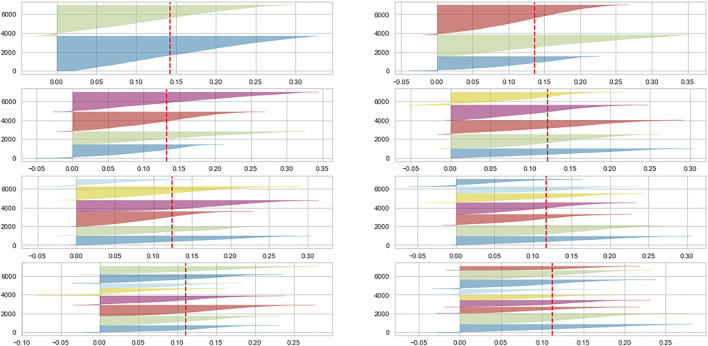
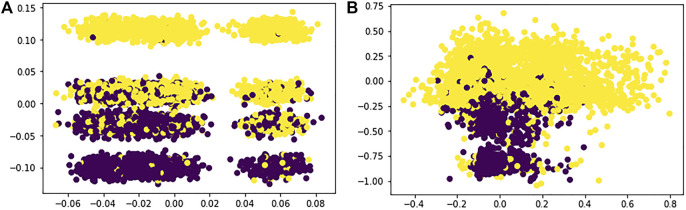
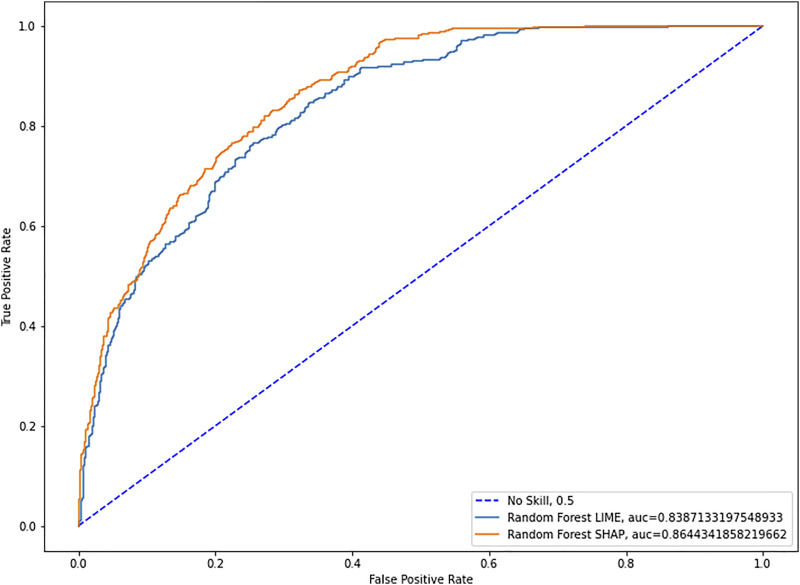
In credit risk estimation, the most important element is obtaining a probability of default as close as possible to the effective risk. This effort quickly prompted new, powerful algorithms that reach a far higher accuracy, but at the cost of losing intelligibility, such as Gradient Boosting or ensemble methods. These models are usually referred to as “black-boxes”, implying that you know the inputs and the output, but there is little way to understand what is going on under the hood. As a response to that, we have seen several different Explainable AI models flourish in recent years, with the aim of letting the user see why the black-box gave a certain output. In this context, we evaluate two very popular eXplainable AI (XAI) models in their ability to discriminate observations into groups, through the application of both unsupervised and predictive modeling to the weights these XAI models assign to features locally. The evaluation is carried out on real Small and Medium Enterprises data, obtained from official italian repositories, and may form the basis for the employment of such XAI models for post-processing features extraction.
Overview
The claims and statistics of this paper haven’t been checked yet.
Run the check — free, no account needed. It reads the open-access text and checks the sources it cites.
Integrity signals
Registry
Cites
Statistics
Figures
Verification
Claims the paper makes
The claims and statistics of this paper haven’t been checked yet.
Run the check — free, no account needed. It reads the open-access text and checks the sources it cites.
Self-check
Percentages, sums and reported differences re-computed from the paper’s own numbers.
The self-check needs the paper’s full text.
Citations
Cites
Breiman, L. (2001) · Machine Learning · doi:10.1023/a:1010933404324 · Cited by 133,538
XGBoost: A Scalable Tree Boosting System
Chen, T., & Guestrin, C. (2016) · Proceedings of the 22nd ACM SIGKDD International Conference on Knowledge Discovery and Data Mining · doi:10.1145/2939672.2939785 · Cited by 54,569
(1967) · Cited by 23,719
A Unified Approach to Interpreting Model Predictions
Lundberg, S., & Lee, S.-I. (2017) · arXiv · doi:10.48550/arxiv.1705.07874 · Cited by 23,707
Silhouettes: A graphical aid to the interpretation and validation of cluster analysis
Rousseeuw, P. J. (1987) · Journal of Computational and Applied Mathematics · doi:10.1016/0377-0427(87)90125-7 · Cited by 21,392
"Why Should I Trust You?": Explaining the Predictions of Any Classifier
Ribeiro, M. T., Singh, S., & Guestrin, C. (2016) · Proceedings of the 22nd ACM SIGKDD International Conference on Knowledge Discovery and Data Mining · doi:10.1145/2939672.2939778 · Cited by 17,555
On Spectral Clustering: Analysis and an algorithm
Ng, A. Y., Jordan, M. I., & Weiss, Y. (2001) · Cited by 8,159
The use of the area under the ROC curve in the evaluation of machine learning algorithms
Bradley, A. P. (1997) · Pattern Recognition · doi:10.1016/s0031-3203(96)00142-2 · Cited by 7,217
Clustering-based undersampling in class-imbalanced data
Lin, W.-C., Tsai, C.-F., Hu, Y.-H., & Jhang, J.-S. (2017) · Information Sciences · doi:10.1016/j.ins.2017.05.008 · Cited by 832
Explainable Machine Learning in Credit Risk Management
Bussmann, N., Giudici, P., Marinelli, D., & Papenbrock, J. (2020) · Computational Economics · doi:10.1007/s10614-020-10042-0 · Cited by 635
Self-citation
Research works printed but not linked: 1
- Davies, 1979, A Cluster Separation Measure, IEEE Trans. Pattern Anal. Mach. Intell., PAMI-1, 224
Cited by
Sorted by citations
Items 301–306 of 306
STREAM: A data-driven framework for physiological state monitoring in ICU patients
Namvar, A., Ram, S., Labaki, W. W., Galbán, S., Lugogo, N. L., & Galbán, C. J. (2026) · PLOS Digital Health · doi:10.1371/journal.pdig.0001753 · Cited by 1
Güçlü, P. (2026) · Özgür Yayınları eBooks · doi:10.58830/ozgur.pub1520.c6141
Yong, S., Zhang, C., Li, J., Dai, S.-Y., Zhang, Q., Yao, Z.-Z., Ouyang, Y.-Y., & Chen-rui, G. (2026) · Frontiers in Public Health · doi:10.3389/fpubh.2026.1968969
Iqtait, M., Ababneh, J., Alawamleh, T., Sammour, E., Al-Ababneh, H. A., & Hafez, M. (2026) · International Conference on Networks, Computers and Communications (ICNCCom) · doi:10.1109/icnccom69117.2026.11736313
An Explainable AI Model for Detecting Malicious Smart Contracts Using EVM Opcode Features
Surendran, R., & Thomas, T. (2026) · IEEE International Conference on Recent Advances in Electronics, Communication, Computing, Automation and Power (RECCAP) · doi:10.1109/reccap69368.2026.11723899
Xie, Y., Liu, Y., & Ning, H. (2026) · International Journal of Financial Studies · doi:10.3390/ijfs14110292
Metadata
- Authors
- Gramegna, A., & Giudici, P.
- Affiliations
- University of Pavia (IT)
- Corresponding author
- Gramegna, Alex
- ORCID
- Giudici, Paolo
- Venue
- Frontiers in Artificial Intelligence
- Publisher
- Frontiers Media SA
- Published
- 2021-09-17
- Volume
- 4
- Pages
- 752558-752558
- ISSN
- 2624-8212 (ISSN-L)
- PMC
- PMC8484963
- OpenAlex
- W3200880768
- Cited by
- 306
- References
- 19
- Citations by year
- 2026: 57 · 2025: 87 · 2024: 89 · 2023: 46 · 2022: 26 · 2021: 1
- FWCI
- 14.31
- Type
- journal article
- Language
- en
- Open access
- gold
- doi.org
- Licence
- Locations
- Frontiers in Artificial Intelligence (publishedVersion, cc-by)
- Europe PMC (PubMed Central) (publishedVersion, other-oa)
- PubMed Central (publishedVersion, cc-by)
- PubMed (publishedVersion)
- DOAJ (DOAJ: Directory of Open Access Journals) (submittedVersion, cc-by-sa)
- Topics
- Physical Sciences › Computer Science › Artificial Intelligence › Explainable Artificial Intelligence (XAI)
- Social Sciences › Business, Management and Accounting › Accounting › Financial Distress and Bankruptcy Prediction
- Physical Sciences › Computer Science › Artificial Intelligence › Imbalanced Data Classification Techniques
- Keywords
- SHAP, lime, explainable AI, credit risk, probability of default, model interpretability, black-box models, feature attribution, small and medium-sized enterprises, gradient boosting, ensemble methods
About these checks
Registry, retraction, Cites and statistics results are computed, not judged, with one exception: a printed reference that no index lists is read once by a model before it counts as a citation error. Claims are extracted by a model and kept only when their quote appears verbatim in the text; each cited source is then checked, with a model’s help, for whether it says what the claim relies on. Those verdicts can be wrong — read the claim’s quote and the cited source before relying on one.
Statistics and arithmetic are recomputed, not judged.
Confidence bands are shown only for fields calibrated on our annotated test set. None is calibrated yet, so no band is shown.
What counts as a claim ›How we measure confidence ›How we check this ›
Are you an author, or do you see a problem with this page? Request a review
