

Survey and analysis of hallucinations in large language models: attribution to prompting strategies or model behavior
Open accessThe DOI matches its Crossref record; 41 of the 41 references it cites were found in a registry or an index.
Abstract
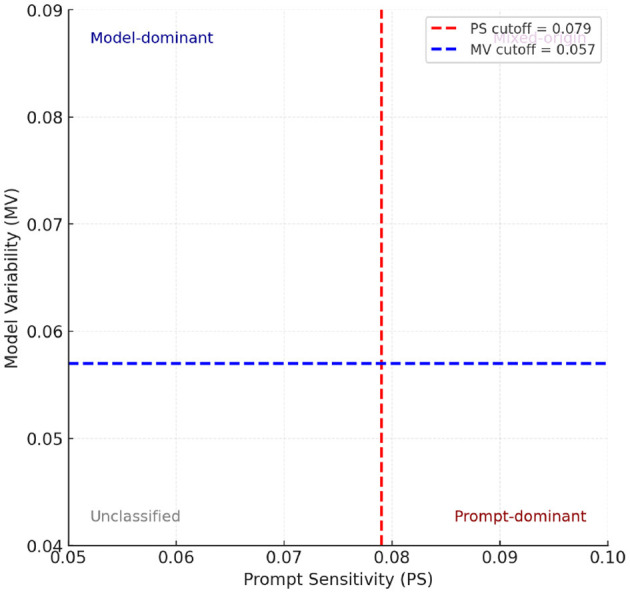
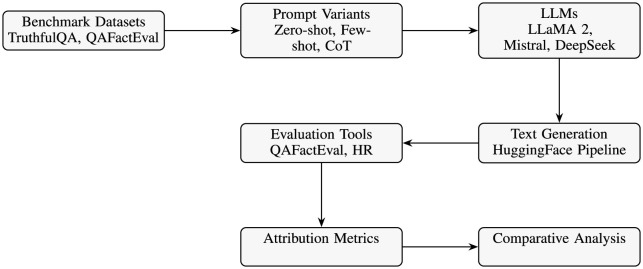
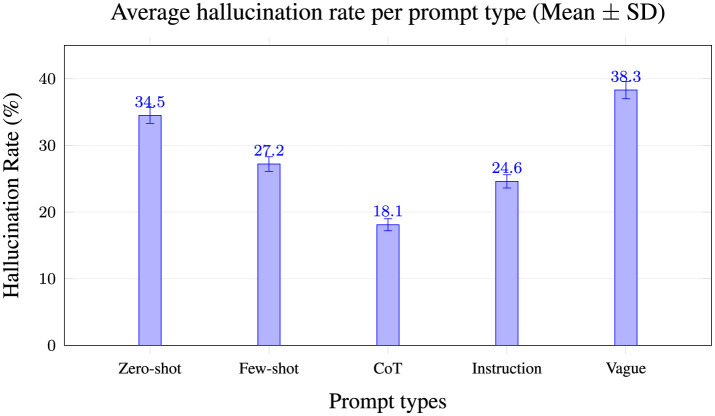
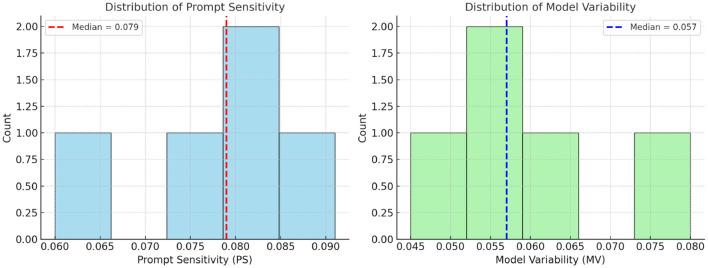
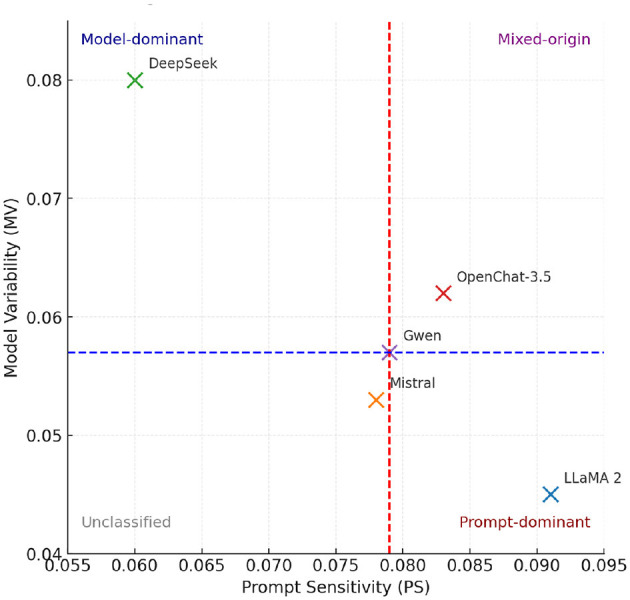
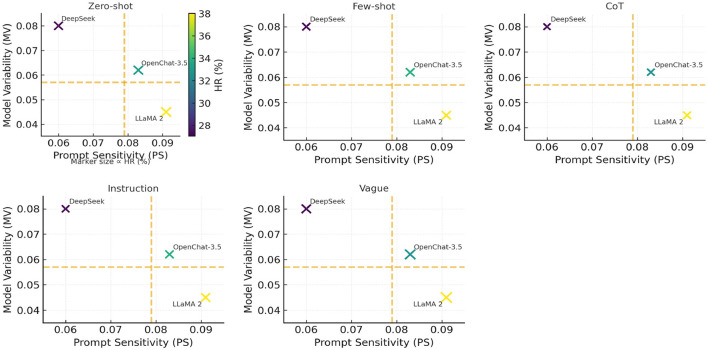
Hallucination in Large Language Models (LLMs) refers to outputs that appear fluent and coherent but are factually incorrect, logically inconsistent, or entirely fabricated. As LLMs are increasingly deployed in education, healthcare, law, and scientific research, understanding and mitigating hallucinations has become critical. In this work, we present a comprehensive survey and empirical analysis of hallucination attribution in LLMs. Introducing a novel framework to determine whether a given hallucination stems from not optimize prompting or the model's intrinsic behavior. We evaluate state-of-the-art LLMs—including GPT-4, LLaMA 2, DeepSeek, and others—under various controlled prompting conditions, using established benchmarks (TruthfulQA, HallucinationEval) to judge factuality. Our attribution framework defines metrics for Prompt Sensitivity (PS) and Model Variability (MV) , which together quantify the contribution of prompts vs. model-internal factors to hallucinations. Through extensive experiments and comparative analyses, we identify distinct patterns in hallucination occurrence, severity, and mitigation across models. Notably, structured prompt strategies such as chain-of-thought (CoT) prompting significantly reduce hallucinations in prompt-sensitive scenarios, though intrinsic model limitations persist in some cases. These findings contribute to a deeper understanding of LLM reliability and provide insights for prompt engineers, model developers, and AI practitioners. We further propose best practices and future directions to reduce hallucinations in both prompt design and model development pipelines.
Overview
The claims and statistics of this paper haven’t been checked yet.
Free: it reads the open-access text and checks the first 5 claims that cite a source we can check. Create a free account to check every claim.
Integrity signals
Registry
Cites
Statistics
Figures
Verification
Claims the paper makes
The claims and statistics of this paper haven’t been checked yet.
Free: it reads the open-access text and checks the first 5 claims that cite a source we can check. Create a free account to check every claim.
Claims other papers make about this one
Each is checked against this paper’s own text: does it say what the citing paper says it does?
The cited source says what the claim attributes to it.
In the citing paper
“Such errors undermine scholarly trust and threaten the integrity of scientific communication [8, 25].”
From CiteAudit: You Cited It, But Did You Read It? A Benchmark for Verifying Scientific References in the LLM Era (2026) · cites this paper as [8]
The check wasn’t confident either way, so it gives no verdict — never disputed.
In the citing paper
“Third, and most critically, the field lacks an unprompted control condition. Every existing study prompts models to produce citations and then measures fabrication rates, but without establishing whether models spontaneously generate citations in the absence of an explicit request [11].”
From How LLMs Cite and Why It Matters: A Cross-Model Audit of Reference Fabrication in AI-Assisted Academic Writing and Methods to Detect Phantom Citations (2026) · cites this paper as [11]
Experimental — accuracy not yet measured
Self-check
Percentages, sums and reported differences re-computed from the paper’s own numbers.
The self-check needs the paper’s full text.
Citations
Cites
Gelman, A., Carlin, J. B., Stern, H. S., & Rubin, D. B. (2003) · doi:10.1201/9780429258480 · Cited by 27,276 · cited 3×
“BHM represents hallucination rates hierarchically with model-specific and prompt-specific parameters drawn from higher-level distributions (Gelman et al., 2013): where H ij is hallucination rate for model i under prompt j , α i , β j represent model-specific and prompt-specific effects, and γ ij…”
Language Models are Few-Shot Learners
Brown, T. B., Mann, B., Ryder, N., Subbiah, M., Kaplan, J., Dhariwal, P., Neelakantan, A., Shyam, P., Sastry, G., Askell, A., et al. (2020) · arXiv · doi:10.48550/arxiv.2005.14165 · Cited by 23,372 · cited 3×
“Models such as GPT-3 (Brown et al., 2020), GPT-4 (OpenAI, 2023b), LLaMA 2 (Touvron et al., 2023), Claude (Anthropic, 2023), DeepSeek (DeepSeek AI, 2023), and others have demonstrated extraordinary capabilities in zero-shot and few-shot learning tasks.”
(1988) · Cited by 16,582
Kaugeranna, R., Kaugeranna, E., & Aion, (. S. 4. 6. (2023) · DROPS (Schloss Dagstuhl – Leibniz Center for Informatics) · doi:10.4230/lipics.giscience.2023.43 · Cited by 13,690
Statistical Decision Theory and Bayesian Analysis
Berger, J. O. (1985) · Springer Series in Statistics · doi:10.1007/978-1-4757-4286-2 · Cited by 7,722
Survey of Hallucination in Natural Language Generation
Ji, Z., Lee, N., Frieske, R., Yu, T., Su, D., Xu, Y., Ishii, E., Bang, Y. J., Madotto, A., & Fung, P. (2023) · ACM Computing Surveys · doi:10.1145/3571730 · Cited by 5,025 · cited 7×
“High-confidence hallucinations—those that appear fluent and plausible but are factually incorrect—are particularly dangerous and difficult to detect automatically (Kadavath et al., 2022; Ji et al., 2023).”
InfluentialSurvey of Hallucination in Natural Language Generation
Ji, Z., Lee, N., Frieske, R., Yu, T., Su, D., Xu, Y., Ishii, E., Bang, Y., Chen, D., Dai, W., et al. (2022) · arXiv · doi:10.48550/arxiv.2202.03629 · Cited by 4,981
Chain-Of-Thought Prompting Elicits Reasoning in Large Language Models
Wei, J., Wang, X., Schuurmans, D., Bosma, M., Ichter, B., Xia, F., Chi, E., Le, Q. V., & Zhou, D. (2022) · Advances in Neural Information Processing Systems 35 · doi:10.52202/068431-1800 · Cited by 4,505
Chain-of-Thought Prompting Elicits Reasoning in Large Language Models
Wei, J., Wang, X., Schuurmans, D., Bosma, M., Ichter, B., Xia, F., Chi, E., Le, Q., & Zhou, D. (2022) · arXiv · doi:10.48550/arxiv.2201.11903 · Cited by 4,263 · cited 9×
“Chain-of-Thought (CoT) prompting (Wei et al., 2022) improves reasoning transparency and factual correctness by encouraging step-wise output generation.”
InfluentialTraining language models to follow instructions with human feedback
Ouyang, L., Wu, J., Jiang, X., Almeida, D., Wainwright, C. L., Mishkin, P., Zhang, C., Agarwal, S., Slama, K., Ray, A., et al. (2022) · arXiv · doi:10.48550/arxiv.2203.02155 · Cited by 4,208
Research works printed but not linked: 3
- 15. Kazemi, S. M., Kashyap, A., and McKeown, K. (2023). Cohs: a dataset for evaluating factual consistency of summaries. arXiv [preprint]. arXiv:2305.00038. doi: 10.4850/arXiv:2305.00038 · arXiv · doi:10.4850/arxiv:2305.00038
- 22. Nakano, R., Hilton, J., Balaji, S., Wu, J., Ouyang, L., Kim, C., et al. (2021). Webgpt: browser-assisted question-answering with human feedback. arXiv [preprint]. arXiv:2112.09332. doi: 10.48550/arXiv:2112.09332 · arXiv · doi:10.48550/arxiv:2112.09332
- 36. Zhang, N., Yang, W., Xie, X., Liu, Q., and Chen, H. (2023). Grounded language model training reduces hallucination. arXiv [preprint]. arXiv:2303.08239. doi: 10.48550/arXiv:.303.08239 · arXiv · doi:10.48550/arxiv:.303.08239
Cited by
Data Quality in the Age of AI: A Review of Governance, Ethics, and the FAIR Principles
Guillen-Aguinaga, M., Aguinaga-Ontoso, E., Guillen-Aguinaga, L., Guillen-Grima, F., & Aguinaga-Ontoso, I. (2025) · Data · doi:10.3390/data10120201 · Cited by 37
Next-generation probiotics: an outlook into current applications and future developments
Kern, L., Tofield, A., Frame, J., & Elinav, E. (2026) · Nature Reviews Microbiology · doi:10.1038/s41579-026-01311-0 · Cited by 31
“Systematic evaluation of state-of-the-art models revealed that hallucinations arise from both prompt-related ambiguity and intrinsic model behaviour, even under controlled prompting strategies and evaluation benchmarks such as TruthfulQA and HallucinationEval (now known as HalluClean) 180–182 .”
Earp, B. D., Frith, L., Mann, S. P., Sawai, T., Shahvisi, A., & Wangmo, T. (2026) · Journal of Medical Ethics · doi:10.1136/jme-2026-112179 · Cited by 16
Hodzic, S., Stević, A., & Matthes, J. (2026) · Technology in Society · doi:10.1016/j.techsoc.2026.103331 · Cited by 12
Hill, C., Dahil, A., Simpson, G., Hardisty, D., Keast, J. M., Pinn, C. K., & Dambha‐Miller, H. (2026) · PLOS Digital Health · doi:10.1371/journal.pdig.0001189 · Cited by 16
The Emerging Role of Multimodal Artificial Intelligence in Urological Surgery
Buck, L., Kohler, J., Risch, J., Incesu, R., Hügelmann, K., Weiß, M.-L., Weische, O., Schließer, P., Knobloch, H. C., Blessin, N. C., et al. (2025) · Current Oncology · doi:10.3390/curroncol32120665 · Cited by 6
“Therefore, the development of domain-specific models and continuous, rigorous validation are crucial to avoiding misinterpretations [74].”
Zhu, Y., Shu, X., Liu, X., Li, Y., Yi, B., & Ma, D. (2025) · Anesthesiology and Perioperative Science · doi:10.1007/s44254-025-00156-9 · Cited by 9
Dehdab, R., Afat, S., Mankertz, F., Brendel, J. M., Maalouf, N., Werner, S., Brendlin, A., Herrmann, J., Nikolaou, K., Kloker, L. D., et al. (2026) · Journal of Cancer Research and Clinical Oncology · doi:10.1007/s00432-026-06432-w · Cited by 5
“Such techniques may reduce the likelihood of hallucinations and improve the consistency of guideline-based recommendations (Anh-Hoang et al. 2025; Amugongo et al. 2025 ).”
Fan, S., Wang, X., Zhang, B., & Sun, X. (2026) · Telematics and Informatics · doi:10.1016/j.tele.2026.102434 · Cited by 5
A Proposal of Revision of Floridi’s Conjecture
Messina, A. (2026) · Philosophy & Technology · doi:10.1007/s13347-026-01041-4 · Cited by 5
Coronado-Vázquez, V., Allande‐Cussó, R., Caparrós-González, R. A., & Gómez-Salgado, J. C. (2026) · Atención Primaria · doi:10.1016/j.aprim.2026.103460 · Cited by 5
Ahmadov, N., Muradova, A., & Aliyeva, A. (2026) · European Archives of Oto-Rhino-Laryngology · doi:10.1007/s00405-026-10245-5 · Cited by 8
The utility of artificial intelligence in visualization of pediatric gastrointestinal mucosa
Stewart, J. W., Barth, B. A., & Rojas, I. (2026) · Frontiers in Pediatrics · doi:10.3389/fped.2025.1739000 · Cited by 3
“Bias may arise when training data do not represent the true population, potentially perpetuating inequities in diagnosis or treatment (63, 64).”
EmeraldMind: A Knowledge Graph–Augmented Framework for Greenwashing Detection
Kaoukis, G., Koufopoulos, I.-A., Psaroudaki, E., Karidi, D. P., Pitoura, E., Papastefanatos, G., & Tsaparas, P. (2026) · International World Wide Web Conference (WWW) · doi:10.1145/3774904.3792997 · Cited by 4
“Prior research has shown that classification metrics do not assess hallucination, factual consistency, or the soundness of model reasoning [8].”
Li, Z., Liu, H., Tan, W., Tang, D., Duan, S., Zhou, B., Tang, L., Hu, X., Huang, L., Zhao, P., et al. (2026) · npj Digital Medicine · doi:10.1038/s41746-026-02645-y · Cited by 9
“The output of these models can vary signi fi cantly based on differentpromptengineeringstrategies,suchasthephrasingofthequestion, theamountofcontextprovided,andtheguidanceofferedoffered 13,14 .”
Jiao, J. R. (2026) · Journal of Engineering Design · doi:10.1080/09544828.2026.2626883 · Cited by 3
The ethics of using artificial intelligence in writing medical research papers
Yu, S., & Hwang, H. (2025) · Kosin Medical Journal · doi:10.7180/kmj.25.141 · Cited by 2
Poudel, A., & Surface, T. (2026) · Discover Civil Engineering · doi:10.1007/s44290-026-00474-2 · Cited by 3
Zhang, X., Dai, Y., Zhao, X., Wu, L., Shao, B., Shan, X., Ji, F., Deng, R., & Zhao, B. (2026) · Digital Health · doi:10.1177/20552076261464749 · Cited by 3
Кузнецов, И. И. (2026) · Modelirovanie, optimizaciâ i informacionnye tehnologii. · doi:10.26102/2310-6018/2026.57.6.020 · Cited by 2
Bang, S. H., Han, S., Turchioe, M. R., Ellison, M., Dai, S., Happ, M. B., Russell, D., & Creber, R. M. (2026) · Journal of the American Medical Informatics Association · doi:10.1093/jamia/ocag123 · Cited by 4
“18,25,30 This study contributes to health and biomedical informatics by demonstrating that LLM-based analysis is feasible for a large qualitative dataset of patient interviews collected in a clinical setting.”
Characterizing Unintended Consequences of GUI Agents For Web Browsing
Zhang, S., Chen, J., Gao, Z., Gao, J., Yi, X., & Li, H. (2026) · CHI Conference on Human Factors in Computing Systems · doi:10.1145/3772318.3790696 · Cited by 20
“Unlike standard generative hallucinations, which are typically defined as model-internal fabrications [23], these errors reflected a form of information supply chain pollution , where the agent pulls content directly from a source without evaluating its reliability.”
Karlin, M., Stephany, C., Okamura, '., & Nam-Huh, Y. (2026) · Frontiers in Artificial Intelligence · doi:10.3389/frai.2026.1834667 · Cited by 3
Naser, M. (2026) · arXiv · doi:10.48550/arxiv.2603.03299 · Cited by 1
“Every existing study prompts models to produce citations and then measures fabrication rates, but without establishing whether models spontaneously generate citations in the absence of an explicit request [11].”
Abusaada, H., & Elshater, A. M. (2026) · Planning Practice and Research · doi:10.1080/02697459.2026.2646633 · Cited by 1
Poudel, A., Barrios, C., Torre, P. D. L., Ton, H., Surface, T., Mehta, V., & Silwal, S. (2026) · Discover Cities · doi:10.1007/s44327-026-00268-2 · Cited by 5
“Unlike traditional engineering models, which are designed around explicit physical, economic, or regulatory constraints [10, 11], LLMs optimize for linguistic coherence rather than factual grounding or contextual judgment [7].”
InfluentialChow, J., & Patlas, M. N. (2026) · Japanese Journal of Radiology · doi:10.1007/s11604-026-02009-2 · Cited by 1
Sriram, N., Jain, R., Mittal, M., Patel, R. B., Fredeen, B. J., Bajaj, A., Du, R., Habashy, K. J., Kemeny, H. R., Govind, S., et al. (2026) · Healthcare · doi:10.3390/healthcare14121640 · Cited by 1
“However, it is important to acknowledge that LLMs are subject to hallucinations or factual errors, which can manifest as misrepresentation of information or presentation of fabricated or false information, which may mislead a reader [38,39].”
Debnath, T., Siddiky, M. N. A., Rahman, M. E., Das, P., Guha, A. K., Rahman, M. R., & Kabir, H. M. D. (2026) · Computer Science Review · doi:10.1016/j.cosrev.2026.100979 · Cited by 4
Babic, B., Umihanić, Š., Osmanović, H., Selak, N., Sehic-Kozica, E., Moranjkic, L., Marijanović, I., Karaga, M., Suljevic, A. J., Umihanić, Š., et al. (2026) · Frontiers in Oncology · doi:10.3389/fonc.2026.1856390 · Cited by 1
Handling AI-generated knowledge artifacts in generative product engineering
Becker, M., Mollahassani, D., Schleifer, S., Goetz, S., Wartzack, S. J., & Göbel, J. C. (2026) · Proceedings of the Design Society · doi:10.1017/pds.2026.10575 · Cited by 1
“LLMs face additional challenges, such as the potential to hallucinate (Anh-Hoang et al., 2025) and produce syntactically valid, but logically and content-wise flawed code and models.”
Hong, S., & Na, H. (2026) · Information · doi:10.3390/info17070712 · Cited by 1
Anh, N. V., Ha, T. M. A., & Nguyen, T. T. H. (2026) · International Orthodontics · doi:10.1016/j.ortho.2026.101216 · Cited by 1
Hallucination detection, verification, and correction in generative AI: A comprehensive survey
Waqas, S. M., Umer, Z., Alim, A., Arham, M., Su’ud, M. M., Kazmi, S. J. A., & Alam, M. M. (2026) · Natural Language Processing Journal · doi:10.1016/j.nlp.2026.100231 · Cited by 1
Filling the Gap: LLMs as Scaffolds for Competency Question Instantiation
McNamara, C., Hederman, L., & O’Sullivan, D. (2026) · ACM International Conference on Intelligent User Interfaces (IUI) · doi:10.1145/3742413.3789141 · Cited by 1
Jin, Y., Kwon, Y., Yoon, J., Zhan, B., & Lee, K. (2026) · CHI Conference on Human Factors in Computing Systems · doi:10.1145/3772318.3790989
Hasan, M. S., & Jabe, M. M. N. (2026) · SSRN Electronic Journal · doi:10.20944/preprints202608.0506.v1 · Cited by 1
Nguyen, T. T., & Nguyen Huynh Hoai, P. (2026) · Proceedings of the 14th International Conference on Advances in Information Technology · doi:10.1145/3816713.3820249
Niimi, J. (2025) · arXiv · doi:10.48550/arxiv.2510.25378 · Cited by 7
“Hallucination in LLMs has been examined from diverse perspectives [2, 4, 13, 14, 15].”
Shi, K., Sun, W., Zhang, Z., Sun, L., Chawla, N. V., & Ye, Y. (2026) · arXiv · doi:10.48550/arxiv.2602.23452
“Such errors undermine scholarly trust and threaten the integrity of scientific communication [8, 25].”
Reimagining Reality: Innovations in AI Hallucination Management and Trustworthy Generation
Nag, A., & Chaudhuri, D. (2026) · Advances in computational intelligence and robotics book series · doi:10.4018/979-8-3373-7534-2.ch012 · Cited by 1
Shrestha, M., & Kim, E. (2025) · IEEE International Conference on Big Data (BigData) · doi:10.1109/bigdata66926.2025.11401920 · Cited by 3
Jasem, A. N. A. A. (2026) · International Journal of Research · doi:10.26643/ijr/22
Cross-Species Aging Knowledge Integration into Agentic AI Platform Uncovers Conserved MechanismsPreprint
Ahuja, G., Sharma, A., Singh, A., Kedia, S., Sharma, A., Gautam, V., Sharma, P. B., Khandelwal, A., Ramakrishna, S., Muddashetty, R. S., et al. (2026) · Research Square · doi:10.21203/rs.3.rs-9060414/v1
Developing RAGs for robot code generation
Salunkhe, O., Chen, S., Syberfeldt, A., & Stahre, J. (2026) · IOP Conference Series Materials Science and Engineering · doi:10.1088/1757-899x/1342/1/012064 · Cited by 1
Ayat, N. E., Boutalline, M., Tannouche, A., Ouazri, C., & Yahyaoui, M. (2026) · Quality & Quantity · doi:10.1007/s11135-026-02715-z · Cited by 1
“LLMs’ black-box nature prevents educators and learners from verifying reasoning (Anh-Hoang et al. 2025), making grounding in verifiable knowledge sources an ethical imperative rather than technical enhancement. beta EEG ratios, disengagement patterns), systems shift from dense text to…”
Pranav, V., Karthika, S. K., & Mubeen, N. (2026) · Results in Engineering · doi:10.1016/j.rineng.2026.110149 · Cited by 1
TVM-SimpleQA: A Factuality Evaluation Dataset for Traditional Vietnamese Medicine
Nguyen, G., Nguyen, T., Nguyen, L., & Đinh, Đ. (2026) · Communications in computer and information science · doi:10.1007/978-3-032-21631-1_36
Self-citationFine-tuning a cancer hallmarks classification model using large language model-synthesized resources
İnan, E. (2026) · Engineering Applications of Artificial Intelligence · doi:10.1016/j.engappai.2026.114702 · Cited by 2
Improved Flood Management and Risk Communication Through LLM
Ranaweera, I., Thenuwara, S. S., & Premachandra, H. W. H. (2026) · International Conference on Image Processing and Robotics (ICIPRoB) · doi:10.1109/iciprob69625.2026.11497793
When Machines Confabulate: Understanding and Addressing Hallucinations in Large Language Models
Raunak, M. S. (2026) · Computer · doi:10.1109/mc.2026.3673606
Hallucination in AI Systems: Understanding and Framework
Ray, S., Paul, A. R., Das, D., & Raj, J. (2026) · Advances in computational intelligence and robotics book series · doi:10.4018/979-8-3373-7320-1.ch001
The Quality of AI-Generated CABG Counseling: A Blinded Comparison of Two Language Models
Özbakkaloğlu, A., Rahman, Ö. F., Keleş, E., Daylan, A., Cansu, D., & Bozok, Ş. (2026) · Journal of Clinical Medicine · doi:10.3390/jcm15103896 · Cited by 1
“The assumption that longer responses are more accurate does not always hold true, and a direct relationship between response length and accuracy may not exist [11].”
Lee, G., Kim, S., Byun, Y., Lee, J.-H., & Choi, H. (2026) · International Journal of Precision Engineering and Manufacturing - Green Technology · doi:10.1007/s40684-026-00890-w · Cited by 1
“They observed that model-dominant models such as DeepSeek exhibit hallucinations in specific domains, regardless of prompt qual - ity [141].”
Green toxicology only becomes beautiful through AI
Maertens, A., & Härtung, T. (2026) · Frontiers in Chemistry · doi:10.3389/fchem.2026.1801623 · Cited by 1
Septama, H. D., Ferdiana, R., & Permanasari, A. E. (2026) · International Conference on Current Research in Artificial Intelligence and Data Science (ICCRAIDS) · doi:10.1109/iccraids67816.2026.11519677
“To reduce hallucination and improve output accuracy, several techniques are implemented, including prompting engineering and RAG [14].”
EmeraldApp: An AI-Driven Tool for Detecting Greenwashing in Sustainability Claims
Kaoukis, G., Koufopoulos, I.-A., Psaroudaki, E., Karidi, D. P., Pitoura, E., Papastefanatos, G., & Tsaparas, P. (2026) · International World Wide Web Conference (WWW) · doi:10.1145/3774905.3794644
“While large language models (LLMs) excel in general text tasks, they falter in specialized verification due to: (1) hallucination of plausible but false details [3, 4]; (2) absence of domain-specific grounding [10]; and (3) opaque outputs lacking traceable evidence trails.”
Glenning, J., & Gualtieri, L. (2026) · Health Education & Behavior · doi:10.1177/10901981261451801
Jain, A. H., Yarrrabothu, S. R., Kande, N. K., & Kethireddy, D. R. (2026) · International Conference on Artificial Intelligence, Systems, and Emerging Technologies (ICAISET) · doi:10.1109/icaiset66439.2026.11541329
“Other studies of hallucinations and abstinence also revealed that confident generation is safe when there is weak evidence [21], [22].”
Shen, S., Yi, L., Wang, J., Duan, J., & Chen, Y. (2026) · International Conference on Energy, Electrical and Power Engineering (CEEPE) · doi:10.1109/ceepe69795.2026.11552122
“Its responses may contain hallucinated mechanisms, unsupported claims, or recommendations that are not grounded in comparable operating cases [12].”
Dynamic Multi-view RAG: Mitigating Hallucinations of Large Language Models in Education
Zhao, W., & Dong, Q. (2026) · Lecture notes in computer science · doi:10.1007/978-981-95-9694-2_5
Inoue, S., Morisaki, S., Wada, T., & Hattori, Y. (2026) · IEEE Transactions on Software Engineering · doi:10.1109/tse.2026.3702933
“We performed a binary classification of generative AI responses (correct AI output or hallucination) based on the definition of hallucination proposed in a previous study [64]: “outputs that appear fluent and coherent but are factually incorrect, logically inconsistent, or entirely fabricated.””
Zhang, Y., Xu, L., & Imoto, S. (2026) · bioRxiv (Cold Spring Harbor Laboratory) · doi:10.64898/2026.06.10.727770
“…neighbour-host signal, Gram type and phage family—and checked each against the parsed profile under a strict literal setting and a predefined lenient setting that cor-1325 rected two known verifier artefacts (RBP near-binding within a ± 2% identity tolerance and a parent-lineage map) [45, 46].”
Benchmarking reliability and calibration of LLMs for multi-cancer early detection test communication
Takabatake, K., Rosito, M. S., Braun, D., Marinac, C. R., O’Donnell, E., & Parmigiani, G. (2026) · JAMIA Open · doi:10.1093/jamiaopen/ooag093
“11,12 Currently, their reliability in accurately explaining MCED test characteristics has not been systematically evaluated.”
Jagannath, M., Sunderesan, A., Gupta, M. K., & Sudandiradoss, C. (2026) · Frontiers in Immunology · doi:10.3389/fimmu.2026.1869543
“In contrast, model-intrinsic hallucinations re fl ect deeper structural limitations, where the probabilistic model incorrectly favours a hallucinatory output over a factual one because of how it has been trained (120).”
Belanche, D., Casaló, L. V., & Flavián, C. (2026) · Journal of Travel Research · doi:10.1177/00472875261456334 · Cited by 2
MLLM-Based Textual Explanations for Face Comparison
Sony, R., Jain, A. K., & Ross, A. (2026) · International Workshop on Biometrics and Forensics · doi:10.1109/iwbf68042.2026.11558159 · Cited by 2
Rubric-guided Prompting for Automatic Assessment Scoring
Haque, S., Hettiachchi, D., & Beck, D. (2026) · ACM Conference on Learning @ Scale (L@S) · doi:10.1145/3774398.3811581
“…aggregates them using rubric rules to compute the final score and then conditions rationale generation on this score. responses, they may hallucinate factually incorrect, fabricated, or logically inconsistent content, raising concerns about their trust-worthiness in decision-making contexts [3].”
Lin, P.-H., Nandy, P., & Wen, C.-Y. (2026) · Communications in computer and information science · doi:10.1007/978-981-92-2282-7_5
Introduction to the Special Issue on Query Performance Prediction
Faggioli, G., Ganguly, D., Datta, S., Ferro, N., & Ounis, I. (2026) · ACM Transactions on Information Systems · doi:10.1145/3827583
“In addition to rank-based effectiveness measures such as NDCG, MAP, or reciprocal rank, LLM-based answer generation systems may need to predict factuality, answer reliability [41], and hallucination risk [2] in generated responses.”
Gilson, S., Tabarsi, B. T., & Barnes, T. M. (2026) · Lecture notes in computer science · doi:10.1007/978-3-032-29770-9_48
GraphRAG for engineering diagrams: ChatP & ID enables LLM interaction with P& IDs
Alimin, A. A., & Schweidtmann, A. M. (2026) · AIChE Journal · doi:10.1002/aic.70540 · Cited by 10
Scaling life cycle assessment with augmented data extraction from chemical process models
Spiekermann, L., Sewani, H., Lochmann, S., Hummel, S., Song, Y., Schilling, J., Winter, B., Bosetti, L., Seiler, J., Suh, S., et al. (2026) · Green Chemistry · doi:10.1039/d6gc00267f
Human-in-the-Loop Framework for Hallucination Mitigation: A Controlled Comparison of GPT and LLaMA
Kai, J. N. J., Syahidi, A. A., & Kiong, K. B. (2026) · International Conference on Business and Industrial Research (ICBIR) · doi:10.1109/icbir69932.2026.11584794
“Prior survey studies identify hallucinations as a systemic limitation of LLMs, arising from factors such as incomplete or noisy training data, exposure bias in autoregressive generation, and the lack of explicit grounding or verification mechanisms during inference [3], [27].”
A Retrieval-Augmented Generation (RAG) Approach to Eliminate Hallucinations in Workflow Generation
Nadeem, J., Tanwir, M., & Tanwir, M. (2026) · International Conference on Computing, Mathematics and Engineering Technologies (iCoMET) · doi:10.1109/icomet69771.2026.11591943
“This is especially a problem because of tasks that have strong structural or conditional constraints, including workflow or code generation, where artefacts that are incorrect can result in system failures or even system crashes [2].”
A Knowledge Graph Question Answering Method Fusing Model Fine-Tuning and Entity-Relation Replacement
Ma, L., Yu, J., Zhang, H., Zhang, Y., Wang, H., & Liu, Z. H. (2026) · International Annual Conference on Complex Systems and Intelligent Science (CSIS-IAC) · doi:10.1109/csis-iac70275.2026.11585102
“However, utilizing LLMs introduces challenges related to hallucination [10] and knowledge alignment.”
Henno, J., Jaakkola, H., & Mäkelä, J. (2026) · MIPRO ICT and Electronics Convention (MIPRO) · doi:10.1109/mipro70003.2026.11591697
Pan, J., Pan, X., & Pan, H. (2026) · Frontiers in Artificial Intelligence · doi:10.3389/frai.2026.1818923
Syahidi, A. A., Nuchitprasitchai, S., & Viriyapant, K. (2026) · International Joint Conference on Computer Science and Software Engineering · doi:10.1109/jcsse68839.2026.11596890
“Despite their strong generative capabilities, LLMs are known to produce hallucinations [4], defined as outputs that appear coherent but contain factually incorrect or unsupported information [5].”
Schimanke, F., Schnieder, M., Mertens, R., Pio, A., Persia, F., Pilato, G., Ge, M., & Sert, M. (2026) · International Journal of Semantic Computing · doi:10.1142/s1793351x26430014
Binh, N. V. (2026) · Research Square · doi:10.21203/rs.3.rs-10303665/v1
Embracing artificial intelligence in surgical training: a clinical leadership perspective
Cook, P., Hassan, A., Kerstein, R. L., & Imam, M. A. (2026) · BMJ Leader · doi:10.1136/leader-2025-001258
Almarashdi, H. S., Alarabi, K., Khurma, O. A., & Fidalgo, P. (2026) · Social Sciences & Humanities Open · doi:10.1016/j.ssaho.2026.102902 · Cited by 1
Designing a Local RAG-Based Intelligent Tutoring System for Domain-Specific Education
Gala, A. D. C. O. S., Marcondes, F. S., Machado, J. M., & Nováis, P. (2026) · Lecture notes in computer science · doi:10.1007/978-981-92-2891-1_13 · Cited by 2
Zhao, Y., Chen, Y., Xu, X., Wu, N., Chu, B., Mi, Y., Skobelev, P., & He, Y. (2026) · Computers and Electronics in Agriculture · doi:10.1016/j.compag.2026.112154
Fu, J. (2026) · International Conference on Artificial Intelligence and Digital Ethics (ICAIDE) · doi:10.1109/icaide69370.2026.11604551
“…error attribution in the assessment framework, allowing for a preliminary analysis of the reasons for the failure of model output; Anh-Hoang et al. [5] (2025) further analyses the sources of model errors from the perspective of generative mechanisms, emphasizing the coupling effect of prompt…”
Rezaei, Z., Amini, M. A., & Banad, Y. M. (2026) · Energy and AI · doi:10.1016/j.egyai.2026.100853 · Cited by 1
Guidelines to Preventing AI Hallucinations in MS FabricPreprint
Pinedo, I. M., & Fuentes, B. (2026) · SSRN Electronic Journal · doi:10.2139/ssrn.7148679
Kokkas, K., Wang, H., Klein, R., Ismail, N. A., Irwin, N., Moonsamy, M. Z., Naidoo, K., Nel, J. S., Nweke, E. E., Parboosing, R., et al. (2026) · Frontiers in Cellular and Infection Microbiology · doi:10.3389/fcimb.2026.1876326
“Gemini 2.5 Pro and Gemini 2.5 Flash demonstrated the closest alignment with expert paper reliability ratings, followed by GPT-5, while GPT-5 Nano showed the greatest divergence, tending to rate paper reliability slightly lower than experts (Figure 7).”
InfluentialShahri, N. S. H., & Nasharuddin, N. A. (2026) · Communications in computer and information science · doi:10.1007/978-981-92-4302-0_18
From Algorithms to Cognition: Brain-Inspired Mechanisms for AI-Enhanced Decision Intelligence
Al-E’mari, S., Sanjalawe, Y. K., & Fataftah, F. (2026) · Advances in computational intelligence and robotics book series · doi:10.4018/979-8-3373-8988-2.ch009
How do AI feedback types affect students’ continuance usage intention in AI hallucinations?
Guo, Y., Huang, T., Lu, H., Zong, L., Huang, L., & Chen, M. (2026) · Interactive Learning Environments · doi:10.1080/10494820.2026.2711950
Dakshit, S., Suryadevara, B., & Stockton, L. (2026) · IEEE International Conference on Healthcare Informatics (ICHI) · doi:10.1109/ichi69079.2026.00243
“Hallucinations occur when models produce fluent text that is not faithful to the source input or factual context, often due to the probabilistic nature of autoregressive language generation [12], [13] .”
AI-MRS: A Governed Retrieval-Augmented Metric Recommendation System for Generative AI Systems
M, A. D., & Maheshwari, R. (2026) · International Conference on Electrical, Computer and Energy Technologies (ICECET) · doi:10.1109/icecet65726.2026.11632315
“Unlike traditional software, GenAI systems are inherently probabilistic, opaque and unpredictable, and may often produce content that are biased, unsafe, confidently incorrect, and entirely fabricated [10] [11] [12].”
Bridging the gap: addressing measurement bias and integrating lexicons to generative AI
Jeong, Y., Grove, S., & Calderon, E. D. V. (2026) · Marketing Letters · doi:10.1007/s11002-026-09835-4
“This approach leverages in-context learning, similar to prior research (Anh-Hoang et al., 2025), allowing GenAI to adapt to the task without model training or fine-tuning (Brown et al., 2020; Liu et al., 2021).”
Choudhry, A., Mshvelidze, J., Mullen, S. P., Kletenik, D., & Adler, R. F. (2026) · JMIR Aging · doi:10.2196/96114
“The participants’ distrust of AI stems directly from a practical awareness of GenAI’s propensity for hallucinations [62].”
Finding homonyms: operationalizing lexical ambiguity in LLM retrieval
Krzyżosiak, K. (2026) · International Journal of Lexicography · doi:10.1093/ijl/ecag026
Potel, J. T., & Kumashiro, M. (2026) · Behavioral Sciences · doi:10.3390/bs16081431 · Cited by 1
“While AI systems, particularly general-purpose LLMs, still produce “hallucinations”, performance on some tasks has improved (Anh-Hoang et al., 2025; Lin et al., 2024; Wang et al., 2025).”
The Governance Gap in Contemporary LLM-Based Agentic Systems: A Structural Diagnostic Review
Valdez-Cantú, C., Cantoral-Ceballos, J. A., & Alvarado-Uribe, J. (2026) · AI · doi:10.3390/ai7080322
A framework for hallucinations explainability in text summarizationPreprint
Hussieny, O. A. A.-A., El-Tantawy, S., Shawky, D., & Maksoud, E. Y. A. (2026) · Research Square · doi:10.21203/rs.3.rs-10766736/v1
Metadata
- Authors
- Anh-Hoang, D., Tran, V., & Nguyen, L.-M.
- Affiliations
- Japan Advanced Institute of Science and Technology (JP)
- Corresponding author
- Anh-Hoang, Dang
- Venue
- Frontiers in Artificial Intelligence
- Publisher
- Frontiers Media SA
- Published
- 2025-09-30
- Volume
- 8
- Pages
- 1622292-1622292
- ISSN
- 2624-8212 (ISSN-L)
- PMC
- PMC12518350
- OpenAlex
- W4414677042
- Semantic Scholar
- a79eb7fddd1b620b12f41243b8c139f01f7b4e4e
- Cited by
- 146
- References
- 27
- Citations by year
- 2026: 140 · 2025: 5
- FWCI
- 13.91
- Type
- journal article
- Language
- en
- Open access
- gold
- doi.org
- Licence
- Locations
- Frontiers in Artificial Intelligence (publishedVersion, cc-by)
- Europe PMC (PubMed Central) (publishedVersion, cc-by)
- PubMed (publishedVersion)
- DOAJ (DOAJ: Directory of Open Access Journals) (submittedVersion, cc-by-sa)
- Funders
- Japan Society for the Promotion of Science (23K16954)
- Topics
- Physical Sciences › Computer Science › Artificial Intelligence › Topic Modeling
- Physical Sciences › Computer Science › Artificial Intelligence › Natural Language Processing Techniques
- Physical Sciences › Computer Science › Computer Vision and Pattern Recognition › Multimodal Machine Learning Applications
- Keywords
- hallucinations, large language models, prompting strategies, prompt sensitivity, model variability, chain-of-thought prompting, factual accuracy, hallucination mitigation, prompt engineering, TruthfulQA
About these checks
Registry, retraction, Cites and statistics results are computed, not judged, with one exception: a printed reference that no index lists is read once by a model before it counts as a citation error. Claims are extracted by a model and kept only when their quote appears verbatim in the text; each cited source is then checked, with a model’s help, for whether it says what the claim relies on. Those verdicts can be wrong — read the claim’s quote and the cited source before relying on one.
Statistics and arithmetic are recomputed, not judged.
Confidence bands are shown only for fields calibrated on our annotated test set. None is calibrated yet, so no band is shown.
What counts as a claim ›How we measure confidence ›How we check this ›
Are you an author, or do you see a problem with this page? Request a review
Data sources
Bibliographic data: Semantic Scholar, OpenAlex, Crossref.
Contains information from the Semantic Scholar Academic Graph Datasets, made available under the ODC Attribution License (ODC-BY 1.0).
Semantic Scholar’s data is described in: Kinney, R., et al. (2023). The Semantic Scholar Open Data Platform. arXiv:2301.10140.
