

Survey and analysis of hallucinations in large language models: attribution to prompting strategies or model behavior
Open accessThe DOI matches its Crossref record; 41 of the 41 references it cites were found in a registry or an index.
Abstract
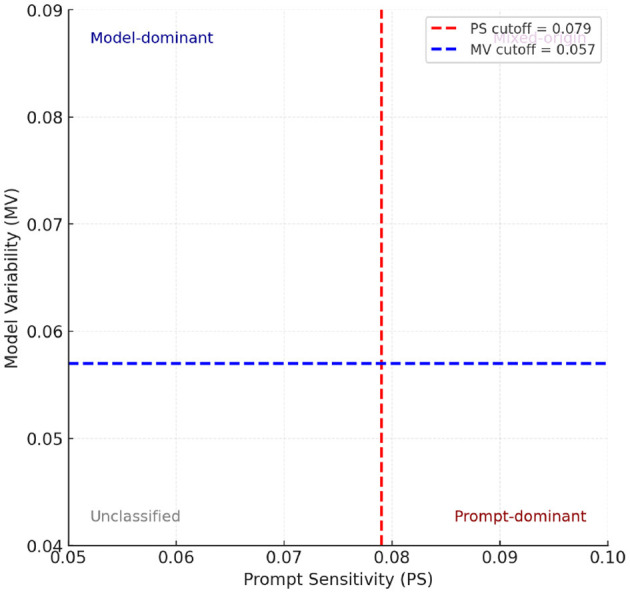
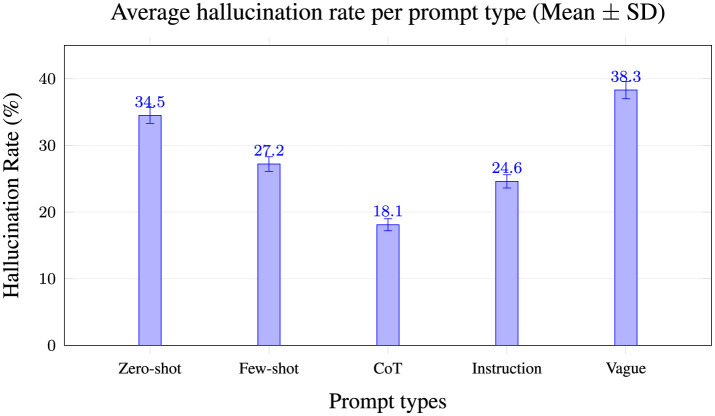
Hallucination in Large Language Models (LLMs) refers to outputs that appear fluent and coherent but are factually incorrect, logically inconsistent, or entirely fabricated. As LLMs are increasingly deployed in education, healthcare, law, and scientific research, understanding and mitigating hallucinations has become critical. In this work, we present a comprehensive survey and empirical analysis of hallucination attribution in LLMs. Introducing a novel framework to determine whether a given hallucination stems from not optimize prompting or the model's intrinsic behavior. We evaluate state-of-the-art LLMs—including GPT-4, LLaMA 2, DeepSeek, and others—under various controlled prompting conditions, using established benchmarks (TruthfulQA, HallucinationEval) to judge factuality. Our attribution framework defines metrics for Prompt Sensitivity (PS) and Model Variability (MV) , which together quantify the contribution of prompts vs. model-internal factors to hallucinations. Through extensive experiments and comparative analyses, we identify distinct patterns in hallucination occurrence, severity, and mitigation across models. Notably, structured prompt strategies such as chain-of-thought (CoT) prompting significantly reduce hallucinations in prompt-sensitive scenarios, though intrinsic model limitations persist in some cases. These findings contribute to a deeper understanding of LLM reliability and provide insights for prompt engineers, model developers, and AI practitioners. We further propose best practices and future directions to reduce hallucinations in both prompt design and model development pipelines.
Overview
The claims and statistics of this paper haven’t been checked yet.
Free: it reads the open-access text and checks the first 5 claims that cite a source we can check. Create a free account to check every claim.
Integrity signals
Registry
Cites
Statistics
Figures
Verification
Claims the paper makes
The claims and statistics of this paper haven’t been checked yet.
Free: it reads the open-access text and checks the first 5 claims that cite a source we can check. Create a free account to check every claim.
Claims other papers make about this one
Each is checked against this paper’s own text: does it say what the citing paper says it does?
The cited source says what the claim attributes to it.
In the citing paper
“Such errors undermine scholarly trust and threaten the integrity of scientific communication [8, 25].”
From CiteAudit: You Cited It, But Did You Read It? A Benchmark for Verifying Scientific References in the LLM Era (2026) · cites this paper as [8]
The check wasn’t confident either way, so it gives no verdict — never disputed.
In the citing paper
“Third, and most critically, the field lacks an unprompted control condition. Every existing study prompts models to produce citations and then measures fabrication rates, but without establishing whether models spontaneously generate citations in the absence of an explicit request [11].”
From How LLMs Cite and Why It Matters: A Cross-Model Audit of Reference Fabrication in AI-Assisted Academic Writing and Methods to Detect Phantom Citations (2026) · cites this paper as [11]
Experimental — accuracy not yet measured
Self-check
Percentages, sums and reported differences re-computed from the paper’s own numbers.
The self-check needs the paper’s full text.
Citations
Cites
Gelman, A., Carlin, J. B., Stern, H. S., & Rubin, D. B. (2003) · doi:10.1201/9780429258480 · Cited by 27,276 · cited 3×
“BHM represents hallucination rates hierarchically with model-specific and prompt-specific parameters drawn from higher-level distributions (Gelman et al., 2013): where H ij is hallucination rate for model i under prompt j , α i , β j represent model-specific and prompt-specific effects, and γ ij…”
Language Models are Few-Shot Learners
Brown, T. B., Mann, B., Ryder, N., Subbiah, M., Kaplan, J., Dhariwal, P., Neelakantan, A., Shyam, P., Sastry, G., Askell, A., et al. (2020) · arXiv · doi:10.48550/arxiv.2005.14165 · Cited by 23,372 · cited 3×
“Models such as GPT-3 (Brown et al., 2020), GPT-4 (OpenAI, 2023b), LLaMA 2 (Touvron et al., 2023), Claude (Anthropic, 2023), DeepSeek (DeepSeek AI, 2023), and others have demonstrated extraordinary capabilities in zero-shot and few-shot learning tasks.”
(1988) · Cited by 16,582
Kaugeranna, R., Kaugeranna, E., & Aion, (. S. 4. 6. (2023) · DROPS (Schloss Dagstuhl – Leibniz Center for Informatics) · doi:10.4230/lipics.giscience.2023.43 · Cited by 13,690
Statistical Decision Theory and Bayesian Analysis
Berger, J. O. (1985) · Springer Series in Statistics · doi:10.1007/978-1-4757-4286-2 · Cited by 7,722
Survey of Hallucination in Natural Language Generation
Ji, Z., Lee, N., Frieske, R., Yu, T., Su, D., Xu, Y., Ishii, E., Bang, Y. J., Madotto, A., & Fung, P. (2023) · ACM Computing Surveys · doi:10.1145/3571730 · Cited by 5,025 · cited 7×
“High-confidence hallucinations—those that appear fluent and plausible but are factually incorrect—are particularly dangerous and difficult to detect automatically (Kadavath et al., 2022; Ji et al., 2023).”
InfluentialSurvey of Hallucination in Natural Language Generation
Ji, Z., Lee, N., Frieske, R., Yu, T., Su, D., Xu, Y., Ishii, E., Bang, Y., Chen, D., Dai, W., et al. (2022) · arXiv · doi:10.48550/arxiv.2202.03629 · Cited by 4,981
Chain-Of-Thought Prompting Elicits Reasoning in Large Language Models
Wei, J., Wang, X., Schuurmans, D., Bosma, M., Ichter, B., Xia, F., Chi, E., Le, Q. V., & Zhou, D. (2022) · Advances in Neural Information Processing Systems 35 · doi:10.52202/068431-1800 · Cited by 4,505
Chain-of-Thought Prompting Elicits Reasoning in Large Language Models
Wei, J., Wang, X., Schuurmans, D., Bosma, M., Ichter, B., Xia, F., Chi, E., Le, Q., & Zhou, D. (2022) · arXiv · doi:10.48550/arxiv.2201.11903 · Cited by 4,263 · cited 9×
“Chain-of-Thought (CoT) prompting (Wei et al., 2022) improves reasoning transparency and factual correctness by encouraging step-wise output generation.”
InfluentialTraining language models to follow instructions with human feedback
Ouyang, L., Wu, J., Jiang, X., Almeida, D., Wainwright, C. L., Mishkin, P., Zhang, C., Agarwal, S., Slama, K., Ray, A., et al. (2022) · arXiv · doi:10.48550/arxiv.2203.02155 · Cited by 4,208
Research works printed but not linked: 3
- 15. Kazemi, S. M., Kashyap, A., and McKeown, K. (2023). Cohs: a dataset for evaluating factual consistency of summaries. arXiv [preprint]. arXiv:2305.00038. doi: 10.4850/arXiv:2305.00038 · arXiv · doi:10.4850/arxiv:2305.00038
- 22. Nakano, R., Hilton, J., Balaji, S., Wu, J., Ouyang, L., Kim, C., et al. (2021). Webgpt: browser-assisted question-answering with human feedback. arXiv [preprint]. arXiv:2112.09332. doi: 10.48550/arXiv:2112.09332 · arXiv · doi:10.48550/arxiv:2112.09332
- 36. Zhang, N., Yang, W., Xie, X., Liu, Q., and Chen, H. (2023). Grounded language model training reduces hallucination. arXiv [preprint]. arXiv:2303.08239. doi: 10.48550/arXiv:.303.08239 · arXiv · doi:10.48550/arxiv:.303.08239
Cited by
Items 101–147 of 147
Arı, M., İlçin, N., Yağcıoğlu, H., & Akkar, I. (2026) · Revista da Associação Médica Brasileira · doi:10.1590/1806-9282.20260388
“A major concern in this context is the phenomenon of “hallucination,” defined as the generation of fluent but factually incorrect or unsup-ported information by large language models 15 .”
Tilley, A., Murray, B., Henry, K., Zhao, X., Gao, Y., Blotske, K., & Sikora, A. N. (2026) · Journal of Managed Care & Specialty Pharmacy · doi:10.18553/jmcp.2026.32.9.1076 · Cited by 3
Nguyen, P., Wu, Y., Anderson, B., Mayorga‐Carlin, M., Sorkin, J., Yesha, Y., & Lal, B. (2026) · IEEE International Conference on Digital Health (ICDH) · doi:10.1109/icdh72779.2026.00010
“Large language models (LLMs) can perform strong medical-text reasoning, but direct LLM-as-classifier approaches are sensitive to prompt phrasing, hallucination, and may lack calibrated uncertainty [3], [4].”
Oliveira, R. S., Gomes, T. F. N., Pinho, D., & Almeida, F. L. (2026) · Journal of Cybersecurity and Privacy · doi:10.3390/jcp6050147
Sánchez‐Piedra, C., Heyerdahl-Viau, I., Garcia-Carpintero, E.-E., Martínez-Núñez, J. M., & Prado-Galbarro, F. J. (2026) · Medical Sciences · doi:10.3390/medsci14050533
“Even though hallucination occurrence may be low, they are a clear characteristic of AI systems [17,18], and, therefore, they are probably one of the principal barriers to the fully autonomous use of AI tools in scientific synthesis workflows.”
Yin, W., Zhang, R., & Zhang, Z. (2026) · International Conference on Distance Education and Learning (ICDEL) · doi:10.1109/icdel70250.2026.11663702
“Without external structural constraints, LLMs are prone to hallucinations and reasoning biases, leading to unstable grading outcomes [18], [19].”
Tao, T., & Li, Y. (2026) · Aslib Journal of Information Management · doi:10.1108/ajim-11-2025-0940
Andrei, S., Giet, T., Belouard, A., Ştefan, M., Popescu, M., Tanaka, S., Montravers, P., & Gouél‐Cheron, A. (2026) · JMIR Formative Research · doi:10.2196/95859
“This text completion mechanism, trained on vast datasets including Wikipedia, internet sources, and books, enables coherent text generation but also introduces the potential for error propagation from training data [7,8].”
InfluentialBrecher, V., Androutsopoulou, V. A., Sicouri, S., Ramlawi, B., Avgerinos, D. V., Athanasiou, T., & Magouliotis, D. E. (2026) · Frontiers in Systems Biology · doi:10.3389/fsysb.2026.1897299 · Cited by 1
Li, M., Guttikonda, S., Lahoti, Y., Sheetz, M., Isleem, U., Cho, S. K.-W., & Kim, J. (2026) · Arthroscopy The Journal of Arthroscopic and Related Surgery · doi:10.1002/arj.70480 · Cited by 2
Behind the screen: laypersons' mental models about ChatGPT
Schneller, M., Seier, J., Huber, S. E., Loi, I., & Albert, D. (2026) · Frontiers in Computer Science · doi:10.3389/fcomp.2026.1915035
Tao, L., Li, Z.-J., Ji, Y.-R., Liao, C.-T., Xiao, X., & Cao, X.-Z. (2026) · Symmetry · doi:10.3390/sym18091498
de Zarzà, I., de Curtò, J., & Calafate, C. T. (2026) · Frontiers in Artificial Intelligence · doi:10.3389/frai.2026.1962295
Torres, A., & Fernandez, M. (2024) · Journal of Health Informatics and Digital Systems · doi:10.68159/z595811548
Zhang, W., Feng, Z., Liu, Y., Zhong, R., Chen, S., Li, Z., 李冰燕, Liu, D., Gao, L., & Hu, K. (2026) · Frontiers in Oncology · doi:10.3389/fonc.2026.1915669
WS-Line: Workload scheduling through LLM-assisted DSL generation and CSOP modeling
Rossi, J., Monti, F., Mecella, M., Resinas, M., & Ruiz–Cortés, A. (2026) · Information and Software Technology · doi:10.1016/j.infsof.2026.108326
Kotegawa, K., Ueda, K., Hosokawa, R., Ogawawa, Y., Umehara, E., Tsubouchi, K., Yasumoto, K., & Suwa, H. (2026) · Communications in computer and information science · doi:10.1007/978-3-032-27235-5_8
von Maltitz, M., Fabris‐Rotelli, I., Roberts, D. J., Smit, A., Maposa, D., & Das, S. (2026) · Advances in computational intelligence and robotics book series · doi:10.4018/979-8-3373-9089-5.ch010
CritiqueBot for constructive feedback: scaffolding design critique with MLLMs
Li, C., Hu, Q., Zhang, M., & Liu, F. (2026) · International Journal of Technology and Design Education · doi:10.1007/s10798-026-10121-7
Mohamed, F. A. A. A., & El-sagheir, A. M. K. (2026) · Medicinal Chemistry Research · doi:10.1007/s00044-026-03616-4 · Cited by 1
Large Language Model-Enhanced Extension Innovative Design for Automated Truck Loading System
Li, C., Huang, J., Gui, F., et al. (2026) · Procedia Computer Science · doi:10.1016/j.procs.2026.08.121
Matysik, S., Wiśniewska, J., & Frankowski, P. K. (2026) · IEEE Access · doi:10.1109/access.2026.3733019
“They reduce manual annotation and screening work by 42-43% while maintaining nearly perfect recall [69] and enabling zero-shot classification without fine-tuning [70].”
Kim, N.-R., Kim, S.-Y., Im, N., Park, S., & Lee, I.-G. (2026) · ICT Express · doi:10.1016/j.icte.2026.09.014
Jain, N., Annambhotla, T., Siddharthan, A., Kanala, H., Budhiraja, A., Sinha, M. G., Charan, D., Dar, M. A., Patel, T., & Biji, C. L. (2026) · JMIR Formative Research · doi:10.2196/97117
“Due to various factors determining tumor size, as well as indirect references to immunohistochemistry, it is essential to extract contextually and factually accurate information [24,25].”
A pragmatic workflow for integrating large language models into toxicological risk assessment
Bassan, A., Amberg, A., Barreca, M. L., Bradley, P. M., Bringezu, F., Souza, J. D. P., Guicheney, C., Piparo, E. L., Kovarich, S., Massarsky, A., et al. (2026) · Frontiers in Toxicology · doi:10.3389/ftox.2026.1877128
He, K., Xia, X.-F., & Wang, C.-F. (2026) · Symmetry · doi:10.3390/sym18101610
Part 1: Artificial intelligence in neurointerventional surgery: current state and challenges
Vargas, J., Hoffman, H., Schirmer, C. M., Hui, F. K., 河野健一, Booth, T. C., Kellogg, R. T., & Levitt, M. (2026) · JNIS Advances · doi:10.1136/jnisadv-2026-000011
Unlocking Hidden Expertise: How AI Transforms Tacit Knowledge Into Competitive Advantage
Tjaden, G., Gutöhrlein, T., & Höschele, D. (2026) · IFIP advances in information and communication technology · doi:10.1007/978-3-032-38610-6_17
Войтків, Г. В., & Hereha, B. (2026) · Bulletin of Luhansk Taras Shevchenko National University Pedagogical Sciences · doi:10.12958/3083-6514-2026-3-182-191
Bayala, Y. L. T., Tinni, I. A., Yaméogo, T. B. W.-Y., Porgo, A. N., Nacanabo, W. M., Traoré, A. D., Aziz, A., Kaboré, F., Tiendrébeogo, W. J. S. Z., & Ouedraogo, D. (2026) · Discover Artificial Intelligence · doi:10.1007/s44163-026-02394-7
“Omissions may hypothetically result from the tendency of attention-based architectures to underweight statistically infrequent clinical content during training [19].”
Barad, K., Gunjan, R., & Butalia, A. (2026) · International Conference on Innovation & Growth in Next-Gen Intelligent Technology & Engineering (IGNITE) · doi:10.1109/ignite69592.2026.11705780
Wang, Z., An, X., Dong, Z., Jia, C., Wang, W., & Benson, D. (2026) · Water · doi:10.3390/w18192427
Elmas, R., Ulutaş, M. A., & Yılmaz, M. (2026) · Journal of Biological Education · doi:10.1080/00219266.2026.2737444
Kim, J., Han, C. Y., & Yang, J. (2026) · International Journal on Document Analysis and Recognition (IJDAR) · doi:10.1007/s10032-026-00620-7
Guerschberg, L., & Gutierrez, Y. E. (2026) · Revista Multidisciplinar Epistemología de las Ciencias · doi:10.71112/gpqkd594
Sulaima, M. F., Jyotsna, A., Herout, L., Gálvez, I. P., Krejcar, O., & Namazi, H. (2026) · Energy Nexus · doi:10.1016/j.nexus.2026.100870 · Cited by 1
Artificial intelligence in osteoarthritis and osteoporosis: implications for management and research
Fairley, J. L., Kapoor, M., & Sharma, D. (2026) · Best Practice & Research Clinical Rheumatology · doi:10.1016/j.berh.2026.102209
Hijazi, A. A., Alashwal, A. M., Shishehgarkhaneh, M. B., Calheiros, R. N., Das, P., & Sabet, P. G. P. (2026) · AI · doi:10.3390/ai7100410 · Cited by 1
Teaching on demand: Exploring the role of AI in medical education podcasts
Guha, P., Oglina, O. L., Brown, C., Krstić, C., Uduku, C. N., Thurston, L., Ratnasabapathy, R., & Sam, A. H. (2026) · Medical Teacher · doi:10.1080/0142159x.2026.2733139
Heravi, M. Y., Jeong, I., Jang, Y., & Moon, H. (2026) · Advanced Engineering Informatics · doi:10.1016/j.aei.2026.105371
Malki, K. H., & Temsah, M.-H. (2026) · Medical Science Educator · doi:10.1007/s40670-026-02928-9
Наилевич, Х. А., & Tumakov, D. N. (2026) · Automatic Documentation and Mathematical Linguistics · doi:10.3103/s0005105526700895
“However, modern architectures are often prone to logical errors and “hallucinations” [2, 3] when performing exact mathematical calculations.”
Pistofidis, P., Petrou, A., & Botsaris, P. N. (2026) · Technologies · doi:10.3390/technologies14100666
Meira, I., Leite, I., Assis, G., Aniceto, M., Rabbani, D. S. R., Pellicer, L. F. A. O., & Paes, A. (2026) · Anais do Symposium on Knowledge Discovery, Mining and Learning (KDMiLe) · doi:10.5753/kdmile.2026.31693
“Generative models are highly sensitive to prompt content, and poorly selected inputs may lead to vague, biased, or even hallucinated topic descriptions [Anh-Hoang et al. 2025].”
Reward-driven hallucination control in retrieval-augmented generation via bandit learning
Aggarwal, S., Lohar, I., Kumar, G., & Sharma, R. (2026) · EPJ Web of Conferences · doi:10.1051/epjconf/202639101004
Nahid, K., Anam, M., Hossain, M. S., Any, O. H., Hassan, K. M. R., & Anwar, M. M. (2026) · medRxiv · doi:10.64898/2026.10.14.26365587
Do LLMs “Normalize” Abstracts? Evidence From Paired Sequence and Position Analyses of Santos Moves
Qiao, F., Wu, Q., & Zhou, Y. (2026) · SAGE Open · doi:10.1177/21582440261499856
Metadata
- Authors
- Anh-Hoang, D., Tran, V., & Nguyen, L.-M.
- Affiliations
- Japan Advanced Institute of Science and Technology (JP)
- Corresponding author
- Anh-Hoang, Dang
- Venue
- Frontiers in Artificial Intelligence
- Publisher
- Frontiers Media SA
- Published
- 2025-09-30
- Volume
- 8
- Pages
- 1622292-1622292
- ISSN
- 2624-8212 (ISSN-L)
- PMC
- PMC12518350
- OpenAlex
- W4414677042
- Semantic Scholar
- a79eb7fddd1b620b12f41243b8c139f01f7b4e4e
- Cited by
- 146
- References
- 27
- Citations by year
- 2026: 140 · 2025: 5
- FWCI
- 13.91
- Type
- journal article
- Language
- en
- Open access
- gold
- doi.org
- Licence
- Locations
- Frontiers in Artificial Intelligence (publishedVersion, cc-by)
- Europe PMC (PubMed Central) (publishedVersion, cc-by)
- PubMed (publishedVersion)
- DOAJ (DOAJ: Directory of Open Access Journals) (submittedVersion, cc-by-sa)
- Funders
- Japan Society for the Promotion of Science (23K16954)
- Topics
- Physical Sciences › Computer Science › Artificial Intelligence › Topic Modeling
- Physical Sciences › Computer Science › Artificial Intelligence › Natural Language Processing Techniques
- Physical Sciences › Computer Science › Computer Vision and Pattern Recognition › Multimodal Machine Learning Applications
- Keywords
- hallucinations, large language models, prompting strategies, prompt sensitivity, model variability, chain-of-thought prompting, factual accuracy, hallucination mitigation, prompt engineering, TruthfulQA
About these checks
Registry, retraction, Cites and statistics results are computed, not judged, with one exception: a printed reference that no index lists is read once by a model before it counts as a citation error. Claims are extracted by a model and kept only when their quote appears verbatim in the text; each cited source is then checked, with a model’s help, for whether it says what the claim relies on. Those verdicts can be wrong — read the claim’s quote and the cited source before relying on one.
Statistics and arithmetic are recomputed, not judged.
Confidence bands are shown only for fields calibrated on our annotated test set. None is calibrated yet, so no band is shown.
What counts as a claim ›How we measure confidence ›How we check this ›
Are you an author, or do you see a problem with this page? Request a review
Data sources
Bibliographic data: Semantic Scholar, OpenAlex, Crossref.
Contains information from the Semantic Scholar Academic Graph Datasets, made available under the ODC Attribution License (ODC-BY 1.0).
Semantic Scholar’s data is described in: Kinney, R., et al. (2023). The Semantic Scholar Open Data Platform. arXiv:2301.10140.
