

The DOI matches its Crossref record; 47 of the 47 references it cites were found in a registry or an index.
Therapists Make the Switch to Telepsychology to Safely Continue Treating Their Patients During the COVID-19 Pandemic. Virtual Reality Telepsychology May Be Next
Open accessAbstract
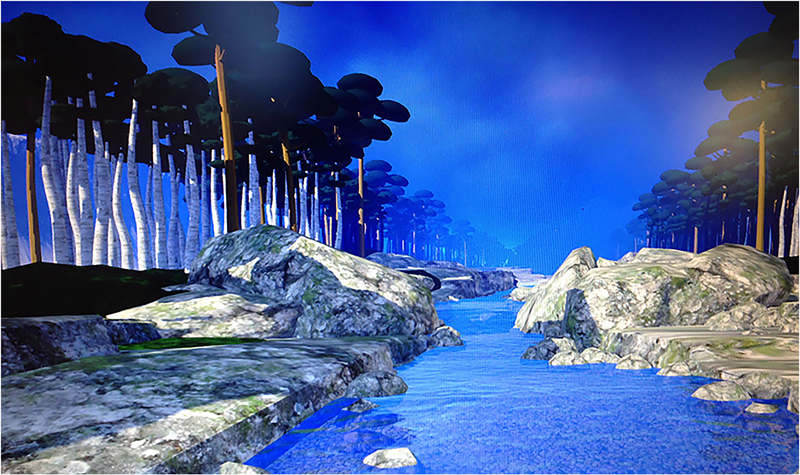
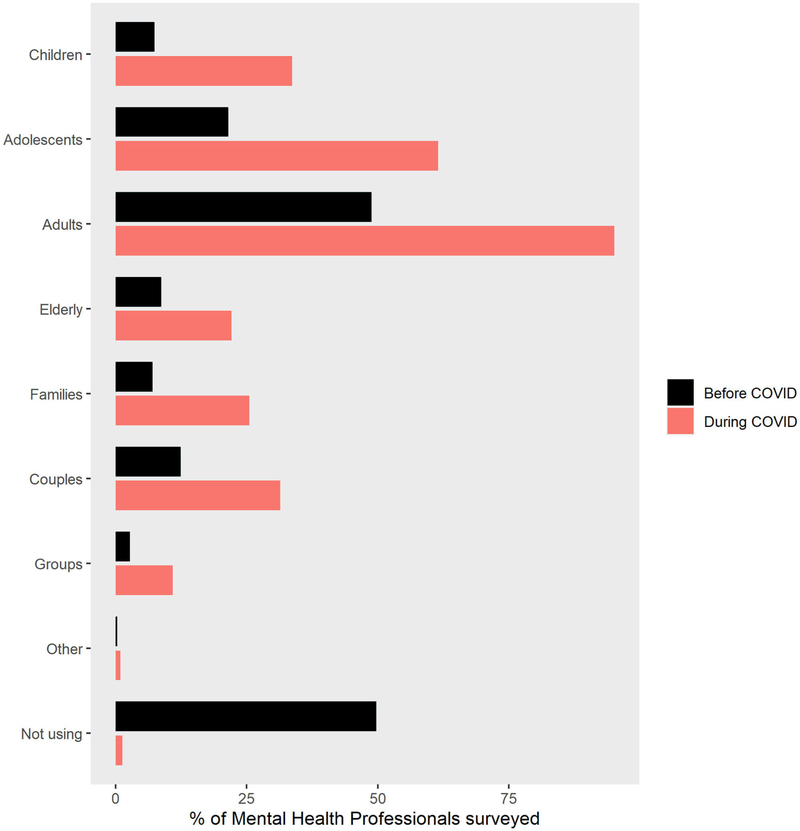
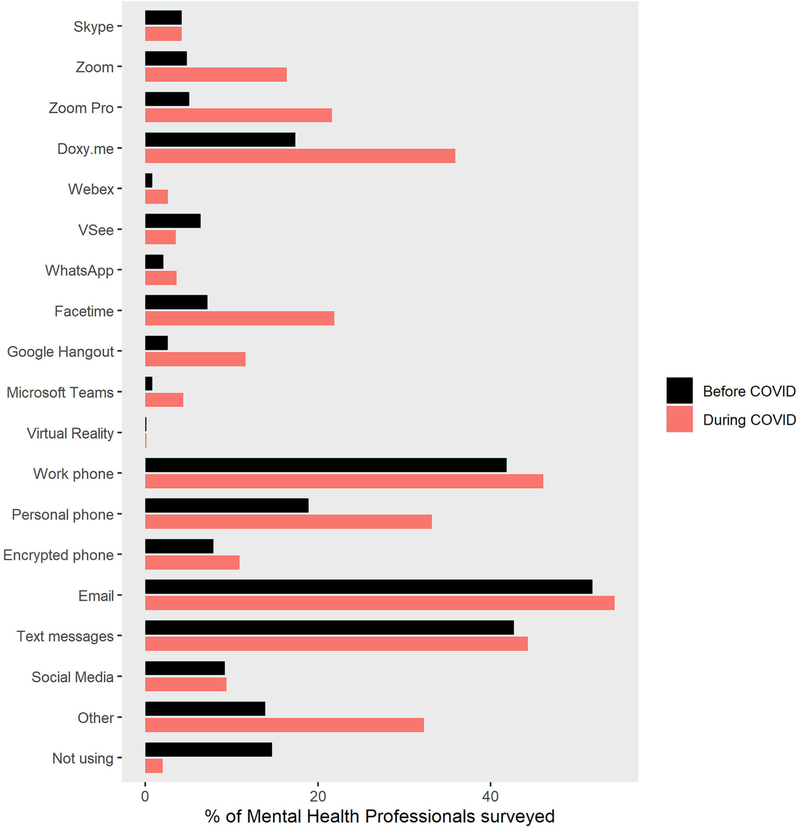
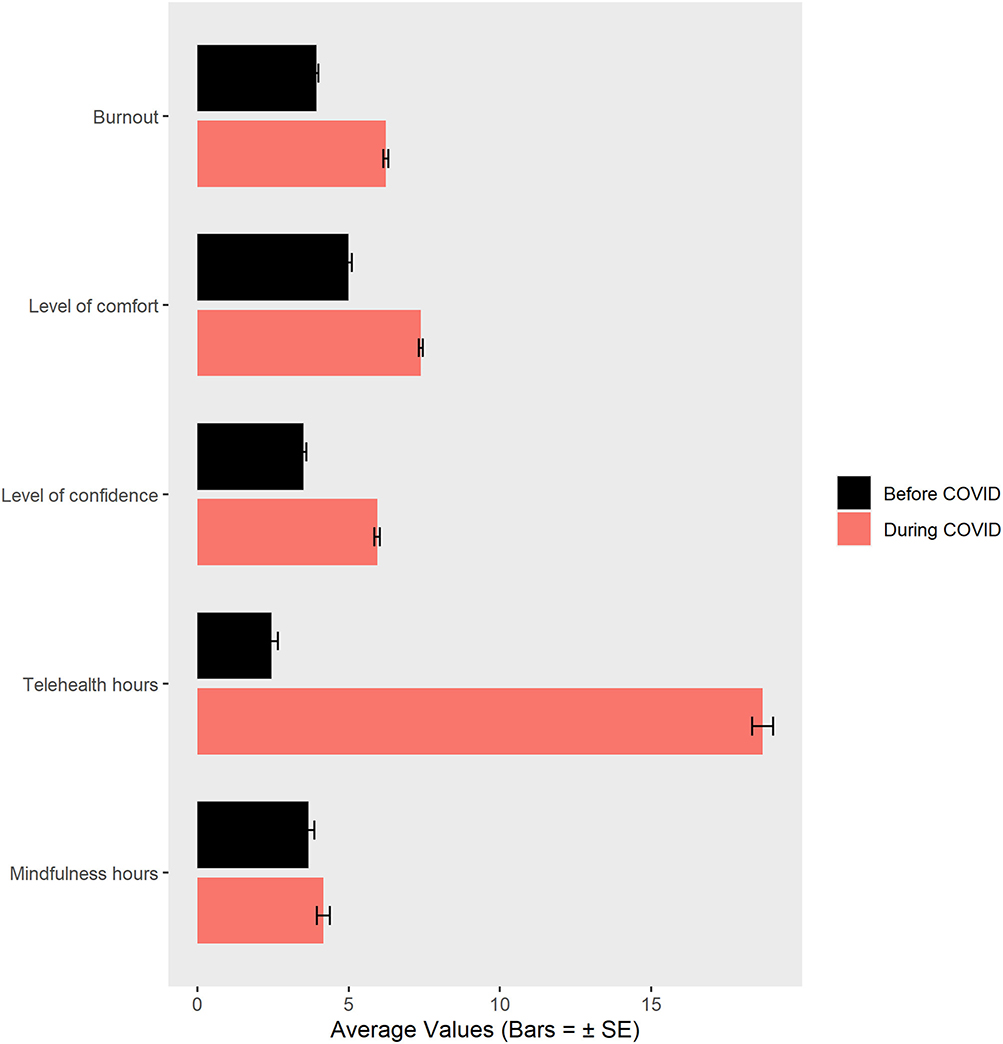
Before COVID-19, most therapists had concerns about telepsychology, and only treated patients in person. During the COVID-19 lockdown, patients still needed therapy, but in-person therapy sessions became unsafe. The current study measured how many therapists are using online therapy before vs. during COVID-19, how much training they have received, and their knowledge about legal restrictions on using telepsychology. A sample of 768 U.S.A. mental health professionals completed a 29-item online survey. Results show that before COVID-19, most therapists only saw their patients in person (e.g., at the therapists office), but during the COVID-19 pandemic, nearly all therapists used a wide range of telecommunication technologies to communicate with their quarantined patients, including texting, telephones, video conferences, and even virtual reality. According to within-subject related samples comparisons, 39% of survey respondents used telepsychology before COVID-19, vs. 98% during COVID-19 (χ2 = 450.02, p < 0.001). Therapists reported high treatment effectiveness using telepsychology (7.45 on 0–10 scale). However, overall, on a 0–10 scale, therapists reported a significant increase in feeling burned out during the COVID-19 pandemic, Mean = 3.93 (SD = 1.93) before vs. 6.22 (SD = 2.27) during the pandemic (Z = −18.57, p < 0.001). Although the APA ethics guidelines encourage therapists to use telepsychology with their patients during the crisis, gaps in respondents' knowledge identify a need for increased specialized training and education. Although the current study showed that virtual reality is rarely used by the therapists surveyed, virtual reality is a promising new telepsychology technology. Billions of dollars are currently being invested in mass producing immersive virtual reality systems. In the future, as networked immersive Virtual Reality becomes more widely available, therapists and patients in physically different locations will be able to “meet” in a shared computer-generated world designed for therapy sessions, potentially including group sessions. Telepsychology and virtual reality have the potential to be increasingly valuable tools to help therapists mitigate the consequences of COVID-19. Research, development and training is recommended.
Overview
The claims and statistics of this paper haven’t been checked yet.
Run the check — free, no account needed. It reads the open-access text and checks the sources it cites.
Integrity signals
Registry
Cites
Statistics
Figures
Verification
Claims the paper makes
The claims and statistics of this paper haven’t been checked yet.
Run the check — free, no account needed. It reads the open-access text and checks the sources it cites.
Claims other papers make about this one
Each is checked against this paper’s own text: does it say what the citing paper says it does?
The cited source says what the claim attributes to it.
In the citing paper
“Sampaio et al. argued that around 50% of mental health professionals expressed concerns about their ability to handle emergency situations in a telemental health setting (23), which is of special interest for our research because the population investigated herein were “at risk” patients (self-harm, suicidality).”
From Radical Acceptance of Reality: Putting DBT®-A Skill Groups Online During the COVID-19 Pandemic: A Qualitative Study (2022) · cites this paper as [23]
Self-check
Percentages, sums and reported differences re-computed from the paper’s own numbers.
The self-check needs the paper’s full text.
Citations
Cites
Lai, J., Ma, S., Wang, Y., Cai, Z., Hu, J., Wei, N., Wu, J., Du, H., Chen, T., Li, R., et al. (2020) · JAMA Network Open · doi:10.1001/jamanetworkopen.2020.3976 · Cited by 8,015
Freudenberger, H. J. (1974) · Journal of Social Issues · doi:10.1111/j.1540-4560.1974.tb00706.x · Cited by 5,463
Mental health and the COVID-19 pandemic
Pfefferbaum, B., & North, C. S. (2020) · New England Journal of Medicine · doi:10.1056/nejmp2008017 · Cited by 4,378
Test Theory: A Unified Treatment
Zwick, R., & McDonald, R. P. (2000) · Journal of the American Statistical Association · doi:10.2307/2669496 · Cited by 3,641
Risk and resilience in family well-being during the COVID-19 pandemic.
Prime, H., Wade, M., & Browne, D. T. (2020) · American Psychologist · doi:10.1037/amp0000660 · Cited by 2,462
Galea, S., Merchant, R. M., & Lurie, N. (2020) · JAMA Internal Medicine · doi:10.1001/jamainternmed.2020.1562 · Cited by 2,089
Singh, S., Roy, D., Sinha, K., Parveen, S., Sharma, G., & Joshi, G. (2020) · Psychiatry Research · doi:10.1016/j.psychres.2020.113429 · Cited by 1,727 · cited 2×
“A number of organizations are also predicting future psychological consequences of COVID-19 and are predicting an increased need for mental healthcare delivery, even after the COVID-19 virus is physically under control (Pfefferbaum and North, 2020; Singh et al., 2020).”
BackgroundDepth of Presence in Virtual Environments
Slater, M., Usoh, M., & Steed, A. (1994) · Presence: Teleoperators and Virtual Environments · doi:10.1162/pres.1994.3.2.130 · Cited by 1,342
Virtual reality as an adjunctive pain control during burn wound care in adolescent patients
Hoffman, H. G., Doctor, J. N., Patterson, D. R., Carrougher, G. J., & Furness, T. A. (2000) · Pain · doi:10.1016/s0304-3959(99)00275-4 · Cited by 651
Using a Single Item to Measure Burnout in Primary Care Staff: A Psychometric Evaluation
Dolan, E. D., Mohr, D., Lempa, M., Joos, S., Fihn, S. D., Nelson, K. M., & Helfrich, C. D. (2015) · Journal of General Internal Medicine · doi:10.1007/s11606-014-3112-6 · Cited by 599
Research works printed but not linked: 1
- Bailenson, 2018, Experience on Demand: What Virtual Reality is, How it Works, and What it Can Do
Cited by
Sorted by citations
Zangani, C., Ostinelli, E. G., Smith, K., Hong, J. S. W., Macdonald, O., Reen, G., Reid, K., Vincent, C. A., Sheriff, R. S., Harrison, P. J., et al. (2022) · JMIR Mental Health · doi:10.2196/38600 · Cited by 178
Realistic Motion Avatars are the Future for Social Interaction in Virtual Reality
Rogers, S., Broadbent, R., Brown, J. M., Fraser, A., & Speelman, C. P. (2022) · Frontiers in Virtual Reality · doi:10.3389/frvir.2021.750729 · Cited by 94
Garagiola, E. R., Lam, Q., Wachsmuth, L. S., Tan, T. Y., Ghali, S., Asafo, S. M., & Swarna, M. (2022) · Behavioral Sciences · doi:10.3390/bs12070220 · Cited by 78
Virtual Reality Applications in Medicine During the COVID-19 Pandemic: Systematic Review
Pallavicini, F., Pepe, A., Clerici, M., & Mantovani, F. (2022) · JMIR Serious Games · doi:10.2196/35000 · Cited by 64
Extended Reality for Enhanced Telehealth During and Beyond COVID-19: Viewpoint
Ong, T., Wilczewski, H., Paige, S. R., Soni, H., Welch, B. M., & Bunnell, B. E. (2021) · JMIR Serious Games · doi:10.2196/26520 · Cited by 58
Metadata
- Authors
- Sampaio, M., Navarro Haro, M. V., De Sousa, B., Vieira Melo, W., & Hoffman, H. G.
- Affiliations
- Universidade Católica Portuguesa (PT)
- University of Washington (US)
- Corresponding author
- Hoffman, Hunter G.
- Venue
- Frontiers in Virtual Reality
- Publisher
- Frontiers Media SA
- Published
- 2021-01-15
- Volume
- 1
- ISSN
- 2673-4192 (ISSN-L)
- PMC
- PMC7880047
- OpenAlex
- W3122779837
- Cited by
- 104
- References
- 47
- Citations by year
- 2026: 12 · 2025: 15 · 2024: 16 · 2023: 14 · 2022: 34 · 2021: 12
- FWCI
- 16.47
- Type
- journal article
- Language
- en
- Open access
- gold
- doi.org
- Licence
- Locations
- Frontiers in Virtual Reality (publishedVersion, cc-by)
- PubMed (publishedVersion)
- Zaguan (University of Zaragoza Repository) (publishedVersion, cc-by)
- PubMed Central (acceptedVersion, cc-by)
- DOAJ (DOAJ: Directory of Open Access Journals) (submittedVersion, cc-by-sa)
- Portuguese National Funding Agency for Science, Research and Technology (RCAAP Project by FCT) (submittedVersion, other-oa)
- Funders
- MAYDAY Fund
- National Institutes of Health
- Topics
- Health Sciences › Medicine › Public Health, Environmental and Occupational Health › Telemedicine and Telehealth Implementation
- Social Sciences › Psychology › Clinical Psychology › COVID-19 and Mental Health
- Health Sciences › Dentistry › General Dentistry › Dental Research and COVID-19
- Keywords
- telepsychology, COVID-19 pandemic, virtual reality therapy, online therapy, therapist training, therapist burnout, videoconferencing, mental health professionals, treatment effectiveness
About these checks
Registry, retraction, Cites and statistics results are computed, not judged, with one exception: a printed reference that no index lists is read once by a model before it counts as a citation error. Claims are extracted by a model and kept only when their quote appears verbatim in the text; each cited source is then checked, with a model’s help, for whether it says what the claim relies on. Those verdicts can be wrong — read the claim’s quote and the cited source before relying on one.
Statistics and arithmetic are recomputed, not judged.
Confidence bands are shown only for fields calibrated on our annotated test set. None is calibrated yet, so no band is shown.
What counts as a claim ›How we measure confidence ›How we check this ›
Are you an author, or do you see a problem with this page? Request a review
