

The DOI matches its Crossref record; 159 of the 165 references it cites were found in a registry or an index.
Animal Experiments in Biomedical Research: A Historical Perspective
Open accessAbstract
The use of non-human animals in biomedical research has given important contributions to the medical progress achieved in our day, but it has also been a cause of heated public, scientific and philosophical discussion for hundreds of years. This review, with a mainly European outlook, addresses the history of animal use in biomedical research, some of its main protagonists and antagonists, and its effect on society from Antiquity to the present day, while providing a historical context with which to understand how we have arrived at the current paradigm regarding the ethical treatment of animals in research.
Overview
The claims and statistics of this paper haven’t been checked yet.
Run the check — free, no account needed. It reads the open-access text and checks the sources it cites.
Integrity signals
Registry
Cites
Statistics
Figures
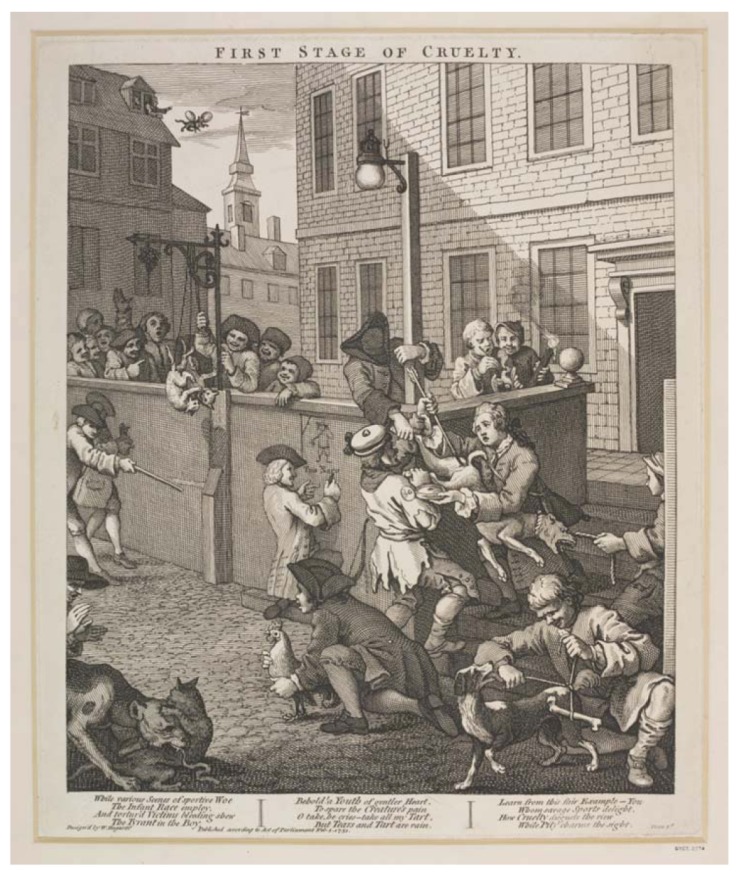
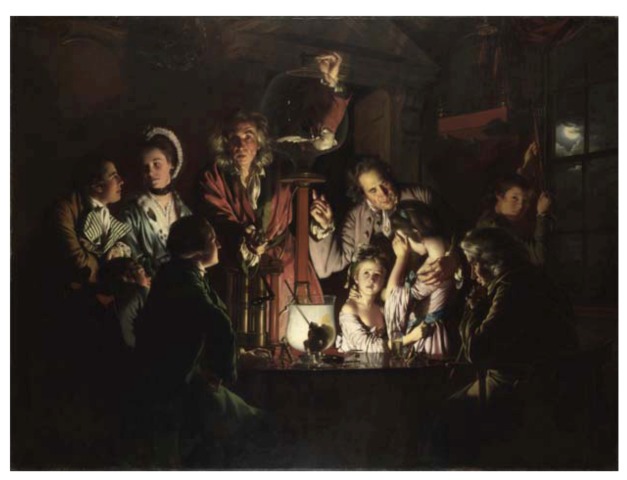
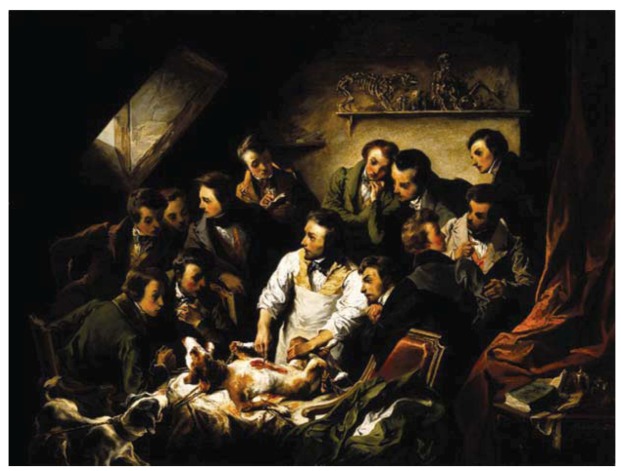
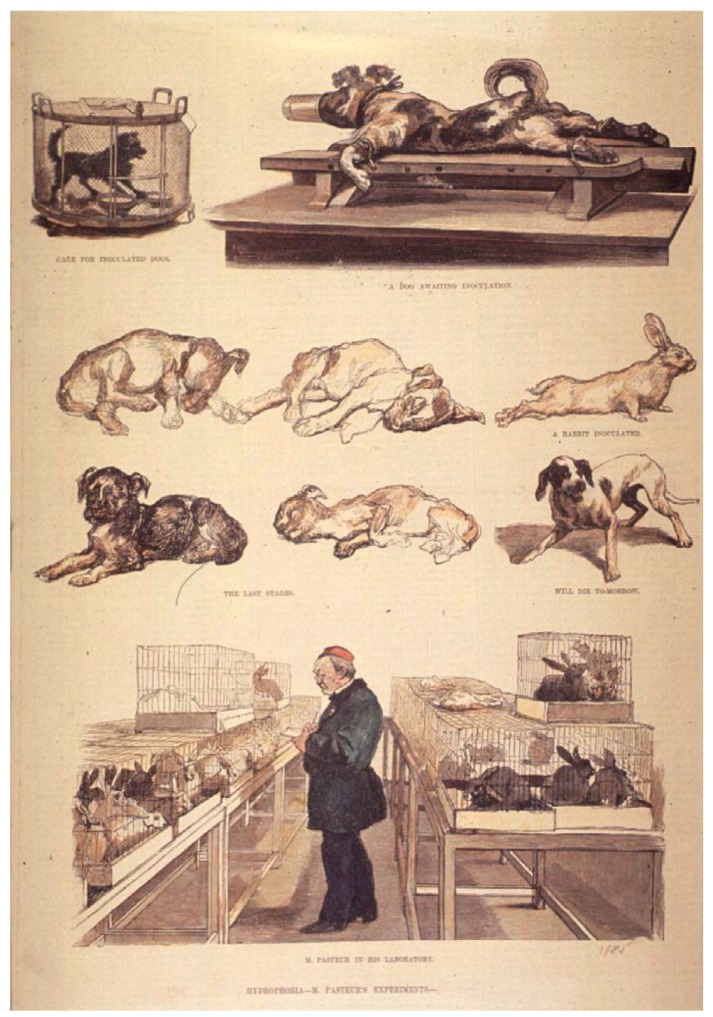
Verification
Claims the paper makes
The claims and statistics of this paper haven’t been checked yet.
Run the check — free, no account needed. It reads the open-access text and checks the sources it cites.
Claims other papers make about this one
Each is checked against this paper’s own text: does it say what the citing paper says it does?
In the citing paper
“It shows in growing restrictions on animal experimentation (73).”
From How should the advancement of large language models affect the practice of science? (2025) · cites this paper as [73]
Self-check
Percentages, sums and reported differences re-computed from the paper’s own numbers.
The self-check needs the paper’s full text.
Citations
Cites
An Introduction to the Principles of Morals and Legislation
de Champs, E. (2017) · HAL · Cited by 6,669
The Principles of Humane Experimental Technique
(1960) · The Medical Journal of Australia · doi:10.5694/j.1326-5377.1960.tb73127.x · Cited by 5,045 · cited 2×
“The Principles of Humane Experimental Technique; Methuen & Co. Ltd.: London, UK, 1959.”
BackgroundBroken Limits to Life Expectancy
Oeppen, J., & Vaupel, J. W. (2002) · Science · doi:10.1126/science.1069675 · Cited by 2,819 · cited 1×
“that biomedical progress had on the twentieth century was the increase in life expectancy, which in some developed countries doubled between 1900 and 2000, and is still on the rise today [144–146].”
BackgroundRegan, T. (1987) · Springer eBooks · doi:10.1007/978-94-009-3331-6_15 · Cited by 1,999
Shapin, S. (1996) · University of Chicago Press eBooks · doi:10.7208/chicago/9780226398488.001.0001 · Cited by 1,629
Can Animal Models of Disease Reliably Inform Human Studies?
van der Worp, H. B., Howells, D. W., Sena, E. S., Porritt, M. J., Rewell, S., O'Collins, V., & Macleod, M. R. (2010) · PLoS Medicine · doi:10.1371/journal.pmed.1000245 · Cited by 1,354 · cited 1×
“, [48].”
An Introduction to the Study of Experimental Medicine
Bernard, C., Wolf, S., & Greene, H. C. (2018) · Routledge eBooks · doi:10.4324/9781351320764-1 · Cited by 937
SINGER, P. A. (1973) · Palgrave Macmillan UK eBooks · doi:10.1007/978-1-349-25176-6_1 · Cited by 917
Singer, P. (2011) · Cambridge University Press eBooks · doi:10.1017/cbo9780511975950 · Cited by 879
Some thoughts concerning education
Locke, J. (.-1. A. D. T. (1990) · Choice Reviews Online · doi:10.5860/choice.27-4002 · Cited by 867
Integration and Stable Germ Line Transmission of Genes Injected into Mouse Pronuclei
Gordon, J. W., & Ruddle, F. H. (1981) · Science · doi:10.1126/science.6272397 · Cited by 686 · cited 1×
“In 1980 John Gordon and Franck Ruddle developed the first transgenic mouse [156], and in 1988, the first gene knockout model was produced, which granted”
BackgroundAnimal rights and human obligations
Regan, T., & SINGER, P. A. (1989) · Cited by 619
Herophilus: The Art of Medicine in Early Alexandria
Sider, D., Herophilus, & von Staden, H. (1990) · The Classical World · doi:10.2307/4350701 · Cited by 605 · cited 6×
“Hellenic Alexandrians who disregarded the established taboos and went on to perform dissection and vivisection on convicted criminals, benefiting from the favorable intellectual and scientific environment in Alexandria at the time [1].”
BackgroundInfluentialPaul Ehrlich (1854-1915) and His Contributions to the Foundation and Birth of Translational Medicine
Valent, P., Groner, B., Schumacher, U., Superti‐Furga, G., Busslinger, M., Královics, R., Zielinski, C. C., Penninger, J. M., Kerjaschki, D., Stingl, G., et al. (2016) · Journal of Innate Immunity · doi:10.1159/000443526 · Cited by 410
21. A Discourse on the Origin of Inequality
Rousseau, J. (2016) · Routledge eBooks · doi:10.4324/9781003370611-7 · Cited by 405
A systematic look at an old problem
Kirkwood, T. B. L. (2008) · Nature · doi:10.1038/451644a · Cited by 392 · cited 1×
“that biomedical progress had on the twentieth century was the increase in life expectancy, which in some developed countries doubled between 1900 and 2000, and is still on the rise today [144–146].”
BackgroundThe Oxford Handbook of Animal Ethics
(2011) · Oxford University Press eBooks · doi:10.1093/oxfordhb/9780195371963.001.0001 · Cited by 342
Festing, S., & Wilkinson, R. (2007) · EMBO Reports · doi:10.1038/sj.embor.7400993 · Cited by 316 · cited 1×
“for a more moderate advocacy of animal rights to appear: while remaining incompatible with an abolitionist animal rights perspective, this paradigm grants animals something like a right to protection from suffering, or at least certain suffering beyond a defined threshold [185], preserving the central idea that there…”
BackgroundThe Cambridge History of Science
(2006) · Cambridge University Press eBooks · doi:10.1017/chol9780521572446 · Cited by 295
Bosch, F., & Rosich, L. (2008) · Pharmacology · doi:10.1159/000149583 · Cited by 291 · cited 1×
“In 1908, Ehrlich would also be awarded the Nobel Prize for contributions to immunology, and would yet again be nominated for his contributions to chemotherapy and the development of Salvasaran (an effective treatment against syphilis), in particular [132–135].”
BackgroundHermann von Helmholtz and the Foundations of Nineteenth-Century Science
Cahan, D. (2019) · University of California Press eBooks · doi:10.1525/9780520914094 · Cited by 287
Robert Koch, a life in medicine and bacteriology
Worboys, M. (1989) · Choice Reviews Online · doi:10.5860/choice.26-3255 · Cited by 269
Matter, Life, and Generation: Eighteenth-Century Embryology and the Haller-Wolff Debate.
Larson, J. L., & Roe, S. A. (1983) · Eighteenth-Century Studies · doi:10.2307/2738295 · Cited by 255
Grene, M., & Depew, D. (2004) · Cambridge University Press eBooks · doi:10.1017/cbo9780511819018 · Cited by 250
Flack, H. D. (2009) · Acta Crystallographica Section A Foundations of Crystallography · doi:10.1107/s0108767309024088 · Cited by 214
‘A Brute to the Brutes?’: Descartes' Treatment of Animals
Cottingham, J. (1978) · Philosophy · doi:10.1017/s0031819100026371 · Cited by 213 · cited 1×
“It has been argued, however, that Descartes’s views on animals were misinterpreted [17,18]—misconstructions that may not always have been free from malice, either by his contemporaries [19] or present-day critics [20]—as he did not explicitly state that animals were incapable of feeling pain and indeed recognized them…”
BackgroundEstimates for worldwide laboratory animal use in 2005
Taylor, K., Gordon, N., Langley, G., & Higgins, W. (2008) · Alternatives to Laboratory Animals · doi:10.1177/026119290803600310 · Cited by 210
Luigi Galvani and animal electricity: two centuries after the foundation of electrophysiology
Piccolino, M. (1997) · Trends in Neurosciences · doi:10.1016/s0166-2236(97)01101-6 · Cited by 181
Rain without thunder: the ideology of the animal rights movement
(1997) · Choice Reviews Online · doi:10.5860/choice.34-3841 · Cited by 178
Empty Cages: Facing the Challenge of Animal Rights
Regan, T. (2004) · Cited by 156
(2006) · Choice Reviews Online · doi:10.5860/choice.43-4596 · Cited by 154
Ideals of Science and Their Discontents in Late Nineteenth-Century American Medicine
Warner, J. H. (1991) · Isis · doi:10.1086/355837 · Cited by 151 · cited 1×
“Many such physicians also opposed experiments on live animals and were members of antivivisection societies [77,139–141].”
BackgroundMaehle, A. (1999) · BRILL eBooks · doi:10.1163/9789004333291 · Cited by 142
Animal Revolution: Changing Attitudes Towards Speciesism
Ryder, R. D. (2001) · Animal Welfare · doi:10.1017/s0962728600024003 · Cited by 135
Claude Bernard and the Constancy of the Internal Environment
Gross, C. G. (1998) · The Neuroscientist · doi:10.1177/107385849800400520 · Cited by 133 · cited 2×
“work, even after this technique had become available, he and nearly all of his students continued to forgo anesthesia in their experiments [102].”
BackgroundExperimenting with Humans and Animals
Guerrini, A. (2003) · Johns Hopkins University Press eBooks · doi:10.56021/9780801871962 · Cited by 132
Robert Koch and the cholera vibrio: a centenary.
Howard-Jones, N. (1984) · BMJ · doi:10.1136/bmj.288.6414.379 · Cited by 130 · cited 1×
“They would go on to identify the causative agents of tuberculosis (Micobacterium tuberculosis, also known as the “Koch bacillus”), cholera (Vibrio cholera, albeit 30 years after Filippo Pacini, 1812–1883 [129]), and anthrax.”
BackgroundExperimenting with humans and animals: from Galen to animal rights
(2004) · Choice Reviews Online · doi:10.5860/choice.41-2815 · Cited by 125
O'Malley, C. D. (1964) · University of California Press eBooks · doi:10.1525/9780520310230 · Cited by 124
Harrison, P. (1992) · The Philosophical Quarterly · doi:10.2307/2220217 · Cited by 116 · cited 1×
“It has been argued, however, that Descartes’s views on animals were misinterpreted [17,18]—misconstructions that may not always have been free from malice, either by his contemporaries [19] or present-day critics [20]—as he did not explicitly state that animals were incapable of feeling pain and indeed recognized them…”
BackgroundBad medicine: doctors doing harm since Hippocrates
(2007) · Choice Reviews Online · doi:10.5860/choice.44-3323 · Cited by 113
Broadie, A., & Pybus, E. M. (1974) · Philosophy · doi:10.1017/s0031819100063312 · Cited by 100 · cited 1×
“Kant believed his anthropocentric philosophy provided the moral tradition and contemporary thought of his society; it was a philosophical underpinning, rather than an abstraction distant from the thoughts and feelings of the ordinary man [29].”
BackgroundVivisection in Historical Perspective
Rupke, N. A. (2025) · Routledge eBooks · doi:10.4324/9781003683810 · Cited by 99
William Harvey's Natural Philosophy
French, R. H. (1994) · Cambridge University Press eBooks · doi:10.1017/cbo9780511628245 · Cited by 98
The Investigative enterprise: experimental physiology in nineteenth-century medicine
(1989) · Choice Reviews Online · doi:10.5860/choice.26-3872 · Cited by 96
Political Animals: The Shaping of Biomedical Research Literature in Twentieth-Century America
Lederer, S. E. (1992) · Isis · doi:10.1086/356025 · Cited by 94 · cited 1×
“Confronted with a general lack of support, moreover in a period that would witness two great world wars and a serious economic recession—which would push the interests of animals further to the background—the line of action of antivivisectionists through most of the twentieth century focused on banning the use of dogs…”
BackgroundLiterary responses to animal experimentation in seventeenth- and eighteenth-century Britain
Maehle, A. (1990) · Medical History · doi:10.1017/s0025727300050250 · Cited by 89 · cited 4×
“their own experiments and were concerned about their moral justification, but nevertheless carried on, certain of the need for the use of live animals for the comprehension of many basic physiological processes, which were yet far from being understood [3,49,61,62].”
BackgroundInfluentialThe Monk in the Garden: The Lost and Found Genius of Gregor Mendel, the Father of Genetics
Henig, R. M. (2000) · Cited by 86
Cohen, C., & Regan, T. (2001) · Rowman & Littlefield Publishers eBooks · doi:10.5040/9798216418658 · Cited by 84 · cited 1×
“Furthermore, and despite the debate in the philosophical ground remained civilized—even between diametrically opposed perspectives, see, for example, [168]—in the “real world” the antagonism began”
BackgroundEthics into action: Henry Spira and the animal rights movement
(2000) · Choice Reviews Online · doi:10.5860/choice.37-6567 · Cited by 84
Eco-terrorism: radical environmental and animal liberation movements
(2007) · Choice Reviews Online · doi:10.5860/choice.44-4680 · Cited by 82
Vallery-Radot, R. (1919) · Doubleday, Page eBooks · doi:10.5962/bhl.title.21897 · Cited by 80
Bentham, J. B. (2014) · doi:10.4324/9781315742809-6 · Cited by 80
Mukerjee, M. (1997) · Scientific American · doi:10.1038/scientificamerican0297-86 · Cited by 78 · cited 1×
“would peak in the 1970s and start to decline thereafter, although the number of biomedical papers has since then more than doubled [181,192–196].”
BackgroundIn the name of science: issues in responsible animal experimentation
(1993) · Choice Reviews Online · doi:10.5860/choice.31-2118 · Cited by 72
Animal experimentation: The legacy of Claude Bernard
LaFollette, H., & Shanks, N. (1994) · International Studies in the Philosophy of Science · doi:10.1080/02698599408573495 · Cited by 65 · cited 1×
“Conciliating Descartes’s rationalism with Harvey’s empiricism, Bernard acknowledged the importance of ideas and theories for the formulation of hypotheses, safeguarding, however, that these were only useful if testable and only credible if substantiated through experimentation [80,89].”
BackgroundThe Psychology of the Human-Animal Bond
(2011) · doi:10.1007/978-1-4419-9761-6 · Cited by 65
The History of Medical Education
O’Malley, C. D. (1970) · University of California Press eBooks · doi:10.1525/9780520313446 · Cited by 62
Coleman, W., & Holmes, F. L. (1988) · University of California Press eBooks · doi:10.1525/9780520310353 · Cited by 62
Kantha, S. S. (1991) · The Keio Journal of Medicine · doi:10.2302/kjm.40.35 · Cited by 61 · cited 1×
“In 1908, Ehrlich would also be awarded the Nobel Prize for contributions to immunology, and would yet again be nominated for his contributions to chemotherapy and the development of Salvasaran (an effective treatment against syphilis), in particular [132–135].”
BackgroundWilliam Harvey's Natural Philosophy.
Cook, H. J., & French, R. (1996) · The American Historical Review · doi:10.2307/2170429 · Cited by 61
Robert Boyle’s landmark book of 1660 with the first experiments on rarified air
West, J. B. (2004) · Journal of Applied Physiology · doi:10.1152/japplphysiol.00759.2004 · Cited by 61
Computational modeling of physiological systems
Beard, D. A., Bassingthwaighte, J. B., & Greene, A. S. (2005) · Physiological Genomics · doi:10.1152/physiolgenomics.00117.2005 · Cited by 60 · cited 1×
“Using the results of meticulously planned experiments on live animals, as well as their interpretation through mathematics and physics, in this treatise, Harvey disproved many of Galen’s fifteen-hundred-year-old ideas [35,36].”
MethodEstimates of Worldwide Laboratory Animal Use
Knight, A. (2008) · Alternatives to Laboratory Animals · doi:10.1177/026119290803600507 · Cited by 59
Sumner, L. W., & Regan, T. (1986) · Noûs · doi:10.2307/2215309 · Cited by 58
Normandin, S. (2007) · Journal of the History of Medicine and Allied Sciences · doi:10.1093/jhmas/jrm015 · Cited by 57
Public perceptions of animal experimentation across Europe
von Roten, F. C. (2012) · Public Understanding of Science · doi:10.1177/0963662511428045 · Cited by 57 · cited 1×
“In spite of the emergence of the animal rights movement, animal research for biomedical purposes was—as it continues to be—seen as morally acceptable by the majority of the public [176,177].”
BackgroundDear, P. (2006) · Cambridge University Press eBooks · doi:10.1017/chol9780521572446.005 · Cited by 55 · cited 1×
“(1580–1657) and Edmund O’Meara (1614–1681) began to question the validity of physiological experiments carried out on animals in such an extremely altered state as one endured under vivisection, although their hidden agenda was to restore the credibility of Galenic medicine [3,46,47].”
BackgroundThe Link Between Animal Abuse and Human Violence
(2009) · Liverpool University Press eBooks · doi:10.2307/jj.4116413 · Cited by 54
Monamy, V. (1968) · Cambridge University Press eBooks · doi:10.1017/cbo9780511801808 · Cited by 52
Physiology's Struggle for Independence in the First Half of the Nineteenth Century
Schiller, J. (1968) · History of Science · doi:10.1177/007327536800700102 · Cited by 50 · cited 2×
“Amidst many other prominent scientists, two physician–physiologists stood out for their contributions to experimental physiology, François Magendie (1783–1855) and, most notably, Magendie’s disciple, Claude Bernard (1813–1878) [67,80–84].”
BackgroundLiddick, D. R. (2006) · Greenwood Publishing Group Inc. eBooks · doi:10.5040/9798400643422 · Cited by 49
The life and works of Louis Pasteur
Schwartz, M. A. (2001) · Journal of Applied Microbiology · doi:10.1046/j.1365-2672.2001.01495.x · Cited by 47 · cited 1×
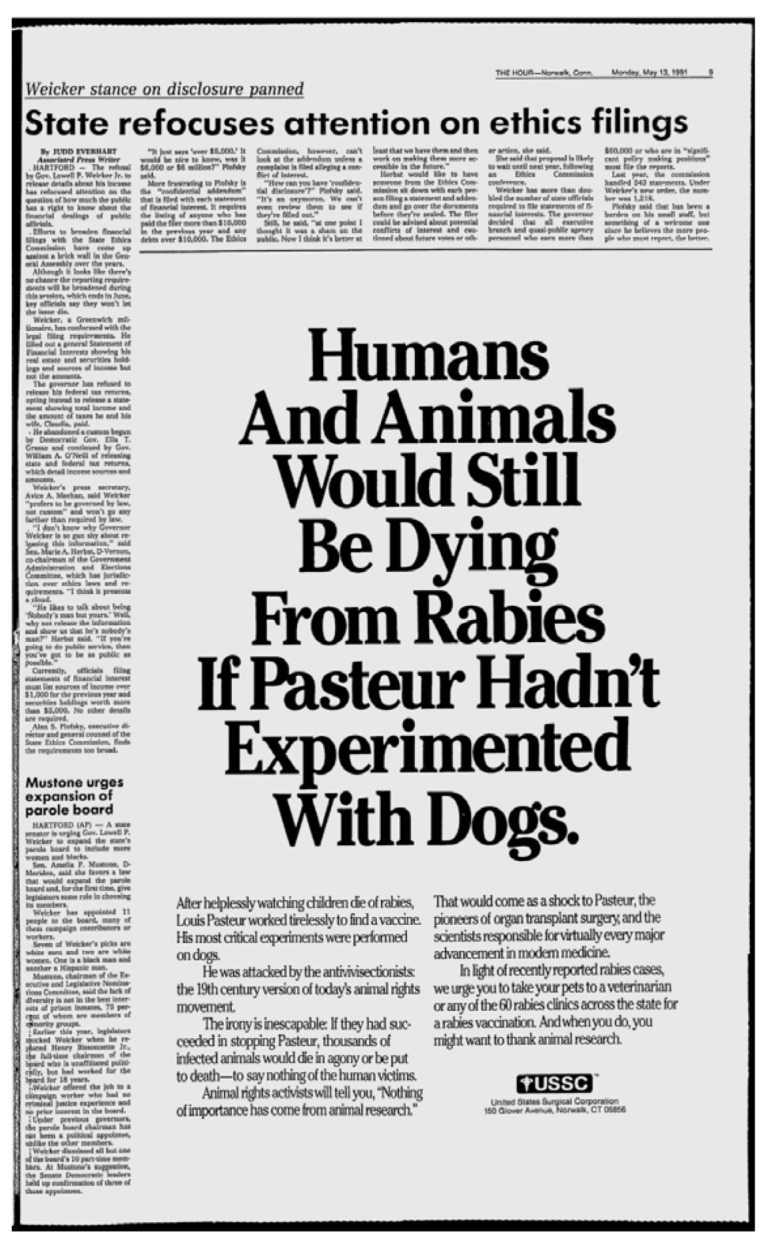
“However, it would be Pasteur’s successful use of a therapeutic vaccine against rabies in humans that would grant him international celebrity status [107,122–124].”
BackgroundMind-Body Dualism and the Harvey-Descartes Controversy
Gorham, G. (1994) · Journal of the History of Ideas · doi:10.2307/2709897 · Cited by 47 · cited 1×
“with most of Harvey’s findings, since he believed that theories forged through philosophical reflection on metaphysics were superior to those resulting from experimental observation, thus considering experiments or interpretations that did not confirm his own natural philosophy as flawed [40,41].”
BackgroundAnimal experiments -- where do you draw the line?: let the people speak.
Aldhous, P., Coghlan, A., & Copley, J. (1999) · PubMed · Cited by 45
Animal consciousness : what matters and why
Dennett, D. C. (1995) · DigitalGeorgetown (Georgetown University Library) · Cited by 43
Vallery-Radot, R. (1911) · Hachette eBooks · doi:10.5962/bhl.title.20935 · Cited by 42
Reasonable Partiality and Animal Ethics
Rollin, B. E. (2005) · Ethical Theory and Moral Practice · doi:10.1007/s10677-005-3297-1 · Cited by 41 · cited 1×
“A “welfarist–reformist” approach has been accepted as a compromise by some prominent animal rights advocates who, while maintaining the long-term goal of a full end to all animal experiments, believe that it is by successive short-term improvements of the status quo that their goal can be achieved; see [178,187,188].”
BackgroundHansen, B. (1998) · The American Historical Review · doi:10.2307/2649773 · Cited by 41 · cited 1×
“However, it would be Pasteur’s successful use of a therapeutic vaccine against rabies in humans that would grant him international celebrity status [107,122–124].”
BackgroundOrmandy, E., Schuppli, C. A., & Weary, D. M. (2009) · Alternatives to Laboratory Animals · doi:10.1177/026119290903700109 · Cited by 41 · cited 1×
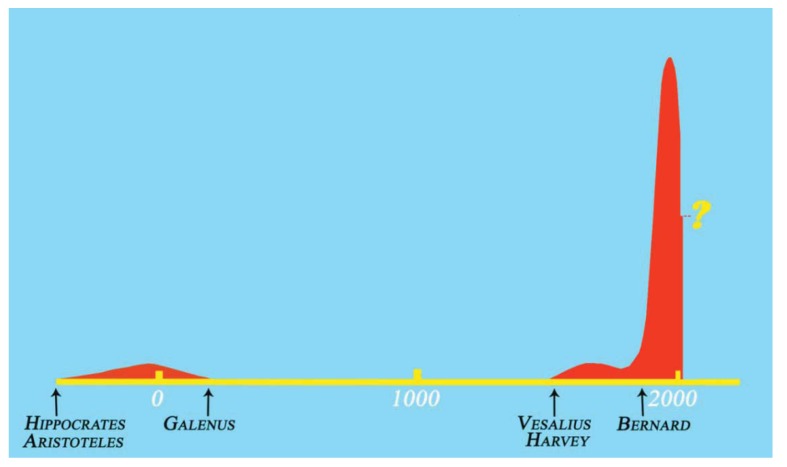
“would otherwise be a continuously downward trend [198,199] (Figure 7).”
BackgroundAnimal research: a moral science
Rollin, B. E. (2007) · EMBO Reports · doi:10.1038/sj.embor.7400996 · Cited by 39
Dog fight: Darwin as animal advocate in the antivivisection controversy of 1875
Feller, D. A. (2009) · Studies in History and Philosophy of Science Part C Studies in History and Philosophy of Biological and Biomedical Sciences · doi:10.1016/j.shpsc.2009.09.004 · Cited by 39 · cited 3×
“Huxley—was appointed that same year to address this issue, which would result in the 1876 amendment of the 1835 Cruelty to Animals Act in order to regulate the use of animals for scientific purposes, being the first case of this kind of legislation in the world [99,111,117,118].”
BackgroundSnow, S. J. (2008) · doi:10.1093/oso/9780192805867.001.0001 · Cited by 39
Animal Experimentation from Antiquity to the End of the Eighteenth Century: Attitudes and Arguments
Maehle, A., & Tröhler, U. (2025) · Routledge eBooks · doi:10.4324/9781003683810-2 · Cited by 38
Harvey and the Oxford Physiologists: Scientific Ideas and Social Interaction
Davis, A. B., & Frank, R. G. (1982) · The American Historical Review · doi:10.2307/1863314 · Cited by 37
Tubbs, R. S., Loukas, M., Shoja, M. M., Shokouhi, G., & Oakes, W. J. (2008) · Journal of neurosurgery · doi:10.3171/jns/2008/108/5/1038 · Cited by 36
Cressey, D. (2011) · Nature · doi:10.1038/470452a · Cited by 35
Building a Better MouseOne Hundred Years of Genetics and Biology
MORSEIII, H. (2007) · The Mouse in Biomedical Research · doi:10.1016/b978-012369454-6/50013-3 · Cited by 35 · cited 1×
“understanding of gene function and their influence in several genetic and non-genetic diseases, and have made the mouse the most commonly used animal model in our day (for a historical overview of the use of the mouse model in research, see [157,158]), with prospects being that it will continue to have a central role…”
BackgroundThe Three Rs: past, present and future
Russell, W. (2005) · Animal Welfare · doi:10.1017/s0962728600029596 · Cited by 35 · cited 2×
“] procedures applied to those animals which have to be used,” later including also the full optimization of the wellbeing of laboratory animals, also seen as a basic requirement for the quality of science [179].”
BackgroundMethodLuigi Galvani and the foundations of electrophysiology
Cajavilca, C. E., Varón, J., & Sternbach, G. L. (2008) · Resuscitation · doi:10.1016/j.resuscitation.2008.09.020 · Cited by 32
Animal Rights Theory and Utilitarianism: Relative Normative Guidance
Francione, G. L. (2003) · Between the Species An Online Journal for the Study of Philosophy and Animals · doi:10.15368/bts.2003v13n3.5 · Cited by 30
Frey, R. G. (2012) · Oxford University Press eBooks · doi:10.1093/oxfordhb/9780195371963.013.0007 · Cited by 30 · cited 1×
“” Hence, as a result of their higher cognitive capabilities, human lives are typically richer than animal lives, being therefore generally more valuable [186].”
BackgroundMind As Machine: A History of Cognitive Science Two-Volume Set
Boden, M. (2006) · Choice Reviews Online · doi:10.5860/choice.44-6202 · Cited by 29
Blessed days of anaesthesia: how anaesthetics changed the world
(2009) · Choice Reviews Online · doi:10.5860/choice.46-4485 · Cited by 28
The welfare of laboratory mice
Baumans, V. (2007) · Animal welfare · doi:10.1007/978-1-4020-2271-5_7 · Cited by 27 · cited 1×
“lifespan and rapid reproduction rate [151,152].”
Fye, W. B. (1995) · Clinical Cardiology · doi:10.1002/clc.4960180513 · Cited by 26
Anatomy of a physiological discovery: William Harvey and the circulation of the blood.
McMullen, E. T. (1995) · PubMed · Cited by 25
Conn, P. M., & Parker, J. V. (2008) · The FASEB Journal · doi:10.1096/fj.08-0502ufm · Cited by 25
Richard Lower: Anatomist and Physiologist
Felts, J. H. (2000) · Annals of Internal Medicine · doi:10.7326/0003-4819-132-5-200003070-00023 · Cited by 25 · cited 1×
“principle that life should be interpreted in light of new findings in physics in their physiological experiments on animals [42–45].”
BackgroundCarl Ludwig: the man, his time, his influence.
Zimmer, H. (1996) · PubMed · Cited by 24
Implementation of the ‘Three Rs’ in biomedical research
Carlsson, H.-E., Hagelin, J., & Hau, J. (2004) · Veterinary Record · doi:10.1136/vr.154.15.467 · Cited by 23
Reisch, M. S., SHORT, P. L., STORCK, W. J., TREMBLAY, J.-F., & Tullo, A. H. (2001) · Chemical & Engineering News · doi:10.1021/cen-v079n039.p019 · Cited by 22
Stephens, M. L., Goldberg, A. M., & Rowan, A. (2001) · WBI Studies Repository · Cited by 21
The Progress of Humane Experimental Technique since 1959: A Personal View
Burch, R. L. (2009) · Alternatives to Laboratory Animals · doi:10.1177/026119290903700308 · Cited by 21 · cited 1×
“of the Three Rs, to the satisfaction of William Russell and Rex Burch, who lived to see the “rediscovery” of their principles and the emergence of a whole new field of research inspired by their groundbreaking work [179,191].”
BackgroundDrawing the life-blood of physiology: Vivisection and the Physiologists' dilemma, 1870–1900
Richards, S. (1986) · Annals of Science · doi:10.1080/00033798600200111 · Cited by 21
Handbook of Laboratory Animal Science, Volume II
Hau, J., & Schapiro, S. J. (2011) · CRC Press eBooks · doi:10.1201/b10837 · Cited by 21
"A Time to Heal": The Diffusion of Listerism in Victorian Britain
Gaw, J. L. (1999) · Transactions of the American Philosophical Society · doi:10.2307/3185883 · Cited by 20
Harvey's Heart: The Discovery of Blood Circulation
Gregory, A. (1997) · UCL Discovery (University College London) · Cited by 18
Linton, D. S. (2005) · doi:10.70249/9780871692863 · Cited by 18
(2007) · BRILL eBooks · doi:10.1163/ej.9789004124011.i-226 · Cited by 15
An Analysis of Interactions between the Natural Sciences and the Social Sciences
Cohen, I. B. (1994) · Boston studies in the philosophy of science · doi:10.1007/978-94-017-3391-5_1 · Cited by 15
4. Science for the Clinic: Science Policy and the Formation of Carl Ludwig's Institute in Leipzig
Lenoir, T. (1988) · University of California Press eBooks · doi:10.1525/9780520310353-005 · Cited by 15
Francois Magendie, Claude Bernard, and the Interrelation of Science, History, and Philosophy
Bloch, H. (1989) · Southern Medical Journal · doi:10.1097/00007611-198910000-00013 · Cited by 13
Disputed discovery: vivisection and experiment in the 19th century
Berkowitz, C. (2006) · Endeavour · doi:10.1016/j.endeavour.2006.07.001 · Cited by 13 · cited 5×
“By that time, Magendie had been dead for over twenty years [82,90,100].”
BackgroundInfluentialThe Impact of Stephen Hales on Medicine
Smith, I. B. (1993) · Journal of the Royal Society of Medicine · doi:10.1177/014107689308600613 · Cited by 12
From the discovery of the circulation of the blood to the first steps in hemorheology: part 1.
Silva, J. M. E. (2009) · PubMed · Cited by 12
Stephen Hales: neglected respiratory physiologist
West, J. B. (1984) · Journal of Applied Physiology · doi:10.1152/jappl.1984.57.3.635 · Cited by 12
The Echo of Harvey's De Motu Cordis (1628) 1628 to 1657
WEIL, E. (1957) · Journal of the History of Medicine and Allied Sciences · doi:10.1093/jhmas/xii.4.167 · Cited by 12
Animal experiments: the long debate.
Festing, S. (1989) · PubMed · Cited by 12
Louis Pasteur: his life and labours
Vallery-Radot, R., & Hamilton, E. E. P. (1885) · doi:10.5962/bhl.title.29261 · Cited by 11
WILLIAM HARVEY AND THE FOUNDATION OF MODERN HAEMODYNAMICS BY ALBRECHT VON HALLER
Buess, H. (1970) · Medical History · doi:10.1017/s0025727300015362 · Cited by 11
LEE, J. A. (1978) · Anaesthesia · doi:10.1111/j.1365-2044.1978.tb08473.x · Cited by 11
Albrecht von Haller (1708–1777)
Frixione, E. (2006) · Journal of Neurology · doi:10.1007/s00415-006-0998-x · Cited by 11
Animal Sensibility and Inclusive Justice in the Age of Bernard Shaw
Preece, R. (2011) · University of British Columbia Press eBooks · doi:10.59962/9780774821117 · Cited by 11
The Welfare of Laboratory Rats
Kaliste, E., & Mering, S. (2006) · Animal welfare · doi:10.1007/978-1-4020-2271-5_8 · Cited by 10 · cited 1×
“lifespan and rapid reproduction rate [151,152].”
Olsson, I. A. S., Robinson, P., & Sandøe, P. (2010) · CRC Press eBooks · doi:10.1201/b10416-3 · Cited by 10
Dolan, K. (2007) · Wiley eBooks · doi:10.1002/9780470753361 · Cited by 10
Regan, T. (2005) · Rowman & Littlefield Publishers eBooks · doi:10.5771/9780742578210 · Cited by 10 · cited 2×
“animal rights cause by Tom Regan himself [171], made researchers close themselves within their community and avoid speaking publicly about their work [172–174], which in turn left pro-research”
BackgroundConn, P. M., & Parker, J. V. (2008) · Palgrave Macmillan US eBooks · doi:10.1057/9780230611993 · Cited by 9
Phlegm and breath—Babylonian contributions to hippocratic medicine
Geller, M. J. (2007) · BRILL eBooks · doi:10.1163/ej.9789004124011.i-226.38 · Cited by 8 · cited 3×
“Observations would be understood in light of such paradigms as the Hippocratic theory of the four humors or the Pythagorean theory of the four elements, along with others of natural or supernatural basis, and to which they added their own theoretical conceptions and observational errors [1,4,6,8,9].”
BackgroundClark-Kennedy, A. E. (1977) · BMJ · doi:10.1136/bmj.2.6103.1656 · Cited by 8
(2009) · Alternatives to Laboratory Animals · doi:10.1177/026119290903700310 · Cited by 8
Steintrager, J. (2004) · Indiana University Press eBooks · doi:10.2979/1445.0 · Cited by 8
Alternatives to Animal Experiments: Serving in the Middle Ground
Balls, M. (2005) · Alternatives to animal testing and experimentation : AATEX · doi:10.11232/aatex.11.4 · Cited by 7 · cited 2×
“More than a restatement of the Three Rs, this definition had the added value of placing onto researchers the burden of providing convincing evidence for the necessity of using animals [183],”
BackgroundViews from behind the barricade.
Birke, L. I. A., & Michael, M. (1992) · PubMed · Cited by 7
Descartes and the Heart Beat: A Conservative Innovation
Grene, M. (2005) · Archimedes · doi:10.1007/1-4020-3048-7_5 · Cited by 6
Descartes on the Moral Status of Animals
Steiner, G. (1998) · Archiv für Geschichte der Philosophie · doi:10.1515/agph.1998.80.3.268 · Cited by 5
Palpitation: Brain, Heart, and ‘Spirits’ in the Seventeenth Century
Wooley, C. F. (1998) · Journal of the Royal Society of Medicine · doi:10.1177/014107689809100316 · Cited by 4 · cited 1×
“principle that life should be interpreted in light of new findings in physics in their physiological experiments on animals [42–45].”
BackgroundExperimentation and scientific method in the classical world: Their rise and decline
Prioreschi, P. (1994) · Medical Hypotheses · doi:10.1016/0306-9877(94)90091-4 · Cited by 4 · cited 1×
“Therefore, and despite medieval physicians’ reverence for Galen and his predecessors, the experimental approach used by these classical authors had been sentenced to oblivion [3,8–11].”
BackgroundDescartes: The Smear and Related Misconstruals
Leiber, J. (2011) · Journal for the Theory of Social Behaviour · doi:10.1111/j.1468-5914.2011.00464.x · Cited by 4 · cited 1×
“It has been argued, however, that Descartes’s views on animals were misinterpreted [17,18]—misconstructions that may not always have been free from malice, either by his contemporaries [19] or present-day critics [20]—as he did not explicitly state that animals were incapable of feeling pain and indeed recognized them…”
BackgroundThe Progress of Humane Experimental Technique since 1959: A Personal View
Burch, R. L. (1995) · Alternatives to Laboratory Animals · doi:10.1177/026119299502300607 · Cited by 4
The History of Animal Ethics in Western Culture
Preece, R. (2011) · Springer eBooks · doi:10.1007/978-1-4419-9761-6_3 · Cited by 3 · cited 7×
“vivisectionist who was appalled to witness Bernard’s experiments and who would later co-found the Victoria Street Society) illustrates the relevance of the new ethical issues that emerged: “I am inclined to look upon anaesthetics as the greatest curse to vivisectible animals” [5,99].”
BackgroundInfluentialCruel Knives? Vivisection and Biomedical Research in Victorian English Canada
Connor, J. T. (1997) · Canadian Journal of Health History · doi:10.3138/cbmh.14.1.37 · Cited by 3
Albrecht Von Haller Medical Encyclopedist.
Jc, B. (1960) · PubMed · Cited by 3
Biomedical science and human health.
Thomas, L. (1978) · PubMed · Cited by 3
Pursuing Medawar’s Challenge for Full Replacement
Stephens, M. L. (2012) · WBI Studies Repository · Cited by 3
(1896) · PubMed · doi:10.1126/science.3.64.421 · Cited by 3
Ernst, H. C. (1902) · Little, Brown eBooks · doi:10.5962/bhl.title.1879 · Cited by 2
From the discovery of the circulation of the blood to the first steps in hemorheology: part 2.
Silva, J. M. E. (2009) · PubMed · Cited by 2
René Descartes, 1596–1650. A Short Note on His Part in the History of Medicine
Bayon, H. P. (1950) · Proceedings of the Royal Society of Medicine · doi:10.1177/003591575004301102 · Cited by 1
A Brief History of the Animal Research Debate and the Place of Alternatives
Rowan, A. (2007) · Journal of oral tissue engineering · doi:10.11232/aatex.12.203 · Cited by 1 · cited 1×
“would peak in the 1970s and start to decline thereafter, although the number of biomedical papers has since then more than doubled [181,192–196].”
BackgroundThe Standardization of Toxins and Antitoxins
Silverstein, A. M., & Nossal, G. J. V. (2002) · Elsevier eBooks · doi:10.1016/b978-012643765-2/50038-9 · Cited by 1
Lectures on Anesthetics and on Asphyxia
Broennle, A. M. (1991) · Anesthesia & Analgesia · doi:10.1213/00000539-199101000-00030 · Cited by 1
The Coming of the Law on Laboratory Animals
SThL, B. K. D. (2007) · doi:10.1002/9780470753361.ch2 · Cited by 1 · cited 1×
“Huxley—was appointed that same year to address this issue, which would result in the 1876 amendment of the 1835 Cruelty to Animals Act in order to regulate the use of animals for scientific purposes, being the first case of this kind of legislation in the world [99,111,117,118].”
BackgroundPhillips, R. (2014) · Alcohol · doi:10.5149/northcarolina/9781469617602.003.0006 · Cited by 1
Johannes Peter Müller (1801–1858)
Kubicki, J. (2004) · Ginekologia Praktyczna · Cited by 1
Research works printed but not linked: 52
- Anderson, S. (2005). Making Medicines: A Brief History of Pharmacy and Pharmaceuticals, Pharmaceutical Press.
- Prioreschi, P. (1998). A History of Medicine, Volume 3: Roman Medicine, Horatius Press.
- Prioreschi, P. (1996). A History of Medicine, Volume 2: Greek Medicine, Horatius Press. [2nd ed.].
- Prioreschi, P. (1996). A History of Medicine, Volume 5: Medieval Medicine, Edwin Mellen Press. [2nd ed.].
- Regan, T., and Singer, P. (1989). Animal Rights and Human Obligations, Prentice Hall. [2nd ed.].
- Boden, M.E. (2006). Mind as Machine: A History of Cognitive Science, Oxford University Press.
- Moya, G.J.D. (1991). Rene Descartes: Critical Assessments, Routledge.
- Gaukroger, S., Schuster, J., and Sutton, J. (2000). Descartes’ Natural Philosophy, Routledge.
- Schneewind, J.B. (1997). Lectures on Ethics, Cambridge University Press.
- Conrad, L.I., Neve, M., Nutton, V., Porter, R., and Wear, A. (1995). The Western Medical Tradition: 800 BC–1800 AD, Cambridge University Press.
- Shackelford, J. (2003). William Harvey and the Mechanics of the Heart, Oxford University Press.
- Conrad, L.I., Neve, M., Nutton, V., Porter, R., and Wear, A. (1995). The Western Medical Tradition: 800 BC-1800 AD, Cambridge University Press.
- Duffin, J. (2010). History of Medicine: A Scandalously Short Introduction, University of Toronto Press. [2nd ed.].
- Maehle, A.-H. (1999). Drugs on Trial: Experimental Pharmacology and Therapeutic Innovation in the Eighteenth Century, Editions Rodopi. · DOI
- Voltaire, F.M.A. (2004). Philosophical Dictionary, Penguin Books.
- Brunton, D. (2004). Medicine Transformed: Health, Disease and Society in Europe, 1800–1930, Manchester University Press.
- Duffin, J. (2010). History of Medicine: A Scandalously Short Introduction, University of Toronto Press. [2nd ed.].
- Bynum, W.F. (1994). Science and the Practice of Medicine in the Nineteenth Century, Cambridge University Press.
- Rudacille, D. (2001). The Scalpel and the Butterfly: The Conflict between Animal Research and Animal Protection, University of California Press.
- Bynum, W.F. (1994). Science and the Practice of Medicine in the Nineteenth Century, Press Syndicate of the University of Cambridge.
- Coleman, W., and Holmes, F.L. (1988). The Investigative Enterprise: Experimental Physiology in Nineteenth-Century Medicine, University of California Press. · DOI
- Olmsted, J.M.D. (1944). François Magendie, Arno Press.
- Davis, 1885, The moral aspects of vivisection, North Am. Rev., 140, 203
- Inoue, T., and Kodama, Y. (2007, January 21–25). Future Alternatives in “3Rs”: Learning from History. Proceedings of the 6th World Congress on Alternatives & Animal Use in the Life Sciences, Tokyo, Japan.
- Debré, P. (2000). Louis Pasteur, Johns Hopkins University Press.
- Rey, R. (1998). The History of Pain, Harvard University Press.
- Cunningham, A., and Williams, P. (1992). The Laboratory Revolution in Medicine, Cambridge University Press.
- Tait, L. (1882). The Uselessness of Vivisection upon Animals as a Method of Scientific Research, The Herald Press.
- Semmelweis, I. (1983). Etiology, Concept and Prophylaxis of Childbed Fever, University of Wisconsin Press.
- Hendriksen, C.F.M., and Morton, D.B. (1999). Humane Endpoints in Animals Experiments for Biomedical Research, Royal Society of Medicine Press.
- Ullmann, 2007, Pasteur–Koch: Distinctive ways of thinking about infectious diseases, Microbe, 2, 383
- Silverstein, A.M. (2001). Paul Ehrlich’s Receptor Immunology: The Magnificent Obsession, Elsevier Science.
- Pearce, 1912, Research in medicine. II. The development of laboratories for the medical sciences, Popul. Sci. Month., 80, 548
- Davis, N. (1903). History of Medicine, Cleveland Press.
- Romano, T.M. (2002). Making Medicine Scientific: John Burdon Sanderson and the Culture of Victorian Science, Johns Hopkins University Press.
- Cunningham, A., and Williams, P. (1992). The Laboratory Revolution in Medicine, Cambridge University Press.
- Rudacille, D. (2001). The Scalpel and the Butterfly: The Conflict between Animal Research and Animal Protection, University of California Press.
- Suckow, M.A., Weisbroth, S.H., and Franklin, C.L. (2006). The Laboratory Rat, Elsevier.
- Fox, J.G. (2007). The Mouse in Biomedical Research: History, Wild Mice, and Genetics, Academic Press.
- Hedrich, H.J., and Bullock, G.R. (2004). The Laboratory Mouse, Elsevier Academic Press.
- Singer, P. (2003). Animal liberation at 30. The New York Review of Books.
- Ryder, R.D. (2000). Animal Revolution: Changing Attitudes toward Speciesism, Berg. · DOI
- Singer, P. (2011). Practical Ethics, Cambridge University Press. · DOI
- Regan, T., and Singer, P. (1989). Animal Rights and Human Obligations, Prentice Hall. [2nd ed.].
- Donway, 1999, Scientists in bunkers: How appeasement of “animal rights” activism has failed, Cerebrum: The Dana Forum on Brain Science, Volume 1, 50
- Aldhous, 1999, Animal experiments: Let the people speak, New Sci., 162, 26
- Balls, M. (2007, January 21–25). Professor W.M.S. Russell (1925–2006): Doyen of the three Rs. Proceedings of the 6th World Congress on Alternatives & Animal Use in the Life Sciences, Tokyo, Japan.
- Salem, D.J., and Rowan, A.N. (2001). The STate of the Animals: 2001, Humane Society Press.
- Smyth, D.H. (1978). Alternatives to Animal Experiments, Scolar Press [for] the Research Defence Society.
- Sztybel, 2007, Animal rights law: Fundamentalism versus pragmatism, J. Crit. Anim. Stud., 5, 1
- Kulpa-Eddy, J., Snyder, M., and Stokes, W. (2007, January 21–25). A review of trends in animal use in the united states (1972–2006). Proceedings of the 6th World Congress on Alternatives & Animal Use in the Life Sciences, Tokyo, Japan.
- Louhimies, 2012, Eu Directive 2010/63/EU: “Implementing the three Rs through policy”, ALTEX Proc., 1, 27
Cited by
Sorted by citations
Human tissues in a dish: The research and ethical implications of organoid technology
Bredenoord, A. L., Clevers, H., & Knoblich, J. A. (2017) · Science · doi:10.1126/science.aaf9414 · Cited by 334
“Animal experimentation is widely used as a proxy for understanding human embryonic development and organ function (8).”
Ethical considerations regarding animal experimentation
Kiani, A. K., Pheby, D., HENEHAN, G. T. M., Brown, R. E., Sieving, P. A., Sýkora, P., Marks, R. S., Falsini, B., Capodicasa, N., Miertuš, S., et al. (2022) · Journal of preventive medicine and hygiene · doi:10.15167/2421-4248/jpmh2022.63.2s3.2768 · Cited by 284
“In addition, vertebrates have many anatomical similarities (all vertebrates have lungs, a heart, kidneys, liver and other organs) [3].”
BackgroundAn Estimate of the Number of Animals Used for Scientific Purposes Worldwide in 2015
Taylor, K., & Alvarez, L. R. (2019) · Alternatives to Laboratory Animals · doi:10.1177/0261192919899853 · Cited by 189
“According to the EU Directive (Article 54 (2)), member states must submit their statistical reports in line with the Commission Implementing Decision every year to the European Commission (the Commission), beginningwith the data from2014by10November 2015.”
BackgroundInfluentialEthical Considerations in Animal Research: The Principle of 3R’s
Dı́az, L., Zambrano, E., Flores, M. E., Contreras, M., Crispín, J. C., Alemán, G., Bravo, C., Armenta-Espinosa, A., Valdés, V. J., Tovar, A. R., et al. (2020) · Revista de investigaci�n Cl�nica · doi:10.24875/ric.20000380 · Cited by 150
Derivation of adult canine intestinal organoids for translational research in gastroenterology
Chandra, L. C., Borcherding, D. C., Kingsbury, D. D., Atherly, T. A., Ambrosini, Y. M., Bourgois‐Mochel, A., Wang, Y., Kimber, M. J., Qi, Y., Wang, Q., et al. (2019) · BMC Biology · doi:10.1186/s12915-019-0652-6 · Cited by 145
Metadata
- Authors
- Franco, N.
- Affiliations
- Universidade do Porto (PT)
- Corresponding author
- Franco, Nuno
- ORCID
- Franco, Nuno
- Venue
- Animals
- Publisher
- MDPI AG
- Published
- 2013-03-19
- Volume
- 3
- Issue
- 1
- Pages
- 238-273
- ISSN
- 2076-2615 (ISSN-L)
- PMC
- PMC4495509
- OpenAlex
- W2124183503
- Cited by
- 265
- References
- 165
- Citations by year
- 2026: 21 · 2025: 31 · 2024: 31 · 2023: 24 · 2022: 30 · 2021: 24 · 2020: 27 · 2019: 24 · 2018: 15 · 2017: 13 · 2016: 6 · 2015: 6 · 2014: 7 · 2013: 3
- FWCI
- 1.70
- Type
- journal article
- Language
- en
- Open access
- gold
- doi.org
- Licence
- Locations
- Animals (publishedVersion, cc-by)
- PubMed Central (publishedVersion, cc-by)
- PubMed (publishedVersion)
- DOAJ (DOAJ: Directory of Open Access Journals) (submittedVersion, cc-by-sa)
- Topics
- Health Sciences › Veterinary › Small Animals › Animal testing and alternatives
- Social Sciences › Law › Animal Law and Welfare
- Social Sciences › Arts and Humanities › History and Philosophy of Science › History of Science and Medicine
- Keywords
- animal experimentation, history of animal research, biomedical research, animal ethics, animal welfare, European history
About these checks
Registry, retraction, Cites and statistics results are computed, not judged, with one exception: a printed reference that no index lists is read once by a model before it counts as a citation error. Claims are extracted by a model and kept only when their quote appears verbatim in the text; each cited source is then checked, with a model’s help, for whether it says what the claim relies on. Those verdicts can be wrong — read the claim’s quote and the cited source before relying on one.
Statistics and arithmetic are recomputed, not judged.
Confidence bands are shown only for fields calibrated on our annotated test set. None is calibrated yet, so no band is shown.
What counts as a claim ›How we measure confidence ›How we check this ›
Are you an author, or do you see a problem with this page? Request a review
