

The DOI matches its Crossref record; 2 of the 2 references it cites were found in a registry or an index.
In Vitro Evaluation of the Antimicrobial and Immunomodulatory Activity of Culinary Herb Essential Oils as Potential Perioceutics
Abstract
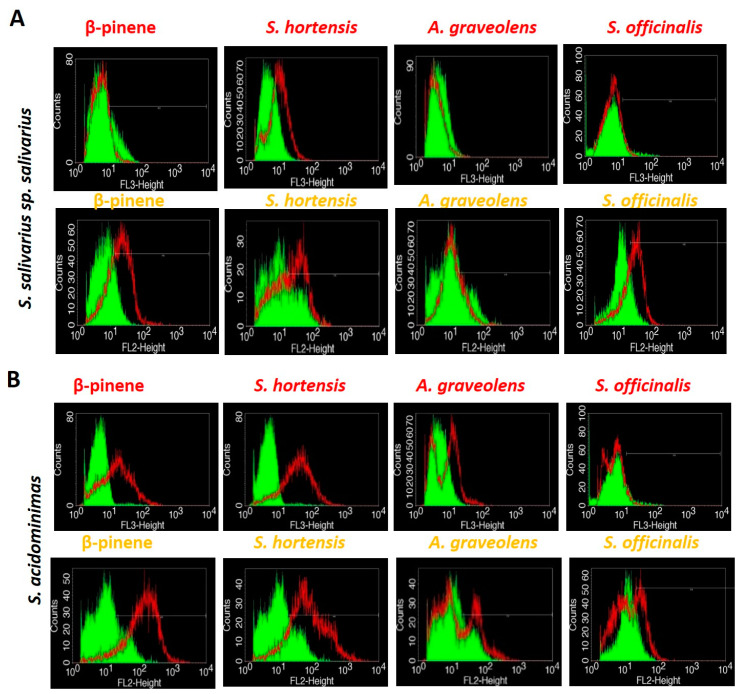
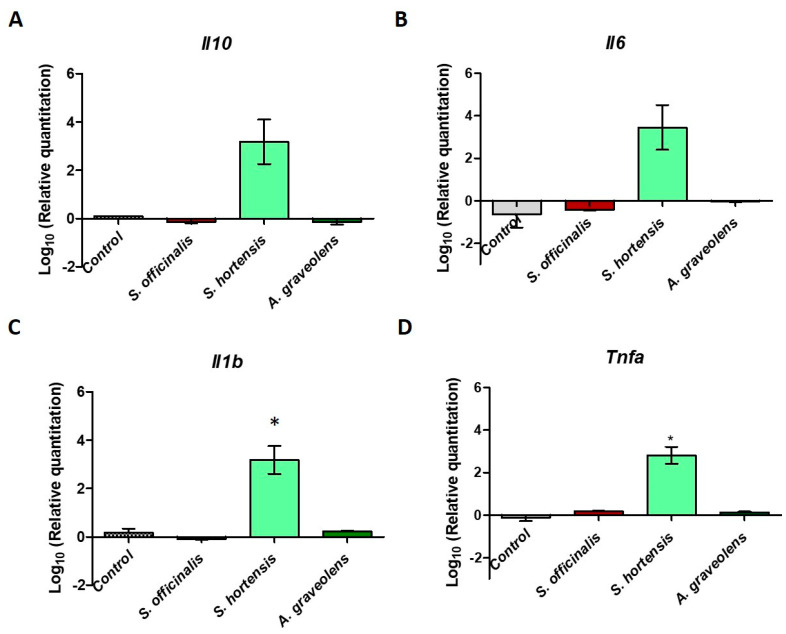
Due to their antimicrobial, immunomodulatory, antioxidant, and regenerative activities, culinary herbs have multiple medicinal uses, among which to prevent and treat oral diseases. The whole essential oils (EOs) have multiple advantages over purified components, such as a low probability to select for antimicrobial resistance, synergic effects of different components, and multi-pharmacological activities. In this study, we aimed to evaluate essential oils from Salvia officinalis (sage), Satureja hortensis (summer savory), and Anethum graveolens (dill) using an in vitro analysis of their antimicrobial activity against Gram-positive and Gram-negative bacterial strains isolated from the oral cavity of patients with periodontitis; the assays addressed both the planktonic and biofilm growth states and used culture-based approaches. Some of the tested EOs exhibited excellent bactericidal and antibiofilm activity, being active at concentrations as low as 0.08–1.36 mg/mL. Flow cytometry was used to investigate the potential mechanisms of their antibacterial activity and confirmed that the tested EOs act by permeabilizing the bacterial membrane and by inhibiting the activity of the efflux pumps. The immunomodulatory effect of the three EOs was determined by analyzing the gene expression profiles for pro- and anti-inflammatory cytokines of the THP-1 cells. The summer savory EO induced a clear proinflammatory effect, while the others did not significantly influence the cytokines profile of the tested cells. Taken together, our results indicate that summer savory EO and, to a lesser extent, sage and dill EOs could be used to inhibit bacteria involved in oral plaque formation and to reduce the expression of genes known to contribute to the inflammatory response using cell culture assessment.
Overview
The claims and statistics of this paper haven’t been checked yet.
Run the check — free, no account needed. It reads the open-access text and checks the sources it cites.
Integrity signals
Registry
Cites
Statistics
Figures
Verification
Claims the paper makes
The claims and statistics of this paper haven’t been checked yet.
Run the check — free, no account needed. It reads the open-access text and checks the sources it cites.
Claims other papers make about this one
Each is checked against this paper’s own text: does it say what the citing paper says it does?
In the citing paper
“By day 9, the cumulative antimicrobial activity of DEO may have peaked, with sustained interactions with microbial cells leading to a noticeable reduction in staphylococcal counts [96].”
From Preservative Potential of Anethum graveolens Essential Oil on Fish Fillet Quality and Shelf Life During Refrigerated Storage (2025) · cites this paper as [96]
Self-check
Percentages, sums and reported differences re-computed from the paper’s own numbers.
The self-check needs the paper’s full text.
Citations
Cites
Defining the healthy “core microbiome” of oral microbial communities
Zaura, E., Keijser, B. J., Huse, S. M., & Crielaard, W. (2009) · BMC Microbiology · doi:10.1186/1471-2180-9-259 · Cited by 1,323
Rosan, B., & Lamont, R. J. (2000) · Microbes and Infection · doi:10.1016/s1286-4579(00)01316-2 · Cited by 561
Research works printed but not linked: 46
- Bodeker, C., Bodeker, G., Ong, C.K., Grundy, C.K., Burford, G., and Shein, K. (2005). WHO Global Atlas of Traditional, Complementary and Alternative Medicine, World Health Organization. · DOI
- Juliani, 2012, Essential oils in combination and their antimicrobial properties, Molecules, 17, 3989, 10.3390/molecules17043989 · DOI
- Dhifi, W., Bellili, S., Jazi, S., Bahloul, N., and Mnif, W. (2016). Essential oils’ chemical characterization and investigation of some biological activities: A critical review. Medicines, 3. · DOI
- Teles, 2011, Mechanisms involved in the association between periodontal diseases and cardiovascular disease, Oral Dis., 17, 450, 10.1111/j.1601-0825.2010.01784.x · DOI
- Meurman, 2011, Periodontal disease and diabetes-Review of the Literature, Med. Oral Patol. Oral Cir. Bucal, 16, e722
- Ali, 2011, Autoimmune responses in periodontal diseases, Autoimmun. Rev., 10, 426, 10.1016/j.autrev.2010.04.005 · DOI
- Abnet, 2001, Prospective study of tooth loss and incident esophageal and gastric cancers in China, Cancer Causes Control, 12, 847, 10.1023/A:1012290009545 · DOI
- Hujoel, 2003, An exploration of the periodontitis–cancer association, Ann. Epidemiol., 13, 312, 10.1016/S1047-2797(02)00425-8 · DOI
- Dodd, 2003, Tooth loss, pancreatic cancer, and Helicobacter pylori, Am. J. Clin. Nutr., 78, 176, 10.1093/ajcn/78.1.176 · DOI
- Chen, 2018, Oral microbiota of periodontal health and disease and their changes after nonsurgical periodontal therapy, ISME J., 12, 1210, 10.1038/s41396-017-0037-1 · DOI
- Rosier, B.T., De Jager, M., Zaura, E., and Krom, B.P. (2014). Historical and contemporary hypotheses on the development of oral diseases: Are we there yet?. Front. Cell. Infect. Microbiol., 4. · DOI
- Shaddox, 2010, Treating chronic periodontitis: Current status, challenges, and future directions, Clin. Cosmet. Investig. Dent., 2, 79, 10.2147/CCIDE.S7712 · DOI
- Zhou, W., Zhang, X., Zhu, C.L., He, Z.Y., Liang, J.P., and Song, Z.C. (2016). Melatonin receptor agonists as the “perioceutics” agents for periodontal disease through modulation of porphyromonas gingivalis virulence and inflammatory response. PLoS ONE, 11. · DOI
- Mittal, 2019, Essential oils: An impending substitute of synthetic antimicrobial agents to overcome antimicrobial resistance, Curr. Drug Targets, 20, 605, 10.2174/1389450119666181031122917 · DOI
- Delcaru, C., Alexandru, I., Podgoreanu, P., Grosu, M., Stavropoulos, E., Chifiriuc, M.C., and Lazar, V. (2016). Microbial biofilms in urinary tract infections and prostatitis: Etiology, pathogenicity, and combating strategies. Pathogens, 5. · DOI
- Dagli, 2015, Essential oils, their therapeutic properties, and implication in dentistry: A review, J. Int. Soc. Prev. Community Dent., 5, 335, 10.4103/2231-0762.165933 · DOI
- Mahboubi, 2011, Chemical composition and antimicrobial activity of Satureja hortensis and Trachyspermum copticum essential oil, Iran. J. Microbiol., 3, 194
- Yazdanpanah, 2014, Antifungal activity of Satureja hortensis L. essential oil against Alternaria citri, Eur. J. Exp. Biol., 4, 399
- Sefidkon, 2006, Influence of drying and extraction methods on yield and chemical composition of the essential oil of Satureja hortensis, Food Chem., 99, 19, 10.1016/j.foodchem.2005.07.026 · DOI
- Kazemi, 2015, Chemical composition of the essential oils of Gnethum graveolens L., Bangladesh J. Bot., 44, 159, 10.3329/bjb.v44i1.22742 · DOI
- Popescu, 2010, Chemical composition of the volatile oil from different plant parts of Anethum graveolens L. (Umbelliferae) cultivated in Romania, Farmacia, 58, 594
- Thormar, H. (2011). Chemistry and bioactivity of essential oils. Lipids and Essential Oils as Antimicrobial Agents, John Wiley & Sons, Ltd. · DOI
- Yumoto, H., Hirota, K., Hirao, K., Ninomiya, M., Murakami, K., Fujii, H., and Miyake, Y. (2019). The pathogenic factors from oral streptococci for systemic diseases. Int. J. Mol. Sci., 20. · DOI
- Whittle, E.E., Legood, S.W., Alav, I., Dulyayangkul, P., Overton, T.W., and Blair, J.M.A. (2019). Flow cytometric analysis of efflux by dye accumulation. Front. Microbiol., 10. · DOI
- Garvey, 2008, The efflux pump inhibitor reserpine selects multidrug-resistant Streptococcus pneumoniae strains that overexpress the ABC transporters PatA and PatB, Antimicrob. Agents Chemother., 52, 1677, 10.1128/AAC.01644-07 · DOI
- Zeng, H., Liu, J., and Ling, J. (2017). Efflux inhibitor suppresses Streptococcus mutans virulence properties. FEMS Microbiol. Lett., 364. · DOI
- Chanput, 2014, THP-1 cell line: An in vitro cell model for immune modulation approach, Int. Immunopharmacol., 23, 38, 10.1016/j.intimp.2014.08.002 · DOI
- Iyer, 2012, Role of interleukin 10 transcriptional regulation in inflammation and autoimmune disease, Crit. Rev. Immunol., 32, 23, 10.1615/CritRevImmunol.v32.i1.30 · DOI · Paper page
- Poole, 1995, Contribution of interleukin-1 to the inflammation-induced increase in nerve growth factor levels and inflammatory hyperalgesia, Br. J. Pharm., 115, 1265, 10.1111/j.1476-5381.1995.tb15035.x · DOI
- Palombo, E.A. (2011). Traditional medicinal plant extracts and natural products with activity against oral bacteria: Potential application in the prevention and treatment of oral diseases. Evid.-Based Complementary Altern. Med., 2011. · DOI
- Thormar, H. (2011). Antibacterial and antifungal activities of essential oils. Lipids and Essential Oils as Antimicrobial Agents, John Wiley & Sons, Ltd. · DOI
- Narayanan, 2015, Salvia officinalis in dentistry, Dent. Hypotheses, 6, 27, 10.4103/2155-8213.150870 · DOI
- Keskin, 2015, Antibacterial and antigelatinolytic effects of Satureja hortensis L. essential oil on epithelial cells exposed to Fusobacterium nucleatum, J. Med. Food, 18, 503, 10.1089/jmf.2013.0052 · DOI
- Iriti, 2015, Composition, cytotoxic and antimicrobial activities of satureja intermedia C.A.Mey essential oil, Int. J. Mol. Sci., 6, 17812
- Zomorodian, K., Ghadiri, P., Saharkhiz, M.J., Moein, M.R., Mehriar, P., Bahrani, F., Golzar, T., Pakshir, K., and Fani, M.M. (2015). Antimicrobial activity of seven essential oils from Iranian aromatic plants against common causes of oral infections. Jundishapur J. Microbiol., 8. · DOI
- Palmer, 2003, Coaggregation-mediated interactions of streptococci and actinomyces detected in initial human dental plaque, J. Bacteriol., 185, 3400, 10.1128/JB.185.11.3400-3409.2003 · DOI
- Jenkinson, 2005, Oral microbial communities in sickness and in health, Trends Microbiol., 13, 589, 10.1016/j.tim.2005.09.006 · DOI
- Gilbert, 1997, Biofilm susceptibility to antimicrobials, Adv. Dent. Res., 11, 160, 10.1177/08959374970110010701 · DOI
- Projan, 2002, Antimicrobials: New solutions badly needed, Curr. Opin. Microbiol., 5, 463, 10.1016/S1369-5274(02)00364-8 · DOI
- Gao, 2003, Production of substances by Medicago truncatula that affect bacterial quorum sensing, Mol. Plant-Microbe Interact., 16, 827, 10.1094/MPMI.2003.16.9.827 · DOI
- Cox, 2000, The mode of antimicrobial action of the essential oil of Melaleuca alternifolia (tea tree oil), J. Appl. Microbiol., 88, 170, 10.1046/j.1365-2672.2000.00943.x · DOI · Paper page
- Chaffanel, 2015, Resistance genes and genetic elements associated with antibiotic resistance in clinical and commensal isolates of streptococcus salivarius, Appl. Environ. Microbiol., 81, 4155, 10.1128/AEM.00415-15 · DOI
- Dahmane, N., Libante, V., Charron-Bourgoin, F., Guedon, E., Guedon, G., Leblond-Bourget, N., and Payot, S. (2017). Diversity of integrative and conjugative elements of streptococcus salivarius and their intra- and interspecies transfer. Appl. Environ. Microbiol., 83. · DOI
- Radulescu, 2004, Capillary gas chromatography-mass spectrometry of volatile and semi-volatile compounds of Salvia officinalis, J. Chromatogr. A, 1027, 121, 10.1016/j.chroma.2003.11.046 · DOI
- Fit, 2011, In vitro evaluation of the antimicrobial properties of some plant essential oils against clinical isolates of Prototheca spp., Rom. Biotechnol. Lett., 16, 6146
- Najee, 2018, Antifungal activity of some medicinal plant extracts against Candida albicans nosocomial isolates, Rom. Biotechnol. Lett., 23, 14073
Cited by
Tayel, A., Hassanin, F. S., Edris, S. N., Hamad, A., & Sabeq, I. I. (2025) · Foods · doi:10.3390/foods14091591 · Cited by 7
Metadata
- Authors
- Popa, M., Măruțescu, L., Oprea, E., Bleotu, C., Kamerzan, C., Chifiriuc, M. C., & Grădișteanu Pircalabioru, G.
- Venue
- Antibiotics
- Publisher
- MDPI AG
- Published
- 2020-07-21
- Volume
- 9
- Issue
- 7
- Pages
- 428
- ISSN
- 2079-6382
- PMC
- PMC7399839
- Cited by
- 27
- References
- 2
- Language
- en
About these checks
Registry, retraction, Cites and statistics results are computed, not judged, with one exception: a printed reference that no index lists is read once by a model before it counts as a citation error. Claims are extracted by a model and kept only when their quote appears verbatim in the text; each cited source is then checked, with a model’s help, for whether it says what the claim relies on. Those verdicts can be wrong — read the claim’s quote and the cited source before relying on one.
Statistics and arithmetic are recomputed, not judged.
Confidence bands are shown only for fields calibrated on our annotated test set. None is calibrated yet, so no band is shown.
What counts as a claim ›How we measure confidence ›How we check this ›
Are you an author, or do you see a problem with this page? Request a review
How to cite
Cite CoChat for the checks on this page, and the paper for its own findings.
- This page
- CoChat. (2026). Citation check: In Vitro Evaluation of the Antimicrobial and Immunomodulatory Activity of Culinary Herb Essential Oils as Potential Perioceutics. https://app.cochat.ai/papers/10.3390/antibiotics9070428
- The paper
- Popa, M., Măruțescu, L., Oprea, E., Bleotu, C., Kamerzan, C., Chifiriuc, M. C., & Grădișteanu Pircalabioru, G. (2020). In Vitro Evaluation of the Antimicrobial and Immunomodulatory Activity of Culinary Herb Essential Oils as Potential Perioceutics. Antibiotics. https://doi.org/10.3390/antibiotics9070428
Data sources
Bibliographic data: Semantic Scholar, OpenAlex, Crossref.
Contains information from the Semantic Scholar Academic Graph Datasets, made available under the ODC Attribution License (ODC-BY 1.0).
Semantic Scholar’s data is described in: Kinney, R., et al. (2023). The Semantic Scholar Open Data Platform. arXiv:2301.10140.
