

Transfer Learning Strategies for Deep Learning-based PHM Algorithms
Open accessThe DOI matches its Crossref record; 17 of the 17 references it cites were found in a registry or an index.
Abstract
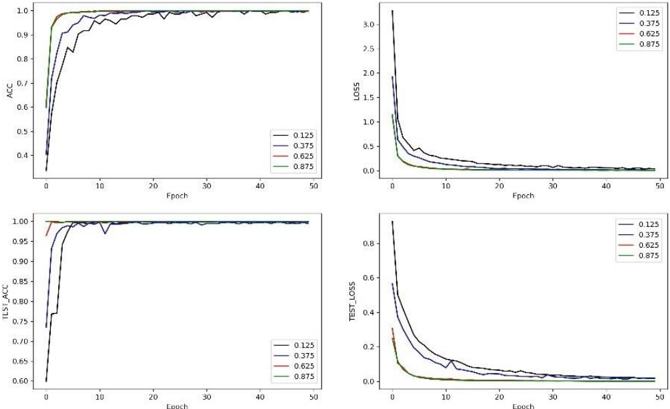
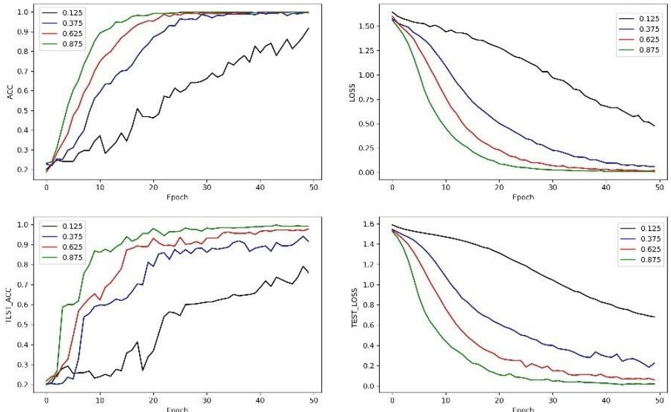
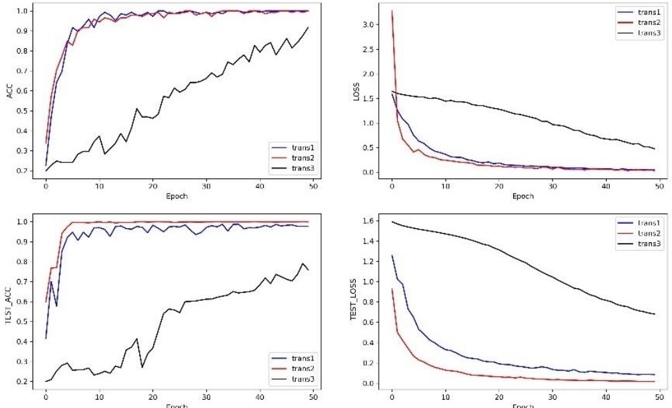
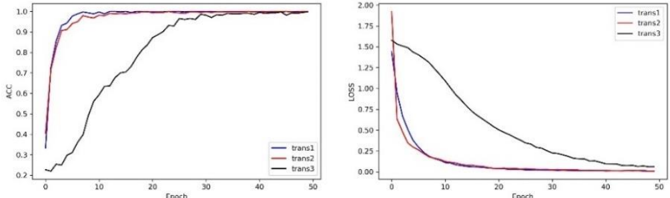
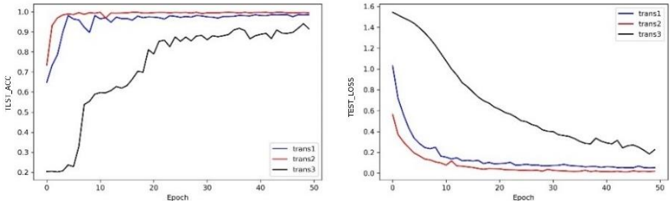
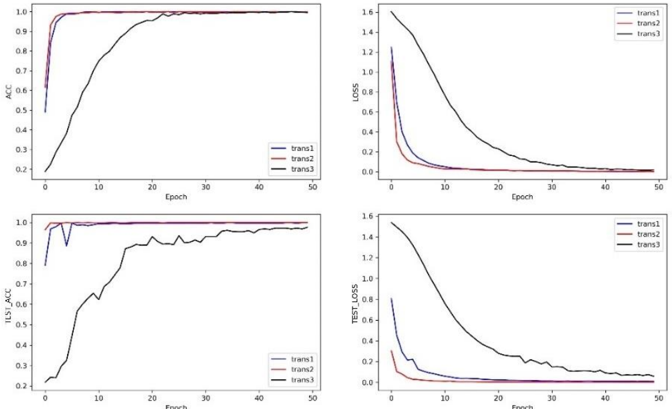
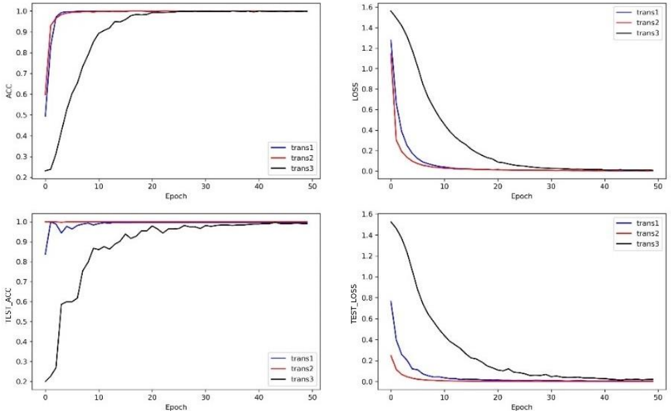
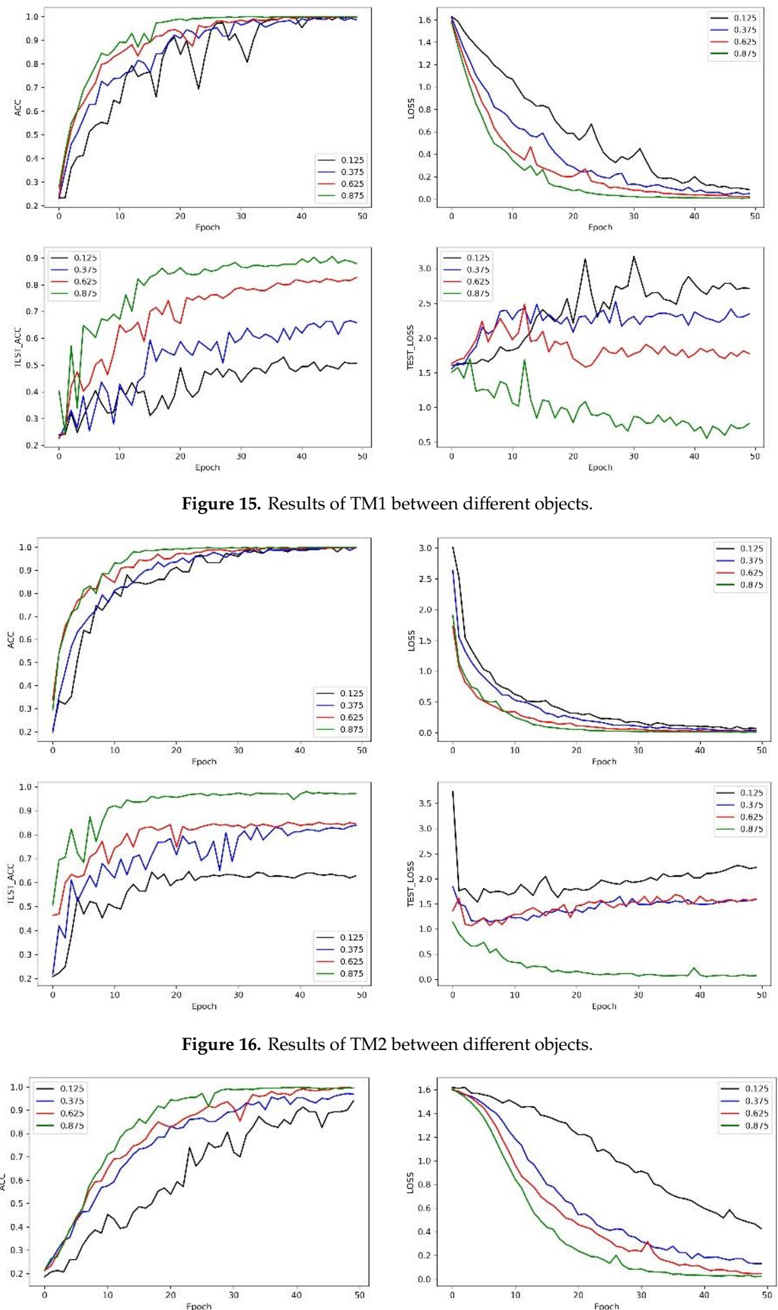
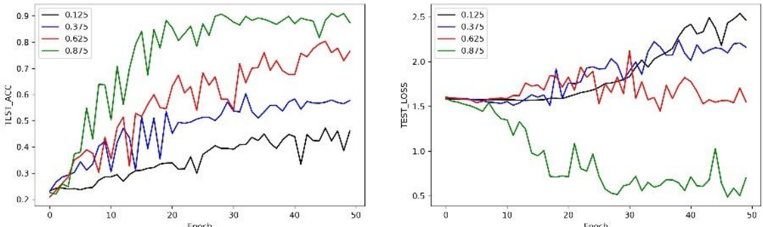
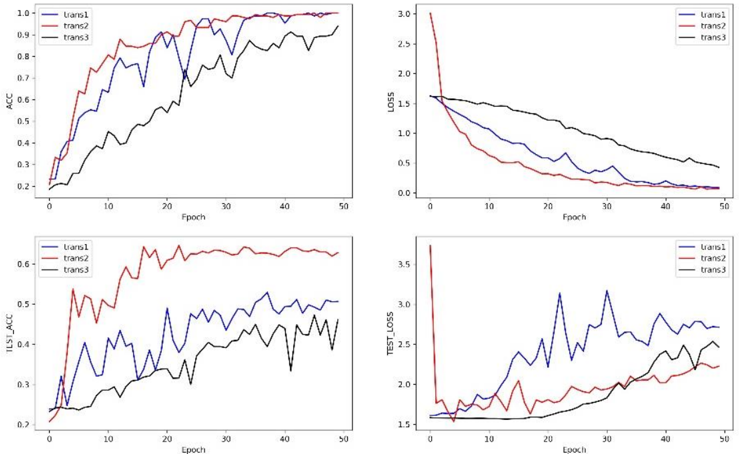
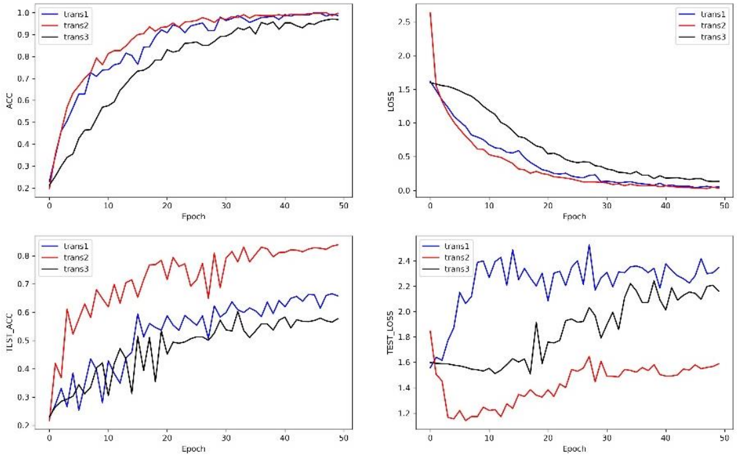
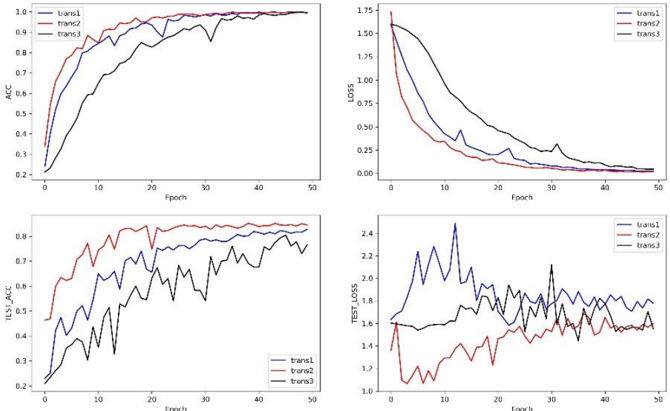
As we enter the era of big data, we have to face big data generated by industrial systems that are massive, diverse, high-speed, and variability. In order to effectively deal with big data possessing these characteristics, deep learning technology has been widely used. However, the existing methods require great human involvement that is heavily depend on domain expertise and may thus be non-representative and biased from task to similar task, so for a wide variety of prognostic and health management (PHM) tasks, how to apply the developed deep learning algorithms to similar tasks to reduce the amount of development and data collection costs has become an urgent problem. Based on the idea of transfer learning and the structures of deep learning PHM algorithms, this paper proposes two transfer strategies via transferring different elements of deep learning PHM algorithms, analyzes the possible transfer scenarios in practical application, and proposes transfer strategies applicable in each scenario. At the end of this paper, the deep learning algorithm of bearing fault diagnosis based on convolutional neural networks (CNN) is transferred based on the proposed method, which was carried out under different working conditions and for different objects, respectively. The experiments verify the value and effectiveness of the proposed method and give the best choice of transfer strategy.
Overview
The claims and statistics of this paper haven’t been checked yet.
Free: it reads the open-access text and checks the first 5 claims that cite a source we can check. Create a free account to check every claim.
Integrity signals
Registry
Cites
Statistics
Figures
Verification
Claims the paper makes
The claims and statistics of this paper haven’t been checked yet.
Free: it reads the open-access text and checks the first 5 claims that cite a source we can check. Create a free account to check every claim.
Claims other papers make about this one
Each is checked against this paper’s own text: does it say what the citing paper says it does?
The cited source says what the claim attributes to it.
In the citing paper
“Transfer learning focuses on how to store the knowledge or solution obtained when solving a problem and apply it to different but related problems so that the amount of data collection and training costs can be reduced [144].”
From Vibration Analysis for Machine Monitoring and Diagnosis: A Systematic Review (2021) · cites this paper as [144]
Self-check
Percentages, sums and reported differences re-computed from the paper’s own numbers.
The self-check needs the paper’s full text.
Citations
Cites
Pan, S. J., & Yang, Q. (2010) · IEEE Transactions on Knowledge and Data Engineering · doi:10.1109/tkde.2009.191 · Cited by 23,387 · cited 1×
“It is undoubtedly expensive to collect enough fault data available for training to reconstruct the fault diagnosis classifier, and it is difficult to directly train a satisfactory fault diagnosis classifier for the collection of a small amount of data [9].”
BackgroundA Survey on Deep Transfer Learning
Tan, C., Sun, F., Kong, T., Zhang, W., Yang, C., & Liu, C. (2018) · Lecture Notes in Computer Science · doi:10.1007/978-3-030-01424-7_27 · Cited by 3,165
Self-citationDeep visual domain adaptation: A survey
Wang, M., & Deng, W. (2018) · Neurocomputing · doi:10.1016/j.neucom.2018.05.083 · Cited by 2,209
Maximum Classifier Discrepancy for Unsupervised Domain Adaptation
Saito, K., Watanabe, K., Ushiku, Y., & Harada, T. (2018) · 2018 IEEE/CVF Conference on Computer Vision and Pattern Recognition · doi:10.1109/cvpr.2018.00392 · Cited by 2,161
Lee, J., Wu, F., Zhao, W., Ghaffari, M., Liao, L., & Siegel, D. (2014) · Mechanical Systems and Signal Processing · doi:10.1016/j.ymssp.2013.06.004 · Cited by 1,594 · cited 1×
“Diagnostics are also included in prognostics and health management [2].”
BackgroundA New Deep Transfer Learning Based on Sparse Auto-Encoder for Fault Diagnosis
Wen, L., Gao, L., & Li, X. (2019) · IEEE Transactions on Systems, Man, and Cybernetics: Systems · doi:10.1109/tsmc.2017.2754287 · Cited by 1,095
Yang, B., Lei, Y., Jia, F., & Xing, S. (2019) · Mechanical Systems and Signal Processing · doi:10.1016/j.ymssp.2018.12.051 · Cited by 879
Deep Model Based Domain Adaptation for Fault Diagnosis
Lu, W., Liang, B., Cheng, Y., Meng, D., Yang, J., & Zhang, T. (2017) · IEEE Transactions on Industrial Electronics · doi:10.1109/tie.2016.2627020 · Cited by 761 · cited 1×
“Lu [13] proposed a deep neural network for fault diagnosis-based domain adaption in 2017.”
BackgroundA sparse auto-encoder-based deep neural network approach for induction motor faults classification
Sun, W., Shao, S., Zhao, R., Yan, R., Zhang, X., & Chen, X. (2016) · Measurement · doi:10.1016/j.measurement.2016.04.007 · Cited by 698
Failure diagnosis using deep belief learning based health state classification
Tamilselvan, P., & Wang, P. (2013) · Reliability Engineering & System Safety · doi:10.1016/j.ress.2013.02.022 · Cited by 630
Cited by
Luo, K., Chen, X., Zheng, H., & Shi, Z. (2022) · Journal of Energy Chemistry · doi:10.1016/j.jechem.2022.06.049 · Cited by 292
Vibration Analysis for Machine Monitoring and Diagnosis: A Systematic Review
Mohd Ghazali, M. H., & Rahiman, W. (2021) · Shock and Vibration · doi:10.1155/2021/9469318 · Cited by 249
“…obtained when solving a problem and apply it to different but related problems so that the amount of data collection and training costs can be reduced [144]. proposed method is robust, and there is no requirement for further training when supplied with new datasets from different working conditions.”
BackgroundChen, H., Luo, H., Huang, B., Jiang, B., & Kaynak, O. (2024) · IEEE Transactions on Neural Networks and Learning Systems · doi:10.1109/tnnls.2023.3290974 · Cited by 219
“Furthermore, transfer learning was extended to the application of prognostic and health management tasks in [78].”
BackgroundAlbelwi, S. (2022) · Entropy · doi:10.3390/e24040551 · Cited by 150
“Despite this benefit, this type of learning only works well if the original and target tasks are from the same domain [9].”
A Systematic Literature Review on Transfer Learning for Predictive Maintenance in Industry 4.0
Azari, M. S., Flammini, F., Santini, S., & Caporuscio, M. (2023) · IEEE Access · doi:10.1109/access.2023.3239784 · Cited by 155
Image classification and prediction using transfer learning in colab notebook
Praveen Gujjar, J., Kumar, H. R. P., & Chiplunkar, N. N. (2021) · Global Transitions Proceedings · doi:10.1016/j.gltp.2021.08.068 · Cited by 104
Current trends and opportunities in the methodology of electrodermal activity measurement
Tronstad, C., Amini, M., Bach, D. R., & Martinsen, Ø. G. (2022) · Physiological Measurement · doi:10.1088/1361-6579/ac5007 · Cited by 105
“One increasingly popular approach in the fi eld of machine learning is transfer learning , where knowledge from developed models trained in one domain can be employed to another, and in this way may offer a technical solution to the challenge of small datasets ( Yang et al 2020 ) .”
A Survey of Deep Learning Based Models for Human Activity Recognition
Khan, N. S., & Ghani, M. S. (2021) · Wireless Personal Communications · doi:10.1007/s11277-021-08525-w · Cited by 69
“It is a process of storing and utilizing the previous knowledge to apply in solving other different but related problems to improve the generalization [98] and solve the insufficient training data problem [99].”
MethodLarge scale foundation models for intelligent manufacturing applications: a survey
Zhang, H., Semujju, S. D., Wang, Z., Lv, X., Xu, K., Wu, L., Jia, Y., Wu, J., Liang, W., Zhuang, R., et al. (2025) · Journal of Intelligent Manufacturing · doi:10.1007/s10845-024-02536-7 · Cited by 83
“In this context, deep learning methods, specifically those based on neural network models such as CNNs [218], RNNs [219], and LSTMs [220], have demonstrated considerable improvements in PHM.”
Polverino, L., Abbate, R., Manco, P., Perfetto, D., Caputo, F., Macchiaroli, R., & Caterino, M. (2023) · International Journal of Engineering Business Management · doi:10.1177/18479790231186848 · Cited by 52
“Vibration seems to be the most analyzed variable for bearings, 31 – 33, 43, For example, Wu et al. 73 use twelve different time-domain extraction features to form a single feature vector as an input to a neural network: VPP, standard deviation, variance, mean, RMS, ARV, form factor, crest factor,…”
BackgroundAdvancements in bearing remaining useful life prediction methods: a comprehensive review
Song, L., Lin, T., Jin, Y., Zhao, S., Li, Y., & Wang, H. (2024) · Measurement Science and Technology · doi:10.1088/1361-6501/ad5223 · Cited by 51
“Hence, it is necessary to consider effective regularization methods for different operating conditions and address the issue of inconsistent data distribution [34, 35].”
Fu, H., Zhao, H., Jiang, J., Zhang, Y., Liu, G., Xiao, W., Du, S., Guo, W., & Liu, X. (2024) · Forest Ecology and Management · doi:10.1016/j.foreco.2024.121712 · Cited by 55
A Comprehensive Overview and Analysis of Large Language Models: Trends and Challenges
Mohammed, A., & Kora, R. (2025) · IEEE Access · doi:10.1109/access.2025.3573955 · Cited by 53
“Here are three different strategies to consider, designed to suit different scenarios and data availability [196]: Full fine-tuning: This approach uses the target data to fine-tune across the entire model.”
Artificial intelligence enabled smart machining and machine tools
Chuo, Y. S., Lee, J., Mun, C. H., Noh, I., Rezvani, S., Kim, D. C., Lee, J., Lee, S. W., & Park, S. S. (2022) · Journal of Mechanical Science and Technology · doi:10.1007/s12206-021-1201-0 · Cited by 42
“This kind of method is called transfer learning, and several studies have been reported that transfer learning was effective in AI modeling for fault diagnosis of mechanical parts [136-138].”
MethodGrover, C., & Turk, N. (2021) · Engineering Science and Technology an International Journal · doi:10.1016/j.jestch.2021.08.006 · Cited by 41
Anwarsha, A., & Babu, T. N. (2022) · Journal of Vibroengineering · doi:10.21595/jve.2022.22366 · Cited by 38
“It also aids in the efficiency and reliability of an asset [1], [2].”
BackgroundUsmani, I. A., Qadri, M. T., Zia, R., Alrayes, F. S., Saidani, O., & Dashtipour, K. K. (2023) · Electronics · doi:10.3390/electronics12040964 · Cited by 36
Lee, K., Han, S., Pham, V. H., Cho, S., Choi, H., Lee, J.-W., Noh, I., & Lee, S. W. (2021) · Applied Sciences · doi:10.3390/app11052370 · Cited by 37
“[23] used a CNN and transfer learning for fault diagnosis of rotating machinery under different working conditions.”
MethodKaji, M., Parvizian, J., & van de Venn, H. W. (2020) · Applied Sciences · doi:10.3390/app10248948 · Cited by 32
Eye-color and Type-2 diabetes phenotype prediction from genotype data using deep learning methods
Muneeb, M., & Henschel, A. (2021) · BMC Bioinformatics · doi:10.1186/s12859-021-04077-9 · Cited by 28
Braig, M., & Zeiler, P. (2022) · IEEE Access · doi:10.1109/access.2022.3233220 · Cited by 24
“The following applications for condition diagnosis can be found in the literature: bearings [66], [99], [100], [101], aircraft engines [102], quadrotor drones [103], batteries [88], [104], [105], gas turbines [106], tanks [107], and gearboxes and rotors [108].”
BackgroundMethodSalinas, N. R. P., Baratchi, M., van Rijn, J. V., & Vollrath, A. (2021) · ECML/PKDD · doi:10.1007/978-3-030-86517-7_28 · Cited by 26
Deep Learning-Based Classification of Melanoma and Non-Melanoma Skin Cancer
Alabdulkreem, E. A., Elmannai, H., Saad, A., Kamil, I. S., & Elaraby, A. E. (2024) · Traitement du signal · doi:10.18280/ts.410117 · Cited by 21
E-Commerce Product Image Classification using Transfer Learning
Jha, B. K., Sivasankari, G. G., & Venugopal, K. R. (2021) · International Conference on Computing Methodologies and Communication (ICCMC) · doi:10.1109/iccmc51019.2021.9418371 · Cited by 19
“Yang F et al. [13] have developed a deep learning-based prognostic and health management (PHM) algorithm.”
BackgroundFrom viral assembly to host interaction: AFM’s contributions to virology
Ray, A., Simpson, J. D., Demir-Yilmaz, I., Gisbert, V. G., Gomes, D. B., Amadei, F., & Alsteens, D. (2024) · Journal of Virology · doi:10.1128/jvi.00873-24 · Cited by 19
Survey on machine learning applied to CNC milling processes
Pasandidehpoor, M., Nogueira, A. R., Mendes-Moreira, J., & Sousa, R. (2025) · Advances in Manufacturing · doi:10.1007/s40436-025-00564-x · Cited by 18
Kaji, M., Parvizian, J., & van de Venn, H. W. (2020) · Preprints.org · doi:10.20944/preprints202011.0591.v1 · Cited by 14
“In recent years, deep learning has emerged as a powerful tool to extract the representative feature from the collected signals [30,31].”
BackgroundAn investigation into the deep learning approach in sentimental analysis using graph-based theories
Kentour, M., & Lu, J. (2021) · PLoS ONE · doi:10.1371/journal.pone.0260761 · Cited by 11
“Imaging is one of the emerging fields in DL, the majority of works tried to explain imaging systems from specific problems [70, 71].”
BackgroundKumar, M. P., Tu, Z.-X., Chen, H.-C., & Chen, K.-C. J. (2024) · IEEE Transactions on Instrumentation and Measurement · doi:10.1109/tim.2024.3476610 · Cited by 11
Afzal, S., Rauf, M., Ashraf, S., Ayob, S. M., & Arfeen, Z. A. (2025) · Diagnostics · doi:10.3390/diagnostics15030378 · Cited by 10
Classification COVID-19 Based on Enhancement X-Ray Images and Low Complexity Model
Saad, A., Kamil, I. S., Alsayat, A., & Elaraby, A. E. (2022) · Computers, materials & continua/Computers, materials & continua (Print) · doi:10.32604/cmc.2022.023878 · Cited by 10
Kinematic Calibration for the 3-UPS/S Shipborne Stabilized Platform Based on Transfer Learning
Xu, M. G., Tian, W., & Zhang, X. (2024) · Journal of Marine Science and Engineering · doi:10.3390/jmse12020275 · Cited by 9
Kumar, M. P., Tu, Z.-X., Chen, H.-C., & Chen, K.-C. J. (2024) · IEEE Transactions on Instrumentation and Measurement · doi:10.1109/tim.2024.3480201 · Cited by 8
“In mechanical fault diagnosis and PHM, DL models struggle to generalize across diverse equipment, environments, and operating conditions, compromising their reliability [17].”
BackgroundLin, H.-M., Lin, C., Wang, C., & Tsai, M. (2022) · Applied Sciences · doi:10.3390/app12199670 · Cited by 6
Monea, C. (2022) · Expert Systems with Applications · doi:10.1016/j.eswa.2022.118093 · Cited by 6
Scale-Adaptive Deep Matching Network for Constrained Image Splicing Detection and Localization
Xu, S., Lv, S., Liu, Y., Xia, C. Y., & Gan, N. (2022) · Applied Sciences · doi:10.3390/app12136480 · Cited by 6
Tian, W., Guo, X., Xu, M., & Zhang, X. (2025) · IEEE Transactions on Neural Networks and Learning Systems · doi:10.1109/tnnls.2025.3586458 · Cited by 5
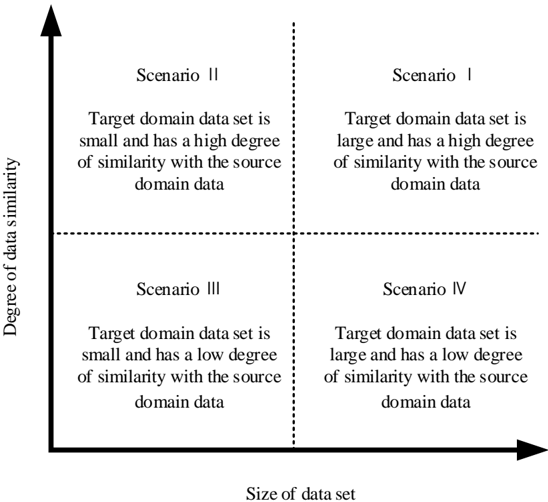
“For example, Yang et al. [33] qualitatively classified deep learning-based prognostics and health management (PHM) algorithms into four scenarios based on the similarity between the two domains and provided recommendations for transfer strategies for di ff erent scenarios.”
Liu, Y., Chen, L., Shangguan, D., & Yu, C. (2025) · Machines · doi:10.3390/machines13080708 · Cited by 5
Design of Real-Time Object Detection in Mobile Robot for Volcano Monitoring Application
Evita, M., Mustikawati, S. T., & Djamal, M. (2022) · Journal of Physics Conference Series · doi:10.1088/1742-6596/2243/1/012038 · Cited by 5
Kim, B., Kim, C., & Ha, S. (2021) · Sensors · doi:10.3390/s21217357 · Cited by 5
Efficient Failure Prediction: A Transfer Learning-Based Solution for Imbalanced Data Classification
Çalışkan, A., Badem, H., Walsh, J. L., & Riordan, D. (2025) · Electronics · doi:10.3390/electronics14244957 · Cited by 3
Afzal, S., & Rauf, M. (2025) · Biomedical Signal Processing and Control · doi:10.1016/j.bspc.2025.107829 · Cited by 3
Mitigate the Negative TL using Adaptive Thresholding for Fault Diagnosis
Kumar, P., & Chen, K.-C. J. (2023) · IEEE International Conference on Omni-layer Intelligent Systems (COINS) · doi:10.1109/coins57856.2023.10189313 · Cited by 2
Kumar, P., Tu, Z.-X., & Chen, K.-C. J. (2024) · IEEE International Conference on Artificial Intelligence Circuits and Systems (AICAS) · doi:10.1109/aicas59952.2024.10595914 · Cited by 2
Analysis of Trustworthiness in Machine Learning and Deep Learning
Kentour, M., & Lu, J. (2021) · University of Huddersfield Repository (University of Huddersfield) · Cited by 2
Tieng, H. (2022) · Journal of Material Sciences & Manfacturing Research · doi:10.47363/jmsmr/2022(3)140 · Cited by 1
Design and Implementation of Ore Classifier Using Transfer Learning Approach
Layson, C. O., Rosas, R., Demetillo, A. T., Calimpusan, R. C. O., Dellosa, J. T., & Mendoza, R. N. (2024) · International Conference on Emerging Technologies and Innovation for Sustainability (EmergIN) · doi:10.1109/emergin63207.2024.10960837 · Cited by 1
“Recent advancements in machine learning, particularly transfer learning, offer a promising solution [17]-[20].”
Deep Learning for Human Activity Recognition: Trends, Challenges, and Edge-Centric Deployments
Kumar, D., & Parvees, M. Y. M. (2025) · International Conference on Inventive Research in Computing Applications (ICIRCA) · doi:10.1109/icirca65293.2025.11089712 · Cited by 1
“Second, owing to the availability of edge computing, alongside affordable hardware accelerators, the need of investigation into the optimization of deep learning based HAR models for lightweight and energy efficient operation without sacrificing performance [5] grows as well.”
Munyaneza, O., Yuk, D.-G., & Sohn, J. W. (2025) · International Journal of Precision Engineering and Manufacturing-Smart Technology · doi:10.57062/ijpem-st.2024.00185 · Cited by 1
Kaji, M., Parvizian, J., & van de Venn, H. W. (2020) · Preprints.org · doi:10.20944/preprints202011.0591.v2 · Cited by 1
Jianfeng, W., Liu, B., & Liu, S. (2023) · Lecture notes in electrical engineering · doi:10.1007/978-981-19-7652-0_47
AFM automation for mechanically characterizing biological samples at different scales
Alonso, J. L. (2023) · theses.fr (ABES) · doi:10.70675/434a99a8zffc9z459cz8970z588186d68543
Deep learning representations for prognostics and health management
Chaoub, A. (2024) · theses.fr (ABES) · doi:10.70675/62d51b8ezdccdz447az9dcczb945ec530828
The Analysis of Creative Product Design Under Deep Style Transfer Algorithm
Chen, S. (2026) · International Journal of Information Technologies and Systems Approach · doi:10.4018/ijitsa.409330
Zuberi, M. J. S., Laarabi, H., Smith, S., & Shehabi, A. (2026) · Energy and AI · doi:10.1016/j.egyai.2026.100789
Metadata
- Authors
- Yang, F., Zhang, W., Tao, L., & Ma, J.
- Affiliations
- National Key Laboratory of Science and Technology on Reliability and Environmental Engineering (CN)
- Beihang University (CN)
- Corresponding author
- Ma, Jian
- Venue
- Applied Sciences
- Publisher
- MDPI AG
- Published
- 2020-03-30
- Volume
- 10
- Issue
- 7
- Pages
- 2361
- ISSN
- 2076-3417 (ISSN-L)
- OpenAlex
- W3015120339
- Cited by
- 53
- References
- 17
- Citations by year
- 2026: 2 · 2025: 10 · 2024: 10 · 2023: 6 · 2022: 12 · 2021: 10 · 2020: 3
- FWCI
- 3.83
- Type
- journal article
- Language
- en
- Open access
- gold
- dx.doi.org
- Licence
- Locations
- Applied Sciences (publishedVersion, cc-by)
- DOAJ (DOAJ: Directory of Open Access Journals) (submittedVersion, cc-by-sa)
- Funders
- National Natural Science Foundation of China (61973011, 61803013, 51605014)
- Fundamental Research Funds for the Central Universities (ZG140S1993)
- National key Laboratory of Science and Technology on Reliability and Environmental Engineering (6142004180501, WDZC2019601A304, 6142004190501)
- R&D projects in key areas of Guangdong Province (2018B010108005)
- Capital Science & Technology Leading Talent Program (Z191100006119029)
- Research Fund (61400020401)
- Topics
- Physical Sciences › Engineering › Control and Systems Engineering › Machine Fault Diagnosis Techniques
- Physical Sciences › Engineering › Safety, Risk, Reliability and Quality › Reliability and Maintenance Optimization
- Physical Sciences › Engineering › Control and Systems Engineering › Fault Detection and Control Systems
- Keywords
- transfer learning, prognostics and health management, deep learning, bearing fault diagnosis, convolutional neural networks, transfer strategy, industrial big data
About these checks
Registry, retraction, Cites and statistics results are computed, not judged, with one exception: a printed reference that no index lists is read once by a model before it counts as a citation error. Claims are extracted by a model and kept only when their quote appears verbatim in the text; each cited source is then checked, with a model’s help, for whether it says what the claim relies on. Those verdicts can be wrong — read the claim’s quote and the cited source before relying on one.
Statistics and arithmetic are recomputed, not judged.
Confidence bands are shown only for fields calibrated on our annotated test set. None is calibrated yet, so no band is shown.
What counts as a claim ›How we measure confidence ›How we check this ›
Are you an author, or do you see a problem with this page? Request a review
Data sources
Bibliographic data: Semantic Scholar, OpenAlex, Crossref.
Contains information from the Semantic Scholar Academic Graph Datasets, made available under the ODC Attribution License (ODC-BY 1.0).
Semantic Scholar’s data is described in: Kinney, R., et al. (2023). The Semantic Scholar Open Data Platform. arXiv:2301.10140.
