

The DOI matches its Crossref record; 2 of the 2 references it cites were found in a registry or an index.
Antimicrobial Properties of Zinc Oxide Nanoparticles Synthesized from Lavandula pubescens Shoot Methanol Extract
Abstract
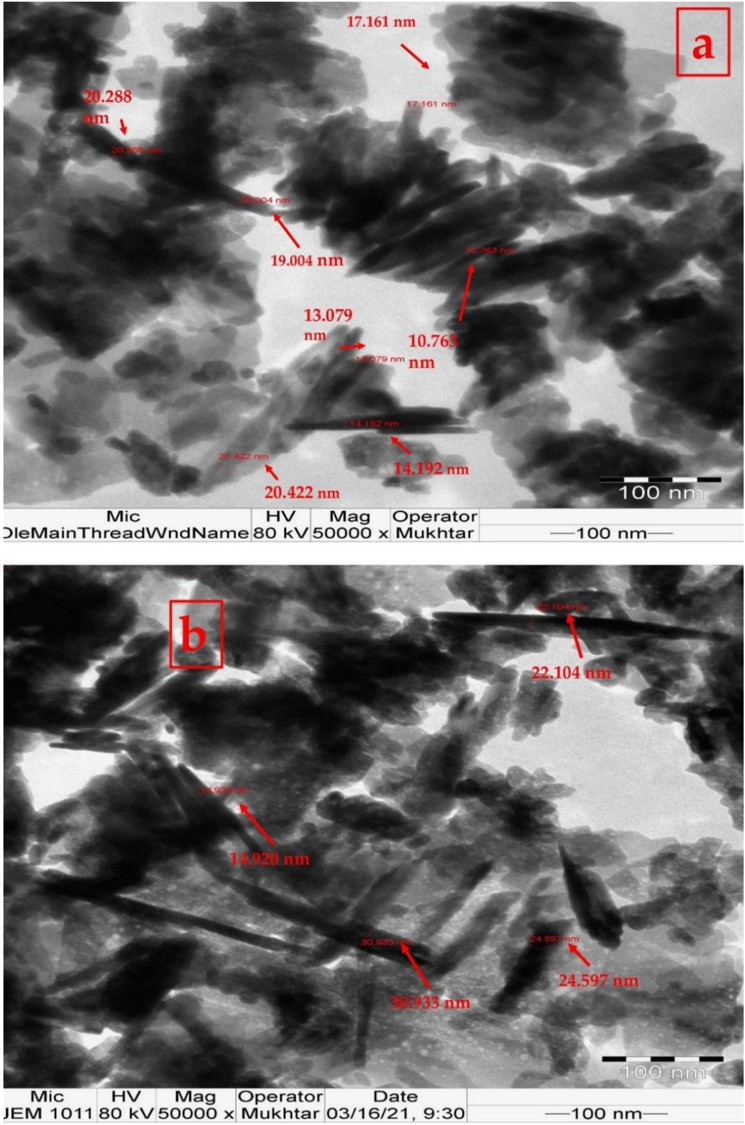
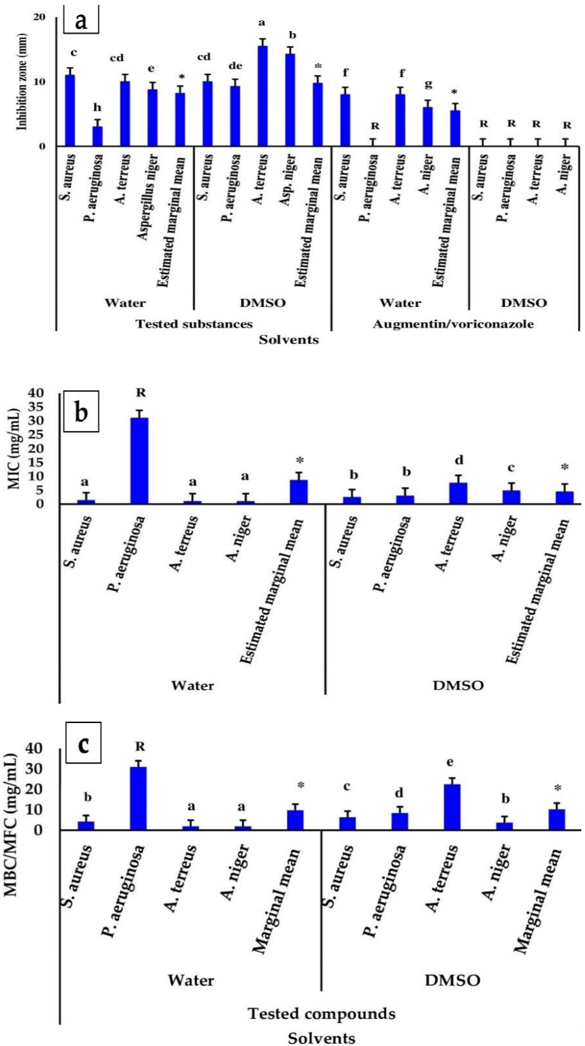
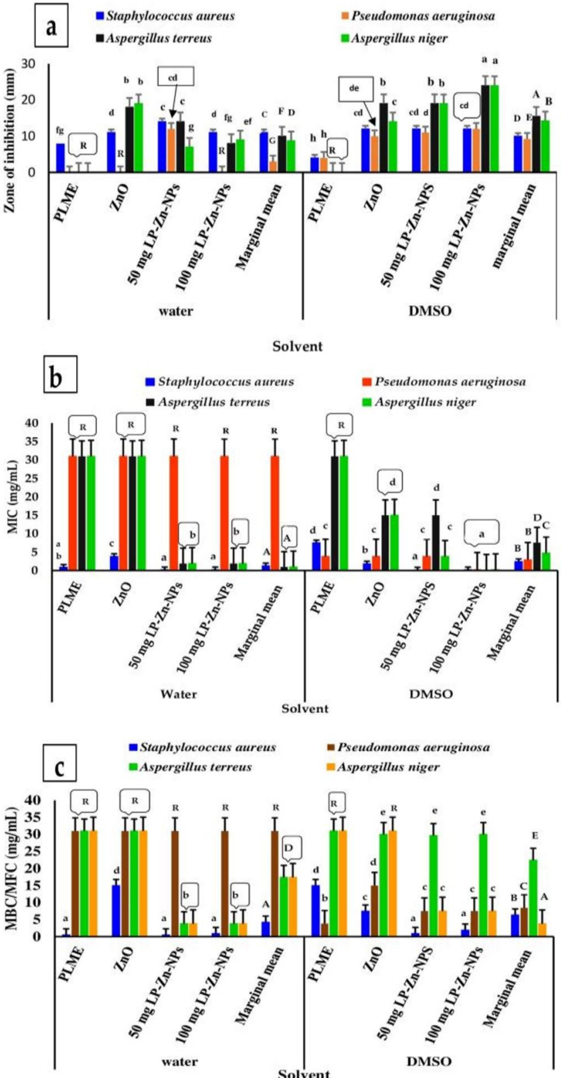
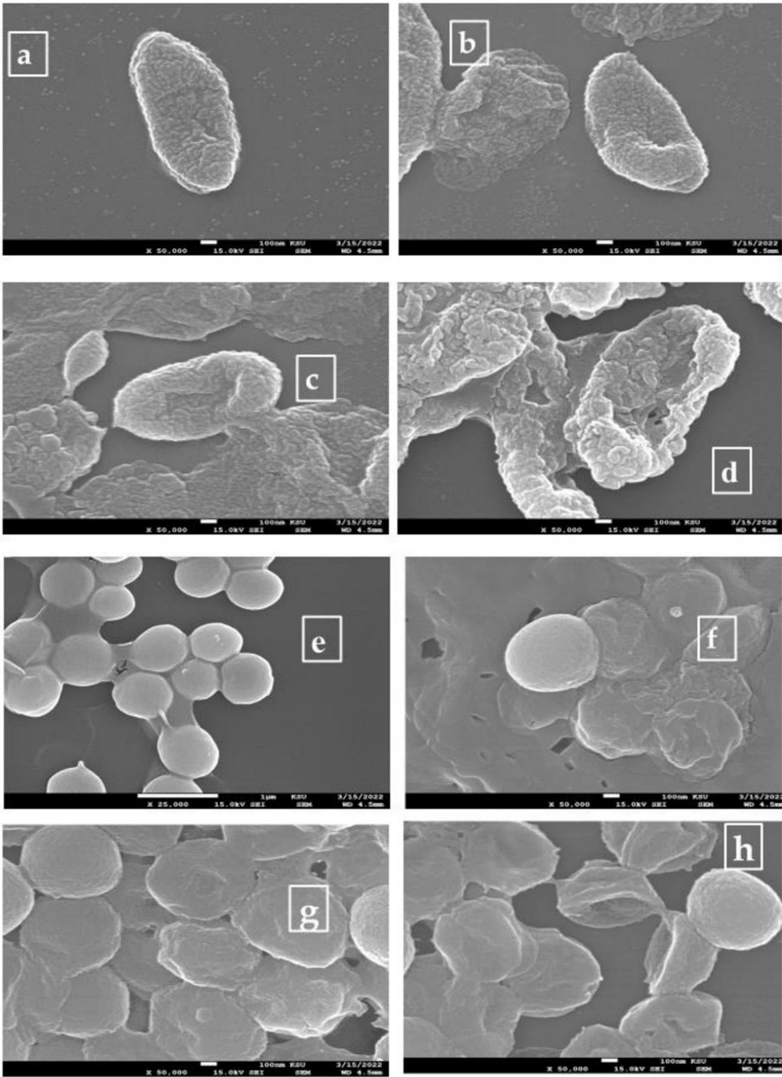
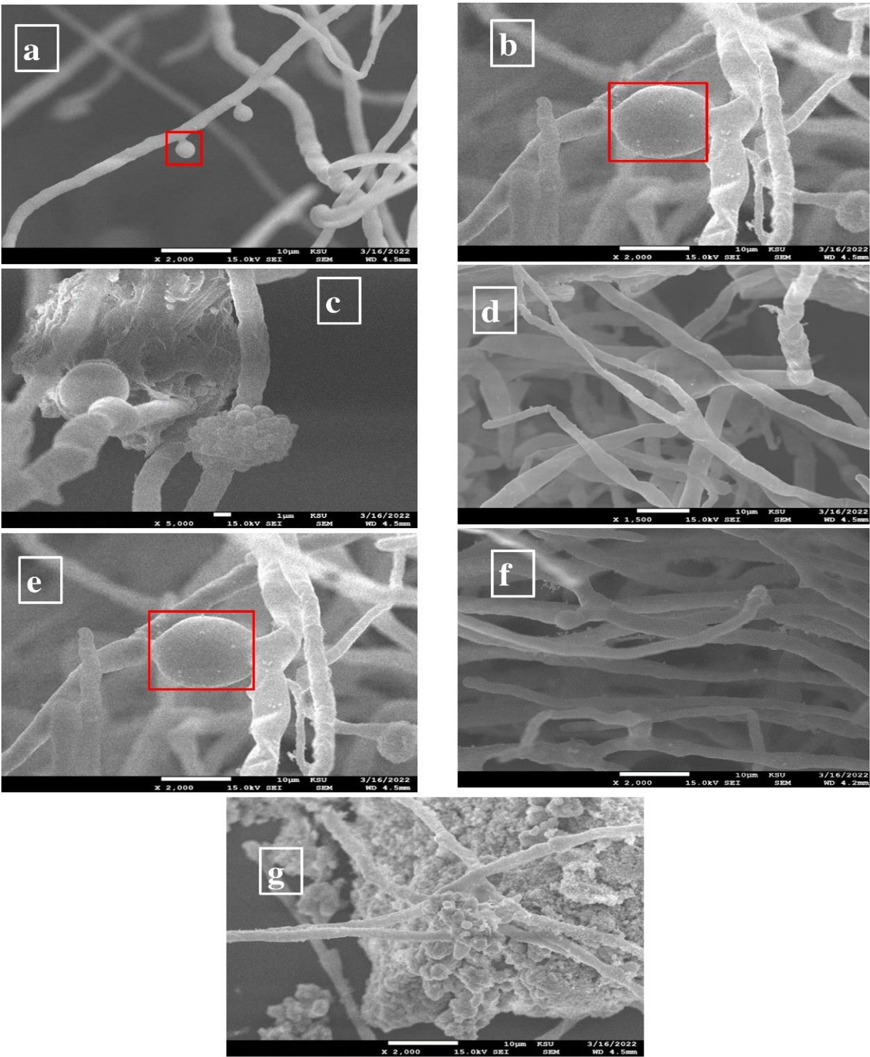
We report on employing in vitro biosynthesized ZnO nanoparticles using L. pubescens shoot methanol extract (50 and 100 mg LP–ZnO NPs) to examine their antimicrobial efficacy against Pseudomonas aeruginosa (ATCC27853), Staphylococcus aureus (ATCC 29213), Aspergillus niger (ATCC 16404 NA), and Aspergillus terreus (TCC 10029). The formation and stability of the investigated ZnO nanoparticles were proven by transmission electron microscopy (TEM), Fourier-transform infrared spectroscopy (FT-IR), UV–vis spectroscopy, X-ray diffraction (XRD), and thermal gravimetric analysis (TGA). The ZnO nanoparticles were rod-shaped (width: 10.76–30.93 nm). The nanoparticles in dimethyl sulfoxide (DMSO) outperformed their water counterparts in terms of their zones of inhibition (ZIs) (marginal means of 12.5 and 8.19 mm, respectively) and minimum inhibition concentrations (MICs) (means of 4.40 and 8.54 mg/mL, respectively). The ZI means for S. aureus, P. aeruginosa, A. terreus, and A. niger were 10.50, 6.13, 12.5, and 11.5 mm, respectively. When treating S. aureus and P. aeruginosa, the ZI of the 50 mg LP–ZnO NPs in water was better (14 mm), with a lower MIC and lower minimum bactericidal/fungicide concentrations (MBC/MFC) (7.22 and 4.88 mg/mL, respectively) than the ZnO and control drugs. The SEM images showed cellular alterations in the surface shapes after the LP–ZnO-NP treatments. Biosynthesized LP–ZnO NPs could have beneficial antibacterial properties, which could allow for future contributions to the development of new antimicrobial drugs.
Overview
The claims and statistics of this paper haven’t been checked yet.
Run the check — free, no account needed. It reads the open-access text and checks the sources it cites.
Integrity signals
Registry
Cites
Statistics
Figures
Verification
Claims the paper makes
The claims and statistics of this paper haven’t been checked yet.
Run the check — free, no account needed. It reads the open-access text and checks the sources it cites.
Claims other papers make about this one
Each is checked against this paper’s own text: does it say what the citing paper says it does?
In the citing paper
“The US Food and Drug Administration (FDA) considers it a generally recognized safe substance (GRAS)27.”
Self-check
Percentages, sums and reported differences re-computed from the paper’s own numbers.
The self-check needs the paper’s full text.
Citations
Cites
Green synthesis of nanoparticles: Current developments and limitations
Ying, S., Guan, Z., Ofoegbu, P. C., Clubb, P., Rico, C., He, F., & Hong, J. (2022) · Environmental Technology & Innovation · doi:10.1016/j.eti.2022.102336 · Cited by 1,677
Metal-Based Nanoparticles as Antimicrobial Agents: An Overview
Sánchez-López, E., Gomes, D., Esteruelas, G., Bonilla, L., Lopez-Machado, A. L., Galindo, R., Cano, A., Espina, M., Ettcheto, M., Camins, A., et al. (2020) · Nanomaterials · doi:10.3390/nano10020292 · Cited by 1,474
Research works printed but not linked: 88
- Rasli, 2020, Zinc oxide from aloe vera extract: Two-level factorial screening of biosynthesis parameters, Heliyon, 6, e03156, 10.1016/j.heliyon.2020.e03156 · DOI
- Siddiqi, 2018, Properties of zinc oxide nanoparticles and their activity against microbes, Nanoscale Res. Lett., 13, 1, 10.1186/s11671-018-2532-3 · DOI
- Jin, S.-E., and Jin, H.-E. (2019). Synthesis, characterization, and three-dimensional structure generation of zinc oxide-based nanomedicine for biomedical applications. Pharmaceutics, 11. · DOI
- Sawai, 2003, Quantitative evaluation of antibacterial activities of metallic oxide powders (ZnO, MgO, and CaO) by conductimetric assay, J. Microbiol. Methods, 54, 177, 10.1016/S0167-7012(03)00037-X · DOI
- Maret, 2011, Metals on the move: Zinc ions in cellular regulation and in the coordination dynamics of zinc proteins, Biometals, 24, 411, 10.1007/s10534-010-9406-1 · DOI
- Zare, 2017, Simple biosynthesis of zinc oxide nanoparticles using nature’s source, and it’s in vitro bio-activity, J. Mol. Struct., 1146, 96, 10.1016/j.molstruc.2017.05.118 · DOI
- Fatimah, 2016, Plant extract mediated of ZnO nanoparticles by using ethanol extract of Mimosa pudica leaves and coffee powder, Procedia Eng., 148, 43, 10.1016/j.proeng.2016.06.483 · DOI
- Pomastowski, 2017, Zinc oxide nanoparticles: Synthesis, antiseptic activity and toxicity mechanism, Adv. Colloid Interface Sci., 249, 37, 10.1016/j.cis.2017.07.033 · DOI
- Ifeanyichukwu, U.L. (2020). Omolola Esther Fayemiand Collins Njie Ateba. Green Synthesis of Zinc Oxide Nanoparticles from Pomegranate (Punica granatum) Extracts and Characterization of Their Antibacterial Activity. Molecules, 25. · DOI
- Abdallah, Y., Liu, M., Ogunyemi, S.O., Ahmed, T., Fouad, H., Abdelazez, A., Yan, C., Yang, Y., Chen, J., and Li, B. (2020). Bioinspired Green Synthesis of Chitosan and Zinc Oxide Nanoparticles with Strong Antibacterial Activity against Rice Pathogen Xanthomonas oryzae pv. Oryzae. Molecules, 25. · DOI
- Alyamani, A.A., Albukhaty, S., Aloufi, S., AlMalki, F.A., Al-Karagoly, H., and Sulaiman, G.M. (2021). Green Fabrication of Zinc Oxide Nanoparticles Using Phlomis Leaf Extract: Characterization and In Vitro Evaluation of Cytotoxicity and Antibacterial Properties. Molecules, 26. · DOI
- Yusof, 2019, Synthesis of ZnO nanoparticles with chitosan as stabilizing agent and their antibacterial properties against Gram-positive and Gram-negative bacteria, Int. J. Biol. Macromol., 124, 1132, 10.1016/j.ijbiomac.2018.11.228 · DOI
- Gudkov, 2021, A mini review of antibacterial properties of ZnO nanoparticles, Front. Phys., 9, 641481, 10.3389/fphy.2021.641481 · DOI
- Zhong, 2018, Synthesis of ZnO nanoparticles-decorated spindle-shaped graphene oxide for application in synergistic antibacterial activity, J. Photochem. Photobiol. B Biol., 183, 293, 10.1016/j.jphotobiol.2018.04.048 · DOI
- Kashef, 2017, Advances in antimicrobial photodynamic inactivation at the nanoscale, Nanophotonics, 6, 853, 10.1515/nanoph-2016-0189 · DOI
- El-Masry, R.M., Talat, D., Hassoubah, S.A., Zabermawi, N.M., Eleiwa, N.Z., Sherif, R.M., Mohammed, A.S., Abourehab, M.A.S., Abdel-Sattar, R.M., and Gamal, M. (2022). Evaluation of the Antimicrobial Activity of ZnO Nanoparticles against Enterotoxigenic Staphylococcus aureus. Life, 12. · DOI
- Leret, 2018, ZnO Nanoporous Spheres with Broad-Spectrum Antimicrobial Activity by Physicochemical Interactions, ACS Appl. Nano Mater., 1, 3214, 10.1021/acsanm.8b00402 · DOI
- Agarwal, 2020, A review on anti-inflammatory activity of green synthesized zinc oxide nanoparticle: Mechanism-based approach, Bioorg. Chem., 94, 103423, 10.1016/j.bioorg.2019.103423 · DOI
- Alamdari, S., Sasani Ghamsari, M., Lee, C., Han, W., Park, H.-H., Tafreshi, M.J., Afarideh, H., and Ara, M.H.M. (2020). Preparation and characterization of zinc oxide nanoparticles using leaf extract of Sambucus ebulus. Appl. Sci., 10. · DOI
- Shaikh, I.A., Muddapur, U.M., Bagewadi, Z.K., Chiniwal, S., Ghoneim, M.M., Mahnashi, M.H., Alsaikhan, F., Yaraguppi, D., Niyonzima, F.N., and More, S.S. (2022). Characterization of Bioactive Compounds from Acacia concinna and Citrus limon, Silver Nanoparticles’ Production by Acacia concinna Extract, and Their Biological Properties. Molecules, 27. · DOI
- Bala, 2015, Green synthesis of zinc oxide nanoparticles using Hibiscus subdariffa leaf extract: Effect of temperature on synthesis, anti-bacterial activity and anti-diabetic activity, RSC Adv., 5, 4993, 10.1039/C4RA12784F · DOI
- Soltanian, 2021, Biosynthesis of zinc oxide nanoparticles using Hertia intermedia and evaluation of its cytotoxic and antimicrobial activities, BioNanoScience, 11, 245, 10.1007/s12668-020-00816-z · DOI
- Yilmaz, 2019, Comparison of antimicrobial activity of bio-synthesized silver and zinc oxide nanoparticles using Lavandula stoechas leaf extract, Res. J. Biotechnol., 14, 24
- Rather, 2022, Green synthesis of ZnO nanoparticles using the leaf extract of Lavandula angustifolia and evaluation of their antibacterial activity against human pathogens, Int. J. Health Sci., 6, 13478, 10.53730/ijhs.v6nS2.8539 · DOI
- Pillai, 2020, Green synthesis and characterization of zinc oxide nanoparticles with antibacterial and antifungal activity, J. Mol. Struct., 1211, 128107, 10.1016/j.molstruc.2020.128107 · DOI
- Turgut, 2017, Chemical characterization of Lavandula angustifolia Mill. as a phytocosmetic species and investigation of its antimicrobial effect in cosmetic products, J. Turk. Chem. Soc. Sect. A Chem., 4, 283, 10.18596/jotcsa.287329 · DOI
- Bousta, 2020, A Phytopharmacological review of a Mediterranean plant: Lavandula stoechas L., Clin. Phytosci., 6, 9, 10.1186/s40816-019-0142-y · DOI
- Hawrył, A., Hawrył, M., and Waksmundzka-Hajnos, M. (2019). Liquid chromatography fingerprint analysis and antioxidant activity of selected lavender species with chemometric calculations. PLoS ONE, 14. · DOI
- Zhao, 2015, Evaluation on bioactivities of total flavonoids from Lavandula angustifolia, Pak. J. Pharm. Sci., 28, 1245
- Mousa, 2018, Total phenolic, total flavonoid content, two isolates and bioactivity of Lavandula pubescens Decne, Int. J. Pharmacogn. Phytochem. Res., 10, 254
- Divya, 2018, Chemical synthesis of zinc oxide nanoparticles and its application of dye decolourization, Int. J. Nanosci. Nanotechnol., 14, 267
- Richardson, 1990, Phytochemical Methods: A Guide to Modern Techniques of Plant Analysis. Second Edition, Brittonia, 42, 115, 10.2307/2807624 · DOI
- Wayne, 2008, Reference method for broth dilution antifungal susceptibility testing of yeasts, Clin. Lab. Stand. Inst., 3, M27-A23
- Pereira, 2011, Growth inhibition and morphological alterations of Trichophyton rubrum induced by essential oil from Cymbopogon winterianus Jowitt ex Bor, Braz. J. Microbiol., 42, 233, 10.1590/S1517-83822011000100029 · DOI
- Alekish, 2018, In vitro antibacterial effects of zinc oxide nanoparticles on multiple drug-resistant strains of Staphylococcus aureus and Escherichia coli: An alternative approach for antibacterial therapy of mastitis in sheep, Vet. World, 11, 1428, 10.14202/vetworld.2018.1428-1432 · DOI
- Liu, 2017, Assessment of antimicrobial and wound healing effects of Brevinin-2Ta against the bacterium Klebsiella pneumoniae in dermally-wounded rats, Oncotarget, 8, 111369, 10.18632/oncotarget.22797 · DOI
- Sharma, N., Singh, V., Pandey, A.K., Mishra, B.N., Kulsoom, M., Dasgupta, N., Khan, S., El-Enshasy, H.A., and Haque, S. (2019). Preparation and evaluation of the ZnO NP–ampicillin/sulbactam nanoantibiotic: Optimization of formulation variables using RSM coupled GA method and antibacterial activities. Biomolecules, 9. · DOI
- Veerasamy, R., Roy, A., Karunakaran, R., and Rajak, H. (2021). Structure–activity relationship analysis of benzimidazoles as emerging anti-inflammatory agents: An overview. Pharmaceuticals, 14. · DOI
- Khedr, 2021, Phthalazine-based VEGFR-2 inhibitors: Rationale, design, synthesis, in silico, ADMET profile, docking, and anticancer evaluations, Arch. Pharm., 354, 2100201, 10.1002/ardp.202100201 · DOI
- Devi, 2021, Recent Development in Indole Derivatives as Anticancer Agent: A Mechanistic Approach, Anti Cancer Agents Med. Chem., 21, 1802, 10.2174/1871520621999210104192644 · DOI
- Arfaie, 2010, Design, synthesis and biological evaluation of new (E)-and (Z)-1, 2, 3-triaryl-2-propen-1-ones as selective COX-2 inhibitors, Eur. J. Med. Chem., 45, 4013, 10.1016/j.ejmech.2010.05.058 · DOI
- Misra, 2022, Anti-enteric efficacy and mode of action of tridecanoic acid methyl ester isolated from Monochoria hastata (L.) Solms leaf, Braz. J. Microbiol., 53, 715, 10.1007/s42770-022-00696-3 · DOI
- Saunier, 2010, Polymorphism of Irganox 1076®: Discovery of new forms and direct characterization of the polymorphs on a medical device by Raman microspectroscopy, Eur. J. Pharm. Biopharm., 75, 443, 10.1016/j.ejpb.2010.04.014 · DOI
- Krishnamoorthy, R., Athinarayanan, J., Periyasamy, V.S., Alshuniaber, M.A., Alshammari, G., Hakeem, M.J., Ahmed, M.A., and Alshatwi, A.A. (2022). Antibacterial Mechanisms of Zinc Oxide Nanoparticle against Bacterial Food Pathogens Resistant to Beta-Lactam Antibiotics. Molecules, 27. · DOI
- Santhoshkumar, 2017, Synthesis of zinc oxide nanoparticles using plant leaf extract against urinary tract infection pathogen, Resour.-Effic. Technol., 3, 459
- Talam, 2012, Synthesis, characterization, and spectroscopic properties of ZnO nanoparticles, Int. Sch. Res. Netw., 2012, 372505
- Ismail, 2018, ZnO nanoparticles: Surface and X-ray profile analysis, J. Ovonic Res., 14, 381
- Dinesh, 2014, Plasmon-mediated, highly enhanced photocatalytic degradation of industrial textile dyes using hybrid ZnO@ Ag core–shell nanorods, RSC Adv., 4, 58930, 10.1039/C4RA09405K · DOI
- Alshammari, G.M., Yagoub, A.E.A., Subash-Babu, P., Hassan, A.B., Al-Nouri, D.M., Mohammed, M.A., Yahya, M.A., and Elsayim, R. (2021). Inhibition of lipid accumulation and adipokine levels in maturing adipocytes by bauhinia rufescens (lam.) stem bark extract loaded titanium oxide nanoparticles. Molecules, 26. · DOI
- Manrique, 2002, FT-IR spectroscopy as a tool for measuring degree of methyl esterification in pectins isolated from ripening papaya fruit, Postharvest Biol. Technol., 25, 99, 10.1016/S0925-5214(01)00160-0 · DOI
- Wei, 2019, Enhanced stability, structural characterization and simulated gastrointestinal digestion of coenzyme Q10 loaded ternary nanoparticles, Food Hydrocoll., 94, 333, 10.1016/j.foodhyd.2019.03.024 · DOI
- Belardi, 2011, Characterization of spent zinc–carbon and alkaline batteries by SEM-EDS, TGA/DTA and XRPD analysis, Thermochim. Acta, 526, 169, 10.1016/j.tca.2011.09.012 · DOI
- Bhardwaj, 2020, eco-friendly greener synthesis of nanoparticles, Adv. Pharm. Bull., 10, 566, 10.34172/apb.2020.067 · DOI · Paper page
- Sorbiun, 2018, Biosynthesis of metallic nanoparticles using plant extracts and evaluation of their antibacterial properties, Nanochem. Res., 3, 1
- Parkash, 2013, Lavandula angustifolia L. (Lavender): An important aromatic medicinal shrub and its in vitro micro-propagation for conservation, Int. Agric. Technol., 9, 691
- Vaiano, 2018, Enhanced photocatalytic removal of phenol from aqueous solutions using ZnO modified with Ag, Appl. Catal. B Environ., 225, 197, 10.1016/j.apcatb.2017.11.075 · DOI · Paper page
- Agarwal, 2017, A review on green synthesis of zinc oxide nanoparticles- An ecofriendly approach, Resour.-Effic. Technol., 3, 406
- Abdelkader, D.H., Negm, W.A., Elekhnawy, E., Eliwa, D., Basmah, N., Aldosari, B.N., Alanood, S., and Almurshedi, A.S. (2022). Zinc oxide nanoparticles as potential delivery carrier: Green synthesis by Aspergillus niger endophytic fungus, characterization, and in vitro/in vivo antibacterial activity. Pharmaceuticals, 15. · DOI
- Lingaraju, 2016, Biogenic synthesis of zinc oxide nanoparticles using Ruta graveolens (L.) and their antibacterial and antioxidant activities, Appl. Nanosci., 6, 703, 10.1007/s13204-015-0487-6 · DOI
- Makabenta, 2021, Nanomaterial-based therapeutics for antibiotic-resistant bacterial infections, Nat. Rev. Microbiol., 19, 23, 10.1038/s41579-020-0420-1 · DOI
- Caetano, 2019, Increased antibacterial activity of ZnO nanoparticles: Influence of size and surface modification, Colloids Surf. B. Biointerfaces, 177, 440, 10.1016/j.colsurfb.2019.02.013 · DOI
- Wang, 2020, Biosynthesis and characterization of zinc oxide nanoparticles from Artemisia annuna and investigate their effect on proliferation, osteogenic differentiation of zinc oxide nanoparticles in human osteoblast-like MG-63 cells, J. Photochem. Photobiol. B Biol., 202, 111652, 10.1016/j.jphotobiol.2019.111652 · DOI
- Lipovsky, 2011, Antifungal activity of ZnO nanoparticles—The role of ROS mediated cell injury, Nanotechnology, 22, 105101, 10.1088/0957-4484/22/10/105101 · DOI
- Markham, 1958, Oxidation of alcohols catalyzed by zinc oxide and light, J. Am. Chem. Soc., 80, 5394, 10.1021/ja01553a019 · DOI
- Baek, 2011, Microbial toxicity of metal oxide nanoparticles (CuO, NiO, ZnO, and Sb2O3) to Escherichia coli, Bacillus subtilis, and Streptococcus aureus, Sci. Total Environ., 409, 1603, 10.1016/j.scitotenv.2011.01.014 · DOI
- Moose, 2010, ZnO particulate matter requires cell contact for toxicity in human colon cancer cells, Chem. Res. Toxicol., 23, 733, 10.1021/tx900203v · DOI
- Namvar, 2015, Cytotoxic effects of biosynthesized zinc oxide nanoparticles on murine cell lines, Evid.-Based Complement. Altern. Med., 2015, 593014, 10.1155/2015/593014 · DOI
- Bhattacharyya, 2014, Chlorogenic acid–phospholipid complex improve protection against UVA induced oxidative stress, J. Photochem. Photobiol. B Biol., 130, 293, 10.1016/j.jphotobiol.2013.11.020 · DOI
- Leung, 2012, Antibacterial activity of ZnO nanoparticles with a modified surface under ambient illumination, Nanotechnology, 23, 475703, 10.1088/0957-4484/23/47/475703 · DOI
- Tayel, 2011, Antibacterial action of zinc oxide nanoparticles against foodborne pathogens, J. Food Saf., 31, 211, 10.1111/j.1745-4565.2010.00287.x · DOI
- Raghupathi, 2011, Size-dependent bacterial growth inhibition and mechanism of antibacterial activity of zinc oxide nanoparticles, Langmuir, 27, 4020, 10.1021/la104825u · DOI
- Heinlaan, 2008, Toxicity of nanosized and bulk ZnO, CuO and TiO2 to bacteria Vibrio fischeri and crustaceans Daphnia magna and Thamnocephalus platyurus, Chemosphere, 71, 1308, 10.1016/j.chemosphere.2007.11.047 · DOI
- Hajipour, 2012, Antibacterial properties of nanoparticles, Trends Biotechnol., 30, 499, 10.1016/j.tibtech.2012.06.004 · DOI
- Pasquet, 2014, Antimicrobial activity of zinc oxide particles on five micro-organisms of the Challenge Tests related to their physicochemical properties, Int. J. Pharm., 460, 92, 10.1016/j.ijpharm.2013.10.031 · DOI
- Pietro, 2019, Relationship between structure and antimicrobial activity of zinc oxide nanoparticles: An overview, Int. J. Nanomed., 14, 9395, 10.2147/IJN.S216204 · DOI
- Jalal, 2010, Zno nanofluids: Green synthesis, characterization, and antibacterial activity, Mater. Chem. Phys., 121, 198, 10.1016/j.matchemphys.2010.01.020 · DOI
- Padmavathy, 2008, Enhanced bioactivity of Zno nanoparticles—An antimicrobial study, Sci. Technol. Adv. Mat., 9, 035004, 10.1088/1468-6996/9/3/035004 · DOI
- Rokbani, H., Daigle, F., and Ajji, A. (2018). Combined effect of ultrasound stimulations and autoclaving on the enhancement of antibacterial activity of ZnO and SiO2/ZnO nanoparticles. Nanomaterials, 8. · DOI
- Stoimenov, 2002, Metal oxide nanoparticles as bactericidal agents, Langmuir, 18, 6679, 10.1021/la0202374 · DOI
- Hirota, 2010, Preparation of zinc oxide ceramics with a sustainable antibacterial activity under dark conditions, Ceram. Int., 36, 497, 10.1016/j.ceramint.2009.09.026 · DOI
- Zhang, 2007, Investigation into the antibacterial behaviour of suspensions of Zno nanoparticles (ZnO nanofluids), J. Nanopart. Res., 9, 479, 10.1007/s11051-006-9150-1 · DOI
- Xie, 2011, Antibacterial activity and mechanism of action of zinc oxide nanoparticles against Campylobacter jejuni, Appl. Environ. Microb., 77, 2325, 10.1128/AEM.02149-10 · DOI
- Reddy, 2014, Antimicrobial activity of zinc oxide (ZnO) nanoparticle against Klebsiella pneumoniae, Pharm. Biol., 52, 1388, 10.3109/13880209.2014.893001 · DOI
- Branquinho, 2018, Efficient coverage of ZnO nanoparticles on cotton fibres for antibacterial finishing using a rapid and low cost in situ synthesis, New J. Chem., 42, 1052, 10.1039/C7NJ03418K · DOI
- Labrie, 2013, Genomes of marine cyanopodoviruses reveal multiple origins of diversity, Environ. Microbiol., 15, 1356, 10.1111/1462-2920.12053 · DOI
- Sardella, 2017, Physiological effects and mode of action of ZnO nanoparticles against postharvest fungal contaminants, Food Res. Int., 101, 274, 10.1016/j.foodres.2017.08.019 · DOI
- Rasha, E., Monerah, A., Manal, A., Rehab, A., Mohammed, D., and Doaa, E. (2021). Biosynthesis of Zinc Oxide Nanoparticles from Acacia nilotica (L.) Extract to Overcome Carbapenem-Resistant Klebsiella Pneumoniae. Molecules, 26. · DOI
- Eskandari, 2011, Growth and investigation of antifungal properties of ZnO nanorod arrays on the glass, Phys. B Condens. Matter, 406, 112, 10.1016/j.physb.2010.10.035 · DOI
Cited by
Sorted by citations
Mehdipour, A., Reza, M. A. S., Rasouli, A., Baravati, M. H. J., Jafari, G. A., & Heidari, F. (2024) · Scientific Reports · doi:10.1038/s41598-024-81295-0 · Cited by 21
Metadata
- Authors
- Yagoub, A. E. A., Al-Shammari, G. M., Al-Harbi, L. N., Subash-Babu, P., Elsayim, R., Mohammed, M. A., Yahya, M. A., & Fattiny, S. Z. A.
- Venue
- Applied Sciences
- Publisher
- MDPI AG
- Published
- 2022-11-15
- Volume
- 12
- Issue
- 22
- Pages
- 11613
- ISSN
- 2076-3417
- Cited by
- 54
- References
- 2
- Language
- en
- Funders
- King Saud University, Riyadh, Saudi Arabia (RSP-2021/84)
About these checks
Registry, retraction, Cites and statistics results are computed, not judged, with one exception: a printed reference that no index lists is read once by a model before it counts as a citation error. Claims are extracted by a model and kept only when their quote appears verbatim in the text; each cited source is then checked, with a model’s help, for whether it says what the claim relies on. Those verdicts can be wrong — read the claim’s quote and the cited source before relying on one.
Statistics and arithmetic are recomputed, not judged.
Confidence bands are shown only for fields calibrated on our annotated test set. None is calibrated yet, so no band is shown.
What counts as a claim ›How we measure confidence ›How we check this ›
Are you an author, or do you see a problem with this page? Request a review
How to cite
Cite CoChat for the checks on this page, and the paper for its own findings.
- This page
- CoChat. (2026). Citation check: Antimicrobial Properties of Zinc Oxide Nanoparticles Synthesized from Lavandula pubescens Shoot Methanol Extract. https://app.cochat.ai/papers/10.3390/app122211613
- The paper
- Yagoub, A. E. A., Al-Shammari, G. M., Al-Harbi, L. N., Subash-Babu, P., Elsayim, R., Mohammed, M. A., Yahya, M. A., & Fattiny, S. Z. A. (2022). Antimicrobial Properties of Zinc Oxide Nanoparticles Synthesized from Lavandula pubescens Shoot Methanol Extract. Applied Sciences. https://doi.org/10.3390/app122211613
