

The DOI matches its Crossref record; 38 of the 38 references it cites were found in a registry or an index; none of the 8 sources its claims cite is checked for support yet.
Green synthesis of zinc nanoparticles by hydroalcoholic extract of lavender (Lavandula stoechas L.), characterization, and cytotoxic effects on human breast and colon cancer
Open accessAbstract
Abstract Introduction Green synthesis is the production of metal nanoparticles (MNPs) with biological agents, including plant extracts, without special physical and chemical solutions and conditions. Due to their unique properties, MNPs are used in various sciences and industries. The study aimed to investigate the cytotoxic effects of zinc nanoparticles (ZnNPs) synthesized by the hydroalcoholic extract of lavender plant against human breast cancer cell lines (MCF7) and human colon cancer cell lines (HT29) with the approach of identifying the ability of these NPs to produce anticancer drugs. Method and Materials: ZnNPs are synthesized using the hydroalcoholic extract of the lavender plant. Evaluate and characterize nanoparticles (NPs) by Tyndall effect, UV-Vis, DLS, FT-IR, Zeta-P, Raman spectroscopy, SEM, AFM, and XRD methods. The cytotoxic effects of produced NPs against cancer cell lines MCF7 and HT29 and the healthy cells MCF10a and HGF were measured using the MTT method. Results: According to the findings of DLS analysis, the average size of ZnNPs is 40 and 50, respectively, at a concentration of 3 mM. The cytotoxicity of nanoparticles on MCF7 and HT29 cell lines produces the highest effect after 48 hours. Conclusion: The lavender plant is a suitable option for the green synthesis of ZnNPs and can be used as a stable source for production MNPs. Also, the synthesized ZnNPs showed cytotoxic effects against the examined cancer cells, while they did not cause toxicity to healthy human cells.
Overview
AI snapshot
Written from the paper’s full text.
TL;DR
Hydroalcoholic lavender (*Lavandula stoechas* L.) extract was used to green-synthesize zinc nanoparticles (ZnNPs), which were characterized by multiple methods and tested against MCF7 breast cancer, HT29 colon cancer, and healthy MCF10a/HGF cells. The ZnNPs showed dose- and time-dependent cytotoxicity against cancer cells with lower toxicity to healthy cells after 48 h.
Key findings
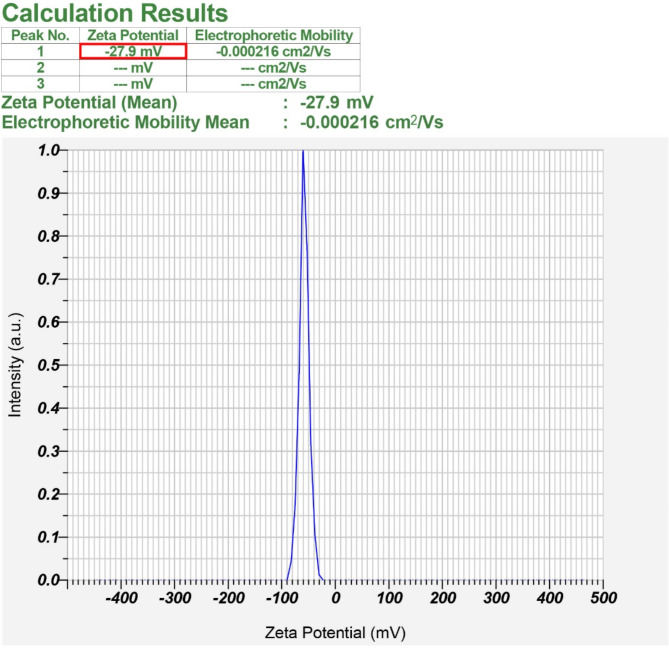
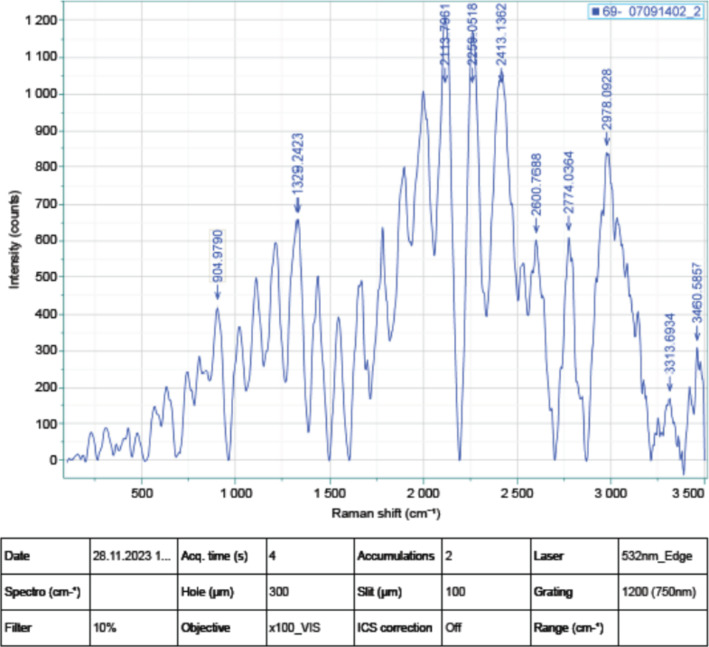
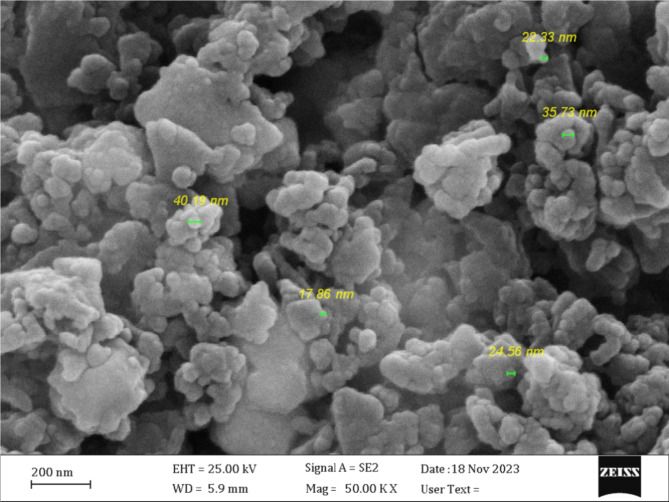
- Optimal synthesis was reported at 3 mM zinc salt, pH 10, 25 °C, and 120 rpm; characterization by Tyndall effect, UV-Vis, DLS, FT-IR, Zeta-P, Raman, SEM, AFM, and XRD confirmed ZnNP formation. DLS gave a hydrodynamic diameter of 50 nm, SEM showed particles between 10 and 50 nm, Raman indicated 3–25 nm, and the discussion reports an average diameter of 27.62 nm; the Zeta-P section reports −27 mV.
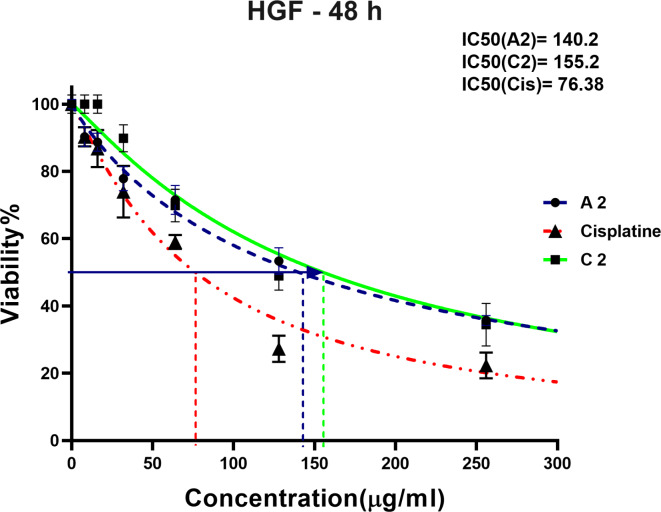
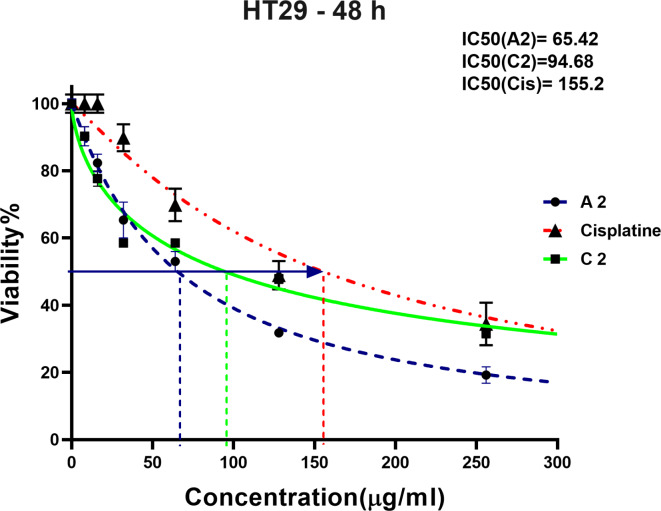
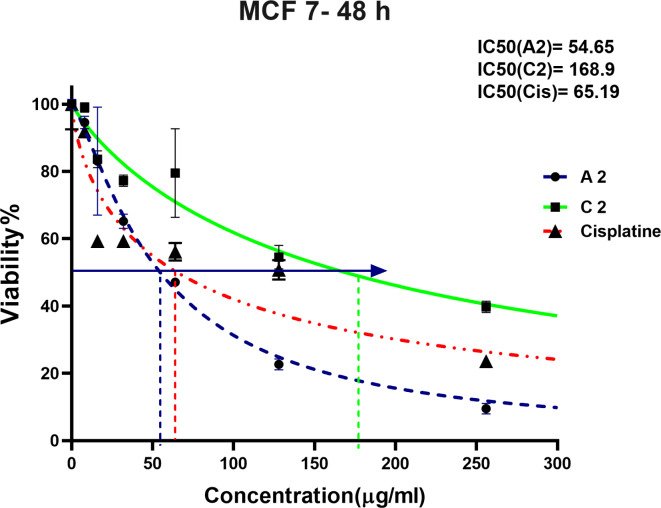
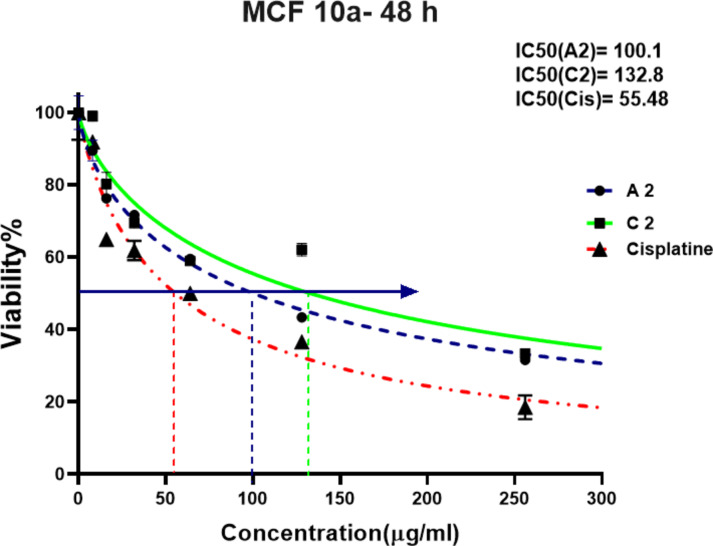
- After 48 h, ZnNPs (A2) had IC50 values of 54.65 µg/mL in MCF7, 65.42 µg/mL in HT29, 140.2 µg/mL in HGF, and 100.1 µg/mL in MCF10a. Cisplatin IC50 values were 65.19 µg/mL in MCF7, 155.2 µg/mL in HT29, 76.38 µg/mL in HGF, and 55.48 µg/mL in MCF10a.
- Cytotoxicity was concentration- and time-dependent, with the highest effect reported after 48 h; normal HGF and MCF10a cells were more resistant to ZnNPs than the cancer cells.
- The paper concludes lavender is a suitable stable source for metal nanoparticle production and that the ZnNPs may have biomedical anticancer applications, while calling for further antibacterial, drug-delivery, and anti-adhesion studies.
Methods
- Lavender was collected around Qom, Iran, and identified as *Lavandula stoechas* L. (SBMU-8303). Hydroalcoholic extract was prepared from 200 g dried ground leaves in 1 L 50/50 distilled water–ethanol for 10 days at 25 °C in the dark, then filtered and evaporated at 45 °C. ZnNPs were synthesized with zinc sulfate/nitrate at 1–5 mM, pH 10, 25 °C, 120 rpm for 24 h, then isolated by ultracentrifugation.
- Characterization used Tyndall effect, UV-Vis, DLS, FT-IR, Zeta-P, Raman spectroscopy, SEM, AFM, and XRD.
- Cytotoxicity was tested by MTT assay on MCF7, HT29, MCF10a, and HGF cells obtained from IBRC. Cells were seeded at 5000 cells/well and treated with ZnNPs at 50, 100, 150, 250, and 300 µg/mL and cisplatin; plates were incubated for 24, 48, and 72 h, and optical density was read at 570 nm. IC50 values were calculated with GraphPad Prism 8.2.1 using non-linear regression dose-response curves.
Limitations
- The paper states that only 48 h results are reported because 24 h was too short for drug effect and 72 h data were unreliable due to culture medium consumption by cells.
- The paper states that large-scale green synthesis still faces obstacles including uncontrollable final nanoparticle size and shape, difficult scalability, wide raw-material variety, and limited raw-material availability at different times.
- Evident from the text: all cytotoxicity data are in vitro, with no in vivo or clinical validation; mechanistic claims about apoptosis, cell cycle disruption, and reactive oxygen species are discussed but not experimentally tested in this paper.
Model-written summary. Check it against the paper before relying on it.
Integrity signals
Registry
Cites
Statistics
Figures
Verification
Claims the paper makes
38 Own result · 12 Own interpretation · 5 No basis given · 4 Not checked yet · 3 No full text of the sources
A result the paper reports from its own data — it cites no other source for it, so there is none to check. The quote shows it is in the paper.
In the paper
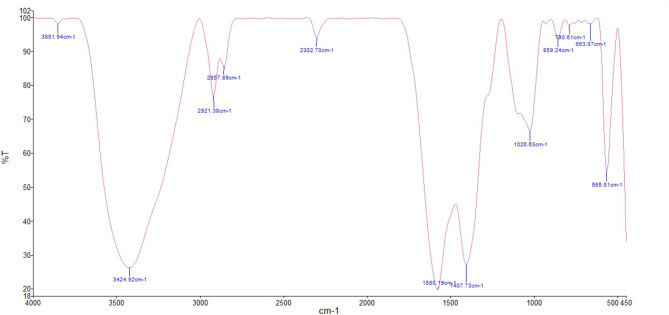
“Based on the analysis of the results obtained from the infrared Fourier transform spectroscopy, the binding of different functional groups to the surface of NPs was proved (Fig. 4).”
§ Green synthesis of zinc nanoparticles by hydroalcoholic extract of lavender (Lavandula stoechas L.), characterization, and cytotoxic effects on human breast and colon cancer > Results > Evaluation of the production of ZnNPs
plainstates an association- Asserted: passes — The authors put it forward as true.
- Checkable: passes — It can be checked against evidence.
- Load-bearing: passes — The paper’s conclusions depend on it.
- Based: passes — The paper gives a reason why it holds.
A result the paper reports from its own data — it cites no other source for it, so there is none to check. The quote shows it is in the paper.
In the paper
“It shows that the best concentration of synthesized NPs was determined to be 3 mM.”
§ Green synthesis of zinc nanoparticles by hydroalcoholic extract of lavender (Lavandula stoechas L.), characterization, and cytotoxic effects on human breast and colon cancer > Results
plain- Asserted: passes — The authors put it forward as true.
- Checkable: passes — It can be checked against evidence.
- Load-bearing: unclear — It is unclear whether the paper’s conclusions depend on it.
- Based: passes — The paper gives a reason why it holds.
A result the paper reports from its own data — it cites no other source for it, so there is none to check. The quote shows it is in the paper.
In the paper
“According to the obtained graph of the Raman spectrum of ZnNPs synthesis, it is impossible to say in what range the largest amount of NPs is formed, but it can be said that the particles are formed in the range of 3 to 25 nm.”
§ Green synthesis of zinc nanoparticles by hydroalcoholic extract of lavender (Lavandula stoechas L.), characterization, and cytotoxic effects on human breast and colon cancer > Results > Investigating the synthesis of ZnNPs using Raman spectroscopy
plain- Asserted: passes — The authors put it forward as true.
- Checkable: passes — It can be checked against evidence.
- Load-bearing: passes — The paper’s conclusions depend on it.
- Based: passes — The paper gives a reason why it holds.
A result the paper reports from its own data — it cites no other source for it, so there is none to check. The quote shows it is in the paper.
In the paper
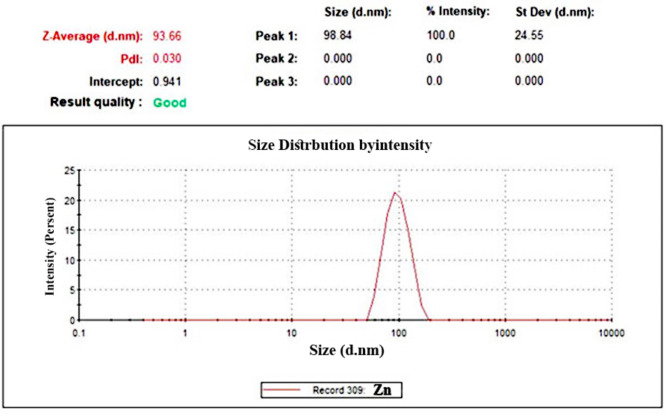
“In addition, the dispersion index of NPs produced by plant extract was calculated as 0.308, and their Zeta-P was calculated as 1.72 mV.”
§ Green synthesis of zinc nanoparticles by hydroalcoholic extract of lavender (Lavandula stoechas L.), characterization, and cytotoxic effects on human breast and colon cancer > Results > Evaluation of the production of ZnNPs
plain- Asserted: passes — The authors put it forward as true.
- Checkable: passes — It can be checked against evidence.
- Load-bearing: unclear — It is unclear whether the paper’s conclusions depend on it.
- Based: passes — The paper gives a reason why it holds.
A result the paper reports from its own data — it cites no other source for it, so there is none to check. The quote shows it is in the paper.
In the paper
“Results show the average size of ZnNPs is 40 and 50 nm at a concentration of 3 mM.”
§ Green synthesis of zinc nanoparticles by hydroalcoholic extract of lavender (Lavandula stoechas L.), characterization, and cytotoxic effects on human breast and colon cancer > Abstract
plain- Asserted: passes — The authors put it forward as true.
- Checkable: passes — It can be checked against evidence.
- Load-bearing: unclear — It is unclear whether the paper’s conclusions depend on it.
- Based: passes — The paper gives a reason why it holds.
A result the paper reports from its own data — it cites no other source for it, so there is none to check. The quote shows it is in the paper.
In the paper
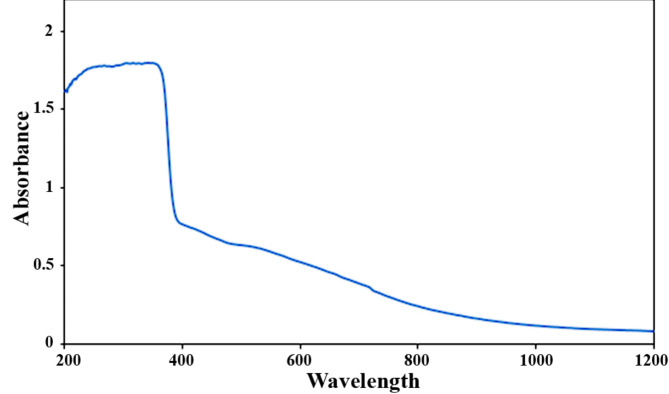
“The synthesis of ZnNPs is carried out in the UV-Vis spectroscopic spectrum at a wavelength of 300 to 400 nm, and the obtained curve shows the formation of NPs in the above range; it can be stated that ZnNPs (Fig. 2) have been synthesized.”
§ Green synthesis of zinc nanoparticles by hydroalcoholic extract of lavender (Lavandula stoechas L.), characterization, and cytotoxic effects on human breast and colon cancer > Results > UV-Vis
plain- Asserted: passes — The authors put it forward as true.
- Checkable: passes — It can be checked against evidence.
- Load-bearing: passes — The paper’s conclusions depend on it.
- Based: passes — The paper gives a reason why it holds.
A result the paper reports from its own data — it cites no other source for it, so there is none to check. The quote shows it is in the paper.
In the paper
“The hydrodynamic diameter size of synthesized NPs at pH = 10 and with a final concentration of 3 mM of zinc salt in lavender plant extract was recorded as 50 nm (Fig. 3).”
§ Green synthesis of zinc nanoparticles by hydroalcoholic extract of lavender (Lavandula stoechas L.), characterization, and cytotoxic effects on human breast and colon cancer > Results > Evaluation of the production of ZnNPs
plain- Asserted: passes — The authors put it forward as true.
- Checkable: passes — It can be checked against evidence.
- Load-bearing: unclear — It is unclear whether the paper’s conclusions depend on it.
- Based: passes — The paper gives a reason why it holds.
A result the paper reports from its own data — it cites no other source for it, so there is none to check. The quote shows it is in the paper.
In the paper
“By examining the results of the MTT test, it was observed that with the increase in the concentration of NPs and with the rise in the treatment time, the survival percentage of cancer cells has decreased significantly compared to the control.”
§ Green synthesis of zinc nanoparticles by hydroalcoholic extract of lavender (Lavandula stoechas L.), characterization, and cytotoxic effects on human breast and colon cancer > Results > Cytotoxicity of ZnNPs
plainstates a cause- Asserted: passes — The authors put it forward as true.
- Checkable: passes — It can be checked against evidence.
- Load-bearing: passes — The paper’s conclusions depend on it.
- Based: passes — The paper gives a reason why it holds.
The paper states this without a source or data behind it here, so there is nothing to check it against. The quote shows it is in the paper.
In the paper
“Also, increasing or decreasing the concentration of zinc metal salts has changed the size of NPs.”
§ Green synthesis of zinc nanoparticles by hydroalcoholic extract of lavender (Lavandula stoechas L.), characterization, and cytotoxic effects on human breast and colon cancer > Discussion
plainstates a cause- Asserted: passes — The authors put it forward as true.
- Checkable: passes — It can be checked against evidence.
- Load-bearing: unclear — It is unclear whether the paper’s conclusions depend on it.
- Based: passes — The paper gives a reason why it holds.
- It may state two separate claims as one. 17
- The quote only partly states this claim. 2
- Probably not a substantial claim. 9
A result the paper reports from its own data — it cites no other source for it, so there is none to check. The quote shows it is in the paper.
In the paper
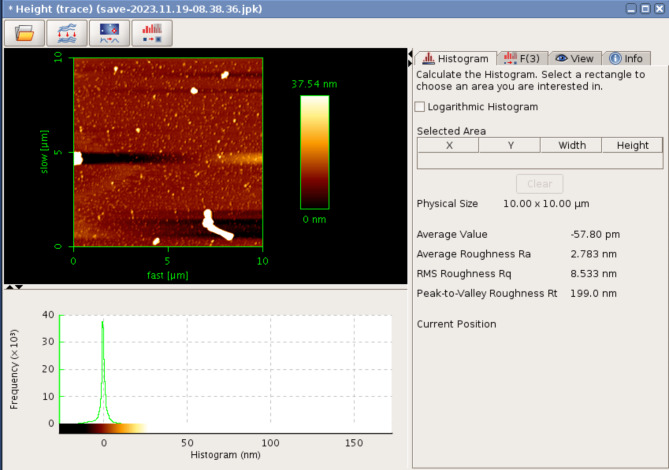
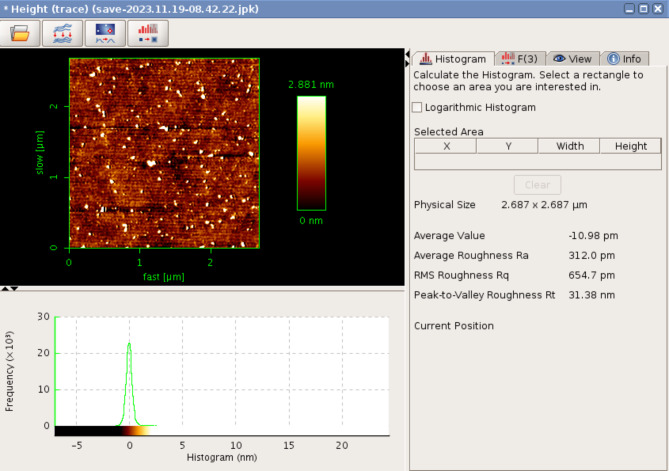
“The SEM images of the produced ZnNPs show that the synthesis NPs were spherical, homogeneous, and of the same size (Fig. 7).”
§ Green synthesis of zinc nanoparticles by hydroalcoholic extract of lavender (Lavandula stoechas L.), characterization, and cytotoxic effects on human breast and colon cancer > Results > SEM and AFM
plain- Asserted: passes — The authors put it forward as true.
- Checkable: passes — It can be checked against evidence.
- Load-bearing: unclear — It is unclear whether the paper’s conclusions depend on it.
- Based: passes — The paper gives a reason why it holds.
It may state two separate claims as one.
A result the paper reports from its own data — it cites no other source for it, so there is none to check. The quote shows it is in the paper.
In the paper
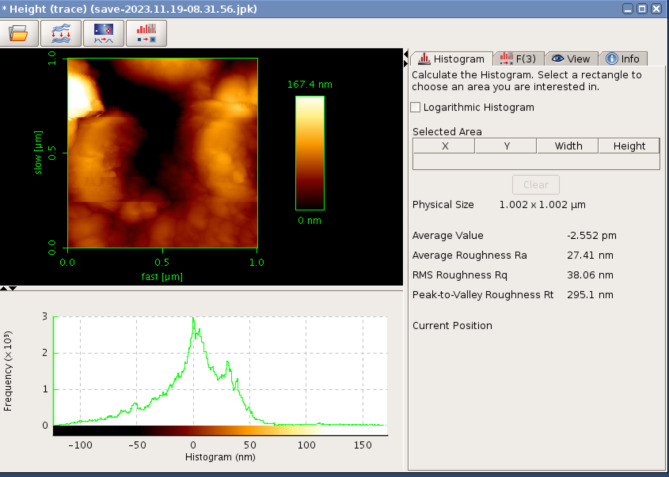
“In addition, the AFM images also confirmed the SEM image and reported the size of the produced NPs below 100 nm (Fig. 8).”
§ Green synthesis of zinc nanoparticles by hydroalcoholic extract of lavender (Lavandula stoechas L.), characterization, and cytotoxic effects on human breast and colon cancer > Results > SEM and AFM
plainstates an association- Asserted: passes — The authors put it forward as true.
- Checkable: passes — It can be checked against evidence.
- Load-bearing: unclear — It is unclear whether the paper’s conclusions depend on it.
- Based: passes — The paper gives a reason why it holds.
It may state two separate claims as one.
A result the paper reports from its own data — it cites no other source for it, so there is none to check. The quote shows it is in the paper.
In the paper
“The highest level of cytotoxicity of NPs occurred after 48 h and was dependent on dose and time.”
§ Green synthesis of zinc nanoparticles by hydroalcoholic extract of lavender (Lavandula stoechas L.), characterization, and cytotoxic effects on human breast and colon cancer > Abstract
plainstates an association- Asserted: passes — The authors put it forward as true.
- Checkable: passes — It can be checked against evidence.
- Load-bearing: passes — The paper’s conclusions depend on it.
- Based: passes — The paper gives a reason why it holds.
It may state two separate claims as one.
A result the paper reports from its own data — it cites no other source for it, so there is none to check. The quote shows it is in the paper.
In the paper
“Figure 4 analysis shows that plant phytochemicals are present in the composition and that Peaks 3424.92 and 2921.38 are respectively associated with O–H bonds and alcohol group, peaks 1580.19 are associated with N–H bonds or C = O of the amino group, peak 1407.73 are associated with C–H bonds and alkane group, and finally, peak 1026.63 are associated with C–N bonds.”
§ Green synthesis of zinc nanoparticles by hydroalcoholic extract of lavender (Lavandula stoechas L.), characterization, and cytotoxic effects on human breast and colon cancer > Results > Evaluation of the production of ZnNPs
plainstates an association- Asserted: passes — The authors put it forward as true.
- Checkable: passes — It can be checked against evidence.
- Load-bearing: passes — The paper’s conclusions depend on it.
- Based: passes — The paper gives a reason why it holds.
It may state two separate claims as one.
A result the paper reports from its own data — it cites no other source for it, so there is none to check. The quote shows it is in the paper.
In the paper
“Also, the synthesized ZnNPs showed cytotoxic effects against the examined cancer cells, while they did not cause toxicity to healthy cells.”
§ Green synthesis of zinc nanoparticles by hydroalcoholic extract of lavender (Lavandula stoechas L.), characterization, and cytotoxic effects on human breast and colon cancer > Abstract
plainstates a cause- Asserted: passes — The authors put it forward as true.
- Checkable: passes — It can be checked against evidence.
- Load-bearing: passes — The paper’s conclusions depend on it.
- Based: passes — The paper gives a reason why it holds.
It may state two separate claims as one. The quote only partly states this claim.
- Rests on an assumption: MCF10a and HGF cell lines are valid models of healthy human cells.
A result the paper reports from its own data — it cites no other source for it, so there is none to check. The quote shows it is in the paper.
In the paper
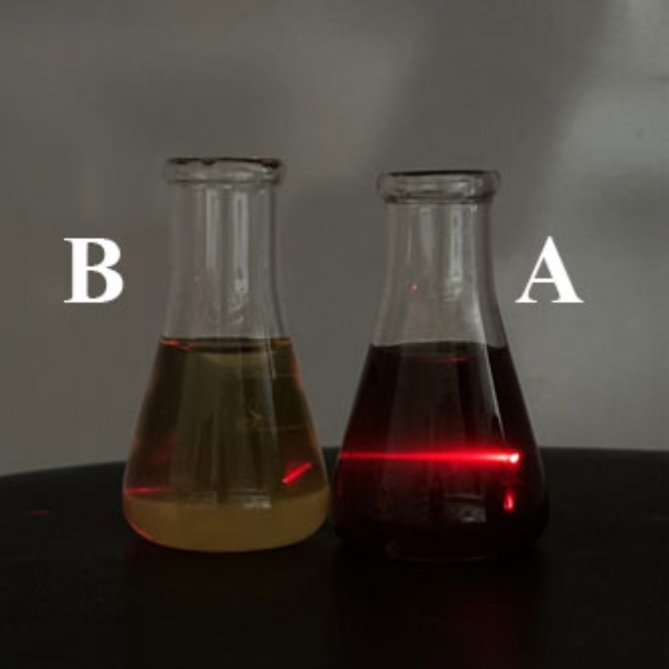
“The color change due to the Tyndall effect indicates the formation of colloidal particles and the synthesis of ZnNPs (Fig. 1).”
§ Green synthesis of zinc nanoparticles by hydroalcoholic extract of lavender (Lavandula stoechas L.), characterization, and cytotoxic effects on human breast and colon cancer > Results > Amount of plant extract and the production of ZnNPs
hedgedstates a cause- Asserted: passes — The authors put it forward as true.
- Checkable: passes — It can be checked against evidence.
- Load-bearing: passes — The paper’s conclusions depend on it.
- Based: passes — The paper gives a reason why it holds.
It may state two separate claims as one.
A result the paper reports from its own data — it cites no other source for it, so there is none to check. The quote shows it is in the paper.
In the paper
“In Fig. 7, the Formed NPs can be seen in different sizes between 10 and 50 nm, which proves that the lavender plant synthesized ZnNPs in the nanometer range.”
§ Green synthesis of zinc nanoparticles by hydroalcoholic extract of lavender (Lavandula stoechas L.), characterization, and cytotoxic effects on human breast and colon cancer > Results > SEM and AFM
boostedstates a cause- Asserted: passes — The authors put it forward as true.
- Checkable: passes — It can be checked against evidence.
- Load-bearing: passes — The paper’s conclusions depend on it.
- Based: passes — The paper gives a reason why it holds.
It may state two separate claims as one.
A result the paper reports from its own data — it cites no other source for it, so there is none to check. The quote shows it is in the paper.
In the paper
“The data obtained from examining the zeta potential of ZnNPs synthesis showed that this particle has relative stability with a zeta potential of -27 mV.”
§ Green synthesis of zinc nanoparticles by hydroalcoholic extract of lavender (Lavandula stoechas L.), characterization, and cytotoxic effects on human breast and colon cancer > Results > Evaluation of the production of ZnNPs
plain- Asserted: passes — The authors put it forward as true.
- Checkable: passes — It can be checked against evidence.
- Load-bearing: unclear — It is unclear whether the paper’s conclusions depend on it.
- Based: passes — The paper gives a reason why it holds.
It may state two separate claims as one.
A result the paper reports from its own data — it cites no other source for it, so there is none to check. The quote shows it is in the paper.
In the paper
“A2 NPs had significant cytotoxic effects in most tested concentrations in human breast cancer (MCF7) and human colon cancer (HT29) cells and inhibited the growth of cancer cells.”
- Also stated in: § Discussion · plain
“The data of the investigation of the cytotoxic effect of the present study show that the synthesized ZnNPs had significant cytotoxic effects in most of the tested concentrations in human breast cancer cells (MCF7) and human colon cancer cells (HT29) and inhibited the growth of cancer cells.”
§ Green synthesis of zinc nanoparticles by hydroalcoholic extract of lavender (Lavandula stoechas L.), characterization, and cytotoxic effects on human breast and colon cancer > Results > Cytotoxicity of ZnNPs
plainstates a cause- Asserted: passes — The authors put it forward as true.
- Checkable: passes — It can be checked against evidence.
- Load-bearing: passes — The paper’s conclusions depend on it.
- Based: passes — The paper gives a reason why it holds.
It may state two separate claims as one.
- Also stated in: § Discussion · plain
A result the paper reports from its own data — it cites no other source for it, so there is none to check. The quote shows it is in the paper.
In the paper
“In this study, the formation of NPs was measured using the Tyndall effect, UV-Vis, DLS, FTIR, Zeta-P, Raman spectroscopy, SEM, AFM, and XRD methods, and all the mentioned measurements confirmed the synthesis of ZnNPs.”
§ Green synthesis of zinc nanoparticles by hydroalcoholic extract of lavender (Lavandula stoechas L.), characterization, and cytotoxic effects on human breast and colon cancer > Discussion
plainstates a cause- Asserted: passes — The authors put it forward as true.
- Checkable: passes — It can be checked against evidence.
- Load-bearing: passes — The paper’s conclusions depend on it.
- Based: passes — The paper gives a reason why it holds.
It may state two separate claims as one.
A result the paper reports from its own data — it cites no other source for it, so there is none to check. The quote shows it is in the paper.
In the paper
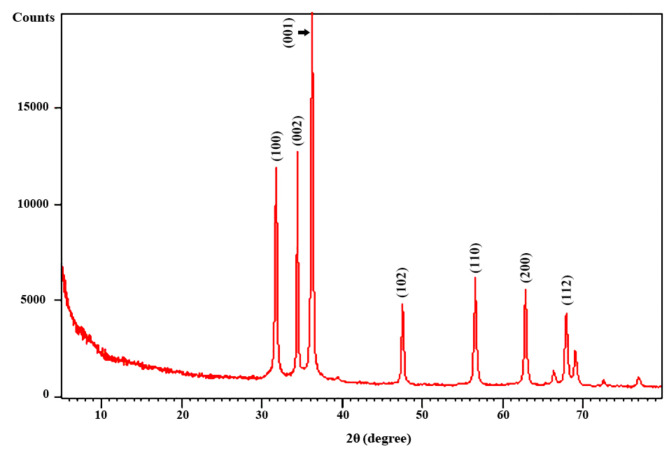
“It is also clear from Fig. 11 that the crystalline nanoparticles are well arranged, and the sample has high purity due to the absence of different peaks.”
§ Green synthesis of zinc nanoparticles by hydroalcoholic extract of lavender (Lavandula stoechas L.), characterization, and cytotoxic effects on human breast and colon cancer > Results > XRD
boostedstates a cause- Asserted: passes — The authors put it forward as true.
- Checkable: passes — It can be checked against evidence.
- Load-bearing: unclear — It is unclear whether the paper’s conclusions depend on it.
- Based: passes — The paper gives a reason why it holds.
It may state two separate claims as one.
- Rests on an assumption: ZnNPs have surface plasmon resonance properties and a distinct optical absorption peak in the range of 2.2 keV, and the formation of a peak in this range indicates the formation of NPs.
The paper states this without a source or data behind it here, so there is nothing to check it against. The quote shows it is in the paper.
In the paper
“Cytotoxic effects of NPs depend on time and concentration.”
§ Green synthesis of zinc nanoparticles by hydroalcoholic extract of lavender (Lavandula stoechas L.), characterization, and cytotoxic effects on human breast and colon cancer > Discussion
plainstates a cause- Asserted: passes — The authors put it forward as true.
- Checkable: passes — It can be checked against evidence.
- Load-bearing: passes — The paper’s conclusions depend on it.
- Based: passes — The paper gives a reason why it holds.
The quote only partly states this claim.
A conclusion the paper draws from its own results — it cites no other source for it, so there is none to check. The quote shows it is in the paper.
In the paper
“It was determined that lavender is a suitable option for the green synthesis of ZnNPs and can be used as a stable source for the production of MNPs.”
§ Green synthesis of zinc nanoparticles by hydroalcoholic extract of lavender (Lavandula stoechas L.), characterization, and cytotoxic effects on human breast and colon cancer > Abstract
plainstates a cause- Asserted: passes — The authors put it forward as true.
- Checkable: passes — It can be checked against evidence.
- Load-bearing: passes — The paper’s conclusions depend on it.
- Based: passes — The paper gives a reason why it holds.
It may state two separate claims as one.
In the paper
“Plants are the largest and most widely used source for the green synthesis of NPs due to their diverse and wide range of phytochemicals that act as reducing and stabilizing agents for forming NPs.”
§ Green synthesis of zinc nanoparticles by hydroalcoholic extract of lavender (Lavandula stoechas L.), characterization, and cytotoxic effects on human breast and colon cancer > Introduction
What the sources say
- Not checked — no full text of the sourcecites [5] Kavitha, A. et al. A mini review on plant-mediated zinc oxide nanoparticles and their antibacterial potency. Biocatal. Agric. Biotechnol. 48, 102654 (2023). source
plainstates a cause- Asserted: passes — The authors put it forward as true.
- Checkable: passes — It can be checked against evidence.
- Load-bearing: fails — The paper’s conclusions may not depend on it.
- Based: passes — The paper gives a reason why it holds.
Probably not a substantial claim. The paper’s conclusions may not depend on it.
In the paper
“Various phytochemicals found in plants, such as organic acids, amines, amides, aldehydes, ketones, and flavonoids, are responsible for the reduction of metal ions and the formation of NPs, and various proteins found in metabolites and plant extracts are responsible for the stability of synthesized NPs5.”
§ Green synthesis of zinc nanoparticles by hydroalcoholic extract of lavender (Lavandula stoechas L.), characterization, and cytotoxic effects on human breast and colon cancer > Introduction
What the sources say
- Not checked — no full text of the sourcecites [5] Kavitha, A. et al. A mini review on plant-mediated zinc oxide nanoparticles and their antibacterial potency. Biocatal. Agric. Biotechnol. 48, 102654 (2023). source
plainstates a cause- Asserted: passes — The authors put it forward as true.
- Checkable: passes — It can be checked against evidence.
- Load-bearing: fails — The paper’s conclusions may not depend on it.
- Based: passes — The paper gives a reason why it holds.
Probably not a substantial claim. The paper’s conclusions may not depend on it. It may state two separate claims as one.
None of the sources cited for this claim have been checked yet.
In the paper
“Due to its characteristics of mature intestinal cells, the human colon adenocarcinoma cell line HT29 is used in studies in various fields, including bioavailability and the study of intestinal immune response to various diseases32.”
§ Green synthesis of zinc nanoparticles by hydroalcoholic extract of lavender (Lavandula stoechas L.), characterization, and cytotoxic effects on human breast and colon cancer > Introduction
What the sources say
- Not checked yetcites [32] Martínez-Maqueda, D., Miralles, B. & Recio, I. HT29 cell line. In The Impact of Food Bioactives on Health: In Vitro and Ex Vivo Models. 113–124. (2015). source
Checked before — its earlier verdict is held back until a new check runs.
plainstates a cause- Asserted: passes — The authors put it forward as true.
- Checkable: passes — It can be checked against evidence.
- Load-bearing: fails — The paper’s conclusions may not depend on it.
- Based: passes — The paper gives a reason why it holds.
Probably not a substantial claim. The paper’s conclusions may not depend on it.
- Not checked yet
A conclusion the paper draws from its own results — it cites no other source for it, so there is none to check. The quote shows it is in the paper.
In the paper
“In addition, considering the lack of reports that the lavender plant is pathogenic, this plant can be regarded as a suitable option for entering the industry to produce MNPs.”
§ Green synthesis of zinc nanoparticles by hydroalcoholic extract of lavender (Lavandula stoechas L.), characterization, and cytotoxic effects on human breast and colon cancer > Discussion
plainstates a possible cause- Asserted: passes — The authors put it forward as true.
- Checkable: fails — It may be too vague to check against evidence.
- Load-bearing: fails — The paper’s conclusions may not depend on it.
- Based: fails — The paper may give no reason why it holds.
Probably not a substantial claim. It may be too vague to check against evidence. The paper’s conclusions may not depend on it. The paper may give no reason why it holds. It may state two separate claims as one.
- Rests on an assumption: The lavender plant is not pathogenic.
None of the sources cited for this claim have been checked yet.
In the paper
“In recent studies, the cytotoxic effects of NPs produced by the green synthesis method have been investigated28–30.”
§ Green synthesis of zinc nanoparticles by hydroalcoholic extract of lavender (Lavandula stoechas L.), characterization, and cytotoxic effects on human breast and colon cancer > Introduction
What the sources say
- Not checked — no full text of the sourcecites [28] Patrón-Romero, L. et al. Synthesis, characterization and cytotoxicity of zinc oxide nanoparticles by green synthesis method. J. Drug Deliv. Sci. Technol. 60, 101925 (2020). source
- Not checked yetcites [29] Selim, Y. A. et al. Green synthesis of zinc oxide nanoparticles using aqueous extract of Deverra tortuosa and their cytotoxic activities. Sci. Rep. 10 (1), 3445 (2020). source
Checked before — its earlier verdict is held back until a new check runs.
- Not checked — no full text of the sourcecites [30] Yadegari, J. G. et al. Antileishmanial, Cellular Mechanisms, and Cytotoxic Effects of Green Synthesized Zinc Nanoparticles Alone and in Combined with Glucantime Against Leishmania Major Infection. Vol. 164. 114984 (Biomedicine & Pharmacotherapy, 2023). source
plain- Asserted: passes — The authors put it forward as true.
- Checkable: passes — It can be checked against evidence.
- Load-bearing: fails — The paper’s conclusions may not depend on it.
- Based: passes — The paper gives a reason why it holds.
Probably not a substantial claim. The paper’s conclusions may not depend on it.
A conclusion the paper draws from its own results — it cites no other source for it, so there is none to check. The quote shows it is in the paper.
In the paper
“Research findings show that pH, temperature, and RPM affect the size, shape, and stability of NPs, and optimizing production by controlling experimental parameters can lead to the production of desirable NPs.”
§ Green synthesis of zinc nanoparticles by hydroalcoholic extract of lavender (Lavandula stoechas L.), characterization, and cytotoxic effects on human breast and colon cancer > Discussion
plainstates a cause- Asserted: passes — The authors put it forward as true.
- Checkable: passes — It can be checked against evidence.
- Load-bearing: fails — The paper’s conclusions may not depend on it.
- Based: fails — The paper may give no reason why it holds.
Probably not a substantial claim. The paper’s conclusions may not depend on it. The paper may give no reason why it holds. It may state two separate claims as one.
A conclusion the paper draws from its own results — it cites no other source for it, so there is none to check. The quote shows it is in the paper.
In the paper
“As a result, the above NPs can find many biomedical applications with therapeutic importance to deal with breast and colon cancer.”
- Also stated in: § Discussion · plain
“As a result, the above NPs can find many biomedical applications with therapeutic importance to deal with breast and colon cancer.”
§ Green synthesis of zinc nanoparticles by hydroalcoholic extract of lavender (Lavandula stoechas L.), characterization, and cytotoxic effects on human breast and colon cancer > Results > Cytotoxicity of ZnNPs
plain- Asserted: passes — The authors put it forward as true.
- Checkable: fails — It may be too vague to check against evidence.
- Load-bearing: passes — The paper’s conclusions depend on it.
- Based: passes — The paper gives a reason why it holds.
Probably not a substantial claim. It may be too vague to check against evidence.
- Also stated in: § Discussion · plain
None of the sources cited for this claim have been checked yet.
In the paper
“The US Food and Drug Administration (FDA) considers it a generally recognized safe substance (GRAS)27.”
§ Green synthesis of zinc nanoparticles by hydroalcoholic extract of lavender (Lavandula stoechas L.), characterization, and cytotoxic effects on human breast and colon cancer > Introduction
What the sources say
- Not checked yetcites [27] Yagoub, A. E. A. et al. Antimicrobial properties of zinc oxide nanoparticles synthesized from lavandula pubescens shoot methanol extract. Appl. Sci. 12 (22), 11613 (2022). source
Checked before — its earlier verdict is held back until a new check runs.
plain- Asserted: passes — The authors put it forward as true.
- Checkable: passes — It can be checked against evidence.
- Load-bearing: fails — The paper’s conclusions may not depend on it.
- Based: passes — The paper gives a reason why it holds.
Probably not a substantial claim. The paper’s conclusions may not depend on it.
- Not checked yet
In the paper
“The MCF-7 cell line is the most common breast cancer cell, which has been studied and characterized by various scientists for more than 40 years, and is the best choice for breast cancer research33.”
§ Green synthesis of zinc nanoparticles by hydroalcoholic extract of lavender (Lavandula stoechas L.), characterization, and cytotoxic effects on human breast and colon cancer > Introduction
What the sources say
- Not checked — no full text of the sourcecites [33] Comşa, Ş., Cimpean, A. M. & Raica, M. The story of MCF-7 breast cancer cell line: 40 years of experience in research. Anticancer Res. 35 (6), 3147–3154 (2015).
plain- Asserted: passes — The authors put it forward as true.
- Checkable: passes — It can be checked against evidence.
- Load-bearing: fails — The paper’s conclusions may not depend on it.
- Based: passes — The paper gives a reason why it holds.
Probably not a substantial claim. The paper’s conclusions may not depend on it. It may state two separate claims as one.
A conclusion the paper draws from its own results — it cites no other source for it, so there is none to check. The quote shows it is in the paper.
In the paper
“Considering the determination of the conditions and amount of compounds for the production of ZNPs by the lavender plant after repetitions of the experiment, it can be said that the production of NPs with the used method is stable and can be implemented on a large scale for use in biological processes.”
§ Green synthesis of zinc nanoparticles by hydroalcoholic extract of lavender (Lavandula stoechas L.), characterization, and cytotoxic effects on human breast and colon cancer > Discussion
plainstates a cause- Asserted: passes — The authors put it forward as true.
- Checkable: passes — It can be checked against evidence.
- Load-bearing: passes — The paper’s conclusions depend on it.
- Based: passes — The paper gives a reason why it holds.
It may state two separate claims as one.
- Rests on an assumption: The green synthesis method reduces final cost, does not produce dangerous waste, is environmentally friendly, and can produce NPs with different properties useful in specific applications.
The paper relies on this without support.
MCF10a and HGF cell lines are valid models of healthy human cells.
“Cell lines, human breast cancer cells (MCF7), human colon cancer cells (HT29), normal human gingival fibroblasts (HGF), and healthy breast cells (MCF10a) were obtained from the National Center for Genetic and Biological Resources of Iran (IBRC) has been prepared and used.”
The paper relies on this without support.
The particles in the solution have a surface charge and cover surrounding particles.
“The particles in the solution have a surface charge; in any case, they cover the surrounding particles.”
The paper relies on this without support.
Steric hindrance is one of the most important factors affecting the stability of NPs.
“In this regard, we can mention the effect of steric hindrance 1 as one of the most important factors affecting the stability of NPs.”
The paper relies on this without support.
The lavender plant is not pathogenic.
“considering the lack of reports that the lavender plant is pathogenic”
The paper relies on this without support.
ZnNPs have surface plasmon resonance properties and a distinct optical absorption peak in the range of 2.2 keV, and the formation of a peak in this range indicates the formation of NPs.
“ZnNPs, due to their surface plasmon resonance properties, have a distinct optical absorption peak in the range of 2.2 keV, and the formation of a peak in this range indicates the formation of NPs.”
The paper relies on this without support.
Compounds in plant extracts such as flavonoids, alcohols, organic acids, cytokines, terpenoids, proteins, peptides, vitamins, and saccharides act as reducing agents and convert metal ions into MNPs.
“Compounds in plant extracts such as flavonoids, alcohols, organic acids, cytokines, terpenoids, proteins, peptides, vitamins, and saccharides act as reducing agents and convert metal ions into MNPs.”
The paper relies on this without support.
Green synthesis of nanoparticles is a bottom-up method, and metabolites of plant extracts containing active compounds of terpenoids, alkaloids, phenols, tannins, and vitamins play the main role in it.
“The green synthesis of nanoparticles is a bottom-up method, and the metabolites of plant extracts containing active compounds of terpenoids, alkaloids, phenols, tannins, and vitamins play the main role in it.”
The paper relies on this without support.
In green synthesis, active compounds act as reducers, giving electrons to metal particles, causing the formation of nanoparticles, and prevent re-aggregation.
“In this process, these active compounds act as reducers, giving electrons to metal particles, causing the formation of nanoparticles, and by continuing this process, they prevent re-aggregation.”
The paper relies on this without support.
By binding to cell surface receptors, NPs activate signaling pathways that play an important role in cell growth and survival.
“By binding to cell surface receptors, NPs activate signaling pathways that play an important role in cell growth and survival.”
The paper relies on this without support.
The green synthesis method reduces final cost, does not produce dangerous waste, is environmentally friendly, and can produce NPs with different properties useful in specific applications.
“The green synthesis method, which uses plant extracts to produce NPs, helps to reduce the final cost of production on a large scale. Also, unlike chemical methods of NPs synthesis, this method does not produce dangerous waste, is environmentally friendly, and can produce NPs with different properties that are useful in specific applications.”
Self-check
Percentages, sums and reported differences re-computed from the paper’s own numbers.
Each contradiction between two passages listed here was confirmed by an independent check.
Rated major: it would touch a result — a value a result rests on, reported and recomputed p-values on opposite sides of the significance level, two passages that conflict with no sign which is right, or a cited work retracted before this paper was published.
In the paper
§ Green synthesis of zinc nanoparticles by hydroalcoholic extract of lavender (Lavandula stoechas L.), characterization, and cytotoxic effects on human breast and colon cancer > Results > Evaluation of the production of ZnNPs
“their Zeta-P was calculated as 1.72 mV.”
§ Green synthesis of zinc nanoparticles by hydroalcoholic extract of lavender (Lavandula stoechas L.), characterization, and cytotoxic effects on human breast and colon cancer > Results > Evaluation of the production of ZnNPs
“The data obtained from examining the zeta potential of ZnNPs synthesis showed that this particle has relative stability with a zeta potential of -27 mV.”
Rated major: it would touch a result — a value a result rests on, reported and recomputed p-values on opposite sides of the significance level, two passages that conflict with no sign which is right, or a cited work retracted before this paper was published.
In the paper
§ Green synthesis of zinc nanoparticles by hydroalcoholic extract of lavender (Lavandula stoechas L.), characterization, and cytotoxic effects on human breast and colon cancer > Abstract
“while they did not cause toxicity to healthy cells.”
§ Green synthesis of zinc nanoparticles by hydroalcoholic extract of lavender (Lavandula stoechas L.), characterization, and cytotoxic effects on human breast and colon cancer > Results > Cytotoxicity of ZnNPs
“| HGF | A2 | 140.2 | | HGF | C2 | 155.2 | | HGF | Cisplatin | 76.38 | | HT29 | A2 | 65.42 | | HT29 | C2 | 94.68 | | HT29 | Cisplatin | 155.2 | | MCF 7 | A2 | 54.65 | | MCF 7 | C2 | 168.9 | | MCF 7 | Cisplatin | 65.19 | | MCF 10a | A2 | 100.1 |”
Rated minor: it would not touch a result — a value no result rests on, a p-value that stays on the same side of the significance level, or a conflict that is clerical, resolved elsewhere in the paper, or outside its own findings.
In the paper
§ Green synthesis of zinc nanoparticles by hydroalcoholic extract of lavender (Lavandula stoechas L.), characterization, and cytotoxic effects on human breast and colon cancer > Method and materials > MTT assay
“100 x (average absorption of control cells/average absorption of treated cells) = percentage of living cells.”
§ Green synthesis of zinc nanoparticles by hydroalcoholic extract of lavender (Lavandula stoechas L.), characterization, and cytotoxic effects on human breast and colon cancer > Method and materials > MTT assay
“The amount of absorption is directly proportional to the number of living cells.”
Citations
Cites
Salem, S. S., & Fouda, A. (2020) · Biological Trace Element Research · doi:10.1007/s12011-020-02138-3 · Cited by 1,306
Global governance by goal-setting: the novel approach of the UN Sustainable Development Goals
Biermann, F., Kanie, N., & Kim, R. E. (2017) · Current Opinion in Environmental Sustainability · doi:10.1016/j.cosust.2017.01.010 · Cited by 1,269
Javed, R., Zia, M., Naz, S., Aisida, S. O., Ain, N. U., & Ao, Q. (2020) · Journal of Nanobiotechnology · doi:10.1186/s12951-020-00704-4 · Cited by 1,019
A review on green synthesis of silver nanoparticles and their applications
Rafique, M., Sadaf, I., Rafique, M. S., & Tahir, M. B. (2016) · Artificial Cells Nanomedicine and Biotechnology · doi:10.1080/21691401.2016.1241792 · Cited by 989
Advances in green synthesis of nanoparticles
Gour, A., & Jain, N. K. (2019) · Artificial Cells, Nanomedicine, and Biotechnology · doi:10.1080/21691401.2019.1577878 · Cited by 967
Green synthesis of zinc oxide nanoparticles: a comparison
Fakhari, S., Jamzad, M., & Kabiri-Fard, H. (2019) · Green Chemistry Letters and Reviews · doi:10.1080/17518253.2018.1547925 · Cited by 712
Selim, Y. A., Azb, M. A., Ragab, I., & H. M. Abd El-Azim, M. (2020) · Scientific Reports · doi:10.1038/s41598-020-60541-1 · Cited by 552
Vijayaraghavan, K., & Ashokkumar, T. (2017) · Journal of environmental chemical engineering · doi:10.1016/j.jece.2017.09.026 · Cited by 490
Colon Cancer: A Clinician’s Perspective in 2019
Ahmed∥, M. (2020) · Gastroenterology Research · doi:10.14740/gr1239 · Cited by 289
Umamaheswari, A., Prabu, S. L., John, S., & Puratchikody, A. (2021) · Biotechnology Reports · doi:10.1016/j.btre.2021.e00595 · Cited by 216
Research works printed but not linked: 1
- Bunghez, I. R. et al. Characterization of silver nanoparticles obtained by Lavandula angustifolia extract. Rev. Roum Chim. 60 (5–6), 515–519 (2015).
Cited by
Sorted by citations
Thiruvengadam, M., Chi, H.-Y., Choi, H.-J., Jung, B.-S., Lee, S.-B., Park, Y., Jeon, D., Çiftçi, F., Shariati, M. A., & Kim, S. (2025) · Industrial Crops and Products · doi:10.1016/j.indcrop.2025.121337 · Cited by 34
Shanmugarathinam, A., Elamaran, N., Kirubakaran, D., Irulappan, G. B., Baig, A. A., & Vasantharaj, K. (2025) · Biomedical Materials & Devices · doi:10.1007/s44174-025-00373-7 · Cited by 12
Dogruer, S., Bilgi, M., Selen, A. V. C. I., & Işık, B. (2026) · International Journal of Environmental Science and Technology · doi:10.1007/s13762-026-07138-9 · Cited by 11
Hu, G., Zhao, B., Gouda, M., Chen, G., Jin, G., Wang, J., & Geng, F. (2025) · Food Research International · doi:10.1016/j.foodres.2025.118249 · Cited by 4
Fulgheri, F., Angius, F., Perra, M., Delogu, I., Puxeddu, S., Georgiev, M. I., Novotná, R., Franková, J., Lobina, M., Manzin, A., et al. (2025) · Antioxidants · doi:10.3390/antiox14070811 · Cited by 4
Metadata
- Authors
- Mehdipour, A., Reza, M. A. S., Rasouli, A., Baravati, M. H. J., Jafari, G. A., & Heidari, F.
- Affiliations
- Qom University of Medical Science and Health Services (IR)
- Corresponding author
- Reza, Mahdieh Ameri Shah
- Venue
- Scientific Reports
- Published
- 2024-11-28
- Volume
- 14
- Issue
- 1
- Pages
- 29543-29543
- ISSN
- 2045-2322 (ISSN-L)
- PMC
- PMC11603038
- OpenAlex
- W4404772541
- Cited by
- 21
- References
- 35
- Citations by year
- 2026: 12 · 2025: 9
- FWCI
- 1.84
- Type
- journal article
- Language
- en
- Open access
- gold
- doi.org
- Licence
- Locations
- Scientific Reports (publishedVersion, cc-by-nc-nd)
- Research Square (submittedVersion, cc-by)
- PubMed Central (publishedVersion, cc-by-nc-nd)
- PubMed (publishedVersion)
- DOAJ (DOAJ: Directory of Open Access Journals) (submittedVersion)
- Funders
- Qom University of Medical Science (IR.MUQ.REC.1401.200)
- Topics
- Physical Sciences › Materials Science › Materials Chemistry › Nanoparticles: synthesis and applications
- Life Sciences › Agricultural and Biological Sciences › Plant Science › Medicinal Plant Research
- Health Sciences › Medicine › Oncology › Metal complexes synthesis and properties
- Keywords
- zinc nanoparticles, green synthesis, Lavandula stoechas, lavender extract, hydroalcoholic extract, cytotoxicity, breast cancer, colon cancer, MCF-7 cells, HT-29 cells, anticancer nanoparticles, nanoparticle characterization
- MeSH terms
- Antineoplastic Agents, Breast Neoplasms, Cell Survival, Colonic Neoplasms, Female, Humans, Plant Extracts, Zinc, HT29 Cells, Lavandula, Cell Line, Tumor, Metal Nanoparticles, Green Chemistry Technology, MCF-7 Cells
About these checks
Registry, retraction, Cites and statistics results are computed, not judged, with one exception: a printed reference that no index lists is read once by a model before it counts as a citation error. Claims are extracted by a model and kept only when their quote appears verbatim in the text; each cited source is then checked, with a model’s help, for whether it says what the claim relies on. Those verdicts can be wrong — read the claim’s quote and the cited source before relying on one.
A language model drew the claims from the paper on 2026-11-10, under version 3 of the claim definition (model deepseek-v4.1-flash, prompt extract-v3).
A second model labelled each claim on 2026-11-10 (model jev-1.13-20260917, definition revision gold-guideline-v0.2).
Statistics and arithmetic are recomputed, not judged.
Confidence bands are shown only for fields calibrated on our annotated test set. None is calibrated yet, so no band is shown.
What counts as a claim ›How we measure confidence ›How we check this ›
Are you an author, or do you see a problem with this page? Request a review
How to cite
Cite CoChat for the checks on this page, and the paper for its own findings.
- This page
- CoChat. (2026). Citation check: Green synthesis of zinc nanoparticles by hydroalcoholic extract of lavender (Lavandula stoechas L.), characterization, and cytotoxic effects on human breast and colon cancer. https://app.cochat.ai/papers/10.1038/s41598-024-81295-0
- The paper
- Mehdipour, A., Reza, M. A. S., Rasouli, A., Baravati, M. H. J., Jafari, G. A., & Heidari, F. (2024). Green synthesis of zinc nanoparticles by hydroalcoholic extract of lavender (Lavandula stoechas L.), characterization, and cytotoxic effects on human breast and colon cancer. Scientific Reports. https://doi.org/10.1038/s41598-024-81295-0
