

Evaluation of Advances in Battery Health Prediction for Electric Vehicles from Traditional Linear Filters to Latest Machine Learning Approaches
Open accessThe DOI matches its Crossref record; 140 of the 140 references it cites were found in a registry or an index.
Abstract
In recent years, there has been growing interest in Li-ion battery State-of-Health (SOH) estimation due to its critical role in ensuring the safe and reliable operation of Electric Vehicles (EVs). Effective energy management and accurate SOH prediction are essential for the reliability and sustainability of EVs. This paper presents an in-depth review of SOH estimation techniques, starting with an overview of seminal methods that lay the theoretical groundwork for battery modeling and SOH prediction. The review then evaluates recent advancements in Machine Learning (ML) and Artificial Intelligence (AI) techniques, emphasizing their contributions to improving SOH estimation. Through a rigorous screening process, the paper systematically assesses the evolution of these advanced methods, addressing specific research questions to evaluate their effectiveness and practical implications. Key findings highlight the potential of hybrid models that integrate Equivalent Circuit Models (ECMs) with Deep Learning approaches, offering enhanced accuracy and real-time performance. Additionally, the paper discusses limitations of current methods, such as challenges in translating laboratory-based models to real-world conditions and the computational complexity of some prospective methods. In conclusion, this paper identifies promising future research directions aimed at optimizing hybrid models and overcoming existing constraints to advance SOH estimation and battery management in Electric Vehicles.
Overview
The claims and statistics of this paper haven’t been checked yet.
Free: it reads the open-access text and checks the first 5 claims that cite a source we can check. Create a free account to check every claim.
Integrity signals
Registry
Cites
Statistics
Figures
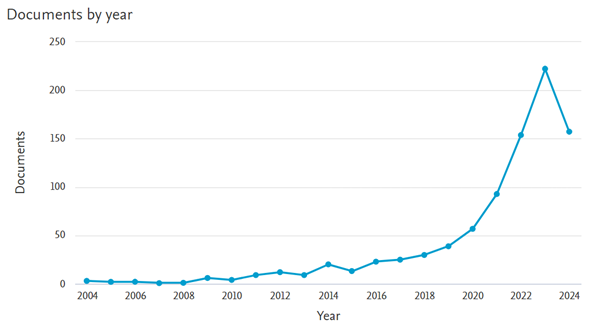
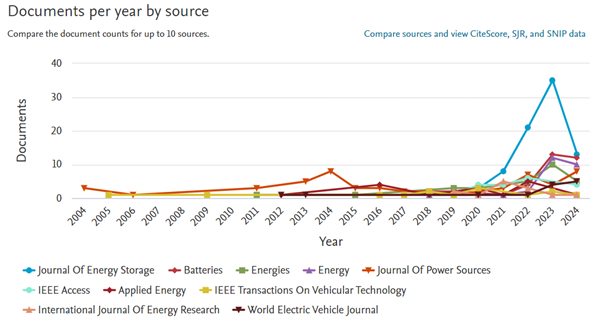
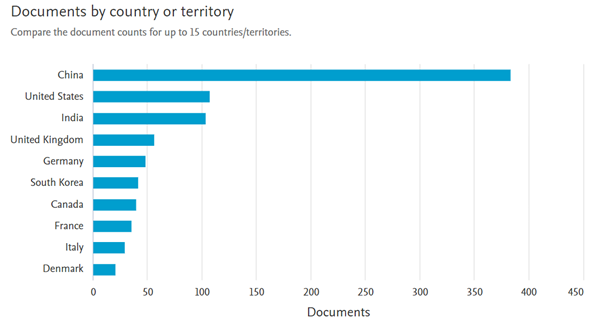
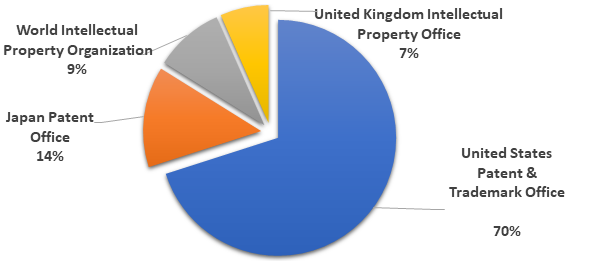
Verification
Claims the paper makes
The claims and statistics of this paper haven’t been checked yet.
Free: it reads the open-access text and checks the first 5 claims that cite a source we can check. Create a free account to check every claim.
Claims other papers make about this one
Each is checked against this paper’s own text: does it say what the citing paper says it does?
The source backs part of the claim, not all of it — or backs it for a different population, condition or comparison.
In the citing paper
“Te necessity for adaptive models was highlighted by Zhao et al., who discovered that the accuracy of SOH estimation was decreased by up to 30% when ML models learned under typical settings were transferred to extreme temperature environments [129].”
From Artificial Intelligence Approaches for SOH Estimation in Lithium-Ion Batteries: A Comprehensive Review of Progress, Critical Evaluations, Challenges, and Toward Future Outlooks (2025) · cites this paper as [129]
Experimental — accuracy not yet measured
Self-check
Percentages, sums and reported differences re-computed from the paper’s own numbers.
The self-check needs the paper’s full text.
Citations
Cites
Kennedy, J., & Eberhart, R. (2002) · Proceedings of ICNN'95 - International Conference on Neural Networks · doi:10.1109/icnn.1995.488968 · Cited by 58,192
A New Approach to Linear Filtering and Prediction Problems
Kalman, R. E. (1960) · Journal of Basic Engineering · doi:10.1115/1.3662552 · Cited by 31,751 · cited 2×
“Kalman Filter (KF) (1960) [32] Estimates the state of linear dynamic systems from noisy observations.”
Mirjalili, S., Mirjalili, S. M., & Lewis, A. (2014) · Advances in Engineering Software · doi:10.1016/j.advengsoft.2013.12.007 · Cited by 19,343 · cited 1×
“Building on this foundation, Waseem et al. [143] introduce a novel method for estimating the SOH of lithium-ion batteries through a hybrid approach that integrates Grey Wolf Optimization (GWO) [144] with Bayesian-Regularized Neural Networks (BRNNs) [145].”
A training algorithm for optimal margin classifiers
Boser, B. E., Guyon, I. M., & Vapnik, V. N. (1992) · Proceedings of the fifth annual workshop on Computational learning theory · doi:10.1145/130385.130401 · Cited by 11,992 · cited 1×
“These results indicate that the proposed method surpasses traditional models such as Elman Neural Networks [126], Support Vector Machines (SVMs) [127], and Gaussian Process Regression (GPR) [117], offering enhanced accuracy and robustness in SOH prediction.”
Elman, J. L. (1990) · Cognitive Science · doi:10.1207/s15516709cog1402_1 · Cited by 11,212 · cited 1×
“These results indicate that the proposed method surpasses traditional models such as Elman Neural Networks [126], Support Vector Machines (SVMs) [127], and Gaussian Process Regression (GPR) [117], offering enhanced accuracy and robustness in SOH prediction.”
New Results in Linear Filtering and Prediction Theory
Kalman, R. E., & Bucy, R. S. (1961) · Journal of Basic Engineering · doi:10.1115/1.3658902 · Cited by 6,387 · cited 1×
“In the past decade, there has been notable evolution in model-based methods, including Kalman Filters (KFs) [32,33] (widely known as linear quadratic estimation filters), Extended Kalman Filters (EKFs), which apply first-order Taylor expansions to linearize nonlinear systems and Unscented Kalman…”
New extension of the Kalman filter to nonlinear systems
Julier, S. J., & Uhlmann, J. K. (1997) · SPIE Proceedings · doi:10.1117/12.280797 · Cited by 5,331 · cited 4×
“Unscented Kalman Filter (UKF) (1997) [34] An accurate alternative to EKF for nonlinear systems.”
InfluentialSupport Vector Regression Machines
Drucker, H., Burges, C. J. C., Kaufman, L., Smola, A. J., & Vapnik, V. N. (1996) · Cited by 4,658
The unscented Kalman filter for nonlinear estimation
Wan, E. A., & Van Der Merwe, R. (2002) · Proceedings of the IEEE 2000 Adaptive Systems for Signal Processing, Communications, and Control Symposium (Cat. No.00EX373) · doi:10.1109/asspcc.2000.882463 · Cited by 4,001 · cited 1×
“Over the years, several significant methods have been developed to enhance SOC estimation under these conditions, as demonstrated in studies such as [73–76].”
Encyclopedia of Machine Learning
(2010) · Springer eBooks · doi:10.1007/978-0-387-30164-8 · Cited by 3,465
Research works printed but not linked: 6
- 3. Murnane, M.; Ghazel, A. A Closer Look at State of Charge ( SOC ) and State of Health ( SOH ) Estimation Techniques for Batteries. Analog Devices 2017, 2, 426-436.
- 57. Brocke, J.v.; Simons, A.; Niehaves, B.; Riemer, K.; Plattfaut, R.; Cleven, A. Reconstructing the Giant: On the Importance of Rigour in Documenting the Literature Search Process. In Proceedings of the 17th European Conference on Information Systems (ECIS 2009), Verona, Italy, 8-10 June 2009.
- 74. Plett, G. LiPB dynamic cell models for Kalman-filter SOC estimation. In Proceedings of the 19th International Battery, Hybrid and Fuel Electric Vehicle Symposium and Exhibition, Busan, Republic of Korea, 19-23 October 2002; pp. 1-12.
- 80. Abrahamsen, P. A Review of Gaussian Random Fields and Correlation Functions; Technical Report 917; Norwegian Computing Center: Oslo, Norway, 1992.
- Holland, J.H. (1975). Adaptation in Natural and Artificial Systems, University of Michigan Press.
- 113. John, J.; Kudva, G.; Jayalakshmi, N.S. Secondary Life of Electric Vehicle Batteries: Degradation, State of Health Estimation Using Incremental Capacity Analysis, Applications and Challenges. IEEE Access 2024, 12, 63735-63753. [CrossRef] 155. UL 1974; ANSI/CAN/UL Standard for Evaluation for Repurposing Batteries. Underwriters Laboratories (UL): Northbrook, IL, USA, 2018; Edition 1, Published Date: October 25, 2018, ANSI Approved: October 25, 2018, SCC Approved: October 25, 2018. 156. IEC 62933-5-3;
Cited by
Kumar, R. S., Singh, A. R., Narayana, P. A., Chandrika, V. S., Bajaj, M., & ЗАЙЦЕВ, Є. О. (2025) · Scientific Reports · doi:10.1038/s41598-025-90810-w · Cited by 85
“To tackle these issues, machine learning approaches have been progressively utilized, providing improved accuracy and adaptability 3,4 .”
High-Volume Battery Recycling: Technical Review of Challenges and Future Directions
Rehman, S., Al‐Greer, M., Burn, A. S., Short, M., & Cui, X. (2025) · Batteries · doi:10.3390/batteries11030094 · Cited by 90
Machine Learning-Based Lithium Battery State of Health Prediction Research
Li, K., & Chen, X. (2025) · Applied Sciences · doi:10.3390/app15020516 · Cited by 44
Cycle based state of health estimation of lithium ion cells using deep learning architectures
Bairwa, B., Pareek, K., & Jadoun, V. K. (2025) · Scientific Reports · doi:10.1038/s41598-025-20995-7 · Cited by 37
Al-Rahamneh, A., Izco, I., Serrano-Hernández, A., & Faulín, J. (2025) · Mathematics · doi:10.3390/math13142247 · Cited by 20
Sakr, H. A., Eladl, A. A., & El-Afifi, M. I. (2025) · Journal of Energy Storage · doi:10.1016/j.est.2025.116409 · Cited by 26
Kumar, N., & Prabhansu (2025) · Future Batteries · doi:10.1016/j.fub.2025.100087 · Cited by 19
Shan, R., Wang, Y., Guo, S., Cui, Y., Zhao, L., Li, J., & Wang, Z. (2025) · Energies · doi:10.3390/en18133542 · Cited by 17
Optimizing battery health monitoring in electric vehicles using interpretable CART–GX model
Mohnish Karthikeyan, B., Anirudh, N. N., Navaneetha Krishnan, S., Christopher Columbus, C., & Kathiresan, A. C. (2025) · Results in Engineering · doi:10.1016/j.rineng.2025.106043 · Cited by 16
SOC Estimation for Lithium-Ion Batteries Based on Weighted Multi-Innovation Sage–Husa Adaptive EKF
Song, W., Liu, R., Jin, X., & Guo, W. (2025) · Energies · doi:10.3390/en18164364 · Cited by 16
Deep learning-based battery health prediction for enhancing electric vehicle performance
Rahman, T., Deb, N., Moniruzzaman, M., Mengash, H. A., Jizat, N. M., Rahman, A. A. M., & Al‐Bawri, S. S. (2026) · Scientific Reports · doi:10.1038/s41598-026-39911-8 · Cited by 14
“Machine learning (ML) models, including Support Vector Machines (SVM), Random Forests (RF), Gaussian Process Regression (GPR), and Gradient Boosting Decision Trees (GBDT), have been applied for both SOH estimation and RUL prediction 12,21 .”
Wu, W., Wang, S., Fan, Y., Liu, D., Long, G., & Fernández, C. (2025) · Journal of Energy Storage · doi:10.1016/j.est.2025.117600 · Cited by 12
Kumar, D., Nasimov, R., Singh, A., Jha, A., Jha, A., & Rizwan, M. (2025) · Applied Computational Intelligence and Soft Computing · doi:10.1155/acis/5516151 · Cited by 8
Venkatesh, A., Kumar, J. V., Kumar, S. P., Kiran, S. S., Ashwini, K., Vijay, L., & Muralidhar, B. (2025) · International Journal of Information Technology · doi:10.1007/s41870-025-02712-9 · Cited by 8
Role of deep learning in battery management system (BMS) for electric vehicles – A review
Ahmed, M. R., Hossen, M. S., Tithi, N. T., Khatun, H., Manik, K. H., Mim, J. J., & Hossain, N. (2026) · Energy Reports · doi:10.1016/j.egyr.2025.109028 · Cited by 23
A Novel Capacity Estimation Method for Lithium-Ion Batteries Based on the Adam Algorithm
Lian, Y., & Qiao, D. (2025) · Batteries · doi:10.3390/batteries11030085 · Cited by 4
Huaibin, G., Ruichao, Y., Jiangwei, Y., Ma, Y., & Chuanwei, Z. (2025) · Ionics · doi:10.1007/s11581-025-06336-8 · Cited by 4
“The black-box models include deep neural networks, support vector machines, random forests, and gradient boosting machines [5].”
Boumous, Z., Boumous, S., Fellah, M., Guesmi, A., & Khezami, L. (2025) · Journal of Energy Storage · doi:10.1016/j.est.2025.118911 · Cited by 4
Korez, K., Fister, D., & Šafarič, R. (2024) · Batteries · doi:10.3390/batteries11010001 · Cited by 3
“Dineva [41] and Madani et al. [42] published a thorough review of deep learning approaches toward reliable SOH predictions.”
Rengarajan, V., & Anuradha, T. (2025) · Iranian Journal of Science and Technology Transactions of Electrical Engineering · doi:10.1007/s40998-025-00941-z · Cited by 2
Edge AI-Driven Battery Management for Electric Vehicles: Models, Hardware, and Future Directions
Zangaruche, S. J., Pakhare, R., Gadekar, S. M., Sangelia, S. D., Allagi, S. B., & Sonwalkar, P. K. (2025) · Global Conference on Information Technology and Communication Networks (GITCON) · doi:10.1109/gitcon65266.2025.11377019 · Cited by 2
“A combination of intelligent power management techniques, well-crafted system architecture, and efficient algorithms are necessary to address these issues and improve the performance/security of electric vehicles equipped with Edge AI[14].”
A Transformer-CNN-BiLSTM Architecture for SOH Prediction of Battery Storage Systems
Wang, T., Wang, K., & Pan, K. (2024) · IEEE Conference on Energy Internet and Energy System Integration (EI2) · doi:10.1109/ei264398.2024.10991902 · Cited by 1
“However, standalone RNN-based models may suffer from vanishing gradient issues and limited generalization when trained with small datasets [11].”
Sudars, K., Namatēvs, I., Ņikuļins, A., & Ozols, K. (2025) · Applied Sciences · doi:10.3390/app15105704 · Cited by 3
A Review of Health State Estimation Algorithms for Retired Lithium-ion Batteries
Liu, Y., Zhuo, C., Shen, Z., Li, M., Fang, L., Lu, S., & Xu, L. (2025) · International Conference on Smart Grid and Artificial Intelligence (SGAI) · doi:10.1109/sgai64825.2025.11009553 · Cited by 1
An entropy-based, self-adaptive predictive algorithm for battery degradation
Strugnell-Lees, B., Evdokimova, E., & Wik, T. (2025) · Journal of Power Sources · doi:10.1016/j.jpowsour.2025.237920 · Cited by 2
Rongli, S., Chen, J., Yang, Y., Liu, Q., Piao, C., & Xie, J. (2026) · Energy · doi:10.1016/j.energy.2026.141396 · Cited by 1
Xu, J., Chen, L., Wu, S., Zheng, J., Sun, H., & Wulamu, A. (2026) · Computers & Chemical Engineering · doi:10.1016/j.compchemeng.2026.109720 · Cited by 2
Techanok, S., Junhuathon, N., & Chayakulkheeree, K. (2025) · International Electrical Engineering Congress (iEECON) · doi:10.1109/ieecon64081.2025.10987628
“Including a review of techniques ranging from traditional methods to the latest machine learning approaches [3], Research has utilized LSTM to estimate battery SOH due to It has strength in handling time series data, Comparisons with recurrent neural networks (RNN) show that LSTM achieves higher…”
Afzal, M. Z., Wen, F., & Saeed, N. (2025) · International Conference on Smart Grid and Green Energy (ICSGGE) · doi:10.1109/icsgge64667.2025.10984914
Liu, X., Wu, X., He, J., & Gupta, R. D. (2025) · Lecture notes in networks and systems · doi:10.1007/978-981-96-7137-3_41
Gregor, M., Bauder, M., de Oliveira, A. K. V., Mast, P., Rüther, R., & Schweiger, H. (2025) · World Electric Vehicle Journal · doi:10.3390/wevj17010003
Xu, J., Chen, L., Wu, S., Zheng, J., Sun, H., & Wulamu, A. (2025) · SSRN Electronic Journal · doi:10.2139/ssrn.5643041
Tefera, E. T., Qiao, H., Moses, A., Juanyun, L., Alberto, A., Xuefeng, W., & Chen, D. (2025) · SSRN Electronic Journal · doi:10.2139/ssrn.5848172
Battery Evolution Forecasting in Electric Vehicles using Deep Learning Models
M.E, P. M., Abinaya Devi, N., Ayyappan, A., Hariharan, S., & Janarathinababu, A. (2025) · International Conference on IoT Based Control Networks and Intelligent Systems (ICICNIS) · doi:10.1109/icicnis66685.2025.11315602
Lithium-ion Battery Health Estimation Using Electric Vehicle Field Data
Zhong, L., & Fei, Z. (2025) · IEEE International Conference on Industrial Informatics (INDIN) · doi:10.1109/indin64977.2025.11279007
Pydi, H. P., Vasudevan, B., Premkumar, D., Rao, G. V., Ramalingam, P. S., & Devi, J. M. (2026) · AIP conference proceedings · doi:10.1063/5.0317822
Madhariya, N., Ralhan, S., Singh, M., Chandrakar, M. K., & Sharma, M. (2026) · International Conference on Advances in Electrical, Computing, Communication and Sustainable Technologies (ICAECT) · doi:10.1109/icaect68478.2026.11426051
Indira, G., Bhavani, M., Brinda, R., & Zahira, R. (2026) · Energy Technology · doi:10.1002/ente.202502262
Hybrid BO-LSBoost Model for Accurate Prediction of Remaining Useful Life of Li-Ion Battery
Varshney, S., Kumar, B., & Mittal, A. P. (2025) · IEEE International Conference on Smart Technologies for Power, Energy and Control (STPEC) · doi:10.1109/stpec66316.2025.11490495
“Prior to the advent of machine learning, predicting remaining useful life (RUL) was often based on physics-based and statistical models [3].”
AI-Driven Battery State-of-Health Prediction for Electric Vehicles Using Hybrid LSTM–GRU Models
Vijayaram, T. R., Gayathri, G. D., Suresh Kumar, J., Velu, S., Harikrishnan, K., & Hari Haran, R. (2026) · International Conference on Intelligent Computing and Control Systems (ICICCS) · doi:10.1109/iciccs67901.2026.11502804
“More recently, the recurrent Neural Network (RNN)-based designs, in particular, the Long Short-Term Memory (LSTM) and Gated Recurrent Unit (GRU) models, have demonstrated enhanced performance due to the memory-based time-series data processing [6].”
yadav, R., Manas, M., & Dubey, R. K. (2026) · International Journal of Ambient Energy · doi:10.1080/01430750.2026.2667500
A LION-optimized GAN for multi-target battery state prediction in battery management system
Alatawi, K. S. S., Almasoudi, F. M., Abd-ElRahman, W. R., Samkari, H. S., Bhutta, M. S., Rasool, G., Alatawi, A. S., Alwasabi, F. Y., & Nazir, M. T. (2026) · Scientific Reports · doi:10.1038/s41598-026-53550-z
Raynukaazhakarsamy, D. (2025) · Journal of Artificial Intelligence Machine Learning and Neural Network · doi:10.55529/jaimlnn.52.118.127
Bastos, M. L., Calazans, M. A. A., dos Santos, M. C. M., Sousa, I. A. M., Borges, L. H. B., & Coelho, L. D. (2026) · Journal of Energy Storage · doi:10.1016/j.est.2026.123693
A Physics-Informed Multi-Scale Framework for Smartphone Battery Life Prediction
Liu, S. (2026) · International Conference on New Energy System and Power Engineering (NESP) · doi:10.1109/nesp70395.2026.11622258
Hussain, S. M., Rehman, S. U., & Ibrahim, I. M. (2026) · Clean Energy Science and Technology · doi:10.18686/cest777
Jiang, Z., Itamoto, R., Lin, J., Mikšík, F., Miyazaki, T., Kim, Y., & Thu, K. (2026) · Renewable and Sustainable Energy Reviews · doi:10.1016/j.rser.2026.117458
Belay, N. C., & Fentaw, B. A. (2026) · Materials Today Communications · doi:10.1016/j.mtcomm.2026.116144
Wang, H., Zhu, T., Cao, Z., & Wen, Y. (2026) · Journal of Energy Storage · doi:10.1016/j.est.2026.124442
Wang, R., Xingyu, H., Shi, Q., Wang, K., Wei, W., Zhang, M., Wang, N., Dong, J., Li, H., Xu, C., et al. (2026) · Green Energy and Intelligent Transportation · doi:10.1016/j.geits.2026.100476
Sakr, H. A., Fouda, M., Ashour, A. F., Eladl, A. A., & El-Afifi, M. I. (2026) · Neural Computing and Applications · doi:10.1007/s00521-026-12491-4
Sikiru, S. (2026) · Journal of Energy Storage · doi:10.1016/j.est.2026.125217
Metadata
- Authors
- Dineva, A.
- Affiliations
- Obuda University (HU)
- Corresponding author
- Dineva, Adrienn
- ORCID
- Dineva, Adrienn
- Venue
- Batteries
- Publisher
- MDPI AG
- Published
- 2024-10-11
- Volume
- 10
- Issue
- 10
- Pages
- 356
- ISSN
- 2313-0105 (ISSN-L)
- OpenAlex
- W4403337165
- Cited by
- 52
- References
- 140
- Citations by year
- 2026: 19 · 2025: 31 · 2024: 2
- FWCI
- 5.62
- Type
- journal article
- Language
- en
- Open access
- gold
- doi.org
- Licence
- Locations
- Batteries (publishedVersion, cc-by)
- DOAJ (DOAJ: Directory of Open Access Journals) (submittedVersion, cc-by-sa)
- Topics
- Physical Sciences › Engineering › Automotive Engineering › Battery Modeling and Management
- Physical Sciences › Engineering › Automotive Engineering › Electric and Hybrid Vehicle Technologies
- Physical Sciences › Engineering › Electrical and Electronic Engineering › Advancements in Battery Materials
- Keywords
- lithium-ion batteries, state of health estimation, battery state of health estimation, electric vehicles, equivalent circuit model, deep learning, hybrid model, battery management systems, linear filters, energy management
About these checks
Registry, retraction, Cites and statistics results are computed, not judged, with one exception: a printed reference that no index lists is read once by a model before it counts as a citation error. Claims are extracted by a model and kept only when their quote appears verbatim in the text; each cited source is then checked, with a model’s help, for whether it says what the claim relies on. Those verdicts can be wrong — read the claim’s quote and the cited source before relying on one.
Statistics and arithmetic are recomputed, not judged.
Confidence bands are shown only for fields calibrated on our annotated test set. None is calibrated yet, so no band is shown.
What counts as a claim ›How we measure confidence ›How we check this ›
Are you an author, or do you see a problem with this page? Request a review
Data sources
Bibliographic data: Semantic Scholar, OpenAlex, Crossref.
Contains information from the Semantic Scholar Academic Graph Datasets, made available under the ODC Attribution License (ODC-BY 1.0).
Semantic Scholar’s data is described in: Kinney, R., et al. (2023). The Semantic Scholar Open Data Platform. arXiv:2301.10140.
