

A Deep Learning Approach for State-of-Health Estimation of Lithium-Ion Batteries Based on a Multi-Feature and Attention Mechanism Collaboration
Open accessThe DOI matches its Crossref record; 31 of the 31 references it cites were found in a registry or an index.
Abstract
Safety issues are one of the main limitations for further application of lithium-ion batteries, and battery degradation is an important causative factor. However, current state-of-health (SOH) estimation methods are mostly developed for a single feature and a single operating condition as well as a single battery material system, which consequently makes it difficult to guarantee robustness and generalization. This paper proposes a data-driven and multi-feature collaborative SOH estimation method based on equal voltage interval discharge time, incremental capacity (IC) and differential thermal voltammetry (DTV) analysis for feature extraction. The deep learning model is constructed based on bi-directional long short-term memory (Bi-LSTM) with the addition of attention mechanism (AM) to focus on the important parts of the features. The proposed method is validated based on a NASA dataset and Oxford University dataset, and the results show that the proposed method has high accuracy and strong robustness. The estimated root mean squared error (RMSE) are below 0.7% and 0.3%, respectively. Compared to single features, the collaboration between multiple features and AM resulted in a 25% error improvement, and the capacity rebound is well captured. The proposed method has the potential to be applied online in an end-cloud collaboration system.
Overview
The claims and statistics of this paper haven’t been checked yet.
Free: it reads the open-access text and checks the first 5 claims that cite a source we can check. Create a free account to check every claim.
Integrity signals
Registry
Cites
Statistics
Figures
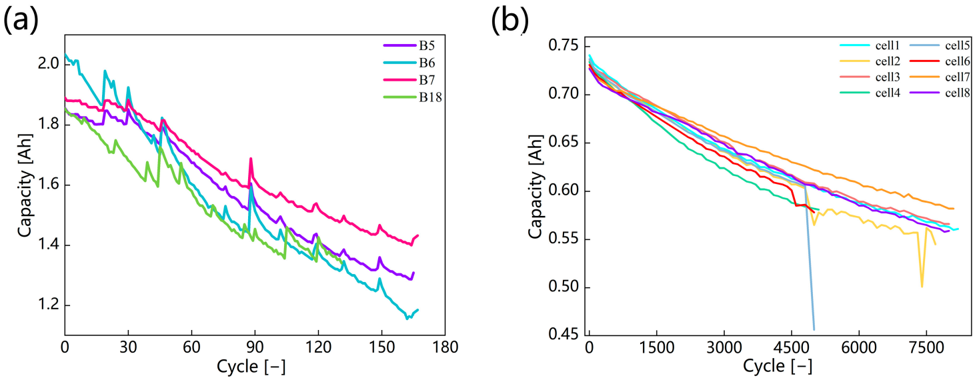
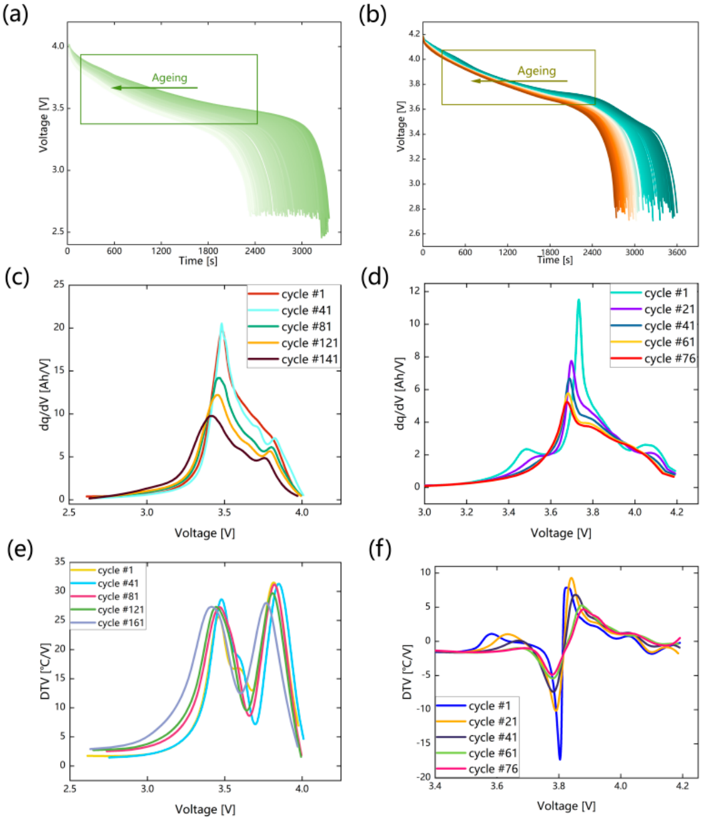
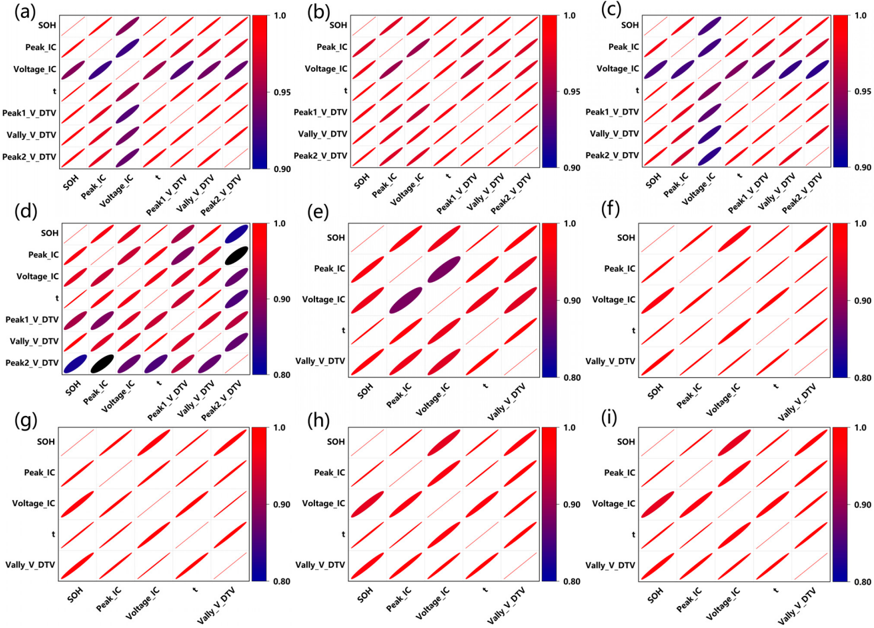
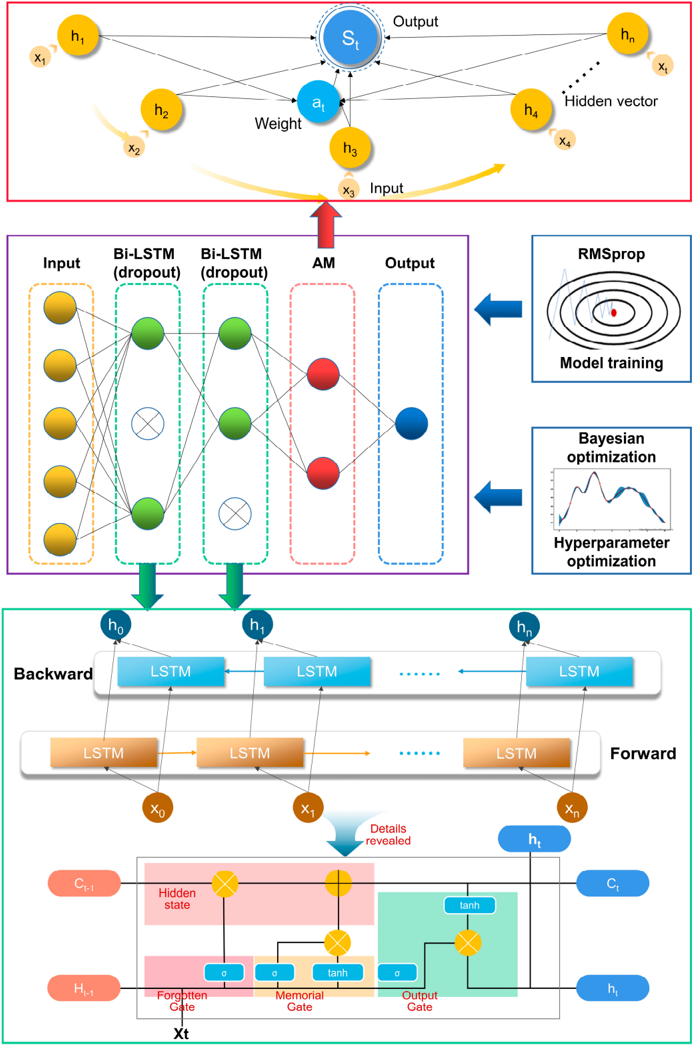
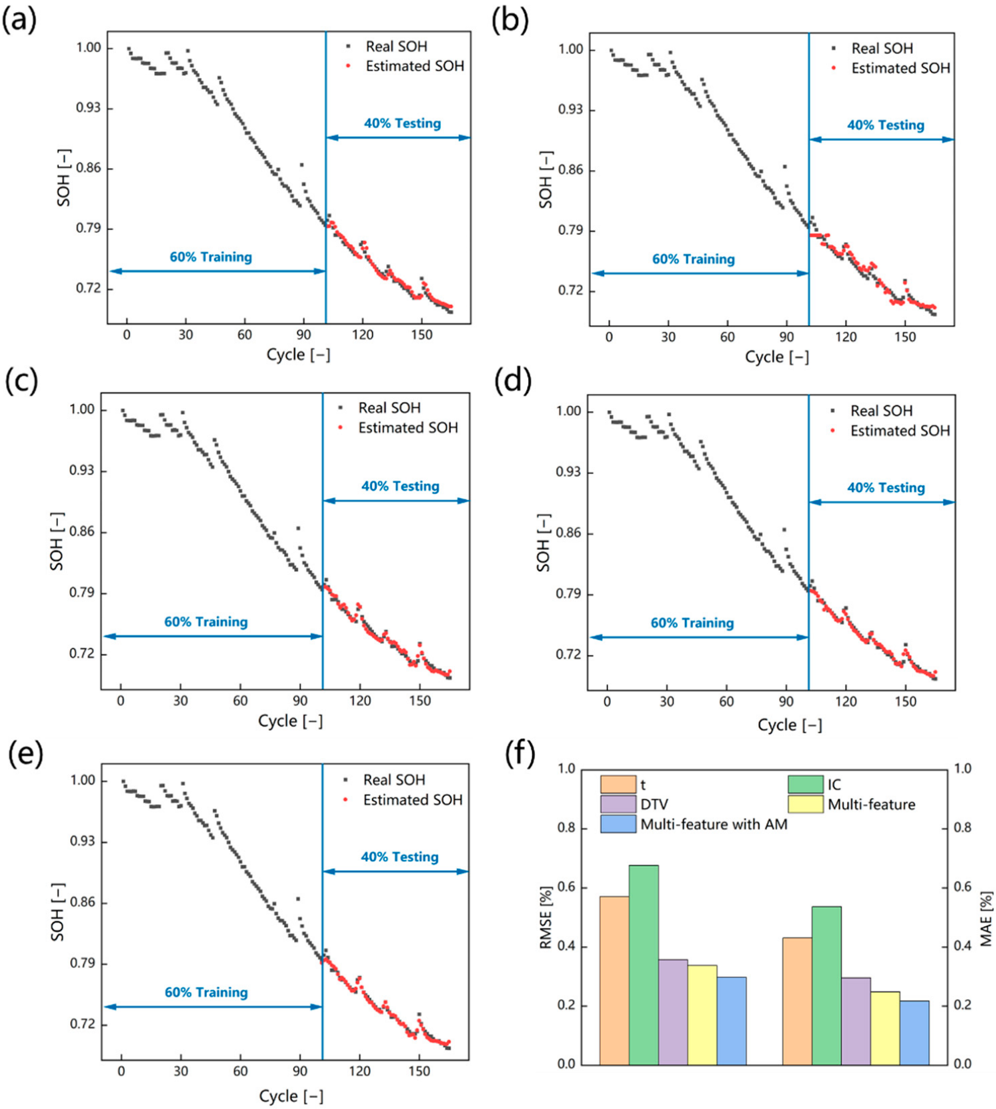
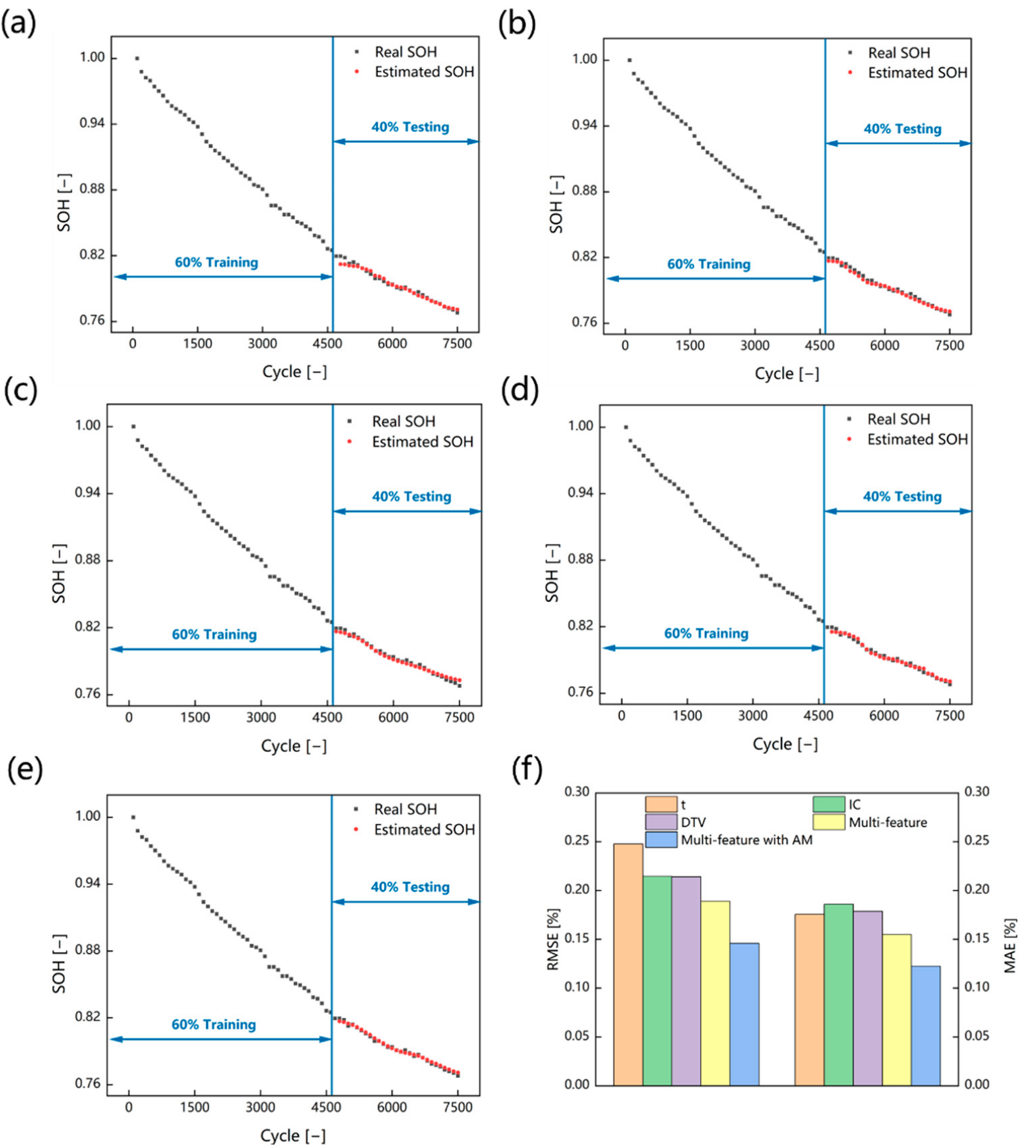
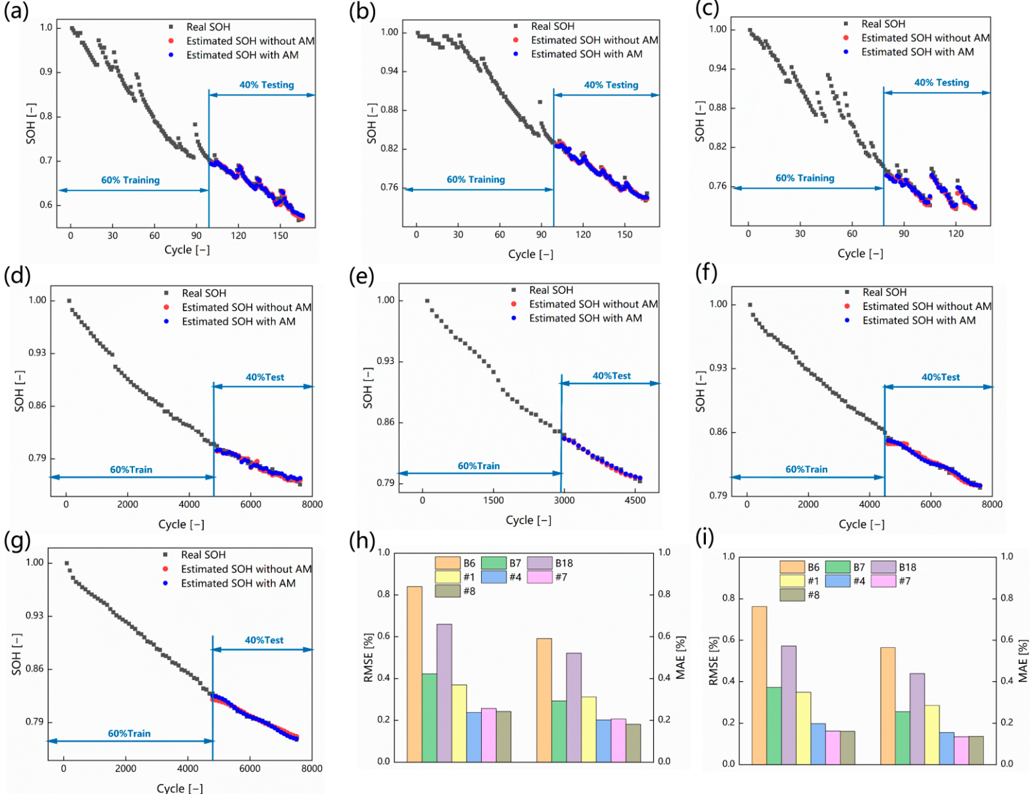
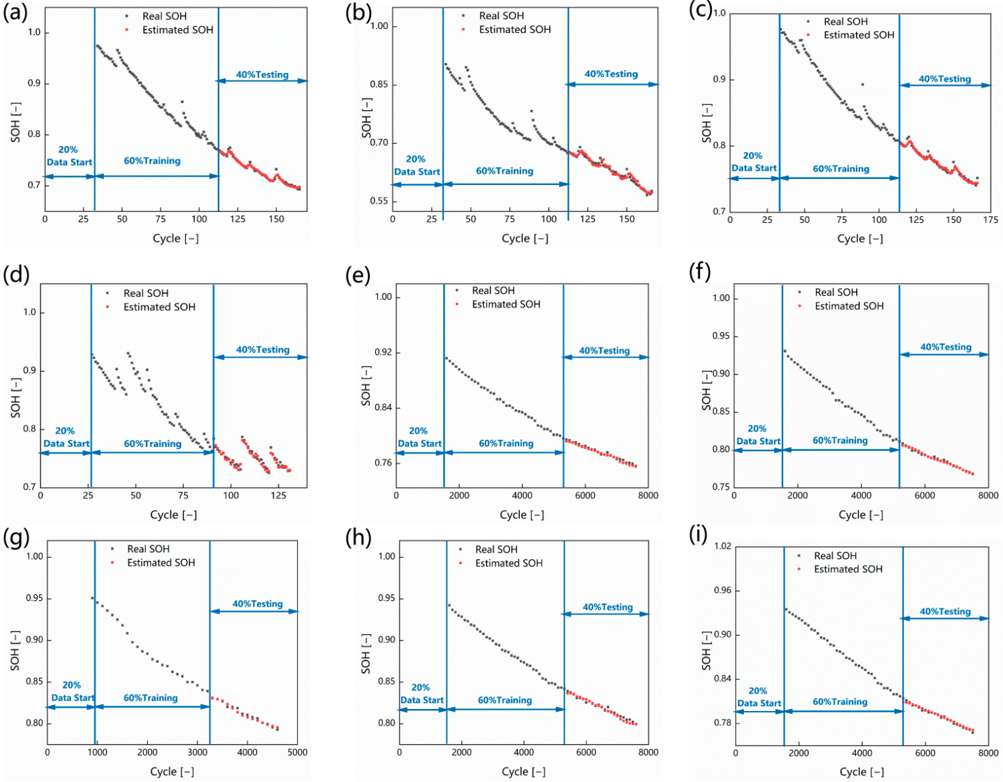
Verification
Claims the paper makes
The claims and statistics of this paper haven’t been checked yet.
Free: it reads the open-access text and checks the first 5 claims that cite a source we can check. Create a free account to check every claim.
Claims other papers make about this one
Each is checked against this paper’s own text: does it say what the citing paper says it does?
The source backs part of the claim, not all of it — or backs it for a different population, condition or comparison.
In the citing paper
“The direct capacity measurement method (the remaining capacity measurement) for SOH estimation is one of the most straightforward and most accurate methods if the battery's current is measured accurately to count the columns and if the measurements are performed under a controlled set of parameters, such as temperature.”
From An Electrochemical Impedance Spectrum-Based State of Health Differential Indicator with Reduced Sensitivity to Measurement Errors for Lithium–Ion Batteries (2024) · cites this paper as [4]
Experimental — accuracy not yet measured
Self-check
Percentages, sums and reported differences re-computed from the paper’s own numbers.
The self-check needs the paper’s full text.
Citations
Cites
Data-driven prediction of battery cycle life before capacity degradation
Severson, K. A., Attia, P. M., Jin, N., Perkins, N., Jiang, B., Yang, Z., Chen, M. H., Aykol, M., Herring, P. K., Fraggedakis, D., et al. (2019) · Nature Energy · doi:10.1038/s41560-019-0356-8 · Cited by 3,228 · cited 1×
“In this sub-section, the proposed method in this paper is validated on the MIT– Stanford–Toyota Research Center dataset [31].”
MethodA review on recent progress, challenges and perspective of battery thermal management system
Lin, J., Liu, X., Li, S., Zhang, C., & Yang, S. (2021) · International Journal of Heat and Mass Transfer · doi:10.1016/j.ijheatmasstransfer.2020.120834 · Cited by 588
State of Charge and State of Health Estimation for Lithium Batteries Using Recurrent Neural Networks
Chaoui, H., & Ibe-Ekeocha, C. C. (2017) · IEEE Transactions on Vehicular Technology · doi:10.1109/tvt.2017.2715333 · Cited by 555 · cited 1×
“Lithium-ion batteries are widely used as power sources in the power system of electric vehicles due to the advantages of high energy density, long service life and low self-discharge rate [1].”
BackgroundShen, S., Sadoughi, M., Li, M., Wang, Z., & Hu, C. (2020) · Applied Energy · doi:10.1016/j.apenergy.2019.114296 · Cited by 537 · cited 2×
“[12] divided the voltage and current curves into 25 segments, taking the left endpoint of each segment as the feature, and conducted SOH estimation based on deep convolutional neural network (DCNN).”
MethodGu, X., See, K. W., Li, P., Shan, K., Wang, Y., Zhao, L., Lim, K. C., & Zhang, N. (2023) · Energy · doi:10.1016/j.energy.2022.125501 · Cited by 373
Toward Sustainable Reuse of Retired Lithium-ion Batteries from Electric Vehicles
Hua, Y., Liu, X., Zhou, S., Huang, Y., Ling, H., & Yang, S. (2021) · Resources, Conservation and Recycling · doi:10.1016/j.resconrec.2020.105249 · Cited by 332
Meng, H., Geng, M., & Han, T. (2023) · Reliability Engineering & System Safety · doi:10.1016/j.ress.2023.109288 · Cited by 255
Jiang, Z. Y., Li, H. B., Qu, Z. G., & Zhang, J. F. (2022) · International Journal of Hydrogen Energy · doi:10.1016/j.ijhydene.2022.01.008 · Cited by 207
Nonlinear health evaluation for lithium-ion battery within full-lifespan
You, H., Zhu, J., Wang, X., Jiang, B., Sun, H., Liu, X., Wei, X., Han, G., Ding, S., Yu, H., et al. (2022) · Journal of Energy Chemistry · doi:10.1016/j.jechem.2022.04.013 · Cited by 158 · cited 1×
“However, it is often difficult to accurately estimate the SOH of a battery due to the superposition of multiple influencing factors such as internal side reactions, different operating environments and different operating conditions of the battery [9,10].”
BackgroundMerla, Y., Wu, B., Yufit, V., Brandon, N. P., Martinez-Botas, R. F., & Offer, G. J. (2016) · Journal of Power Sources · doi:10.1016/j.jpowsour.2015.12.122 · Cited by 156
Yang, S., He, R., Zhang, Z., Cao, Y., Gao, X., & Liu, X. (2020) · Matter · doi:10.1016/j.matt.2020.04.015 · Cited by 156 · cited 1×
“The proposed model can achieve highly accurate SOH prediction, which is expected to be applied online in practical applications in the framework of cyber hierarchy and interactional network (CHAIN) in combination with the cloud platform [28].”
MethodXiong, R., Tian, J., Shen, W., Lu, J., & Sun, F. (2022) · Journal of Energy Chemistry · doi:10.1016/j.jechem.2022.09.045 · Cited by 154 · cited 1×
“Current methods for battery SOH estimation can be classified into direct measurement methods, model-based methods and data-driven methods [11].”
MethodDifferential thermal voltammetry for tracking of degradation in lithium-ion batteries
Wu, B., Yufit, V., Merla, Y., Martinez-Botas, R. F., Brandon, N. P., & Offer, G. J. (2015) · Journal of Power Sources · doi:10.1016/j.jpowsour.2014.09.127 · Cited by 151
Lin, M., Yan, C., Wang, W., Dong, G., Meng, J., & Wu, J. (2023) · Energy · doi:10.1016/j.energy.2023.127675 · Cited by 134 · cited 7×
“#4 #7 #8 Proposed 6:4 DTV IC Duration of the same discharging voltage range 0.216 0.162 0.231 0.229 0.191 EBM-ACO [27] Leave-one-outcross validation IC DTV DTC Internar resistance 0.77 1.49 0.59 0.79 0.77 Stacking-based ensemble learning model [21] Leave-one-out cross validation Voltage Temperature IC 0.72 0.62 0.42 0…”
MethodInfluentialSelf-citationMou, J., Duan, P., Gao, L., Liu, X., & Li, J. (2021) · Future Generation Computer Systems · doi:10.1016/j.future.2021.10.003 · Cited by 121
Liu, X., Zhang, L., Yu, H., Wang, J., Li, J., Yang, K., Zhao, Y., Wang, H., Wu, B., Brandon, N. P., et al. (2022) · Advanced Energy Materials · doi:10.1002/aenm.202200889 · Cited by 104 · cited 1×
“However, it is often difficult to accurately estimate the SOH of a battery due to the superposition of multiple influencing factors such as internal side reactions, different operating environments and different operating conditions of the battery [9,10].”
BackgroundSelf-citationZhang, F., Zi-xuan, X., & Wu, M. (2022) · Journal of Energy Storage · doi:10.1016/j.est.2022.106277 · Cited by 103 · cited 1×
“[19] extracted features based on fixed voltage intervals and used a back propagation (BP) neural network optimized based on a genetic algorithm to estimate the battery SOH.”
MethodPang, M.-C., Yang, K., Brugge, R. H., Zhang, T., Liu, X., Pan, F. M., Yang, S., Aguadero, A., Wu, B., Marinescu, M., et al. (2021) · Materials Today · doi:10.1016/j.mattod.2021.02.011 · Cited by 97 · cited 1×
“Therefore, it is critical to perform an accurate state of health (SOH) estimation of the battery to ensure that it operates in a highly efficient and safe way [8].”
BackgroundSelf-citationZhang, Z., Min, H., Guo, H., Yu, Y., Sun, W., Jiang, J., & Zhao, H. (2023) · Journal of Energy Storage · doi:10.1016/j.est.2023.107063 · Cited by 88 · cited 16×
“Then, a deep learning Batteries 2023, 9, 329 4 of 18 model is built based on Bi-LSTM.”
MethodInfluentialLi, G., Li, B., Li, C., & Wang, S. (2022) · Energy · doi:10.1016/j.energy.2022.126064 · Cited by 83
Semi-Empirical Capacity Fading Model for SoH Estimation of Li-Ion Batteries
Singh, P., Chen, C., Tan, C. M., & Huang, S.-C. (2019) · Applied Sciences · doi:10.3390/app9153012 · Cited by 79 · cited 1×
“[14] proposed a semi-empirical model using battery charge/discharge cycles as an input to achieve a fast and accurate SOH estimation.”
MethodExtending battery life: a low-cost practical diagnostic technique for lithium-ion batteries
Merla, Y., Wu, B., Yufit, V., Brandon, N. P., Martinez-Botas, R. F., & Offer, G. J. (2016) · Journal of Power Sources · doi:10.1016/j.jpowsour.2016.09.008 · Cited by 70
Jiang, Z., Qu, Z., Zhou, L., & Tao, W. (2016) · Applied Energy · doi:10.1016/j.apenergy.2016.10.125 · Cited by 67
Gong, Q., Wang, P., & Cheng, Z. (2022) · Journal of The Electrochemical Society · doi:10.1149/1945-7111/ac5bac · Cited by 45 · cited 3×
“#4 #7 #8 Proposed 6:4 DTV IC Duration of the same discharging voltage range 0.216 0.162 0.231 0.229 0.191 EBM-ACO [27] Leave-one-outcross validation IC DTV DTC Internar resistance 0.77 1.49 0.59 0.79 0.77 Stacking-based ensemble learning model [21] Leave-one-out cross validation Voltage Temperature IC 0.72 0.62 0.42 0…”
MethodInfluentialHealth prognosis for lithium-ion battery with multi-feature optimization
Lin, M., Wu, D., Meng, J., Wang, W., & Wu, J. (2022) · Energy · doi:10.1016/j.energy.2022.126307 · Cited by 45
Self-citationMeng, J., Azib, T., & Yue, M. (2023) · Proceedings of the Institution of Mechanical Engineers Part A Journal of Power and Energy · doi:10.1177/09576509231153907 · Cited by 38 · cited 1×
“[13] combined the particle filter (PF) and empirical mode decomposition (EMD) methods to estimate the end of life, proposed a simple PF parameter adjustment process and used EMD in the state estimation phase of PF to avoid overfitting in the extrapolation process.”
MethodXu, J., Liu, B., Zhang, G., & Zhu, J. (2022) · Energy Science & Engineering · doi:10.1002/ese3.1338 · Cited by 35 · cited 3×
“[21] used the area and maximum slope of the voltage distribution in the constant current charging stage and the differential of the temperature curve as features.”
MethodInfluentialRahimifard, S., Habibi, S. R., Goward, G. R., & Tjong, J. (2021) · Energies · doi:10.3390/en14248560 · Cited by 25
Yang, B., Wang, D., Zhang, B., Chen, S., Sun, X., & Wang, T. (2023) · Journal of Energy Storage · doi:10.1016/j.est.2022.106357 · Cited by 18 · cited 1×
“[16] attributed the aging of batteries mainly to the breakage of cathode agglomerates and the thickness change of anode solid electrolyte interface (SEI) film, and constructed a full-cell impedance model based on this to estimate the SOH of batteries by parameters strongly correlated with SOH.”
MethodJiang, Z., & Qu, Z. (2016) · Energy Procedia · doi:10.1016/j.egypro.2016.06.091 · Cited by 12
Liu, W., & Zhao, J. (2022) · Journal of The Electrochemical Society · doi:10.1149/1945-7111/ac6bc4 · Cited by 8 · cited 1×
“[17] extracted features based on the curve of the constantcurrent charging process and used a linear regression algorithm to achieve battery SOH estimation.”
Method
Research works printed but not linked: 1
- Birkl, C. Diagnosis and Prognosis of Degradation in Lithium-Ion Batteries; University of Oxford: Oxford, UK, 2017.
Cited by
Bao, G., Liu, X., Zou, B., Yang, K., Zhao, J., Zhang, L., Chen, M., Qiao, Y., Wang, W., Tan, R., et al. (2025) · Energy · doi:10.1016/j.energy.2025.135548 · Cited by 65
Self-citationSylvestrin, G. R., Maciel, J. N., Amorim, M. L. M., Carmo, J. P., Afonso, J. A., Lopes, S. F., & Ando, O. H. (2025) · Energies · doi:10.3390/en18030746 · Cited by 75
Integrating Digital Twins and Machine Learning for Advanced Control in Green Hydrogen Production
Feng, Z., Luo, Y., Li, D., Pan, J., Tan, R., & Chen, Y. (2025) · CHAIN · doi:10.23919/chain.2025.000003 · Cited by 56
Self-citationUribe-Pérez, N., González‐Garrido, A., Gallarreta, A., Justel, D., González-Pérez, M., González–Ramos, J., Arrizabalaga, A., Asensio, F. J., & Bidaguren, P. (2024) · Electronics · doi:10.3390/electronics13101940 · Cited by 61
Multiscale modeling for enhanced battery health analysis: Pathways to longevity
Yang, K., Zhang, L., Wang, W., Long, C., Yang, S., Zhu, T., & Liu, X. (2024) · Carbon Neutralization · doi:10.1002/cnl2.124 · Cited by 47
Self-citation
Metadata
- Authors
- Zou, B., Xiong, M., Wang, H., Ding, W., Jiang, P., Hua, W., Zhang, Y., Zhang, L., Wang, W., & Tan, R.
- Affiliations
- China Software Testing Center, Beijing 100038, China
- Beihang University (CN)
- Southeast University (CN)
- Nanjing Forestry University (CN)
- Imperial College London (GB)
- Corresponding author
- Zhang, Lisheng
- Wang, Wentao
- Tan, Rui
- Venue
- Batteries
- Publisher
- MDPI AG
- Published
- 2023-06-19
- Volume
- 9
- Issue
- 6
- Pages
- 329
- ISSN
- 2313-0105 (ISSN-L)
- OpenAlex
- W4381140692
- Cited by
- 39
- References
- 31
- Citations by year
- 2026: 10 · 2025: 16 · 2024: 11 · 2023: 2
- FWCI
- 2.83
- Type
- journal article
- Language
- en
- Open access
- gold
- doi.org
- Licence
- Locations
- Batteries (publishedVersion, cc-by)
- Cronfa (Swansea University) (submittedVersion, cc-by)
- DOAJ (DOAJ: Directory of Open Access Journals) (submittedVersion, cc-by-sa)
- Topics
- Physical Sciences › Engineering › Automotive Engineering › Battery Modeling and Management
- Physical Sciences › Engineering › Electrical and Electronic Engineering › Advancements in Battery Materials
- Physical Sciences › Engineering › Civil and Structural Engineering › Structural Health Monitoring Techniques
- Keywords
- lithium-ion batteries, state of health estimation, battery degradation, attention mechanism, bidirectional LSTM, multi-feature fusion, incremental capacity analysis, battery safety, NASA battery dataset
About these checks
Registry, retraction, Cites and statistics results are computed, not judged, with one exception: a printed reference that no index lists is read once by a model before it counts as a citation error. Claims are extracted by a model and kept only when their quote appears verbatim in the text; each cited source is then checked, with a model’s help, for whether it says what the claim relies on. Those verdicts can be wrong — read the claim’s quote and the cited source before relying on one.
Statistics and arithmetic are recomputed, not judged.
Confidence bands are shown only for fields calibrated on our annotated test set. None is calibrated yet, so no band is shown.
What counts as a claim ›How we measure confidence ›How we check this ›
Are you an author, or do you see a problem with this page? Request a review
Data sources
Bibliographic data: Semantic Scholar, OpenAlex, Crossref.
Contains information from the Semantic Scholar Academic Graph Datasets, made available under the ODC Attribution License (ODC-BY 1.0).
Semantic Scholar’s data is described in: Kinney, R., et al. (2023). The Semantic Scholar Open Data Platform. arXiv:2301.10140.
