

Whole Genome Sequencing and Extracellular Metabolite Profiling of Lactiplantibacillus plantarum FRT4: Insights into Probiotic Functionality
Open accessThe DOI matches its Crossref record; 72 of the 72 references it cites were found in a registry or an index.
Abstract
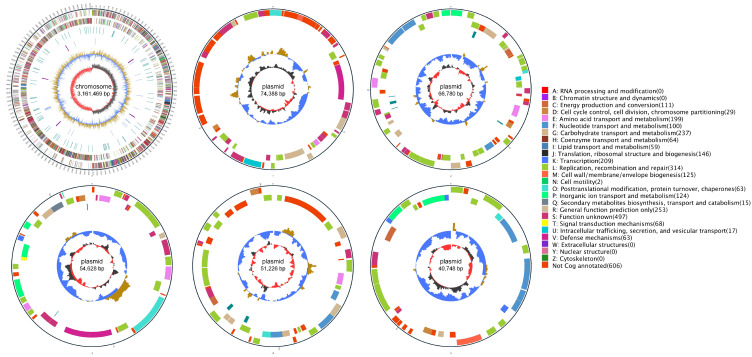
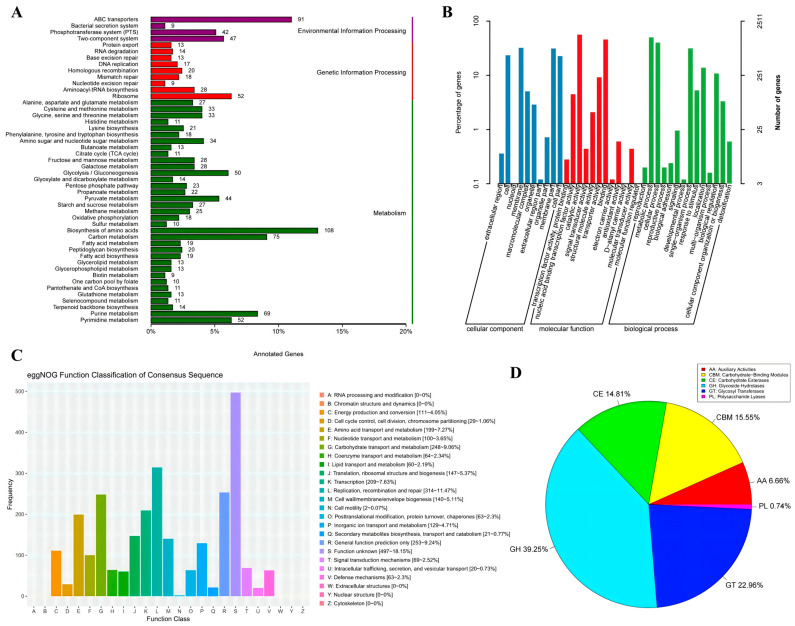
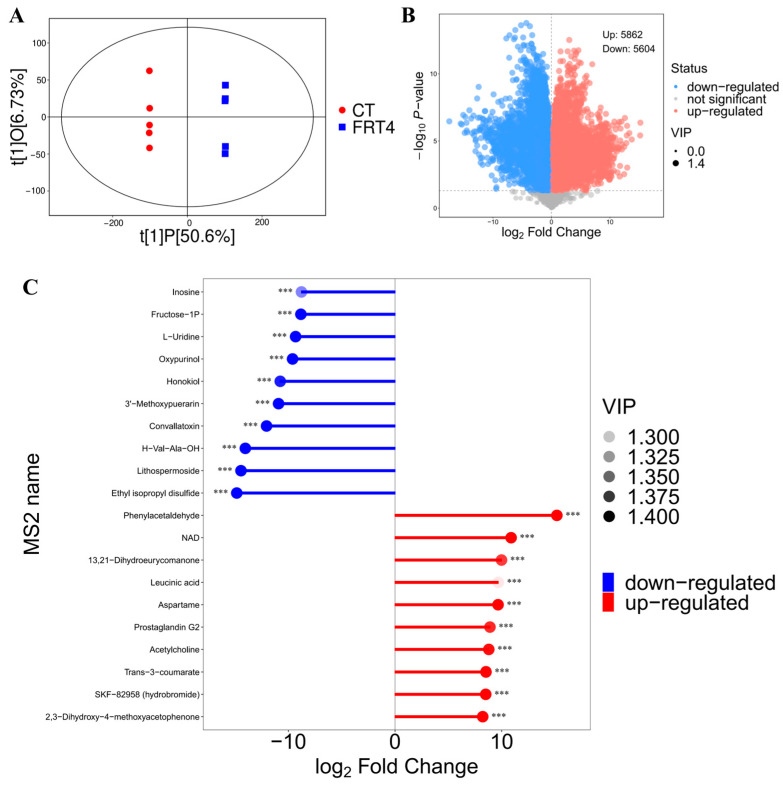
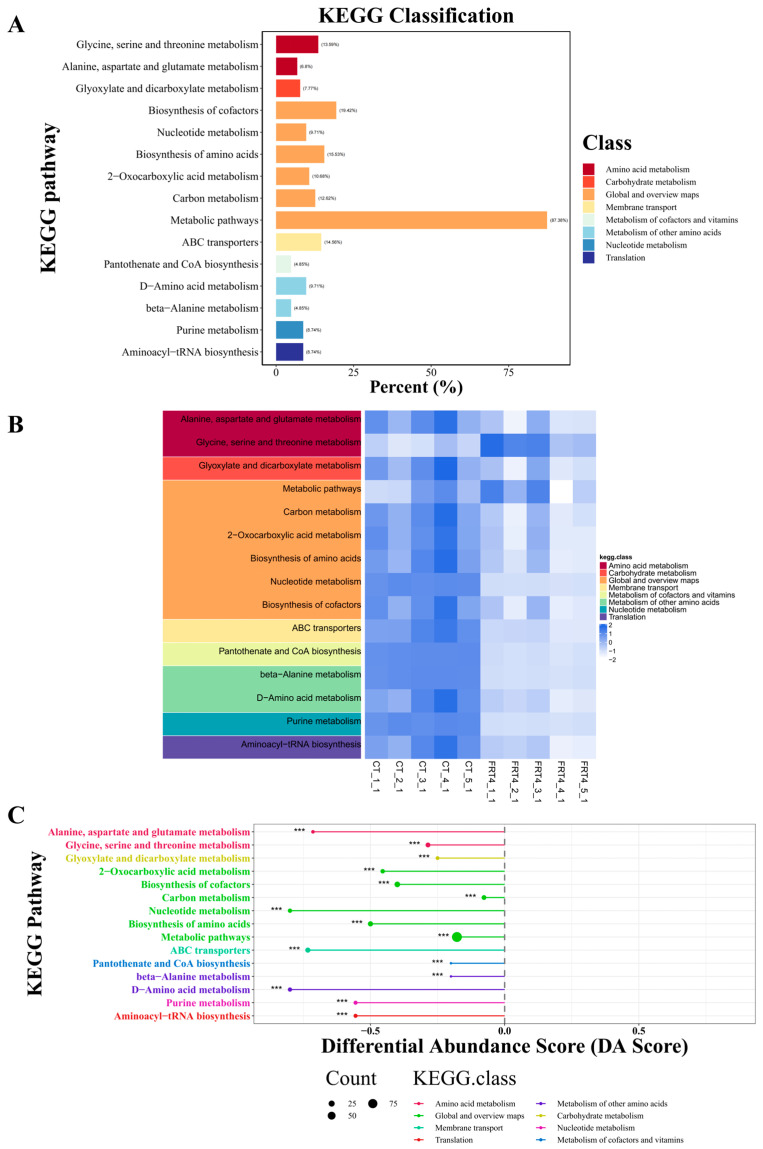
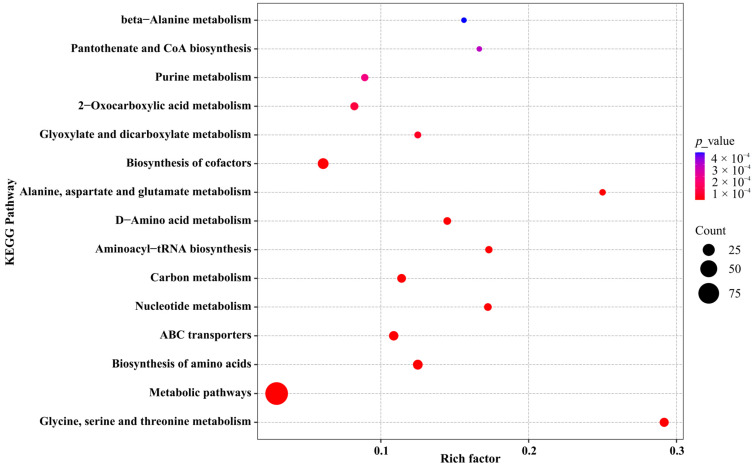
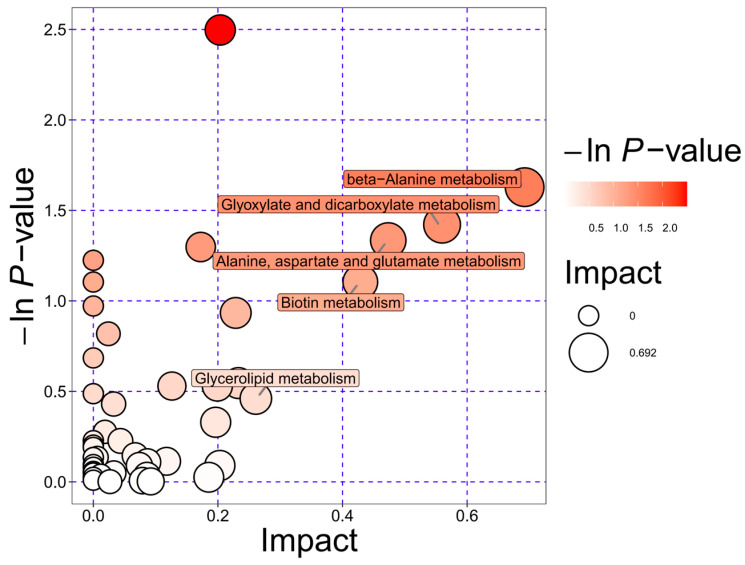
Lactiplantibacillus plantarum is a widely studied probiotic species with significant strain-specific functional diversity, yet the molecular mechanisms underlying these variations remain largely unexplored. In this study, whole genome sequencing (WGS) and untargeted metabolomics were employed to comprehensively characterize the genetic architecture and extracellular metabolic profile of Lp. plantarum FRT4 (CGMCC 17955), a probiotic strain previously studied for its metabolic effects in animal models. WGS revealed a circular chromosome and five plasmids, encoding 3301 protein-coding genes enriched in amino acid biosynthesis, carbohydrate metabolism, and environmental response pathways. Carbohydrate-active enzymes (CAZy) annotation revealed 135 carbohydrate-active enzyme genes, dominated by glycoside hydrolases and glycosyl transferases. Untargeted metabolomic analysis comparing the fermentation supernatant of FRT4 with non-inoculated MRS medium revealed significant alterations in metabolite composition, including elevated levels of acetylcholine, nicotinamide adenine dinucleotide (NAD), and trans-3-coumarate, and reduced levels of uridine, inosine, and fructose-1-phosphate, indicating active modulation of neurotransmission, redox balance, and purine metabolism. KEGG (Kyoto Encyclopedia of Genes and Genomes) enrichment showed significant regulation of pathways related to amino acid metabolism, carbon metabolism, and cofactor biosynthesis. These findings highlight the metabolic versatility and functional potential of FRT4, offering mechanistic insights into its probiotic effects and providing a basis for its potential application in fermentation-based formulations.
Overview
The claims and statistics of this paper haven’t been checked yet.
Free: it reads the open-access text and checks the first 5 claims that cite a source we can check. Create a free account to check every claim.
Integrity signals
Registry
Cites
Statistics
Figures
Verification
Claims the paper makes
The claims and statistics of this paper haven’t been checked yet.
Free: it reads the open-access text and checks the first 5 claims that cite a source we can check. Create a free account to check every claim.
Claims other papers make about this one
Each is checked against this paper’s own text: does it say what the citing paper says it does?
The cited source says what the claim attributes to it.
In the citing paper
“Such an enrichment suggests active gene regulation and genomic stability, as well as metabolic versatility [38].”
From Comparative Genomics-Based Evaluation of Lacticaseibacillus rhamnosus KFOM 0134 as a Probiotic against Staphylococcus aureus (2026) · cites this paper as [38]
Self-check
Percentages, sums and reported differences re-computed from the paper’s own numbers.
The self-check needs the paper’s full text.
Citations
Cites
Prodigal: prokaryotic gene recognition and translation initiation site identification
Hyatt, D., Chen, G.-L., LoCascio, P. F., Land, M. L., Larimer, F. W., & Hauser, L. J. (2010) · BMC Bioinformatics · doi:10.1186/1471-2105-11-119 · Cited by 12,587
Circos: An information aesthetic for comparative genomics
Krzywinski, M., Schein, J., Birol, İ., Connors, J., Gascoyne, R., Horsman, D., Jones, S. J., & Marra, M. A. (2009) · Genome Research · doi:10.1101/gr.092759.109 · Cited by 10,964 · cited 1×
“66 [40].”
Canu: scalable and accurate long-read assembly via adaptive k -mer weighting and repeat separation
Koren, S., Walenz, B. P., Berlin, K., Miller, J. R., Bergman, N. H., & Phillippy, A. M. (2017) · Genome Research · doi:10.1101/gr.215087.116 · Cited by 7,304 · cited 1×
“5 [31].”
Infernal 1.1: 100-fold faster RNA homology searches
Nawrocki, E. P., & Eddy, S. R. (2013) · Bioinformatics · doi:10.1093/bioinformatics/btt509 · Cited by 3,591 · cited 1×
“1.3 [35], respectively.”
InfluentialUsing RepeatMasker to Identify Repetitive Elements in Genomic Sequences
Tarailo‐Graovac, M., & Chen, N. (2009) · Current Protocols in Bioinformatics · doi:10.1002/0471250953.bi0410s25 · Cited by 3,398 · cited 1×
“0.5 [33] with a reference repeat sequence database.”
InfluentialantiSMASH 5.0: updates to the secondary metabolite genome mining pipeline
Blin, K., Shaw, S., Steinke, K., Villebro, R., Ziemert, N., Lee, S. Y., Medema, M. H., & Weber, T. (2019) · Nucleic Acids Research · doi:10.1093/nar/gkz310 · Cited by 2,907 · cited 1×
“0.0 [39].”
InfluentialtRNAscan-SE: Searching for tRNA Genes in Genomic Sequences
Chan, P. P., & Lowe, T. M. (2019) · Methods in Molecular Biology · doi:10.1007/978-1-4939-9173-0_1 · Cited by 1,798 · cited 1×
“0 [34] and Infernal v1.”
NAD(H) and NADP(H) Redox Couples and Cellular Energy Metabolism
Xiao, W., Wang, R.-S., Handy, D. E., & Loscalzo, J. (2018) · Antioxidants & Redox Signaling · doi:10.1089/ars.2017.7216 · Cited by 1,061 · cited 1×
“As a key cofactor in energy metabolism, antioxidant defense, and DNA repair, NAD plays important roles in maintaining cellular homeostasis [59,60].”
Bland, C., Ramsey, T. L., Sabree, F., Lowe, M., Brown, K., Kyrpides, N. C., & Hugenholtz, P. (2007) · BMC Bioinformatics · doi:10.1186/1471-2105-8-209 · Cited by 1,049 · cited 1×
“2 [36].”
Reprogramming of glucose, fatty acid and amino acid metabolism for cancer progression
Li, Z., & Zhang, H. (2016) · Cellular and Molecular Life Sciences · doi:10.1007/s00018-015-2070-4 · Cited by 830 · cited 1×
“Amino acid metabolism has been implicated in various disease processes, including obesity, diabetes, and cancer [70–72].”
Carbohydrate-active enzymes (CAZymes) in the gut microbiome
Wardman, J. F., Bains, R. K., Rahfeld, P., & Withers, S. G. (2022) · Nature Reviews Microbiology · doi:10.1038/s41579-022-00712-1 · Cited by 597 · cited 4×
“The predicted CAZyme repertoire suggests potential for producing fermentation-derived bioactive compounds such as short-chain fatty acids and phenolic derivatives [43,46].”
InfluentialAkhter, S., Aziz, R. K., & Edwards, R. A. (2012) · Nucleic Acids Research · doi:10.1093/nar/gks406 · Cited by 575 · cited 1×
“3 [38].”
Hosomi, K., Saito, M., Park, J., Murakami, H., Shibata, N., Ando, M., Nagatake, T., Konishi, K., Ohno, H., Tanisawa, K., et al. (2022) · Nature Communications · doi:10.1038/s41467-022-32015-7 · Cited by 451 · cited 1×
“Previous studies have shown that probiotic strains like Blautia wexlerae can regulate acetylcholine levels and modulate gut microbiota, thereby improving obesity and type 2 diabetes in mice [58].”
Ramos, C. L., Thorsen, L., Schwan, R. F., & Jespersen, L. (2013) · Food Microbiology · doi:10.1016/j.fm.2013.03.010 · Cited by 360 · cited 1×
“Similarly, research by Ramos et al. [25] showed that Lp. plantarum strains isolated from Brazilian foods display diverse probiotic properties that are strain-specific rather than species-specific.”
Zhou, Z., Luo, M., Zhang, H., Yin, Y., Cai, Y., & Zhu, Z.-J. (2022) · Nature Communications · doi:10.1038/s41467-022-34537-6 · Cited by 339 · cited 1×
“The annotation method of metabolites is consistent with the KGMN framework implemented in MetDNA2 [41].”
Ye, L., Bae, M., Cassilly, C. D., Jabba, S. V., Thorpe, D. W., Martin, A. M., Lu, H.-Y., Wang, J., Thompson, J. D., Lickwar, C. R., et al. (2021) · Cell Host & Microbe · doi:10.1016/j.chom.2020.11.011 · Cited by 318
The food-gut axis: lactic acid bacteria and their link to food, the gut microbiome and human health
De Filippis, F., Pasolli, E., & Ercolini, D. (2020) · FEMS Microbiology Reviews · doi:10.1093/femsre/fuaa015 · Cited by 303
Functional and Probiotic Attributes of an Indigenous Isolate of Lactobacillus plantarum
Kaushik, J. K., Kumar, A., Duary, R. K., Mohanty, A. K., Grover, S., & Batish, V. K. (2009) · PLoS ONE · doi:10.1371/journal.pone.0008099 · Cited by 293
NAD + Metabolism in Cardiac Health, Aging, and Disease
Abdellatif, M., Sedej, S., & Kroemer, G. (2021) · Circulation · doi:10.1161/circulationaha.121.056589 · Cited by 255 · cited 1×
“Exogenous NAD supplementation has been explored for its potential to support metabolic health and mitigate age-related dysfunctions, including obesity, diabetes, and cardiovascular conditions [61–63].”
Feedback Control of Two-Component Regulatory Systems
Groisman, E. A. (2016) · Annual Review of Microbiology · doi:10.1146/annurev-micro-102215-095331 · Cited by 252 · cited 1×
“Furthermore, the presence of ABC transporters, two-component systems, and PTS suggests that FRT4 can dynamically sense and respond to environmental changes, aligning with its potential for metabolic adaptation in complex substrates or biotechnological settings [49–52].”
NAD + homeostasis in human health and disease
Zapata‐Pérez, R., Wanders, R. J. A., van Karnebeek, C. D. M., & Houtkooper, R. H. (2021) · EMBO Molecular Medicine · doi:10.15252/emmm.202113943 · Cited by 238
Improved genomic island predictions with IslandPath-DIMOB
Bertelli, C., & Brinkman, F. S. L. (2018) · Bioinformatics · doi:10.1093/bioinformatics/bty095 · Cited by 218 · cited 1×
“2 [37], while prophage regions were detected using PhiSpy v2.”
Biomass Utilization by Gut Microbiomes
White, B. A., Lamed, R., Bayer, E. A., & Flint, H. J. (2014) · Annual Review of Microbiology · doi:10.1146/annurev-micro-092412-155618 · Cited by 217 · cited 1×
“These features may contribute to interactions within microbial communities in fermented systems [47,48].”
A novel approach to Lactiplantibacillus plantarum: From probiotic properties to the omics insights
Echegaray, N., Yilmaz, B., Sharma, H., Kumar, M., Pateiro, M., Ozogul, F., & Lorenzo, J. M. (2023) · Microbiological Research · doi:10.1016/j.micres.2022.127289 · Cited by 209 · cited 3×
“Consistent with prior Lp. plantarum surveys, FRT4 harbors a broad CAZyme repertoire (135 genes), supporting its versatile carbohydrate utilization [13,43,44].”
Lactobacillus reuteri tryptophan metabolism promotes host susceptibility to CNS autoimmunity
Montgomery, T. L., Eckstrom, K., Lile, K. H., Caldwell, S., Heney, E. R., Lahue, K. G., D’Alessandro, A., Wargo, M. J., & Krementsov, D. N. (2022) · Microbiome · doi:10.1186/s40168-022-01408-7 · Cited by 198 · cited 1×
“In recent years, the gut microbiota has attracted increasing attention for its vital role in maintaining host health, particularly in relation to metabolic disorders, immune regulation, and neural signaling [1–6].”
NAD metabolism: Role in senescence regulation and aging
Chini, C. C. S., Cordeiro, H. S., Tran, N. L. K., & Chini, E. N. (2023) · Aging Cell · doi:10.1111/acel.13920 · Cited by 168 · cited 1×
“Exogenous NAD supplementation has been explored for its potential to support metabolic health and mitigate age-related dysfunctions, including obesity, diabetes, and cardiovascular conditions [61–63].”
Basal forebrain cholinergic signalling: development, connectivity and roles in cognition
Ananth, M. R., Rajebhosale, P., Kim, R., Talmage, D. A., & Role, L. W. (2023) · Nature Reviews Neuroscience · doi:10.1038/s41583-023-00677-x · Cited by 148
Extracellular nucleotide and nucleoside signaling in vascular and blood disease
Idzko, M., Ferrari, D., Riegel, A.-K., & Eltzschig, H. K. (2014) · Blood · doi:10.1182/blood-2013-09-402560 · Cited by 147
Rocchetti, M. T., Russo, P., Capozzi, V., Drider, D., Spano, G., & Fiocco, D. (2021) · International Journal of Molecular Sciences · doi:10.3390/ijms222112076 · Cited by 146 · cited 1×
“In addition, various strains of Lp. plantarum have demonstrated key probiotic features, including acid and bile tolerance, auto-aggregation, surface hydrophobicity, hydrogen peroxide production, epithelial adhesion, and antimicrobial activity, highlighting its diverse probiotic attributes [19–22].”
The Metabolic Fates of Pyruvate in Normal and Neoplastic Cells
Prochownik, E. V., & Wang, H. (2021) · Cells · doi:10.3390/cells10040762 · Cited by 142 · cited 1×
“Pyruvate, a glycolysis product and an anaplerotic substrate for the TCA cycle, reflects the organism’s metabolic flexibility in responding to changes in fermentative substrates [69].”
Gut-derived systemic inflammation as a driver of depression in chronic liver disease
Kronsten, V. T., Tranah, T. H., Pariante, C., & Shawcross, D. L. (2022) · Journal of Hepatology · doi:10.1016/j.jhep.2021.11.008 · Cited by 137
Amino acid is a major carbon source for hepatic lipogenesis
Liao, Y., Chen, Q., Liu, L., Huang, H., Sun, J., Bai, X., Jin, C., Li, H., Sun, F., Xiao, X., et al. (2024) · Cell Metabolism · doi:10.1016/j.cmet.2024.10.001 · Cited by 116
Zheng, W., Song, H., Luo, Z., Wu, H., Chen, L., Wang, Y., Cui, H., Zhang, Y., Wang, B., Li, W., et al. (2021) · Proceedings of the National Academy of Sciences · doi:10.1073/pnas.2017762118 · Cited by 110 · cited 1×
“These compounds are known to play roles in neurotransmission, redox balance, and inflammation in other systems [53–56].”
Lipid transport by mammalian ABC proteins
Quazi, F., & Molday, R. S. (2011) · Essays in Biochemistry · doi:10.1042/bse0500265 · Cited by 106
Shen, Z., Cui, T., Liu, Y., Wu, S., Han, C., & Li, J. (2023) · Phytomedicine · doi:10.1016/j.phymed.2023.155129 · Cited by 97
NAD metabolism modulates inflammation and mitochondria function in diabetic kidney disease
Myakala, K., Wang, X. X., Shults, N. V., Krawczyk, E., Jones, B. A., Yang, X., Rosenberg, A. Z., Ginley, B. G., Sarder, P., Brodsky, L., et al. (2023) · Journal of Biological Chemistry · doi:10.1016/j.jbc.2023.104975 · Cited by 84 · cited 1×
“As a key cofactor in energy metabolism, antioxidant defense, and DNA repair, NAD plays important roles in maintaining cellular homeostasis [59,60].”
Kok, C. R., Rose, D., & Hutkins, R. (2023) · Annual Review of Food Science and Technology · doi:10.1146/annurev-food-060721-015516 · Cited by 73 · cited 1×
“The predicted CAZyme repertoire suggests potential for producing fermentation-derived bioactive compounds such as short-chain fatty acids and phenolic derivatives [43,46].”
Zhang, Z., Niu, H., Qu, Q., Guo, D., Wan, X., Yang, Q., Mo, Z., Tan, S., Xiang, Q., Xue, T., et al. (2025) · Critical Reviews in Food Science and Nutrition · doi:10.1080/10408398.2024.2448562 · Cited by 73
Comprehensive pan‐genome analysis of Lactiplantibacillus plantarum complete genomes
Carpi, F. M., Coman, M. M., Silvi, S., Picciolini, M., Verdenelli, M. C., & Napolioni, V. (2022) · Journal of Applied Microbiology · doi:10.1111/jam.15199 · Cited by 72 · cited 2×
“Consistent with prior Lp. plantarum surveys, FRT4 harbors a broad CAZyme repertoire (135 genes), supporting its versatile carbohydrate utilization [13,43,44].”
Mucin utilization by gut microbiota: recent advances on characterization of key enzymes
Raba, G., & Luis, A. S. (2023) · Essays in Biochemistry · doi:10.1042/ebc20220121 · Cited by 66 · cited 1×
“These features may contribute to interactions within microbial communities in fermented systems [47,48].”
Recent advances in therapeutic probiotics: insights from human trials
Cho, M.-Y., Eom, J.-H., Choi, E.-M., Yang, S., Lee, D., Kim, Y.-Y., Kim, H.-S., & Hwang, I. (2025) · Clinical Microbiology Reviews · doi:10.1128/cmr.00240-24 · Cited by 59 · cited 1×
“Probiotics, as an effective strategy for modulating the composition and function of the gut microbiota, have been widely applied in both the food industry and clinical interventions [7–9].”
Fentie, E. G., Lim, K., Jeong, M., & Shin, J. (2024) · Comprehensive Reviews in Food Science and Food Safety · doi:10.1111/1541-4337.13424 · Cited by 58
Proffitt, C., Bidkhori, G., Lee, S., Tebani, A., Mardinoglu, A., Uhlen, M., Moyes, D. L., & Shoaie, S. (2022) · iScience · doi:10.1016/j.isci.2022.104513 · Cited by 55 · cited 1×
“Previous studies have linked the upregulation of glyoxy-late and dicarboxylate metabolism with metabolic disorders including obesity, type 2 diabetes, and atherosclerosis [67,68].”
Modulating brain function with microbiota
Foster, J. A. (2022) · Science · doi:10.1126/science.abo4220 · Cited by 54
Luiz, J. D., Manassi, C. F., Magnani, M., da Cruz, A. G., Pimentel, T. C., & Verruck, S. (2023) · Critical Reviews in Food Science and Nutrition · doi:10.1080/10408398.2023.2280247 · Cited by 51
Vagal pathway activation links chronic stress to decline in intestinal stem cell function
Zhang, G., Lian, Y., Li, Q., Zhou, S., Zhang, L., Chen, L., Tang, J., Liu, H., Li, N., Pan‐Hammarström, Q., et al. (2025) · Cell stem cell · doi:10.1016/j.stem.2025.02.016 · Cited by 51 · cited 1×
“This molecule has been associated with gut–brain axis signaling in previous studies [57].”
Strain diversity of plant‐associated Lactiplantibacillus plantarum
Yu, A. O., Goldman, E. A., Brooks, J. T., Golomb, B. L., Yim, I. S., Gotcheva, V., Angelov, A., Kim, E. B., & Marco, M. L. (2021) · Microbial Biotechnology · doi:10.1111/1751-7915.13871 · Cited by 50 · cited 2×
“Strains from different sources and genetic backgrounds vary substantially in terms of metabolite production, environmental adaptability, and host interaction mechanisms [23].”
Arellano-García, L., Trepiana, J., Martínez, J. A., Portillo, M. P., & Milton‐Laskibar, I. (2023) · Antioxidants · doi:10.3390/antiox12030717 · Cited by 47
Peng, Z., Ehrmann, M. A., Waldhuber, A., Niemeyer, C., Miethke, T., Frick, J.-S., Xiong, T., & Vogel, R. F. (2017) · Research in Microbiology · doi:10.1016/j.resmic.2017.03.003 · Cited by 46 · cited 1×
“Furthermore, the presence of ABC transporters, two-component systems, and PTS suggests that FRT4 can dynamically sense and respond to environmental changes, aligning with its potential for metabolic adaptation in complex substrates or biotechnological settings [49–52].”
Cai, H., Wen, Z., Zhao, L., Yu, D., Meng, K., & Yang, P. (2022) · Food & Nutrition Research · doi:10.29219/fnr.v66.7974 · Cited by 45 · cited 4×
“Additionally, it exhibits strong protective effects on the intestinal barrier and modulates gut microbiota composition effectively [28,30].”
InfluentialSelf-citationNeuroendocrine gut–brain signaling in obesity
Gruber, T., Lechner, F., Krieger, J.-P., & García‐Cáceres, C. (2024) · Trends in Endocrinology and Metabolism · doi:10.1016/j.tem.2024.05.002 · Cited by 44 · cited 1×
“In recent years, the gut microbiota has attracted increasing attention for its vital role in maintaining host health, particularly in relation to metabolic disorders, immune regulation, and neural signaling [1–6].”
Yadav, R., Singh, P. K., Puniya, A. K., & Shukla, P. (2017) · Frontiers in Microbiology · doi:10.3389/fmicb.2016.02116 · Cited by 43
Nucleosides are overlooked fuels in central carbon metabolism
Strefeler, A., Blanco-Fernández, J., & Jourdain, A. A. (2024) · Trends in Endocrinology and Metabolism · doi:10.1016/j.tem.2024.01.013 · Cited by 38 · cited 1×
“Beyond their role in nucleic acid synthesis, nucleotides are increasingly recognized as dynamic participants in energy metabolism and intracellular signaling, with links to disease-related metabolic processes [64–66].”
Chen, C., Wu, C.-C., Kim, Y., Hsu, W.-Y., Tsai, Y.-C., & Chiu, S. (2024) · Gut Microbes · doi:10.1080/19490976.2024.2359501 · Cited by 38
Kaur, T., Weadick, B., Mace, T. A., Desai, K., Odom, H., & Govindarajan, R. (2022) · Pharmacology & Therapeutics · doi:10.1016/j.pharmthera.2022.108300 · Cited by 36 · cited 1×
“Beyond their role in nucleic acid synthesis, nucleotides are increasingly recognized as dynamic participants in energy metabolism and intracellular signaling, with links to disease-related metabolic processes [64–66].”
Cai, H., Wen, Z., Xu, X., Wang, J., Li, X., Meng, K., & Yang, P. (2022) · Foods · doi:10.3390/foods11020184 · Cited by 33 · cited 1×
“As previously described [29], Lp. plantarum FRT4 was isolated from a type of yogurt in Xinjiang Province, China, and is preserved at the Chinese General Microorganism Collection Center under accession number 17955.”
Self-citationNAD + Precursors in Human Health and Disease: Current Status and Future Prospects
Yaku, K., & Nakagawa, T. (2023) · Antioxidants and Redox Signaling · doi:10.1089/ars.2023.0354 · Cited by 33
Li, D., Cai, H., Liu, G., Han, Y., Qiu, K., Liu, W., Meng, K., & Yang, P. (2024) · Journal of Animal Science and Biotechnology/Journal of animal science and biotechnology · doi:10.1186/s40104-023-00982-6 · Cited by 33
Self-citationLi, D., Meng, K., Liu, G., Wen, Z., Han, Y., Liu, W., Xu, X. J., Song, L., Cai, H., & Yang, P. (2025) · Microbiome · doi:10.1186/s40168-025-02083-0 · Cited by 33 · cited 3×
“The Lp. plantarum FRT4 is a strain with previously reported metabolic effects in animal models, including alleviation of high-fat diet-induced weight gain, fat accumulation, hyperlipidemia, and hepatic steatosis [27–30].”
Self-citationLiu, Y., Liu, Q., Zhao, J., Zhang, H., Zhai, Q., & Chen, W. (2022) · International Journal of Biological Macromolecules · doi:10.1016/j.ijbiomac.2022.09.136 · Cited by 32 · cited 1×
“A study by Liu et al. [24] demonstrated that different Lp. plantarum strains exhibit significant strain-specific anti-inflammatory effects in both Caco-2 cells and DSS-induced animal models, which are closely associated with their genetic characteristics.”
Gu, Q., Chen, Z., Liu, N., Xia, C., Zhou, Q., & Li, P. (2023) · Journal of Dairy Science · doi:10.3168/jds.2023-23251 · Cited by 30 · cited 1×
“Among them, lactic acid bacteria (LAB) probiotics are especially notable for their high safety profile and robust metabolic activity, contributing significantly to intestinal homeostasis, inflammatory regulation, and the improvement of metabolic imbalances [9–12].”
Self-citationTwo-Component Systems in Francisella Species
van Hoek, M. L., Hoang, K. V., & Gunn, J. S. (2019) · Frontiers in Cellular and Infection Microbiology · doi:10.3389/fcimb.2019.00198 · Cited by 27
Wohl, J., & Petersen, M. (2020) · Plant Cell Reports · doi:10.1007/s00299-020-02552-w · Cited by 27 · cited 1×
“These compounds are known to play roles in neurotransmission, redox balance, and inflammation in other systems [53–56].”
Choi, Y., Park, E., Kim, S., Ha, J., Oh, H., Kim, Y., Lee, Y., Seo, Y., Kang, J., Lee, S., et al. (2021) · Journal of Dairy Science · doi:10.3168/jds.2020-19625 · Cited by 26
Yang, J., Shang, P., Zhang, B., Wang, J., Du, Z., Wang, S., Xing, J., & Zhang, H. (2023) · BMC Microbiology · doi:10.1186/s12866-023-02993-9 · Cited by 22 · cited 1×
“In recent years, the rapid advancement of high-throughput sequencing and metabolomics technologies has enabled an integrated approach combining whole-genome sequencing (WGS) and metabolomics, offering a powerful tool for probiotic research [26].”
Chen, G., Ye, G., Zhang, X., Liu, X., Tu, Y., Ye, Z., Liu, J., Guo, Q., Wang, Z., Wang, L., et al. (2018) · Cellular Physiology and Biochemistry · doi:10.1159/000487354 · Cited by 20 · cited 1×
“Previous studies have linked the upregulation of glyoxy-late and dicarboxylate metabolism with metabolic disorders including obesity, type 2 diabetes, and atherosclerosis [67,68].”
Kim, M., Shin, S., Han, J. W., Kim, J. E., Lee, M. J., Bae, H. R., & Kwon, E.-Y. (2024) · Microbiological Research · doi:10.1016/j.micres.2024.127972 · Cited by 19 · cited 2×
“Probiotics, as an effective strategy for modulating the composition and function of the gut microbiota, have been widely applied in both the food industry and clinical interventions [7–9].”
Davray, D., Bawane, H., & Kulkarni, R. S. (2022) · Food Microbiology · doi:10.1016/j.fm.2022.104153 · Cited by 17 · cited 2×
“These values are in line with species-level reports for Lp. plantarum , which typically exhibits a robust backbone of amino acid and central carbon metabolism [13,42,43].”
Stojanov, S., Plavec, T. V., Zupančič, Š., & Berlec, A. (2024) · Microbial Cell Factories · doi:10.1186/s12934-024-02612-w · Cited by 17 · cited 1×
“In addition, various strains of Lp. plantarum have demonstrated key probiotic features, including acid and bile tolerance, auto-aggregation, surface hydrophobicity, hydrogen peroxide production, epithelial adhesion, and antimicrobial activity, highlighting its diverse probiotic attributes [19–22].”
Impaired cardiac branched-chain amino acid metabolism in a novel model of diabetic cardiomyopathy
Asakura, J., Nagao, M., Shinohara, M., Hosooka, T., Kuwahara, N., Nishimori, M., Tanaka, H., Satomi‐Kobayashi, S., Matsui, S., Sasaki, T., et al. (2025) · Cardiovascular Diabetology · doi:10.1186/s12933-025-02725-5 · Cited by 12 · cited 1×
“Amino acid metabolism has been implicated in various disease processes, including obesity, diabetes, and cancer [70–72].”
Lactobacillus plantarum L11 and Lactobacillus reuteri LR: Ameliorate Obesity via AMPK Pathway
Liang, S., Sun, J., Gu, X., Zhao, Y., Wang, X., Tao, H., Wang, Z., Zhong, Y., Wang, J., & Han, B. (2024) · Nutrients · doi:10.3390/nu17010004 · Cited by 10 · cited 1×
“Studies have demonstrated that Lp. plantarum can modulate gut microbiota, alleviate inflammation, and mitigate both neurological and metabolic disorders, underscoring its strong potential in the development of functional foods and therapeutic strategies for metabolic diseases [14–18].”
Lactiplantibacillus Plantarum as a Complementary Approach for Diabetes Treatment and Management
Kumar, A., Kumar, V., Pramanik, J., Rustagi, S., Prajapati, B. G., Jebreen, A. M. Y., & Pande, R. (2025) · Current Nutrition Reports · doi:10.1007/s13668-025-00664-x · Cited by 8
Cited by
Liu, Q., Guo, X., Zhang, J., Tang, B., Peng, D., Liu, J., Tang, J., & Jiang, X. (2026) · Food Bioscience · doi:10.1016/j.fbio.2026.108858 · Cited by 4
Zhang, Z., Liu, Y., Zhu, X., Mu, G., & Wu, X. (2025) · Food Bioscience · doi:10.1016/j.fbio.2025.108122 · Cited by 1
Zhang, Z., Liu, Y., Kong, F., Song, Y., Liu, Y., Wu, X., & Mu, G. (2026) · Food Bioscience · doi:10.1016/j.fbio.2026.108749 · Cited by 1
Rahaman, M., Rahman, M. M., Arafat, K. Y., Gilman, M. A. A., Siddique, N., Sultana, T., Das, Z. C., Talukder, A. K., Islam, T., Rahman, M. A., et al. (2026) · Veterinary Medicine and Science · doi:10.1002/vms3.71060 · Cited by 1
Gwak, Y.-S., Suh, H.-Y., Yoon, H.-R., Kim, S., Bae, C.-I., & Kim, M.-J. (2026) · Journal of Microbiology and Biotechnology · doi:10.4014/jmb.2606.06012
Metadata
- Authors
- Huang, Y., Meng, K., Liu, G., Chen, Z., Han, Y., Yang, P., Zhang, R., & Cai, H.
- Affiliations
- Chinese Academy of Agricultural Sciences (CN)
- Yunnan Normal University (CN)
- Corresponding author
- Zhang, Rui
- Cai, Hongying
- Venue
- Biology
- Publisher
- MDPI AG
- Published
- 2025-09-01
- Volume
- 14
- Issue
- 9
- Pages
- 1167
- ISSN
- 2079-7737 (ISSN-L)
- PMC
- PMC12467724
- OpenAlex
- W4413885327
- Cited by
- 7
- References
- 72
- Citations by year
- 2026: 6 · 2025: 1
- FWCI
- 3.30
- Type
- journal article
- Language
- en
- Open access
- gold
- doi.org
- Licence
- Locations
- Biology (publishedVersion, cc-by)
- Europe PMC (PubMed Central) (publishedVersion, cc-by)
- PubMed (publishedVersion)
- PubMed Central (publishedVersion, cc-by)
- DOAJ (DOAJ: Directory of Open Access Journals) (submittedVersion, cc-by-sa)
- Funders
- Science and Technology Innovation Project of the Chinese Academy of Agricultural Sciences (CAAS-ASTIP-2023-IFR-10, CAAS-IFR-JCCX-2025-01)
- Agricultural Science and Technology Innovation Program (ASTIP) of the Chinese Academy of Agricultural Sciences (CAAS-ASTIP-2023-IFR-10, CAAS-IFR-JCCX-2025-01)
- Topics
- Life Sciences › Agricultural and Biological Sciences › Food Science › Probiotics and Fermented Foods
- Life Sciences › Biochemistry, Genetics and Molecular Biology › Molecular Biology › Gut microbiota and health
- Life Sciences › Agricultural and Biological Sciences › Animal Science and Zoology › Animal Nutrition and Physiology
- Keywords
- probiotic functionality, carbohydrate-active enzymes, glycoside hydrolases, glycosyltransferases, plasmids, amino acid biosynthesis, carbohydrate metabolism, neurotransmission, redox homeostasis, purine metabolism, acetylcholine, NAD+, fermentation supernatant
About these checks
Registry, retraction, Cites and statistics results are computed, not judged, with one exception: a printed reference that no index lists is read once by a model before it counts as a citation error. Claims are extracted by a model and kept only when their quote appears verbatim in the text; each cited source is then checked, with a model’s help, for whether it says what the claim relies on. Those verdicts can be wrong — read the claim’s quote and the cited source before relying on one.
Statistics and arithmetic are recomputed, not judged.
Confidence bands are shown only for fields calibrated on our annotated test set. None is calibrated yet, so no band is shown.
What counts as a claim ›How we measure confidence ›How we check this ›
Are you an author, or do you see a problem with this page? Request a review
Data sources
Bibliographic data: Semantic Scholar, OpenAlex, Crossref.
Contains information from the Semantic Scholar Academic Graph Datasets, made available under the ODC Attribution License (ODC-BY 1.0).
Semantic Scholar’s data is described in: Kinney, R., et al. (2023). The Semantic Scholar Open Data Platform. arXiv:2301.10140.
