

Carotenoids from Cyanobacteria: Biotechnological Potential and Optimization Strategies
Open accessThe DOI matches its Crossref record; 95 of the 96 references it cites were found in a registry or an index.
Abstract
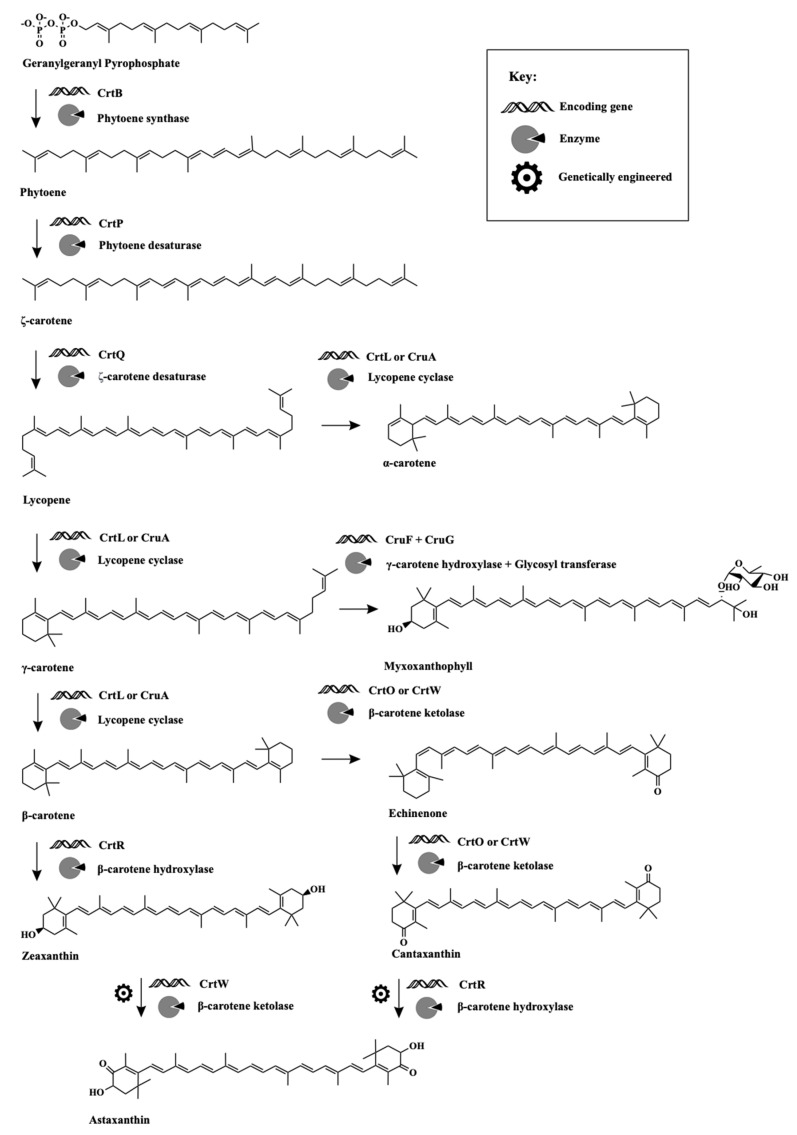
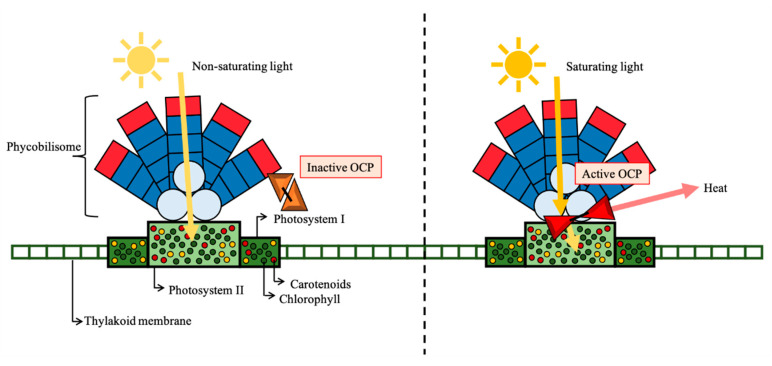
Carotenoids are tetraterpenoids molecules present in all photosynthetic organisms, responsible for better light-harvesting and energy dissipation in photosynthesis. In cyanobacteria, the biosynthetic pathway of carotenoids is well described, and apart from the more common compounds (e.g., β-carotene, zeaxanthin, and echinenone), specific carotenoids can also be found, such as myxoxanthophyll. Moreover, cyanobacteria have a protein complex called orange carotenoid protein (OCP) as a mechanism of photoprotection. Although cyanobacteria are not the organism of choice for the industrial production of carotenoids, the optimisation of their production and the evaluation of their bioactive capacity demonstrate that these organisms may indeed be a potential candidate for future pigment production in a more environmentally friendly and sustainable approach of biorefinery. Carotenoids-rich extracts are described as antioxidant, anti-inflammatory, and anti-tumoral agents and are proposed for feed and cosmetical industries. Thus, several strategies for the optimisation of a cyanobacteria-based bioprocess for the obtention of pigments were described. This review aims to give an overview of carotenoids from cyanobacteria not only in terms of their chemistry but also in terms of their biotechnological applicability and the advances and the challenges in the production of such compounds.
Overview
The claims and statistics of this paper haven’t been checked yet.
Free: it reads the open-access text and checks the first 5 claims that cite a source we can check. Create a free account to check every claim.
Integrity signals
Registry
Cites
Statistics
Figures
Verification
Claims the paper makes
The claims and statistics of this paper haven’t been checked yet.
Free: it reads the open-access text and checks the first 5 claims that cite a source we can check. Create a free account to check every claim.
Claims other papers make about this one
Each is checked against this paper’s own text: does it say what the citing paper says it does?
The source backs part of the claim, not all of it — or backs it for a different population, condition or comparison.
In the citing paper
“This surge in carotenoid levels can be interpreted as a defensive mechanism employed by the organism to cope with the stress induced by ERY, as carotenoids are known for their antioxidant properties and contribution to cellular protection (Pagels et al. 2021).”
From Integrated morpho-physiological and biochemical description of the mechanisms leading stress responses in cyanobacteria (Arthrospira platensis) upon exposure to Erythromycin (2025) · cites this paper as Pagels et al. 2021
Experimental — accuracy not yet measured
Self-check
Percentages, sums and reported differences re-computed from the paper’s own numbers.
The self-check needs the paper’s full text.
Citations
Cites
Handbook of Microalgal Culture: Applied Phycology and Biotechnology
(2013) · doi:10.1002/9781118567166 · Cited by 979
Juneja, A., Ceballos, R., & Murthy, G. (2013) · Energies · doi:10.3390/en6094607 · Cited by 835 · cited 1×
“These factors can also change enzymatic activity and consequently metabolic pathways of the organism [56].”
BackgroundCarotenoids from microalgae: A review of recent developments
Gong, M., & Bassi, A. (2016) · Biotechnology Advances · doi:10.1016/j.biotechadv.2016.10.005 · Cited by 723 · cited 1×
“5 billion (USD) from 2016 to 2019, βcarotene, astaxanthin, and lutein being responsible for 60% of this market [7,8].”
BackgroundMicroalgae as sources of carotenoids
Guedes, A. C., Amaro, H. M., & Malcata, F. X. (2011) · Marine Drugs · doi:10.3390/md9040625 · Cited by 639 · cited 3×
“600) and can be divided into two major classes, carotenes, such as α- and β-carotene, and xanthophylls (oxygenised derivatives of carotenes) such as zeaxanthin and echinenone [4,5].”
BackgroundSelf-citationPanis, G., & Carreon, J. R. (2016) · Algal Research · doi:10.1016/j.algal.2016.06.007 · Cited by 444 · cited 1×
“Further purification can be performed, but the cost is hardly justifiable [72].”
BackgroundPhycobiliproteins from cyanobacteria: Chemistry and biotechnological applications
Pagels, F., Guedes, A. C., Amaro, H. M., Kijjoa, A., & Vasconcelos, V. (2019) · Biotechnology Advances · doi:10.1016/j.biotechadv.2019.02.010 · Cited by 426 · cited 2×
“The cyanobacteria light-harvesting occurs mainly through the phycobilisome, a protein component of the extramembrane antenna pigment (phycobiliproteins), which transfers the energy to the photosystem core [15].”
BackgroundSelf-citationCell disruption and lipid extraction for microalgal biorefineries: A review
Lee, S. Y., Cho, J. M., Chang, Y. K., & Oh, Y.-K. (2017) · Bioresource Technology · doi:10.1016/j.biortech.2017.06.038 · Cited by 377
Light emitting diodes (LEDs) applied to microalgal production
Schulze, P. S. C., Barreira, L. A., Pereira, H. G. C., Perales, J. A., & Varela, J. C. S. (2014) · Trends in Biotechnology · doi:10.1016/j.tibtech.2014.06.001 · Cited by 370 · cited 1×
“However, in cyanobacteria, the absorption of blue light is done in a less effective way [43], and that lack of blue light can reduce carotenoids productivity.”
BackgroundEhling-Schulz, M., Bilger, W., & Scherer, S. (1997) · Journal of Bacteriology · doi:10.1128/jb.179.6.1940-1945.1997 · Cited by 368 · cited 2×
“[48] observed that UV-B irradiation induced an increase in carotenoids, especially echinenone and myxoxanthophyll in Nostoc commune after 1 day of irradiation.”
BackgroundUltrasound assisted extraction of β-carotene from Spirulina platensis
Dey, S., & Rathod, V. K. (2013) · Ultrasonics Sonochemistry · doi:10.1016/j.ultsonch.2012.05.010 · Cited by 304
Cited by
Microalgae as a Source of Valuable Phenolic Compounds and Carotenoids
Cichoński, J., & Chrzanowski, G. (2022) · Molecules · doi:10.3390/molecules27248852 · Cited by 125
“Food is one of the key sectors for carotenoid production, and estimates suggest that this industry will reach 2 billion USD worldwide in 2026 [85].”
BackgroundRed Seaweed Pigments from a Biotechnological Perspective
Freitas, M. V., Pacheco, D., Cotas, J., Mouga, T., Afonso, C., & Pereira, L. (2021) · Phycology · doi:10.3390/phycology2010001 · Cited by 114
Mapelli‐Brahm, P., Gómez‐Villegas, P., Gonda, M., Léon-Vaz, A., León, R., Mildenberger, J., Rebours, C., Saravia, V., Vero, S., Vila, E., et al. (2023) · Marine Drugs · doi:10.3390/md21060340 · Cited by 105
Natural Dyes and Pigments: Sustainable Applications and Future Scope
Negi, A. (2025) · Sustainable Chemistry · doi:10.3390/suschem6030023 · Cited by 116
Kato, Y., Inabe, K., Hidese, R., Kondo, A., & Hasunuma, T. (2022) · Bioresource Technology · doi:10.1016/j.biortech.2021.126196 · Cited by 90
Srivastava, A., Kalwani, M., Chakdar, H., Pabbi, S., & Shukla, P. (2022) · Bioresource Technology · doi:10.1016/j.biortech.2022.127071 · Cited by 97
Natural Carotenoids: Recent Advances on Separation from Microbial Biomass and Methods of Analysis
Papapostolou, H., Kachrimanidou, V., Alexandri, M., Plessas, S., Papadaki, A., & Kopsahelis, N. (2023) · Antioxidants · doi:10.3390/antiox12051030 · Cited by 79
“[43] recently reviewed the potential of these microorganisms, reporting the strains Cyanobium sp.”
BackgroundGrubišić, M., Šantek, B., Zorić, Z., Čošić, Z., Vrana, I., Gašparović, B., Čož‐Rakovac, R., & Šantek, M. I. (2022) · Molecules · doi:10.3390/molecules27041248 · Cited by 69
“In cyanobacteria, the main pigments are phycobiliproteins, while carotenoids have a protective role against saturating light and are a quencher of reactive oxygen species (ROS) [130].”
BackgroundResilience and Mitigation Strategies of Cyanobacteria under Ultraviolet Radiation Stress
Singh, V. K., Jha, S., Rana, P., Mishra, S., Kumari, N., Singh, S. C., Anand, S., Upadhye, V. J., & Sinha, R. P. (2023) · International Journal of Molecular Sciences · doi:10.3390/ijms241512381 · Cited by 75
“Carotenoids capture triplet-state energy produced from chlorophyll and safeguard cells from photooxidation-related harm while lipid peroxidation is averted by α-tocopherol via foraging ROS [66].”
BackgroundMicroalgae pigments as a sustainable approach to textile dyeing: A critical review
Mutaf, T., Demir, A., Elibol, M., & Öncel, S. Ş. (2023) · Algal Research · doi:10.1016/j.algal.2023.103291 · Cited by 65
Molecular design of microalgae as sustainable cell factories
Einhaus, A., Baier, T., & Kruse, O. (2023) · Trends in biotechnology · doi:10.1016/j.tibtech.2023.11.010 · Cited by 61
Naz, T., Ullah, S., Nazir, Y., Li, S., Iqbal, B., Liu, Q., Mohamed, H., & Song, Y. (2023) · Journal of Fungi · doi:10.3390/jof9050578 · Cited by 62
“The growing conditions are also crucial for the extraction because they can alter the cell structure [74].”
BackgroundCui, J., Sun, H., Chen, R., Sun, J., Mo, G., Luan, G., & Lu, X. (2023) · Green Carbon · doi:10.1016/j.greenca.2023.11.004 · Cited by 45
Nawaz, T., Gu, L., Fahad, S., Saud, S., Harrison, M. T., & Zhou, R. (2024) · Food and Energy Security · doi:10.1002/fes3.536 · Cited by 47
Sandybayeva, S. K., Kossalbayev, B. D., Zayadan, B. K., Sadvakasova, A. K., Bolatkhan, K., Zadneprovskaya, E. V., Kakimov, A. B., Alwasel, S., Leong, Y. K., Allakhverdiev, S. I., et al. (2022) · Biochemical Engineering Journal · doi:10.1016/j.bej.2022.108640 · Cited by 44
Cosmetic Potential of Pigments Extracts from the Marine Cyanobacterium Cyanobium sp.
Pagels, F., Almeida, C. J., Vasconcelos, V. M., & Guedes, A. C. (2022) · Marine Drugs · doi:10.3390/md20080481 · Cited by 40
“Moreover, pigments from cyanobacteria have been proposed as a highly bioactive group of compounds [9,10].”
BackgroundSelf-citationIsomerization of carotenoids in photosynthesis and metabolic adaptation
Telegina, T. A., Vechtomova, Y. L., Aybush, A. V., Buglak, A. A., & Kritsky, M. S. (2023) · Biophysical Reviews · doi:10.1007/s12551-023-01156-4 · Cited by 44
“…epidemiological studies and clinical trials has shown that carotenoid supplementation in the human diet can significantly reduce the risk of ROS-mediated diseases such as cancer, cardiovascular disease, or photosensitivity disorders (Pagels et al. 2021; Raja et al. 2007; Srivas-tava et al. 2022).”
BackgroundThevarajah, B., Piyatilleke, S., Nimarshana, P. H. V., Selvaraju, K., Malik, A., & Ariyadasa, T. U. (2024) · Bioresource Technology · doi:10.1016/j.biortech.2024.130612 · Cited by 42
Solar bioreactors used for the industrial production of microalgae
Masojídek, J., Lhotský, R., Štěrbová, K., Zittelli, G. C., & Torzillo, G. (2023) · Applied Microbiology and Biotechnology · doi:10.1007/s00253-023-12733-8 · Cited by 41
“These environmental constraints induced the development of diverse protective systems producing a variety of physiologically beneficial and valuable compounds such as polyunsaturated fatty acids (PUFAs), polysaccharides, lipids, essential amino acids, antioxidants or bioactive substances with immunological, biostimula…”
BackgroundRodrigues, F. G., Reis, M. A., Ferreira, L., Grosso, C., Ferraz, R., Vieira, M., Vasconcelos, V. M., & Martins, R. F. (2024) · Molecules · doi:10.3390/molecules29204799 · Cited by 36
“Arthrospira is a well-known and largely consumed cyanobacterium, and Nostoc is widely used as food in Asia and South America [83,104].”
BackgroundSelf-citationSustainable Microalgae and Cyanobacteria Biotechnology
López-Hernández, J.-F., Kean-Meng, T., Asencio-Alcudia, G.-G., Asyraf-Kassim, M., Alvarez-González, C.-A., & Márquez-Rocha, F.-J. (2022) · Applied Sciences · doi:10.3390/app12146887 · Cited by 30
“Genetic engineering was used in another study to improve carotenoids production in cyanobacteria [33].”
MethodMarine Microbial-Derived Resource Exploration: Uncovering the Hidden Potential of Marine Carotenoids
Steven, R., Humaira, Z., Natanael, Y., Dwivany, F. M., Trinugroho, J. P., Dwijayanti, A., Kristianti, T., Tallei, T. E., Emran, T. B., Jeon, H. H., et al. (2022) · Marine Drugs · doi:10.3390/md20060352 · Cited by 34
“The global carotenoid market is being propelled forward by the increasing use of pigments in a variety of industries, including health and pharmaceutical [77].”
BackgroundPoly-β-hydroxybutyrate production by Synechocystis MT_a24 in a raceway pond using urban wastewater
Grivalský, T., Lakatos, G., Štěrbová, K., Manoel, J. A. C., Beloša, R., Divoká, P., Kopp, J., Kriechbaum, R., Oliver Spadiut, A., Zwirzitz, A., et al. (2024) · Applied Microbiology and Biotechnology · doi:10.1007/s00253-023-12924-3 · Cited by 28
“In addition, the positive effect of alkaline pH (pH = 9.0) on carotenoid production was also referred (Pagels et al. 2021).”
InfluentialAssunção, J., Amaro, H. M., Malcata, F. X., & Guedes, A. C. (2022) · Life · doi:10.3390/life12091389 · Cited by 30
“5 billion from 2016–2019, and is expected to reach USD 2 billion (USD) in 2026 [59].”
BackgroundSelf-citationDwivedi, S., & Ahmad, I. Z. (2022) · Environmental Research · doi:10.1016/j.envres.2022.114943 · Cited by 28
Assunção, J., Amaro, H. M., Tavares, T. G., Malcata, F. X., & Guedes, A. C. (2023) · Life · doi:10.3390/life13010187 · Cited by 25
“In general, the increase in carotenoid synthesis in culture occurs under extreme conditions, particularly in terms of light intensity, but also under extreme salinity (high [NaCl]) or pH [11,34].”
BackgroundSelf-citationPagels, F., Guedes, A. C., Vicente, A. A., & Vasconcelos, V. M. (2023) · Phycology · doi:10.3390/phycology3010004 · Cited by 26
“Inside cyanobacteria cells, these compounds are in charge of collecting exceeded energy from photosynthetic metabolism, preventing detrimental consequences and cell damage [11], and can be isolated and employed for a similar purpose in human skin, where extended exposure to sunlight (UV radiation and high light intens…”
BackgroundSelf-citationCyanobacteria as a Biocatalyst for Sustainable Production of Biofuels and Chemicals
Singh, V. K., Jha, S., Rana, P., Soni, R., Lalnunpuii, R., Singh, P. K., Sinha, R. P., & Singh, G. (2024) · Energies · doi:10.3390/en17020408 · Cited by 24
Canonico, M., Konert, G., Crepin, A., Šedivá, B., & Kaňa, R. (2021) · Cells · doi:10.3390/cells10081916 · Cited by 21
“The monocyclic G -carotene represents a branching point towards either β-carotene or myxoxanthophyll [78] that could possibly act as two competing routes during HL stress.”
BackgroundKosiba, J., & Krztoń, W. (2021) · Hydrobiologia · doi:10.1007/s10750-021-04780-x · Cited by 21
“Adama Mickiewicza 33, 31-120 Kraków, Poland e-mail: kosiba@iop.krakow.pl et al., 2006), although they do in fact produce amino acids, and also contain large amounts of proteins, carbohydrates, lipids, minerals, vitamins and pigments (Pagels et al., 2021).”
BackgroundEngineering of the fast-growing cyanobacterium Synechococcus sp. PCC 11901 to synthesize astaxanthin
Betterle, N., Gasparotto, E., Battagini, E., Ceschi, E., Bellamoli, F., Nixon, P. J., & Ballottari, M. (2025) · Biotechnology for Biofuels and Bioproducts · doi:10.1186/s13068-025-02626-5 · Cited by 20
“Cyanobacteria have the additional advantage that carotenoids are more easily extracted from biomass than H. pluvialis [22].”
InfluentialRenaud, C., Leys, N., & Wattiez, R. (2023) · Journal of Plant Interactions · doi:10.1080/17429145.2023.2242697 · Cited by 21
“They also contain carotenoids, which are yellow, orange, or red pigments that possess the ability to protect themselves against an excess of light energy (Pagels et al. 2021).”
BackgroundMolecular mechanisms of Marine-Derived Natural Compounds as photoprotective strategies
Liu, Y., Liu, Y., Deng, J., Wu, X., He, W., Mu, X., & Nie, X. (2022) · International Immunopharmacology · doi:10.1016/j.intimp.2022.109174 · Cited by 18
Chettri, S., Altemimi, A. B., Das, P., Singh, R., Said, P. P., Nath, P. C., Pandey, V. K., & Rustagi, S. (2026) · Sustainable Food Technology · doi:10.1039/d5fb00537j · Cited by 21
Zhang, M., Xiao, Y., Song, Q., & Li, Z. (2025) · Environmental Microbiome · doi:10.1186/s40793-025-00735-0 · Cited by 15
“…taxa such as cyanobacteria and actinobacteria in moss and lichen microhabitats may contribute to the synthesis of pigmented antioxidant compounds [122, 123], which not only enhance their own survival under extreme environmental conditions but also may provide indirect protection to the host.”
Mrázová, K., Bačovský, J., Sedrlova, Z., Slaninová, E., Obruča, S., Fritz, I., & Krzyžánek, V. (2023) · Microorganisms · doi:10.3390/microorganisms11040888 · Cited by 16
Reimão, M., Almeida, L., Ramos, C., Eusébio, N., Martins, R. F., da Silva, Vasconcelos, V. M., & Freitas, M. (2025) · Journal of Cleaner Production · doi:10.1016/j.jclepro.2025.146071 · Cited by 14
Self-citationWood, P. L. (2024) · Metabolites · doi:10.3390/metabo14070378 · Cited by 14
“The The biosynthesis of carotenoids utilizes geranylgeranyl pyrophosphate as a precursor [27], generating halocynthiaxanthin-3-acetate and phoenicoxanthin in algae and echinenone in cyanobacteria (Figure 8). biosynthesis of carotenoids utilizes geranylgeranyl pyrophosphate as a precursor [27],…”
BackgroundInfluentialMelloni, M., Sergi, D., Simioni, C., Passaro, A., & Neri, L. M. (2023) · Biology · doi:10.3390/biology12030449 · Cited by 14
“Although microalgae also include cyanobacteria, it was chosen not to mention them as they have some limitations in the production of molecules such as carotenoids and vitamins, thus becoming less attractive than green microalgae in regards to their use as functional foods [27,28].”
BackgroundRecent Advances in Microbial Production of Terpenoids from Biomass-derived Feedstocks
Cao, Y., & Xian, M. (2024) · Chemical Research in Chinese Universities · doi:10.1007/s40242-024-3242-2 · Cited by 12
Light Modulation for Bioactive Pigment Production in Synechocystis salina
Assunção, J., Pagels, F., Tavares, T. G., Malcata, F. X., & Guedes, A. C. (2022) · Bioengineering · doi:10.3390/bioengineering9070331 · Cited by 13
“salina to green light (high intensity) positively influenced the production of chl a, whilst white light enhanced carotenoid productivities in addition to positively influencing production of zeaxanthin and β-carotene; these are important pigments for use by the food and aquaculture industries as nutraceuticals or col…”
BackgroundSelf-citationZampieri, R. M., Caldara, F., & Rocca, N. L. (2023) · Journal of Applied Phycology · doi:10.1007/s10811-023-02995-0 · Cited by 14
Kwidzińska, K., Zalewska, M., Aksmann, A., Kobos, J., Mazur‐Marzec, H., & Caban, M. (2024) · Journal of Hazardous Materials · doi:10.1016/j.jhazmat.2024.134373 · Cited by 12
New easy lab methods for the extraction of phycobiliproteins and pigments from cyanobacteria
Kollmen, J., Rech, M., Lorig, F., Nonno, S. D., Stiefelmaier, J., & Strieth, D. (2025) · Journal of Applied Phycology · doi:10.1007/s10811-024-03414-8 · Cited by 11
“The extraction of phycobiliproteins and pigments can, broadly differentiated, be carried out using mechanical (e.g., ultrasonic, microwave, supercritical extraction) and non-mechanical (e.g., heat, chemical, enzymatic) methods (Pagels et al. 2021b).”
Djebaili, R., Mignini, A., Vaccarelli, I., Pellegrini, M., Spera, D. M., Gallo, M. D., & D’Alessandro, A. M. (2022) · Frontiers in Microbiology · doi:10.3389/fmicb.2022.933398 · Cited by 14
Cyanobacterial myxoxanthophylls: biotechnological interventions and biological implications
Srivastava, A., Thapa, S., Chakdar, H., Babele, P. K., & Shukla, P. (2022) · Critical Reviews in Biotechnology · doi:10.1080/07388551.2022.2117682 · Cited by 10
“Since pigments are photosynthetic components, variation in light quality, intensity, and photoperiod has a significant impact on pigment production and cell content [25,47].”
BackgroundAbdullahi, Z. H., Marselin, F. N., Khaironizam, N. I. A., Fauzi, N. F. A., & Maznah, W. O. W. (2023) · Plant Physiology and Biochemistry · doi:10.1016/j.plaphy.2023.03.010 · Cited by 12
β-Carotene from Dunaliella: Production, applications in food/feed, and recent advances
Pagels, F., & Guedes, A. C. (2023) · Elsevier eBooks · doi:10.1016/b978-0-323-99196-4.00020-6 · Cited by 16
Self-citationJaiswal, T. P., Chakraborty, S., Tiwari, R. K., Priyanka, P., Mishra, A. K., & Singh, S. S. (2024) · Algal Research · doi:10.1016/j.algal.2024.103653 · Cited by 9
Pfennig, T., Kullmann, E., Zavřel, T., Nakielski, A., Ebenhöh, O., Červený, J., Bernát, G., & Matuszyńska, A. (2024) · PLoS Computational Biology · doi:10.1371/journal.pcbi.1012445 · Cited by 12
“The scipy function minimize was used to minimize the optimization function using the Nelder-Mead algorithm.”
Кузикова, И. Л., Zaytseva, T. B., Chernova, E., Povolotckaia, A., Pankin, D. V., Sazanova, A. L., & Медведева, Н. Г. (2025) · Chemosphere · doi:10.1016/j.chemosphere.2025.144090 · Cited by 9
Isolation, Identification and Pigment Analysis of Novel Cyanobacterial Strains from Thermal Springs
Sandybayeva, S. K., Kossalbayev, B. D., Zayadan, B. K., Kopecký, J., Kakimova, A. B., Bolatkhan, K., & Allakhverdiev, S. I. (2024) · Plants · doi:10.3390/plants13212951 · Cited by 10
Ainas, M., Touzout, N., Tahraoui, H., Mokeddem, H. E., Moussa, H., Kherbouche, S., Mebrouk, S., Zhang, J., & Amrane, A. (2025) · Ecotoxicology · doi:10.1007/s10646-025-02888-7 · Cited by 8
“This surge in carotenoid levels can be interpreted as a defensive mechanism employed by the organism to cope with the stress induced by ERY, as carotenoids are known for their antioxidant properties and contribution to cellular protection (Pagels et al. 2021).”
Vincent, M., Blanc-Garin, V., Chenebault, C., Cirimele, M., Farci, S., Garcia-Alles, L. F., Cassier‐Chauvat, C., & Chauvat, F. (2024) · International Journal of Molecular Sciences · doi:10.3390/ijms25073827 · Cited by 9
“The production of sesquiterpenes, such as farnesene, competes with the synthesis of photosynthetic pigments (chlorophyll and carotenoids) because they use the same precursor metabolite FPP [38] (Figure 1). photoautotrophic growth (Figure 8).”
BackgroundEngelhart-Straub, S., Haack, M., Awad, D., Brueck, T., & Mehlmer, N. (2023) · Microorganisms · doi:10.3390/microorganisms11092147 · Cited by 10
“Microalgae or cyanobacteria can use carbon dioxide as their carbon source and produce photoautotrophic lipids and carotenoids, but they also have disadvantages, such as low lipid productivity and long fermentation duration for microalgae [11], as well as low carotenoid content for cyanobacteria [12].”
BackgroundPerevedentseva, E. V., Melnik, N. N., Muronets, E. M., Averyushkin, A. S., Karmenyan, A., & Elanskaya, I. V. (2023) · Journal of Luminescence · doi:10.1016/j.jlumin.2023.120224 · Cited by 7
Miao, R., Légeret, B., Cuiné, S., Burlacot, A., Lindblad, P. C., Li‐Beisson, Y., Beisson, F., & Peltier, G. (2024) · PLANT PHYSIOLOGY · doi:10.1093/plphys/kiae319 · Cited by 7
Bilova, T. E., Golushko, N., Frolova, N., Soboleva, A., Silinskaya, S., Khakulova, A. A., Orlova, A. A., Sinetova, M. A., Los, D. A., & Frolov, A. (2025) · International Journal of Molecular Sciences · doi:10.3390/ijms26052201 · Cited by 9
“…in their natural habitats, the majority of cyanobacteria developed a few UV-stress mitigation mechanisms: enhanced biosynthesis of carotenoids [5], mycosporine-like amino acids [6], polyphenols [7] and polyamines to protect the photo-synthetic apparatus; up-regulation of scavengers for…”
Nowruzi, B., & Hashemi, H. (2024) · The Journal of Cosmetic Medicine · doi:10.25056/jcm.2024.8.1.18 · Cited by 8
RetractedAntioxidants from marine cyanobacteria
Hatha, A. A. M., & Sumayya, N. S. (2023) · Elsevier eBooks · doi:10.1016/b978-0-323-95086-2.00010-2 · Cited by 9
Bhagat, N., Gupta, G. K., Minhas, A. K., Chhabra, D., & Shukla, P. (2025) · BMC Biotechnology · doi:10.1186/s12896-025-00955-9 · Cited by 9
“The speculated reason behind the slower cell growth could be the presence of lower carotenoids content in cyanobacteria [49].”
Redox cycle: signaling and metabolic cross-talks in cyanobacteria
Sharma, S., Mishra, A., Priyanka, P., & Singh, S. S. (2024) · Elsevier eBooks · doi:10.1016/b978-0-443-13231-5.00011-8 · Cited by 10
Arora, N., & Pritam, P. (2025) · Blue Biotechnology · doi:10.1186/s44315-025-00028-8 · Cited by 5
“Carotenoids are a class of isoprenoids synthesized by various organisms, such as plants, microalgae, mammals, and cyanobacteria [1, 2].”
Duan, M., Tian, W., Pang, X., Li, R., Wang, J., Cui, X., Yang, L., & Li, X. (2025) · Lab on a Chip · doi:10.1039/d5lc00759c · Cited by 5
Yaderets, V. V., Karpova, N. V., Викторовна, Г. Е., Сергеевна, Ш. А., & Джавахия, В. В. (2023) · Fermentation · doi:10.3390/fermentation9121007 · Cited by 5
The Cyanobacteria Genus Aphanothece: Bioactive Compounds and Applications in Biotechnology
Delgado, R. T., Filho, R. D. S. F., & Mendes, C. R. B. (2025) · Applied Biochemistry and Biotechnology · doi:10.1007/s12010-025-05221-4 · Cited by 6
Sandybayeva, S. K., Ismailova, S. A., Yershova, A. O., Kakimova, A. B., & Zayadan, B. K. (2025) · Plants · doi:10.3390/plants15010033 · Cited by 5
“…produce a diverse array of pigments such as phycobiliproteins, chlorophylls, and carotenoids that not only function as essential light-harvesting molecules but also exhibit antioxidant, anti-inflammatory, anti-cancer, neuroprotective, anti-obesity and immunomodulatory properties [15–17].”
Carotenoids: Overview of the main methods and conditions of their preparation
Yaderets, V. V., Карпова, Н. В., Glagoleva, E. V., Petrova, K. S., Shibaeva, A. S., & Джавахия, В. В. (2024) · Proceedings of universities Applied chemistry and biotechnology · doi:10.21285/achb.905 · Cited by 5
Wolffia: A sustainable aquatic crop for future food systems and space agriculture
Saranya, S. V., Lincy, L. L., Thamanna, L., Dhayanithi, S., & Chellapandi, P. (2025) · Trends in Food Science & Technology · doi:10.1016/j.tifs.2025.105069 · Cited by 8
Cultivation of Cyanobacteria on Sustainable Dried Luffa cylindrica
Kollmen, J., Stiefelmaier, J., Mofrad, R., & Strieth, D. (2023) · Phycology · doi:10.3390/phycology3040032 · Cited by 5
Biotechnological Applications of Cyanobacteria: Synechocystis and Synechococcus Strains
Bolay, P., Toepel, J., & Bühler, B. (2025) · Advances in biochemical engineering, biotechnology · doi:10.1007/10_2025_282 · Cited by 6
Lee, J. H., Park, J.-Y., Seo, M.-D., & Lee, P. C. (2024) · Metabolic Engineering · doi:10.1016/j.ymben.2024.12.009 · Cited by 4
D’Auria, G., Nitride, C., & Ferranti, P. (2022) · Elsevier eBooks · doi:10.1016/b978-0-12-823960-5.00024-x · Cited by 4
Cyanobacterial Biomass as a Feedstock for Biochemicals
Wichaphian, A., Sriket, N., Htoo, N. Y. M., Zin, M. T., & Srinuanpan, S. (2024) · Springer eBooks · doi:10.1007/978-3-031-70698-1_9 · Cited by 2
Farooq, M. S., Javed, F., Uzair, M., EL-BELTAGI, H. S., Zulfiqar, U., Khan, M. R., Yousuf, M., Tuckner, M., Rebouh, N. Y., & Shah, M. A. (2026) · Agrosystems Geosciences & Environment · doi:10.1002/agg2.70321 · Cited by 5
Flora, A., Afrin, S., Jui, A. H., Bhowmik, B., Bhuiyan, R. H., Rashid, M. M., Khatun, N., Islam, S., Hossain, T., Bhuiyan, M. N. I., et al. (2026) · Thalassas An International Journal of Marine Sciences · doi:10.1007/s41208-026-01104-5 · Cited by 3
“…yeasts, and microalgae synthesize a wide array of chromogenic compounds such as carotenoids, actinorhodin, flexirubin, melanin, phycocyanin, and phy - coerythrin, each characterized by distinct physicochemical properties and biological functions (Manivasagan et al. 2018 ; Pagels et al. 2021 ).”
Ali, A., Muzaffar, H., Hassoun, S. A., Afzaal, M., & Ndagire, C. T. (2026) · Archives of Microbiology · doi:10.1007/s00203-026-04860-3 · Cited by 4
“Although research on PBP bioactivities has increased recently, it is still limited and primarily focuses on PC (Pagels et al. 2021 ).”
Deng, C., Zhang, Z., Yan, G., Liu, N., Dai, Q., Zhao, L., Wang, F., Li, Y., Yang, Y., & Wang, W. (2024) · Scientia Horticulturae · doi:10.1016/j.scienta.2024.113608 · Cited by 4
Ghosh, T., Bharadwaj, S. V. V., & Bux, F. (2025) · Journal of Applied Phycology · doi:10.1007/s10811-025-03513-0 · Cited by 3
“…research has focused on stress (Pancha et al. 2014), synthetic biology (Ducat et al. 2011), or medium and/or growth conditions engineering (Pagels et al. 2020, 2021; Contreras-Ropero et al. 2024) approaches for accumulation of high-value commodities, biomass has been forced to play second…”
Rörig, L. R., Lima, A. O. D. S., Bonomi‐Barufi, J., Junker, E., do Nascimento, M. E. C., Morillas‐España, A., Abdala‐Díaz, R., Vega, J., Avilés, A., Acién, F. G., et al. (2024) · Algal Research · doi:10.1016/j.algal.2024.103692 · Cited by 3
Honda, M. (2022) · Elsevier eBooks · doi:10.1016/b978-0-323-96106-6.00005-8 · Cited by 3
Lima, A. D. S. P., Cahú, T. B., Dantas, D. M. M., de Veras, B. O., Oliveira, C. Y. B., Souza, R. S., de Moraes, L. B. S., Silva, F. C. O., Araújo, M. I. F., Gálvez, A. O., et al. (2023) · Food Science and Technology International · doi:10.1177/10820132231186171 · Cited by 2
“According to Pagels et al. (2021) and Shen et al. (2015) light stress, as well as the depletion of nitrogenous compounds, are effective and widely applied strategies for the species in order to induce the accumulation of carotenoids and fatty acids with numerous therapeutic applications.”
Yaderets, V. V., Карпова, Н. В., Glagoleva, E. V., Shibaeva, A. S., & Джавахия, В. В. (2025) · Fermentation · doi:10.3390/fermentation11020082 · Cited by 2
Testing eukaryotic routes for heterologous production of ketocarotenoids in cyanobacteria
Mahdi, A. V., Wittmann, D. N., Hanamghar, S. S., Zorć, O., Cao, J., Groß, G. A., Jensen, P. E., Russo, D. A., & Zedler, J. A. Z. (2025) · Sustainable Microbiology · doi:10.1093/sumbio/qvaf008 · Cited by 2
“To date, “green” heterologous astaxanthin production has been established in cyanobacteria (reviewed in Pagels et al. 2021 ), microalgae (reviewed in Goold et al. 2024 ), and various higher plants (reviewed in Rodriguez-Concepcion et al. 2018 ) using a variety of ketolases and hydroxylases.”
Kumawat, R., Kumar, A., Kundu, A., Abraham, G., Prasanna, R., Singh, A., & Jaiswal, P. (2025) · 3 Biotech · doi:10.1007/s13205-025-04545-6 · Cited by 2
“Generally, salinity stress is reported to increase the carotenoid content in microalgae (Paliwal et al. 2015; Pagels et al. 2021).”
Delgado, R. T., Filho, R. D. S. F., Assunção, M. F. G., Aksoy, B., Lm, S., & Mendes, C. R. B. (2026) · Journal of Applied Phycology · doi:10.1007/s10811-026-03805-z · Cited by 2
Santin, A., Storti, M., Mezzavilla, M., Fortunato, A., Fiorin, F., Gaboriau, D. C. A., Arcudi, F., Flores, E., Morosinotto, T., & Perin, G. (2026) · New Phytologist · doi:10.1111/nph.71225 · Cited by 5
“:3) repletion, Anabaena acclimated photosynthesis to high light increasing the Car content (Figs 2a, S11), a common response among photosynthetic organisms (Izuhara et al ., 2020; Pagels et al ., 2021).”
Nanoengineering for DNA-conscious delivery of plant-based biopesticides in agroecosystems
Upadhyay, S. K. (2026) · Plant Nano Biology · doi:10.1016/j.plana.2026.100294 · Cited by 2
Pagels, F., Arias, A., Guedes, A. C., Vicente, A. A., Vasconcelos, V. M., & Moreira, M. T. (2022) · Applied Sciences · doi:10.3390/app122412999 · Cited by 2
Self-citationFrom lab to outdoors: microalgal process perspective for a step to reality
Yarkent, Ç., Kliber, C. G., Masojídek, J., Štěrbová, K., Saurav, K., Faraloni, C., Zittelli, G. C., Touloupakis, E., Moia, I. C., Torzillo, G., et al. (2024) · Elsevier eBooks · doi:10.1016/b978-0-443-22127-9.00019-6 · Cited by 2
Hakeem, I., Ubaid, A., Kamthan, M., Abid, M., & Ali, A. (2025) · Wiley eBooks · doi:10.1002/9781394287888.ch2 · Cited by 1
AQUACULTURE AS A SOURCE OF DANGER OF BIOLOGICAL AND GENETIC POLLUTION OF NATURAL RESERVOIRS.
наук», 1. Г. Б. У. Н. «. И. Ц. Ю. Н. Ц. Р. А., & Гуськов, Г. Е. (2023) · IEEE Lasers and Electro-Optics Society Annual Meeting (LEOS) · doi:10.23947/aquaculture.2023.30-33 · Cited by 1
Development of Functional Foods Using Biotechnological Approaches
Sharath Kumar, N., Thakur, A., Sharma, A., & Sharma, A. (2025) · Springer eBooks · doi:10.1007/978-3-031-96526-5_6 · Cited by 1
Priya, S. C., & Ranjitha, J. (2025) · Journal of Environmental Nanotechnology · doi:10.13074/jent.2025.09.2521558 · Cited by 1
Yuan, J., Lai, B., & Krömer, J. O. (2025) · Bioelectrochemistry · doi:10.1016/j.bioelechem.2025.109164 · Cited by 2
Fazelian, H., Moraveji, M. K., Mozaffarian, M., & Vahabzadeh, F. (2026) · International Journal of Environmental Science and Technology · doi:10.1007/s13762-026-07046-y · Cited by 1
Genetic Modifications in Cyanobacteria: Current Status and Future Prospects
Tripathi, K., & Mishra, Y. (2026) · IntechOpen eBooks · doi:10.5772/intechopen.1014041 · Cited by 2
Introductory Chapter: Cyanobacteria – Exploring Their Role in Energy, Environment and Industry
Severo, I. A., & Fagundes, M. B. (2026) · IntechOpen eBooks · doi:10.5772/intechopen.1014612 · Cited by 1
Robles, M., Beltrán, V., Garbayo, I., Wierzchoś, J., & Vílchez, C. (2026) · Processes · doi:10.3390/pr14081301 · Cited by 1
Kwidzińska, K., & Caban, M. (2026) · European Journal of Phycology · doi:10.1080/09670262.2026.2682186 · Cited by 1
Metadata
- Authors
- Pagels, F., Vasconcelos, V., & Guedes, A. C.
- Affiliations
- Universidade do Porto (PT)
- Corresponding author
- Guedes, Ana Catarina
- Venue
- Biomolecules
- Publisher
- MDPI AG
- Published
- 2021-05-15
- Volume
- 11
- Issue
- 5
- Pages
- 735
- ISSN
- 2218-273X (ISSN-L)
- PMC
- PMC8156961
- OpenAlex
- W3160613428
- Semantic Scholar
- 29d61b2e1560245ff022222c8f8e7f0a3a7e4997
- Cited by
- 162
- References
- 96
- Citations by year
- 2026: 32 · 2025: 32 · 2024: 23 · 2023: 55 · 2022: 16 · 2021: 4
- FWCI
- 2.63
- Type
- journal article
- Language
- en
- Open access
- gold
- doi.org
- Licence
- Locations
- Biomolecules (publishedVersion, cc-by)
- PubMed Central (publishedVersion, cc-by)
- PubMed (publishedVersion)
- DOAJ (DOAJ: Directory of Open Access Journals) (submittedVersion, cc-by-sa)
- Funders
- Fundação para a Ciência e a Tecnologia (SFRH/BD/136767/2018, UIDB/04423/2020, UIDP/04423/2020)
- European Regional Development Fund (POCI-01-0247-FEDER-035234, NORTE-01-0145-FEDER-000004, EAPA_151/2016)
- Topics
- Life Sciences › Biochemistry, Genetics and Molecular Biology › Biotechnology › Microbial Metabolism and Applications
- Physical Sciences › Energy › Renewable Energy, Sustainability and the Environment › Algal biology and biofuel production
- Life Sciences › Biochemistry, Genetics and Molecular Biology › Molecular Biology › Plant biochemistry and biosynthesis
- Keywords
- carotenoids, cyanobacteria, carotenoid biosynthesis, beta-carotene, zeaxanthin, echinenone, myxoxanthophyll, orange carotenoid protein, photoprotection, pigment production, bioprocess optimization, biorefinery, antioxidant activity, anti-inflammatory activity, anticancer activity, feed additives, cosmetics
- MeSH terms
- Cyanobacteria, Biotechnology, Carotenoids, Photosynthesis, beta Carotene, Biosynthetic Pathways
About these checks
Registry, retraction, Cites and statistics results are computed, not judged, with one exception: a printed reference that no index lists is read once by a model before it counts as a citation error. Claims are extracted by a model and kept only when their quote appears verbatim in the text; each cited source is then checked, with a model’s help, for whether it says what the claim relies on. Those verdicts can be wrong — read the claim’s quote and the cited source before relying on one.
Statistics and arithmetic are recomputed, not judged.
Confidence bands are shown only for fields calibrated on our annotated test set. None is calibrated yet, so no band is shown.
What counts as a claim ›How we measure confidence ›How we check this ›
Are you an author, or do you see a problem with this page? Request a review
Data sources
Bibliographic data: Semantic Scholar, OpenAlex, Crossref.
Contains information from the Semantic Scholar Academic Graph Datasets, made available under the ODC Attribution License (ODC-BY 1.0).
Semantic Scholar’s data is described in: Kinney, R., et al. (2023). The Semantic Scholar Open Data Platform. arXiv:2301.10140.
