

Hybrid Multitask Learning Reveals Sequence Features Driving Specificity in the CRISPR/Cas9 System
Open accessThe DOI matches its Crossref record; 32 of the 32 references it cites were found in a registry or an index.
Abstract
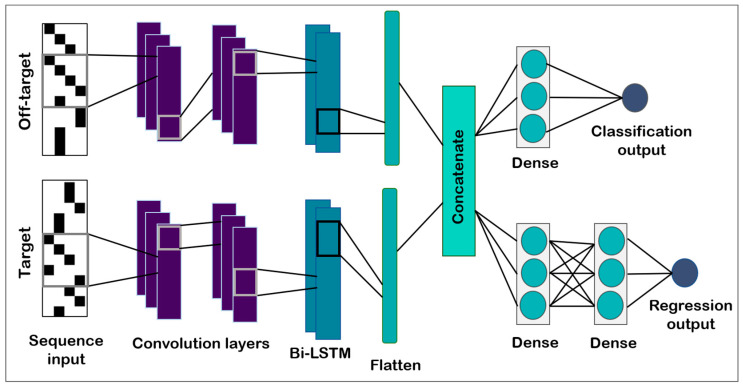
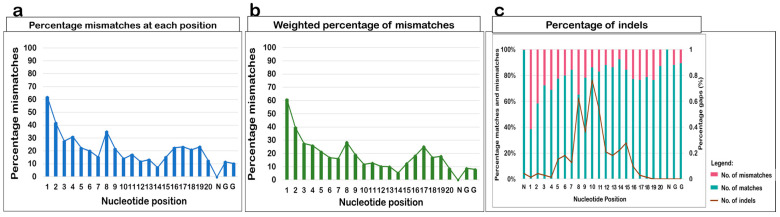
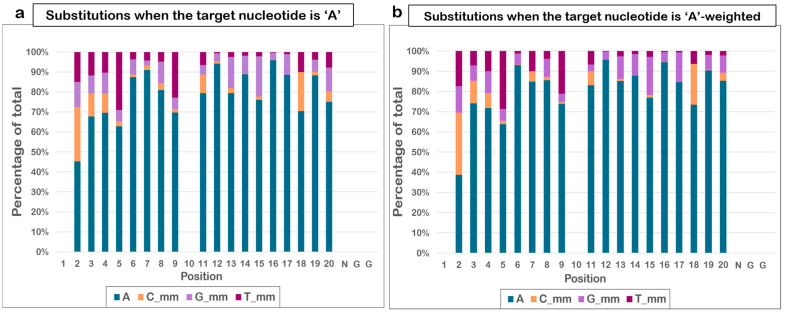
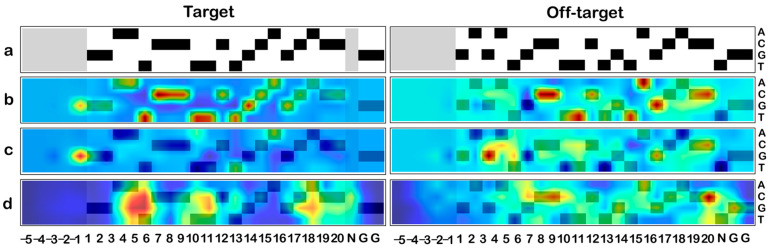
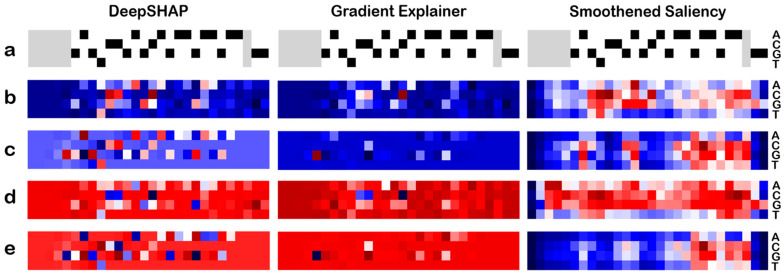
CRISPR/Cas9 technology is capable of precisely editing genomes and is at the heart of various scientific and medical advances in recent times. The advances in biomedical research are hindered because of the inadvertent burden on the genome when genome editors are employed—the off-target effects. Although experimental screens to detect off-targets have allowed understanding the activity of Cas9, that knowledge remains incomplete as the rules do not extrapolate well to new target sequences. Off-target prediction tools developed recently have increasingly relied on machine learning and deep learning techniques to reliably understand the complete threat of likely off-targets because the rules that drive Cas9 activity are not fully understood. In this study, we present a count-based as well as deep-learning-based approach to derive sequence features that are important in deciding on Cas9 activity at a sequence. There are two major challenges in off-target determination—the identification of a likely site of Cas9 activity and the prediction of the extent of Cas9 activity at that site. The hybrid multitask CNN–biLSTM model developed, named CRISP–RCNN, simultaneously predicts off-targets and the extent of activity on off-targets. Employing methods of integrated gradients and weighting kernels for feature importance approximation, analysis of nucleotide and position preference, and mismatch tolerance have been performed.
Overview
The claims and statistics of this paper haven’t been checked yet.
Free: it reads the open-access text and checks the first 5 claims that cite a source we can check. Create a free account to check every claim.
Integrity signals
Registry
Cites
Statistics
Figures
Verification
Claims the paper makes
The claims and statistics of this paper haven’t been checked yet.
Free: it reads the open-access text and checks the first 5 claims that cite a source we can check. Create a free account to check every claim.
Claims other papers make about this one
Each is checked against this paper’s own text: does it say what the citing paper says it does?
The source backs part of the claim, not all of it — or backs it for a different population, condition or comparison.
In the citing paper
“Machine learning and deep learning models have emerged as powerful predictive tools, enabling researchers to anticipate and comprehend potential off-target activities with unprecedented precision (Vora et al., 2023).”
From Emerging applications of gene editing technologies for the development of climate-resilient crops (2025) · cites this paper as Vora et al., 2023
Experimental — accuracy not yet measured
Self-check
Percentages, sums and reported differences re-computed from the paper’s own numbers.
The self-check needs the paper’s full text.
Citations
Cites
A Programmable Dual-RNA–Guided DNA Endonuclease in Adaptive Bacterial Immunity
Jinek, M., Chylinski, K., Fonfara, I., Hauer, M., Doudna, J. A., & Charpentier, E. (2012) · Science · doi:10.1126/science.1225829 · Cited by 17,116
Learning Deep Features for Discriminative Localization
Zhou, B., Khosla, A., Lapedriza, A., Oliva, A., & Torralba, A. (2016) · 2016 IEEE Conference on Computer Vision and Pattern Recognition (CVPR) · doi:10.1109/cvpr.2016.319 · Cited by 11,428 · cited 1×
“AMs for a specific class would indicate the discriminative regions (in this case, nucleotide and the position of nucleotides) that the deep learning network deems critical for identification with that class [37].”
RNA-Guided Human Genome Engineering via Cas9
Mali, P., Yang, L., Esvelt, K. M., Aach, J., Guell, M., DiCarlo, J. E., Norville, J. E., & Church, G. M. (2013) · Science · doi:10.1126/science.1232033 · Cited by 9,210
Chicco, D., & Jurman, G. (2020) · BMC Genomics · doi:10.1186/s12864-019-6413-7 · Cited by 6,143 · cited 1×
“Additionally, the Matthew’s correlation coefficient (MCC), which is known to be a reliable metric in binary classification of unbalanced datasets, was also compared among the candidate models [27].”
Biopython: freely available python tools for computational molecular biology and bioinformatics
Cock, P. J. A., Antao, T., Chang, J. T., Chapman, B. A., Cox, C. J., Dalke, A., Friedberg, I., Hamelryck, T., Kauff, F., Wilczynski, B., et al. (2009) · Bioinformatics · doi:10.1093/bioinformatics/btp163 · Cited by 6,080 · cited 1×
“To account for the bulges, the predicted off-targets were aligned using the pairwise2 module of biopython tools [19,20].”
MethodRepurposing CRISPR as an RNA-Guided Platform for Sequence-Specific Control of Gene Expression
Qi, L. S., Larson, M. H., Gilbert, L. A., Doudna, J. A., Weissman, J. S., Arkin, A. P., & Lim, W. A. (2013) · Cell · doi:10.1016/j.cell.2013.02.022 · Cited by 5,016 · cited 15×
“The single RNA-guided Cas9 protein is reported to tolerate not only mismatches but DNA/RNA bulges as well, resulting in off-target effects [7,18,34].”
BackgroundInfluentialDNA targeting specificity of RNA-guided Cas9 nucleases
Hsu, P. D., Scott, D. A., Weinstein, J. A., Ran, F. A., Konermann, S., Agarwala, V., Li, Y., Fine, E. J., Wu, X., Shalem, O., et al. (2013) · Nature Biotechnology · doi:10.1038/nbt.2647 · Cited by 4,741 · cited 1×
“It has, however, been reported in multiple studies that Cas9 acts at sequences similar to the target sequence as well, resulting in unwanted off-target effects [6,7].”
BackgroundCRISPR-Mediated Modular RNA-Guided Regulation of Transcription in Eukaryotes
Gilbert, L. A., Larson, M. H., Morsut, L., Liu, Z., Brar, G. A., Torres, S. E., Stern-Ginossar, N., Brandman, O., Whitehead, E. H., Doudna, J. A., et al. (2013) · Cell · doi:10.1016/j.cell.2013.06.044 · Cited by 3,696 · cited 15×
“The single RNA-guided Cas9 protein is reported to tolerate not only mismatches but DNA/RNA bulges as well, resulting in off-target effects [7,18,34].”
BackgroundInfluentialGenetic screens in human cells using the CRISPR-Cas9 system
Wang, T., Wei, J. J., Sabatini, D. M., & Lander, E. S. (2014) · Science · doi:10.1126/science.1246981 · Cited by 2,856 · cited 1×
“Studies in the past have also revealed that the sequence composition of the 3′ end of the spacer and downstream sequence of the DNA contribute to efficiency; however, the position-specific effect of various spacer DNA bases is not yet known [8,9].”
BackgroundLearning Important Features Through Propagating Activation Differences
Shrikumar, A., Greenside, P., & Kundaje, A. (2017) · arXiv · doi:10.48550/arxiv.1704.02685 · Cited by 2,761
Research works printed but not linked: 5
- Smilkov D. Thorat N. Kim B. Viégas F. Wattenberg M. Smoothgrad: Removing noise by adding noise arXiv 2017 1706.03825
- Kingma D.P. Ba J. Adam: A method for stochastic optimization arXiv 2014 1412.6980
- Cao C. Chicco D. Hoffman M.M. The mcc-f1 curve: A performance evaluation technique for binary classification arXiv 2020 2006.11278
- Simonyan K. Vedaldi A. Zisserman A. Deep inside convolutional networks: Visualising image classification models and saliency maps arXiv 2013 1312.6034
- Sundararajan M. Taly A. Yan Q. Gradients of counterfactuals arXiv 2016 1611.02639
Cited by
Deep learning in CRISPR-Cas systems: a review of recent studies
Lee, M. (2023) · Frontiers in Bioengineering and Biotechnology · doi:10.3389/fbioe.2023.1226182 · Cited by 99
“Anti-CRISPR Protein Identification Utilizing deep learning to identify anti-CRISPR proteins Wandera et al. (2022), Upmeier zu Belzen et al.”
Abbasi, A. F., Asim, M. N., & Dengel, A. (2025) · Journal of Translational Medicine · doi:10.1186/s12967-024-06013-w · Cited by 63
“Among these studies, 22 have utilized Python libraries such as TensorFlow and Keras [40, 61, 78, 92, 103, 105, 116, 117, 128, 138, 152, 187, 209, 219, 221, 228, 231, 232, 238].”
InfluentialEmerging applications of gene editing technologies for the development of climate-resilient crops
Chavhan, R. L., Jaybhaye, S. G., Hinge, V. R., Deshmukh, A. S., Shaikh, U. S., Jadhav, P. K., Kadam, U. S., & Hong, J. C. (2025) · Frontiers in Genome Editing · doi:10.3389/fgeed.2025.1524767 · Cited by 55
AI-Based solutions for current challenges in regenerative medicine
Sarabi, P. A., Shabanpouremam, M., Eghtedari, A. R., Barat, M., Moshiri, B., Zarrabi, A., & Vosough, M. (2024) · European Journal of Pharmacology · doi:10.1016/j.ejphar.2024.177067 · Cited by 50
Interpretable CRISPR/Cas9 off-target activities with mismatches and indels prediction using BERT
Luo, Y., Chen, Y., Xie, H., Zhu, W., & Zhang, G. (2024) · Computers in Biology and Medicine · doi:10.1016/j.compbiomed.2024.107932 · Cited by 33
Najar, M., & Wang, H. (2024) · Progress in Nuclear Energy · doi:10.1016/j.pnucene.2024.105280 · Cited by 24
Zhang, G., Luo, Y., Xie, H., & Dai, Z. (2024) · International Journal of Molecular Sciences · doi:10.3390/ijms252010945 · Cited by 24
“These These observations are in agreement with Vora et al. [40], which demonstrates that the PAM-distal-most positions provide valuable information. observations are agreement with Vora et al. [40], which demonstrates that the PAM-distal-most positions provide valuable information.”
ResultRafiq, S., Macha, M. A., & Assad, A. (2025) · International Journal of Data Science and Analytics · doi:10.1007/s41060-025-00773-4 · Cited by 14
“Comparative analysis indicates that embedding-based techniques, in conjunction with deep learning models, substantially enhance sensitivity, MCC, and overall predictive accuracy for both OTE and OFTE tasks [56, 70].”
Richter, M., & Admasu, A. S. (2025) · International Journal of Molecular Sciences · doi:10.3390/ijms26146795 · Cited by 10
“…advancements in CRISPR–Cas9 research, where integrating sequence-based features (e.g., nucleotide motifs and positional importance) with non-sequence data (e.g., structural properties, chromatin accessibility, and target site epigenetics) has significantly improved gRNA activity predictions [22].”
DNA shape features improve prediction of CRISPR/Cas9 activity
Vora, D. S., Bhandari, S. M., & Sundar, D. (2024) · Methods · doi:10.1016/j.ymeth.2024.04.012 · Cited by 7
Self-citationKesarwani, P., Vora, D. S., & Sundar, D. (2023) · ACS Omega · doi:10.1021/acsomega.3c05691 · Cited by 7
Self-citationEffah, C. Y., Li, X., Zhang, Q., Ding, L., Drokow, E. K., Zhang, X., & Wu, Y. (2026) · ACS Sensors · doi:10.1021/acssensors.6c00860 · Cited by 5
graphB3—an interpretable graph learning approach for predicting blood–brain barrier permeability
Kumar, S., Yadav, S., Vora, D. S., Paul, P., & Dhanjal, J. K. (2025) · Briefings in Bioinformatics · doi:10.1093/bib/bbaf679 · Cited by 7
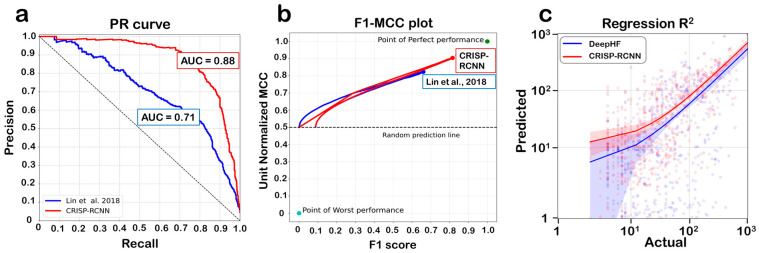
“Incontrasttosingle-thresholdmet-rics, the MCC-F1 plot compares a classification model’s performance across varying thresholds providing a more robust evaluation, especially for imbalanced datasets [35, 36].”
Self-citationSaeed, M., Arham, M., Zafar, I., Jamal, A., Hussian, M., Usman, M., Bahwerth, F. S., Noman, M., & Hossain, M. B. (2026) · Biotechnology Journal · doi:10.1002/biot.70255 · Cited by 2
CRISPR System and AI Applications
Asim, M. N., Ahmed, S., & Dengel, A. (2025) · Springer eBooks · doi:10.1007/978-3-031-90450-9_7
Köse, A., Ranalli, M., Trivanović, D. I., & Maslovarić, I. S. (2026) · Biotechnology and Bioengineering · doi:10.1002/bit.70279
“…gRNA–DNA duplex and therefore have minimal impact on the cleavage process (J. S. Chen et al. 2017; Modrzejewski et al. 2020 (2024) have demonstrated that positions further away from the PAM can also provide valuable information regarding off‐target activity (Vora et al. 2023; G. Zhang et al. 2024).”
Metadata
- Authors
- Vora, D. S., Yadav, S., & Sundar, D.
- Affiliations
- Indian Institute of Technology Delhi (IN)
- Corresponding author
- Sundar, Durai
- Venue
- Biomolecules
- Publisher
- MDPI AG
- Published
- 2023-04-03
- Volume
- 13
- Issue
- 4
- Pages
- 641
- ISSN
- 2218-273X (ISSN-L)
- PMC
- PMC10135716
- OpenAlex
- W4362582590
- Semantic Scholar
- e3d63580ccb4331ee6ac6ef20d06132f81818486
- Cited by
- 17
- References
- 32
- Citations by year
- 2026: 3 · 2025: 7 · 2024: 5 · 2023: 2
- FWCI
- 1.51
- Type
- journal article
- Language
- en
- Open access
- gold
- doi.org
- Licence
- Locations
- Biomolecules (publishedVersion, cc-by)
- PubMed Central (publishedVersion, cc-by)
- PubMed (publishedVersion)
- DOAJ (DOAJ: Directory of Open Access Journals) (submittedVersion, cc-by-sa)
- Topics
- Life Sciences › Biochemistry, Genetics and Molecular Biology › Molecular Biology › CRISPR and Genetic Engineering
- Life Sciences › Biochemistry, Genetics and Molecular Biology › Molecular Biology › Machine Learning in Bioinformatics
- Life Sciences › Biochemistry, Genetics and Molecular Biology › Molecular Biology › RNA regulation and disease
- Keywords
- CRISPR/Cas9, off-target prediction, sequence features, CNN-BiLSTM, integrated gradients, feature importance, mismatch tolerance, genome editing
- MeSH terms
- Machine Learning, Genome, CRISPR-Cas Systems
About these checks
Registry, retraction, Cites and statistics results are computed, not judged, with one exception: a printed reference that no index lists is read once by a model before it counts as a citation error. Claims are extracted by a model and kept only when their quote appears verbatim in the text; each cited source is then checked, with a model’s help, for whether it says what the claim relies on. Those verdicts can be wrong — read the claim’s quote and the cited source before relying on one.
Statistics and arithmetic are recomputed, not judged.
Confidence bands are shown only for fields calibrated on our annotated test set. None is calibrated yet, so no band is shown.
What counts as a claim ›How we measure confidence ›How we check this ›
Are you an author, or do you see a problem with this page? Request a review
Data sources
Bibliographic data: Semantic Scholar, OpenAlex, Crossref.
Contains information from the Semantic Scholar Academic Graph Datasets, made available under the ODC Attribution License (ODC-BY 1.0).
Semantic Scholar’s data is described in: Kinney, R., et al. (2023). The Semantic Scholar Open Data Platform. arXiv:2301.10140.
