

The DOI matches its Crossref record; 3 of the 3 references it cites were found in a registry or an index.
Restoration of T and B Cell Differentiation after RAG1 Gene Transfer in Human RAG1 Defective Hematopoietic Stem Cells
Abstract
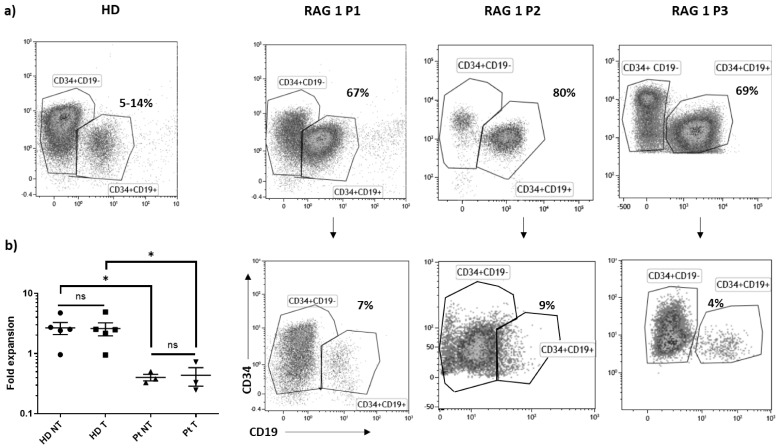
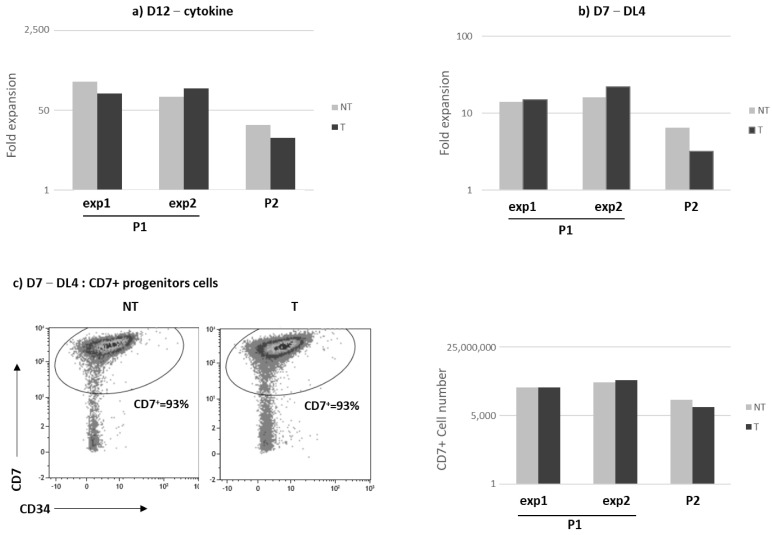
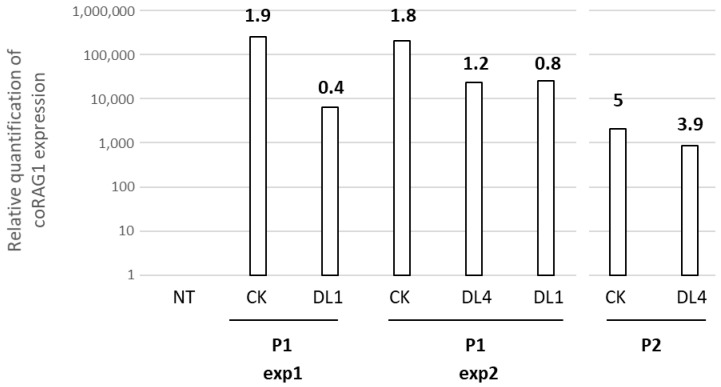
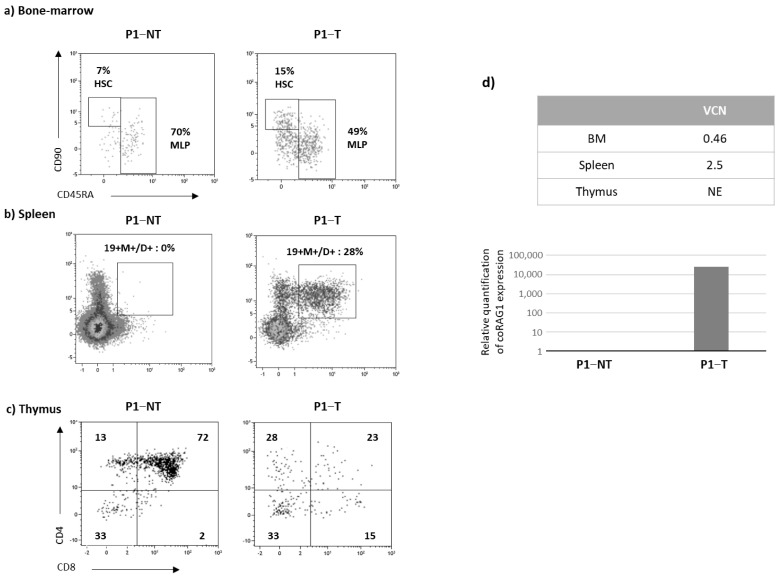
Recombinase-activating gene (RAG)-deficient SCID patients lack B and T lymphocytes due to the inability to rearrange immunoglobulin and T cell receptor genes. The two RAG genes act as a required dimer to initiate gene recombination. Gene therapy is a valid treatment alternative for RAG-SCID patients who lack a suitable bone marrow donor, but developing such therapy for RAG1/2 has proven challenging. Using a clinically approved lentiviral vector with a codon-optimized RAG1 gene, we report here preclinical studies using CD34+ cells from four RAG1-SCID patients. We used in vitro T cell developmental assays and in vivo assays in xenografted NSG mice. The RAG1-SCID patient CD34+ cells transduced with the RAG1 vector and transplanted into NSG mice led to restored human B and T cell development. Together with favorable safety data on integration sites, these results substantiate an ongoing phase I/II clinical trial for RAG1-SCID.
Overview
The claims and statistics of this paper haven’t been checked yet.
Run the check — free, no account needed. It reads the open-access text and checks the sources it cites.
Integrity signals
Registry
Cites
Statistics
Figures
Verification
Claims the paper makes
The claims and statistics of this paper haven’t been checked yet.
Run the check — free, no account needed. It reads the open-access text and checks the sources it cites.
Claims other papers make about this one
Each is checked against this paper’s own text: does it say what the citing paper says it does?
In the citing paper
“Three Rag1 SCID patients have been treated between 2021 and 2024, and they are showing immunological reconstitution without clonal expansion.35”
From Ex vivo modification of hematopoietic stem and progenitor cells for gene therapy (2025) · cites this paper as [35]
Self-check
Percentages, sums and reported differences re-computed from the paper’s own numbers.
The self-check needs the paper’s full text.
Citations
Cites
The COSMIC Cancer Gene Census: describing genetic dysfunction across all human cancers
Sondka, Z., Bamford, S., Cole, C. G., Ward, S. A., Dunham, I., & Forbes, S. A. (2018) · Nature Reviews Cancer · doi:10.1038/s41568-018-0060-1 · Cited by 1,597
Lentiviral Gene Therapy Combined with Low-Dose Busulfan in Infants with SCID-X1
Mamcarz, E., Zhou, S., Lockey, T., Abdelsamed, H., Cross, S. J., Kang, G., Ma, Z., Condori, J., Dowdy, J., Triplett, B., et al. (2019) · New England Journal of Medicine · doi:10.1056/nejmoa1815408 · Cited by 263
Demeulemeester, J., De Rijck, J., Gijsbers, R., & Debyser, Z. (2015) · BioEssays · doi:10.1002/bies.201500051 · Cited by 71
Research works printed but not linked: 44
- Braams, M., Pike-Overzet, K., and Staal, F.J.T. (2023). The recombinase activating genes: Architects of immune diversity during lymphocyte development. Front. Immunol., 14. · DOI
- Buckley, 2004, Molecular defects in human severe combined immunodeficiency and approaches to immune reconstitution, Annu. Rev. Immunol., 22, 625, 10.1146/annurev.immunol.22.012703.104614 · DOI
- Bosticardo, 2021, RAG deficiencies: Recent advances in disease pathogenesis and novel therapeutic approaches, Eur. J. Immunol., 51, 1028, 10.1002/eji.202048880 · DOI
- Kwan, 2014, Newborn screening for severe combined immunodeficiency in 11 screening programs in the United States, JAMA, 312, 729, 10.1001/jama.2014.9132 · DOI
- Delmonte, 2018, RAG Deficiency: Two Genes, Many Diseases, J. Clin. Immunol., 38, 646, 10.1007/s10875-018-0537-4 · DOI
- Cifaldi, 2022, Clinical, Immunological, and Molecular Variability of RAG Deficiency: A Retrospective Analysis of 22 RAG Patients, J. Clin. Immunol., 42, 130, 10.1007/s10875-021-01130-3 · DOI
- Fischer, 2015, Severe combined immunodeficiencies and related disorders, Nat. Rev. Dis. Prim., 1, 15061, 10.1038/nrdp.2015.61 · DOI
- Dvorak, 2014, Comparison of outcomes of hematopoietic stem cell transplantation without chemotherapy conditioning by using matched sibling and unrelated donors for treatment of severe combined immunodeficiency, J. Allergy Clin. Immunol., 134, 935, 10.1016/j.jaci.2014.06.021 · DOI
- Neven, 2009, Long-term outcome after hematopoietic stem cell transplantation of a single-center cohort of 90 patients with severe combined immunodeficiency, Blood, 113, 4114, 10.1182/blood-2008-09-177923 · DOI
- Buckley, 2010, Transplantation of hematopoietic stem cells in human severe combined immunodeficiency: Longterm outcomes, Immunol. Res., 49, 25, 10.1007/s12026-010-8191-9 · DOI
- Lankester, 2022, Hematopoietic cell transplantation in severe combined immunodeficiency: The SCETIDE 2006-2014 European cohort, J. Allergy Clin. Immunol., 149, 1744, 10.1016/j.jaci.2021.10.017 · DOI
- Fischer, 2020, Gene therapy for severe combined immunodeficiencies and beyond, J. Exp. Med., 217, e20190607, 10.1084/jem.20190607 · DOI
- Ferrari, 2020, Gene therapy using haematopoietic stem and progenitor cells, Nat. Rev. Genet., 22, 216, 10.1038/s41576-020-00298-5 · DOI
- Lankester, 2023, Advances in gene therapy for inborn errors of immunity, Curr. Opin. Allergy Clin. Immunol., 23, 467, 10.1097/ACI.0000000000000952 · DOI
- Yates, 2005, Long-term immune reconstitution in RAG-1-deficient mice treated by retroviral gene therapy: A balance between efficiency and toxicity, Blood, 107, 63
- Benjelloun, 2008, Restoration of Human B-cell Differentiation Into NOD-SCID Mice Engrafted With Gene-corrected CD34+ Cells Isolated From Artemis or RAG1-deficient Patients, Mol. Ther., 16, 396, 10.1038/sj.mt.6300353 · DOI
- Rodijk, 2011, Correction of murine Rag1 deficiency by self-inactivating lentiviral vector-mediated gene transfer, Leukemia, 25, 1471, 10.1038/leu.2011.106 · DOI
- Baum, 2014, Successful RAG1-SCID gene therapy depends on the level of RAG1 expression, J. Allergy Clin. Immunol., 134, 242, 10.1016/j.jaci.2014.04.033 · DOI
- Sarwari, 2014, Recombination-activating gene 1 (Rag1)–deficient mice with severe combined immunodeficiency treated with lentiviral gene therapy demonstrate autoimmune Omenn-like syndrome, J. Allergy Clin. Immunol., 133, 1116, 10.1016/j.jaci.2013.10.009 · DOI
- Vloemans, 2020, Successful preclinical development of gene therapy for recombinase-activating gene-1-deficient SCID, Mol. Ther. Methods Clin. Dev., 17, 666, 10.1016/j.omtm.2020.03.016 · DOI
- Six, 2008, Human adenylate kinase 2 deficiency causes a profound hematopoietic defect associated with sensorineural deafness, Nat. Genet., 41, 106
- Moirangthem, 2021, A DL-4-and TNFα-based culture system to generate high numbers of nonmodified or genetically modified immunotherapeutic human T-lymphoid progenitors, Cell. Mol. Immunol., 18, 1662, 10.1038/s41423-021-00706-8 · DOI
- Schmidt, 2001, Detection and direct genomic sequencing of multiple rare unknown flanking DNA in highly complex samples, Hum. Gene Ther., 12, 743, 10.1089/104303401750148649 · DOI
- Afzal, 2017, GENE-IS: Time-Efficient and Accurate Analysis of Viral Integration Events in Large-Scale Gene Therapy Data, Mol. Ther. Nucleic Acids, 6, 133, 10.1016/j.omtn.2016.12.001 · DOI
- Fronza, 2015, A Graph Based Framework to Model Virus Integration Sites, Comput. Struct. Biotechnol. J., 14, 69, 10.1016/j.csbj.2015.10.006 · DOI
- Shen, 2003, Common Sites of Retroviral Integration in Mouse Hematopoietic Tumors Identified by High-Throughput, Single Nucleotide Polymorphism-Based Mapping and Bacterial Artificial Chromosome Hybridization, J. Virol., 77, 1584, 10.1128/JVI.77.2.1584-1588.2003 · DOI
- Abel, U., Deichmann, A., Nowrouzi, A., Gabriel, R., Bartholomae, C.C., Glimm, H., von Kalle, C., and Schmidt, M. (2011). Analyzing the number of common integration sites of viral vectors—New methods and computer programs. PLoS ONE, 6. · DOI
- Sun, 2011, Computational identification of insertional mutagenesis targets for cancer gene discovery, Nucleic. Acids Res., 39, e105, 10.1093/nar/gkr447 · DOI
- Mamedov, I.Z., Britanova, O.V., Zvyagin, I.V., Turchaninova, M.A., Bolotin, D.A., Putintseva, E.V., Lebedev, Y.B., and Chudakov, D.M. (2012). Preparing unbiased T-cell receptor and antibody cDNA libraries for the deep next generation sequencing profiling. Front. Immunol., 4. · DOI
- Bolotin, 2015, MiXCR: Software for comprehensive adaptive immunity profiling, Nat. Methods, 12, 380, 10.1038/nmeth.3364 · DOI
- Shugay, M., Bagaev, D.V., Turchaninova, M.A., Bolotin, D.A., Britanova, O.V., Putintseva, E.V., Pogorelyy, M.V., Nazarov, V.I., Zvyagin, I.V., and Kirgizova, V.I. (2015). VDJtools: Unifying Post-analysis of T Cell Receptor Repertoires. PLoS Comput. Biol., 11. · DOI
- Tucci, 2022, A systematic review and meta-analysis of gene therapy with hematopoietic stem and progenitor cells for monogenic disorders, Nat. Commun., 13, 1315, 10.1038/s41467-022-28762-2 · DOI · Paper page
- Jang, 2020, Optimizing lentiviral vector transduction of hematopoietic stem cells for gene therapy, Gene Ther., 27, 545, 10.1038/s41434-020-0150-z · DOI
- Masiuk, 2019, PGE2 and poloxamer synperonic F108 enhance transduction of human HSPCs with a β-globin lentiviral vector, Mol. Ther. Methods Clin. Dev., 13, 390, 10.1016/j.omtm.2019.03.005 · DOI
- Wu, 2004, Integration target site selection for retroviruses and transposable elements, Cell. Mol. Life Sci., 61, 2588, 10.1007/s00018-004-4206-9 · DOI
- Cattoglio, 2007, Hot spots of retroviral integration in human CD34+ hematopoietic cells, Blood, 110, 1770, 10.1182/blood-2007-01-068759 · DOI
- Brecht, 2020, Nucleolar localization of RAG1 modulates V(D)J recombination activity, Proc. Natl. Acad. Sci. USA, 117, 4300, 10.1073/pnas.1920021117 · DOI
- Beilinson, 2021, The RAG1 N-terminal region regulates the efficiency and pathways of synapsis for V(D)J recombination, J. Exp. Med., 218, e20210250, 10.1084/jem.20210250 · DOI
- Lee, 2013, A systematic analysis of recombination activity and genotype-phenotype correlation in human recombination-activating gene 1 deficiency, J. Allergy Clin. Immunol., 133, 1099, 10.1016/j.jaci.2013.10.007 · DOI
- Corneo, 2001, Identical mutations in RAG1 or RAG2 genes leading to defective V(D)J recombinase activity can cause either T-B–severe combined immune deficiency or Omenn syndrome, Blood, 97, 2772, 10.1182/blood.V97.9.2772 · DOI
- Csomos, 2022, Partial RAG deficiency in humans induces dysregulated peripheral lymphocyte development and humoral tolerance defect with accumulation of T-bet+ B cells, Nat. Immunol., 23, 1256, 10.1038/s41590-022-01271-6 · DOI
- Villa, 2019, RAG gene defects at the verge of immunodeficiency and immune dysregulation, Immunol. Rev., 287, 73, 10.1111/imr.12713 · DOI
- Abina, 2015, Outcomes following gene therapy in patients with severe wiskott-aldrich syndrome, JAMA, 313, 1550, 10.1001/jama.2015.3253 · DOI · Paper page
- Magnani, 2022, Long-term safety and efficacy of lentiviral hematopoietic stem/progenitor cell gene therapy for Wiskott–Aldrich syndrome, Nat. Med., 28, 71, 10.1038/s41591-021-01641-x · DOI · Paper page
Cited by
Ex vivo modification of hematopoietic stem and progenitor cells for gene therapy
Williams, D. A., Kohn, D. B., & Thrasher, A. J. (2025) · Molecular Therapy · doi:10.1016/j.ymthe.2025.03.058 · Cited by 11
Metadata
- Authors
- Sorel, N., Díaz-Pascual, F., Bessot, B., Sadek, H., Mollet, C., Chouteau, M., Zahn, M., Gil-Farina, I., Tajer, P., van Eggermond, M., Berghuis, D., Lankester, A. C., André, I., Gabriel, R., Cavazzana, M., Pike-Overzet, K., Staal, F. J. T., & Lagresle-Peyrou, C.
- Affiliations
- Human Lymphohematopoiesis Laboratory, Université Paris Cité, Imagine Institute, INSERM UMR 1163, 75015 Paris, France
- ProtaGene CGT GmbH, Im Neuenheimer Feld 582, 69120 Heidelberg, Germany
- Biotherapy Clinical Investigation Center, Groupe Hospitalier Universitaire Ouest, AP-HP, INSERM, 75015 Paris, France
- Department of Immunohematology and Blood Transfusion, L3-Q Leiden University Medical Center, 2333 ZA Leiden, The Netherlands
- Department of Pediatrics, Leiden University Medical Center, 2333 ZA Leiden, The Netherlands
- Biotherapy Department, Necker-Enfants Malades Hospital, AP-HP, 75015 Paris, France
- ORCID
- Venue
- Biomedicines
- Publisher
- MDPI AG
- Published
- 2024-07-05
- Volume
- 12
- Issue
- 7
- Pages
- 1495
- ISSN
- 2227-9059
- PMC
- PMC11275127
- Cited by
- 5
- References
- 3
- Language
- en
- Funders
- EU (755170-2, NNF21CC0073729)
- the Novo Nordisk Foundation for Stem Cell Research (755170-2, NNF21CC0073729)
About these checks
Registry, retraction, Cites and statistics results are computed, not judged, with one exception: a printed reference that no index lists is read once by a model before it counts as a citation error. Claims are extracted by a model and kept only when their quote appears verbatim in the text; each cited source is then checked, with a model’s help, for whether it says what the claim relies on. Those verdicts can be wrong — read the claim’s quote and the cited source before relying on one.
Statistics and arithmetic are recomputed, not judged.
Confidence bands are shown only for fields calibrated on our annotated test set. None is calibrated yet, so no band is shown.
What counts as a claim ›How we measure confidence ›How we check this ›
Are you an author, or do you see a problem with this page? Request a review
How to cite
Cite CoChat for the checks on this page, and the paper for its own findings.
- This page
- CoChat. (2026). Citation check: Restoration of T and B Cell Differentiation after RAG1 Gene Transfer in Human RAG1 Defective Hematopoietic Stem Cells. https://app.cochat.ai/papers/10.3390/biomedicines12071495
- The paper
- Sorel, N., Díaz-Pascual, F., Bessot, B., Sadek, H., Mollet, C., Chouteau, M., Zahn, M., Gil-Farina, I., Tajer, P., van Eggermond, M., Berghuis, D., Lankester, A. C., André, I., Gabriel, R., Cavazzana, M., Pike-Overzet, K., Staal, F. J. T., & Lagresle-Peyrou, C. (2024). Restoration of T and B Cell Differentiation after RAG1 Gene Transfer in Human RAG1 Defective Hematopoietic Stem Cells. Biomedicines. https://doi.org/10.3390/biomedicines12071495
