

MASLD: Prevalence, Mechanisms, and Sex-Based Therapies in Postmenopausal Women
Open accessThe DOI matches its Crossref record; 366 of the 366 references it cites were found in a registry or an index.
Abstract
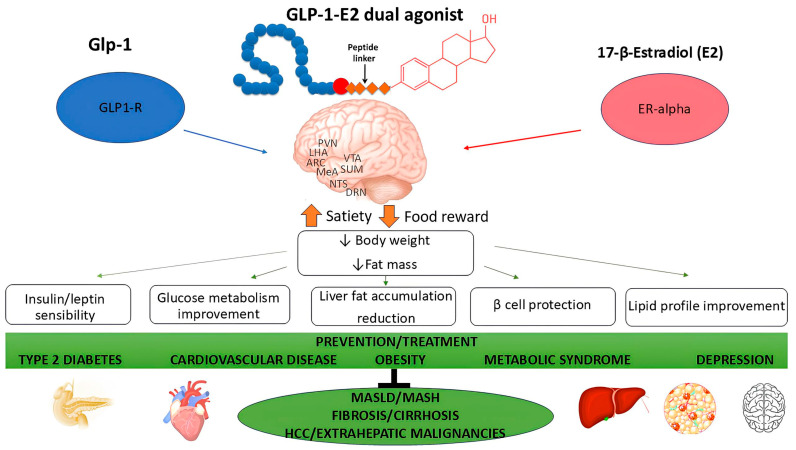
Metabolic dysfunction-associated steatotic liver disease (MASLD) is the most common chronic liver disease influenced by genetic, lifestyle, and environmental factors. While MASLD is more prevalent in men, women are at increased risk after menopause, highlighting the critical pathogenetic role of sex hormones. The complex interplay between estrogen deficiency, visceral fat accumulation, metabolic syndrome (MetS), and inflammation accelerates disease progression, increases cardiovascular (CV) risk, and triggers a cycle of worsening adiposity, metabolic dysfunction, and psychological problems, including eating disorders. Weight loss in postmenopausal women can significantly improve both metabolic and psychological outcomes, helping to prevent MASLD and related conditions. This review examines the prevalence of MASLD, its comorbidities (type 2 diabetes T2D, CV, mental disorders), pathogenetic mechanisms, and pharmacological treatment with GLP-1 receptor agonists (GLP1-RAs), with a focus on postmenopausal women. Given the use of GLP1-RAs in the treatment of obesity and T2D in MASLD patients, and the increase in MetS and MASLD after menopause, this review analyzes the potential of a stable GLP-1–estrogen conjugate as a therapeutic approach in this subgroup. By combining the synergistic effects of both hormones, this dual agonist has been shown to increase food intake and food reward suppression, resulting in greater weight loss and improved insulin sensitivity, glucose, and lipid metabolism. Therefore, we hypothesize that this pharmacotherapy may provide more targeted therapeutic benefits than either hormone alone by protecting the liver, β-cells, and overall metabolic health. As these effects are only supported by preclinical data, this review highlights the critical need for future research to evaluate and confirm the mechanisms and efficacy in clinical settings, particularly in postmenopausal women.
Overview
The claims and statistics of this paper haven’t been checked yet.
Free: it reads the open-access text and checks the first 5 claims that cite a source we can check. Create a free account to check every claim.
Integrity signals
Registry
Cites
Statistics
Figures
Verification
Claims the paper makes
The claims and statistics of this paper haven’t been checked yet.
Free: it reads the open-access text and checks the first 5 claims that cite a source we can check. Create a free account to check every claim.
Claims other papers make about this one
Each is checked against this paper’s own text: does it say what the citing paper says it does?
The check wasn’t confident either way, so it gives no verdict — never disputed.
In the citing paper
“While the reduction in lean body mass and functional capacity in younger individuals may appear marginal compared with the metabolic benefits associated with weight loss [75], in older adults this reduction may be crucial, potentially leading to loss of independence and the development of clinical frailty, with all the associated adverse consequences [76].”
From A Narrative Review on GLP-1 Receptor Agonists for Obesity in Older Women: Maximizing Weight Loss While Preserving Lean Mass (2026) · cites this paper as [76]
Experimental — accuracy not yet measured
Self-check
Percentages, sums and reported differences re-computed from the paper’s own numbers.
The self-check needs the paper’s full text.
Citations
Cites
Younossi, Z. M., Golabi, P., Paik, J. M., Henry, A., Van Dongen, C., & Henry, L. (2023) · Hepatology · doi:10.1097/hep.0000000000000004 · Cited by 3,383 · cited 2×
“The prevalence of obesity varies by region [3,4] and is higher in women than men [72–74] across all age groups, with the highest rates observed between ages 50 and 65 [73].”
InfluentialThe multiple-hit pathogenesis of non-alcoholic fatty liver disease (NAFLD)
Buzzetti, E., Pinzani, M., & Tsochatzis, E. A. (2016) · Metabolism · doi:10.1016/j.metabol.2015.12.012 · Cited by 3,119 · cited 1×
“…hypothesis extends this theory by suggesting that in genetically predisposed individuals, a combination of factors such as insulin resistance, adipose tissue dysfunction, sex hormones, diet, gut microbiota, and genetic/epigenetic influences contribute to hepatic steatosis and inflammation [160].”
Rinella, M. E., Neuschwander-Tetri, B. A., Siddiqui, M. S., Abdelmalek, M. F., Caldwell, S., Barb, D., Kleiner, D. E., & Loomba, R. (2023) · Hepatology · doi:10.1097/hep.0000000000000323 · Cited by 2,667
Phelps, N. H., Singleton, R. K., Zhou, B., Heap, R. A., Mishra, A., Bennett, J. E., Paciorek, C. J., Lhoste, V. P., Carrillo-Larco, R. M., Stevens, G. A., et al. (2024) · The Lancet · doi:10.1016/s0140-6736(23)02750-2 · Cited by 2,544 · cited 1×
“The prevalence of obesity varies by region [3,4] and is higher in women than men [72–74] across all age groups, with the highest rates observed between ages 50 and 65 [73].”
The prevalence and incidence of NAFLD worldwide: a systematic review and meta-analysis
Riazi, K., Azhari, H., Charette, J. H., Underwood, F. E., King, J. A., Afshar, E. E., Swain, M. G., Congly, S. E., Kaplan, G. G., & Shaheen, A.-A. (2022) · The Lancet Gastroenterology & Hepatology · doi:10.1016/s2468-1253(22)00165-0 · Cited by 2,246
Tacke, F., Horn, P., Wai-Sun Wong, V., Ratziu, V., Bugianesi, E., Francque, S., Zelber-Sagi, S., Valenti, L., Roden, M., Schick, F., et al. (2024) · Journal of Hepatology · doi:10.1016/j.jhep.2024.04.031 · Cited by 2,210
Epidemiology of Hepatocellular Carcinoma
McGlynn, K. A., Petrick, J. L., & El‐Serag, H. B. (2021) · Hepatology · doi:10.1002/hep.31288 · Cited by 2,147 · cited 1×
“In liver cancer, MASH has surpassed alcohol-related liver disease as the leading cause of HCC [42], with men generally experiencing rates two to four times higher than women [44,45].”
A phase 3, randomized, controlled trial of resmetirom in NASH with liver fibrosis
Harrison, S. A., Bedossa, P., Guy, C. D., Schattenberg, J. M., Loomba, R., Taub, R., Labriola, D., Moussa, S. E., Neff, G. W., Rinella, M. E., et al. (2024) · New England Journal of Medicine · doi:10.1056/nejmoa2309000 · Cited by 2,084 · cited 1×
“In the phase 3 trials, MAESTRO-NAFLD-1 [294] and MAESTRO-MASH [295], resmetirom effectively reduced liver steatosis in non-cirrhotic MASH adults with significant liver fibrosis [296].”
A Placebo-controlled trial of subcutaneous semaglutide in nonalcoholic steatohepatitis
Newsome, P. N., Buchholtz, K., Cusi, K., Linder, M., Okanoue, T., Ratziu, V., Sanyal, A. J., Sejling, A.-S., & Harrison, S. A. (2021) · New England Journal of Medicine · doi:10.1056/nejmoa2028395 · Cited by 2,039 · cited 1×
“While the effect on fibrosis regression remains uncertain, improvements in non-invasive markers of liver fibrosis were observed [314].”
Global epidemiology of NAFLD-related HCC: trends, predictions, risk factors and prevention
Huang, D. Q., El-Serag, H. B., & Loomba, R. (2021) · Nature Reviews Gastroenterology & Hepatology · doi:10.1038/s41575-020-00381-6 · Cited by 1,855 · cited 3×
“Given the critical role of sex and age in the development of MASLD and related cancers, identifying those at the highest risk is essential for effective screening programs and interventions [49].”
Cited by
From steatosis to cirrhosis: the role of obesity in the progression of liver disease
Nowak, K., Paluch, M., Cudzik, M., Syska, K., Gawlikowska, W., & Janczura, J. (2025) · Journal of Diabetes & Metabolic Disorders · doi:10.1007/s40200-025-01754-x · Cited by 22
Jamalinia, M., Saeian, S., Nikkhoo, N., Nazerian, A., & Lankarani, K. B. (2025) · Metabolism and Target Organ Damage · doi:10.20517/mtod.2025.131 · Cited by 20
Sex Differences in MASLD After Age 50: Presentation, Diagnosis, and Clinical Implications
Milani, I., Parrotta, M. E., Colangeli, L., Chinucci, M., Palleschi, S., Rossi, B., Sbraccia, P., Mantovani, A., Leonetti, F., Guglielmi, V., et al. (2025) · Biomedicines · doi:10.3390/biomedicines13092292 · Cited by 15
“This may explain the observed “sex paradox”, characterized by a non-linear trajectory of MASLD prevalence and progression across different ages and metabolic risk factors [19,25].”
InfluentialSelf-citationMoscucci, F., Baratta, F., Pastori, D., Menichelli, D., Mattioli, A. V., Gallina, S., Lospinuso, I., Sciomer, S., Piccirillo, G., & Desideri, G. (2026) · Nutrients · doi:10.3390/nu18040632 · Cited by 11
Al-Mughalles, A. S., Ma, J., Ma, H., Zhang, C., Xiao, H., Ma, X., Zhang, Q., Jia, C., Han, H., Ding, B., et al. (2026) · Cell Communication and Signaling · doi:10.1186/s12964-026-02997-8 · Cited by 5
González-González, A., Soria-Utrilla, V., Fontalba-Romero, M. I., Núñez‐Sánchez, M. Á., Castro, A. A., Queipo‐Ortuño, M. I., Ramos‐Molina, B., Martínez‐Montoro, J. I., & Fernández-García, J. C. (2026) · Current Obesity Reports · doi:10.1007/s13679-026-00694-8 · Cited by 6
“Given known sex differences in gut microbiota composition, SCFA metabolism, and MASLD prevalence or risk of associated complications [34, 35], these demographic imbalances may partially explain the inconsistent microbial findings.”
Khaing, W., Nyamsuren, U., & Shin, S. (2025) · Nutrition Research · doi:10.1016/j.nutres.2025.10.008 · Cited by 1
Position Statement on Cardiometabolic Health Across the Woman's Life Course – 2025
de Oliveira, G. M. M., de Almeida, M. C. C., Valério, C. M., Giuffrida, F. M. A., Espíndola, L. N., Izar, M. C. D. O., Marques-Santos, C., Freire, C. M. V., Albuquerque, C. J. D. M., Chagas, A. C. P., et al. (2025) · Arquivos Brasileiros de Cardiologia · doi:10.36660/abc.20250615i · Cited by 2
Posicionamento sobre a Saúde Cardiometabólica ao Longo do Ciclo de Vida da Mulher – 2025
de Oliveira, G. M. M., de Almeida, M. C. C., Valério, C. M., Giuffrida, F. M. A., Espíndola, L. N., Izar, M. C. D. O., Marques-Santos, C., Freire, C. M. V., Albuquerque, C. J. D. M., Chagas, A. C. P., et al. (2025) · Arquivos Brasileiros de Cardiologia · doi:10.36660/abc.20250615 · Cited by 5
Position Statement on Cardiometabolic Health Across the Woman's Life Course – 2025
de Oliveira, G. M. M., de Almeida, M. C. C., Valério, C. M., Giuffrida, F. M. A., Espíndola, L. N., Izar, M. C. D. O., Marques-Santos, C., Freire, C. M. V., Albuquerque, C. J. D. M., Chagas, A. C. P., et al. (2025) · Revista Brasileira Ginecologia e Obstetrícia · doi:10.61622/rbgo/2025rbgo200 · Cited by 2
Milani, I., Ciasca, G., Chinucci, M., Carnazzo, V., Leonetti, F., Basile, U., & Capoccia, D. (2026) · Journal of Endocrinological Investigation · doi:10.1007/s40618-026-02880-w · Cited by 1
Self-citationКотлярова, А. А., & Kotlyarov, S. N. (2026) · International Journal of Molecular Sciences · doi:10.3390/ijms27104453 · Cited by 1
“Large population-based studies have also shown that age, body mass index, and metabolic factors modify the risk of MAFLD/MASLD differently in men and women, requiring consideration of sex when interpreting both clinical and experimental data [196–199].”
Johnson, P. R., Keirns, B. H., Meade, G. E., Huizinga, P. A., Kim, A. Y., Sigdel, R., Cardona, C. J., Montgomery, M. R., Emerson, S. R., & Chowanadisai, W. (2026) · International Journal of Obesity · doi:10.1038/s41366-026-02133-z · Cited by 2
Pradeepthi, B., Ahmed, N., supriya, J., Manogna, A., Padamati, R. K., Murty, R. S., & Kiranmai, K. (2025) · Research Square · doi:10.21203/rs.3.rs-6604350/v1
Lee, Y., & Lee, W. (2025) · PLoS ONE · doi:10.1371/journal.pone.0336569
“Furthermore, compared to women, men tend to have a higher proportion of visceral fat relative to their body mass index (BMI), predisposing them to a higher risk of steatotic liver disease [40].”
Velija-Ašimi, Z. (2025) · Science, Art and Religion. · doi:10.5005/jp-journals-11005-0124
Ding, H., Zhang, Y., Wang, B., Li, Y., Zhao, X., & Ge, P. (2026) · International Journal of Biological Macromolecules · doi:10.1016/j.ijbiomac.2026.150350
MALINDISA, E. K., Kafumu, I., Rweyendera, A., Mkemangwa, E., Majinge, D. C., Nkandala, I., Manyiri, P. M., & Kilonzo, S. B. (2026) · BMC Endocrine Disorders · doi:10.1186/s12902-026-02179-0 · Cited by 2
“Estrogen appears to exert a protective effect on the liver modulating inflammation, oxidative stress, and lipid metabolism, effects that diminish after menopause, thereby increasing susceptibility to MASLD and even fibrosis in older women [36].”
Palacios, S., & Lilue, M. (2026) · Gynecological Endocrinology · doi:10.1080/09513590.2026.2624205
Arriaga-González, F. G., Castañeda-Córdova, F. D. J., Díaz‐Muñoz, M., Hoare, M., Adams, D. J., Robles‐Espinoza, C. D., & Molina‐Aguilar, C. (2026) · BMC Medical Genomics · doi:10.1186/s12920-026-02332-7 · Cited by 2
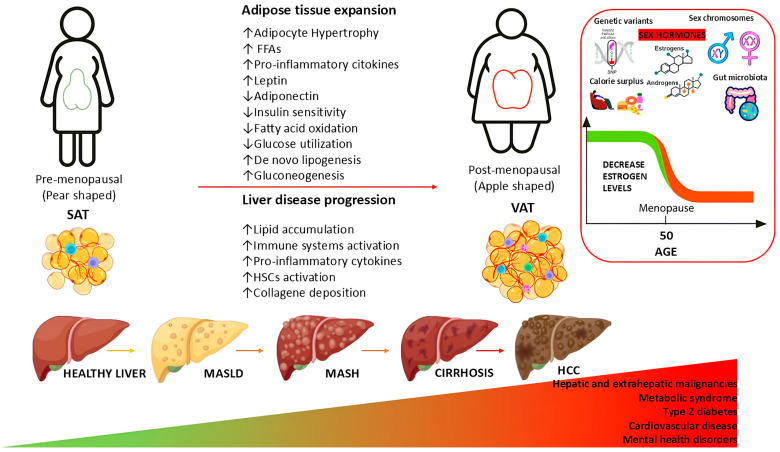
“While MASLD is more prevalent in men, women face increased risk after menopause, with an inversion in epidemiological incidence rates — a pattern also observed in type 2 diabetes (T2DM), cardiovascular conditions, and mental disorders [120].”
Wang, S.-A., Chen, H.-W., Zhong, Q., Xu, Z.-Y., Wei, Y., Zhang, C., Li, Q.-R., Shao, Z., Liu, K., Cao, B., et al. (2026) · International Journal of Obesity · doi:10.1038/s41366-026-02067-6
“In older women, fewer individuals reach extreme VAT levels, limiting statistical power, though trends are consistent with the increasing incidence of MASLD-related HCC in postmenopausal women reported in recent studies [39].”
InfluentialAgeing liver in the era of MASLD: risks, mechanisms and treatment opportunities
Alqahtani, S. A., Schneider, C. V., & Schattenberg, J. M. (2026) · Frontline Gastroenterology · doi:10.1136/flgastro-2026-103677
“151 This pattern may explain the delayed peak in MASLD prevalence among females (60–69 years), compared with the earlier onset in males.”
Liu, T., Li, Y., Huang, Y., Pan, A., Yin, J., & Liao, Y. (2026) · Journal of Clinical Medicine · doi:10.3390/jcm15114254
“In postmenopausal women, declining estrogen levels reduce subcutaneous fat storage capacity and promote visceral fat redistribution, thereby increasing susceptibility to hepatic steatosis [47,48].”
巢嘉婧, Tan, Z., Zhang, Y. M., Gao, Q., Li, Z., & Xu, C. (2026) · Clinical and Translational Gastroenterology · doi:10.14309/ctg.0000000000001059
“Least Absolute Shrinkage and Selection Operator INTRODUCTION Metabolic dysfunction-associated steatotic liver disease (MASLD), formerly known as nonalcoholic fatty liver disease (NAFLD), has emerged as the most prevalent chronic liver disease worldwide (1).”
Lebertová, L., Marková, I., Hüttl, M., Černá, K., Zapletalová, I., & Malínská, H. (2026) · Antioxidants · doi:10.3390/antiox15060729
Khalil, I., Al-Badri, S. G., Hossain, M. S., Din, A. U., Ima, M. J., Rahman, M. T., Akter, M. M., Halder, L., Joy, A. D., Promi, S. A., et al. (2026) · Medicine · doi:10.1097/md.0000000000049493
“[26,77] However, in select countries like the Russian Federation (females 4.612%, 95% CI = 3.992 to 5.235 vs males 3.497%, 95% CI = 2.935 to 4.063) and Saudi Arabia (females 2.317%, 95% CI = 2.125 to 2.509 vs males 1.432%, 95% CI = 1.245 to 1.620), females exhibited higher EAPC, possibly reflecting…”
InfluentialLink between Metabolic Dysfunction-Associated Steatotic Liver Disease and Cardiovascular Diseases
Shen, D., Chen, R., & Ye, S. (2026) · Research · doi:10.34133/research.1373 · Cited by 3
Milani, I., Parrotta, M. E., Chinucci, M., Franzò, E., Gintoli, E., Franco, F., Sbraccia, P., Guglielmi, V., & Capoccia, D. (2026) · Frontiers in Endocrinology · doi:10.3389/fendo.2026.1819337 · Cited by 1
Self-citationAvgousti, I., Augoulea, A., Armeni, E., Karagiannakis, D. S., Paraskevopoulou, S., Panoulis, K. P. C., Kalantaridou, S., Papanikola, N., Angelopoulou, A., Papatheodoridis, G., et al. (2026) · Journal of Clinical Medicine · doi:10.3390/jcm15156098
“Importantly, our findings highlight the complementary roles of general and central adiposity within the MASLD framework in postmenopausal women [4].”
The menopause-obesity axis in MASH progression: from estrogen decline to liver fibrosis
Ntikoudi, A., & Vlachou, E. D. (2026) · Frontiers in Gastroenterology · doi:10.3389/fgstr.2026.1889458
Cree, M. G., Dunsmoor-Su, R. F., Khoudary, S. R. E., Hurtado, M. D., Kapoor, E., Neal-Perry, G. S., & Santoro, N. F. (2026) · Obesity Pillars · doi:10.1016/j.obpill.2026.100321
“While the prevalence of MASLD is typically higher for men than women during reproductive years, this difference plateaus after 50 years of age, as women are 2.4 times more likely to develop MASLD after menopause, likely related, in part, to the decline in estrogen levels [37].”
InfluentialImpact of Menopause and Menopausal Hormone Therapy on Liver–Kidney–Metabolic Health
Jamalinia, M., Lonardo, A., & Weiskirchen, R. (2026) · Advances in Therapy · doi:10.1007/s12325-026-03758-2 · Cited by 1
Eating Behavior in Menopausal Women: From Molecular to Clinical Aspects—What Changes?
Vignera, S. L., Calogero, A. E., Cannarella, R., Crafa, A., Barbagallo, F., & Condorelli, R. A. (2026) · International Journal of Molecular Sciences · doi:10.3390/ijms27198538
“Recent evidence highlights the importance of estrogen receptor signaling in tanycytes, specialized hypothalamic cells lining the third ventricle that regulate metabolic homeostasis [18].”
InfluentialKotlyarov, S. N., Котлярова, А. А., Catanzaro, R., & Marotta, F. (2026) · International Journal of Molecular Sciences · doi:10.3390/ijms27198614
Chandran, R., Tsutsumi, T., Ng, C. H., Yoneda, M., & Mehta, A. (2026) · Current Cardiovascular Risk Reports · doi:10.1007/s12170-026-00793-0
Safety and tolerability of elinzanetant: a pooled analysis from four randomized clinical trials
Pinkerton, J. V., Francuski, M., Nappi, R. E., Simon, J. A., Lu, C., Djordjevic, S., Seitz, C., & Panay, N. (2026) · EClinicalMedicine · doi:10.1016/j.eclinm.2026.104250
“21,22 There is also emerging evidence of association between severe menopause symptoms and increase in risk of harmful alcohol consumption as a coping mechanism that may further affect liver health.”
Choi, H., Moon, S., Kim, Y. T., Sung, K.-C., & Kim, B. J. (2026) · Nutrition Metabolism and Cardiovascular Diseases · doi:10.1016/j.numecd.2026.105030
Mazza, A. D. (2026) · Endocrine Practice · doi:10.1016/j.eprac.2026.09.113
Prevalence and steatosis severity of MASLD in patients with type 2 diabetes mellitus in Kuwait
Altarrah, M., Alhammad, R., Ahmad, S., Abu-Farha, M., Devarajan, S., Alhaddad, S., Afyoni, A., Alhaifi, F., Qaddoumi, M., Shehab, M., et al. (2026) · Frontiers in Endocrinology · doi:10.3389/fendo.2026.1963647
“This lack of a signi fi cant association may partly re fl ect the different age-related trajectories of MASLD between men and women, as the prevalence of MASLD in women tends to increase after menopause (19, 20).”
Metadata
- Authors
- Milani, I., Chinucci, M., Leonetti, F., & Capoccia, D.
- Affiliations
- Sapienza University of Rome (IT)
- Corresponding author
- Milani, Ilaria
- Venue
- Biomedicines
- Publisher
- MDPI AG
- Published
- 2025-04-02
- Volume
- 13
- Issue
- 4
- Pages
- 855
- ISSN
- 2227-9059 (ISSN-L)
- PMC
- PMC12024897
- OpenAlex
- W4409101902
- Cited by
- 38
- References
- 366
- Citations by year
- 2026: 28 · 2025: 10
- FWCI
- 5.84
- Type
- journal article
- Language
- en
- Open access
- gold
- doi.org
- Licence
- Locations
- Biomedicines (publishedVersion, cc-by)
- PubMed Central (publishedVersion, cc-by)
- PubMed (publishedVersion)
- DOAJ (DOAJ: Directory of Open Access Journals) (submittedVersion, cc-by-sa)
- IRIS Research product catalog (Sapienza University of Rome) (submittedVersion, cc-by)
- Topics
- Health Sciences › Medicine › Hepatology › Liver Disease Diagnosis and Treatment
- Health Sciences › Medicine › Endocrinology, Diabetes and Metabolism › Diabetes, Cardiovascular Risks, and Lipoproteins
- Health Sciences › Medicine › Pathology and Forensic Medicine › Alcohol Consumption and Health Effects
- Keywords
- non-alcoholic fatty liver disease, postmenopausal women, sex hormones, estrogen deficiency, GLP-1 receptor agonists, weight loss, metabolic syndrome, visceral fat, type 2 diabetes, cardiovascular risk, insulin sensitivity, eating disorders, liver disease comorbidity
About these checks
Registry, retraction, Cites and statistics results are computed, not judged, with one exception: a printed reference that no index lists is read once by a model before it counts as a citation error. Claims are extracted by a model and kept only when their quote appears verbatim in the text; each cited source is then checked, with a model’s help, for whether it says what the claim relies on. Those verdicts can be wrong — read the claim’s quote and the cited source before relying on one.
Statistics and arithmetic are recomputed, not judged.
Confidence bands are shown only for fields calibrated on our annotated test set. None is calibrated yet, so no band is shown.
What counts as a claim ›How we measure confidence ›How we check this ›
Are you an author, or do you see a problem with this page? Request a review
Data sources
Bibliographic data: Semantic Scholar, OpenAlex, Crossref.
Contains information from the Semantic Scholar Academic Graph Datasets, made available under the ODC Attribution License (ODC-BY 1.0).
Semantic Scholar’s data is described in: Kinney, R., et al. (2023). The Semantic Scholar Open Data Platform. arXiv:2301.10140.
