

MASLD: Prevalence, Mechanisms, and Sex-Based Therapies in Postmenopausal Women
Open accessThe DOI matches its Crossref record; 366 of the 366 references it cites were found in a registry or an index.
Abstract
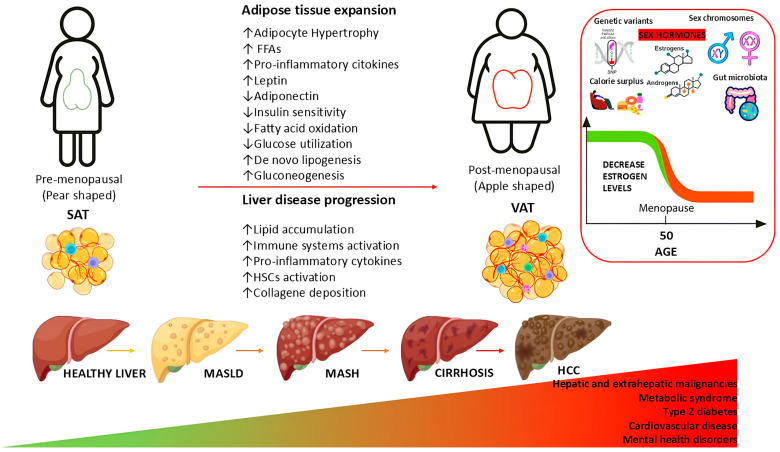
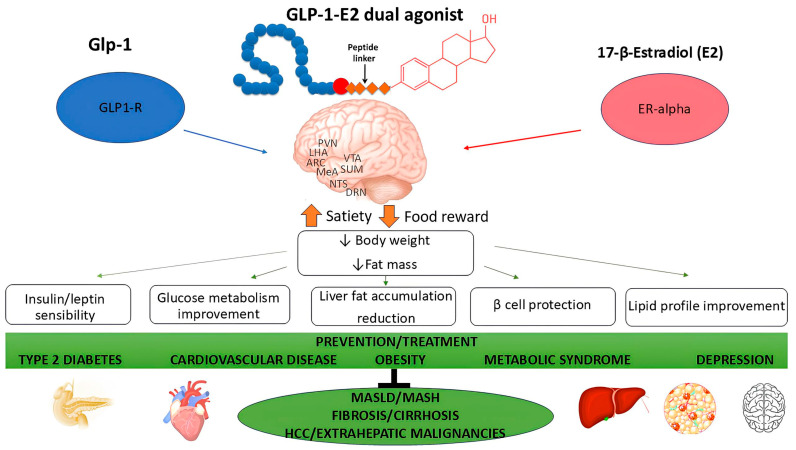
Metabolic dysfunction-associated steatotic liver disease (MASLD) is the most common chronic liver disease influenced by genetic, lifestyle, and environmental factors. While MASLD is more prevalent in men, women are at increased risk after menopause, highlighting the critical pathogenetic role of sex hormones. The complex interplay between estrogen deficiency, visceral fat accumulation, metabolic syndrome (MetS), and inflammation accelerates disease progression, increases cardiovascular (CV) risk, and triggers a cycle of worsening adiposity, metabolic dysfunction, and psychological problems, including eating disorders. Weight loss in postmenopausal women can significantly improve both metabolic and psychological outcomes, helping to prevent MASLD and related conditions. This review examines the prevalence of MASLD, its comorbidities (type 2 diabetes T2D, CV, mental disorders), pathogenetic mechanisms, and pharmacological treatment with GLP-1 receptor agonists (GLP1-RAs), with a focus on postmenopausal women. Given the use of GLP1-RAs in the treatment of obesity and T2D in MASLD patients, and the increase in MetS and MASLD after menopause, this review analyzes the potential of a stable GLP-1–estrogen conjugate as a therapeutic approach in this subgroup. By combining the synergistic effects of both hormones, this dual agonist has been shown to increase food intake and food reward suppression, resulting in greater weight loss and improved insulin sensitivity, glucose, and lipid metabolism. Therefore, we hypothesize that this pharmacotherapy may provide more targeted therapeutic benefits than either hormone alone by protecting the liver, β-cells, and overall metabolic health. As these effects are only supported by preclinical data, this review highlights the critical need for future research to evaluate and confirm the mechanisms and efficacy in clinical settings, particularly in postmenopausal women.
Overview
The claims and statistics of this paper haven’t been checked yet.
Free: it reads the open-access text and checks the first 5 claims that cite a source we can check. Create a free account to check every claim.
Integrity signals
Registry
Cites
Statistics
Figures
Verification
Claims the paper makes
The claims and statistics of this paper haven’t been checked yet.
Free: it reads the open-access text and checks the first 5 claims that cite a source we can check. Create a free account to check every claim.
Claims other papers make about this one
Each is checked against this paper’s own text: does it say what the citing paper says it does?
The check wasn’t confident either way, so it gives no verdict — never disputed.
In the citing paper
“While the reduction in lean body mass and functional capacity in younger individuals may appear marginal compared with the metabolic benefits associated with weight loss [75], in older adults this reduction may be crucial, potentially leading to loss of independence and the development of clinical frailty, with all the associated adverse consequences [76].”
From A Narrative Review on GLP-1 Receptor Agonists for Obesity in Older Women: Maximizing Weight Loss While Preserving Lean Mass (2026) · cites this paper as [76]
Experimental — accuracy not yet measured
Self-check
Percentages, sums and reported differences re-computed from the paper’s own numbers.
The self-check needs the paper’s full text.
Citations
Cites
Younossi, Z. M., Golabi, P., Paik, J. M., Henry, A., Van Dongen, C., & Henry, L. (2023) · Hepatology · doi:10.1097/hep.0000000000000004 · Cited by 3,383 · cited 2×
“The prevalence of obesity varies by region [3,4] and is higher in women than men [72–74] across all age groups, with the highest rates observed between ages 50 and 65 [73].”
InfluentialThe multiple-hit pathogenesis of non-alcoholic fatty liver disease (NAFLD)
Buzzetti, E., Pinzani, M., & Tsochatzis, E. A. (2016) · Metabolism · doi:10.1016/j.metabol.2015.12.012 · Cited by 3,119 · cited 1×
“…hypothesis extends this theory by suggesting that in genetically predisposed individuals, a combination of factors such as insulin resistance, adipose tissue dysfunction, sex hormones, diet, gut microbiota, and genetic/epigenetic influences contribute to hepatic steatosis and inflammation [160].”
Rinella, M. E., Neuschwander-Tetri, B. A., Siddiqui, M. S., Abdelmalek, M. F., Caldwell, S., Barb, D., Kleiner, D. E., & Loomba, R. (2023) · Hepatology · doi:10.1097/hep.0000000000000323 · Cited by 2,667
Phelps, N. H., Singleton, R. K., Zhou, B., Heap, R. A., Mishra, A., Bennett, J. E., Paciorek, C. J., Lhoste, V. P., Carrillo-Larco, R. M., Stevens, G. A., et al. (2024) · The Lancet · doi:10.1016/s0140-6736(23)02750-2 · Cited by 2,544 · cited 1×
“The prevalence of obesity varies by region [3,4] and is higher in women than men [72–74] across all age groups, with the highest rates observed between ages 50 and 65 [73].”
The prevalence and incidence of NAFLD worldwide: a systematic review and meta-analysis
Riazi, K., Azhari, H., Charette, J. H., Underwood, F. E., King, J. A., Afshar, E. E., Swain, M. G., Congly, S. E., Kaplan, G. G., & Shaheen, A.-A. (2022) · The Lancet Gastroenterology & Hepatology · doi:10.1016/s2468-1253(22)00165-0 · Cited by 2,246
Tacke, F., Horn, P., Wai-Sun Wong, V., Ratziu, V., Bugianesi, E., Francque, S., Zelber-Sagi, S., Valenti, L., Roden, M., Schick, F., et al. (2024) · Journal of Hepatology · doi:10.1016/j.jhep.2024.04.031 · Cited by 2,210
Epidemiology of Hepatocellular Carcinoma
McGlynn, K. A., Petrick, J. L., & El‐Serag, H. B. (2021) · Hepatology · doi:10.1002/hep.31288 · Cited by 2,147 · cited 1×
“In liver cancer, MASH has surpassed alcohol-related liver disease as the leading cause of HCC [42], with men generally experiencing rates two to four times higher than women [44,45].”
A phase 3, randomized, controlled trial of resmetirom in NASH with liver fibrosis
Harrison, S. A., Bedossa, P., Guy, C. D., Schattenberg, J. M., Loomba, R., Taub, R., Labriola, D., Moussa, S. E., Neff, G. W., Rinella, M. E., et al. (2024) · New England Journal of Medicine · doi:10.1056/nejmoa2309000 · Cited by 2,084 · cited 1×
“In the phase 3 trials, MAESTRO-NAFLD-1 [294] and MAESTRO-MASH [295], resmetirom effectively reduced liver steatosis in non-cirrhotic MASH adults with significant liver fibrosis [296].”
A Placebo-controlled trial of subcutaneous semaglutide in nonalcoholic steatohepatitis
Newsome, P. N., Buchholtz, K., Cusi, K., Linder, M., Okanoue, T., Ratziu, V., Sanyal, A. J., Sejling, A.-S., & Harrison, S. A. (2021) · New England Journal of Medicine · doi:10.1056/nejmoa2028395 · Cited by 2,039 · cited 1×
“While the effect on fibrosis regression remains uncertain, improvements in non-invasive markers of liver fibrosis were observed [314].”
Global epidemiology of NAFLD-related HCC: trends, predictions, risk factors and prevention
Huang, D. Q., El-Serag, H. B., & Loomba, R. (2021) · Nature Reviews Gastroenterology & Hepatology · doi:10.1038/s41575-020-00381-6 · Cited by 1,855 · cited 3×
“Given the critical role of sex and age in the development of MASLD and related cancers, identifying those at the highest risk is essential for effective screening programs and interventions [49].”
Boutari, C., & Mantzoros, C. S. (2022) · Metabolism · doi:10.1016/j.metabol.2022.155217 · Cited by 1,068 · cited 1×
“The prevalence of obesity varies by region [3,4] and is higher in women than men [72–74] across all age groups, with the highest rates observed between ages 50 and 65 [73].”
Gut microbiota and human NAFLD: disentangling microbial signatures from metabolic disorders
Aron-Wisnewsky, J., Vigliotti, C., Witjes, J., Le, P., Holleboom, A. G., Verheij, J., Nieuwdorp, M., & Clément, K. (2020) · Nature Reviews Gastroenterology & Hepatology · doi:10.1038/s41575-020-0269-9 · Cited by 1,063
Lonardo, A., Nascimbeni, F., Ballestri, S., Fairweather, D., Win, S., Than, T. A., Abdelmalek, M. F., & Suzuki, A. (2019) · Hepatology · doi:10.1002/hep.30626 · Cited by 1,050 · cited 3×
“During the reproductive years, men typically have a higher prevalence of MASLD than women [12,23–25], progressing to more severe stages, such as MASH, cirrhosis, and HCC [7,8,12,26].”
Cusi, K., Isaacs, S., Barb, D., Basu, R., Caprio, S., Garvey, W. T., Kashyap, S., Mechanick, J. I., Mouzaki, M., Nadolsky, K., et al. (2022) · Endocrine Practice · doi:10.1016/j.eprac.2022.03.010 · Cited by 1,021
Tirzepatide for metabolic dysfunction-associated steatohepatitis with liver fibrosis
Loomba, R., Hartman, M. L., Lawitz, E. J., Vuppalanchi, R., Boursier, J., Bugianesi, E., Yoneda, M., Behling, C., Cummings, O. W., Tang, Y., et al. (2024) · New England Journal of Medicine · doi:10.1056/nejmoa2401943 · Cited by 1,005 · cited 1×
“For example, the combination of GIP with GLP1-RAs has been shown to significantly improve MASH, reduce fibrosis, and decrease liver steatosis [345–347], while also having a synergistic effect on cardiometabolic risk factors [348–350].”
Sex differences in metabolic regulation and diabetes susceptibility
Tramunt, B., Smati, S., Grandgeorge, N., Lenfant, F., Arnal, J.-F., Montagner, A., & Gourdy, P. (2020) · Diabetologia · doi:10.1007/s00125-019-05040-3 · Cited by 923 · cited 1×
“While women of reproductive age tend to be more insulin sensitive, less prone to store fat in visceral and ectopic compartments, and have a greater capacity to secrete insulin and incretins [30,90], postmenopausal women are at higher risk for central obesity, hypertriglyceridemia, and prediabetes.”
The complex link between NAFLD and type 2 diabetes mellitus - mechanisms and treatments
Targher, G., Corey, K. E., Byrne, C. D., & Roden, M. (2021) · Nature Reviews Gastroenterology & Hepatology · doi:10.1038/s41575-021-00448-y · Cited by 850 · cited 1×
“Accumulation of fat in the liver impairs glycogen synthesis, increases gluconeogenesis [88], exacerbates insulin resistance, and promotes the systemic release of proinflammatory cytokines and hepatokines [89].”
A multisociety Delphi consensus statement on new fatty liver disease nomenclature
Rinella, M. E., Lazarus, J. V., Ratziu, V., Francque, S. M., Sanyal, A. J., Kanwal, F., Romero, D., Abdelmalek, M. F., Anstee, Q. M., Arab, J. P., et al. (2024) · Annals of Hepatology · doi:10.1016/j.aohep.2023.101133 · Cited by 844 · cited 1×
“Metabolic dysfunction-associated steatotic liver disease (MASLD), previously known as non-alcoholic fatty liver disease (NAFLD), is the most common chronic liver disease and is now included in the 2023 consensus definition of steatotic liver disease (SLD) [1,2].”
Current status and future trends of the global burden of MASLD
Miao, L., Targher, G., Byrne, C. D., Cao, Y.-Y., & Zheng, M.-H. (2024) · Trends in Endocrinology & Metabolism · doi:10.1016/j.tem.2024.02.007 · Cited by 781 · cited 5×
“For extrahepatic cancers, associations have been observed between Fatty Liver Index (FLI) scores (30–60 and ≥ 60) and the presence of colorectal adenomas or early colon cancer in men [3,62–64], and breast cancer in postmenopausal women [3,63–65].”
InfluentialMetabolic dysfunction-associated steatotic liver disease (MASLD): a state-of-the-art review
Chan, W.-K., Chuah, K.-H., Rajaram, R. B., Lim, L.-L., Ratnasingam, J., & Vethakkan, S. R. (2023) · Journal of Obesity & Metabolic Syndrome · doi:10.7570/jomes23052 · Cited by 776 · cited 1×
“These studies suggest improvements in steatohepatitis, reduced progression of fibrosis, and decreased liver-related complications [297,299], supporting these therapies for the treatment of T2D and/or obesity in patients with MASLD [313–316].”
Sex differences in type 2 diabetes
Kautzky-Willer, A., Leutner, M., & Harreiter, J. (2023) · Diabetologia · doi:10.1007/s00125-023-05891-x · Cited by 624
Sex differences in gut microbiota
Kim, Y. S., Unno, T., Kim, B.-Y., & Park, M.-S. (2020) · The World Journal of Men s Health · doi:10.5534/wjmh.190009 · Cited by 610 · cited 2×
“It is reasonable to assume that sexual dimorphism in the gut microbiome is influenced by sex hormones [228–230] and that this interaction plays an important role in the development of metabolic diseases, particularly affecting key aspects such as intestinal barrier integrity and inflammatory status…”
International trends in hepatocellular carcinoma incidence, 1978–2012
Petrick, J. L., Florio, A. A., Znaor, A., Ruggieri, D., Laversanne, M., Alvarez, C. S., Ferlay, J., Valery, P. C., Bray, F., & McGlynn, K. A. (2020) · International Journal of Cancer · doi:10.1002/ijc.32723 · Cited by 594 · cited 1×
“In liver cancer, MASH has surpassed alcohol-related liver disease as the leading cause of HCC [42], with men generally experiencing rates two to four times higher than women [44,45].”
Younossi, Z. M., Stepanova, M., Ong, J., Trimble, G., AlQahtani, S., Younossi, I., Ahmed, A., Racila, A., & Henry, L. (2021) · Clinical Gastroenterology and Hepatology · doi:10.1016/j.cgh.2020.05.064 · Cited by 576 · cited 2×
“Notably, MASH-related liver disease has become the leading cause of liver transplantation in women without HCC [42], and the second most common cause in men [9].”
Complications, morbidity and mortality of nonalcoholic fatty liver disease
Mantovani, A., Scorletti, E., Mosca, A., Alisi, A., Byrne, C. D., & Targher, G. (2020) · Metabolism · doi:10.1016/j.metabol.2020.154170 · Cited by 553 · cited 2×
“The strong association between MASLD and metabolic disorders places people at a significantly higher risk of mortality [2,68,92], with a 1.17-fold increased likelihood of CV disease compared to those without [104].”
InfluentialA Phase 2 Randomized Trial of Survodutide in MASH and Fibrosis
Sanyal, A. J., Bedossa, P., Fraessdorf, M., Neff, G. W., Lawitz, E., Bugianesi, E., Anstee, Q. M., Hussain, S. A., Newsome, P. N., Ratziu, V., et al. (2024) · New England Journal of Medicine · doi:10.1056/nejmoa2401755 · Cited by 528 · cited 1×
“For example, the combination of GIP with GLP1-RAs has been shown to significantly improve MASH, reduce fibrosis, and decrease liver steatosis [345–347], while also having a synergistic effect on cardiometabolic risk factors [348–350].”
Social Media, Body Image and Food Choices in Healthy Young Adults: A Mixed Methods Systematic Review
Rounsefell, K., Gibson, S., McLean, S., Blair, M., Molenaar, A., Brennan, L., Truby, H., & McCaffrey, T. A. (2020) · Nutrition & Dietetics · doi:10.1111/1747-0080.12581 · Cited by 472 · cited 1×
“Women in particular experience a strong link between body dissatisfaction, shaped by socio-cultural ideals, and disordered eating, beginning in adolescence [278,279].”
Dakanalis, A., Mentzelou, M., Papadopoulou, S. K., Papandreou, D., Spanoudaki, M., Vasios, G. K., Pavlidou, E., Mantzorou, M., & Giaginis, C. (2023) · Nutrients · doi:10.3390/nu15051173 · Cited by 463 · cited 2×
“In fact, these mental health conditions are associated with higher levels of binge eating disorders (BED) and emotional eating [155,156], especially in postmenopausal women [157], that negatively affect diet, weight [156], and quality of life (QoL), creating barriers to weight loss and effective…”
Harrison, S. A., Taub, R., Neff, G. W., Lucas, K. J., Labriola, D., Moussa, S. E., Alkhouri, N., & Bashir, M. R. (2023) · Nature Medicine · doi:10.1038/s41591-023-02603-1 · Cited by 435 · cited 1×
“In the phase 3 trials, MAESTRO-NAFLD-1 [294] and MAESTRO-MASH [295], resmetirom effectively reduced liver steatosis in non-cirrhotic MASH adults with significant liver fibrosis [296].”
Jarvis, H., Craig, D., Barker, R., Spiers, G., Stow, D., Anstee, Q. M., & Hanratty, B. (2020) · PLOS Medicine · doi:10.1371/journal.pmed.1003100 · Cited by 429 · cited 2×
“This suggests that other measures of central obesity may be more effective in predicting liver outcomes, particularly in women [78].”
Worldwide prevalence of DSM-5 eating disorders among young people
Silén, Y., & Keski-Rahkonen, A. (2022) · Current Opinion in Psychiatry · doi:10.1097/yco.0000000000000818 · Cited by 397
Heritability of Hepatic Fibrosis and Steatosis Based on a Prospective Twin Study
Loomba, R., Schork, N., Chen, C.-H., Bettencourt, R., Bhatt, A., Ang, B., Nguyen, P., Hernandez, C., Richards, L., Salotti, J., et al. (2015) · Gastroenterology · doi:10.1053/j.gastro.2015.08.011 · Cited by 389 · cited 1×
“Metabolic diseases such as obesity and T2D show familial clustering, suggesting a strong hereditary component to the risk of developing MASLD and related liver diseases [161,162].”
Le, M. H., Yeo, Y. H., Zou, B., Barnet, S., Henry, L., Cheung, R., & Nguyen, M. H. (2022) · Clinical and Molecular Hepatology · doi:10.3350/cmh.2022.0239 · Cited by 357
Hartman, M. L., Sanyal, A. J., Loomba, R., Wilson, J. M., Nikooienejad, A., Bray, R., Karanikas, C. A., Duffin, K. L., Robins, D. A., & Haupt, A. (2020) · Diabetes Care · doi:10.2337/dc19-1892 · Cited by 351
Advances in non-invasive assessment of hepatic fibrosis
Loomba, R., & Adams, L. A. (2020) · Gut · doi:10.1136/gutjnl-2018-317593 · Cited by 345 · cited 2×
“Given the clinical burden of MASLD, non-invasive tests [237] offer early detection of liver disease, cost-effectiveness in the management of metabolic dysfunction, and over-coming the limitations of invasiveness of liver biopsy, the gold standard for assessing liver fibrosis [238].”
Maas, A. H. E. M., Rosano, G., Cifkova, R., Chieffo, A., van Dijken, D., Hamoda, H., Kunadian, V., Laan, E., Lambrinoudaki, I., Maclaran, K., et al. (2021) · European Heart Journal · doi:10.1093/eurheartj/ehaa1044 · Cited by 344 · cited 2×
“This highlights the need for screening, prevention, and treatment of these risk factors, such as weight gain, dyslipidemia, hypertension, and T2D, in women during the menopausal transition [85,119].”
Targeted estrogen delivery reverses the metabolic syndrome
Finan, B., Yang, B., Ottaway, N., Stemmer, K., Müller, T. D., Yi, C.-X., Habegger, K., Schriever, S. C., García-Cáceres, C., Kabra, D. G., et al. (2012) · Nature Medicine · doi:10.1038/nm.3009 · Cited by 337 · cited 6×
“This mechanism helps to specifically target cells that express the GLP-1R, thus avoiding unwanted hormonal effects [264], such as the uterotrophic and oncogenic effects seen in breast cancer models [264,354,365].”
InfluentialSexual dimorphism in cardiometabolic health: the role of adipose tissue, muscle and liver
Goossens, G. H., Jocken, J. W. E., & Blaak, E. E. (2021) · Nature Reviews Endocrinology · doi:10.1038/s41574-020-00431-8 · Cited by 334 · cited 6×
“In addition, the higher activity of lipoprotein lipase (LPL) in subcutaneous adipocytes of the lower body in women suggests greater TG clearance compared to visceral adipocytes in men with obesity [171].”
InfluentialAssociation between non-alcoholic fatty liver disease and cancer incidence rate
Kim, G.-A., Lee, H. C., Choe, J., Kim, M.-J., Lee, M. J., Chang, H.-S., Bae, I. Y., Kim, H.-K., An, J., Shim, J. H., et al. (2018) · Journal of Hepatology · doi:10.1016/j.jhep.2017.09.012 · Cited by 331 · cited 2×
“For extrahepatic cancers, associations have been observed between Fatty Liver Index (FLI) scores (30–60 and ≥ 60) and the presence of colorectal adenomas or early colon cancer in men [3,62–64], and breast cancer in postmenopausal women [3,63–65].”
Walli-Attaei, M., Joseph, P., Rosengren, A., Chow, C. K., Rangarajan, S., Lear, S. A., AlHabib, K. F., Davletov, K., Dans, A., Lanas, F., et al. (2020) · The Lancet · doi:10.1016/s0140-6736(20)30543-2 · Cited by 330
The Number of X Chromosomes Causes Sex Differences in Adiposity in Mice
Chen, X., McClusky, R., Chen, J., Beaven, S. W., Tontonoz, P., Arnold, A. P., & Reue, K. (2012) · PLoS Genetics · doi:10.1371/journal.pgen.1002709 · Cited by 326 · cited 1×
“For example, mice with XX chromosomes have up to a two-fold increase in obesity [170,171], weight gain, elevated lipid and insulin levels, and fatty liver when fed a high-fat diet (HFD) [170].”
Balakrishnan, M., Patel, P., Dunn-Valadez, S., Dao, C., Khan, V., Ali, H., El-Serag, L., Hernaez, R., Sisson, A., Thrift, A. P., et al. (2021) · Clinical Gastroenterology and Hepatology · doi:10.1016/j.cgh.2020.04.067 · Cited by 324 · cited 2×
“In women over 50, the loss of estrogen’s protective effects [141], associated with higher prevalence of MASLD and fibrosis [37,146,147], strengthens the pathophysiological link between MASD and cognitive decline [141,148–151].”
Simon, T. G., Roelstraete, B., Hagström, H., Sundström, J., & Ludvigsson, J. F. (2022) · Gut · doi:10.1136/gutjnl-2021-325724 · Cited by 321 · cited 1×
“For example, in a Swedish cohort of 10,422 adults with biopsy-confirmed MASLD, women showed a stronger positive association between MASLD and the incidence of major adverse CV events (MACE) than men [124].”
Tan, D. J. H., Ng, C. H., Lin, S. Y., Pan, X. H., Tay, P., Lim, W. H., Teng, M., Syn, N., Lim, G., Yong, J. N., et al. (2022) · The Lancet Oncology · doi:10.1016/s1470-2045(22)00078-x · Cited by 307 · cited 1×
“In addition, a recent meta-analysis of 15,377 patients with MASLD-related HCC, found no significant sex differences [55], while US cancer statistics showed an increase in MASLD-related HCC cases in both sexes aged 50 and older, with a decrease in younger men [52].”
Updated mechanisms of MASLD pathogenesis
Li, Y., Yang, P., Ye, J., Xu, Q., Wu, J., & Wang, Y. (2024) · Lipids in Health and Disease · doi:10.1186/s12944-024-02108-x · Cited by 300 · cited 1×
“Obesity, particularly central obesity, is a key driver of MASLD, with insulin resistance, adipocyte dysfunction, and inflammatory markers playing a critical role in the development of MASLD and related conditions [17,18].”
Glucagon-like peptide-1 receptor co-agonists for treating metabolic disease.
Baggio, L. L., & Drucker, D. J. (2021) · Molecular Metabolism · doi:10.1016/j.molmet.2020.101090 · Cited by 299 · cited 2×
“This mechanism helps to specifically target cells that express the GLP-1R, thus avoiding unwanted hormonal effects [264], such as the uterotrophic and oncogenic effects seen in breast cancer models [264,354,365].”
Mantovani, A., Petracca, G., Beatrice, G., Csermely, A., Lonardo, A., & Targher, G. (2021) · Metabolites · doi:10.3390/metabo11020073 · Cited by 299 · cited 1×
“A recent meta-analysis of phase 2 RCTs confirmed these findings, showing a reduction in liver enzyme levels, decreased liver fat content, and histologic improvement in MASH without worsening fibrosis [317].”
Loomba, R., Noureddin, M., Kowdley, K. V., Kohli, A., Sheikh, A., Neff, G., Bhandari, B. R., Gunn, N., Caldwell, S. H., Goodman, Z., et al. (2021) · Hepatology · doi:10.1002/hep.31622 · Cited by 296 · cited 1×
“These results were also confirmed in studies combining semaglutide with lipogenesis inhibitors [318,319] and in preliminary results from the ongoing phase 3 ESSENCE study [320,321].”
Genetic Basis for Sex Differences in Obesity and Lipid Metabolism
Link, J. C., & Reue, K. (2017) · Annual Review of Nutrition · doi:10.1146/annurev-nutr-071816-064827 · Cited by 292 · cited 2×
“The sex chromosome complement may also contribute to the sexual dimorphism observed in metabolic traits [22,167].”
Nevola, R., Epifani, R., Imbriani, S., Tortorella, G., Aprea, C., Galiero, R., Rinaldi, L., Marfella, R., & Sasso, F. C. (2023) · International Journal of Molecular Sciences · doi:10.3390/ijms24021703 · Cited by 286 · cited 9×
“Pre-clinical data suggest that GLP1-RAs may reduce the incidence of HCC associated with MASH by restoring the balance between adiponectin and leptin levels [307,326].”
InfluentialThe role of hepatokines in NAFLD
Stefan, N., Schick, F., Birkenfeld, A. L., Häring, H.-U., & White, M. F. (2023) · Cell Metabolism · doi:10.1016/j.cmet.2023.01.006 · Cited by 282 · cited 1×
“Insulin signaling is crucial for synaptic plasticity, neuroprotection, and neuronal growth [137], which helps explain how insulin resistance, driven by increased VAT and the release of pro-inflammatory cytokines, impairs cognitive function in MASLD [138].”
Assessing gender differences in food preferences and physical activity: a population-based survey
Feraco, A., Armani, A., Amoah, I., Guseva, E., Camajani, E., Gorini, S., Strollo, R., Padua, E., Caprio, M., & Lombardo, M. (2024) · Frontiers in Nutrition · doi:10.3389/fnut.2024.1348456 · Cited by 259 · cited 3×
“This helps explain why middle-aged women often experience BED despite adopting healthier eating habits [248,285].”
Hutchison, A. L., Tavaglione, F., Romeo, S., & Charlton, M. (2023) · Journal of Hepatology · doi:10.1016/j.jhep.2023.08.030 · Cited by 250 · cited 4×
“However, in MASLD, leptin shows dose-dependent activity, becoming inflammatory and fibrotic at higher levels [175].”
InfluentialLe, P., Tatar, M., Dasarathy, S., Alkhouri, N., Herman, W. H., Taksler, G. B., Deshpande, A., Ye, W., Adekunle, O. A., McCullough, A., et al. (2025) · JAMA Network Open · doi:10.1001/jamanetworkopen.2024.54707 · Cited by 243
Liu, J., Ayada, I., Zhang, X., Wang, L., Li, Y., Wen, T., Ma, Z., Bruno, M. J., de Knegt, R. J., Cao, W., et al. (2022) · Clinical Gastroenterology and Hepatology · doi:10.1016/j.cgh.2021.02.030 · Cited by 242 · cited 1×
“MASLD is more common in people who are overweight or obese, with a global prevalence of about 50% [71].”
le Roux, C. W., Steen, O., Lucas, K. J., Startseva, E., Unseld, A., & Hennige, A. M. (2024) · The Lancet Diabetes & Endocrinology · doi:10.1016/s2213-8587(23)00356-x · Cited by 237
Menopause and women’s cardiovascular health: is it really an obvious relationship?
Ryczkowska, K., Adach, W., Janikowski, K., Banach, M., & Bielecka-Dabrowa, A. (2023) · Archives of Medical Science · doi:10.5114/aoms/157308 · Cited by 233 · cited 1×
“These findings, observed in a sample with an average age of 50, have been linked to changes in body composition and cardiometabolic risk factors during the perimenopausal period [333,334].”
Alkhouri, N., Herring, R., Kabler, H., Kayali, Z., Hassanein, T., Kohli, A., Huss, R. S., Zhu, Y., Billin, A. N., Damgaard, L. H., et al. (2022) · Journal of Hepatology · doi:10.1016/j.jhep.2022.04.003 · Cited by 230 · cited 1×
“These results were also confirmed in studies combining semaglutide with lipogenesis inhibitors [318,319] and in preliminary results from the ongoing phase 3 ESSENCE study [320,321].”
NAFLD and NASH in Postmenopausal Women: Implications for Diagnosis and Treatment
DiStefano, J. K. (2020) · Endocrinology · doi:10.1210/endocr/bqaa134 · Cited by 228 · cited 5×
“Women typically have a lower risk of hepatic, cardiometabolic, and cognitive disease during their reproductive years, but lose this protection after menopause, resulting in a disease prevalence comparable to or higher than that of men [36,60].”
InfluentialKoceva, A., Herman, R., Janež, A., Rakuša, M., & Jensterle, M. (2024) · International Journal of Molecular Sciences · doi:10.3390/ijms25137342 · Cited by 219
Incretins (GLP-1 receptor agonists and dual/triple agonists) and the liver
Newsome, P. N., & Ambery, P. (2023) · Journal of Hepatology · doi:10.1016/j.jhep.2023.07.033 · Cited by 211 · cited 10×
“As reported in the literature [299,301,312], a growing number of randomized clinical trials (RCTs) have investigated the hepatoprotective effects of incretin-based therapies in the treatment of MASLD or MASH.”
InfluentialSandireddy, R., Sakthivel, S., Gupta, P., Behari, J., Tripathi, M., & Singh, B. K. (2024) · Frontiers in Cell and Developmental Biology · doi:10.3389/fcell.2024.1433857 · Cited by 211 · cited 5×
“Increased intestinal permeability, or “leaky gut,” leads to the release of microbiota-derived metabolites that are recognized as biomarkers or therapeutic targets for MASLD [211,223].”
InfluentialGlobal burden of metabolic dysfunction-associated steatotic liver disease, 2010 to 2021
Feng, G., Targher, G., Byrne, C. D., Yilmaz, Y. N., Wong, V. W., Lesmana, C. R. A., Adams, L. A., Boursier, J., Papatheodoridis, G., El‐Kassas, M., et al. (2024) · JHEP Reports · doi:10.1016/j.jhepr.2024.101271 · Cited by 195 · cited 2×
“This may explain why the incidence and severity of diseases such as liver fibrosis increase after menopause [5], with women affected by MASLD experiencing more years of disability due to the disease than men [16].”
Sorimachi, H., Obokata, M., Takahashi, N., Reddy, Y. N. V., Jain, C. C., Verbrugge, F. H., Koepp, K. E., Khosla, S., Jensen, M. D., & Borlaug, B. A. (2021) · European Heart Journal · doi:10.1093/eurheartj/ehaa823 · Cited by 183 · cited 1×
“…VAT, measured by computed tomography (CT) scan, has been found to be independently associated with heart failure with preserved ejection fraction, hemodynamic abnormalities [130], and increases in left ventricular mass (LVM) and mean myocardial wall thickness (MMWT) in women, but not in men [131].”
Sexual dimorphism of metabolic dysfunction-associated steatotic liver disease
Cherubini, A., Torre, S. D., Pelusi, S., & Valenti, L. V. C. (2024) · Trends in Molecular Medicine · doi:10.1016/j.molmed.2024.05.013 · Cited by 181 · cited 5×
“However, after age 50, the prevalence of MASLD in women becomes similar to that in men [5,6,26,30,31].”
InfluentialEstrogens in adipose tissue physiology and obesity-related dysfunction
Kuryłowicz, A. (2023) · Biomedicines · doi:10.3390/biomedicines11030690 · Cited by 178 · cited 1×
“Estrogens also regulate genes involved in brown adipose tissue (BAT) function, such as uncoupling protein 1 (UCP-1), which is critical for energy balance, and promotes the “browning” process of white adipocytes [197].”
Santos-Marcos, J. A., Mora-Ortiz, M., Tena-Sempere, M., Lopez-Miranda, J., & Camargo, A. (2023) · Biology of Sex Differences · doi:10.1186/s13293-023-00490-2 · Cited by 176 · cited 1×
“…to assume that sexual dimorphism in the gut microbiome is influenced by sex hormones [228–230] and that this interaction plays an important role in the development of metabolic diseases, particularly affecting key aspects such as intestinal barrier integrity and inflammatory status [231].”
Glucagon-like Peptide-1 Receptor-based Therapeutics for Metabolic Liver Disease
Yabut, J. M., & Drucker, D. J. (2023) · Endocrine Reviews · doi:10.1210/endrev/bnac018 · Cited by 175 · cited 9×
“This results in less FFAs flowing to the liver, reducing substrate availability for DNL [300], HGP [297], and the secretion of TG-rich VLDL [301], while promoting fatty acid oxidation.”
InfluentialSex matters: The effects of biological sex on adipose tissue biology and energy metabolism
Valencak, T. G., Osterrieder, A., & Schulz, T. J. (2017) · Redox Biology · doi:10.1016/j.redox.2017.04.012 · Cited by 173 · cited 1×
“Two key adipokines, adiponectin and leptin, show sex differences in their levels [7,179], with women typically having higher levels than men [179,210].”
The Importance of Nutrition in Menopause and Perimenopause—A Review
Erdélyi, A., Pálfi, E., Tűű, L., Nas, K., Szűcs, Z., Török, M., Jakab, A., & Várbíró, S. (2023) · Nutrients · doi:10.3390/nu16010027 · Cited by 173 · cited 2×
“However, the “menopausal transition” is a period characterized by both physical and psychological changes [253].”
The first MASH drug therapy on the horizon: Current perspectives of resmetirom
Petta, S., Targher, G., Romeo, S., Pajvani, U. B., Zheng, M., Aghemo, A., & Valenti, L. V. C. (2024) · Liver International · doi:10.1111/liv.15930 · Cited by 171 · cited 1×
“In the phase 3 trials, MAESTRO-NAFLD-1 [294] and MAESTRO-MASH [295], resmetirom effectively reduced liver steatosis in non-cirrhotic MASH adults with significant liver fibrosis [296].”
Vitale, A., Svegliati-Baroni, G., Ortolani, A., Cucco, M., Dalla Riva, G. V., Giannini, E. G., Piscaglia, F., Rapaccini, G., Di Marco, M., Caturelli, E., et al. (2023) · Gut · doi:10.1136/gutjnl-2021-324915 · Cited by 170 · cited 1×
“For example, although an Italian study observed a significant increase in MASLD-related HCC cases from 3.6% in 2002 to 28.9% in 2019, with a higher incidence in men, it identified overweight/obesity, hyperglycemia, and T2D as key risk factors for HCC [54].”
InfluentialHassani Zadeh, S., Mansoori, A., & Hosseinzadeh, M. (2021) · Journal of Gastroenterology and Hepatology · doi:10.1111/jgh.15363 · Cited by 167
De, A., Bhagat, N., Mehta, M., Taneja, S., & Duseja, A. K. (2023) · Journal of Hepatology · doi:10.1016/j.jhep.2023.07.031 · Cited by 167 · cited 1×
“Furthermore, understanding the interaction between sex/gender and traditional risk factors can improve patient outcomes [20,21], especially within the evolving field of precision medicine, which is increasingly focused on sex/gender differences.”
Muscogiuri, G., Verde, L., Vetrani, C., Barrea, L., Savastano, S., & Colao, A. (2023) · Journal of Endocrinological Investigation · doi:10.1007/s40618-023-02196-z · Cited by 164 · cited 1×
“Social and environmental stressors significantly affect the relationship between ovarian hormones and food preferences, with emotional stress often leading to increased consumption of fatty and sugary foods [277].”
Burra, P., Bizzaro, D., Gonta, A., Shalaby, S., Gambato, M., Morelli, M. C., Trapani, S., Floreani, A., Marra, F., Brunetto, M. R., et al. (2021) · Liver International · doi:10.1111/liv.14943 · Cited by 162 · cited 9×
“These findings suggest a typically female dietary pattern that may contribute to the pathogenesis of MASLD [12], especially after menopause.”
InfluentialThe Emerging Role of Glucagon-like Peptide-1 Receptor Agonists for the Management of NAFLD
Patel Chavez, C., Cusi, K., & Kadiyala, S. (2022) · The Journal of Clinical Endocrinology & Metabolism · doi:10.1210/clinem/dgab578 · Cited by 162
Serra-Burriel, M., Graupera, I., Torán, P., Thiele, M., Roulot, D., Wai-Sun Wong, V., Neil Guha, I., Fabrellas, N., Arslanow, A., Expósito, C., et al. (2019) · Journal of Hepatology · doi:10.1016/j.jhep.2019.08.019 · Cited by 160
Mayneris-Perxachs, J., Arnoriaga-Rodríguez, M., Luque-Córdoba, D., Priego-Capote, F., Pérez-Brocal, V., Moya, A., Burokas, A., Maldonado, R., & Fernández-Real, J.-M. (2020) · Microbiome · doi:10.1186/s40168-020-00913-x · Cited by 159 · cited 1×
“After menopause, women’s gut microbiomes become more similar to men’s in both composition and function, suggesting a masculinization of the microbiota [234].”
Inherited basis of visceral, abdominal subcutaneous and gluteofemoral fat depots
Agrawal, S., Wang, M., Klarqvist, M. D. R., Smith, K., Shin, J., Dashti, H., Diamant, N., Choi, S. H., Jurgens, S. J., Ellinor, P. T., et al. (2022) · Nature Communications · doi:10.1038/s41467-022-30931-2 · Cited by 156 · cited 1×
“…to fibrosis and liver dysfunction only in the later stages of chronic liver disease GWAS have identified loci associated with fat distribution, showing a stronger association of key SNPs in women compared to men [167–169], and suggesting that adiposity traits are more heritable in women [169].”
The interplay between diabetes mellitus and menopause: clinical implications
Lambrinoudaki, I. V., Paschou, S. Α., Armeni, E., & Goulis, D. G. (2022) · Nature Reviews Endocrinology · doi:10.1038/s41574-022-00708-0 · Cited by 155 · cited 6×
“After age 55, this trend reverses, with CVD mortality at 38.5% for men and 41% for women [85].”
InfluentialA Review of FoxO1-Regulated Metabolic Diseases and Related Drug Discoveries
Peng, S., Li, W., Hou, N., & Huang, N. (2020) · Cells · doi:10.3390/cells9010184 · Cited by 147 · cited 1×
“Estrogens suppress HGP and improve insulin sensitivity via the ER α -phosphoinositide 3-kinase-Akt-Foxo1 pathway [41,194], with Foxo1 regulating glucose-6-phosphatase (G6pc), a critical enzyme in HGP [195].”
Targeted pharmacological therapy restores β-cell function for diabetes remission
Sachs, S., Bastidas-Ponce, A., Tritschler, S., Bakhti, M., Böttcher, A., Sánchez-Garrido, M. A., Tarquis-Medina, M., Kleinert, M., Fischer, K., Jall, S., et al. (2020) · Nature Metabolism · doi:10.1038/s42255-020-0171-3 · Cited by 147 · cited 2×
“Maximizing estrogen signaling to β -cells via GLP-1 has been shown to reduce daily insulin needs by 60%, increase β -cell survival, and protect against cytokine-induced dysfunction in mouse models of T2D and in human micro-islets [358].”
Stea, T. H., Nordheim, O., Bere, E., Stornes, P., & Eikemo, T. A. (2020) · PLOS ONE · doi:10.1371/journal.pone.0232521 · Cited by 147 · cited 1×
“Middle-aged women are more likely than men to consume healthier foods, such as fruits and vegetables [248,249], and are more likely to follow the Mediterranean diet [250,251].”
Newsome, P. N., Sanyal, A. J., Engebretsen, K. A., Kliers, I., Østergaard, L., Vanni, D., Bugianesi, E., Rinella, M. E., Roden, M., & Ratziu, V. (2024) · Alimentary Pharmacology & Therapeutics · doi:10.1111/apt.18331 · Cited by 145
Torre, S. D. (2020) · Frontiers in Endocrinology · doi:10.3389/fendo.2020.572490 · Cited by 144 · cited 9×
“Although obesity is more common in women, they appear to have some protection against obesity-related cardiometabolic conditions, including MASLD, up until menopause [41].”
InfluentialTan, D. J. H., Setiawan, V. W., Ng, C. H., Lim, W. H., Muthiah, M. D., Tan, E. X., Dan, Y. Y., Roberts, L. R., Loomba, R., & Huang, D. Q. (2023) · Hepatology · doi:10.1002/hep.32758 · Cited by 144 · cited 2×
“The interaction between the female sex and the PNPLA3 p.I148M variant [50,51], and the increasing prevalence of T2D and central obesity in postmenopausal women [31], may explain why the incidence and mortality rates of HCC in women are rapidly approaching those of men [52,53].”
A narrative review of sex differences in eating disorders: Is there a biological basis?
Culbert, K. M., Sisk, C. L., & Klump, K. L. (2021) · Clinical Therapeutics · doi:10.1016/j.clinthera.2020.12.003 · Cited by 142 · cited 4×
“Sleep and mood disorders, such as depression, anxiety, and emotional distress [255,259], combined with somato-vegetative symptoms (hot flashes, palpitations, insomnia), which are common during menopause, contribute to weight gain and an increase in visceral fat mass [260].”
InfluentialSpotlight on the Gut Microbiome in Menopause: Current Insights
Peters, B. A., Santoro, N. F., Kaplan, R. C., & Qi, Q. (2022) · International Journal of Women s Health · doi:10.2147/ijwh.s340491 · Cited by 141 · cited 2×
“Serum estradiol has been associated with greater gut microbiota diversity in premenopausal women, as well as a greater ability to maintain the gut barrier and protect against gut injury [233].”
Rentzeperi, E., Pegiou, S., Koufakis, T., Grammatiki, M., & Kotsa, K. (2022) · Journal of Personalized Medicine · doi:10.3390/jpm12030454 · Cited by 140 · cited 6×
“Overall, while it remains unclear whether GLP1-RAs have sex-specific effects on reducing CV risk or influencing parameters like WC, blood pressure, and the frequency of MACE [328], it is important to consider the possibility that biological sex may positively modulate treatment response [264,328].”
InfluentialMenopause-associated risk of cardiovascular disease
Anagnostis, P. G., Lambrinoudaki, I. V., Stevenson, J. C., & Goulis, D. G. (2022) · Endocrine Connections · doi:10.1530/ec-21-0537 · Cited by 138 · cited 1×
“These sex differences may be influenced by the combined effect of MASLD and menopausal hormonal changes that increase CV risk [127,128].”
Efficacy and Safety of Tirzepatide in Type 2 Diabetes and Obesity Management
Sinha, R., Papamargaritis, D., Sargeant, J. A., & Davies, M. J. (2023) · Journal of Obesity & Metabolic Syndrome · doi:10.7570/jomes22067 · Cited by 138 · cited 1×
“For example, the combination of GIP with GLP1-RAs has been shown to significantly improve MASH, reduce fibrosis, and decrease liver steatosis [345–347], while also having a synergistic effect on cardiometabolic risk factors [348–350].”
Blüher, M., Rosenstock, J., Hoefler, J., Manuel, R., & Hennige, A. M. (2024) · Diabetologia · doi:10.1007/s00125-023-06053-9 · Cited by 138
Cherubini, A., Ostadreza, M., Jamialahmadi, O., Pelusi, S., Rrapaj, E., Casirati, E., Passignani, G., Norouziesfahani, M., Sinopoli, E., Baselli, G., et al. (2023) · Nature Medicine · doi:10.1038/s41591-023-02553-8 · Cited by 136 · cited 2×
“The interaction between the female sex and the PNPLA3 p.I148M variant [50,51], and the increasing prevalence of T2D and central obesity in postmenopausal women [31], may explain why the incidence and mortality rates of HCC in women are rapidly approaching those of men [52,53].”
Gender and CVD- Does It Really Matters?
Suman, S., Pravalika, J., Manjula, P., & Farooq, U. (2023) · Current Problems in Cardiology · doi:10.1016/j.cpcardiol.2023.101604 · Cited by 134 · cited 2×
“Studies have shown that women tend to experience CV events seven to ten years later than men [110,113–115], therefore the mean age of women (50 years) in the PURE study may be too early to detect significant CV risk effects.”
Cao, L., An, Y., Zhao, Z., Liu, H., Jiang, J., Liu, W., Zhou, Y., Shi, M., Dai, W., Lv, Y., et al. (2024) · BMC Medicine · doi:10.1186/s12916-024-03315-0 · Cited by 133 · cited 2×
“This suggests that some of the effects of the co-agonist on BED are mediated by estrogens [99].”
Estrogens stimulate serotonin neurons to inhibit binge-like eating in mice
Cao, X., Xu, P., Oyola, M. G., Xia, Y., Yan, X., Saito, K., Zou, F., Wang, C., Yang, Y., Hinton, A., et al. (2014) · Journal of Clinical Investigation · doi:10.1172/jci74726 · Cited by 131 · cited 1×
“Research has shown that the replacement of 17 β -estradiol in ovariectomized female mice suppresses food intake by interacting with ER α in serotonin (5-HT) neurons in the DRN [363].”
Peters, B. A., Lin, J., Qi, Q., Usyk, M., Isasi, C. R., Mossavar-Rahmani, Y., Derby, C. A., Santoro, N., Perreira, K. M., Daviglus, M. L., et al. (2022) · mSystems · doi:10.1128/msystems.00273-22 · Cited by 130 · cited 1×
“This helps explain why, similar to ovariectomized mice with reduced estrogen levels, the changes in the gut microbiota observed during menopause [230] lead to the neutralization of sex differences in microbiota composition and function [232].”
Wang, L., Berger, N. A., Kaelber, D. C., & Xu, R. (2024) · Gastroenterology · doi:10.1053/j.gastro.2024.04.029 · Cited by 130 · cited 1×
“Although not specifically indicated for MASH [2], GLP1-RAs have also reduced the risk of composite liver disease (including cirrhosis or HCC) in patients with diabetes [322–324], even in those with compensated cirrhosis from MASLD [325].”
Lonardo, A., & Suzuki, A. (2020) · Journal of Clinical Medicine · doi:10.3390/jcm9051278 · Cited by 129 · cited 3×
“The presence of hepatic steatosis in women with MASLD reduces the protective effects of estrogen, leading to higher rates of CV disease [30,122,123].”
Thomas, J. A., Kendall, B. J., Dalais, C., Macdonald, G. A., & Thrift, A. P. (2022) · European Journal of Cancer · doi:10.1016/j.ejca.2022.06.051 · Cited by 129
Nonalcoholic Fatty Liver Disease Increases the Risk of Anxiety and Depression
Labenz, C., Huber, Y., Michel, M., Nagel, M., Galle, P. R., Kostev, K., & Schattenberg, J. M. (2020) · Hepatology Communications · doi:10.1002/hep4.1541 · Cited by 128 · cited 1×
“Middle-aged women with MASLD also have a higher prevalence of depression, which worsens with the severity of steatosis [143,144,153].”
Gender Differences and Cardiometabolic Risk: The Importance of the Risk Factors
Meloni, A., Dessalvi, C. C., Cugusi, L., Donataccio, M. P., Deidda, M., Sciomer, S., Gallina, S., Vassalle, C., Moscucci, F., Mercuro, G., et al. (2023) · International Journal of Molecular Sciences · doi:10.3390/ijms24021588 · Cited by 124 · cited 1×
“While each factor independently affects CV risk, their combined effect significantly increases the risk, contributing to a 1.5-fold increase in all-cause mortality [121].”
InfluentialMin, J., Goodale, H., Xue, H., Brey, R. A., & Wang, Y. (2020) · Advances in Nutrition · doi:10.1093/advances/nmaa162 · Cited by 122 · cited 1×
“The prevalence of obesity varies by region [3,4] and is higher in women than men [72–74] across all age groups, with the highest rates observed between ages 50 and 65 [73].”
Gender Bias in Diagnosis, Prevention, and Treatment of Cardiovascular Diseases: A Systematic Review
Hamid, A. A., Beckett, R., Wilson, M., Jalal, Z., Cheema, E. U., Dhiya Al-Jumeily, O. B. E., Coombs, T., Ralebitso-Senior, T. K., & Assi, S. A. (2024) · Cureus · doi:10.7759/cureus.54264 · Cited by 119
NAFLD and MAFLD as emerging causes of HCC: A populational study
Myers, S., Neyroud-Caspar, I., Spahr, L., Gkouvatsos, K., Fournier, E., Giostra, E., Magini, G., Frossard, J.-L., Bascaron, M.-E., Vernaz, N., et al. (2021) · JHEP Reports · doi:10.1016/j.jhepr.2021.100231 · Cited by 116 · cited 2×
“These findings suggest a shift toward a reduction in the male predominance of MASLD-related HCC [52,53,56].”
Abildgaard, J., Ploug, T., Al-Saoudi, E., Wagner, T., Thomsen, C., Ewertsen, C., Bzorek, M., Pedersen, B. K., Pedersen, A. T., & Lindegaard, B. (2021) · Scientific Reports · doi:10.1038/s41598-021-94189-2 · Cited by 116 · cited 5×
“Additionally, hypertrophic changes in VAT were associated with reduced insulin sensitivity [200] and increased peroxisome proliferator-activated receptor gamma (PPAR-γ ) expression, while decreasing FASN expression in SAT.”
InfluentialSex Differences in Brown Adipose Tissue Function: Sex Hormones, Glucocorticoids, and Their Crosstalk
Kaikaew, K., Grefhorst, A., & Visser, J. A. (2021) · Frontiers in Endocrinology · doi:10.3389/fendo.2021.652444 · Cited by 114 · cited 1×
“This also supports the role of sex hormones in influencing the higher levels and activity of BAT in women compared to men, attributed to higher thermogenic proteins such as UCP1 and PGC1 α [204,205].”
Zhang, S., Gan, S., Zhang, Q., Liu, L., Meng, G., Yao, Z., Wu, H., Gu, Y., Wang, Y., Zhang, T., et al. (2022) · International Journal of Epidemiology · doi:10.1093/ije/dyab174 · Cited by 113 · cited 1×
“…fish, and whole grains, has been associated with a reduced risk of MASLD [2,244,245], while a Western diet high in red meat, sugar, and saturated fat increases the risk of MASLD [2,244,246], also affecting the microbiome, intestinal barrier, bacterial translocation, and neuroinflammation [134,158].”
Adipocyte Metabolism and Health after the Menopause: The Role of Exercise
Marsh, M. L., Oliveira, M. N., & Vieira‐Potter, V. J. (2023) · Nutrients · doi:10.3390/nu15020444 · Cited by 113 · cited 1×
“A reduction in E2 levels may worsen uncontrolled eating disorders, such as BED [255,259,263,264,269], as evidenced by the increased risk of compulsive overeating in adult female rats following ovariectomy [270], and in postmenopausal women [268].”
Golabi, P., Paik, J. M., Kumar, A., Al Shabeeb, R., Eberly, K. E., Cusi, K., GunduRao, N., & Younossi, Z. M. (2023) · Metabolism · doi:10.1016/j.metabol.2023.155642 · Cited by 113 · cited 1×
“Research also suggests that prediabetes and T2D significantly increase all-cause mortality, but this effect was only observed in women [97].”
Fang, Y., Ji, L., Zhu, C., Xiao, Y., Zhang, J., Lu, J., Yin, J., & Wei, L. (2020) · Frontiers in Cell and Developmental Biology · doi:10.3389/fcell.2020.602574 · Cited by 108
Gender Differences in Nonalcoholic Fatty Liver Disease
Mahtab, M. A., Ghosh, J., Bhatia, S. J., Nagral, A. S., Bangar, M., Menezes, S. B., Butt, N., Manchanayake, J., & Singh, S. P. (2022) · Euroasian Journal of Hepato-Gastroenterology · doi:10.5005/jp-journals-10018-1370 · Cited by 108 · cited 7×
“The influence of age and gender on the clinical features of MASLD/MASH is well documented [147], with sex hormones playing a critical role in regulating metabolic processes in the liver [22].”
Influentialvan Egmond, L. T., Meth, E. M. S., Engström, J., Ilemosoglou, M., Keller, J. A., Vogel, H., & Benedict, C. (2023) · Obesity · doi:10.1002/oby.23616 · Cited by 106
Adiponectin and leptin in the diagnosis and therapy of NAFLD
Boutari, C., & Mantzoros, C. S. (2019) · Metabolism · doi:10.1016/j.metabol.2019.154028 · Cited by 104 · cited 1×
“Leptin, on the other hand, is known as the “starvation hormone”, which is synthesized by adipose tissue and acts as a metabolic regulator that can reduce food intake [179,213].”
Sex and estrogens alter the action of glucagon-like peptide-1 on reward
Richard, J. E., Anderberg, R. H., López-Ferreras, L., Olandersson, K., & Skibicka, K. P. (2016) · Biology of Sex Differences · doi:10.1186/s13293-016-0059-9 · Cited by 102 · cited 1×
“The effect of GLP-1 on feeding behavior is based on central signaling through the estrogen receptor ER α , which is necessary for its effects on food reward [342].”
Emanuel, R. H. K., Roberts, J., Docherty, P. D., Lunt, H., Campbell, R. E., & Möller, K. (2022) · Frontiers in Endocrinology · doi:10.3389/fendo.2022.1017468 · Cited by 102 · cited 1×
“Another example is the use of this dual agonist in the treatment of PCOS, the leading cause of hyperandrogenism in women during their reproductive years, where disrupted estrogen signaling and elevated androgen levels lead to impaired hepatic metabolism [177,359].”
Beyond the X Factor: Relevance of Sex Hormones in NAFLD Pathophysiology
Torre, S. D. (2021) · Cells · doi:10.3390/cells10092502 · Cited by 101 · cited 8×
“After menopause, the decline in estrogen promotes a re-distribution of lipids from SAT to a more central, android fat distribution [60,177,200].”
InfluentialSex hormones influence the intestinal microbiota composition in mice
Wu, Y., Peng, X., Li, X., Li, D., Tan, Z., & Yu, R. (2022) · Frontiers in Microbiology · doi:10.3389/fmicb.2022.964847 · Cited by 101
The importance of estradiol for body weight regulation in women
Vigil, P., Meléndez, J., Petkovic, G., & Río, J. P. D. (2022) · Frontiers in Endocrinology · doi:10.3389/fendo.2022.951186 · Cited by 100 · cited 10×
“Overall, while it remains unclear whether GLP1-RAs have sex-specific effects on reducing CV risk or influencing parameters like WC, blood pressure, and the frequency of MACE [328], it is important to consider the possibility that biological sex may positively modulate treatment response [264,328].”
InfluentialEstrogen receptor–α in medial amygdala neurons regulates body weight
Xu, P., Cao, X., He, Y., Zhu, L., Yang, Y., Saito, K., Wang, C., Yan, X., Hinton, A. O., Zou, F., et al. (2015) · Journal of Clinical Investigation · doi:10.1172/jci80941 · Cited by 98 · cited 2×
“In addition to these regions, the GLP-1-E2 conjugate transports bioactive estrogens to the dorsal raphe nucleus (DRN), a key area involved in the development of eating behavior [362].”
Depression and Cognitive Impairment—Extrahepatic Manifestations of NAFLD and NASH
Colognesi, M., Gabbia, D., & De Martin, S. (2020) · Biomedicines · doi:10.3390/biomedicines8070229 · Cited by 98 · cited 3×
“Poor diet can also disrupt the gut microbiota, contributing to fat deposition in the liver [134,158] and cognitive decline in MASLD [133].”
Genome-wide association studies suggest sex-specific loci associated with abdominal and visceral fat
Sung, Y. J., Pérusse, L., Sarzynski, M. A., Fornage, M., Sidney, S., Sternfeld, B., Rice, T., Terry, J. G., Jacobs, D. R., Katzmarzyk, P., et al. (2016) · International Journal of Obesity · doi:10.1038/ijo.2015.217 · Cited by 97
Richards, J., Bang, N., Ratliff, E. L., Paszkowiak, M. A., Khorgami, Z., Khalsa, S. S., & Simmons, W. K. (2023) · Obesity Pillars · doi:10.1016/j.obpill.2023.100080 · Cited by 96
Hepatic ERα accounts for sex differences in the ability to cope with an excess of dietary lipids
Meda, C., Barone, M., Mitro, N., Lolli, F., Pedretti, S., Caruso, D., Maggi, A., & Della Torre, S. (2020) · Molecular Metabolism · doi:10.1016/j.molmet.2019.12.009 · Cited by 93
Abushamat, L. A., Shah, P. A., Eckel, R. H., Harrison, S. A., & Barb, D. (2024) · Clinical Gastroenterology and Hepatology · doi:10.1016/j.cgh.2024.01.032 · Cited by 92 · cited 7×
“This results in less FFAs flowing to the liver, reducing substrate availability for DNL [300], HGP [297], and the secretion of TG-rich VLDL [301], while promoting fatty acid oxidation.”
InfluentialThe Hepatoprotective and Hepatotoxic Roles of Sex and Sex-Related Hormones
Xu, L., Yuan, Y., Che, Z., Tan, X., Wu, B., Wang, C., Xu, C., & Xiao, J. (2022) · Frontiers in Immunology · doi:10.3389/fimmu.2022.939631 · Cited by 89 · cited 1×
“Estrogen signaling also protects against HCC by inhibiting inflammasome activation and regulating NF-κ B pathways, shifting KCs from a pro-inflammatory to an anti-inflammatory phenotype, with this effect being more pronounced in women [186] than men [102].”
Brettle, H., Tran, V., Drummond, G. R., Franks, A. E., Petrovski, S., Vinh, A., & Jelinic, M. (2022) · Frontiers in Immunology · doi:10.3389/fimmu.2022.971048 · Cited by 89 · cited 2×
“It is reasonable to assume that sexual dimorphism in the gut microbiome is influenced by sex hormones [228–230] and that this interaction plays an important role in the development of metabolic diseases, particularly affecting key aspects such as intestinal barrier integrity and inflammatory status…”
Exploring the effects of estrogen deficiency and aging on organismal homeostasis during menopause
Camon, C., Garratt, M., & Correa, S. M. (2024) · Nature Aging · doi:10.1038/s43587-024-00767-0 · Cited by 89 · cited 2×
“…ER α receptor reduces appetite by increasing anorexigenic peptide expression in POMC neurons and decreasing orexigenic peptide expression in NPY/AgRP neurons [264], with female-specific effects, particularly in the hypothalamic arcuate nucleus (ARC) and nucleus of the solitary tract (NTS) [265].”
Vogel, H., Wolf, S., Rabasa, C., Rodriguez-Pacheco, F., Babaei, C. S., Stöber, F., Goldschmidt, J., DiMarchi, R. D., Finan, B., Tschöp, M. H., et al. (2016) · Neuropharmacology · doi:10.1016/j.neuropharm.2016.07.039 · Cited by 86 · cited 3×
“This study also confirmed that the GLP-1-E2 combination was more effective than the individual hormones used separately [335].”
Estrogen, brain structure, and cognition in p ostmenopausal women
Boyle, C. P., Raji, C. A., Erickson, K. I., López, O. L., Becker, J. T., Gach, H. M., Kuller, L. H., Longstreth, W. T., Jr., Carmichael, O. T., Riedel, B. C., et al. (2020) · Human Brain Mapping · doi:10.1002/hbm.25200 · Cited by 86 · cited 1×
“In women over 50, the loss of estrogen’s protective effects [141], associated with higher prevalence of MASLD and fibrosis [37,146,147], strengthens the pathophysiological link between MASD and cognitive decline [141,148–151].”
Martelli, D., & Brooks, V. L. (2023) · International Journal of Molecular Sciences · doi:10.3390/ijms24032684 · Cited by 86 · cited 3×
“By improving insulin sensitivity and promoting lipid mobilization, leptin helps reduce fat accumulation in the liver, thereby protecting against MASLD [214,215].”
Non-alcoholic fatty liver disease in women – Current knowledge and emerging concepts
Eng, P. C., Forlano, R., Tan, T., Manousou, P., Dhillo, W. S., & Izzi‐Engbeaya, C. N. (2023) · JHEP Reports · doi:10.1016/j.jhepr.2023.100835 · Cited by 86 · cited 10×
“Women typically have a lower risk of hepatic, cardiometabolic, and cognitive disease during their reproductive years, but lose this protection after menopause, resulting in a disease prevalence comparable to or higher than that of men [36,60].”
InfluentialYang, M., Liu, Q., Huang, T., Tan, W., Qu, L., Chen, T., Pan, H., Chen, L., Liu, J., Wong, C.-W., et al. (2020) · Theranostics · doi:10.7150/thno.47037 · Cited by 84 · cited 1×
“…and oxidative phosphorylation through the induction of PGC1 and CPT-1, as well as lipid export from the liver via the secretion of TG-rich VLDLs [31,41,208], the reduced oxidative capacity of the liver during menopause shifts hepatic lipid metabolism from fatty acid oxidation to lipogenesis.”
Zeng, Q., Wang, L., Dong, S.-Y., Zha, X., Ran, L., Li, Y., Chen, S., Gao, J., Li, S., Lü, Y., et al. (2020) · Metabolism · doi:10.1016/j.metabol.2020.154456 · Cited by 84 · cited 1×
“Furthermore, in women, all measures of adiposity (VAT, subcutaneous adipose tissue SAT, BMI, and waist circumference WC) increased with age [79].”
McLean, B. A., Wong, C. K., Kaur, K. D., Seeley, R. J., & Drucker, D. J. (2021) · JCI Insight · doi:10.1172/jci.insight.153732 · Cited by 84 · cited 1×
“…[126,300,301], it has also been reported that their effects on lipid metabolism [299] may be influenced by GLP-1 receptors (GLP-1R) in the liver [307–310], particularly in liver endothelial cells and T cells, as shown in preclinical models [309] and liver biopsies from MASH patients [310].”
Fianchi, F., Liguori, A., Gasbarrini, A., Grieco, A., & Miele, L. (2021) · International Journal of Molecular Sciences · doi:10.3390/ijms22126485 · Cited by 83 · cited 1×
“Increased intestinal permeability, or “leaky gut,” leads to the release of microbiota-derived metabolites that are recognized as biomarkers or therapeutic targets for MASLD [211,223].”
Younossi, Z. M., Stepanova, M., Taub, R. A., Barbone, J. M., & Harrison, S. A. (2022) · Clinical Gastroenterology and Hepatology · doi:10.1016/j.cgh.2021.07.039 · Cited by 82 · cited 1×
“A study evaluating Resmetirom, an approved pharma-cotherapy for MASH, found that lower baseline Health-Related Quality of Life (HRQoL) scores, which include physical, social, emotional, and mental health components, including depression, were independently associated with female gender [293].”
A review of sex differences in the mechanisms and drivers of overeating
Anversa, R. G., Muthmainah, M., Sketriené, D., Gogos, A., Sumithran, P., & Brown, R. M. (2021) · Frontiers in Neuroendocrinology · doi:10.1016/j.yfrne.2021.100941 · Cited by 82 · cited 3×
“The primary biological factor influencing gender differences in eating behavior is the alteration of gonadal hormones [259,261], which affect appetite, caloric needs, and energy balance [250,262,263].”
Targeting Autophagy to Counteract Obesity-Associated Oxidative Stress
Pietrocola, F., & Pedro, J. M. B. (2021) · Antioxidants · doi:10.3390/antiox10010102 · Cited by 81 · cited 1×
“Activation of autophagy may be a promising strategy for the prevention and treatment of metabolic diseases [360,361].”
Da Porto, A., Casarsa, V., Colussi, G., Catena, C., Cavarape, A., & Sechi, L. (2020) · Diabetes & Metabolic Syndrome: Clinical Research & Reviews · doi:10.1016/j.dsx.2020.03.009 · Cited by 80
Shah, T., Haimi, I., Yang, Y., Gaston, S., Taoutel, R., Mehta, S., Lee, H. J., Zambahari, R., Baumbach, A., Henry, T. D., et al. (2021) · The American Journal of Cardiology · doi:10.1016/j.amjcard.2021.02.015 · Cited by 80
Dietary intake and menopausal symptoms in postmenopausal women: a systematic review
Noll, P. R. E. S., Campos, C. A. S., Leone, C., Zangirolami-Raimundo, J., Noll, M. A., Baracat, E. C., Soares, J. M., & Sorpreso, I. C. E. (2020) · Climacteric · doi:10.1080/13697137.2020.1828854 · Cited by 77 · cited 1×
“Notably, these symptoms are often associated with lower adherence to the Mediterranean diet [260], and increased consumption of highly processed foods, saturated fats, and sugars [275,276].”
Gauci, S., Cartledge, S. H., Redfern, J., Gallagher, R. D., Huxley, R., Lee, C., Vassallo, A. J., & O'Neil, A. E. (2022) · Current Atherosclerosis Reports · doi:10.1007/s11883-022-01046-2 · Cited by 77 · cited 2×
“While CV disease has traditionally been thought of as more common in men and older adults [105–107], it follows a similar pattern to MASLD, with higher risks in men under 50 and increasing rates in postmenopausal women [5,60,108–110].”
Elsaid, M. I., Li, N., Firkins, S. A., Rustgi, V. K., Paskett, E. D., Acharya, C., Reddy, K. R., Chiang, C. W., & Mumtaz, K. (2024) · Alimentary Pharmacology & Therapeutics · doi:10.1111/apt.17925 · Cited by 77 · cited 1×
“Although not specifically indicated for MASH [2], GLP1-RAs have also reduced the risk of composite liver disease (including cirrhosis or HCC) in patients with diabetes [322–324], even in those with compensated cirrhosis from MASLD [325].”
GLP-1 and Its Analogs: Does Sex Matter?
Börchers, S., & Skibicka, K. P. (2025) · Endocrinology · doi:10.1210/endocr/bqae165 · Cited by 77
17-β Estradiol regulates proglucagon-derived peptide secretion in mouse and human α- and L cells
Handgraaf, S., Dusaulcy, R., Visentin, F., Philippe, J., & Gosmain, Y. (2018) · JCI Insight · doi:10.1172/jci.insight.98569 · Cited by 73 · cited 2×
“This effect was reversed by E2 supplementation, confirming the essential role of sex hormones in maintaining glycemic homeostasis [344].”
Glucagon-like Peptide-1 Receptor Agonist Use in Patients With Liver Cirrhosis and Type 2 Diabetes
Yen, F.-S., Hou, M.-C., Cheng-Chung Wei, J., Shih, Y.-H., Hsu, C. Y., Hsu, C.-C., & Hwu, C.-M. (2024) · Clinical Gastroenterology and Hepatology · doi:10.1016/j.cgh.2023.06.004 · Cited by 73 · cited 1×
“This may also explain their beneficial effects on the intestinal barrier and gut microbiota [301,311].”
The link between type 2 diabetes and dementia: from biomarkers to treatment
Beeri, M. S., & Bendlin, B. B. (2020) · The Lancet Diabetes & Endocrinology · doi:10.1016/s2213-8587(20)30267-9 · Cited by 72 · cited 2×
“The discovery of central insulin resistance in Alzheimer’s disease has made it a potential therapeutic target [137].”
Crudele, L., Matteis, C. D., Novielli, F., Buduo, E. D., Petruzzelli, S., Giorgi, A. D., Antonica, G., Berardi, E., & Moschetta, A. (2024) · Biology of Sex Differences · doi:10.1186/s13293-024-00617-z · Cited by 72 · cited 1×
“It highlights the need to revise FLI cut-off values for women over 50 to better reflect the association between MASLD and metabolic factors that affect women more than men, particularly with regard to liver outcomes [240].”
Tobari, M., & Hashimoto, E. (2019) · Gut and Liver · doi:10.5009/gnl19236 · Cited by 71 · cited 2×
“In women over 50, the loss of estrogen’s protective effects [141], associated with higher prevalence of MASLD and fibrosis [37,146,147], strengthens the pathophysiological link between MASD and cognitive decline [141,148–151].”
Ovarian Hormones and Reward Processes in Palatable Food Intake and Binge Eating
Ma, R., Mikhail, M. E., Culbert, K. M., Johnson, A. W., Sisk, C. L., & Klump, K. L. (2019) · Physiology · doi:10.1152/physiol.00013.2019 · Cited by 70 · cited 2×
“Hormonal fluctuations throughout the menstrual cycle influence emotional eating, with food intake peaking during the luteal phase (lower estradiol levels) and decreasing during the ovulatory phase (higher estradiol levels) [259,261].”
Kojima, M., Takahashi, H., Kuwashiro, T., Tanaka, K., Mori, H., Ozaki, I., Kitajima, Y., Matsuda, Y., Ashida, K., Eguchi, Y., et al. (2020) · International Journal of Molecular Sciences · doi:10.3390/ijms21165722 · Cited by 69 · cited 1×
“Pre-clinical data suggest that GLP1-RAs may reduce the incidence of HCC associated with MASH by restoring the balance between adiponectin and leptin levels [307,326].”
Micioni Di Bonaventura, M. V., Lutz, T. A., Romano, A., Pucci, M., Geary, N., Asarian, L., & Cifani, C. (2017) · International Journal of Eating Disorders · doi:10.1002/eat.22687 · Cited by 68
Galmés-Pascual, B. M., Martínez-Cignoni, M. R., Morán-Costoya, A., Bauzá-Thorbrügge, M., Sbert-Roig, M., Valle, A., Proenza, A. M., Lladó, I., & Gianotti, M. (2020) · Free Radical Biology and Medicine · doi:10.1016/j.freeradbiomed.2020.02.016 · Cited by 68
Gender Differences Relating to Lifestyle Habits and Health-Related Quality of Life of Adolescents
Boraita, R. J., Ibort, E. G., Torres, J. M. D., & Alsina, D. A. (2020) · Child Indicators Research · doi:10.1007/s12187-020-09728-6 · Cited by 68 · cited 1×
“Women in particular experience a strong link between body dissatisfaction, shaped by socio-cultural ideals, and disordered eating, beginning in adolescence [278,279].”
Association between anxiety and depression and nonalcoholic fatty liver disease
Choi, J. M., Chung, G. E., Kang, S. J., Kwak, M.-S., Yang, J. I., Park, B., & Yim, J. Y. (2021) · Frontiers in Medicine · doi:10.3389/fmed.2020.585618 · Cited by 68 · cited 1×
“Middle-aged women with MASLD also have a higher prevalence of depression, which worsens with the severity of steatosis [143,144,153].”
Added Fructose in Non-Alcoholic Fatty Liver Disease and in Metabolic Syndrome: A Narrative Review
Coronati, M., Baratta, F., Pastori, D., Ferro, D., Angelico, F., & Ben, M. D. (2022) · Nutrients · doi:10.3390/nu14061127 · Cited by 68 · cited 1×
“An increase in carbohydrate consumption, especially simple sugars, promotes DNL, and fructose added to sugary beverages has been identified as a key factor in the development of MASLD and MetS [288].”
Estradiol regulates leptin sensitivity to control feeding via hypothalamic Cited1
González‐García, I., García-Clavé, E., Cebrian-Serrano, A., Thuc, O. L., Contreras, R. E., Xu, Y., Gruber, T., Schriever, S. C., Legutko, B., Lintelmann, J., et al. (2023) · Cell Metabolism · doi:10.1016/j.cmet.2023.02.004 · Cited by 68
Menopause Predisposes Women to Increased Risk of Cardiovascular Disease
Kamińska, M. S., Schneider-Matyka, D., Rachubińska, K., Pańczyk, M., Grochans, E., & Cybulska, A. M. (2023) · Journal of Clinical Medicine · doi:10.3390/jcm12227058 · Cited by 68
Fu, C., Hao, W., Shrestha, N., Virani, S. S., Mishra, S. R., & Zhu, D. (2022) · eClinicalMedicine · doi:10.1016/j.eclinm.2021.101236 · Cited by 67
Sex Differences in the Association of Body Composition and Cardiovascular Mortality
Srikanthan, P., Horwich, T. B., Press, M. C., Gornbein, J. A., & Watson, K. E. (2021) · Journal of the American Heart Association · doi:10.1161/jaha.120.017511 · Cited by 66 · cited 1×
“This process, along with adipocyte hyperplasia, helps protect against hypoxia and inflammation in adipocytes [176,198].”
Quan, H., Zhang, H., Wei, W., & Fang, T. (2016) · Journal of Diabetes and its Complications · doi:10.1016/j.jdiacomp.2016.01.013 · Cited by 65 · cited 1×
“Women also experienced greater improvements in glycemic control, with higher reductions in HbA1c levels with combined exenatide and metformin therapy, along with greater improvements in lipid profiles, insulin resistance, and increased adiponectin levels [329].”
George, E. S., Sood, S., Daly, R. M., & Tan, S. (2022) · BMC Geriatrics · doi:10.1186/s12877-021-02721-w · Cited by 65 · cited 2×
“These factors also contribute to cognitive decline, particularly in the aging population [132–135].”
Ebrahimi, F., Hagström, H., Sun, J., Bergman, D., Shang, Y., Yang, W., Roelstraete, B., & Ludvigsson, J. F. (2023) · Journal of Hepatology · doi:10.1016/j.jhep.2023.08.018 · Cited by 65 · cited 1×
“Metabolic diseases such as obesity and T2D show familial clustering, suggesting a strong hereditary component to the risk of developing MASLD and related liver diseases [161,162].”
Appetite- and Weight-Regulating Neuroendocrine Circuitry in Hypothalamic Obesity
Gan, H.-W., Cerbone, M., & Dattani, M. T. (2024) · Endocrine Reviews · doi:10.1210/endrev/bnad033 · Cited by 65 · cited 1×
“…receptors in the hypothalamus and hindbrain, including the paraventricular nucleus (PVN), dorsal medial nucleus of the hypothalamus and ARC, as well as the nucleus of the NTS, increasing satiety, reducing food intake [298,300,302], and potentially reducing anticipatory food reward [299,303].”
Liraglutide 3.0 mg for Weight Management: A Population Pharmacokinetic Analysis
Overgaard, R. V., Petri, K. C., Jacobsen, L. V., & Jensen, C. B. (2016) · Clinical Pharmacokinetics · doi:10.1007/s40262-016-0410-7 · Cited by 64 · cited 1×
“Pharmacokinetic analysis of liraglutide exposure showed 32% higher exposure in women than in men, independent of body weight, suggesting that female sex is an independent factor promoting weight loss [332].”
Morán-Costoya, A., Proenza, A. M., Gianotti, M., Lladó, I., & Valle, A. (2021) · Antioxidants and Redox Signaling · doi:10.1089/ars.2021.0044 · Cited by 64
Bandyopadhyay, S., Das, S., Samajdar, S. S., & Joshi, S. R. (2023) · Diabetes & Metabolic Syndrome: Clinical Research & Reviews · doi:10.1016/j.dsx.2023.102849 · Cited by 64 · cited 1×
“These studies suggest improvements in steatohepatitis, reduced progression of fibrosis, and decreased liver-related complications [297,299], supporting these therapies for the treatment of T2D and/or obesity in patients with MASLD [313–316].”
Long-Term Effectiveness of Liraglutide for Weight Management and Glycemic Control in Type 2 Diabetes
Mirabelli, M., Chiefari, E., Caroleo, P., Arcidiacono, B., Corigliano, D. M., Giuliano, S., Brunetti, F. S., Tanyolaç, S., Foti, D. P., Puccio, L., et al. (2019) · International Journal of Environmental Research and Public Health · doi:10.3390/ijerph17010207 · Cited by 61 · cited 1×
“However, one study found that, in addition to female sex, a higher baseline BMI was also associated with greater weight loss after treatment with liraglutide [331].”
Hypothalamic Estrogen Signaling and Adipose Tissue Metabolism in Energy Homeostasis
Irizarry, V. C. T., Jiang, Y., He, Y., & Xu, P. (2022) · Frontiers in Endocrinology · doi:10.3389/fendo.2022.898139 · Cited by 61 · cited 1×
“E2 also interacts with other hormones [171,266], such as ghrelin (an orexigenic gastric hormone), leptin, cholecystokinin, and GLP-1 to promote the cessation of food intake [264,267,268].”
Robeva, R. N., Mladenović, D. R., Vesković, M. N., Hrnčić, D., Bjekić-Macut, J., Stanojlović, O. P., Livadas, S., Yıldız, B. O., & Μacut, D. (2021) · Maturitas · doi:10.1016/j.maturitas.2021.06.012 · Cited by 60 · cited 1×
“This leads to excessive hepatic fat accumulation, lipotoxicity, and chronic inflammation [31,60,209].”
Zhang, R., Yan, Z., Zhong, H., Rong, L., Liu, W., Xiong, S., Liu, Q., & Liu, M. (2024) · Hepatology Communications · doi:10.1097/hc9.0000000000000484 · Cited by 60 · cited 1×
“…such as lipopolysaccharide (LPS, a major component of the outer membrane of Gram-negative bacteria) or trimethylamine N-oxide, contribute to systemic inflammation, alterations in bile acid and choline metabolism, and the production of short-chain fatty acids (SFCA) and ethanol [22,25,224,225].”
Epidemiology, pathophysiology and clinical aspects of Hepatocellular Carcinoma in MAFLD patients
Argenziano, M. E., Kim, M. N., Montori, M., Bucchianico, A. D., Balducci, D., Ahn, S. H., & Svegliati‐Baroni, G. (2024) · Hepatology International · doi:10.1007/s12072-024-10692-4 · Cited by 60 · cited 1×
“The global increase in HCC associated with MASLD is driven by the increase in metabolic diseases [48], with confirmed risk factors including T2D, obesity, and the patatin-like phospholipase domain-containing 3 (PNPLA3) gene variant [49].”
Sanchez-Garrido, M. A., Serrano-López, V., Ruíz-Pino, F., Vazquez, M. J., Rodríguez-Martín, A., Torres, E., Velasco, I., Rodríguez, A., Chicano‐Gálvez, E., Mora-Ortiz, M., et al. (2024) · Nature Communications · doi:10.1038/s41467-024-52898-y · Cited by 60
Rosso, C., Caviglia, G. P., Birolo, G., Armandi, A., Pennisi, G., Pelusi, S., Younes, R., Liguori, A., Perez-Diaz-del-Campo, N., Nicolosi, A., et al. (2023) · Clinical Gastroenterology and Hepatology · doi:10.1016/j.cgh.2023.04.024 · Cited by 59
Transcriptional Regulation in Non-Alcoholic Fatty Liver Disease
Steensels, S., Qiao, J., & Ersoy, B. A. (2020) · Metabolites · doi:10.3390/metabo10070283 · Cited by 58 · cited 1×
“This process activates key transcription factors such as c-Jun N-terminal kinase (JNK) and κ light chain enhancer of B cell (NF-κ B) [41,181], which trigger the release of pro-inflammatory cytokines such as tumor necrosis factor (TNF α ), interleukin-16 (IL-16), and interleukin-1 β (IL-1 β ),…”
Zazueta, A., Valenzuela-Pérez, L., Ortiz‐López, N., Pinto-León, A., Torres, V., Guiñez, D., Aliaga, N., Merino, P., Sandoval, A., Covarrubías, N., et al. (2024) · International Journal of Molecular Sciences · doi:10.3390/ijms25084387 · Cited by 58 · cited 1×
“Dysbiosis, or changes in the composition of the gut microbiota, has been associated with all stages of MASLD [211,221], including steatosis, MASH, advanced fibrosis, cirrhosis, and HCC [222].”
Fresneda, S., Abbate, M., Busquets-Cortés, C., López‐González, Á. A., Fuster-Parra, P., Bennasar‐Veny, M., & Yáñez, A. M. (2022) · Biology of Sex Differences · doi:10.1186/s13293-022-00475-7 · Cited by 57 · cited 2×
“MASLD is a stronger risk factor for developing T2D in premenopausal women than in postmenopausal women or men, with the effect varying by severity [93,94].”
Soto, A., Spongberg, C. V., Martinino, A., & Giovinazzo, F. (2024) · Biomedicines · doi:10.3390/biomedicines12020397 · Cited by 57 · cited 1×
“These factors induce inflammation and fibrosis in hepatocytes [159].”
Gender issues in cardiovascular diseases. Focus on energy metabolism
Ventura‐Clapier, R., Piquereau, J., Garnier, A., Mericskay, M., Lemaire, C., & Crozatier, B. (2020) · Biochimica et Biophysica Acta (BBA) - Molecular Basis of Disease · doi:10.1016/j.bbadis.2020.165722 · Cited by 55
Association between Menopause, Postmenopausal Hormone Therapy and Metabolic Syndrome
Ou, Y.-J., Lee, J., Huang, S., Chen, S., Geng, J., & Su, C.-H. (2023) · Journal of Clinical Medicine · doi:10.3390/jcm12134435 · Cited by 54 · cited 2×
“These changes are particularly common in postmenopausal women [189,190].”
Ji, H., Cheng, S. C., Yeo, Y. H., Trivedi, H. D., Reue, K., & Kwan, A. C. (2023) · Journal of Hepatology · doi:10.1016/j.jhep.2023.08.013 · Cited by 54 · cited 1×
“During the reproductive years, men typically have a higher prevalence of MASLD than women [12,23–25], progressing to more severe stages, such as MASH, cirrhosis, and HCC [7,8,12,26].”
Engström, A., Wintzell, V., Melbye, M., Svanström, H., Eliasson, B., Gudbjörnsdottir, S., Hveem, K., Jonasson, C., Hviid, A., Ueda, P., et al. (2024) · Hepatology · doi:10.1097/hep.0000000000000712 · Cited by 54
From Liver to Brain: How MAFLD/MASLD Impacts Cognitive Function
Medina‐Julio, D., Ramírez-Mejía, M. M., Córdova‐Gallardo, J., Peniche-Luna, E., Cantú-Brito, C. G., & Méndez‐Sánchez, N. (2024) · Medical Science Monitor · doi:10.12659/msm.943417 · Cited by 54
Exposure-response analysis for evaluation of semaglutide dose levels in type 2 diabetes
Petri, K. C. C., Ingwersen, S. H., Flint, A., Zacho, J., & Overgaard, R. V. (2018) · Diabetes, Obesity and Metabolism · doi:10.1111/dom.13358 · Cited by 53 · cited 1×
“One possible explanation for the greater efficacy of GLP1-RAs in reducing body weight is the lower average body weight of women compared to men, resulting in greater drug exposure [327,328,330].”
Jadhav, K., & Cohen, T. S. (2020) · Frontiers in Endocrinology · doi:10.3389/fendo.2020.592157 · Cited by 53 · cited 1×
“Dysbiosis, or changes in the composition of the gut microbiota, has been associated with all stages of MASLD [211,221], including steatosis, MASH, advanced fibrosis, cirrhosis, and HCC [222].”
From NAFLD to MASLD: When metabolic comorbidity matters
Hong, S., Sun, L., Hao, Y., Li, P., Zhou, Y., Liang, X., Hu, J., & Wei, H. (2023) · Annals of Hepatology · doi:10.1016/j.aohep.2023.101281 · Cited by 53 · cited 2×
“These factors, which are characteristic of MetS, T2D, and the diagnosis of MASLD, increase the risk of both conditions in post-menopausal women [91,92].”
Barrea, L., Verde, L., Suárez, R., Frías-Toral, E., Vásquez, C. A., Colao, A., Savastano, S., & Muscogiuri, G. (2024) · Journal of Translational Medicine · doi:10.1186/s12967-023-04814-z · Cited by 53 · cited 1×
“Middle-aged women are more likely than men to consume healthier foods, such as fruits and vegetables [248,249], and are more likely to follow the Mediterranean diet [250,251].”
A new generation of non-invasive tests of liver fibrosis with improved accuracy in MASLD
Calès, P., Canivet, C. M., Costentin, C. E., Lannes, A., Oberti, F., Fouchard, I., Hunault, G., de Lédinghen, V., & Boursier, J. (2024) · Journal of Hepatology · doi:10.1016/j.jhep.2024.11.049 · Cited by 53
Genetic Risk Factors for Metabolic Dysfunction-Associated Steatotic Liver Disease
Pei, Y., & Goh, G. B. (2025) · Gut and Liver · doi:10.5009/gnl240407 · Cited by 53
Organ Abnormalities Caused by Turner Syndrome
Yoon, S. H., Kim, G. Y., Choi, G. T., & Tae, J. (2023) · Cells · doi:10.3390/cells12101365 · Cited by 52 · cited 1×
“In contrast, women with Turner syndrome (partial or complete loss of the X chromosome) have a variety of liver problems, including steatosis, steatohepatitis, cirrhosis, and increased weight and BMI, probably due to estrogen deficiency [174,175].”
Boccara, E., Golan, S., & Beeri, M. S. (2023) · Frontiers in Medicine · doi:10.3389/fmed.2023.1160426 · Cited by 52 · cited 1×
“While VAT worsens the relationship between aging and cognitive decline in both men and women, estradiol appears to mitigate this effect in women [139,140].”
Allen, A. M., Therneau, T. M., Mara, K. C., Larson, J. J., Watt, K. D., Hayes, S. N., & Kamath, P. S. (2019) · American Journal of Gastroenterology · doi:10.14309/ajg.0000000000000401 · Cited by 51 · cited 2×
“As a result, current clinical risk assessments may underestimate the CV risk in women [123], emphasizing the importance of understanding sex-specific risk factors and early screening for women with MASLD to develop targeted prevention strategies.”
Zhang, X., El‐Serag, H. B., & Thrift, A. P. (2020) · Cancer Epidemiology Biomarkers & Prevention · doi:10.1158/1055-9965.epi-19-1052 · Cited by 51 · cited 3×
“The interaction between the female sex and the PNPLA3 p.I148M variant [50,51], and the increasing prevalence of T2D and central obesity in postmenopausal women [31], may explain why the incidence and mortality rates of HCC in women are rapidly approaching those of men [52,53].”
MAFLD: an optimal framework for understanding liver cancer phenotypes
Crane, H., Gofton, C., Sharma, A., & George, J. (2023) · Journal of Gastroenterology · doi:10.1007/s00535-023-02021-7 · Cited by 51 · cited 1×
“The gut microbiome plays a critical role in regulating metabolic processes through the gut–liver axis, and its influence on metabolic diseases is increasingly recognized [220].”
Menopause and metabolic dysfunction-associated steatotic liver disease
Pοlyzos, S. A., & Goulis, D. G. (2024) · Maturitas · doi:10.1016/j.maturitas.2024.108024 · Cited by 50 · cited 10×
“…tissue (VAT) and the adverse changes in carbohydrate and lipid metabolism during the peri-menopausal period, resulting from the cessation of ovarian function [5,15], can contribute to higher levels of inflammatory biomarkers, worsening disease progression, and impacting quality of life [16].”
InfluentialDong, X., Li, J.-M., Lü, X., Lin, X.-Y., Hong, M., Weng, S., & Pan, J. (2024) · Translational Gastroenterology and Hepatology · doi:10.21037/tgh-23-118 · Cited by 50 · cited 1×
“[14].”
Sex and Gender Differences in Liver Fibrosis: Pathomechanisms and Clinical Outcomes
Jamalinia, M., Lonardo, A., & Weiskirchen, R. (2024) · Fibrosis · doi:10.70322/fibrosis.2024.10006 · Cited by 50 · cited 1×
“In women over 50, the loss of estrogen’s protective effects [141], associated with higher prevalence of MASLD and fibrosis [37,146,147], strengthens the pathophysiological link between MASD and cognitive decline [141,148–151].”
The Role of Hepatic Fat Accumulation in Glucose and Insulin Homeostasis—Dysregulation by the Liver
London, A., Lundsgaard, A., Kiens, B., & Bojsen-Møller, K. N. (2021) · Journal of Clinical Medicine · doi:10.3390/jcm10030390 · Cited by 49 · cited 1×
“Accumulation of fat in the liver impairs glycogen synthesis, increases gluconeogenesis [88], exacerbates insulin resistance, and promotes the systemic release of proinflammatory cytokines and hepatokines [89].”
Cited by
From steatosis to cirrhosis: the role of obesity in the progression of liver disease
Nowak, K., Paluch, M., Cudzik, M., Syska, K., Gawlikowska, W., & Janczura, J. (2025) · Journal of Diabetes & Metabolic Disorders · doi:10.1007/s40200-025-01754-x · Cited by 22
Jamalinia, M., Saeian, S., Nikkhoo, N., Nazerian, A., & Lankarani, K. B. (2025) · Metabolism and Target Organ Damage · doi:10.20517/mtod.2025.131 · Cited by 20
Sex Differences in MASLD After Age 50: Presentation, Diagnosis, and Clinical Implications
Milani, I., Parrotta, M. E., Colangeli, L., Chinucci, M., Palleschi, S., Rossi, B., Sbraccia, P., Mantovani, A., Leonetti, F., Guglielmi, V., et al. (2025) · Biomedicines · doi:10.3390/biomedicines13092292 · Cited by 15
“This may explain the observed “sex paradox”, characterized by a non-linear trajectory of MASLD prevalence and progression across different ages and metabolic risk factors [19,25].”
InfluentialSelf-citationMoscucci, F., Baratta, F., Pastori, D., Menichelli, D., Mattioli, A. V., Gallina, S., Lospinuso, I., Sciomer, S., Piccirillo, G., & Desideri, G. (2026) · Nutrients · doi:10.3390/nu18040632 · Cited by 11
Al-Mughalles, A. S., Ma, J., Ma, H., Zhang, C., Xiao, H., Ma, X., Zhang, Q., Jia, C., Han, H., Ding, B., et al. (2026) · Cell Communication and Signaling · doi:10.1186/s12964-026-02997-8 · Cited by 5
Metadata
- Authors
- Milani, I., Chinucci, M., Leonetti, F., & Capoccia, D.
- Affiliations
- Sapienza University of Rome (IT)
- Corresponding author
- Milani, Ilaria
- Venue
- Biomedicines
- Publisher
- MDPI AG
- Published
- 2025-04-02
- Volume
- 13
- Issue
- 4
- Pages
- 855
- ISSN
- 2227-9059 (ISSN-L)
- PMC
- PMC12024897
- OpenAlex
- W4409101902
- Semantic Scholar
- 1e073aa57e6ce558960135f0d322afff72f6a9d9
- Cited by
- 38
- References
- 366
- Citations by year
- 2026: 28 · 2025: 10
- FWCI
- 5.84
- Type
- journal article
- Language
- en
- Open access
- gold
- doi.org
- Licence
- Locations
- Biomedicines (publishedVersion, cc-by)
- PubMed Central (publishedVersion, cc-by)
- PubMed (publishedVersion)
- DOAJ (DOAJ: Directory of Open Access Journals) (submittedVersion, cc-by-sa)
- IRIS Research product catalog (Sapienza University of Rome) (submittedVersion, cc-by)
- Topics
- Health Sciences › Medicine › Hepatology › Liver Disease Diagnosis and Treatment
- Health Sciences › Medicine › Endocrinology, Diabetes and Metabolism › Diabetes, Cardiovascular Risks, and Lipoproteins
- Health Sciences › Medicine › Pathology and Forensic Medicine › Alcohol Consumption and Health Effects
- Keywords
- non-alcoholic fatty liver disease, postmenopausal women, sex hormones, estrogen deficiency, GLP-1 receptor agonists, weight loss, metabolic syndrome, visceral fat, type 2 diabetes, cardiovascular risk, insulin sensitivity, eating disorders, liver disease comorbidity
About these checks
Registry, retraction, Cites and statistics results are computed, not judged, with one exception: a printed reference that no index lists is read once by a model before it counts as a citation error. Claims are extracted by a model and kept only when their quote appears verbatim in the text; each cited source is then checked, with a model’s help, for whether it says what the claim relies on. Those verdicts can be wrong — read the claim’s quote and the cited source before relying on one.
Statistics and arithmetic are recomputed, not judged.
Confidence bands are shown only for fields calibrated on our annotated test set. None is calibrated yet, so no band is shown.
What counts as a claim ›How we measure confidence ›How we check this ›
Are you an author, or do you see a problem with this page? Request a review
Data sources
Bibliographic data: Semantic Scholar, OpenAlex, Crossref.
Contains information from the Semantic Scholar Academic Graph Datasets, made available under the ODC Attribution License (ODC-BY 1.0).
Semantic Scholar’s data is described in: Kinney, R., et al. (2023). The Semantic Scholar Open Data Platform. arXiv:2301.10140.
