

Second-Line Therapies in Primary Biliary Cholangitis: A Comparative Review of Obeticholic Acid, Fibrates, Seladelpar, and Elafibranor
Open accessThe DOI matches its Crossref record; 47 of the 47 references it cites were found in a registry or an index; 74 of the 148 sources its claims cite were checked for support.
Abstract
Primary biliary cholangitis (PBC) is a chronic autoimmune liver disease marked by cholestasis and progressive fibrosis. While ursodeoxycholic acid (UDCA) remains the first-line therapy, approximately 30-40% of patients have an inadequate biochemical response, increasing the risk of disease progression. Obeticholic acid (OCA), a potent farnesoid X receptor (FXR) agonist, was the first second-line agent approved by the only Food and Drug Administration (FDA) and has demonstrated moderate biochemical efficacy but limited tolerability due to dose-dependent pruritus and safety concerns in cirrhosis. Fenofibrate, a peroxisome proliferator-activated receptor alpha (PPAR-α) agonist, showed substantial alkaline phosphatase (ALP) reductions when added to UDCA, although its long-term benefit remains unconfirmed in large-scale trials and its use remains off-label in the United States, unlike FDA-approved agents. Seladelpar, a selective peroxisome proliferator-activated receptor delta (PPAR-δ) agonist, and elafibranor, a dual PPAR-α/δ agonist, have both recently received FDA accelerated approval after demonstrating significant improvements in ALP, biochemical response rates, and pruritus relief in phase 3 trials. This review summarizes these second-line therapies' mechanisms, efficacy, safety, and limitations emphasizing the need for individualized treatment decisions and ongoing research into long-term clinical outcomes.
Overview
CoChat Summary
TL;DR
This comparative review summarizes mechanisms, efficacy, safety, and limitations of second-line therapies for primary biliary cholangitis: obeticholic acid, fibrates, seladelpar, and elafibranor. It concludes that all improve biochemical endpoints, but long-term outcome data remain limited and treatment should be individualized.
Key findings
- Obeticholic acid (OCA): In POISE, the primary endpoint was achieved by 46% of the 5–10 mg group and 47% of the 10 mg group vs 10% with placebo (p < 0.001). In an observational study of 191 patients, median reductions at 12 months were ALP −32.3%, ALT −31.4%, and bilirubin −11.2%; cirrhosis was associated with lower response (29.5% vs 49.2%; p = 0.01) and higher discontinuation (30% vs 12%; p = 0.004). Safety concerns include dose-dependent pruritus and a 3.9-fold increased risk of hepatic decompensation in PBC-related cirrhosis; annual cost was approximately $69,000, with an ICER of $473,400 per QALY.
- Fibrates: In BEZURSO, 24-month biochemical response occurred in 31% with bezafibrate vs 0% with placebo (p < 0.001), and ALP normalization in 67% vs 2% (p < 0.001). A randomized trial of fenofibrate plus UDCA reported Barcelona response in 81.4% vs 64.3% with UDCA alone (p = 0.048). Fibrates remain off-label for PBC in the United States; adverse events included myalgia (20% vs 10%) and reversible creatinine elevation.
- Seladelpar: In ENHANCE at 3 months, composite biochemical response was 78.2% with 10 mg and 57.1% with 5 mg vs 12.5% with placebo (p < 0.0001); ALP < 1.67 × ULN occurred in 95% and 95% vs 23% (p < 0.0001). In RESPONSE, composite response was 61.7% vs 20.0% (p < 0.001), ALP normalization 25% vs 0% (p < 0.001), and pruritus NRS change −3.2 vs −1.7 (p = 0.005). ASSURE reported sustained composite response in 72% and new response in 94% of crossover patients at 12 months.
- Elafibranor: In a phase 2 trial, ALP decreased by −48.3% with 80 mg and −40.6% with 120 mg vs +3.2% with placebo (p < 0.001 for both); composite endpoint was achieved by 67% and 79% vs 6.7%. In ELATIVE, biochemical response occurred in 51% vs 4% with placebo (p < 0.001), ALP normalization in 15% vs 0% (p < 0.002), and WI-NRS change did not differ significantly between groups. It received FDA accelerated approval in 2024.
Methods
- Narrative comparative review; no systematic review methods, search strategy, or formal risk-of-bias assessment are described.
- Synthesizes published clinical trials, observational studies, and guidelines for OCA, fibrates, seladelpar, and elafibranor, including POISE, D’Amato, Gomez, BEZURSO, fenofibrate trials, ENHANCE, RESPONSE, ASSURE, elafibranor phase 2, and ELATIVE.
- Main analysis is qualitative comparison of mechanisms, biochemical efficacy, pruritus effects, safety, and regulatory status; no meta-analysis or pooled statistics are reported.
Limitations
- The paper states that the evidence base is largely driven by surrogate biochemical endpoints, with limited long-term data on fibrosis progression, transplantation, or survival, constraining firm treatment algorithms.
- The paper notes that trials excluded patients with decompensated cirrhosis or advanced liver failure and autoimmune overlap syndromes, limiting generalizability; ELATIVE enrolled mostly white patients, with racial minorities underrepresented and ethnicity data not recorded.
- Evident from the text: as a narrative review without a described systematic search or formal quality assessment, selection and synthesis may be subject to bias.
Model-written summary. Check it against the paper before relying on it.
Integrity signals
Registry
Cites
Statistics
Figures
Verification
Claims the paper makes
64 Valid · 1 Not valid · 56 Not checked · 14 Own results and interpretations
At least one cited source doesn’t support this claim or points to a different paper, and none confirmed it — see the verdicts below.
In the paper
“The proportion of patients who achieved ALP < 1.67 × ULN at 3 months was higher in the 10 mg seladelpar group (95%) and the 5 mg seladelpar group (95%), compared to placebo (23%) (p < 0.0001 in both comparisons).”
§ Second-Line Therapies in Primary Biliary Cholangitis: A Comparative Review of Obeticholic Acid, Fibrates, Seladelpar, and Elafibranor > 4. Seladelpar > 4.2. Clinical Trials & Efficacy
What the sources say
- Disputedcites [16] Hirschfield G.M. Shiffman M.L. Gulamhusein A. Kowdley K.V. Vierling J.M. Levy C. Kremer A.E. Zigmond E. Andreone P. Gordon S.C. Seladelpar efficacy and safety at 3 months in patients with primary biliary cholangitis: ENHANCE, a phase 3, randomized, placebo-controlled study Hepatology 2023 78 397 415 10.1097/HEP.0000000000000395 37386786 PMC10344437 sourceExperimental — accuracy not yet measured
The Results > Efficacy passage reports that 18% of placebo patients, 64% of the 5-mg group, and 82% of the 10-mg group achieved ALP <1.67×ULN at month 3. The claimed 23%, 95%, and 95% are instead the percentages who achieved a ≥15% decrease in ALP from baseline. The cited passage does not give p-values for the individual ALP <1.67×ULN comparison. (LLM, conf=0.95)
Checked by a reasoning model — may be wrong.
plainstates a cause- Asserted: passes — The authors put it forward as true.
- Checkable: passes — It can be checked against evidence.
- Load-bearing: passes — The paper’s conclusions depend on it.
- Based: passes — The paper gives a reason why it holds.
- Disputed
Every source the paper cites for this claim was checked and supports it.
In the paper
“Elafibranor functions as an agonist of PPAR-α/δ [49].”
§ Second-Line Therapies in Primary Biliary Cholangitis: A Comparative Review of Obeticholic Acid, Fibrates, Seladelpar, and Elafibranor > 5. Elafibranor > 5.1. Mechanism of Action
What the sources say
- Supportedcites [49] Ratziu V. Harrison S.A. Francque S. Bedossa P. Lehert P. Serfaty L. Romero-Gomez M. Boursier J. Abdelmalek M. Caldwell S. Elafibranor, an Agonist of the Peroxisome Proliferator-Activated Receptor-alpha and -delta, Induces Resolution of Nonalcoholic Steatohepatitis without Fibrosis Worsening Gastroenterology 2016 150 1147 1159 e1145 10.1053/j.gastro.2016.01.038 26874076 source
The introductory passage (p. 2) explicitly describes elafibranor as a dual PPAR-α/δ agonist. The opening summary (p. 1) also identifies it as an agonist of both receptors. (LLM, conf=0.95)
states a cause- Asserted: passes — The authors put it forward as true.
- Checkable: passes — It can be checked against evidence.
- Load-bearing: unclear — It is unclear whether the paper’s conclusions depend on it.
- Based: passes — The paper gives a reason why it holds.
- Supported
The cited sources support only part of this claim — read each source’s verdict below.
In the paper
“Changes in transient elastography and enhanced liver fibrosis (ELF) scores from baseline to 12 months were not significantly different between treatment groups (p = 0.6818 and p = 0.4718 for 5–10 mg OCA vs. placebo; p = 0.3267 and p = 0.2324 for 10 mg OCA vs. placebo, respectively [27].”
§ Second-Line Therapies in Primary Biliary Cholangitis: A Comparative Review of Obeticholic Acid, Fibrates, Seladelpar, and Elafibranor > 2. Obeticholic Acid > 2.2. Clinical Trials & Efficacy
What the sources say
- Partly supportedcites [27] Nevens F. Andreone P. Mazzella G. Strasser S.I. Bowlus C. Invernizzi P. Drenth J.P. Pockros P.J. Regula J. Beuers U. A Placebo-Controlled Trial of Obeticholic Acid in Primary Biliary Cholangitis N. Engl. J. Med. 2016 375 631 643 10.1056/NEJMoa1509840 27532829 sourceExperimental — accuracy not yet measured
The Secondary End Points section (p. 7) states that changes from baseline to 12 months in transient elastography and enhanced liver fibrosis scores did not differ significantly between either obeticholic acid group and placebo. Our copy does not give the four exact P values in the citing sentence, so those figures cannot be verified from it. (LLM, conf=0.86)
plain- Asserted: passes — The authors put it forward as true.
- Checkable: passes — It can be checked against evidence.
- Load-bearing: unclear — It is unclear whether the paper’s conclusions depend on it.
- Based: passes — The paper gives a reason why it holds.
- Partly supported
Every source the paper cites for this claim was checked and supports it.
In the paper
“Patients with PBC- autoimmune hepatitis (AIH) overlap had comparable response rates to those with PBC alone (46.4% vs. 42.3%; p = 0.68) but experienced greater reductions in ALT at 6 months (−38% vs. −29%; p = 0.04).”
§ Second-Line Therapies in Primary Biliary Cholangitis: A Comparative Review of Obeticholic Acid, Fibrates, Seladelpar, and Elafibranor > 2. Obeticholic Acid > 2.2. Clinical Trials & Efficacy
What the sources say
- Supportedcites [28] D’Amato D. De Vincentis A. Malinverno F. Vigano M. Alvaro D. Pompili M. Picciotto A. Palitti V.P. Russello M. Storato S. Real-world experience with obeticholic acid in patients with primary biliary cholangitis JHEP Rep. 2021 3 100248 10.1016/j.jhepr.2021.100248 33681748 PMC7930359 source
The Abstract Results report that patients with PBC-AIH overlap had a similar response to those with pure PBC (46.4% vs. 42.3%; p = 0.68). The Results section on treatment response in PBC-AIH overlap patients also reports no difference in response rates at 6 or 12 months. (LLM, conf=0.95)
plain- Asserted: passes — The authors put it forward as true.
- Checkable: passes — It can be checked against evidence.
- Load-bearing: unclear — It is unclear whether the paper’s conclusions depend on it.
- Based: passes — The paper gives a reason why it holds.
- Supported
Every source the paper cites for this claim was checked and supports it.
In the paper
“According to the American Association for the Study of Liver Diseases (AASLD), ursodeoxycholic acid (UDCA) is the first-line treatment for PBC [7].”
§ Second-Line Therapies in Primary Biliary Cholangitis: A Comparative Review of Obeticholic Acid, Fibrates, Seladelpar, and Elafibranor > 1. Introduction
What the sources say
- Supportedcites [7] Lindor K.D. Bowlus C.L. Boyer J. Levy C. Mayo M. Primary Biliary Cholangitis: 2018 Practice Guidance from the American Association for the Study of Liver Diseases Hepatology 2019 69 394 419 10.1002/hep.30145 30070375 source
The guidance’s “Therapy for PBC—UDCA” section explicitly calls UDCA at 13–15 mg/kg/day the first-line therapy for PBC. Its Guidance statements also recommend UDCA for patients with abnormal liver enzyme values, regardless of histologic stage. (LLM, conf=0.95)
plain- Asserted: passes — The authors put it forward as true.
- Checkable: passes — It can be checked against evidence.
- Load-bearing: passes — The paper’s conclusions depend on it.
- Based: passes — The paper gives a reason why it holds.
- Supported
80 more claims · 34 with their cited sources checked
Create a free account to see all 135 claims and to verify the 6 references still open.
- It may state two separate claims as one. 47
- Probably not a substantial claim. 6
Self-check
Percentages, sums and reported differences re-computed from the paper’s own numbers.
Each contradiction between two passages listed here was confirmed by an independent check.
Rated major: it would touch a result — a value a result rests on, reported and recomputed p-values on opposite sides of the significance level, two passages that conflict with no sign which is right, or a cited work retracted before this paper was published.
In the paper
“36/60 patients (64.3%) in the UDCA-only group”
§ Second-Line Therapies in Primary Biliary Cholangitis: A Comparative Review of Obeticholic Acid, Fibrates, Seladelpar, and Elafibranor > 3. Peroxisome Proliferator-Activated Receptor-Alpha Agonists > 3.2. Clinical Trials & Efficacy
Reported 64.3 · recomputed 60
Rated major: it would touch a result — a value a result rests on, reported and recomputed p-values on opposite sides of the significance level, two passages that conflict with no sign which is right, or a cited work retracted before this paper was published.
In the paper
§ Second-Line Therapies in Primary Biliary Cholangitis: A Comparative Review of Obeticholic Acid, Fibrates, Seladelpar, and Elafibranor > Abstract
“Seladelpar, a selective peroxisome proliferator-activated receptor delta (PPAR-δ) agonist, and elafibranor, a dual PPAR-α/δ agonist, have both recently received FDA accelerated approval after demonstrating significant improvements in ALP, biochemical response rates, and pruritus relief in phase 3 trials.”
§ Second-Line Therapies in Primary Biliary Cholangitis: A Comparative Review of Obeticholic Acid, Fibrates, Seladelpar, and Elafibranor > 5. Elafibranor > 5.2. Clinical Trials & Efficacy
“Among patients with moderate-to-severe pruritus (44 in the elafibranor group and 22 in the placebo group), the least-squares mean change in WI-NRS score from baseline through week 52 did not differ significantly between the two groups.”
Citations
Cites
A Placebo-Controlled Trial of Obeticholic Acid in Primary Biliary Cholangitis
Nevens, F., Andreone, P., Mazzella, G., Strasser, S. I., Bowlus, C., Invernizzi, P., Drenth, J. P. H., Pockros, P. J., Regula, J., Beuers, U., et al. (2016) · New England Journal of Medicine · doi:10.1056/nejmoa1509840 · Cited by 1,131 · cited 7×
“From a comparative perspective, OCA and fibrates both achieve ALP reduction, but fibrates often provide greater biochemical response and potential pruritus relief, whereas OCA is limited by dose-dependent pruritus and contraindications in cirrhosis [15,22,27].”
InfluentialRatziu, V., Harrison, S. A., Francque, S., Bedossa, P., Lehert, P., Serfaty, L., Romero-Gomez, M., Boursier, J., Abdelmalek, M., Caldwell, S., et al. (2016) · Gastroenterology · doi:10.1053/j.gastro.2016.01.038 · Cited by 1,035 · cited 2×
“Elafibranor functions as an agonist of PPAR-α / δ [49].”
Lindor, K. D., Bowlus, C. L., Boyer, J., Levy, C., & Mayo, M. (2019) · Hepatology · doi:10.1002/hep.30145 · Cited by 913 · cited 9×
“Currently, fibrates are only approved by the FDA as lipid-lowering medications in the United States (US) and multiple countries rather than PBC treatment [7].”
InfluentialA Placebo-Controlled Trial of Bezafibrate in Primary Biliary Cholangitis
Corpechot, C., Chazouillères, O., Rousseau, A., Le Gruyer, A., Habersetzer, F., Mathurin, P., Goria, O., Potier, P., Minello, A., Silvain, C., et al. (2018) · New England Journal of Medicine · doi:10.1056/nejmoa1714519 · Cited by 642
Epidemiology of primary sclerosing cholangitis and primary biliary cirrhosis: A systematic review
Boonstra, K., Beuers, U., & Ponsioen, C. Y. (2012) · Journal of Hepatology · doi:10.1016/j.jhep.2011.10.025 · Cited by 632
Safety considerations with fibrate therapy
Davidson, M. H., Armani, A., McKenney, J. M., & Jacobson, T. A. (2007) · The American Journal of Cardiology · doi:10.1016/j.amjcard.2006.11.016 · Cited by 408 · cited 2×
“Fenofibrate may cause reversible elevations in serum creatinine, likely due to increased creatinine production rather than a true decline in the glomerular filtration rate [7,42].”
Efficacy and Safety of Elafibranor in Primary Biliary Cholangitis
Kowdley, K. V., Bowlus, C. L., Levy, C., Akarca, U. S., Alvares-da-Silva, M. R., Andreone, P., Arrese, M., Corpechot, C., Francque, S. M., Heneghan, M. A., et al. (2024) · New England Journal of Medicine · doi:10.1056/nejmoa2306185 · Cited by 314
Primary biliary cholangitis: pathogenesis and therapeutic opportunities
Gulamhusein, A. F., & Hirschfield, G. M. (2020) · Nature Reviews Gastroenterology & Hepatology · doi:10.1038/s41575-019-0226-7 · Cited by 308 · cited 1×
“Primary Biliary Cholangitis (PBC) is a common autoimmune liver disease, with a global prevalence ranging from 1.9 to 40.2 cases per 100,000 and incidence estimates be-tween 0.3 and 5.8 per 100,000 per year, depending on geography [1,2].”
InfluentialA Phase 3 Trial of Seladelpar in Primary Biliary Cholangitis
Hirschfield, G. M., Bowlus, C. L., Mayo, M. J., Kremer, A. E., Vierling, J. M., Kowdley, K. V., Levy, C., Villamil, A., Ladrón de Guevara Cetina, A. L., Janczewska, E., et al. (2024) · New England Journal of Medicine · doi:10.1056/nejmoa2312100 · Cited by 286 · cited 4×
“However, ALT and GGT were significantly decreased with seladelpar which indicates reduced hepatocellular injury [47].”
InfluentialQiu, Y.-Y., Zhang, J., Zeng, F.-Y., & Zhu, Y. Z. (2023) · Pharmacological Research · doi:10.1016/j.phrs.2023.106786 · Cited by 271
Lleo, A., Wang, G.-Q., Gershwin, M. E., & Hirschfield, G. M. (2020) · The Lancet · doi:10.1016/s0140-6736(20)31607-x · Cited by 253 · cited 2×
“The diagnosis is typically suspected in patients with elevated liver enzymes, particularly alkaline phosphatase (ALP) and gamma-glutamyl transferase (GGT), along with the presence of circulating antimito-chondrial antibodies (AMA) [5].”
Recent advances in clinical practice: Epidemiology of autoimmune liver diseases
Trivedi, P. J., & Hirschfield, G. M. (2021) · Gut · doi:10.1136/gutjnl-2020-322362 · Cited by 244
Long‐term ursodeoxycholic acid delays histological progression in primary biliary cirrhosis
Angulo, P., Batts, K. P., Therneau, T. M., Jorgensen, R. A., Dickson, R. E., & Lindor, K. D. (1999) · Hepatology · doi:10.1002/hep.510290301 · Cited by 234 · cited 1×
“Several trials have shown that UDCA prolongs transplant-free survival and slows disease progression; however, it does not reliably control pruritus and fatigue [8,9].”
de Vries, E., Bolier, R., Goet, J., Parés, A., Verbeek, J., de Vree, M., Drenth, J., van Erpecum, K., van Nieuwkerk, K., van der Heide, F., et al. (2021) · Gastroenterology · doi:10.1053/j.gastro.2020.10.001 · Cited by 224 · cited 2×
“From a comparative perspective, OCA and fibrates both achieve ALP reduction, but fibrates often provide greater biochemical response and potential pruritus relief, whereas OCA is limited by dose-dependent pruritus and contraindications in cirrhosis [15,22,27].”
Schattenberg, J. M., Pares, A., Kowdley, K. V., Heneghan, M. A., Caldwell, S., Pratt, D., Bonder, A., Hirschfield, G. M., Levy, C., Vierling, J., et al. (2021) · Journal of Hepatology · doi:10.1016/j.jhep.2021.01.013 · Cited by 191 · cited 10×
“GGT, hsCRP, and IgM were significantly reduced during treatment [17].”
InfluentialJones, D., Boudes, P. F., Swain, M. G., Bowlus, C. L., Galambos, M. R., Bacon, B. R., Doerffel, Y., Gitlin, N., Gordon, S. C., Odin, J. A., et al. (2017) · The Lancet Gastroenterology & Hepatology · doi:10.1016/s2468-1253(17)30246-7 · Cited by 191
Levy, C., Peter, J. A., Nelson, D. R., Keach, J., Petz, J., Cabrera, R., Clark, V., Firpi, R. J., Morelli, G., Soldevila-Pico, C., et al. (2011) · Alimentary Pharmacology & Therapeutics · doi:10.1111/j.1365-2036.2010.04512.x · Cited by 186 · cited 4×
“Median ALP levels dropped from 351 U/L (range 214–779) at baseline to 177 U/L (range 60–384) after 48 weeks of treatment ( p 0.0001) [37].”
InfluentialUrsodeoxycholic acid delays the onset of esophageal varices in primary biliary cirrhosis
Lindor, K. D., Jorgensen, R. A., Therneau, T. M., Malinchoc, M., & Dickson, E. R. (1997) · Mayo Clinic Proceedings · doi:10.4065/72.12.1137 · Cited by 166 · cited 1×
“Several trials have shown that UDCA prolongs transplant-free survival and slows disease progression; however, it does not reliably control pruritus and fatigue [8,9].”
Primary biliary cholangitis: Epidemiology, prognosis, and treatment
Trivella, J., John, B. V., & Levy, C. (2023) · Hepatology Communications · doi:10.1097/hc9.0000000000000179 · Cited by 159 · cited 2×
“Subsequent extension studies have confirmed the durability of its biochemical benefits and its suitability as monotherapy in UDCA-intolerant patients [31].”
Lindor, K. D., Bowlus, C. L., Boyer, J., Levy, C., & Mayo, M. (2022) · Hepatology · doi:10.1002/hep.32117 · Cited by 146 · cited 2×
“In patients with compensated cirrhosis without portal hypertension, OCA may be used cautiously, but the dose should not exceed 5 mg per day [12].”
Hirschfield, G. M., Shiffman, M. L., Gulamhusein, A., Kowdley, K. V., Vierling, J. M., Levy, C., Kremer, A. E., Zigmond, E., Andreone, P., Gordon, S. C., et al. (2023) · Hepatology · doi:10.1097/hep.0000000000000395 · Cited by 127 · cited 5×
“On the other hand, seladelpar (PPAR-δ selective) consistently improves pruritus and shows high biochemical response rates, while elafibranor (dual PPAR-α / δ ) improves biochemical endpoints with a neutral pruritus effect but a reassuring safety signal overall [16,50].”
InfluentialObeticholic acid-a new therapy in PBC and NASH
Chapman, R. W., & Lynch, K. D. (2020) · British Medical Bulletin · doi:10.1093/bmb/ldaa006 · Cited by 116 · cited 1×
“FXR, a nuclear bile acid receptor, plays a central role in regulating bile acid homeostasis and stimulates the secretion of gut-derived hormones, particularly fibroblast growth factor 19 [26,27].”
Pediatric-onset primary biliary cirrhosis
Dahlan, Y., Smith, L., Simmonds, D., Jewell, L. D., Wanless, I., Heathcote, E. J., & Bain, V. G. (2003) · Gastroenterology · doi:10.1016/j.gastro.2003.08.022 · Cited by 92 · cited 1×
“It primarily affects middle-aged women, with a prevalence of at least one in 1000 women over the age of 40 [3,4].”
Samur, S., Klebanoff, M., Banken, R., Pratt, D. S., Chapman, R., Ollendorf, D. A., Loos, A. M., Corey, K., Hur, C., & Chhatwal, J. (2017) · Hepatology · doi:10.1002/hep.28932 · Cited by 89 · cited 2×
“Pricing reductions to below $18,450 per year would be necessary to meet standard willingness-to-pay thresholds [29].”
Real-world experience with obeticholic acid in patients with primary biliary cholangitis
D’Amato, D., De Vincentis, A., Malinverno, F., Viganò, M., Alvaro, D., Pompili, M., Picciotto, A., Palitti, V. P., Russello, M., Storato, S., et al. (2021) · JHEP Reports · doi:10.1016/j.jhepr.2021.100248 · Cited by 85
Ghonem, N. S., Auclair, A. M., Hemme, C. L., Gallucci, G. M., de la Rosa Rodriguez, R., Boyer, J. L., & Assis, D. N. (2020) · Clinical Pharmacology & Therapeutics · doi:10.1002/cpt.1930 · Cited by 57
Liu, Y., Guo, G., Zheng, L., Sun, R., Wang, X., Deng, J., Jia, G., Yang, C., Cui, L., Guo, C., et al. (2023) · American Journal of Gastroenterology · doi:10.14309/ajg.0000000000002238 · Cited by 55 · cited 6×
“From a comparative perspective, OCA and fibrates both achieve ALP reduction, but fibrates often provide greater biochemical response and potential pruritus relief, whereas OCA is limited by dose-dependent pruritus and contraindications in cirrhosis [15,22,27].”
InfluentialCortez‐Pinto, H., Liberal, R., Lopes, S., Machado, M. V., Carvalho, J., Dias, T., Santos, A., Agostinho, C., Figueiredo, P., Loureiro, R., et al. (2021) · United European Gastroenterology Journal · doi:10.1002/ueg2.12095 · Cited by 53
John, B. V., Schwartz, K., Levy, C., Dahman, B., Deng, Y., Martin, P., Taddei, T. H., & Kaplan, D. E. (2021) · Hepatology Communications · doi:10.1002/hep4.1720 · Cited by 51 · cited 2×
“This effect is likely related to impaired hepatic clearance in cirrhosis, leading to drug accumulation and excessive FXR activation, which can worsen portal hypertension and cholestatic injury in vulnerable livers [32].”
InfluentialGallucci, G. M., Alsuwayt, B., Auclair, A. M., Boyer, J. L., Assis, D. N., & Ghonem, N. S. (2022) · Inflammation · doi:10.1007/s10753-022-01713-1 · Cited by 46
Obeticholic Acid for Primary Biliary Cholangitis
Floreani, A., Gabbia, D., & De Martin, S. (2022) · Biomedicines · doi:10.3390/biomedicines10102464 · Cited by 41 · cited 1×
“AASLD further emphasized that OCA is contraindicated in patients with decompensated cirrhosis and recommended close monitoring of all patients with cirrhosis receiving OCA, even those without advanced disease [18].”
Gomez, E., Garcia Buey, L., Molina, E., Casado, M., Conde, I., Berenguer, M., Jorquera, F., Simón, M., Olveira, A., Hernández‐Guerra, M., et al. (2021) · Alimentary Pharmacology & Therapeutics · doi:10.1111/apt.16181 · Cited by 41
Gallucci, G. M., Hayes, C. M., Boyer, J. L., Barbier, O., Assis, D. N., & Ghonem, N. S. (2024) · Cells · doi:10.3390/cells13151296 · Cited by 40 · cited 2×
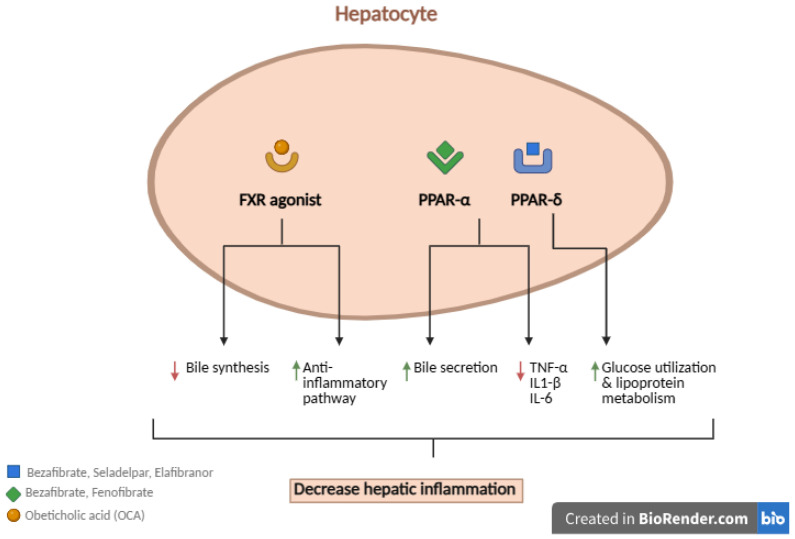
“Fibrates including, fenofibrate, gemfibrozil, and bezafibrate, act through activating peroxisome proliferator-activated receptor alpha (PPAR-α ), a nuclear receptor involved in lipid metabolism and inflammation [33].”
Clinical Management of Primary Biliary Cholangitis—Strategies and Evolving Trends
Gao, L., Wang, L., Woo, E., He, X., Yang, G., Bowlus, C., Leung, P. S. C., & Gershwin, M. E. (2020) · Clinical Reviews in Allergy & Immunology · doi:10.1007/s12016-019-08772-7 · Cited by 39 · cited 1×
“Based on the POISE trial results, OCA received approval as a second-line treatment for PBC in patients with an inadequate response or intolerance to UDCA [29,30].”
Honda, A., Kamata, S., Akahane, M., Machida, Y., Uchii, K., Shiiyama, Y., Habu, Y., Miyawaki, S., Kaneko, C., Oyama, T., et al. (2022) · International Journal of Molecular Sciences · doi:10.3390/ijms23094726 · Cited by 32
Keech, A., & Field Study Investigators (2006) · Atherosclerosis Supplements · doi:10.1016/s1567-5688(06)81349-8 · Cited by 28
Gallucci, G. M., Trottier, J., Hemme, C., Assis, D. N., Boyer, J. L., Barbier, O., & Ghonem, N. S. (2021) · Hepatology Communications · doi:10.1002/hep4.1787 · Cited by 26 · cited 1×
“PPAR-α activation enhances bile acid metabolism and secretion [33,34].”
Giannini, E. G., Pasta, A., Calabrese, F., Labanca, S., Marenco, S., Pieri, G., Torres, M. C. P., & Strazzabosco, M. (2024) · Liver International · doi:10.1111/liv.16222 · Cited by 21
Levy, C., Trivedi, P. J., Kowdley, K. V., Gordon, S. C., Bowlus, C. L., Londoño, M. C., Hirschfield, G. M., Gulamhusein, A., Lawitz, E. J., Vierling, J. M., et al. (2026) · American Journal of Gastroenterology · doi:10.14309/ajg.0000000000003603 · Cited by 20 · cited 4×
“Adverse events were almost identical to placebo when observed in both short and long-term studies [16,23,47].”
InfluentialXu, C., Yue, R., Lv, X., Wang, S., & Du, M. (2022) · Frontiers in Pharmacology · doi:10.3389/fphar.2022.835991 · Cited by 17
Azizsoltani, A., Niknam, B., Taghizadeh-Teymorloei, M., Ghoodjani, E., Dianat-Moghadam, H., & Alizadeh, E. (2025) · Biomedicine & Pharmacotherapy · doi:10.1016/j.biopha.2025.118249 · Cited by 15 · cited 1×
“OCA is a semi-synthetic hydrophobic bile acid analog derived from chenodeoxycholic acid that functions as a highly selective agonist of the farnesoid X receptor (FXR) [25].”
Guoyun, X., Dawei, D., Ning, L., Yinan, H., Fangfang, Y., Siyuan, T., Hao, S., Jiaqi, Y., Ang, X., Guanya, G., et al. (2022) · Frontiers in Pharmacology · doi:10.3389/fphar.2022.948362 · Cited by 13 · cited 1×
“These effects collectively reduce cholesterol and hepatic inflammation, and it reflects by reductions in serum ALP and GGT levels [7,15,39].”
Evolving therapeutic landscape of primary biliary cholangitis: A review
Mitchell, N. E., Chan, S., Diaz, D. J., Ansari, N., Lee, J. S., & Twohig, P. A. (2025) · World Journal of Hepatology · doi:10.4254/wjh.v17.i7.107223 · Cited by 11
Treatment of Primary Biliary Cholangitis
Liu, C.-H., & Bowlus, C. L. (2022) · Clinics in Liver Disease · doi:10.1016/j.cld.2022.06.012 · Cited by 9
Evaluating the safety and efficacy of seladelpar for adults with primary biliary cholangitis
Caines, A., Trudeau, S., & Gordon, S. C. (2024) · Expert Opinion on Pharmacotherapy · doi:10.1080/14656566.2024.2390120 · Cited by 7 · cited 3×
“Additionally, it has anti-inflammatory effects on hepatic macrophages and stellate cells, which in turn reduces pro-inflammatory cytokines and fibrogenic activity [44–46].”
Advancing care in primary biliary cholangitis: emerging insights and novel therapies
Vögelin, M., & Kremer, A. E. (2025) · Expert Opinion on Pharmacotherapy · doi:10.1080/14656566.2025.2516622 · Cited by 5 · cited 2×
“Additionally, since it is a newly approved therapy, patients might face insurance coverage challenges [45,46].”
Cited by
Programmed cell death in acute kidney injury: From molecular mechanisms to targeted therapies
Xu, B., Zheng, Y., Hu, Y., Li, F., Chen, X., Dong, X., Che, J., Feng, J., & Wu, M. (2026) · European Journal of Medicinal Chemistry · doi:10.1016/j.ejmech.2026.118860 · Cited by 3
Cholestatic Immune-Mediated Diseases Management – Part 2
Mandea, M., & Gheorghe, L. S. (2026) · IntechOpen eBooks · doi:10.5772/intechopen.1016073
Bokhari, B. T., Saleh, A. M., Aljohani, H. M., Owaydhah, W. H., Alobaidy, M. A., Dahran, N. A., Naffadi, H. M., & Eisa, A. A. (2026) · PLoS ONE · doi:10.1371/journal.pone.0343274 · Cited by 1
Romeo, M., Basile, C., Imperatore, A., Mozzi, G., Nardo, F. D., Napolitano, C., Vaia, P., Puorto, L. D., Indipendente, M., Dallio, M., et al. (2026) · Cells · doi:10.3390/cells15141292 · Cited by 2
Cholestatic Immune-Mediated Diseases Management – Part 1
Mandea, M., & Gheorghe, L. S. (2026) · IntechOpen eBooks · doi:10.5772/intechopen.1016072
Metadata
- Authors
- Jamal, F., Elshaer, A., Alatout, M. H., Odeh, N. B., Youssef, A., Abo Abdullah, H., Elmasry, S., Shahin, T., Abdul Nabi, H., Worden, A. R., Malik, T. A., & Lizaola-Mayo, B. C.
- Affiliations
- Mayo Clinic (US)
- Department of Cardiology, Mayo Clinic, Phoenix, AZ 85054, USA
- Department of Gastroenterology and Hepatology, Mayo Clinic, Phoenix, AZ 85054, USA
- Corresponding author
- Jamal, Fares
- ORCID
- Venue
- Biomedicines
- Publisher
- MDPI AG
- Published
- 2025-09-24
- Volume
- 13
- Issue
- 10
- Pages
- 2335
- ISSN
- 2227-9059 (ISSN-L)
- PMC
- PMC12561627
- OpenAlex
- W4414517587
- Semantic Scholar
- 4b198bce7794caafafe41b6a4b7031dc3bc960c4
- Cited by
- 6
- References
- 46
- Citations by year
- 2026: 6
- FWCI
- 0.88
- Type
- journal article
- Language
- en
- Open access
- gold
- doi.org
- Licence
- Locations
- Biomedicines (publishedVersion, cc-by)
- Europe PMC (PubMed Central) (publishedVersion, cc-by)
- PubMed (publishedVersion)
- DOAJ (DOAJ: Directory of Open Access Journals) (submittedVersion, cc-by-sa)
- Topics
- Health Sciences › Medicine › Hepatology › Liver Diseases and Immunity
- Health Sciences › Medicine › Oncology › Drug Transport and Resistance Mechanisms
- Health Sciences › Medicine › Surgery › Pediatric Hepatobiliary Diseases and Treatments
- Keywords
- primary biliary cirrhosis, second-line therapy, obeticholic acid, fibrates, fenofibrate, seladelpar, elafibranor, farnesoid X receptor agonist, PPARα agonist, PPARδ agonist, ursodeoxycholic acid, cholestasis, pruritus, alkaline phosphatase, liver fibrosis, drug safety and tolerability
About these checks
Registry, retraction, Cites and statistics results are computed, not judged, with one exception: a printed reference that no index lists is read once by a model before it counts as a citation error. Claims are extracted by a model and kept only when their quote appears verbatim in the text; each cited source is then checked, with a model’s help, for whether it says what the claim relies on. Those verdicts can be wrong — read the claim’s quote and the cited source before relying on one.
The claim verdicts this report counts are experimental: their accuracy is not yet measured.
A language model drew the claims from the paper on 2026-10-10, under version 3 of the claim definition (model deepseek-v4.1-flash, prompt extract-v3).
A second model labelled each claim on 2026-10-10 (model jev-1.13-20260917, definition revision gold-guideline-v0.2).
Cited sources are checked with a language model’s help (gpt-6-sol).
Statistics and arithmetic are recomputed, not judged.
Confidence bands are shown only for fields calibrated on our annotated test set. None is calibrated yet, so no band is shown.
What counts as a claim ›How we measure confidence ›How we check this ›
Are you an author, or do you see a problem with this page? Request a review
Data sources
Bibliographic data: Semantic Scholar, OpenAlex, Crossref.
Contains information from the Semantic Scholar Academic Graph Datasets, made available under the ODC Attribution License (ODC-BY 1.0).
Semantic Scholar’s data is described in: Kinney, R., et al. (2023). The Semantic Scholar Open Data Platform. arXiv:2301.10140.
