

The Non-Steroidal FXR Agonist Cilofexor Improves Portal Hypertension and Reduces Hepatic Fibrosis in a Rat NASH Model
Open accessThe DOI matches its Crossref record; 28 of the 29 references it cites were found in a registry or an index.
Abstract
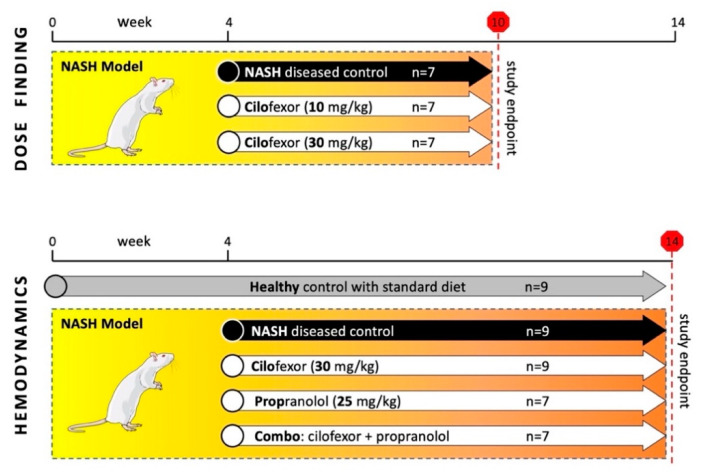
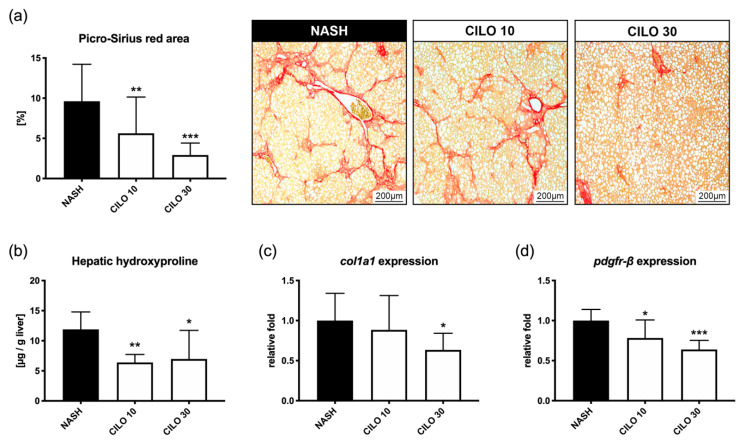
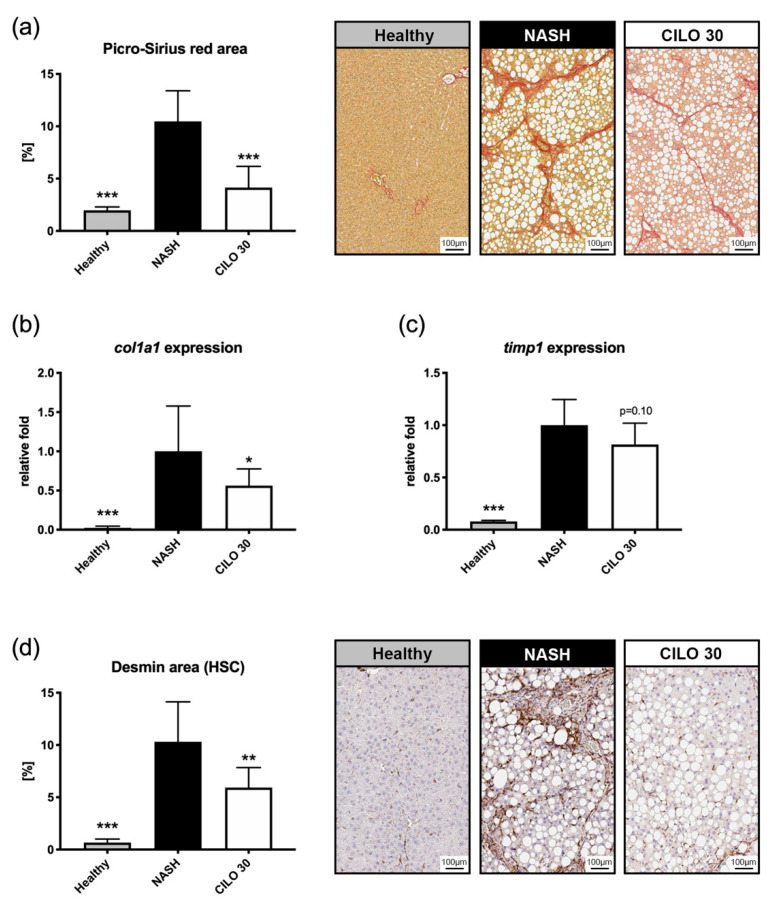
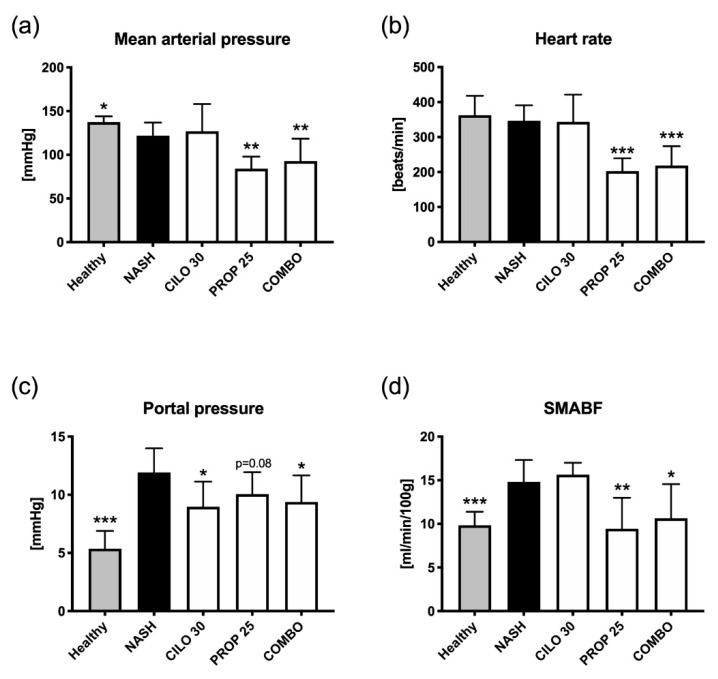
Background: The farnesoid X receptor (FXR) influences hepatic metabolism, inflammation and liver fibrosis as key components of non-alcoholic steatohepatitis (NASH). We studied the effects of the non-steroidal FXR agonist cilofexor (formerly GS-9674) on portal pressure and fibrosis in experimental NASH. Methods: NASH was induced in Wistar rats using a choline-deficient high-fat diet plus intraperitoneal sodium nitrite injections. First, a dose-finding study was performed with 10 mg/kg and 30 mg/kg of cilofexor, focusing on histological readouts. Liver fibrosis was assessed by Picro-Sirius-Red, desmin staining and hepatic hydroxyproline content. Gene expression was determined by RT-PCR. In a subsequent hemodynamic study, rats received 30 mg/kg cilofexor with or without propranolol (25 mg/kg). Portal pressure, systemic hemodynamics and splanchnic blood flow were measured. Results: Cilofexor dose-dependently induced FXR target genes shp, cyp7a1 and fgf15 in hepatic and ileal tissues, paralleled by a dose-dependent reduction in liver fibrosis area (Picro-Sirius-Red) of −41% (10 mg/kg) and −69% (30 mg/kg), respectively. The 30 mg/kg cilofexor dose significantly reduced hepatic hydroxyproline content (−41%), expression of col1a1 (−37%) and pdgfr-β (−36%), as well as desmin area (−42%) in NASH rats. Importantly, cilofexor decreased portal pressure (11.9 ± 2.1 vs. 8.9 ± 2.2 mmHg; p = 0.020) without affecting splanchnic blood-flow or systemic hemodynamics. The addition of propranolol to cilofexor additionally reduced splanchnic inflow (−28%) but also mean arterial pressure (−25%) and heart rate (−37%). Conclusion: The non-steroidal FXR agonist cilofexor decreased portal hypertension and reduced liver fibrosis in NASH rats. While cilofexor seems to primarily decrease sinusoidal resistance in cirrhotic portal hypertension, the combination with propranolol additionally reduced mesenteric hyperperfusion.
Overview
The claims and statistics of this paper haven’t been checked yet.
Free: it reads the open-access text and checks the first 5 claims that cite a source we can check. Create a free account to check every claim.
Integrity signals
Registry
Cites
Statistics
Figures
Verification
Claims the paper makes
The claims and statistics of this paper haven’t been checked yet.
Free: it reads the open-access text and checks the first 5 claims that cite a source we can check. Create a free account to check every claim.
Claims other papers make about this one
Each is checked against this paper’s own text: does it say what the citing paper says it does?
The cited source says what the claim attributes to it.
In the citing paper
“While rodent models have demonstrated a striking reduction in portal hypertension with FXR agonism,130 its effect on HSC activation may possibly be more preventive than therapeutic in vitro.131”
From An integrated view of anti-inflammatory and antifibrotic targets for the treatment of NASH (2023) · cites this paper as [130]
Self-check
Percentages, sums and reported differences re-computed from the paper’s own numbers.
The self-check needs the paper’s full text.
Citations
Cites
Expanding consensus in portal hypertension
de Franchis, R. (2015) · Journal of Hepatology · doi:10.1016/j.jhep.2015.05.022 · Cited by 3,078 · cited 1×
“The only oral medication to decrease portal pressure and incidence of PH-associated complications are non-selective beta-blocker (NSBB), like propranolol or carvedilol [4].”
BackgroundAngulo, P., Kleiner, D. E., Dam-Larsen, S., Adams, L. A., Bjornsson, E. S., Charatcharoenwitthaya, P., Mills, P. R., Keach, J. C., Lafferty, H. D., Stahler, A., et al. (2015) · Gastroenterology · doi:10.1053/j.gastro.2015.04.043 · Cited by 2,987 · cited 1×
“The prognosis of NASH patients is significantly affected by the degree of hepatic fibrosis and portal hypertension (PH) [3].”
BackgroundHepatic Stellate Cells: Protean, Multifunctional, and Enigmatic Cells of the Liver
Friedman, S. L. (2008) · Physiological Reviews · doi:10.1152/physrev.00013.2007 · Cited by 2,842 · cited 1×
“Desmin was used as an HSC activation marker since its hepatic expression is highly specific for HSCs in rodents [18].”
MethodYounossi, Z. M., Ratziu, V., Loomba, R., Rinella, M., Anstee, Q. M., Goodman, Z., Bedossa, P., Geier, A., Beckebaum, S., Newsome, P. N., et al. (2019) · The Lancet · doi:10.1016/s0140-6736(19)33041-7 · Cited by 1,277 · cited 1×
“In preclinical and clinical studies, FXR agonists improved the histological features of NASH and reduced liver fibrosis [9,10].”
BackgroundGuha, I. N., Parkes, J., Roderick, P., Chattopadhyay, D., Cross, R., Harris, S., Kaye, P., Burt, A. D., Ryder, S. D., Aithal, G. P., et al. (2008) · Hepatology · doi:10.1002/hep.21984 · Cited by 745 · cited 4×
“Non-alcoholic fatty liver disease (NAFLD) is considered the hepatic manifestation of the metabolic syndrome, which affects about one-quarter of the Western population [1].”
BackgroundInfluentialBile acids and nonalcoholic fatty liver disease: Molecular insights and therapeutic perspectives
Arab, J. P., Karpen, S. J., Dawson, P. A., Arrese, M., & Trauner, M. (2017) · Hepatology · doi:10.1002/hep.28709 · Cited by 634 · cited 1×
“The farnesoid X receptor (FXR) regulates bile acid, lipid and glucose metabolism, inflammation and the sinusoidal vascular tone [7,8].”
BackgroundSelf-citationThe epidemiology of non‐alcoholic fatty liver disease
Bellentani, S. (2017) · Liver International · doi:10.1111/liv.13299 · Cited by 606
Mandorfer, M., Bota, S., Schwabl, P., Bucsics, T., Pfisterer, N., Kruzik, M., Hagmann, M., Blacky, A., Ferlitsch, A., Sieghart, W., et al. (2014) · Gastroenterology · doi:10.1053/j.gastro.2014.03.005 · Cited by 378
Self-citationPatel, K., Harrison, S. A., Elkhashab, M., Trotter, J. F., Herring, R., Rojter, S. E., Kayali, Z., Wong, V. W., Greenbloom, S., Jayakumar, S., et al. (2020) · Hepatology · doi:10.1002/hep.31205 · Cited by 347
Mouse models of nonalcoholic steatohepatitis in preclinical drug development
Hansen, H. H., Feigh, M., Veidal, S. S., Rigbolt, K. T., Vrang, N., & Fosgerau, K. (2017) · Drug Discovery Today · doi:10.1016/j.drudis.2017.06.007 · Cited by 270 · cited 1×
“The CDHFD/NaNO2 model was well-suited to assess these effects since it presents a portal hypertensive phenotype with hyperdynamic circulation, whereas pure diet-induced NASH models often only show signs of steatohepatitis and mild fibrosis but lack PH [24].”
Background
Research works printed but not linked: 4
- Kirby B. Djedjos C.S. Birkebak J. Song Q. Grycz K. Weston J. Subramanian G.M. Watkins W. Myers R.P. Mathias A. Evaluation of the Safety and Pharmacokinetic Effects of the Oral, Non-Steroidal Farnesoid X Receptor Agonist GS-9674 in Healthy Volunteers Hepatology 2016 64 574A
- Liu K. Liles J. Breckenridge D. FXR Agonist GS-9674 Decreases Hepatic Fibrosis in a Mouse Model of Advanced Fibrosis Due to Nash Hepatology 2018 68 1009A
- Younossi Z.M. Stepanova M. Nader F. Gulamhusein A. Hameed B. Thorburn D. Li G. Chung C. Subramanian G.M. Myers R.P. Patient-reported outcomes (PROs) in patients with primary sclerosing cholangitis (PSC) during treatment with cilofexor (GS-9674) Hepatology 2019 70 805A
- Kowdley K.V. Minuk G.Y. Pagadala M.R. Gulamhusein A. Swain M.G. Neff G.W. Zogg D. Bowlus C.L. Agarwal K. Yoshida E.M. The nonsteroidal farnesoid X receptor (FXR) agonist cilofexor improves liver biochemistry in patients with primary biliary cholangitis (PBC): A phase 2, randomized, placebo-controlled trial Hepatology 2019 70 31A
Cited by
Hepatic inflammatory responses in liver fibrosis
Hammerich, L., & Tacke, F. (2023) · Nature Reviews Gastroenterology & Hepatology · doi:10.1038/s41575-023-00807-x · Cited by 803
“For example, the FXR agonists obeticholic acid and cilofexor can reduce liver fibrosis in mouse models 238,239 , and a phase III trial of obeticholic acid including 1,968 patients with NASH demonstrated an improvement in liver fibrosis 240 .”
Fleishman, J. S., & Kumar, S. (2024) · Signal Transduction and Targeted Therapy · doi:10.1038/s41392-024-01811-6 · Cited by 544
An integrated view of anti-inflammatory and antifibrotic targets for the treatment of NASH
Tacke, F., Puengel, T., Loomba, R., & Friedman, S. L. (2023) · Journal of Hepatology · doi:10.1016/j.jhep.2023.03.038 · Cited by 321
Bile acid metabolism and signalling in liver disease
Fuchs, C. D., Simbrunner, B., Baumgartner, M., Campbell, C., Reiberger, T., & Trauner, M. (2025) · Journal of Hepatology · doi:10.1016/j.jhep.2024.09.032 · Cited by 231
Self-citationFXR agonists in NASH treatment
Adorini, L., & Trauner, M. (2023) · Journal of Hepatology · doi:10.1016/j.jhep.2023.07.034 · Cited by 184
Self-citationReview article: therapeutic aspects of bile acid signalling in the gut‐liver axis
Simbrunner, B., Trauner, M., & Reiberger, T. (2021) · Alimentary Pharmacology & Therapeutics · doi:10.1111/apt.16602 · Cited by 114
Self-citationPathophysiology and therapeutic options for cirrhotic portal hypertension
Guixé‐Muntet, S., Quesada‐Vázquez, S., & Gracia‐Sancho, J. (2024) · The Lancet. Gastroenterology & hepatology · doi:10.1016/s2468-1253(23)00438-7 · Cited by 109
Recent advances on FXR-targeting therapeutics
Panzitt, K., Zollner, G., Marschall, H., & Wagner, M. (2022) · Molecular and Cellular Endocrinology · doi:10.1016/j.mce.2022.111678 · Cited by 94
“Effects on fibrosis and vascular remodeling: FXR activation modulates hepatic stellate cell activation and results in decreased fibrosis in several animal models [33, 99-103].”
BackgroundPaternostro, R., Kwanten, W. J., Hofer, B., Semmler, G., Bagdadi, A., Luzko, I., Hernández–Gea, V., Graupera, I., García‐Pagán, J. C., Saltini, D., et al. (2024) · Journal of Hepatology · doi:10.1016/j.jhep.2024.05.033 · Cited by 87
Self-citationThe gut microbiota–bile acid axis: A potential therapeutic target for liver fibrosis
Zhang, Y., Li, Z.-J., Gou, H.-Z., Song, X., & Zhang, L. (2022) · Frontiers in Cellular and Infection Microbiology · doi:10.3389/fcimb.2022.945368 · Cited by 90
Emerging pharmacological treatment options for MAFLD
Rojas, Á., Lara, C., Múñoz‐Hernández, R., Gato, S., Ampuero, J., & Romero‐Gómez, M. (2022) · Therapeutic Advances in Endocrinology and Metabolism · doi:10.1177/20420188221142452 · Cited by 59
Li, H. (2021) · Digestive and Liver Disease · doi:10.1016/j.dld.2021.07.006 · Cited by 51
Nuclear receptors in liver fibrosis
Königshofer, P., Brusilovskaya, K., Petrenko, O., Hofer, B. S., Schwabl, P., Trauner, M., & Reiberger, T. (2021) · Biochimica et Biophysica Acta (BBA) - Molecular Basis of Disease · doi:10.1016/j.bbadis.2021.166235 · Cited by 45
Self-citationCurrent Therapeutic Landscape for Metabolic Dysfunction-Associated Steatohepatitis
Devasia, A. G., Ramasamy, A., & Leo, C. H. (2025) · International Journal of Molecular Sciences · doi:10.3390/ijms26041778 · Cited by 48
“Preclinical studies demonstrated that Cilofexor decreases portal hypertension in cirrhotic and non-cirrhotic models of MASH by targeting vascular remodeling and sinusoidal dysfunction without affecting systemic hemodynamics [127].”
Redox‐Dependent Effects in the Physiopathological Role of Bile Acids
Orozco-Aguilar, J., Simón, F., & Cabello‐Verrugio, C. (2021) · Oxidative Medicine and Cellular Longevity · doi:10.1155/2021/4847941 · Cited by 48
The interplay between nonalcoholic fatty liver disease and atherosclerotic cardiovascular disease
Finney, A. C., Das, S., Kumar, D., McKinney, M. P., Cai, B., Yurdagul, A., & Rom, O. (2023) · Frontiers in Cardiovascular Medicine · doi:10.3389/fcvm.2023.1116861 · Cited by 40
Treatment of primary sclerosing cholangitis
Floreani, A., & Martin, S. D. (2021) · Digestive and Liver Disease · doi:10.1016/j.dld.2021.04.028 · Cited by 48
Emerging synthetic drugs for the treatment of liver cirrhosis
Fallowfield, J. A., Jimenez-Ramos, M., & Robertson, A. (2021) · Expert Opinion on Emerging Drugs · doi:10.1080/14728214.2021.1918099 · Cited by 38
Endothelial Dysfunction and Liver Cirrhosis: Unraveling of a Complex Relationship
Nesci, A., Ruggieri, V., Manilla, V., Spinelli, I., Santoro, L., Giorgio, A. D., Santoliquido, A., & Ponziani, F. R. (2024) · International Journal of Molecular Sciences · doi:10.3390/ijms252312859 · Cited by 41
“…blood flow or systemic hemodynamics occurred after the addition of propranolol; while cilofexor seems to primarily decrease sinusoidal resistance in cirrhotic portal hypertension, the combination of the two drugs reduced splanchnic inflow, but also the mean arterial pressure and heart rate [157].”
Current Therapeutical Approaches Targeting Lipid Metabolism in NAFLD
Vitulo, M., Gnodi, E., Rosini, G., Meneveri, R., Giovannoni, R., & Barisani, D. (2023) · International Journal of Molecular Sciences · doi:10.3390/ijms241612748 · Cited by 37
“After positive results in an animal model [224] and in phase 1 [225], ciloflexor was tested in noncirrhotic NASH patients with two different dosages in a phase 2 clinical trial, i.”
ResultTargeting bile acid signaling for the treatment of liver diseases: From bench to bed
Duan, S., Li, X., Fan, G., & Liu, R. (2022) · Biomedicine & Pharmacotherapy · doi:10.1016/j.biopha.2022.113154 · Cited by 33
Luo, L., Chang, Y., & Li, S. (2023) · Life Sciences · doi:10.1016/j.lfs.2023.121614 · Cited by 35
Bile acid signaling in MASLD: From pathogenesis to therapeutic applications
Simbrunner, B., Paternostro, R., Reiberger, T., & Trauner, M. (2025) · Hepatology · doi:10.1097/hep.0000000000001539 · Cited by 33
Self-citationSimbrunner, B., Hofer, B., Schwabl, P., Zinober, K., Petrenko, O., Fuchs, C. D., Semmler, G., Marculescu, R., Mandorfer, M., Datz, C., et al. (2024) · Hepatology International · doi:10.1007/s12072-023-10636-4 · Cited by 29
“…ACLD may provide an explanation for the therapeutic efficacy of FXR agonists observed in previous experimental studies using animal models of chronic liver disease [7–9, 29 In the present study, patients with dACLD exhibited increased expression of FXR and SHP as compared to patients with cACLD.”
BackgroundResultSelf-citationTrauner, M., Chung, C., Sterling, K., Liu, X., Lu, X., Xu, J., Tempany, C. M., Goodman, Z. D., Färkkilä, M. A., Tanaka, A., et al. (2023) · BMC Gastroenterology · doi:10.1186/s12876-023-02653-2 · Cited by 29
“In preclinical models of liver fibrosis, cilofexor demonstrated anti-inflammatory and antifibrotic effects, reducing hepatic fibrosis and portal hypertension [28, 29].”
BackgroundSelf-citationRodent model of metabolic dysfunction‐associated fatty liver disease: a systematic review
Cui, X., Li, H., Li, L., Xie, C., Gao, J., Chen, Y., Zhang, H., Hao, W., Fu, J., & Guo, H. (2025) · Journal of Gastroenterology and Hepatology · doi:10.1111/jgh.16749 · Cited by 27
Pathogenesis and Therapeutic Strategies Related to Non-Alcoholic Fatty Liver Disease
Teng, T., Qiu, S., Zhao, Y., Zhao, S., Sun, D., Hou, L., Li, Y., Zhou, K., Yu, X., Yang, C., et al. (2022) · International Journal of Molecular Sciences · doi:10.3390/ijms23147841 · Cited by 28
Prasoppokakorn, T., Pitisuttithum, P., & Treeprasertsuk, S. (2021) · Journal of Clinical and Translational Hepatology · doi:10.14218/jcth.2021.00189 · Cited by 27
“A recent phase II study using OCA plus atorvastatin therapy initiated at 4 weeks to ameliorate the elevation of LDL cholesterol from OCA (CONTROL) in 84 biopsies confirmed that NASH patients showed no significant elevation in LDL cholesterol at 8 weeks (27).”
MethodEmerging Therapeutic Targets for Portal Hypertension
Felli, É., Nulan, Y., Selicean, S. E., Wang, C., Gracia‐Sancho, J., & Bosch, J. (2023) · Current Hepatology Reports · doi:10.1007/s11901-023-00598-4 · Cited by 24
“Cilofexor (Formerly GS-9674) FXR agonist Pre-clinical [62]”
Fuchs, C. D., SRODA, N., Scharnagl, H., Gupta, R. S., Minto, W. C., Stojaković, T., Liles, J. T., Budas, G. R., Hollenback, D., & Trauner, M. (2023) · JHEP Reports · doi:10.1016/j.jhepr.2023.100874 · Cited by 24
“37 Furthermore, a direct comparison of OCA with the FXR agonist EDP-305 in Mdr2 -/- mice showed that EDP-305 more potently improved hepatic fi brosis and downregulated activation of HSCs. 38 More-over, while activation of FXR in HSCs has been shown to have direct anti-fi brotic effects, increased levels of FGF19 had no…”
Self-citationTrauner, M., Levy, C., Tanaka, A., Goodman, Z. D., Thorburn, D., Joshi, D., Salminen, K., Yimam, K. K., Isayama, H., Montaño‐Loza, A. J., et al. (2025) · The Lancet. Gastroenterology & hepatology · doi:10.1016/s2468-1253(25)00208-0 · Cited by 22
Self-citationCytoskeleton alterations in non-alcoholic fatty liver disease
Pessoa, J., & Teixeira, J. (2021) · Metabolism · doi:10.1016/j.metabol.2021.155115 · Cited by 22
Therapeutics for Metabolic Dysfunction-Associated Fatty Liver Disease (MAFLD)
Bhopale, K. K., & Srinivasan, M. P. (2023) · Livers · doi:10.3390/livers3040040 · Cited by 19
“By suppressing the inflammatory macrophage phenotype, the activation of PPAR-beta/gamma improves fatty acid metabolism and exhibits anti-inflammatory effects [79].”
BackgroundInfluentialYang, M. J., Khoukaz, L., Qi, X., Kimchi, E. T., Staveley-O’Carroll, K. F., & Li, G. (2021) · Biomedicines · doi:10.3390/biomedicines9121893 · Cited by 18
Camacho, R. C., Polidori, D., Chen, T., Chen, B., Hsu, H. H., Gao, B., Marella, M., Lubomirski, M. S., Beavers, T., Cabrera, J., et al. (2023) · Diabetes Obesity and Metabolism · doi:10.1111/dom.14955 · Cited by 35
New insights into gut-liver axis in advanced liver diseases: A promising therapeutic target
Xing, Y., Ou, Y., Wang, Y., Hou, L., & Zhu, J. (2025) · Biochemical Pharmacology · doi:10.1016/j.bcp.2025.117284 · Cited by 13
Amatya, R., Lee, D.-H., Min, K. A., & Shin, M. C. (2023) · Pharmaceutics · doi:10.3390/pharmaceutics15071963 · Cited by 15
Targeting Gut–Liver Axis for Treatment of Liver Fibrosis and Portal Hypertension
Kalo, E., Read, S. A., & Ahlenstiel, G. (2021) · Livers · doi:10.3390/livers1030014 · Cited by 13
“The combination of GS-9674 with the beta-blocker propranolol appeared safe and resulted in an additional decrease of mesenteric hyper-perfusion [62].”
BackgroundStructural insight into the molecular mechanism of cilofexor binding to the farnesoid X receptor
Jiang, L., Liu, X., Wei, H., Dai, S., Qu, L., Chen, X., Guo, M., & Chen, Y. (2022) · Biochemical and Biophysical Research Communications · doi:10.1016/j.bbrc.2022.01.069 · Cited by 12
Porada, M., & Bułdak, Ł. (2025) · Metabolites · doi:10.3390/metabo15020072 · Cited by 12
“In NASH animal models, GS-9674 was also evaluated in combination with propranolol, which proved to be safe and resulted in an additional reduction of mesenteric hyperperfusion [225].”
Bai, X., Liu, Z., Li, X., Sun, R., & Yu, Z. (2025) · Journal of Translational Medicine · doi:10.1186/s12967-025-07037-6 · Cited by 12
“Cilofexor, an FXR agonist, has demonstrated efficacy in treating hepatic fibrosis [141, 142].”
Kunst, R. F., Bolt, I., van Dasselaar, R. D. J., Nijmeijer, B. A., Beuers, U. H., Elferink, R. P. J. O., & van de Graaf, S. F. J. (2023) · JHEP Reports · doi:10.1016/j.jhepr.2023.100917 · Cited by 14
“During the DDC diet, mice were treated daily with a combination of 10 mg/kg OCA 19,20 (INT-747, MedChemExpress), 30 mg/kg cilofexor 21 (GS-9674, MedChe-mExpress), or placebo at 8 a.m. and 10 mg/kg intestinal ASBTi (Linerixibat; MedChemExpress) or placebo by oral gavage at 5 p.m. Placebo treatment…”
Hollenback, D., Hambruch, E., Fink, G., Birkel, M., Schulz, A., Hornberger, M., Liu, K., Staiger, K. M., Krol, H. D., Deuschle, U., et al. (2024) · Journal of Pharmacology and Experimental Therapeutics · doi:10.1124/jpet.123.001900 · Cited by 9
Self-citationSwamikkannu, D. M., Dasarapu, S., Siva, R. P. V., Nallam, J., & Pabba, S. (2024) · Egyptian Liver Journal · doi:10.1186/s43066-024-00331-w · Cited by 10
Restoring FXR expression as a novel treatment strategy in liver cancer and other liver disorders
Girisa, S., Aswani, B. S., Manickasamy, M. K., Hegde, M., Alqahtani, M. S., Abbas, M., Sethi, G., & Kunnumakkara, A. B. (2025) · Expert Opinion on Therapeutic Targets · doi:10.1080/14728222.2025.2487465 · Cited by 8
“…reduction in liver fibrosis by decreasing the fibrotic area, hepatic hydroxyproline content, and the expression of markers natural agonist COL1A1 and PDGFR-β, while also reducing desmin area and portal pressure in choline-deficient high-fat diet fed NASH model injected with sodium nitrite [164].”
Klindt, C., Truong, J. K., Bennett, A. L., Pachura, K. J., Herebıan, D., Mayatepek, E., Luedde, T., Ebert, M. P. A., Karpen, S. J., & Dawson, P. A. (2024) · American Journal of Physiology-Gastrointestinal and Liver Physiology · doi:10.1152/ajpgi.00129.2024 · Cited by 7
Immunometabolic factors contributing to obesity-linked hepatocellular carcinoma
Akl, M. G., & Widenmaier, S. B. (2023) · Frontiers in Cell and Developmental Biology · doi:10.3389/fcell.2022.1089124 · Cited by 9
“Cilofexor and Tropifexor are also FXR agonists that have demonstrated antifibrotic effect in animal models and are under investigation for their safety in clinical trials (Hernandez et al., 2019; Schwabl et al., 2021; Zhao et al., 2022).”
BackgroundAn update on novel pharmacological agents for primary sclerosing cholangitis
Gallo, C., Howardson, B. O., Cristoferi, L., Carbone, M., Gershwin, M. E., & Invernizzi, P. (2022) · Expert Opinion on Therapeutic Targets · doi:10.1080/14728222.2022.2030707 · Cited by 6
Lipid Droplet Dynamics in Alcoholic Steatohepatitis
Omar, D. Y., Willoughby, M. M., Mostafa, N., Otakhor, K. O., Bhatt, S., Zaidi, M. A. A., & Schott, M. B. (2025) · American Journal Of Pathology · doi:10.1016/j.ajpath.2025.07.010 · Cited by 5
“146 The dual approach targets key disease pathways ― bile acid metabolism via farnesoid X receptor activation and DNL via acetyl-CoA carboxylase inhibition.”
Current and investigational drugs in early clinical development for portal hypertension
Sakiani, S., Heller, T., & Koh, C. (2022) · Frontiers in Medicine · doi:10.3389/fmed.2022.974182 · Cited by 5
“The additional of an NSBB, propranolol, further reduced splanchnic inflow, reducing mesenteric hyperperfusion (89).”
BackgroundShi, J., Wen, Y., Wang, L., Wu, L., Wang, L., Chen, C., Wang, H., & Zhao, C. (2026) · Liver International · doi:10.1111/liv.70586 · Cited by 4
“In two rodent MASH models induced by CCl 4 /HFD and choline-deficient/HFD, cilofexor treatment produced a dose-dependent reduction in hepatic steatosis and ballooning degeneration [155, 156].”
Zhou, H., Chen, Q., Ma, L., Li, G., Kang, X., Tang, J., Wang, H., Li, S., Sun, Y., & Chang, X. (2025) · Toxics · doi:10.3390/toxics13040265 · Cited by 4
“A choline-deficient high-fat diet promoted collagen deposition by reducing the expression of FXR and its ligand (small heterodimer partner (SHP)) to activate rat HSCs and increase the levels of hydroxyproline (Hyp) and COL1A1 [26].”
Nuclear Receptors in Energy Metabolism
Walth-Hummel, A. A., Herzig, S., & Rohm, M. (2022) · Advances in experimental medicine and biology · doi:10.1007/978-3-031-11836-4_4 · Cited by 5
Cilofexor for the Treatment of Nonalcoholic Steatohepatitis
Pοlyzos, S. A., Xanthopoulos, K., & Kountouras, J. (2021) · Current Vascular Pharmacology · doi:10.2174/1570161119666211209161023 · Cited by 4
Bhopale, K. K., & Srinivasan, M. P. (2026) · Livers · doi:10.3390/livers6030045 · Cited by 3
Liver Steatosis: From Lipotoxicity to Cellular Damage
Puengel, T., & Tacke, F. (2024) · Springer eBooks · doi:10.1007/978-981-97-9519-2_4 · Cited by 3
Emerging in Diabetic Cardiomyopathy: Molecular Pathways and Targets for Therapeutic Intervention
Trivedi, M. V., Jadhav, H. R., & Gaikwad, A. B. (2025) · Drug Development Research · doi:10.1002/ddr.70187 · Cited by 2
“In another study, cilofexor, an FXR agonist, reduced portal pressure and attenuated liver fibrosis by reducing Col1A1 and TIMP1 expression (Schwabl et al. 2021).”
Mik, P., Barannikava, K., & Surkova, P. (2023) · Journal of Clinical Medicine · doi:10.3390/jcm12155072 · Cited by 1
Design, synthesis, and biological evaluation of FXR/ASK1 dual-target modulators
Zhang, X., Wang, J., Zhao, Z., Wang, C., Ye, Z., Ma, W.-Y., Xu, J.-X., & Zhang, F. (2026) · Beilstein Journal of Organic Chemistry · doi:10.3762/bjoc.22.59 · Cited by 1
Wei, X., Su, Y., Cheng, Q., Liang, S., Zhang, T., Duan, L.-X., Shen, X., & Qiu, X. (2024) · Frontiers in Pharmacology · doi:10.3389/fphar.2024.1334402 · Cited by 1
Primary sclerosing cholangitis
Ahmad, J., & Grewal, P. (2024) · Elsevier eBooks · doi:10.1016/b978-0-443-26710-9.00019-5 · Cited by 1
Satyavathi, G., Srinivas, Y., & Malleswari (2015)
Metabolic-associated fatty liver disease: pharmacological management
Shi, Y., & Fan, J. (2023) · Elsevier eBooks · doi:10.1016/b978-0-323-98368-6.00010-0
Non-alcoholic Fatty Liver Disease: Pathology, Disease Models and Therapies
Wu, Z. (2023) · Highlights in Science Engineering and Technology · doi:10.54097/hset.v36i.5702
The liver sinusoid in chronic liver disease: NAFLD and NASH
Kwanten, W. J., & Francque, S. (2024) · Elsevier eBooks · doi:10.1016/b978-0-323-95262-0.00012-7
Unravelling the therapeutic landscape of bile acid-based therapies in gastrointestinal disorders
Alrehaili, B. D. (2024) · Saudi Journal of Gastroenterology · doi:10.4103/sjg.sjg_53_24
Trifylli, E.-M., Charalambous, C. H., Spiliotopoulos, N., Papadopoulos, N., Oikonomou, A., Manolakopoulos, S., & Deutsch, M. J. (2025) · Livers · doi:10.3390/livers5040065
“Cilofexor, an FXR agonist, has been tested alone or in combination with other agents in MASH mice models, with a reduction in steatosis and fibrosis [91].”
FXR agonists in liver and biliary tract diseases
Buzun, K. (2026) · Farmacja Polska · doi:10.32383/farmpol/216437
Rôle du récepteur Farnesoid X dans le contrôle central de l'homéostasie énergétique
Deckmyn, B. (2022) · theses.fr (ABES) · doi:10.70675/db76bb16z01f4z4f26zaf99za1003045be0c
Zhang, Z., Zheng, X., Dong, C., Li, P., Lin, Y., Sun, Z., Li, W., Liu, X., Li, J. J., Li, S., et al. (2026) · Journal of Medicinal Chemistry · doi:10.1021/acs.jmedchem.5c03220 · Cited by 2
The bile acid-gut microbiota-vitamin D axis: new insights into biliary atresia
Huang, C., Li, Z., Shen, W., Luo, M., & 林发全 (2026) · Frontiers in Cellular and Infection Microbiology · doi:10.3389/fcimb.2026.1847110
Bile acid signaling in health and disease
Fan, Z., He, M., Liang, T., 张必利, Zhao, N., & Li, P. (2026) · Molecular Biomedicine · doi:10.1186/s43556-026-00603-4
Metadata
- Authors
- Schwabl, P., Hambruch, E., Budas, G. R., Supper, P., Burnet, M., Liles, J. T., Birkel, M., Brusilovskaya, K., Königshofer, P., Peck-Radosavljevic, M., Watkins, W. J., Trauner, M., Breckenridge, D. G., Kremoser, C., & Reiberger, T.
- Affiliations
- Medical University of Vienna (AT)
- Phenex Pharmaceuticals (Germany) (DE)
- Gilead Sciences (United States) (US)
- Synovo (Germany) (DE)
- Division of Gastroenterology and Hepatology, Department of Internal Medicine III, Medical University of Vienna, 1090 Vienna, Austria
- Austrian Academy of Sciences (AT)
- Corresponding author
- Reiberger, Thomas
- ORCID
- Venue
- Biomedicines
- Publisher
- MDPI AG
- Published
- 2021-01-09
- Volume
- 9
- Issue
- 1
- Pages
- 60
- ISSN
- 2227-9059 (ISSN-L)
- PMC
- PMC7827357
- OpenAlex
- W3120249619
- Cited by
- 70
- References
- 29
- Citations by year
- 2026: 5 · 2025: 11 · 2024: 15 · 2023: 16 · 2022: 11 · 2021: 11
- FWCI
- 9.55
- Type
- journal article
- Language
- en
- Open access
- gold
- doi.org
- Licence
- Locations
- Biomedicines (publishedVersion, cc-by)
- Europe PMC (PubMed Central) (publishedVersion, other-oa)
- PubMed Central (publishedVersion, cc-by)
- PubMed (publishedVersion)
- DOAJ (DOAJ: Directory of Open Access Journals) (submittedVersion, cc-by-sa)
- UCL Discovery (University College London) (submittedVersion)
- Funders
- This research was funded by Gilead Sciences and Phenex Pharmaceuticals (GS9674)
- Topics
- Health Sciences › Medicine › Hepatology › Liver Disease Diagnosis and Treatment
- Health Sciences › Medicine › Hepatology › Liver physiology and pathology
- Health Sciences › Medicine › Hepatology › Liver Disease and Transplantation
- Keywords
- farnesoid X receptor agonist, nonalcoholic steatohepatitis, portal hypertension, liver fibrosis, propranolol, choline-deficient high-fat diet, sodium nitrite, hepatic hydroxyproline, splanchnic circulation, hepatic hemodynamics, FGFR1, CYP7A1, COL1A1
About these checks
Registry, retraction, Cites and statistics results are computed, not judged, with one exception: a printed reference that no index lists is read once by a model before it counts as a citation error. Claims are extracted by a model and kept only when their quote appears verbatim in the text; each cited source is then checked, with a model’s help, for whether it says what the claim relies on. Those verdicts can be wrong — read the claim’s quote and the cited source before relying on one.
Statistics and arithmetic are recomputed, not judged.
Confidence bands are shown only for fields calibrated on our annotated test set. None is calibrated yet, so no band is shown.
What counts as a claim ›How we measure confidence ›How we check this ›
Are you an author, or do you see a problem with this page? Request a review
Data sources
Bibliographic data: Semantic Scholar, OpenAlex, Crossref.
Contains information from the Semantic Scholar Academic Graph Datasets, made available under the ODC Attribution License (ODC-BY 1.0).
Semantic Scholar’s data is described in: Kinney, R., et al. (2023). The Semantic Scholar Open Data Platform. arXiv:2301.10140.
