

A Perspective on the Development of c-Jun N-terminal Kinase Inhibitors as Therapeutics for Alzheimer’s Disease: Investigating Structure through Docking Studies
Open accessThe DOI matches its Crossref record; 35 of the 35 references it cites were found in a registry or an index.
Abstract
c-Jun N-terminal kinase (JNK) plays an important role in cell death caused by various stimuli. Because the isoform JNK3 is mainly expressed in the brain, it is believed to play a pivotal role in various neurodegenerative diseases, including Alzheimer’s disease (AD) and Parkinson’s disease (PD), which still lack plausible therapeutics. To develop a novel and selective JNK3 inhibitor, we conducted a decadal review (2011 to 2021) of published articles on JNK inhibitors, particularly those focusing on a structural perspective and docking insights. We observed the structures of three isoforms of JNK, namely holo-proteins and co-crystal structures, with JNK3 inhibitors and summarized the significant structural aspects of selective JNK3 inhibitors as AD therapeutics.
Overview
The claims and statistics of this paper haven’t been checked yet.
Free: it reads the open-access text and checks the first 5 claims that cite a source we can check. Create a free account to check every claim.
Integrity signals
Registry
Cites
Statistics
Figures
Verification
Claims the paper makes
The claims and statistics of this paper haven’t been checked yet.
Free: it reads the open-access text and checks the first 5 claims that cite a source we can check. Create a free account to check every claim.
Claims other papers make about this one
Each is checked against this paper’s own text: does it say what the citing paper says it does?
The cited source says what the claim attributes to it.
In the citing paper
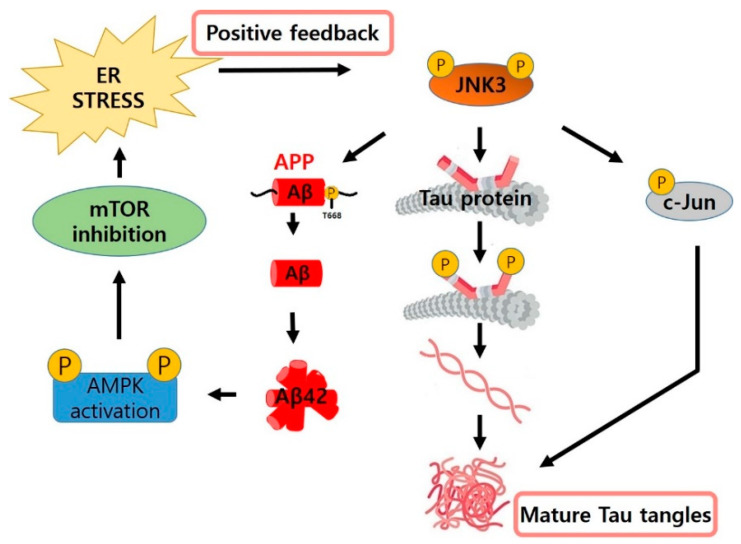
“In AD, c-Jun N-terminal kinase3 (JNK3) activation is closely associated with neuronal damage, amyloid deposition, and the formation of tau tangles.516”
From Recent advances in Alzheimer's disease: Mechanisms, clinical trials and new drug development strategies. (2024) · cites this paper as [516]
Self-check
Percentages, sums and reported differences re-computed from the paper’s own numbers.
The self-check needs the paper’s full text.
Citations
Cites
AMPK Phosphorylation of Raptor Mediates a Metabolic Checkpoint
Gwinn, D. M., Shackelford, D. B., Egan, D. F., Mihaylova, M. M., Mery, A., Vasquez, D. S., Turk, B. E., & Shaw, R. J. (2008) · Molecular Cell · doi:10.1016/j.molcel.2008.03.003 · Cited by 3,849 · cited 2×
“This process inhibit the mTOR pathway and t e representative cell rescue system and induces a tran l tio a block that prevents protein ex ession [14].”
BackgroundDérijard, B., Hibi, M., Wu, I.-H., Barrett, T., Su, B., Deng, T., Karin, M., & Davis, R. J. (1994) · Cell · doi:10.1016/0092-8674(94)90380-8 · Cited by 3,188
SP600125, an anthrapyrazolone inhibitor of Jun N-terminal kinase
Bennett, B. L., Sasaki, D. T., Murray, B. W., O'Leary, E. C., Sakata, S. T., Xu, W., Leisten, J. C., Motiwala, A., Pierce, S., Satoh, Y., et al. (2001) · Proceedings of the National Academy of Sciences · doi:10.1073/pnas.251194298 · Cited by 2,558
Nichols, E., Szoeke, C. E. I., Vollset, S. E., Abbasi, N., Abd-Allah, F., Abdela, J., Aichour, M. T. E., Akinyemi, R. O., Alahdab, F., Asgedom, S. W., et al. (2019) · The Lancet Neurology · doi:10.1016/s1474-4422(18)30403-4 · Cited by 2,412 · cited 1×
“With the rapid aging of the global population, neurodegenerative diseases such as AD have become a major social issue and have a significant impact not only on patients, but also on other individuals around the patients [8,9].”
BackgroundPhosphoproteome analysis by mass spectrometry and its application to Saccharomyces cerevisiae
Ficarro, S. B., McCleland, M. L., Stukenberg, P. T., Burke, D. J., Ross, M. M., Shabanowitz, J., Hunt, D. F., & White, F. M. (2002) · Nature Biotechnology · doi:10.1038/nbt0302-301 · Cited by 1,636 · cited 1×
“There are 518 known protein kinases encoded in the human genome, and protein kinases phosphorylate approximately one-third of all proteins [3,4].”
BackgroundThe regulation of protein function by multisite phosphorylation – a 25 year update
Cohen, P. (2000) · Trends in Biochemical Sciences · doi:10.1016/s0968-0004(00)01712-6 · Cited by 1,136 · cited 1×
“There are 518 known protein kinases encoded in the human genome, and protein kinases phosphorylate approximately one-third of all proteins [3,4].”
BackgroundTHE ENZYMATIC PHOSPHORYLATION OF PROTEINS
Burnett, G., & Kennedy, E. P. (1954) · Journal of Biological Chemistry · doi:10.1016/s0021-9258(18)71184-8 · Cited by 582 · cited 1×
“Protein kinases were discovered more than 65 years ago, but they have been therapeutic targets for less than 30 years [1,2].”
BackgroundThe c-jun kinase/stress-activated pathway: Regulation, function and role in human disease
Johnson, G. L., & Nakamura, K. (2007) · Biochimica et Biophysica Acta (BBA) - Molecular Cell Research · doi:10.1016/j.bbamcr.2006.12.009 · Cited by 500 · cited 2×
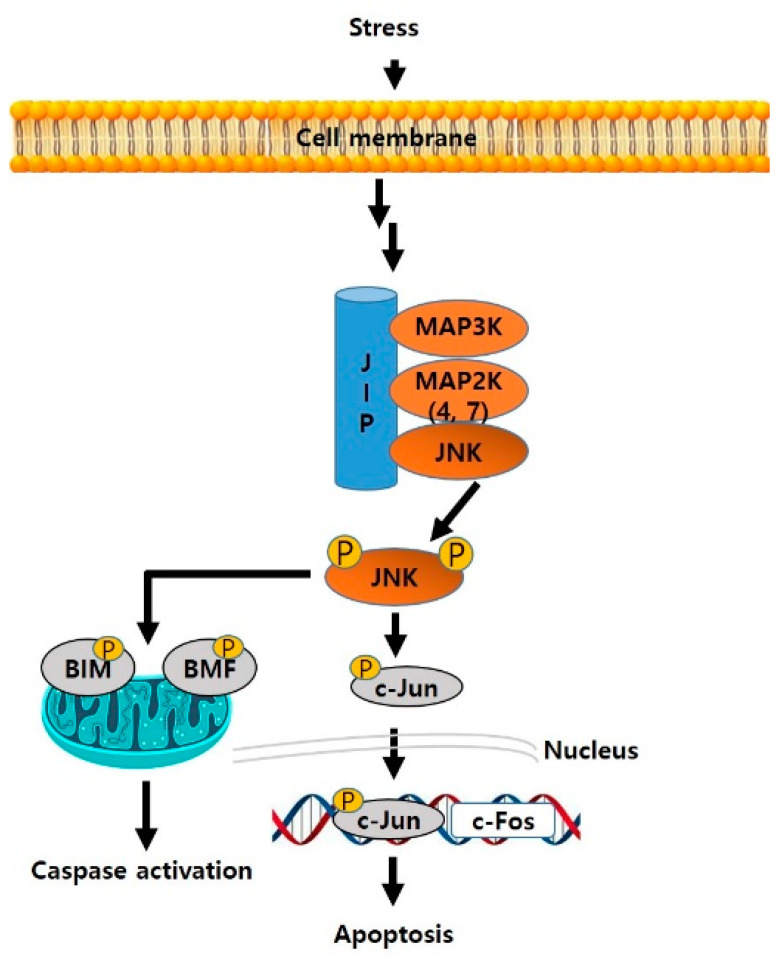
“Next, the activated MAPKK4 and MAPKK7 phosphorylate JNK at two different sites, and the phosphorylated JNK then phosphorylates the N-terminal of c-Jun to induce an apoptotic signal [11].”
BackgroundKinase Drug Discovery – What’s Next in the Field?
Cohen, P., & Alessi, D. R. (2013) · ACS Chemical Biology · doi:10.1021/cb300610s · Cited by 377 · cited 1×
“Along with this approval, research in the field of non-oncology kinase inhibitors became increasingly active [7].”
BackgroundProperties of FDA-approved small molecule protein kinase inhibitors: A 2021 update
Roskoski, R. (2021) · Pharmacological Research · doi:10.1016/j.phrs.2021.105463 · Cited by 335 · cited 1×
“Many researchers in pharmaceutical companies and academia have worked hard in this area, and as a result, 67 small-molecule kinase inhibitor drugs have been approved by the US FDA as of 2021 [5].”
Background
Cited by
Zhang, J., Zhang, Y., Wang, J., Xia, Y., Zhang, J., & Chen, L. (2024) · Signal Transduction and Targeted Therapy · doi:10.1038/s41392-024-01911-3 · Cited by 1,138
“516 Hah et al. have conducted in-depth studies on this target, continuously re fi ning and developing several generations of compounds based on the structure of pan-JNK inhibitor 42 , which was identi fi ed through an in-house kinase-focused library screening.”
BackgroundNatural Alkaloids as Multi-Target Compounds towards Factors Implicated in Alzheimer’s Disease
Vrabec, R., Blunden, G., & Cahlíková, L. (2023) · International Journal of Molecular Sciences · doi:10.3390/ijms24054399 · Cited by 53
“portion is expressed in the heart nd testis [44].”
BackgroundJNK Activation in Alzheimer’s Disease Is Driven by Amyloid β and Is Associated with Tau Pathology
Solas, M., Vela, S., Smerdou, C., Martišová, E., Martínez-Valbuena, I., Luquín, M. R., & Ramírez, M. J. (2023) · ACS Chemical Neuroscience · doi:10.1021/acschemneuro.3c00093 · Cited by 57
Jun, J., Yang, S., Lee, J.-H., Moon, H., Kim, J., Jung, H., Im, D., Oh, Y., Jang, M., Cho, H., et al. (2022) · European Journal of Medicinal Chemistry · doi:10.1016/j.ejmech.2022.114894 · Cited by 38
Self-citationKhan, Z. U., Carretero‐Rey, M., de León-López, C. A. M., & Navarro‐Lobato, I. (2025) · Molecular Neurobiology · doi:10.1007/s12035-025-05203-x · Cited by 33
“In some instances, they are depicted outside the nucleus due to space limitations.) disease [149], and reducing the activity of its phosphorylation enzyme, c-Jun N-terminal kinase, is seen as a potential therapeutic strategy for Alzheimer’s disease [150, 151].”
Wen, S., Bu, F., Zhu, Y., Wu, Y., Xiao, H., Pan, X., Zhang, J., Sun, Q., Wang, G., & Ouyang, L. (2023) · Journal of Medicinal Chemistry · doi:10.1021/acs.jmedchem.2c01410 · Cited by 28
Jun, J., Moon, H., Yang, S., Lee, J.-H., Baek, J., Kim, H., Cho, H., Hwang, K., Ahn, S., Kim, Y., et al. (2023) · Journal of Medicinal Chemistry · doi:10.1021/acs.jmedchem.3c00393 · Cited by 23
Self-citationBhujbal, S. P., & Hah, J. (2025) · Archives of Pharmacal Research · doi:10.1007/s12272-025-01566-w · Cited by 18
“In our previously published review article (Cho and Hah 2021), we analyzed the structural characteristics of all three JNK isoforms by comparing multiple co-crystal structures and docking studies involving representative inhibitors for each isoform.”
Self-citationSchepetkin, I. A., Kovrizhina, A. R., Stankevich, K. S., Khlebnikov, А. I., Kirpotina, L. N., Quinn, M. T., & Cook, M. J. (2022) · Frontiers in Pharmacology · doi:10.3389/fphar.2022.958687 · Cited by 16
“Due to the potential clinical significance of the JNKs, many groups have sought to develop inhibitors for these targets (Gehringer et al., 2015; Cho and Hah, 2021).”
BackgroundNovel Tryptanthrin Derivatives with Selectivity as c–Jun N–Terminal Kinase (JNK) 3 Inhibitors
Schepetkin, I. A., Karpenko, O. S., Kovrizhina, A. R., Kirpotina, L. N., Khlebnikov, А. I., Chekal, S. I., Radudik, A. V., Shybinska, M. O., & Quinn, M. T. (2023) · Molecules · doi:10.3390/molecules28124806 · Cited by 15
Yu, C., Xu, Y., Zhao, M., Song, P., & Yu, J. H. (2024) · Ecotoxicology and Environmental Safety · doi:10.1016/j.ecoenv.2024.117029 · Cited by 16
JNK inhibitor and ferroptosis modulator as possible therapeutic modalities in Alzheimer disease (AD)
Zakaria, S., Ibrahim, N., Abdo, W., & El‐Sisi, A. E. (2024) · Scientific Reports · doi:10.1038/s41598-024-73596-1 · Cited by 8
Update on JNK inhibitor patents: 2015 to present
Feng, G., Yang, X., Wen, S., Wang, G., & Ouyang, L. (2024) · Expert Opinion on Therapeutic Patents · doi:10.1080/13543776.2024.2400167 · Cited by 8
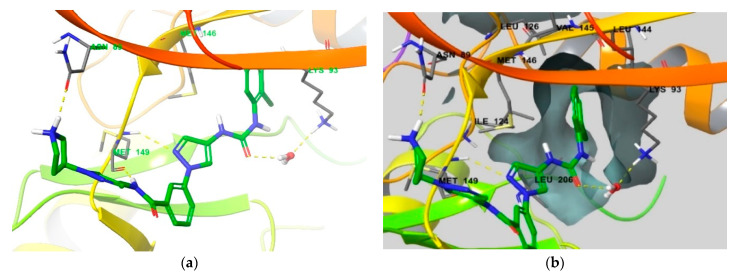
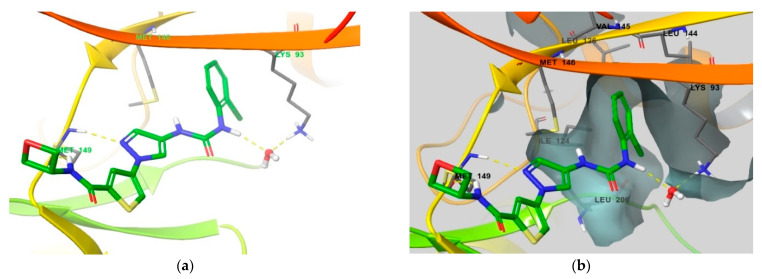
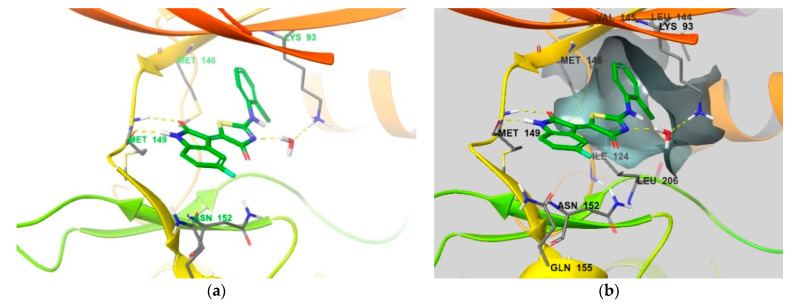
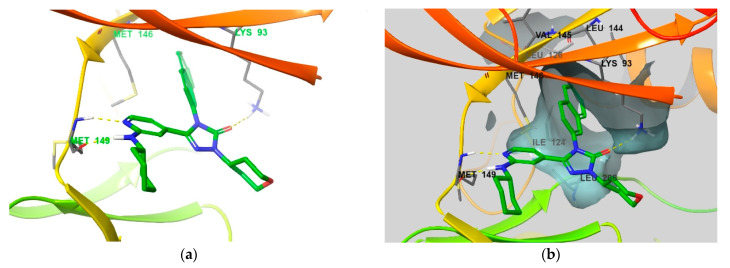
“In summary, the development of JNK3 isoform-selective inhibitors focuses on forming a hydrogen bond with Met149 in the hinge region, occupying a larger hydrophobic pocket, and forming additional interactions in the solvent-exposed area [58].”
c-Jun in neurodegeneration: A key transcriptional regulator with therapeutic implications
Khan, F. A., Khan, H., Awan, U. A., Nurahmat, M., Nabijan, M., Abduwaki, M., & Dong, J. (2026) · Molecular Therapy — Nucleic Acids · doi:10.1016/j.omtn.2026.102874 · Cited by 6
“156 Experimental models demonstrate that excessive c-Jun activity is causally linked to neuron loss.”
InfluentialYu, H., Zhang, X., Liu, Z., & Zhang, L. (2025) · Journal of Medicinal Chemistry · doi:10.1021/acs.jmedchem.5c01488 · Cited by 4
Bu, F., Guan, R., Wang, W., Liu, Z., Yin, S., Zhao, Y., & Chai, J. (2022) · Medicine · doi:10.1097/md.0000000000032100 · Cited by 4
Zaater, M. A., Kerdawy, A. M. E., Mahmoud, W. R., & Abou‐Seri, S. M. (2025) · International Journal of Biological Macromolecules · doi:10.1016/j.ijbiomac.2025.142141 · Cited by 2
Cong, C., Li, X.-L., Lin, G., & Xu, L. (2025) · Experimental and Therapeutic Medicine · doi:10.3892/etm.2025.12998 · Cited by 2
“A core component of neuronal response to ROS is the activation of JNK (26); JNK belongs to the mitogen‑activated protein kinase (MAPK) family, and JNK phosphorylation is associated with diverse apoptotic transcrip‑ tion factors (27).”
Giraldo-Berrio, D., Jiménez-Del-Río, M., & Velez‐Pardo, C. (2024) · Neuropharmacology · doi:10.1016/j.neuropharm.2024.110152 · Cited by 2
“Therefore, drugs targeting the JNK/p-c-JUNSer63/Ser73, TP53 > PUMA > CASP3 pathway (Soto-Mercado et al., 2020) could potentially be useful in the treatment of FAD conditions (e.g., Cho and Hah, 2021; W ´ ojcik et al., 2023; Yarza et al., 2016).”
Qin, Q., Qin, L., Xie, R., Peng, S., Guo, C., & Yang, B. (2022) · Frontiers in Nutrition · doi:10.3389/fnut.2022.847320 · Cited by 2
Special Issue “Alzheimer’s Disease—115 Years after Its Discovery”
Cardoso, S., Carvalho, C., & Correia, S. C. (2024) · Biomedicines · doi:10.3390/biomedicines12030478 · Cited by 2
An Overview of Protein Kinase Inhibitors
De, S. K. (2024) · Springer eBooks · doi:10.1007/978-3-031-75682-5_1
Regulation of different kinases for Alzheimer's disease therapy: progresses and perspectives
Han, M., Liao, Q., He, S., Guo, L., Lu, Z., Wang, X., Sun, W., Duan, Y. B., Lyu, W., & Li, Q. (2026) · Bioorganic Chemistry · doi:10.1016/j.bioorg.2026.110300
Tan, M., Cai, H., Feng, Z., & Du, Z. (2026) · Journal of Invertebrate Pathology · doi:10.1016/j.jip.2026.108752
Poonam, Rana, R., Thakur, M., Sharma, A., Pannu, S., Sharma, S., Naman, S., Rani, S., Devi, D., Kumar, V., et al. (2026) · Frontiers in Oncology · doi:10.3389/fonc.2026.1908830
Metadata
- Authors
- Cho, H., & Hah, J.-M.
- Affiliations
- Hanyang University (KR)
- Corresponding author
- Hah, Jung-Mi
- ORCID
- Hah, Jung-Mi
- Venue
- Biomedicines
- Publisher
- MDPI AG
- Published
- 2021-10-09
- Volume
- 9
- Issue
- 10
- Pages
- 1431
- ISSN
- 2227-9059 (ISSN-L)
- PMC
- PMC8533360
- OpenAlex
- W3205457107
- Semantic Scholar
- ace2a246ee582c698e689c37a9e745b6db83b153
- Cited by
- 27
- References
- 35
- Citations by year
- 2026: 4 · 2025: 4 · 2024: 10 · 2023: 5 · 2022: 4
- FWCI
- 0.63
- Type
- journal article
- Language
- en
- Open access
- gold
- doi.org
- Licence
- Locations
- Biomedicines (publishedVersion, cc-by)
- PubMed Central (publishedVersion, cc-by)
- PubMed (publishedVersion)
- DOAJ (DOAJ: Directory of Open Access Journals) (submittedVersion, cc-by-sa)
- Funders
- National Research Foundation of Korea (NRF-2020R1A6A1A03042854, NRF-2021R1A2C2007159)
- Topics
- Life Sciences › Neuroscience › Cellular and Molecular Neuroscience › Alzheimer's disease research and treatments
- Life Sciences › Pharmacology, Toxicology and Pharmaceutics › Drug Discovery › Computational Drug Discovery Methods
- Health Sciences › Medicine › Pharmacology (medical) › Cholinesterase and Neurodegenerative Diseases
- Keywords
- c-Jun N-terminal kinase, JNK3 inhibitors, Alzheimer's disease, Parkinson's disease, structure-based drug design, molecular docking, JNK isoforms, co-crystal structure, neurodegenerative diseases, selective kinase inhibitors
About these checks
Registry, retraction, Cites and statistics results are computed, not judged, with one exception: a printed reference that no index lists is read once by a model before it counts as a citation error. Claims are extracted by a model and kept only when their quote appears verbatim in the text; each cited source is then checked, with a model’s help, for whether it says what the claim relies on. Those verdicts can be wrong — read the claim’s quote and the cited source before relying on one.
Statistics and arithmetic are recomputed, not judged.
Confidence bands are shown only for fields calibrated on our annotated test set. None is calibrated yet, so no band is shown.
What counts as a claim ›How we measure confidence ›How we check this ›
Are you an author, or do you see a problem with this page? Request a review
Data sources
Bibliographic data: Semantic Scholar, OpenAlex, Crossref.
Contains information from the Semantic Scholar Academic Graph Datasets, made available under the ODC Attribution License (ODC-BY 1.0).
Semantic Scholar’s data is described in: Kinney, R., et al. (2023). The Semantic Scholar Open Data Platform. arXiv:2301.10140.
