

Oxidative and Nitrosative Stress in Major Depressive Disorder: A Case Control Study
Open accessThe DOI matches its Crossref record; 69 of the 69 references it cites were found in a registry or an index.
Abstract
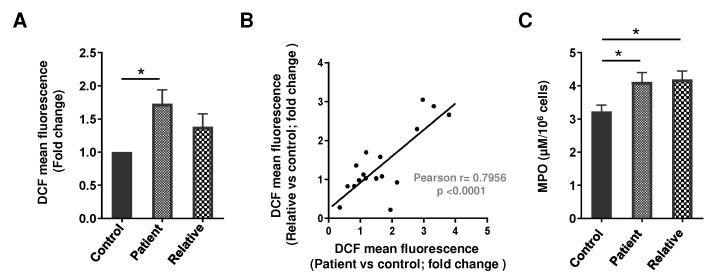
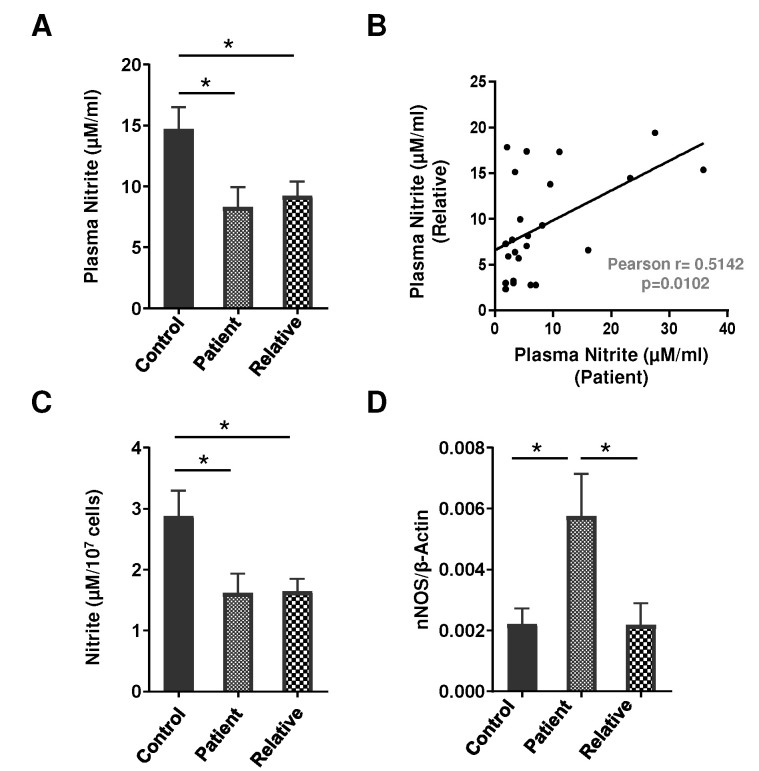
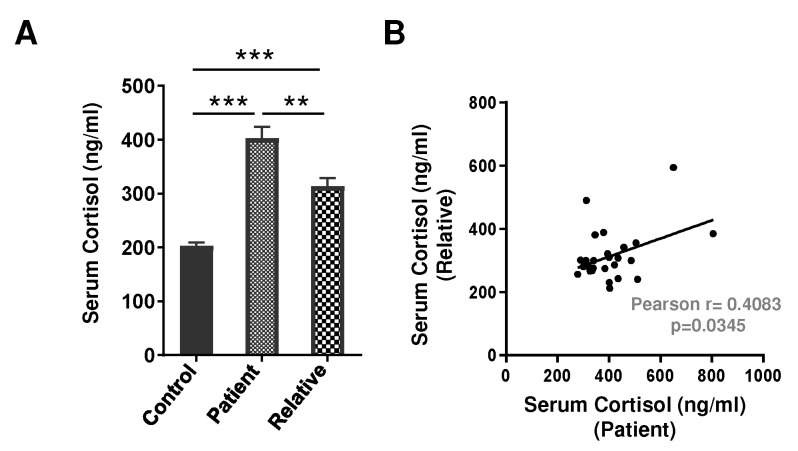
Introduction: The role of increased oxidative stress and alterations to the nitric oxide (NO) pathway have been implicated in major depressive disorder (MDD). The two pathways interact closely with each other but have not been studied simultaneously in MDD. This study aimed to assess and compare the levels of oxidative and nitrosative stress in the neutrophils (PMNs) of drug-naive MDD patients and their first-degree relatives. Methods: 29 drug-naive MDD patients and 27 healthy first-degree relatives and healthy controls aged 18–45 years were included in this study. An assessment of the levels of reactive oxygen species (ROS), nitrites, neuronal NO synthase (nNOS), and myeloperoxidase in PMNs, and cortisol in serum was carried out. Results: Compared to healthy controls, the generation of free radicals, myeloperoxidase activity, and nNOS mRNA expression in PMNs, and cortisol level in serum were significantly higher in drug-naive depression patients. Indeed, increased levels of myeloperoxidase and serum cortisol were also noted in first-degree relatives. The total nitrite content in the PMNs and plasma however was significantly lower in both patients and first-degree relatives. Interestingly, a positive correlation was established in the ROS levels in the PMNs, plasma and neutrophil nitrite, and the serum cortisol level between MDD patients and their first-degree relatives. Conclusion: The results of this study contribute towards a better understanding of the familial association of depressive disorder, and demonstrate for the first time that neutrophil ROS/RNS, plasma nitrite, and serum cortisol levels are positively correlated between MDD patients and their first-degree relatives. However, further studies in larger, more diverse samples are needed to extend these pathways as potential biomarkers to identify persons at high risk for psychopathology at an early stage.
Overview
The claims and statistics of this paper haven’t been checked yet.
Free: it reads the open-access text and checks the first 5 claims that cite a source we can check. Create a free account to check every claim.
Integrity signals
Registry
Cites
Statistics
Figures
Verification
Claims the paper makes
The claims and statistics of this paper haven’t been checked yet.
Free: it reads the open-access text and checks the first 5 claims that cite a source we can check. Create a free account to check every claim.
Claims other papers make about this one
Each is checked against this paper’s own text: does it say what the citing paper says it does?
The source backs part of the claim, not all of it — or backs it for a different population, condition or comparison.
In the citing paper
“Reduced plasma levels of antioxidants (vitamin E, zinc, coenzyme Q10, glutathione) and enzymes (xanthine oxidase and superoxide dismutase) are interrelated with worsening depressive symptoms (102).”
From Chronic stress, neuroinflammation, and depression: an overview of pathophysiological mechanisms and emerging anti-inflammatories (2023) · cites this paper as [102]
Experimental — accuracy not yet measured
Self-check
Percentages, sums and reported differences re-computed from the paper’s own numbers.
The self-check needs the paper’s full text.
Citations
Cites
Hamilton, M. (1960) · Journal of Neurology, Neurosurgery & Psychiatry · doi:10.1136/jnnp.23.1.56 · Cited by 32,817 · cited 8×
“HAM-D: 17-item Hamilton Depression Rating Scale, GAF: Global Assessment of Functioning Scale.”
MethodInfluentialMolecular Mechanisms of Depression: Perspectives on New Treatment Strategies
Lang, U. E., & Borgwardt, S. (2013) · Cellular Physiology and Biochemistry · doi:10.1159/000350094 · Cited by 8,475
Malhi, G. S., & Mann, J. J. (2018) · The Lancet · doi:10.1016/s0140-6736(18)31948-2 · Cited by 4,099
Cytokines sing the blues: inflammation and the pathogenesis of depression
Raison, C. L., Capuron, L., & Miller, A. H. (2006) · Trends in Immunology · doi:10.1016/j.it.2005.11.006 · Cited by 3,009 · cited 1×
“At the same time, it is also known that patients with depression have elevated levels of inflammatory markers [3,40,41].”
BackgroundGlutamate, nitric oxide and cell-cell signalling in the nervous system
Garthwaite, J. (1991) · Trends in Neurosciences · doi:10.1016/0166-2236(91)90022-m · Cited by 2,402 · cited 1×
“NO is also involved in the release of neurotransmitters (including dopamine), neural development, regeneration, the regulation of gene expression, and synaptic plasticity which is believed to be related to learning and memory [17].”
BackgroundBiosynthesis of nitric oxide from l-arginine
Moncada, S., Palmer, R. M. J., & Higgs, E. A. (1989) · Biochemical Pharmacology · doi:10.1016/0006-2952(89)90403-6 · Cited by 1,208
Maes, M., Galecki, P., Chang, Y. S., & Berk, M. (2011) · Progress in Neuro-Psychopharmacology and Biological Psychiatry · doi:10.1016/j.pnpbp.2010.05.004 · Cited by 1,140 · cited 1×
“Consequent to increased reactive oxygen species (ROS) levels, depression is also related to depleted levels of antioxidants such as vitamin E, zinc, coenzyme Q10, and glutathione as well as the exhaustion of antioxidative enzyme activities such as xanthine oxidase and superoxide dismutase [4,5,9,10].”
BackgroundGawryluk, J. W., Wang, J.-F., Andreazza, A. C., Shao, L., & Young, L. T. (2011) · The International Journal of Neuropsychopharmacology · doi:10.1017/s1461145710000805 · Cited by 594 · cited 1×
“Studies in post-mortem brain samples have further displayed increased levels of ROS including peroxide and superoxide and altered levels of antioxidant defenses in depression patients [13,14].”
BackgroundGlucocorticoids, cytokines and brain abnormalities in depression
Zunszain, P. A., Anacker, C., Cattaneo, A., Carvalho, L. A., & Pariante, C. M. (2011) · Progress in Neuro-Psychopharmacology and Biological Psychiatry · doi:10.1016/j.pnpbp.2010.04.011 · Cited by 554 · cited 1×
“have also reported elevated levels of glucocorticoids in patients with MDD [71].”
BackgroundSarandol, A., Sarandol, E., Eker, S. S., Erdinc, S., Vatansever, E., & Kirli, S. (2007) · Human Psychopharmacology: Clinical and Experimental · doi:10.1002/hup.829 · Cited by 486 · cited 2×
“The human brain is believed to be more vulnerable to oxidative stress compared to other organs and tissues in the body [8].”
Background
Research works printed but not linked: 1
- Sadock B. Sadock V. Ruiz P. Depression and Bipolar Disorder. Kaplan & Sadock’s Synopsis of Psychiatry 11th ed. Wolters Kluwer Philadelphia, PA, USA 2015 752 830
Cited by
Hassamal, S. (2023) · Frontiers in Psychiatry · doi:10.3389/fpsyt.2023.1130989 · Cited by 578
“Reduced plasma levels of antioxidants (vitamin E, zinc, coenzyme Q10, glutathione) and enzymes (xanthine oxidase and superoxide dismutase) are interrelated with worsening depressive symptoms (102).”
BackgroundMolecular pathways of major depressive disorder converge on the synapse
Fries, G. R., Saldana, V. A., Finnstein, J., & Rein, T. (2023) · Molecular Psychiatry · doi:10.1038/s41380-022-01806-1 · Cited by 504
Winiarska‐Mieczan, A., Kwiecień, M., Jachimowicz-Rogowska, K., Donaldson, J., Tomaszewska, E., & Baranowska‐Wójcik, E. (2023) · International Journal of Molecular Sciences · doi:10.3390/ijms24032258 · Cited by 155
Almulla, A. F., Thipakorn, Y., Vasupanrajit, A., Tunvirachaisakul, C., Oxenkrug, G., Al-Hakeim, H. K., & Maes, M. (2022) · Cells · doi:10.3390/cells11193112 · Cited by 31
Depression Pathophysiology: Astrocyte Mitochondrial Melatonergic Pathway as Crucial Hub
Anderson, G. (2022) · International Journal of Molecular Sciences · doi:10.3390/ijms24010350 · Cited by 33
Subba, R., Ahmad, M. H., Ghosh, B., & Mondal, A. C. (2022) · European Journal of Pharmacology · doi:10.1016/j.ejphar.2022.174993 · Cited by 31
Hussain, H., Ahmad, S., Shah, S. W. A., Ullah, A., Almehmadi, M. M., Abdulaziz, O., Allahyani, M. A., Alsaiari, A. A., Halawi, M., & Alamer, E. (2022) · Biomedicines · doi:10.3390/biomedicines10102385 · Cited by 35
Postsynaptic Proteins at Excitatory Synapses in the Brain—Relationship with Depressive Disorders
Samojedny, S., Czechowska, E., Pańczyszyn-Trzewik, P., & Sowa-Kućma, M. (2022) · International Journal of Molecular Sciences · doi:10.3390/ijms231911423 · Cited by 23
Janković, T., Bogicevic, M., & Knežević, N. N. (2024) · Molecular and Cellular Endocrinology · doi:10.1016/j.mce.2024.112266 · Cited by 25
Bahdar, Z. I., Abu‐El‐Rub, E., Almazari, R., Alzu’bi, A., & Al‐Zoubi, R. M. (2025) · Neurogenetics · doi:10.1007/s10048-025-00803-0 · Cited by 25
Microbes and Mental Illness: Past, Present, and Future
Bransfield, R. C., Mao, C., & Greenberg, R. (2023) · Healthcare · doi:10.3390/healthcare12010083 · Cited by 31
“Oxidative stress and changes in nitric oxide are also well recognized as being a part of the stress response and the pathogenesis of depression and other mental illnesses [360–362].”
BackgroundPotential Benefits of Anthocyanins in Chronic Disorders of the Central Nervous System
Panchal, S. K., & Brown, L. (2022) · Molecules · doi:10.3390/molecules28010080 · Cited by 19
Xia, J., Chen, M., Shao, H., Chen, H., Zhu, S., Zhao, M., Luo, W., Yang, J., & Wu, S. (2023) · Frontiers in Bioscience-Landmark · doi:10.31083/j.fbl2812356 · Cited by 19
“Oxidative stress and mitochondrial dysfunction may be closely related to the onset and progression of LLD. Evidence supporting this hypothesis includes studies showing abnormal manifestations of oxidative stress and mitochondrial dysfunction in patients with LLD [155–157].”
BackgroundJahromi, G. G., & Rezaei, N. (2025) · Heart and Mind · doi:10.4103/hm.hm-d-24-00076 · Cited by 15
da Silva, B., Viero, F. T., Rodrigues, P., & Trevisan, G. (2024) · Nitric Oxide · doi:10.1016/j.niox.2024.01.006 · Cited by 15
Ebokaiwe, A. P., Obasi, D. O., Obeten, U., & Onyemuche, T. (2022) · Alcohol · doi:10.1016/j.alcohol.2022.10.002 · Cited by 13
Lan, L., Chen, C.-Y., Wang, Y., Guo, Z., & Zhang, Y. (2025) · Progress in Neuro-Psychopharmacology and Biological Psychiatry · doi:10.1016/j.pnpbp.2025.111401 · Cited by 13
Almulla, A. F., Thipakorn, Y., Vasupanrajit, A., Tunvirachaisakul, C., Oxenkrug, G. F., Al‐Hakeim, H. K., & Maes, M. H. J. (2022) · medRxiv · doi:10.1101/2022.08.06.22278492 · Cited by 11
Deng, Q., Parker, E., Wu, C., Zhu, L., Liu, T. C., Duan, R., & Yang, L. (2024) · Aging and Disease · doi:10.14336/ad.2024.0239 · Cited by 12
Expression of PON1, PON2, PON3 and MPO Genes in Patients with Depressive Disorders
Bliźniewska-Kowalska, K. M., Gałecki, P., Su, K., Halaris, A. E., Szemraj, J., & Gałecka, M. (2022) · Journal of Clinical Medicine · doi:10.3390/jcm11123321 · Cited by 11
Chen, J., Wei, Y., Li, N., Pi, C., Zhao, W., Zhong, Y., Li, W., Shen, H., Yang, Y., Zheng, W., et al. (2024) · Molecular Neurobiology · doi:10.1007/s12035-024-04363-6 · Cited by 11
Zhang, T., Geng, M., Li, X., Gu, Y., Zhao, W., Ning, Q., Zhao, Z., Wang, L., Zhang, H., & Zhang, F. (2024) · International Journal of Molecular Sciences · doi:10.3390/ijms25158353 · Cited by 11
Zumbi, C. N., Choi, H. H. T., Huang, H., Panyod, S., Wang, T.-W., Huang, S.-J., Tsou, H., Ho, C., & Sheen, L. (2024) · Journal of Ethnopharmacology · doi:10.1016/j.jep.2024.118906 · Cited by 9
Moreira, L. K. D. S., Turones, L. C., Campos, H. M., Martins, A. N., Thomaz, D. V., Gil, E. D. S., Ghedini, P. C., da Rocha, F. F., Menegatti, R., Fajemiroye, J. O., et al. (2022) · Life Sciences · doi:10.1016/j.lfs.2022.121199 · Cited by 9
Yang, Y., Chen, Y., Jia, X., & Huang, X. (2024) · Journal of Affective Disorders · doi:10.1016/j.jad.2024.08.150 · Cited by 8
Ali, D. H., Hegazy, H. G., Ali, E. H. A., & El-Tantawi, H. G. (2025) · Naunyn-Schmiedeberg s Archives of Pharmacology · doi:10.1007/s00210-025-03972-9 · Cited by 6
“GSH is the primary antioxidant in the brain which scavenges the free radicals, oxidizes into GSSG form and protects neurons against oxidative injury (Fisher et al. 2020).”
InfluentialMbye, M., Akram, A., Mohamed, H., & BANAT, F. A. (2025) · LWT · doi:10.1016/j.lwt.2025.118414 · Cited by 7
Gao, Y., Meng, L., Lu, Z., Li, X., Luo, R.-Q., Lin, H., Pan, Z.-M., Xu, B., Huang, Q.-K., Xiao, Z., et al. (2025) · World Journal of Psychiatry · doi:10.5498/wjp.v15.i4.100289 · Cited by 5
Mei, X., Liu, Y., Liu, X., Ma, S., Wang, C., Wang, L., Miao, Q., Chen, P., Tang, B., & Chen, G. (2025) · Coordination Chemistry Reviews · doi:10.1016/j.ccr.2025.217441 · Cited by 5
Camel Milk and Oxidative stress: Therapeutic potential against metabolic syndrome diseases
Musa, K. H., Hamad, E. M., & Elnour, A. A. M. (2025) · Journal of Agriculture and Food Research · doi:10.1016/j.jafr.2025.101682 · Cited by 9
Oxidative and nitrosative stress in bipolar affective disorder and its familial aggregation
Singh, H., Singh, A. K., Kar, S. K., Tripathi, A., Dalal, P., & Dikshit, M. (2025) · Indian Journal of Psychiatry · doi:10.4103/indianjpsychiatry.indianjpsychiatry_396_23 · Cited by 4
“The total nitrite content in PMNs was reported as µ M/10 7 PMNs. [47]”
InfluentialSelf-citationPannu, A. S., & Goyal, R. K. (2024) · Current Bioactive Compounds · doi:10.2174/0115734072312121240822050630 · Cited by 3
Targeting ferroptosis as a novel strategy for depressive mental disorders
Qian, L., Yao, Q., Jiang, Y., Liu, W., Xiong, L., Shi, H., & Shi, Y. (2025) · Psychopharmacology · doi:10.1007/s00213-025-06934-4 · Cited by 3
Li, C., Wang, Y., Chen, J., Xiao, S., Lou, M., Ding, M., & Xing, Y. (2026) · BMC Psychiatry · doi:10.1186/s12888-025-07685-4 · Cited by 5
“Moreover, TNF-α has been shown to enhance oxidative and nitrosative stress by stimulating reactive oxygen and nitrogen species production, thereby amplifying cellular damage and neuroinflammation [11, 12].”
Cespuglio, R., Вячеславовна, Г. А., Zabegalov, K. N., Chaprov, K., Svirin, E. P., Sitdikova, K., Burova, A., Shulgin, B., Lebedeva, K., Deykin, A. V., et al. (2025) · Frontiers in Bioscience-Landmark · doi:10.31083/fbl26778 · Cited by 3
Khalifé, S., Bollmann, S., Zalesky, A., & Oestreich, L. (2025) · Biological Psychiatry Cognitive Neuroscience and Neuroimaging · doi:10.1016/j.bpsc.2025.09.003 · Cited by 3
Li, K., You, L., Zhen, J., Huang, G., Wang, T., Cai, Y., Zhang, Y., & Xu, A. (2023) · Journal of Traditional Chinese Medical Sciences · doi:10.1016/j.jtcms.2023.12.001 · Cited by 3
Pannu, A. S., Goyal, R. K., & Goswami, S. (2024) · Central Nervous System Agents in Medicinal Chemistry · doi:10.2174/0118715249331487241021053730 · Cited by 2
Rebouças, M. D. O., da Silva, D. M. A., Vale, L. D. C., Valentim, J. T., de Oliveira, N. F., de Carvalho, A. M. R., de Oliveira, A. A., Chaves, R. D. C., Luciano, M. C. D. S., & de Sousa, F. C. F. (2024) · Archives of Psychiatry and Psychotherapy · doi:10.12740/app/175726 · Cited by 1
“The pathophysiology of depression is associated with enhancing proinflammatory response, elevation of proinflammatory cytokines, ROS production, oxidative stress, and lipid peroxidation, which are important [7].”
BackgroundLin, Y., Che, X., & Li, T. (2025) · The Journal of Maternal-Fetal & Neonatal Medicine · doi:10.1080/14767058.2025.2463402 · Cited by 5
Bertollo, A. G., Soares, S. J. B., Amaral, S. S., de Medeiros, J., Nicolleti, A. O. A., Ibrahim, H. J., Kreuz, K. M., Schuh, L. A., da Silva, B. V., Mingoti, M. E. D., et al. (2025) · Molecular Biology Reports · doi:10.1007/s11033-025-10576-2 · Cited by 2
de Sousa, R. W. R., dos Santos, I. L., Rodrigues, D. C. D. N., do Nascimento, M. L. L. B., Conceição, M. L. P., de Freitas, M. M., Fernandes, G. D. S., Sousa, R. D. C. D. L., Souza, R. P., Pereira, I. C., et al. (2025) · Physiology & Behavior · doi:10.1016/j.physbeh.2025.115153 · Cited by 2
The role of 5-HT3 receptors in schizophrenia and associated depressive and addictive comorbidities
Jůza, R., Więckowska, A., Vojtěchová, I., Kuča, K., Soukup, O., Korábečný, J., & Petrásek, T. (2026) · Progress in Neuro-Psychopharmacology and Biological Psychiatry · doi:10.1016/j.pnpbp.2026.111663 · Cited by 1
Mihai, F.-D., Trasca, E.-T., Radulescu, P.-M., Mercuţ, R., Căluianu, E. I., Ciupeanu-Călugăru, E. D., Calafeteanu, D. M., Marinescu, G.-A., Dănoiu, S., & Rădulescu, D. (2025) · Diagnostics · doi:10.3390/diagnostics15070832 · Cited by 1
“Furthermore, the study did not include detailed psychoemotional assessments, such as measures of anxiety or post-traumatic stress, nor did it incorporate genetic or epigenetic markers that might influence the inflammatory response to operational stress.”
Depressive Symptoms as Potential Mediator between Physical Activity and Bone Health—A Scoping Review
Houtenbos, S. P., Kuehl, L. K., Wuertz‐Kozak, K., & Wippert, P. (2022) · Osteology · doi:10.3390/osteology2040020
Martins, L. (2024) · Revista de Educação Física / Journal of Physical Education · doi:10.37310/ref.v92i2.2964 · Cited by 1
Ghaiedi, M., Barmoudeh, Z., Daneshyar, Z., Malekzadeh, J., & Hassanzadeh, S. (2024) · Heroin addiction and related clinical problems · doi:10.62401/2531-4122-2024-28
Otomewo, L. O., Eduviere, A. T., Adeoluwa, O. A., Moke, E. G., & Adeoluwa, G. O. (2024) · Pharmacological Research - Natural Products · doi:10.1016/j.prenap.2024.100104
Oxidative alterations in exfoliated oral mucosa cells of patients with major depressive disorder
de Abreu, L. M., da Silva, C. R., Bortoleto, A. L. F., Nunes, G. B., Gracia, M. M., Murayama, R. A. T., Bernabé, D. G., & Mingoti, G. Z. (2025) · Journal of Oral Biology and Craniofacial Research · doi:10.1016/j.jobcr.2025.01.026
“…diagnosed with MDD have elevated systemic levels of enzymes involved in the production of reactive oxygen species (ROS) and reactive nitrogen species (RNS) compared to healthy controls, 8,9,11 leading to an increase in the levels of xanthine oxidase and ROS in the blood and brain of MDD patients.”
Ginsenosides for depression treatment: From benchside to bedside
Xie, J., Zhu, F., Zhao, Y., Wang, Y., Matsabisa, M. G., Chabalala, H. P., Braga, F. C., & Tang, M. (2025) · Journal of Traditional Chinese Medical Sciences · doi:10.1016/j.jtcms.2025.03.007 · Cited by 2
Cespuglio, R., Zabegalov, K. N., de Munter, J., Вячеславовна, Г. А., Chaprov, K., Rogacheva, D., Askarova, S., Schmitt-Böhrer, A. G., Deykin, A. V., Lesch, K., et al. (2026) · International Journal of Molecular Sciences · doi:10.3390/ijms27062836
“Liver steatosis is linked to nitrosative stress [105,106], while a central pathogenic mechanism of SERT deficiency is systemic en-dotoxemia caused by increased gut permeability (i.e., ‘leaky gut’) [43,59].”
Jabłonka, D., Modzelewski, S., & Waszkiewicz, N. (2026) · Pathophysiology · doi:10.3390/pathophysiology33020039
“Alterations in ROS/RNS parameters together with cortisol in drug-naïve patients further highlight the integration of inflammatory, redox, and stress-related pathways [52].”
Biomarkers for mood disorders: A scoping review of research from India
Tholasappa, V., Baidebettu, V. P., Vijaykumar, H. G., Reddy, P. V., Arasappa, R., & Kesavan, M. (2026) · Indian Journal of Psychiatry · doi:10.4103/indianjpsychiatry_282_26
“Two studies assessed serum cortisol levels, both reporting significantly elevated cortisol levels in patients compared to HC. [44,46] Agnihotri S et al. [44] also found a positive correlation between cortisol levels and depression severity.”
Metadata
- Authors
- Somani, A., Singh, A. K., Gupta, B., Nagarkoti, S., Dalal, P. K., & Dikshit, M.
- Affiliations
- King George's Medical University (IN)
- Central Drug Research Institute (IN)
- Department of Psychiatry, King George’s Medical University, Lucknow 226003, India
- Corresponding author
- Dikshit, Madhu
- Venue
- Brain Sciences
- Publisher
- MDPI AG
- Published
- 2022-01-21
- Volume
- 12
- Issue
- 2
- Pages
- 144
- ISSN
- 2076-3425 (ISSN-L)
- PMC
- PMC8870258
- OpenAlex
- W4206995814
- Cited by
- 54
- References
- 69
- Citations by year
- 2026: 6 · 2025: 18 · 2024: 13 · 2023: 5 · 2022: 12
- FWCI
- 4.17
- Type
- journal article
- Language
- en
- Open access
- gold
- doi.org
- Licence
- Locations
- Brain Sciences (publishedVersion, cc-by)
- PubMed Central (publishedVersion, cc-by)
- PubMed (publishedVersion)
- DOAJ (DOAJ: Directory of Open Access Journals) (submittedVersion, cc-by-sa)
- Funders
- Council of Scientific and Industrial Research, India
- University Grants Commission
- Central Drug Research Institute
- Topics
- Life Sciences › Neuroscience › Biological Psychiatry › Tryptophan and brain disorders
- Life Sciences › Neuroscience › Behavioral Neuroscience › Stress Responses and Cortisol
- Health Sciences › Medicine › Pharmacology (medical) › Treatment of Major Depression
- Keywords
- major depressive disorder, oxidative stress, nitrosative stress, nitric oxide pathway, neutrophils, reactive oxygen species, myeloperoxidase, neuronal nitric oxide synthase, plasma nitrite, serum cortisol, first-degree relatives, biomarkers
About these checks
Registry, retraction, Cites and statistics results are computed, not judged, with one exception: a printed reference that no index lists is read once by a model before it counts as a citation error. Claims are extracted by a model and kept only when their quote appears verbatim in the text; each cited source is then checked, with a model’s help, for whether it says what the claim relies on. Those verdicts can be wrong — read the claim’s quote and the cited source before relying on one.
Statistics and arithmetic are recomputed, not judged.
Confidence bands are shown only for fields calibrated on our annotated test set. None is calibrated yet, so no band is shown.
What counts as a claim ›How we measure confidence ›How we check this ›
Are you an author, or do you see a problem with this page? Request a review
Data sources
Bibliographic data: Semantic Scholar, OpenAlex, Crossref.
Contains information from the Semantic Scholar Academic Graph Datasets, made available under the ODC Attribution License (ODC-BY 1.0).
Semantic Scholar’s data is described in: Kinney, R., et al. (2023). The Semantic Scholar Open Data Platform. arXiv:2301.10140.
