

Dual semi-supervised learning for classification of Alzheimer's disease and mild cognitive impairment based on neuropsychological data
Open accessThe DOI matches its Crossref record; 42 of the 42 references it cites were found in a registry or an index.
Abstract
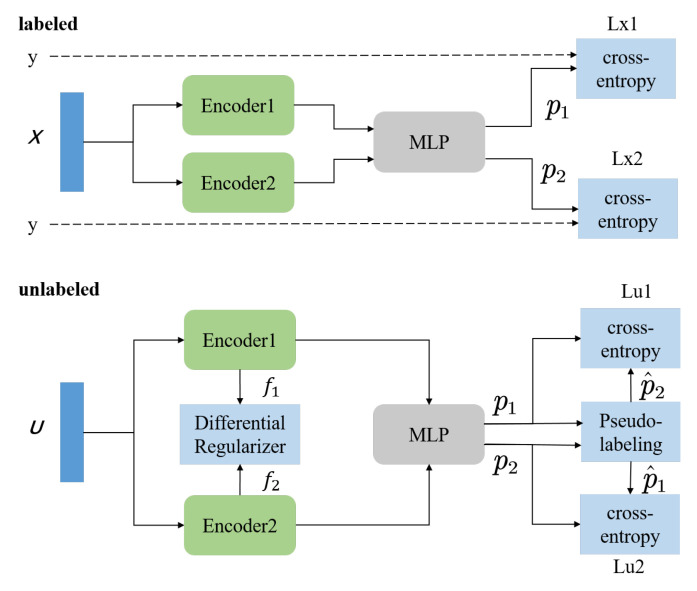
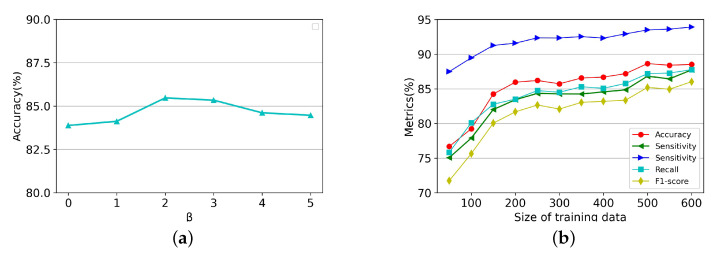
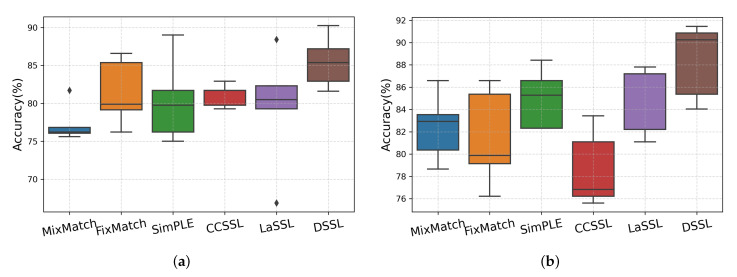
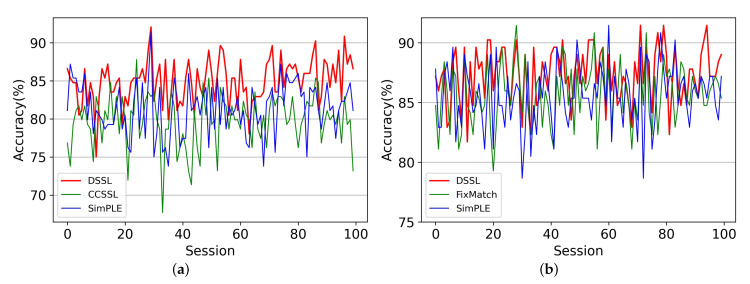
Deep learning has shown impressive diagnostic abilities in Alzheimer’s disease (AD) research in recent years. However, although neuropsychological tests play a crucial role in screening AD and mild cognitive impairment (MCI), there is still a lack of deep learning algorithms only using such basic diagnostic methods. This paper proposes a novel semi-supervised method using neuropsychological test scores and scarce labeled data, which introduces difference regularization and consistency regularization with pseudo-labeling. A total of 188 AD, 402 MCI, and 229 normal controls (NC) were enrolled in the study from the Alzheimer’s Disease Neuroimaging Initiative (ADNI) database. We first chose the 15 features most associated with the diagnostic outcome by feature selection among the seven neuropsychological tests. Next, we proposed a dual semi-supervised learning (DSSL) framework that uses two encoders to learn two different feature vectors. The diagnosed 60 and 120 subjects were randomly selected as training labels for the model. The experimental results show that DSSL achieves the best accuracy and stability in classifying AD, MCI, and NC (85.47% accuracy for 60 labels and 88.40% accuracy for 120 labels) compared to other semi-supervised methods. DSSL is an excellent semi-supervised method to provide clinical insight for physicians to diagnose AD and MCI.
Overview
The claims and statistics of this paper haven’t been checked yet.
Free: it reads the open-access text and checks the first 5 claims that cite a source we can check. Create a free account to check every claim.
Integrity signals
Registry
Cites
Statistics
Figures
Verification
Claims the paper makes
The claims and statistics of this paper haven’t been checked yet.
Free: it reads the open-access text and checks the first 5 claims that cite a source we can check. Create a free account to check every claim.
Claims other papers make about this one
Each is checked against this paper’s own text: does it say what the citing paper says it does?
In the citing paper
“At a cognitive and behavioral level, ML systems can extract reliable features originating from the neuropsychological assessment, automatically classify different disease phenotypes, identify development stages, and even predict disease conversion (75, 76).”
From Research on digital tool in cognitive assessment: a bibliometric analysis (2023) · cites this paper as [76]
Self-check
Percentages, sums and reported differences re-computed from the paper’s own numbers.
The self-check needs the paper’s full text.
Citations
Cites
Folstein, M. F., Folstein, S. E., & McHugh, P. R. (1975) · Journal of Psychiatric Research · doi:10.1016/0022-3956(75)90026-6 · Cited by 88,282 · cited 8×
“MMSE—MMSE is a comprehensive screening tool commonly used in the clinical diagnosis of cognitive impairment.”
MethodInfluential(2014) · Cited by 33,419
Hirono, N., Mori, E., Ikejiri, Y., Imamura, T., Shimomura, T., Hashimoto, M., Yamashita, H., & Ikeda, M. (1997) · Brain and nerve · Cited by 21,039
Kok, J. S., Berg, I. J., & Scherder, E. J. A. (2013) · Dementia and Geriatric Cognitive Disorders Extra · doi:10.1159/000353441 · Cited by 20,589
Older Adults' Reasons for Using Technology while Aging in Place
Peek, S. T. M., Luijkx, K. G., Rijnaard, M. D., Nieboer, M. E., van der Voort, C. S., Aarts, S., van Hoof, J., Vrijhoef, H. J. M., & Wouters, E. J. M. (2016) · Gerontology · doi:10.1159/000430949 · Cited by 19,690
Sensitivity and False Alarm Rate of a Fall Sensor in Long-Term Fall Detection in the Elderly
Kangas, M., Korpelainen, R., Vikman, I., Nyberg, L., & Jämsä, T. (2015) · Gerontology · doi:10.1159/000362720 · Cited by 18,909
Correlation Coefficients: Appropriate Use and Interpretation
Schober, P., Boer, C., & Schwarte, L. A. (2018) · Anesthesia & Analgesia · doi:10.1213/ane.0000000000002864 · Cited by 10,986 · cited 10×
“Features Selection Feature selection has a highly important role in DL. Pearson’s correlation coefficient (PCC) [44], one of the most common feature selection methods, is applied to neuropsychological tests in this study.”
MethodInfluentialThe Clinical Dementia Rating (CDR): Current version and scoring rules
Morris, J. C. (1993) · Neurology · doi:10.1212/wnl.43.11.2412-a · Cited by 9,882
Randaugment: Practical automated data augmentation with a reduced search space
Cubuk, E. D., Zoph, B., Shlens, J., & Le, Q. V. (2020) · 2020 IEEE/CVF Conference on Computer Vision and Pattern Recognition Workshops (CVPRW) · doi:10.1109/cvprw50498.2020.00359 · Cited by 3,223 · cited 2×
“FixMatch [27] uses both strong and weak augmentations, and experiments with strong augmentations based on RandAugment [28] and CTAugment [29].”
MethodMeasurement of Functional Activities in Older Adults in the Community
Pfeffer, R. I., Kurosaki, T. T., Harrah, C. H., Chance, J. M., & Filos, S. (1982) · Journal of Gerontology · doi:10.1093/geronj/37.3.323 · Cited by 2,972 · cited 9×
“FAQ—FAQ rates the subject’s ability to perform daily activities based on interviews with partners, which assesses the patient’s physical, mental, and social role function completion and factors that affect daily performance.”
MethodInfluentialFixMatch: Simplifying Semi-Supervised Learning with Consistency and Confidence
Sohn, K., Berthelot, D., Li, C.-L., Zhang, Z., Carlini, N., Cubuk, E. D., Kurakin, A., Zhang, H., & Raffel, C. (2020) · arXiv · doi:10.48550/arxiv.2001.07685 · Cited by 2,892
Appelhof, B., Bakker, C., Van Duinen-van den Ijssel, J. C. L., Zwijsen, S. A., Smalbrugge, M., Verhey, F. R. J., de Vugt, M. E., Zuidema, S. U., & Koopmans, R. T. C. M. (2017) · Dementia and Geriatric Cognitive Disorders · doi:10.1159/000477087 · Cited by 2,760
A survey on semi-supervised learning
van Engelen, J. E., & Hoos, H. H. (2020) · Machine Learning · doi:10.1007/s10994-019-05855-6 · Cited by 2,666 · cited 1×
“Semi-supervised learning (SSL) methods in DL are particularly suitable for situations where labeled data is scarce [14].”
MethodValidation of the NPI-Q, a Brief Clinical Form of the Neuropsychiatric Inventory
Kaufer, D., Cummings, J. L., Ketchel, P., Smith, V. M., MacMillan, A., Shelley, T., López, O. L., & DeKosky, S. T. (2000) · Journal of Neuropsychiatry · doi:10.1176/appi.neuropsych.12.2.233 · Cited by 1,973 · cited 6×
“The NPIQ is a short version of the NPI, which only screens questions and severity ratings for each domain.”
MethodInfluentialA/T/N: An unbiased descriptive classification scheme for Alzheimer disease biomarkers
Jack, C. R., Bennett, D. A., Blennow, K., Carrillo, M. C., Feldman, H. H., Frisoni, G. B., Hampel, H., Jagust, W. J., Johnson, K. A., Knopman, D. S., et al. (2016) · Neurology · doi:10.1212/wnl.0000000000002923 · Cited by 1,864 · cited 1×
“Positron emission tomography (PET), magnetic resonance imaging (MRI), and cerebrospinal fluid (CSF) biomarkers are included in A/T/N system for research [3], which highlights the importance of reliable biomarkers for AD diagnosis.”
BackgroundZhang, X. (2017) · Encyclopedia of Machine Learning and Data Mining · doi:10.1007/978-1-4899-7687-1_79 · Cited by 1,434
Label Propagation for Deep Semi-Supervised Learning
Iscen, A., Tolias, G., Avrithis, Y., & Chum, O. (2019) · 2019 IEEE/CVF Conference on Computer Vision and Pattern Recognition (CVPR) · doi:10.1109/cvpr.2019.00521 · Cited by 686 · cited 1×
“[33] used a label propagation method based on the manifold assumption to predict the current node based on the k nodes with high similarity, and used the predicted results to generate pseudo-labels for unlabeled samples.”
MethodReMixMatch: Semi-Supervised Learning with Distribution Matching and Augmentation AnchoringPreprint
Berthelot, D., Carlini, N., Cubuk, E. D., Kurakin, A., Sohn, K., Zhang, H., & Raffel, C. (2020) · arXiv (Cornell University) · Cited by 600
Kueper, J. K., Speechley, M., & Montero-Odasso, M. (2018) · Journal of Alzheimer’s Disease · doi:10.3233/jad-170991 · Cited by 424 · cited 1×
“The itemized scores of seven neuropsychological tests are used, including the Alzheimer’s disease assessment scale-cognitive (ADAS-Cog) [37], the mini-mental state exam (MMSE) [38], the clinical dementia rating (CDR) [39], the Rey auditory verbal learning test (RAVLT) [40], the functional activity questionnaire (FAQ)…”
MethodEwers, M., Walsh, C., Trojanowski, J. Q., Shaw, L. M., Petersen, R. C., Jack, C. R., Feldman, H. H., Bokde, A. L. W., Alexander, G. E., Scheltens, P., et al. (2012) · Neurobiology of Aging · doi:10.1016/j.neurobiolaging.2010.10.019 · Cited by 394 · cited 1×
“Research suggests neuropsychological test results may have as much screening potential for AD patients as CSF and MRI biomarkers [16].”
BackgroundSelkoe, D. J. (2011) · Cold Spring Harbor Perspectives in Biology · doi:10.1101/cshperspect.a004457 · Cited by 363 · cited 1×
“The lesions of the disease occur mainly in the cerebral cortex and hippocampus, which causes patients to develop cognitive impairments in language, memory, and other aspects [2].”
BackgroundModern views of machine learning for precision psychiatry
Chen, Z. S., Kulkarni, P. (., Galatzer-Levy, I. R., Bigio, B., Nasca, C., & Zhang, Y. (2022) · Patterns · doi:10.1016/j.patter.2022.100602 · Cited by 210 · cited 1×
“Research has suggested that the traditional diagnosis of cognitive disorders remains limited to subjective symptoms and observable features, and that ML offers a novel paradigm that can enable automated and more objective evaluation of various psychiatric diseases [5].”
BackgroundZhang, Y., Wang, S., Xia, K., Jiang, Y., & Qian, P. (2021) · Information Fusion · doi:10.1016/j.inffus.2020.09.002 · Cited by 184
Class-Aware Contrastive Semi-Supervised Learning
Yang, F., Wu, K., Zhang, S., Jiang, G., Liu, Y., Zheng, F., Zhang, W., Wang, C., & Zeng, L. (2022) · IEEE Computer Society Conference on Computer Vision and Pattern Recognition/Proceedings - IEEE Computer Society Conference on Computer Vision and Pattern Recognition/Proceedings · doi:10.1109/cvpr52688.2022.01402 · Cited by 180 · cited 2×
“The five methods described in Section 2: MixMatch [25], FixMatch [27], SimPLE [34], CCSSL [35], and LaSSL [36] are considered as baseline methods.”
MethodSimPLE: Similar Pseudo Label Exploitation for Semi-Supervised Classification
Hu, Z., Yang, Z., Hu, X., & Nevatia, R. (2021) · 2021 IEEE/CVF Conference on Computer Vision and Pattern Recognition (CVPR) · doi:10.1109/cvpr46437.2021.01485 · Cited by 170 · cited 2×
“The five methods described in Section 2: MixMatch [25], FixMatch [27], SimPLE [34], CCSSL [35], and LaSSL [36] are considered as baseline methods.”
BackgroundMethodAdversarial Dropout for Supervised and Semi-Supervised Learning
Park, S., Park, J., Shin, S.-J., & Moon, I.-C. (2018) · Proceedings of the AAAI Conference on Artificial Intelligence · doi:10.1609/aaai.v32i1.11634 · Cited by 153
CBIR system using Capsule Networks and 3D CNN for Alzheimer's disease diagnosis
Kruthika, K. R., Rajeswari, & Maheshappa, H. D. (2019) · Informatics in Medicine Unlocked · doi:10.1016/j.imu.2018.12.001 · Cited by 150
Deep Learning-Based Diagnosis of Alzheimer’s Disease
Saleem, T. J., Zahra, S. R., Wu, F., Alwakeel, A., Alwakeel, M., Jeribi, F., & Hijji, M. (2022) · Journal of Personalized Medicine · doi:10.3390/jpm12050815 · Cited by 135 · cited 2×
“The lack of labeled data remains a significant obstacle to the progress of DL in AD diagnosis [13].”
BackgroundBattista, P., Salvatore, C., & Castiglioni, I. (2017) · Behavioural Neurology · doi:10.1155/2017/1850909 · Cited by 113 · cited 1×
“[18] used a combination of support vector machine (SVM) and 131 measures from 324 participants, including different neuropsychological tests to classify subjects with different clinical dementia ratings (CDR).”
MethodArtificial intelligence and neuropsychological measures: the case of Alzheimer's disease
Battista, P., Salvatore, C., Berlingeri, M., Cerasa, A., & Castiglioni, I. (2020) · Neuroscience & Biobehavioral Reviews · doi:10.1016/j.neubiorev.2020.04.026 · Cited by 98 · cited 1×
“Although ML methods such as SVM have yielded promising results, no predictors can be used as the gold standard, and some studies have found problems with some measures [19].”
MethodChehrehnegar, N., Nejati, V., Shati, M., Rashedi, V., Lotfi, M.-S., Adelirad, F., & Foroughan, M. (2019) · Psychogeriatrics · doi:10.1111/psyg.12484 · Cited by 91 · cited 1×
“Patients in the early stages of AD, namely mild cognitive impairment (MCI), have a greater likelihood of converting to AD years later [1].”
BackgroundClassification of Alzheimer’s Disease Using Deep Convolutional Spiking Neural Network
Turkson, R. E., Qu, H., Mawuli, C. B., & Eghan, M. J. (2021) · Neural Processing Letters · doi:10.1007/s11063-021-10514-w · Cited by 85 · cited 1×
“Specifically, convolutional neural networks (CNN) and graph convolutional networks (GCN) have demonstrated excellent performance in medical image classification tasks [9].”
BackgroundAmini, M., Pedram, M. M., Moradi, A., & Ouchani, M. (2021) · Computational and Mathematical Methods in Medicine · doi:10.1155/2021/5514839 · Cited by 84 · cited 1×
“[10] compared several ML methods for AD diagnosis using functional magnetic resonance imaging (fMRI) images.”
MethodClassification of Alzheimer’s disease based on brain MRI and machine learning
Zhao, F., Xu, F., Qi, X., Li, C., & Yao, L. (2019) · Neural Computing and Applications · doi:10.1007/s00521-019-04495-0 · Cited by 82
Grassi, M., Perna, G., Caldirola, D., Schruers, K. R. J., Duara, R., & Loewenstein, D. (2018) · Journal of Alzheimer s Disease · doi:10.3233/jad-170547 · Cited by 75 · cited 1×
“[17] used predictors integrating sociodemographic characteristics, cognitive measures, clinical tests, etc.”
MethodLaSSL: Label-Guided Self-Training for Semi-supervised Learning
Zhao, Z. W., Zhou, L., Wang, L., Shi, Y., & Gao, Y. (2022) · Proceedings of the AAAI Conference on Artificial Intelligence · doi:10.1609/aaai.v36i8.20907 · Cited by 55 · cited 2×
“The five methods described in Section 2: MixMatch [25], FixMatch [27], SimPLE [34], CCSSL [35], and LaSSL [36] are considered as baseline methods.”
BackgroundMethodZhou, H., He, L., Zhang, Y., Shen, L., & Chen, B. Y. (2022) · IEEE International Symposium on Biomedical Imaging (ISBI) · doi:10.1109/isbi52829.2022.9761449 · Cited by 54 · cited 1×
“[11] proposed an interpretable GCN framework using multimodal brain imaging data to classify AD, MCI, and normal controls (NC).”
MethodShi, Y., Wang, Z., Chen, P., Cheng, P., Zhao, K., Zhang, H., Shu, H., Gu, L., Gao, L., Wáng, Q., et al. (2020) · Biological Psychiatry Cognitive Neuroscience and Neuroimaging · doi:10.1016/j.bpsc.2020.12.007 · Cited by 26 · cited 1×
“However, these measures’ high cost and intrusiveness limit their widespread application and potential in clinical screening patients for AD [4].”
BackgroundNeuropsychological Assessment of Dementia and Cognitive Disorders
Seo, E. H. (2018) · 신경정신의학 · doi:10.4306/jknpa.2018.57.1.2 · Cited by 22 · cited 12×
“However, due to the complexity of disease pathology, it is costly to obtain the ground truth labels for AD and MCI, which requires expert knowledge.”
InfluentialZhou, H., Zhang, Y., Chen, B. Y., Shen, L., & He, L. (2022) · Lecture notes in computer science · doi:10.1007/978-3-031-16452-1_45 · Cited by 19 · cited 1×
“[12] further proposed a sparse interpretable GCN framework, which uses multiple modalities of brain imaging data to classify AD.”
BackgroundInterpretability of Deep Learning
Huang, Z., Li, F., Wang, Z., & Wang, Z. (2022) · International Journal of Future Computer and Communication · doi:10.18178/ijfcc.2022.11.2.585 · Cited by 9 · cited 1×
“In addition, the interpretability of deep learning is still being explored by researchers [20].”
BackgroundData Shapley: Equitable Valuation of Data for Machine Learning
Ghorbani, A., & Zou, J. (2019) · arXiv · doi:10.48550/arxiv.1904.02868 · cited 1×
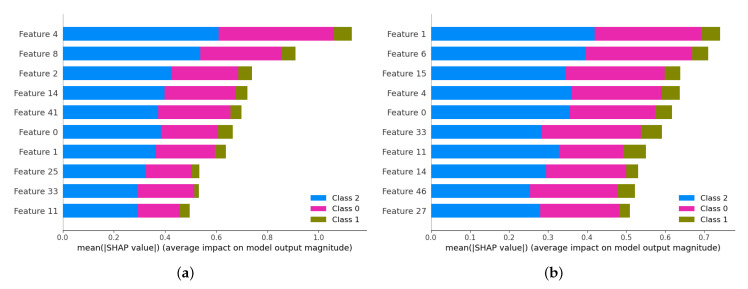
“To facilitate the visualization of the learned feature representations, we use Shapley values [45] to quantify the importance of features in the algorithm predictions.”
Method
Research works printed but not linked: 8
- Bachman P. Alsharif O. Precup D. Learning with pseudo-ensembles Advances in Neural Information Processing Systems 27 (NIPS 2014) Neural Information Processing Systems Foundation, Inc. (NeurIPS) La Jolla, CA, USA 2014 Volume 27
- Sajjadi M. Javanmardi M. Tasdizen T. Regularization with stochastic transformations and perturbations for deep semi-supervised learning Advances in Neural Information Processing Systems 29 (NIPS 2016) Neural Information Processing Systems Foundation, Inc. (NeurIPS) La Jolla, CA, USA 2016 Volume 29
- Laine S. Aila T. Temporal ensembling for semi-supervised learning arXiv 2016 1610.02242
- Berthelot D. Carlini N. Goodfellow I. Papernot N. Oliver A. Raffel C.A. Mixmatch: A holistic approach to semi-supervised learning Advances in Neural Information Processing Systems 32 (NeurIPS 2019) Neural Information Processing Systems Foundation, Inc. (NeurIPS) La Jolla, CA, USA 2019 Volume 32
- Tarvainen A. Valpola H. Mean teachers are better role models: Weight-averaged consistency targets improve semi-supervised deep learning results Advances in Neural Information Processing Systems 30 (NIPS 2017) Neural Information Processing Systems Foundation, Inc. (NeurIPS) La Jolla, CA, USA 2017 Volume 30
- Lee D.H. Pseudo-label: The simple and efficient semi-supervised learning method for deep neural networks Proceedings of the Workshop on Challenges in Representation Learning ICML, Atlanta, USA 16–21 June 2013 Volume 3 896
- Rey A. L’examen Clinique en Psychologie University Press of France Paris, France 1958
- Sheikh J.I. Yesavage J.A. Geriatric Depression Scale (GDS): Recent evidence and development of a shorter version Clin. Gerontol. J. Aging Ment. Health 1986 5 165 173
Cited by
Deep learning in food category recognition
Zhang, Y., Deng, L., Zhu, H., Wang, W., Ren, Z., Zhou, Q., Lu, S., Sun, S., Zhu, Z., Gorriz, J. M., et al. (2023) · Information Fusion · doi:10.1016/j.inffus.2023.101859 · Cited by 357
Artificial intelligence for dementia prevention
Newby, D., Orgeta, V., Marshall, C. R., Lourida, I., Albertyn, C. P., Tamburin, S., Raymont, V., Veldsman, M., Koychev, I., Bauermeister, S., et al. (2023) · Alzheimer's & Dementia · doi:10.1002/alz.13463 · Cited by 42
“37,38 Amorein-depthdescriptionofML methodologies and applications to the broader dementia field can be found in the methods optimization paper also included in this special issue.”
MethodArtificial intelligence for dementia research methods optimization
Bucholc, M., James, C., Khleifat, A. A., Badhwar, A., Clarke, N., Dehsarvi, A., Madan, C. R., Marzi, S. J., Shand, C., Schilder, B. M., et al. (2023) · Alzheimer's & Dementia · doi:10.1002/alz.13441 · Cited by 40
“87 There are several key challenges that limit the translation of DL methods into clinical practice.”
BackgroundResearch on digital tool in cognitive assessment: a bibliometric analysis
Chen, L., Zhen, W., & Peng, D. (2023) · Frontiers in Psychiatry · doi:10.3389/fpsyt.2023.1227261 · Cited by 26
“At a cognitive and behavioral level, ML systems can extract reliable features originating from the neuropsychological assessment, automatically classify different disease phenotypes, identify development stages, and even predict disease conversion (75, 76).”
BackgroundMERGE: A model for multi-input biomedical federated learning
Casella, B., Riviera, W., Aldinucci, M., & Menegaz, G. (2023) · Patterns · doi:10.1016/j.patter.2023.100856 · Cited by 25
“70 However, these are still hot topics, and exploiting FL to preserve data privacy while keeping competitive performance would mark a step forward in the field.”
Background
Metadata
- Authors
- Wang, Y., Gu, X., Hou, W., Zhao, M., Sun, L., & Guo, C.
- Affiliations
- Jilin University (CN)
- First Hospital of Jilin University (CN)
- Corresponding author
- Guo, Chunjie
- Venue
- Brain Sciences
- Publisher
- MDPI AG
- Published
- 2023-02-10
- Volume
- 13
- Issue
- 2
- Pages
- 306
- ISSN
- 2076-3425 (ISSN-L)
- PMC
- PMC9954645
- OpenAlex
- W4320493755
- Cited by
- 17
- References
- 42
- Citations by year
- 2026: 6 · 2025: 6 · 2023: 5
- FWCI
- 3.45
- Type
- journal article
- Language
- en
- Open access
- gold
- doi.org
- Licence
- Locations
- Brain Sciences (publishedVersion, cc-by)
- PubMed Central (publishedVersion, cc-by)
- PubMed (publishedVersion)
- DOAJ (DOAJ: Directory of Open Access Journals) (submittedVersion, cc-by-sa)
- Funders
- the National Natural Science Foundation of China (62072212, 82071442, 20220508125RC, JLSWSRCZX2021-004, 20210101273JC, 2020B47, JDYY2021-A0010)
- the General Program of the National Natural Science Foundation of China (62072212, 82071442, 20220508125RC, JLSWSRCZX2021-004, 20210101273JC, 2020B47, JDYY2021-A0010)
- the Development Project of Jilin Province of China (62072212, 82071442, 20220508125RC, JLSWSRCZX2021-004, 20210101273JC, 2020B47, JDYY2021-A0010)
- the Jilin Provincial Department of Finance (62072212, 82071442, 20220508125RC, JLSWSRCZX2021-004, 20210101273JC, 2020B47, JDYY2021-A0010)
- the Natural Science Foundation of Jilin Province (62072212, 82071442, 20220508125RC, JLSWSRCZX2021-004, 20210101273JC, 2020B47, JDYY2021-A0010)
- Bethune Project of Jilin University (62072212, 82071442, 20220508125RC, JLSWSRCZX2021-004, 20210101273JC, 2020B47, JDYY2021-A0010)
- the Science and Technology Achievement Transformation Fund of the First Hospital of Jilin University (62072212, 82071442, 20220508125RC, JLSWSRCZX2021-004, 20210101273JC, 2020B47, JDYY2021-A0010)
- Topics
- Health Sciences › Medicine › Psychiatry and Mental health › Dementia and Cognitive Impairment Research
- Health Sciences › Health Professions › Health Information Management › Artificial Intelligence in Healthcare
- Life Sciences › Neuroscience › Cellular and Molecular Neuroscience › Alzheimer's disease research and treatments
- Keywords
- Alzheimer's disease, mild cognitive impairment, semi-supervised learning, neuropsychological assessment, pseudo-labeling, consistency regularization, limited labeled data, ADNI
About these checks
Registry, retraction, Cites and statistics results are computed, not judged, with one exception: a printed reference that no index lists is read once by a model before it counts as a citation error. Claims are extracted by a model and kept only when their quote appears verbatim in the text; each cited source is then checked, with a model’s help, for whether it says what the claim relies on. Those verdicts can be wrong — read the claim’s quote and the cited source before relying on one.
Statistics and arithmetic are recomputed, not judged.
Confidence bands are shown only for fields calibrated on our annotated test set. None is calibrated yet, so no band is shown.
What counts as a claim ›How we measure confidence ›How we check this ›
Are you an author, or do you see a problem with this page? Request a review
Data sources
Bibliographic data: Semantic Scholar, OpenAlex, Crossref.
Contains information from the Semantic Scholar Academic Graph Datasets, made available under the ODC Attribution License (ODC-BY 1.0).
Semantic Scholar’s data is described in: Kinney, R., et al. (2023). The Semantic Scholar Open Data Platform. arXiv:2301.10140.
