

The DOI matches its Crossref record.
Novel Silyl Ether-Based Acid-Cleavable Antibody-MMAE Conjugates with Appropriate Stability and Efficacy
Open accessAbstract
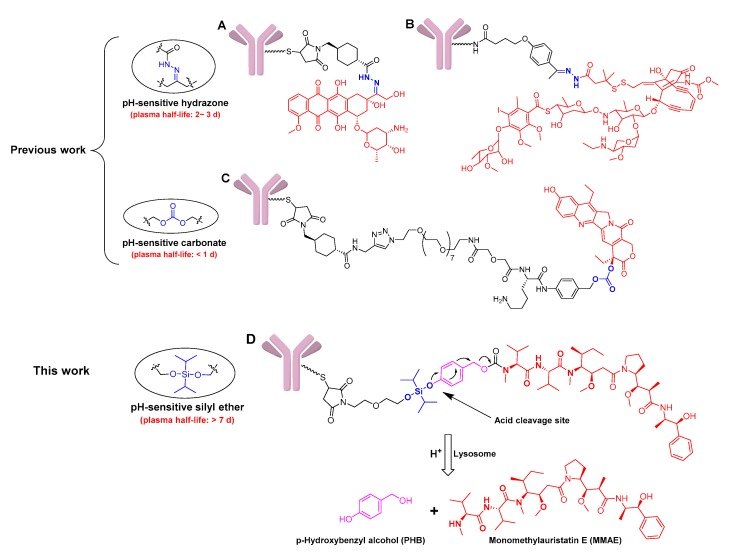
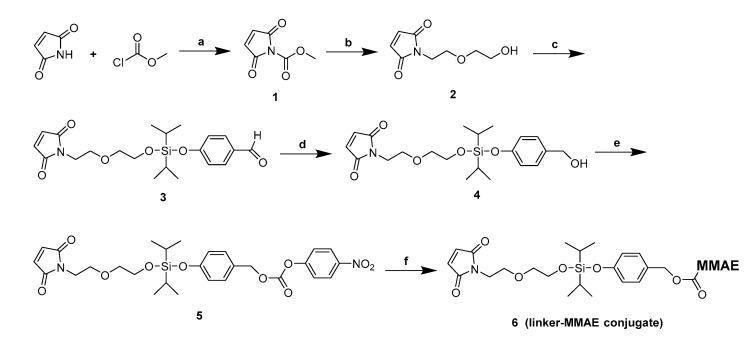
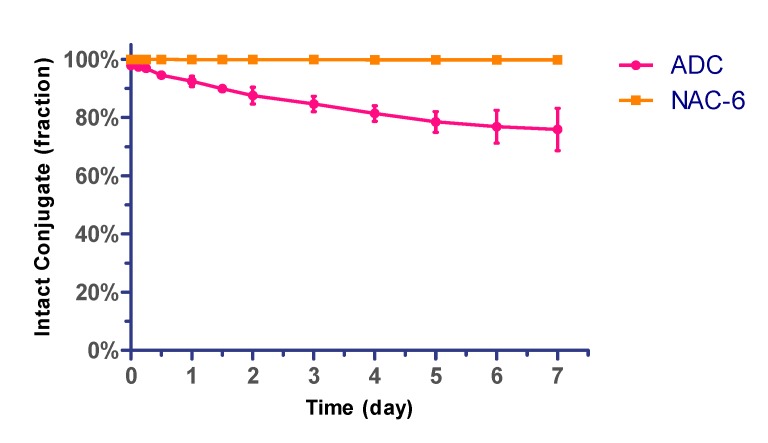
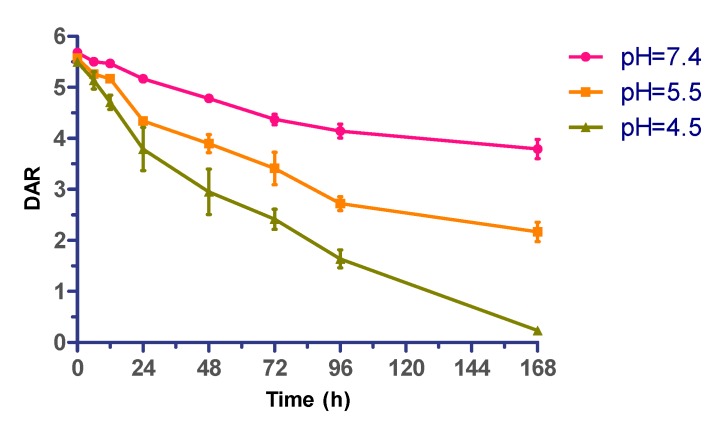
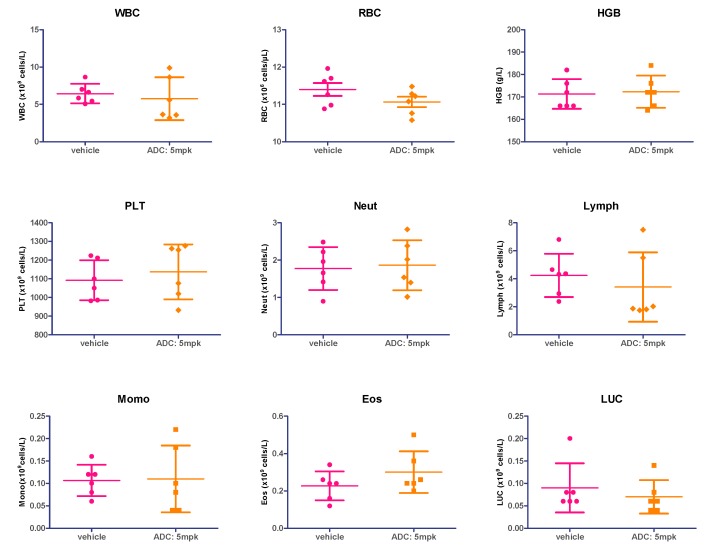
Antibody-drug conjugate (ADC) is a novel efficient drug delivery system that has been successfully used in clinical practice, and it has become a research hotspot in the anti-tumor drug field. Acid-cleavable linkers were first used in clinical ADCs, but their structural variety (e.g., hydrazone and carbonate) is still limited, and their stability is usually insufficient. Designing novel acid-cleavable linkers for the conjugation of the popular cytotoxin monomethyl auristatin E (MMAE) has always been a significant topic. In this paper, we generate a novel, silyl ether-based acid-cleavable antibody-MMAE conjugate, which skillfully achieves efficient combination of amino-conjugated MMAE with the acid-triggered silyl ether group by introducing p-hydroxybenzyl alcohol (PHB). The stability, acid-dependence cleavage, effective mechanism, efficacy and safety of the resulting ADC were systematically studied; the results show that it exhibits a significant improvement in stability, while maintaining appropriate efficacy and controlled therapeutic toxicity. This strategy is expected to expand a new type of acid-cleavable linkers for the development of ADCs with highly potent payloads.
Overview
The claims and statistics of this paper haven’t been checked yet.
Run the check — free, no account needed. It reads the open-access text and checks the sources it cites.
Integrity signals
Registry
Cites
Statistics
Figures
Verification
Claims the paper makes
The claims and statistics of this paper haven’t been checked yet.
Run the check — free, no account needed. It reads the open-access text and checks the sources it cites.
Claims other papers make about this one
Each is checked against this paper’s own text: does it say what the citing paper says it does?
The source backs part of the claim, not all of it — or backs it for a different population, condition or comparison.
In the citing paper
“By contrast, silyl ether linkers have been engineered to remain more stable in the plasma (t1/2 > 7 days), providing more controlled, site-specific drug release than hydrazone or carbonate linkers59,60.”
From The evolving landscape of antibody-drug conjugates (ADCs) for treatment of prostate cancer (2025) · cites this paper as [60]
Experimental — accuracy not yet measured
Self-check
Percentages, sums and reported differences re-computed from the paper’s own numbers.
The self-check needs the paper’s full text.
Citations
Cites
Still being checked.
Research works printed but not linked: 57
- Peters, 2015, Antibody-drug conjugates as novel anti-cancer chemotherapeutics, Biosci. Rep., 35, e00225, 10.1042/BSR20150089 · DOI
- Perez, 2014, Antibody-drug conjugates: Current status and future directions, Drug Discov. Today, 19, 869, 10.1016/j.drudis.2013.11.004 · DOI
- Zhou, Q. (2017). Site-specific antibody conjugation for ADC and beyond. Biomedicines, 5. · DOI
- Zhang, 2017, A new construct of antibody-drug conjugates for treatment of B-cell non-Hodgkin’s lymphomas, Eur. J. Pharm. Sci., 103, 36, 10.1016/j.ejps.2017.02.034 · DOI
- Stringhini, 2017, Non-internalizing antibody-drug conjugates display potent anti-cancer activity upon proteolytic release of monomethyl auristatin E in the subendothelial extracellular matrix, Int. J. Cancer, 140, 1670, 10.1002/ijc.30569 · DOI
- Zolot, 2013, Antibody-drug conjugates, Nat. Rev. Drug. Discov., 12, 259, 10.1038/nrd3980 · DOI
- Beck, 2017, Strategies and challenges for the next generation of antibody-drug conjugates, Nat. Rev. Drug. Discov., 16, 315, 10.1038/nrd.2016.268 · DOI · Paper page
- Lyon, 2018, Drawing lessons from the clinical development of antibody-drug conjugates, Drug. Discov. Today Technol., 30, 105, 10.1016/j.ddtec.2018.10.001 · DOI
- Gebleux, 2016, Antibody-drug conjugates: Current status and future perspectives, Pharm. Ther., 167, 48, 10.1016/j.pharmthera.2016.07.012 · DOI
- Ekholm, 2016, Introducing glycolinkers for the functionalization of cytotoxic drugs and applications in antibody-drug conjugation chemistry, ChemMedChem, 11, 2501, 10.1002/cmdc.201600372 · DOI
- Jain, 2015, Current ADC linker chemistry, Pharm. Res., 32, 3526, 10.1007/s11095-015-1657-7 · DOI
- Diamantis, 2016, Antibody-drug conjugates-an emerging class of cancer treatment, Br. J. Cancer, 114, 362, 10.1038/bjc.2015.435 · DOI
- Gordon, 2015, Field guide to challenges and opportunities in antibody-drug conjugates for chemists, Bioconjug. Chem., 26, 2198, 10.1021/acs.bioconjchem.5b00399 · DOI
- Tsuchikama, 2018, Antibody-drug conjugates: Recent advances in conjugation and linker chemistries, Protein Cell, 9, 33, 10.1007/s13238-016-0323-0 · DOI
- Casey, 2010, Sensors and regulators of intracellular pH, Nat. Rev. Mol. Cell. Biol., 11, 50, 10.1038/nrm2820 · DOI · Paper page
- Nolting, 2013, Linker technologies for antibody-drug conjugates, Methods Mol. Biol., 1045, 71, 10.1007/978-1-62703-541-5_5 · DOI
- Cardillo, 2011, Humanized anti-trop-2 igg-sn-38 conjugate for effective treatment of diverse epithelial cancers: Preclinical studies in human cancer xenograft models and monkeys, Clin. Cancer Res., 17, 3157, 10.1158/1078-0432.CCR-10-2939 · DOI
- Dan, 2018, Antibody-drug conjugates for cancer therapy: Chemistry to clinical implications, Pharmaceuticals, 11, 32, 10.3390/ph11020032 · DOI
- Chari, 2014, Antibody-drug conjugates: An emerging concept in cancer therapy, Angew. Chem. Int. Ed. Engl., 53, 3796, 10.1002/anie.201307628 · DOI · Paper page
- Baron, 2018, Gemtuzumab ozogamicin for the treatment of acute myeloid leukemia, Expert Rev. Clin. Pharmacol., 11, 549, 10.1080/17512433.2018.1478725 · DOI
- Tanaka, 2009, The cytotoxic effects of gemtuzumab ozogamicin (mylotarg) in combination with conventional antileukemic agents by isobologram analysis in vitro, Anticancer Res., 29, 4589
- Moussa, 2016, Immunogenicity of therapeutic protein aggregates, J. Pharm. Sci., 105, 417, 10.1016/j.xphs.2015.11.002 · DOI
- Adem, 2014, Auristatin antibody drug conjugate physical instability and the role of drug payload, Bioconjug. Chem., 25, 656, 10.1021/bc400439x · DOI
- Chen, H., Lin, Z., Arnst, K.E., Miller, D.D., and Li, W. (2017). Tubulin inhibitor-based antibody-drug conjugates for cancer therapy. Molecules, 22. · DOI
- Vankemmelbeke, 2016, Third-generation antibody drug conjugates for cancer therapy-a balancing act, Deliv, 7, 141, 10.4155/tde-2016-0002 · DOI
- Senter, 2012, The discovery and development of brentuximab vedotin for use in relapsed Hodgkin lymphoma and systemic anaplastic large cell lymphoma, Nat. Biotechnol., 30, 631, 10.1038/nbt.2289 · DOI
- Doronina, 2008, Novel peptide linkers for highly potent antibody-auristatin conjugate, Bioconjug. Chem., 19, 1960, 10.1021/bc800289a · DOI
- Maderna, 2015, Recent advances in the development of new auristatins: Structural modifications and application in antibody drug conjugates, Mol. Pharm., 12, 1798, 10.1021/mp500762u · DOI
- Anami, 2018, Glutamic acid-valine-citrulline linkers ensure stability and efficacy of antibody-drug conjugates in mice, Nat. Commun., 9, 2512, 10.1038/s41467-018-04982-3 · DOI
- Larson, 2005, Final report of the efficacy and safety of gemtuzumab ozogamicin (mylotarg) in patients with cd33-positive acute myeloid leukemia in first recurrence, Cancer, 104, 1442, 10.1002/cncr.21326 · DOI
- Alley, 2008, Contribution of linker stability to the activities of anticancer immunoconjugates, Bioconjug. Chem., 19, 759, 10.1021/bc7004329 · DOI
- Gu, 2014, Controlled acid-mediated regioselectiveo-desilylations for multifunctionalization of cyclodextrins, Eur. J. Org. Chem., 2014, 5793, 10.1002/ejoc.201402802 · DOI
- Yan, 2017, Controlled release of silyl ether camptothecin from thiol-ene click chemistry-functionalized mesoporous silica nanoparticles, Acta Biomaterijalia, 51, 471, 10.1016/j.actbio.2017.01.062 · DOI
- Parrott, 2010, Tunable bifunctional silyl ether cross-linkers for the design of acid-sensitive biomaterials, J. Am. Chem. Soc., 132, 17928, 10.1021/ja108568g · DOI
- Chu, 2014, Particle replication in nonwetting templates nanoparticles with tumor selective alkyl silyl ether docetaxel prodrug reduces toxicity, Nano. Lett., 14, 1472, 10.1021/nl4046558 · DOI
- Assadi, 2006, Synthesis and characterization of methylsalicylate and acetaminophen silyl ether canditates for prodrugs, Main Group Chem., 5, 179, 10.1080/10241220701456032 · DOI
- Finniss, 2014, A versatile acid-labile linker for antibody–drug conjugates, Med. Chem. Commun., 5, 1355, 10.1039/C4MD00150H · DOI
- Wang, Y., Fan, S., Zhong, W., Zhou, X., and Li, S. (2017). Development and properties of valine-alanine based antibody-drug conjugates with monomethyl auristatin e as the potent payload. Int. J. Mol. Sci., 18. · DOI
- Hendriks, 2013, Impact of tumor HER2/ERBB2 expression level on HER2-targeted liposomal doxorubicin-mediated drug delivery: Multiple low-affinity interactions lead to a threshold effect, Mol. Cancer Ther., 12, 1816, 10.1158/1535-7163.MCT-13-0180 · DOI
- Li, 2008, Targeting HER2-positive breast cancer with trastuzumab-dm1, an antibody-cytotoxic drug conjugate, Cancer Res., 68, 9280, 10.1158/0008-5472.CAN-08-1776 · DOI
- Nunes, 2017, Use of a next generation maleimide in combination with THIOMAB™ antibody technology delivers a highly stable, potent and near homogeneous THIOMAB™ antibody-drug conjugate (TDC), RSC Adv., 7, 24828, 10.1039/C7RA04606E · DOI
- Ray, 2007, Mechanism of action of the microtubule-targeted antimitotic depsipeptide tasidotin (formerly ILX-651) and its major metabolite tasidotin c-carboxylate, Cancer Res., 67, 3767, 10.1158/0008-5472.CAN-06-3065 · DOI
- Maderna, 2014, Discovery of cytotoxic dolastatin 10 analogues with n-terminal modifications, J. Med. Chem., 57, 10527, 10.1021/jm501649k · DOI
- Jiang, 2016, HER2-targeted antibody drug conjugates for ovarian cancer therapy, Eur. J. Pharm. Sci., 93, 274, 10.1016/j.ejps.2016.08.015 · DOI
- Law, 2006, Lymphocyte activation antigen CD70 expressed by renal cell carcinoma is a potential therapeutic target for anti-CD70 antibody-drug conjugates, Cancer Res., 66, 2328, 10.1158/0008-5472.CAN-05-2883 · DOI
- Li, 2016, An anti-her2 antibody conjugated with monomethyl auristatin e is highly effective in her2-positive human gastric cancer, Cancer Biol. Ther., 17, 346, 10.1080/15384047.2016.1139248 · DOI
- Zhang, 2018, Immolation of p-aminobenzyl ether linker and payload potency and stability determine the cell-killing activity of antibody-drug conjugates with phenol-containing payloads, Bioconjug. Chem., 29, 267, 10.1021/acs.bioconjchem.7b00576 · DOI
- Gianolio, 2012, Targeting HER2-positive cancer with dolastatin 15 derivatives conjugated to trastuzumab, novel antibody-drug conjugates, Cancer Chemother. Pharm., 70, 439, 10.1007/s00280-012-1925-8 · DOI
- Francisco, 2003, Cac10-vcmmae, an anti-CD30-monomethyl auristatin e conjugate with potent and selective antitumor activity, Blood, 102, 1458, 10.1182/blood-2003-01-0039 · DOI
- Trail, 2013, Antibody drug conjugates as cancer therapeutics, Antibodies, 2, 113, 10.3390/antib2010113 · DOI
- Parrott, 2012, Incorporation and controlled release of silyl ether prodrugs from print nanoparticles, J. Am. Chem. Soc., 134, 7978, 10.1021/ja301710z · DOI
- Trail, 1993, Cure of xenografted human carcinomas by BR96-doxorubicin immunoconjugates, Science, 261, 212, 10.1126/science.8327892 · DOI
- Boghaert, 2008, Determination of pharmacokinetic values of calicheamicin-antibody conjugates in mice by plasmon resonance analysis of small (5 microl) blood samples, Cancer Chemother. Pharm., 61, 1027, 10.1007/s00280-007-0560-2 · DOI
- Saleh, 2000, PhaseI trial of the anti-lewis y drug immunoconjugate BR96-doxorubicin in patients with lewis y-expressing epithelial tumors, J. Clin. Oncol. Off. J. Am. Soc. Clin. Oncol., 18, 2282, 10.1200/JCO.2000.18.11.2282 · DOI
- Govindan, 2009, Ceacam5-targeted therapy of human colonic and pancreatic cancer xenografts with potent labetuzumab-sn-38 immunoconjugates, Clin. Cancer. Res., 15, 6052, 10.1158/1078-0432.CCR-09-0586 · DOI
- Weber, 2002, Enhanced kidney clearance with an ester-linked 99mtc-radiolabeled antibody fab’-chelator conjugate, Bioconjug. Chem., 1, 431, 10.1021/bc00006a010 · DOI
- Jeffrey, 2006, Development and properties of β-glucuronide linkers for monoclonal antibody-drug conjugates, Bioconjug. Chem., 17, 831, 10.1021/bc0600214 · DOI
Cited by
Sorted by citations
Antibody–drug conjugates: Recent advances in linker chemistry
Su, Z., Xiao, D., Xie, F., Liu, L., Wang, Y., Fan, S., Zhou, X., & Li, S. (2021) · Acta Pharmaceutica Sinica B · doi:10.1016/j.apsb.2021.03.042 · Cited by 403
Self-citationThe evolving landscape of antibody-drug conjugates (ADCs) for treatment of prostate cancer
Lin, C., Hadfield, M. J., Santopietro, A., Lagos, G., Cheng, L., El-Deiry, W. S., Aggarwal, R., Mega, A., Hyams, E., & Carneiro, B. A. (2025) · npj Precision Oncology · doi:10.1038/s41698-025-01131-0 · Cited by 20
Metadata
- Authors
- Wang, Y., Fan, S., Xiao, D., Xie, F., Li, W., Zhong, W., & Zhou, X.
- Affiliations
- National Engineering Research Center for the Emergency Drug, Beijing Institute of Pharmacology and Toxicology, Beijing 100850, China
- Corresponding author
- Zhong, Wu
- Zhou, Xinbo
- Venue
- Cancers
- Publisher
- MDPI AG
- Published
- 2019-07-08
- Volume
- 11
- Issue
- 7
- Pages
- 957
- ISSN
- 2072-6694 (ISSN-L)
- PMC
- PMC6678733
- OpenAlex
- W2955413137
- Cited by
- 50
- References
- 0
- Citations by year
- 2026: 9 · 2025: 10 · 2024: 8 · 2023: 5 · 2022: 5 · 2021: 8 · 2020: 4 · 2019: 1
- FWCI
- 2.97
- Type
- journal article
- Language
- en
- Open access
- gold
- dx.doi.org
- Licence
- Locations
- Cancers (publishedVersion, cc-by)
- Europe PMC (PubMed Central) (publishedVersion, cc-by)
- PubMed Central (publishedVersion, cc-by)
- PubMed (publishedVersion)
- DOAJ (DOAJ: Directory of Open Access Journals) (submittedVersion)
- Funders
- National Science and Technology Major Project for Major New Drugs Innovation and Development (2018ZX09711003-009)
- Chinese National Natural Science Foundation (81872736)
- Topics
- Life Sciences › Immunology and Microbiology › Immunology › Monoclonal and Polyclonal Antibodies Research
- Life Sciences › Immunology and Microbiology › Immunology › Toxin Mechanisms and Immunotoxins
- Physical Sciences › Chemistry › Organic Chemistry › Synthesis and pharmacology of benzodiazepine derivatives
- Keywords
- antibody-drug conjugates, silyl ethers, monomethyl auristatin E, p-hydroxybenzyl alcohol, linker stability, cytotoxic payloads, targeted cancer therapy
About these checks
Registry, retraction, Cites and statistics results are computed, not judged, with one exception: a printed reference that no index lists is read once by a model before it counts as a citation error. Claims are extracted by a model and kept only when their quote appears verbatim in the text; each cited source is then checked, with a model’s help, for whether it says what the claim relies on. Those verdicts can be wrong — read the claim’s quote and the cited source before relying on one.
Statistics and arithmetic are recomputed, not judged.
Confidence bands are shown only for fields calibrated on our annotated test set. None is calibrated yet, so no band is shown.
What counts as a claim ›How we measure confidence ›How we check this ›
Are you an author, or do you see a problem with this page? Request a review
How to cite
Cite CoChat for the checks on this page, and the paper for its own findings.
- This page
- CoChat. (2026). Citation check: Novel Silyl Ether-Based Acid-Cleavable Antibody-MMAE Conjugates with Appropriate Stability and Efficacy. https://app.cochat.ai/papers/10.3390/cancers11070957
- The paper
- Wang, Y., Fan, S., Xiao, D., Xie, F., Li, W., Zhong, W., & Zhou, X. (2019). Novel Silyl Ether-Based Acid-Cleavable Antibody-MMAE Conjugates with Appropriate Stability and Efficacy. Cancers. https://doi.org/10.3390/cancers11070957
