

The DOI matches its Crossref record; 441 of the 460 references it cites were found in a registry or an index.
Multifaceted Interplay between Hormones, Growth Factors and Hypoxia in the Tumor Microenvironment
Open accessAbstract
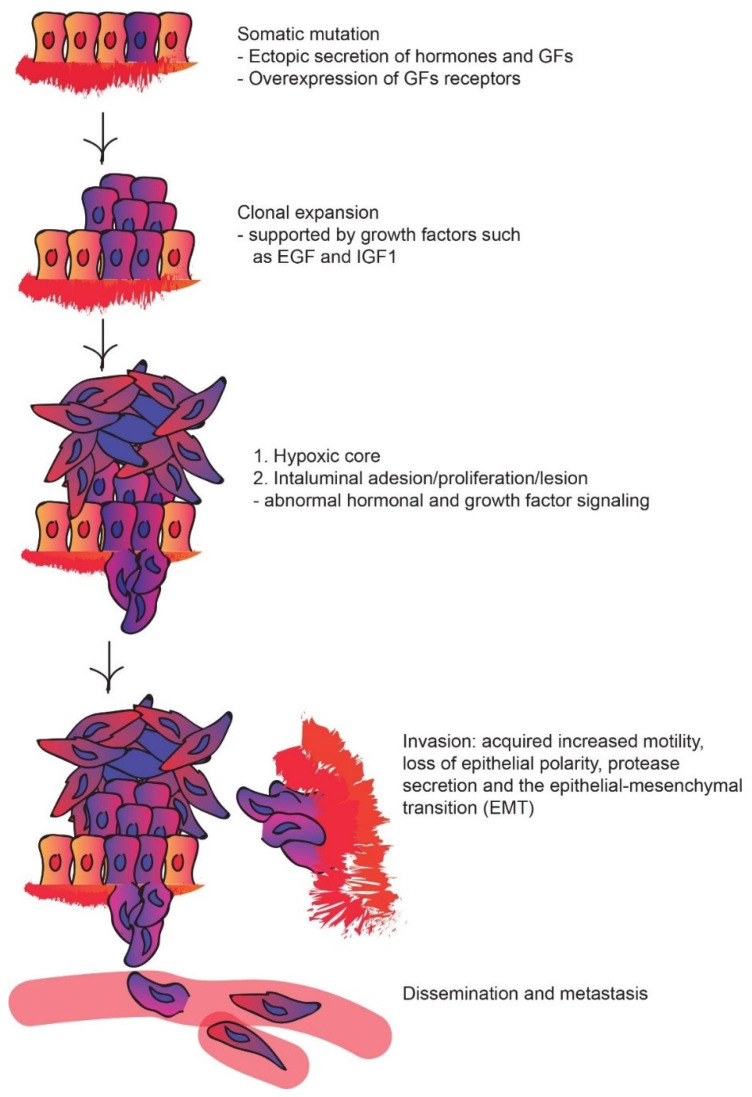
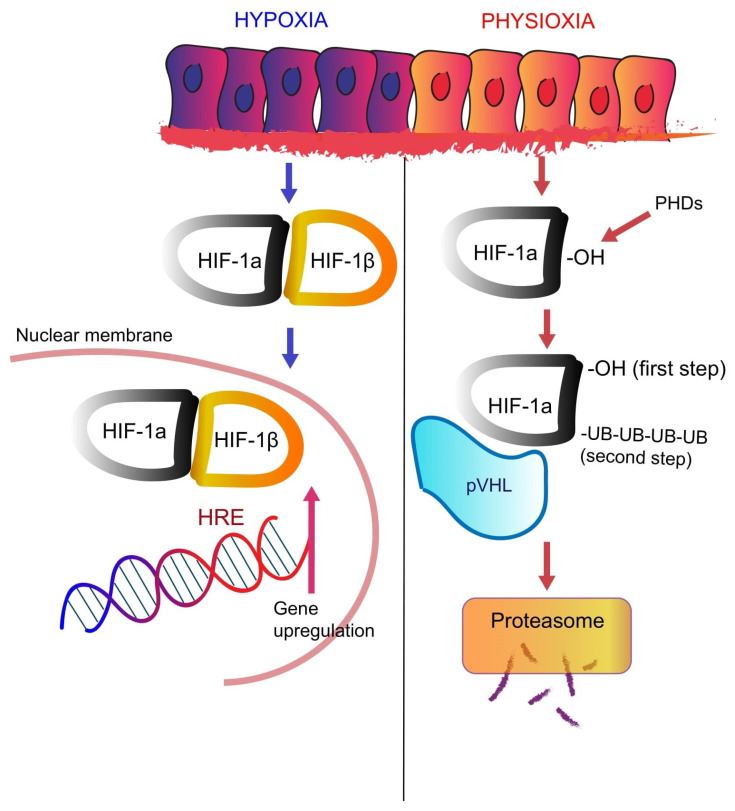
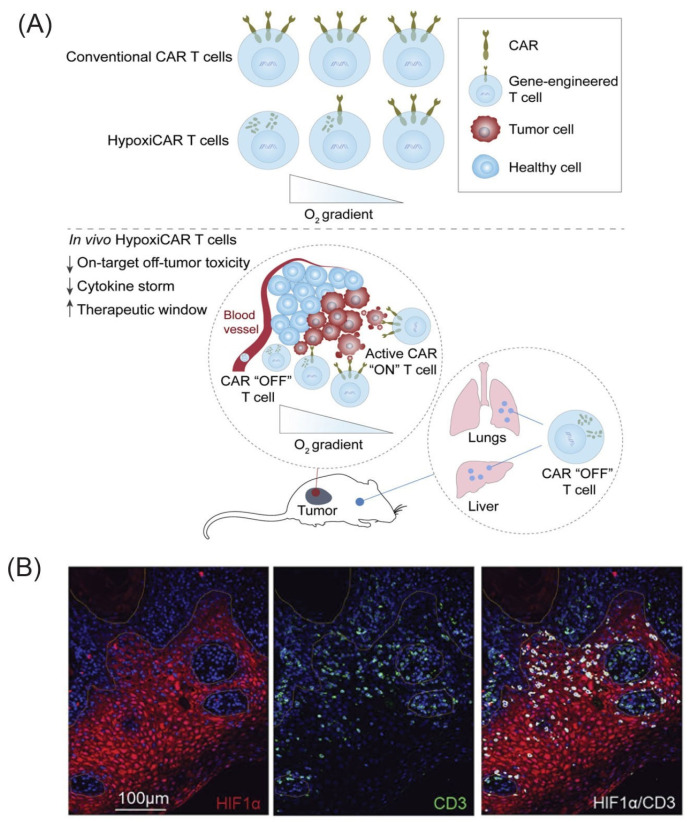
Hormones and growth factors (GFs) are signaling molecules implicated in the regulation of a variety of cellular processes. They play important roles in both healthy and tumor cells, where they function by binding to specific receptors on target cells and activating downstream signaling cascades. The stages of tumor progression are influenced by hormones and GF signaling. Hypoxia, a hallmark of cancer progression, contributes to tumor plasticity and heterogeneity. Most solid tumors contain a hypoxic core due to rapid cellular proliferation that outgrows the blood supply. In these circumstances, hypoxia-inducible factors (HIFs) play a central role in the adaptation of tumor cells to their new environment, dramatically reshaping their transcriptional profile. HIF signaling is modulated by a variety of factors including hormones and GFs, which activate signaling pathways that enhance tumor growth and metastatic potential and impair responses to therapy. In this review, we summarize the role of hormones and GFs during cancer onset and progression with a particular focus on hypoxia and the interplay with HIF proteins. We also discuss how hypoxia influences the efficacy of cancer immunotherapy, considering that a hypoxic environment may act as a determinant of the immune-excluded phenotype and a major hindrance to the success of adoptive cell therapies.
Overview
The claims and statistics of this paper haven’t been checked yet.
Run the check — free, no account needed. It reads the open-access text and checks the sources it cites.
Integrity signals
Registry
Cites
Statistics
Figures
Verification
Claims the paper makes
The claims and statistics of this paper haven’t been checked yet.
Run the check — free, no account needed. It reads the open-access text and checks the sources it cites.
Claims other papers make about this one
Each is checked against this paper’s own text: does it say what the citing paper says it does?
The source backs part of the claim, not all of it — or backs it for a different population, condition or comparison.
In the citing paper
“For instance, hypoxia impacts the efficiency of cancer immunotherapy by contributing to the immune-eliminated phenotype, which is a key barrier to the therapeutic effect of adoptive cell therapy (5).”
From Cross-talk between HIF and PD-1/PD-L1 pathways in carcinogenesis and therapy (2022) · cites this paper as [5]
Experimental — accuracy not yet measured
Self-check
Percentages, sums and reported differences re-computed from the paper’s own numbers.
The self-check needs the paper’s full text.
Citations
Cites
3 retracted
Gilkes, D. M., Bajpai, S. K., Chaturvedi, P., Wirtz, D., & Semenza, G. L. (2013) · Journal of Biological Chemistry · doi:10.1074/jbc.m112.442939 · Cited by 473
RetractedRETRACTED: Collagen Prolyl Hydroxylases Are Essential for Breast Cancer Metastasis
Gilkes, D. M., Chaturvedi, P., Bajpai, S., Wong, C. C., Wei, H., Pitcairn, S., Hubbi, M. E., Wirtz, D., & Semenza, G. L. (2013) · Cancer Research · doi:10.1158/0008-5472.can-12-3963 · Cited by 296
RetractedProcollagen lysyl hydroxylase 2 is essential for hypoxia-induced breast cancer metastasis
Gilkes, D. M., Bajpai, S., Wong, C. C., Chaturvedi, P., Hubbi, M. E., Wirtz, D., & Semenza, G. L. (2013) · Molecular Cancer Research · doi:10.1158/1541-7786.mcr-12-0629 · Cited by 252
RetractedTumor angiogenesis: therapeutic implications
Sherwood, L. M., Parris, E. E., & Folkman, J. (1971) · New England Journal of Medicine · doi:10.1056/nejm197111182852108 · Cited by 10,187
Isolation of Putative Progenitor Endothelial Cells for Angiogenesis
Asahara, T., Murohara, T., Sullivan, A., Silver, M., van der Zee, R., Li, T., Witzenbichler, B., Schatteman, G., & Isner, J. M. (1997) · Science · doi:10.1126/science.275.5302.964 · Cited by 8,725
Molecular Mechanisms of Stress-Responsive Changes in Collagen and Elastin Networks in Skin
Aziz, J., Shezali, H., Radzi, Z., Yahya, N. A., Abu Kassim, N. H., Czernuszka, J., & Rahman, M. T. (2016) · Skin Pharmacology and Physiology · doi:10.1159/000447017 · Cited by 7,323
Wang, G. L., Jiang, B. H., Rue, E. A., & Semenza, G. L. (1995) · Proceedings of the National Academy of Sciences · doi:10.1073/pnas.92.12.5510 · Cited by 6,212
Jaakkola, P., Mole, D. R., Tian, Y.-M., Wilson, M. I., Gielbert, J., Gaskell, S. J., Kriegsheim, A. V., Hebestreit, H. F., Mukherji, M., Schofield, C. J., et al. (2001) · Science · doi:10.1126/science.1059796 · Cited by 5,535
Chimeric Antigen Receptor T Cells for Sustained Remissions in Leukemia
Maude, S. L., Frey, N., Shaw, P. A., Aplenc, R., Barrett, D. M., Bunin, N. J., Chew, A., Gonzalez, V. E., Zheng, Z., Lacey, S. F., et al. (2014) · New England Journal of Medicine · doi:10.1056/nejmoa1407222 · Cited by 5,413
Targeting Hypoxia-Inducible Factors for the Treatment of Anemia in Chronic Kidney Disease Patients
Locatelli, F., Fishbane, S. N., Block, G. A., & Macdougall, I. C. (2017) · American Journal of Nephrology · doi:10.1159/000455166 · Cited by 4,836
Cited by
Sorted by citations
Glaviano, A., Lau, H., Carter, L. M., Lee, E. H. C., Lam, H. Y., Okina, E., Tan, D. J. J., Tan, W., Ang, H. L., Carbone, D., et al. (2025) · Journal of Hematology & Oncology · doi:10.1186/s13045-024-01634-6 · Cited by 169
Cross-talk between HIF and PD-1/PD-L1 pathways in carcinogenesis and therapy
Shurin, M. R., & Umansky, V. (2022) · Journal of Clinical Investigation · doi:10.1172/jci159473 · Cited by 113
“For instance, hypoxia impacts the efficiency of cancer immunotherapy by contributing to the immune-eliminated phenotype, which is a key barrier to the therapeutic effect of adoptive cell therapy (5).”
BackgroundTumour hypoxia in driving genomic instability and tumour evolution
Suvac, A., Ashton, J., & Bristow, R. G. (2025) · Nature reviews. Cancer · doi:10.1038/s41568-024-00781-9 · Cited by 60
Exosomes‐mediated crosstalk between glioma and immune cells in the tumor microenvironment
Guo, X., Sui, R., & Piao, H. (2023) · CNS Neuroscience & Therapeutics · doi:10.1111/cns.14239 · Cited by 39
Yang, Z., Pietrobon, V., Bobbin, M. L., Stefanson, O., Yang, J., Goswami, A., Alphson, B., Choi, H., Magallanes, K., Cai, Q., et al. (2023) · Journal of Translational Medicine · doi:10.1186/s12967-023-04014-9 · Cited by 29
Self-citationMitra, S., Dash, R., Sohel, M., Chowdhury, A., Munni, Y. A., Ali, M. C., Hannan, M. A., Islam, T., & Moon, I. S. (2022) · Current Neuropharmacology · doi:10.2174/1570159x20666220310115004 · Cited by 19
The Role of Hypoxia-Inducible Factor in the Mechanisms of Aging
Dzhalilova, D. S., & Makarova, O. V. (2022) · Biochemistry (Moscow) · doi:10.1134/s0006297922090115 · Cited by 17
Kwon, W., Seo, H. K., Song, G., Lee, M.-K., & Park, W. S. (2025) · Biomedicines · doi:10.3390/biomedicines13010086 · Cited by 15
Influence of tumor microenvironment on the different breast cancer subtypes and applied therapies
Almeida, C. F., Correia‐da‐Silva, G., Teixeira, N. A. A., & Amaral, C. (2024) · Biochemical Pharmacology · doi:10.1016/j.bcp.2024.116178 · Cited by 16
Aquino, A., & Franzese, O. (2025) · Cancers · doi:10.3390/cancers17091547 · Cited by 13
Mei, X.-L., Shuyi, W., Wu, S.-L., Luo, X., Huang, S.-X., Liu, R., & Qiang, Z. (2024) · World Journal of Hepatology · doi:10.4254/wjh.v16.i7.1051 · Cited by 9
Novel targeted therapies and immunological strategies for breast cancer treatment
Mussa, A., Hamid, M. A. M., Talib, M., Ehinnou, I. B., Bragoli, A. J., Hajissa, K., Mokhtar, N. F., Mohamud, R., Al-Hatamleh, M. A. I., & Hassan, R. (2026) · Biochemical Pharmacology · doi:10.1016/j.bcp.2026.117929 · Cited by 10
Shifting the paradigm: engaging multicellular networks for cancer therapy
Hu, J. K., Ascierto, P. A., Cesano, A., Herrmann, V., & Marincola, F. M. (2024) · Journal of Translational Medicine · doi:10.1186/s12967-024-05043-8 · Cited by 8
Self-citationPhua, T. J. (2023) · Frontiers in Aging · doi:10.3389/fragi.2023.1196648 · Cited by 8
Proto, M., Fiore, D., Bifulco, M., & Gazzerro, P. (2023) · International Journal of Molecular Sciences · doi:10.3390/ijms241713427 · Cited by 7
Wang, Z. (2025) · American Journal of Cancer Research · doi:10.62347/vuzh4644 · Cited by 5
Nervous system contributions to small cell lung cancer: Lessons from diverse oncological studies
Liao, S., Kang, K., Yao, Z., & Lü, Y. (2024) · Biochimica et Biophysica Acta (BBA) - Reviews on Cancer · doi:10.1016/j.bbcan.2024.189252 · Cited by 2
Assessing blood vascular endothelial growth factor level in patients with vulvovaginal atrophy
Сергеевна, Г. О., Khizroeva, J. K., Солопова, А. Г., Ivanov, A. E., Blinov, D. V., & Tatarintseva, А. Y. (2025) · Obstetrics Gynecology and Reproduction · doi:10.17749/2313-7347/ob.gyn.rep.2025.684 · Cited by 2
Wang, L. M., Serban, M. F., Pérez, O. A., Seuntjens, J. P., & Ybarra, N. (2025) · International Journal of Radiation Biology · doi:10.1080/09553002.2025.2523294 · Cited by 1
Flores-Estrada, J. J., Jiménez, A., Victoria-Acosta, G., Cortés-Malagón, E. M., Ortiz‐López, M. G., Álvarez-Sánchez, M. E., Núñez-Olvera, S. I., Pérez‐Navarro, Y., Morales‐Reyna, M., & Puente-Rivera, J. (2025) · International Journal of Molecular Sciences · doi:10.3390/ijms26157340 · Cited by 1
Natural and Engineered Cytokines as Cancer Therapeutics
O'Neal, P., Bharathkar, S. K., McCue, A. C., & Spangler, J. B. (2025) · Annual Review of Cancer Biology · doi:10.1146/annurev-cancerbio-070524-040306 · Cited by 1
Xie, Z., Lin, L., Ma, C., & Liu, A. (2024) · Frontiers in Oncology · doi:10.3389/fonc.2024.1439229 · Cited by 1
Zulkifli, A., Nam, H. Y., Ng, W. M., Yasin, N. F., & Kamarul, T. (2025) · Tissue and Cell · doi:10.1016/j.tice.2025.102828
Yang, Z., Pietrobon, V., Bobbin, M. L., Stefanson, O., Yang, J., Goswami, A., Alphson, B., Choi, H., Magallanes, K., Cai, Q., et al. (2023) · Figshare · doi:10.6084/m9.figshare.22608214
Self-citationIncreased TGF-β signaling during antiestrogen therapy in triple-negative breast cancer cells
Dharwal, N., Rathore, D., Shukla, N., & Dave, H. V. (2025) · The Journal of Steroid Biochemistry and Molecular Biology · doi:10.1016/j.jsbmb.2025.106934
Mansour, M. M. H., Aglan, Y. I., El-Aziz, M. F. A., Mandour, M. F., & Dalal, H. A. E. (2026) · The Egyptian Journal of Otolaryngology · doi:10.1186/s43163-026-01082-8
Dai, H., Lu, R., Zhang, M., Hang, Z., Jiang, K., Qin, C., & Zhao, Y. (2026) · Human Genomics · doi:10.1186/s40246-026-00982-3
Ali, I. H., Hasan, S. M., Khedhir, N. H., & Mohsein, O. (2026) · The Ukrainian Biochemical Journal · doi:10.15407/ubj98.03.112
Chen, P., Lu, Q.-D., Liang, H., Guo, M. J., Jia-pin, C., Yang, C.-X., Gu, G., Wang, L., & Zheng, Y. (2026) · Head & Neck · doi:10.1002/hed.70406
Uti, D. E., Alum, E. U., Ogbu, C. O., Ugwu, O. P.-C., Egbung, G. E., Atangwho, I. J., Dagnaw, M., & Jan, A. (2026) · Discover Nano · doi:10.1186/s11671-026-04831-z
Raju, T. K., Garrido, P., Garcı́a-Sanmartı́n, J., & Martı́nez, A. (2026) · Molecules · doi:10.3390/molecules31162791
Li, J.-C., Ma, X.-L., Liu, Z.-J., Chang, X., Wei, Y.-F., Ma, N., Liu, X.-L., Zhang, X., Sun, Y.-W., Zhou, H., et al. (2026) · Bioorganic & Medicinal Chemistry · doi:10.1016/j.bmc.2026.118812
Metadata
- Authors
- Lappano, R., Todd, L. A., Stanic, M., Cai, Q., Maggiolini, M., Marincola, F., & Pietrobon, V.
- Affiliations
- University of Calabria (IT)
- University of Waterloo (CA)
- Department of Laboratory Medicine & Pathobiology, University of Toronto, Toronto, ON M5S 1A8, Canada
- Kite Pharma (United States) (US)
- Corresponding author
- Lappano, Rosamaria
- Pietrobon, Violena
- ORCID
- Venue
- Cancers
- Publisher
- MDPI AG
- Published
- 2022-01-21
- Volume
- 14
- Issue
- 3
- Pages
- 539
- ISSN
- 2072-6694 (ISSN-L)
- PMC
- PMC8833523
- OpenAlex
- W4207059954
- Cited by
- 32
- References
- 460
- Citations by year
- 2026: 8 · 2025: 11 · 2024: 5 · 2023: 5 · 2022: 3
- FWCI
- 0.72
- Type
- journal article
- Language
- en
- Open access
- gold
- doi.org
- Licence
- Locations
- Cancers (publishedVersion, cc-by)
- PubMed Central (publishedVersion, cc-by)
- PubMed (publishedVersion)
- TSpace (University of Toronto) (submittedVersion, cc-by)
- DOAJ (DOAJ: Directory of Open Access Journals) (submittedVersion, cc-by-sa)
- Archive of Doctoral Theses and Digital Collections (University of Calabria) (submittedVersion)
- Funders
- Italian Association for Cancer Research (IG 21322)
- Topics
- Life Sciences › Biochemistry, Genetics and Molecular Biology › Cancer Research › Cancer, Hypoxia, and Metabolism
- Health Sciences › Medicine › Hepatology › Hepatocellular Carcinoma Treatment and Prognosis
- Life Sciences › Biochemistry, Genetics and Molecular Biology › Molecular Biology › Angiogenesis and VEGF in Cancer
- Keywords
- tumor microenvironment, hormones, growth factors, hypoxia, hypoxia-inducible factor, HIF signaling, tumor progression, tumor heterogeneity, metastasis, cancer immunotherapy, immune-excluded phenotype, adoptive immunotherapy, treatment resistance
About these checks
Registry, retraction, Cites and statistics results are computed, not judged, with one exception: a printed reference that no index lists is read once by a model before it counts as a citation error. Claims are extracted by a model and kept only when their quote appears verbatim in the text; each cited source is then checked, with a model’s help, for whether it says what the claim relies on. Those verdicts can be wrong — read the claim’s quote and the cited source before relying on one.
Statistics and arithmetic are recomputed, not judged.
Confidence bands are shown only for fields calibrated on our annotated test set. None is calibrated yet, so no band is shown.
What counts as a claim ›How we measure confidence ›How we check this ›
Are you an author, or do you see a problem with this page? Request a review
