

mRNA-Lipid Nanoparticle (LNP) Delivery of Humanized EpCAM-CD3 Bispecific Antibody Significantly Blocks Colorectal Cancer Tumor Growth
Open accessThe DOI matches its Crossref record; 32 of the 32 references it cites were found in a registry or an index.
Abstract
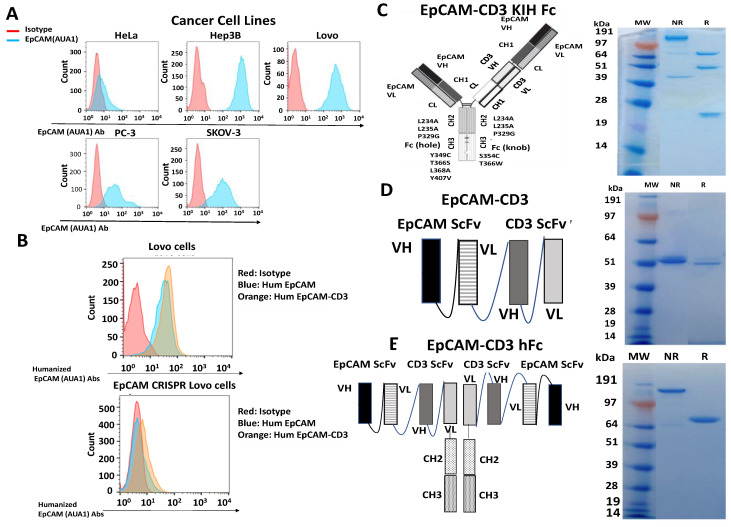
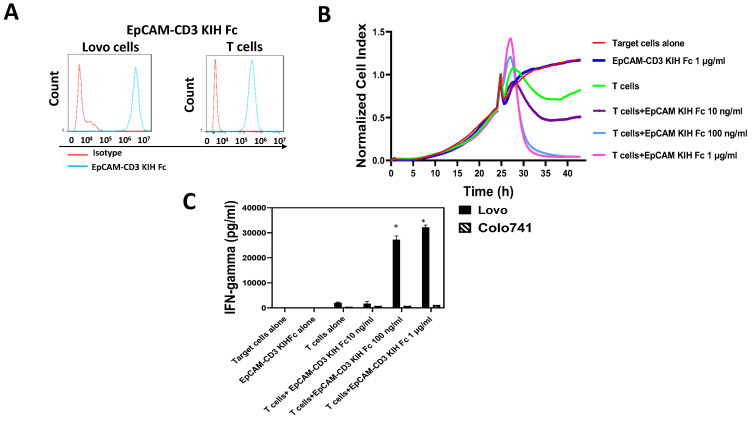
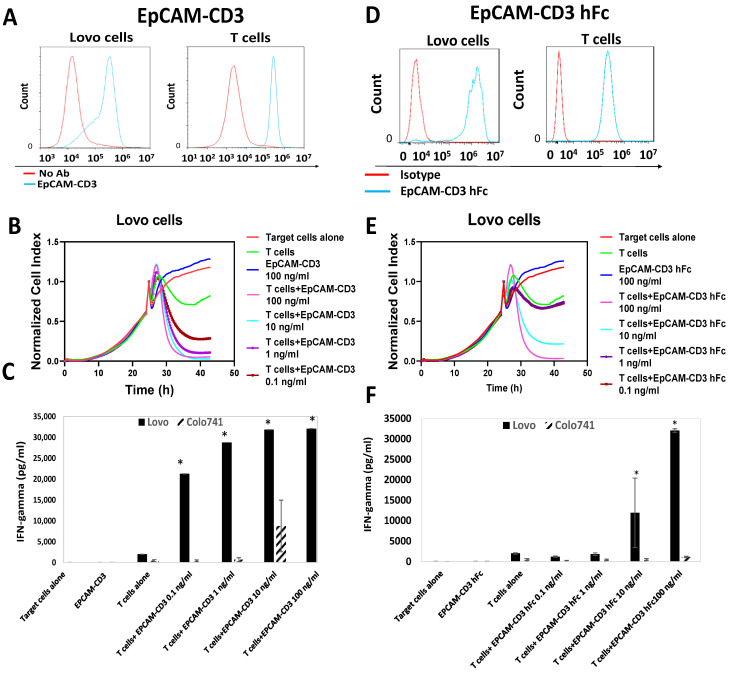
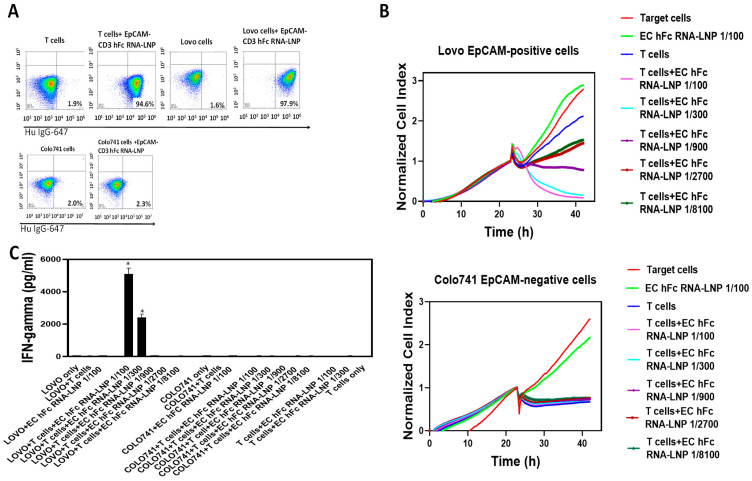
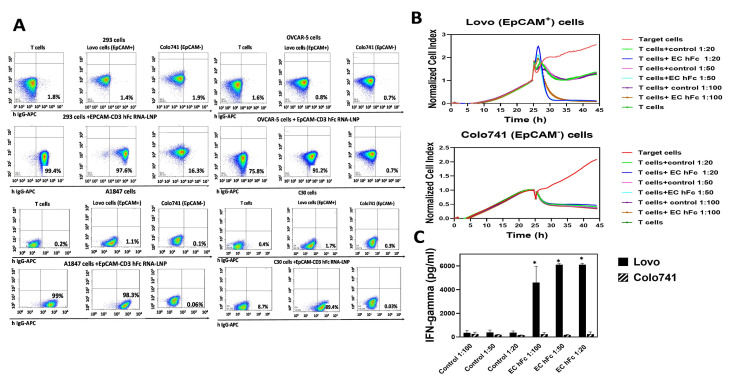
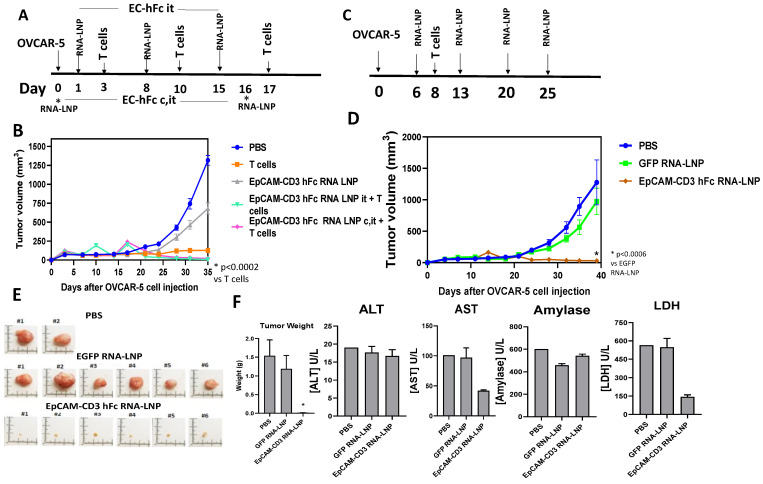
The epithelial cell adhesion molecule (EpCAM) is often overexpressed in many types of tumors, including colorectal cancer. We sequenced and humanized an EpCAM mouse antibody and used it to develop bispecific EpCAM-CD3 antibodies. Three different designs were used to generate bispecific antibodies such as EpCAM-CD3 CrossMab knob-in-hole, EpCAM ScFv-CD3 ScFv (BITE), and EpCAM ScFv-CD3 ScFv-human Fc designs. These antibody designs showed strong and specific binding to the EpCAM-positive Lovo cell line and T cells, specifically killed EpCAM-positive Lovo cells and not EpCAM-negative Colo741 cells in the presence of T cells, and increased T cells’ IFN-gamma secretion in a dose-dependent manner. In addition, transfection of HEK-293 cells with EpCAM ScFv-CD3 ScFv human Fc mRNA-LNPs resulted in antibody secretion that killed Lovo cells and did not kill EpCAM-negative Colo741 cells. The antibody increased IFN-gamma secretion against Lovo target cells and did not increase it against Colo741 target cells. EpCAM-CD3 hFc mRNA-LNP transfection of several cancer cell lines (A1847, C30, OVCAR-5) also demonstrated functional bispecific antibody secretion. In addition, intratumoral delivery of the EpCAM-CD3 human Fc mRNA-LNPs into OVCAR-5 tumor xenografts combined with intravenous injection of T cells significantly blocked xenograft tumor growth. Thus, EpCAM-CD3 hFc mRNA-LNP delivery to tumor cells shows strong potential for future clinical studies.
Overview
The claims and statistics of this paper haven’t been checked yet.
Free: it reads the open-access text and checks the first 5 claims that cite a source we can check. Create a free account to check every claim.
Integrity signals
Registry
Cites
Statistics
Figures
Verification
Claims the paper makes
The claims and statistics of this paper haven’t been checked yet.
Free: it reads the open-access text and checks the first 5 claims that cite a source we can check. Create a free account to check every claim.
Claims other papers make about this one
Each is checked against this paper’s own text: does it say what the citing paper says it does?
The source backs part of the claim, not all of it — or backs it for a different population, condition or comparison.
In the citing paper
“For example, EpCAM/CD3 BiTEs eliminated CSCs in colon cancer cell lines and primary CSCs isolated from colon cancer patient samples and blocked CRC xenograft tumor growth [186,187].”
From Mechanisms and Strategies to Overcome Drug Resistance in Colorectal Cancer (2025) · cites this paper as [187]
Experimental — accuracy not yet measured
Self-check
Percentages, sums and reported differences re-computed from the paper’s own numbers.
The self-check needs the paper’s full text.
Citations
Cites
Bray, F., Ferlay, J., Soerjomataram, I., Siegel, R. L., Torre, L. A., & Jemal, A. (2018) · CA: A Cancer Journal for Clinicians · doi:10.3322/caac.21492 · Cited by 84,109 · cited 1×
“Introduction Colorectal cancer is one of the most common cancers worldwide [1,2].”
BackgroundEpCAM (CD326) finding its role in cancer
Baeuerle, P. A., & Gires, O. (2007) · British Journal of Cancer · doi:10.1038/sj.bjc.6603494 · Cited by 527
The Emerging Role of EpCAM in Cancer and Stem Cell Signaling
Munz, M., Baeuerle, P. A., & Gires, O. (2009) · Cancer Research · doi:10.1158/0008-5472.can-09-0654 · Cited by 515 · cited 1×
“EpCAM can be expressed not only in epithelial cells but also in the stem cells of different tissues and in embryonic stem cells [9].”
BackgroundAn RNA vaccine drives expansion and efficacy of claudin-CAR-T cells against solid tumors
Reinhard, K., Rengstl, B., Oehm, P., Michel, K., Billmeier, A., Hayduk, N., Klein, O., Kuna, K., Ouchan, Y., Wöll, S., et al. (2020) · Science · doi:10.1126/science.aay5967 · Cited by 512 · cited 1×
“For the design of DNA templates for RNA-based expression, the EpCAM ScFv-CD3 ScFv-human Fc sequence was cloned into a DNA vector with a T7AG promoter, 5′UTR, 3′UTR, and a 150 poly A tail as described [31].”
MethodBacac, M., Fauti, T., Sam, J., Colombetti, S., Weinzierl, T., Ouaret, D., Bodmer, W., Lehmann, S., Hofer, T., Hosse, R. J., et al. (2016) · Clinical Cancer Research · doi:10.1158/1078-0432.ccr-15-1696 · Cited by 345 · cited 4×
“Lovo and Colo741 cell lines were obtained from Dr. Walter Bodmer (Oxford University, Oxford, UK), whose laboratory authenticated the cell lines using SNPs, Sequenom MassARRAY iPLEX, and HumanOmniExpress-24 BeadChip arrays, and tested for the absence of Mycoplasma [21].”
BackgroundMethodInfluentialSelf-citationEpCAM in carcinogenesis: the good, the bad or the ugly
van der Gun, B. T. F., Melchers, L. J., Ruiters, M. H. J., de Leij, L. F. M. H., McLaughlin, P. M. J., & Rots, M. G. (2010) · Carcinogenesis · doi:10.1093/carcin/bgq187 · Cited by 322
Immunotherapy of colorectal cancer: Challenges for therapeutic efficacy
Ciardiello, D., Vitiello, P. P., Cardone, C., Martini, G., Troiani, T., Martinelli, E., & Ciardiello, F. (2019) · Cancer Treatment Reviews · doi:10.1016/j.ctrv.2019.04.003 · Cited by 304
EpCAM: Structure and function in health and disease
Schnell, U., Cirulli, V., & Giepmans, B. N. G. (2013) · Biochimica et Biophysica Acta (BBA) - Biomembranes · doi:10.1016/j.bbamem.2013.04.018 · Cited by 289 · cited 1×
“EpCAM was discovered over 40 years ago as an epithelial antigen and was later classified as a cell adhesion molecule [6].”
BackgroundLipid nanoparticles for delivery of RNA therapeutics: Current status and the role of in vivo imaging
Jung, H. N., Lee, S.-Y., Lee, S., Youn, H., & Im, H.-J. (2022) · Theranostics · doi:10.7150/thno.77259 · Cited by 282
The Critical Contribution of Pseudouridine to mRNA COVID-19 Vaccines
Morais, P., Adachi, H., & Yu, Y.-T. (2021) · Frontiers in Cell and Developmental Biology · doi:10.3389/fcell.2021.789427 · Cited by 273
Cited by
Wang, Y.-S., Kumari, M., Chen, G.-H., Hong, M.-H., Yuan, J. P.-Y., Tsai, J.-L., & Wu, H.-C. (2023) · Journal of Biomedical Science · doi:10.1186/s12929-023-00977-5 · Cited by 173
“The EpCAM scFv-CD3 scFv-human Fc also significantly blocked OVCAR-5 xenograft tumor growth in vivo [69].”
BackgroundEnhancing RNA-lipid nanoparticle delivery: Organ- and cell-specificity and barcoding strategies
Wei, P.-S., Thota, N., John, G., Chang, E., Lee, S., Wang, Y., Ma, Z., Tsai, Y.-H., & Mei, K. (2024) · Journal of Controlled Release · doi:10.1016/j.jconrel.2024.08.030 · Cited by 149
“…production of biological therapeutics, such as vaccination antigens [2], therapeutic proteins, e.g., erythropoietin [5], antibody therapeutics [6,7], novel cellular receptors, e.g., the chimeric antigen-receptors (CARs) for cellular immunotherapies [8], and agents for genome editing,…”
Wu, L., Li, X., Qian, X., Wang, S., Liu, J., & Yan, J. (2024) · Vaccines · doi:10.3390/vaccines12020186 · Cited by 141
Self-citationMechanisms and Strategies to Overcome Drug Resistance in Colorectal Cancer
Haynes, J., & Manogaran, P. (2025) · International Journal of Molecular Sciences · doi:10.3390/ijms26051988 · Cited by 82
“For example, EpCAM/CD3 BiTEs eliminated CSCs in colon cancer cell lines and primary CSCs isolated from colon cancer patient samples and blocked CRC xenograft tumor growth [186,187].”
Combination therapy with oncolytic virus and T cells or mRNA vaccine amplifies antitumor effects
Fu, R., Qi, R., Xiong, H., Lei, X., Jiang, Y., He, J., Chen, F., Zhang, L., Qiu, D., Chen, Y., et al. (2024) · Signal Transduction and Targeted Therapy · doi:10.1038/s41392-024-01824-1 · Cited by 87
CAR-NK Cells Generated with mRNA-LNPs Kill Tumor Target Cells In Vitro and In Vivo
Golubovskaya, V., Sienkiewicz, J., Sun, J., Zhang, S., Huang, Y., Zhou, H., Harto, H., Xu, S., Berahovich, R., & Wu, L. (2023) · International Journal of Molecular Sciences · doi:10.3390/ijms241713364 · Cited by 68
Self-citationKamrani, A., Nasiri, H., Hassanzadeh, A., Ahmadian Heris, J., Mohammadinasab, R., Sadeghvand, S., Sadeghi, M., Valedkarimi, Z., Hosseinzadeh, R., Shomali, N., et al. (2024) · Cell Communication and Signaling · doi:10.1186/s12964-023-01430-8 · Cited by 50
“…cytotoxicity against CRC cells [38] EGFR Mice lysis of KRAS-and BRAF-mutated CRC lines [39] EpCAM Mice Blocked xenograft tumor growth [40] CEA/BiTE BALB/c mice Targeting CEA + Tumor cells [41] Cd1d/BiTE C57BL/6J (B6) mice Activated invariant natural killer T cells (iNKT cells) [42]…”
BackgroundResearch Advances of Lipid Nanoparticles in the Treatment of Colorectal Cancer
Zhang, J., Ali, K., & Wang, J. (2024) · International Journal of Nanomedicine · doi:10.2147/ijn.s466490 · Cited by 42
MacLean, M. R., Walker, O. L., Arun, R. P., Fernando, W., & Marcato, P. (2024) · International Journal of Molecular Sciences · doi:10.3390/ijms25074102 · Cited by 35
Freeze-Drying of mRNA-LNPs Vaccines: A Review
Khan, M. F. H., Baudin, F., Perumal, A. S., & Kamen, A. (2025) · Vaccines · doi:10.3390/vaccines13080853 · Cited by 44
“More recently, clinical trials study the efficacy and technical feasibility of mRNA immunotherapeutic against different types of cancers like melanoma [3], brain [10], lung (NSCLC) [11], ovarian [12], prostate [13], hematological [14], digestive system [15], and breast [16] cancer types.”
mRNA vaccine in gastrointestinal tumors: Immunomodulatory effects and immunotherapy
Zhang, A., Ji, Q., Sheng, X., & Wu, H. (2023) · Biomedicine & Pharmacotherapy · doi:10.1016/j.biopha.2023.115361 · Cited by 27
Better, Faster, Stronger: Accelerating mRNA ‐Based Immunotherapies With Nanocarriers
Carvalho, H., Fidalgo, T. A. S., Acúrcio, R. C., Matos, A. I., Satchi‐Fainaro, R., & Florindo, H. F. (2024) · Wiley Interdisciplinary Reviews Nanomedicine and Nanobiotechnology · doi:10.1002/wnan.2017 · Cited by 19
Kim, B., Park, C. H., Jung, I.-Y., Lee, Y., Lim, S. G., Lee, D., Kwon, S. J., & Koo, H. (2025) · Journal of Nanobiotechnology · doi:10.1186/s12951-025-03836-7 · Cited by 26
Lipid-Based Colloidal Nanocarriers for Site-Specific Drug Delivery
Shameli, K., Kalali, B. N., Moeini, H., & Kartouzian, A. (2026) · Colloids and Interfaces · doi:10.3390/colloids10010007 · Cited by 15
Jiang, X., Wang, S., Qi, L., Liu, Y., & Liu, L. (2023) · Medical Oncology · doi:10.1007/s12032-023-02273-6 · Cited by 18
“This repertoire extends beyond monoclonal antibodies to include bi-and even tri-specific antibodies, enabling simultaneous engagement with multiple targets for a more comprehensive therapeutic strategy [10, 11].”
Hu, L., Zhang, S., Sienkiewicz, J., Zhou, H., Berahovich, R., Sun, J., Li, M., Ocampo, A., Liu, X., Huang, Y., et al. (2024) · Vaccines · doi:10.3390/vaccines12070808 · Cited by 15
“Here, we generated a HER2-CD3 bsAb with a mutated Fc (P329G, L234A, and L235A) domain to reduce Fc effector functions [53,54] and leveraged lipid nanoparticle (LNP) technology to achieve efficient delivery of the bsAb-encoding mRNA.”
BackgroundMethodSelf-citationBispecific antibodies and nanotechnology: a strategic alliance in cancer immunotherapy
Battistini, E., Lapuhs, P., Jiménez, A., Garrido-Areal, S., Rivas-Gómez, L., Zagorac, I., Álvarez‐Vallina, L., Alonso, M. J., & Sanjurjo, L. (2025) · Molecular Cancer · doi:10.1186/s12943-025-02501-9 · Cited by 11
“Weekly low-dose injections of EpCAM x CD3 [89], or HER2 x CD3 [90] mRNA led to strong tumor growth inhibition, suggesting that local delivery can overcome systemic barriers and ensure efficacy.”
The dawn of a new Era: mRNA vaccines in colorectal cancer immunotherapy
Song, J., Zhang, Y., Zhou, C., Zhan, J., Cheng, X., Huang, H., Mao, S., & Zong, Z. (2024) · International Immunopharmacology · doi:10.1016/j.intimp.2024.112037 · Cited by 11
Clinical trials of bispecific antibody therapy for colorectal cancer: advanced and next steps
Shao, W., Liu, Y., Huang, L., Lu, S., Zhai, Y., Xiong, Y., Chen, N., Ye, P., & Lv, Q. (2026) · Frontiers in Oncology · doi:10.3389/fonc.2026.1758251 · Cited by 6
Immunotherapy for precision medicine in colorectal cancer
Cao, M., Xu, M. Y., Bairmani, Z. A., Bashir, B., Waldman, S. A., & Snook, A. E. (2025) · Expert Review of Precision Medicine and Drug Development · doi:10.1080/23808993.2025.2560303 · Cited by 3
Roy, A. A., Jain, N., Pokale, R., Madhusoodanan, G., Mukharya, A., Farhana, S. A., Rao, B. S. S., Goda, J. S., & Mutalik, S. (2026) · International Journal of Pharmaceutics · doi:10.1016/j.ijpharm.2026.126862 · Cited by 6
Formulation screening for local delivery of mRNA and photosensitizer to treat superficial tumor
Huang, L., Tang, S., Guo, J., Tu, Y., Li, S., Yang, T., Zhao, D. B., & Wang, C. (2025) · Journal of Drug Delivery Science and Technology · doi:10.1016/j.jddst.2025.107525 · Cited by 4
Zagorac, I., Ramírez-Fernández, Á., Tapia‐Galisteo, A., Rubio-Pérez, L., Gómez-Rosel, M., Grau, M., Rodríguez‐Peralto, J. L., Álvarez‐Vallina, L., & Blanco, B. (2025) · Frontiers in Immunology · doi:10.3389/fimmu.2025.1684655 · Cited by 4
Taghvimi, S., Fard, E. S., Baghrobehbahani, A., Shafiee, M., Zarezadeh, V., Mamaghani, M. P., Nazarian, M., Chegeni, N., Movahedpour, A., Mousavi, P., et al. (2026) · Applied Radiation and Isotopes · doi:10.1016/j.apradiso.2026.112486 · Cited by 2
Zhou, J., Li, N., Liu, R., Kabanov, A. V., Polacheck, W. J., Nguyen, J., & Cao, Y. (2026) · Journal of Controlled Release · doi:10.1016/j.jconrel.2026.115157 · Cited by 4
Therapeutic mRNAs for cancer immunotherapy: From structure to delivery
Vishwakarma, M., Akram, W., & Haider, T. (2024) · Advances in immunology · doi:10.1016/bs.ai.2024.10.013 · Cited by 1
Wang, B., Duan, J., Ma, H., Ren, M., Chen, L., Su, R., Zhang, H., Zhang, S., & Gao, Y. (2026) · European journal of medical research · doi:10.1186/s40001-026-04320-0
“…malignancies (> 98% CRC primary tumors [47], 94% metastases [PMID 32079673]) contrasts sharply with restricted expression in vital organs (basolateral surface of normal epithelia [48]); (3) Clinical validation exists through catumaxomab (anti-EpCAM × anti-CD3) for malignant ascites [49, 50].”
Nakamura, R., Tsumura, R., Anzai, T., Asano, R., & Yasunaga, M. (2026) · Methods in molecular biology · doi:10.1007/978-1-0716-5037-0_10
A modular γδ TCR-T platform combining KRAS pMHC targeting with re-dosable mRNA engager redirection
Ramírez-Fernández, Á., Bear, A. S., Ghahe, E. K., Bartoszek, R. L., Ho, M., Chen, G. M., Dersh, D., Córdoba-Espejo, L., Liu, J., Deng, M. Z., et al. (2026) · Journal of Hematology & Oncology · doi:10.1186/s13045-026-01836-0
“…would add manufacturing complexity and impose a second permanent specificity that could not be modulated after infusion, we implemented a transient mRNA-based strategy to generate an M5 TCE. mRNA-encoded bispecific antibodies can reach therapeutic serum levels after systemic delivery [36, 53].”
Tiwari, A., Pawlowski, K. D., & Balyasnikova, I. V. (2026) · Acta Neuropathologica · doi:10.1007/s00401-026-03063-w
GOLUBOVSKAYA, V., Hu, L., Zhang, S., Sienkiewicz, J., Zhou, H., Berahovich, R., Sun, J., Li, L., Bodmer, W. F., & Wu, L. (2026) · Proceedings of the National Academy of Sciences · doi:10.1073/pnas.2616059123
Self-citationMiyazaki, T., Kubara, K., Kondo, K., Kamiyama, H., Hara, S., Moriya, J., Ishihara, H., & Suzuki, Y. (2026) · International Journal of Pharmaceutics · doi:10.1016/j.ijpharm.2026.127599
Metadata
- Authors
- Golubovskaya, V., Sienkiewicz, J., Sun, J., Huang, Y., Hu, L., Zhou, H., Harto, H., Xu, S., Berahovich, R., Bodmer, W., & Wu, L.
- Affiliations
- Promab Biotechnologies, 2600 Hilltop Drive, Richmond, CA 94806, USA
- John Radcliffe Hospital (GB)
- Corresponding author
- Golubovskaya, Vita
- Wu, Lijun
- Venue
- Cancers
- Publisher
- MDPI AG
- Published
- 2023-05-22
- Volume
- 15
- Issue
- 10
- Pages
- 2860
- ISSN
- 2072-6694 (ISSN-L)
- PMC
- PMC10216523
- OpenAlex
- W4377239774
- Cited by
- 31
- References
- 32
- Citations by year
- 2026: 10 · 2025: 7 · 2024: 10 · 2023: 4
- FWCI
- 5.13
- Type
- journal article
- Language
- en
- Open access
- gold
- doi.org
- Licence
- Locations
- Cancers (publishedVersion, cc-by)
- PubMed Central (publishedVersion, cc-by)
- PubMed (publishedVersion)
- Funders
- Promab Biotechnologies
- Topics
- Life Sciences › Immunology and Microbiology › Immunology › Monoclonal and Polyclonal Antibodies Research
- Life Sciences › Biochemistry, Genetics and Molecular Biology › Molecular Biology › RNA Interference and Gene Delivery
- Life Sciences › Immunology and Microbiology › Immunology › Immunotherapy and Immune Responses
- Keywords
- humanized monoclonal antibody, colorectal cancer, tumor cell killing, IFN-gamma secretion, T cell cytotoxicity, intratumoral drug delivery, tumor xenografts, LoVo cells, antibody design
About these checks
Registry, retraction, Cites and statistics results are computed, not judged, with one exception: a printed reference that no index lists is read once by a model before it counts as a citation error. Claims are extracted by a model and kept only when their quote appears verbatim in the text; each cited source is then checked, with a model’s help, for whether it says what the claim relies on. Those verdicts can be wrong — read the claim’s quote and the cited source before relying on one.
Statistics and arithmetic are recomputed, not judged.
Confidence bands are shown only for fields calibrated on our annotated test set. None is calibrated yet, so no band is shown.
What counts as a claim ›How we measure confidence ›How we check this ›
Are you an author, or do you see a problem with this page? Request a review
Data sources
Bibliographic data: Semantic Scholar, OpenAlex, Crossref.
Contains information from the Semantic Scholar Academic Graph Datasets, made available under the ODC Attribution License (ODC-BY 1.0).
Semantic Scholar’s data is described in: Kinney, R., et al. (2023). The Semantic Scholar Open Data Platform. arXiv:2301.10140.
