

The DOI matches its Crossref record; 80 of the 80 references it cites were found in a registry or an index.
The Role of Canine Models of Human Cancer: Overcoming Drug Resistance Through a Transdisciplinary “One Health, One Medicine” Approach
Open accessAbstract
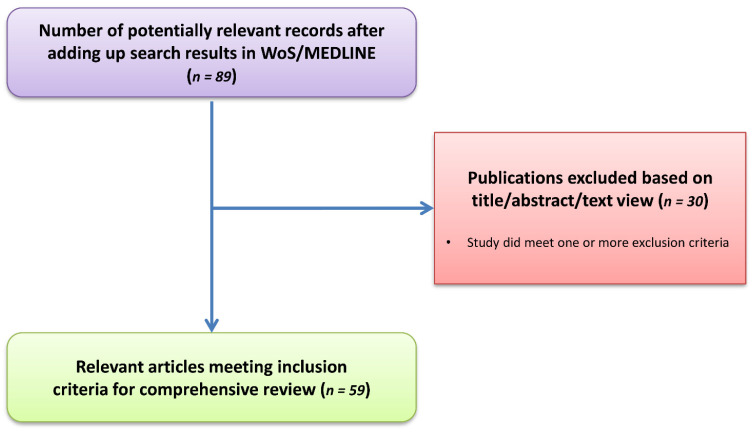
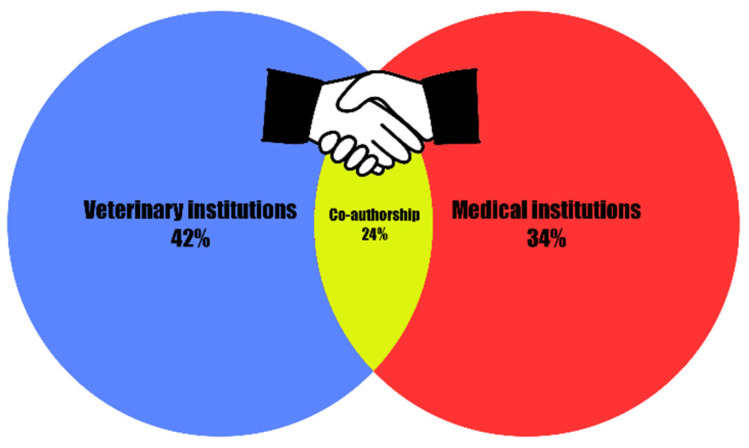
Introduction: Chemotherapy is a primary treatment option in human and veterinary oncology. Like humans, canine patients often develop drug resistance. Comparative oncology is gaining increasing interest, and spontaneous tumors of companion dogs have emerged as a powerful resource for better understanding human cancer. The genetic, molecular, and histological features of tumors in dogs are more closely related to those in humans than the ones in laboratory animals, including complex mechanisms of drug resistance. Methods: A comprehensive literature search was conducted in the electronic database Clarivate Web of Science (WOS): Medical Literature Analysis and Retrieval System Online (MEDLINE) from 1990 to 2025 (updated 22 January 2025). The final set includes 59 relevant full-text English articles. Results: The literature findings suggest that canine spontaneous tumors are valuable model systems with important translational implications for identifying novel mechanisms of chemotherapy resistance shared with humans and may help advance the current standard of care in precision medicine. Conclusions: We have provided an updated overview of the role of canine tumor models to study oncotherapy resistance, focusing on limitations and opportunities for advancement. Despite complementary benefits of such models in translational oncology research, their relevance remains underestimated. Strengthening the collaboration between human and veterinary medicine professionals and comparative medicine researchers, and obtaining the support of interdisciplinary institutions, could contribute to addressing the problem of multidrug resistance for both human and canine patients. Future research may promote using canine spontaneous tumors as translational therapeutic models for human chemoresistance, through a multidisciplinary approach based on the emerging “One Health, One Medicine” paradigm.
Overview
The claims and statistics of this paper haven’t been checked yet.
Run the check — free, no account needed. It reads the open-access text and checks the sources it cites.
Integrity signals
Registry
Cites
Statistics
Figures
Verification
Claims the paper makes
The claims and statistics of this paper haven’t been checked yet.
Run the check — free, no account needed. It reads the open-access text and checks the sources it cites.
Claims other papers make about this one
Each is checked against this paper’s own text: does it say what the citing paper says it does?
The cited source says what the claim attributes to it.
In the citing paper
“Dogs with naturally occurring cancers are emerging as valuable translational models [119–121]”
From Phage therapy in oncology: opportunities for cancer prevention and treatment (2026) · cites this paper as [120]
Self-check
Percentages, sums and reported differences re-computed from the paper’s own numbers.
The self-check needs the paper’s full text.
Citations
Cites
Ballard, P., Yates, J. W. T., Yang, Z., Kim, D.-W., Yang, J. C.-H., Cantarini, M., Pickup, K., Jordan, A., Hickey, M., Grist, M., et al. (2016) · Clinical Cancer Research · doi:10.1158/1078-0432.ccr-16-0399 · Cited by 718
Spontaneous tumors in dogs and cats: Models for the study of cancer biology and treatment
MacEwen, E. G. (1990) · Cancer and Metastasis Reviews · doi:10.1007/bf00046339 · Cited by 393
Functional Multidrug Resistance Protein (MRP1) Lacking the N-terminal Transmembrane Domain
Bakos, É., Evers, R., Szakács, G., Tusnády, G., Welker, E., Szabó, K., de Haas, M., van Deemter, L., Borst, P., Váradi, A., et al. (1998) · Journal of Biological Chemistry · doi:10.1074/jbc.273.48.32167 · Cited by 326
Norouzi, M., Yathindranath, V., Thliveris, J. A., Kopec, B. M., Siahaan, T. J., & Miller, D. W. (2020) · Scientific Reports · doi:10.1038/s41598-020-68017-y · Cited by 295
Animal models and therapeutic molecular targets of cancer: utility and limitations
Cekanova, M., & Rathore, K. (2014) · Drug Design, Development and Therapy · doi:10.2147/dddt.s49584 · Cited by 274
Preclinical Comparison of the Blood–brain barrier Permeability of Osimertinib with Other EGFR TKIs
Colclough, N., Chen, K., Johnström, P., Strittmatter, N., Yan, Y., Wrigley, G. L., Schou, M., Goodwin, R. J. A., Varnäs, K., Adua, S. J., et al. (2020) · Clinical Cancer Research · doi:10.1158/1078-0432.ccr-19-1871 · Cited by 244
Cytochrome P450 enzymes: Novel options for cancer therapeutics
McFadyen, M. C. E., Melvin, W. T., & Murray, G. I. (2004) · Molecular Cancer Therapeutics · doi:10.1158/1535-7163.363.3.3 · Cited by 242
Gardner, H. L., Fenger, J. M., & London, C. A. (2016) · Annual Review of Animal Biosciences · doi:10.1146/annurev-animal-022114-110911 · Cited by 215
MDR1-deficient genotype in Collie dogs hypersensitive to the P-glycoprotein substrate ivermectin
Roulet, A., Puel, O., Gesta, S., Lepage, J.-F., Drag, M. D., Soll, M. D., Alvinerie, M., & Pineau, T. (2003) · European Journal of Pharmacology · doi:10.1016/s0014-2999(02)02955-2 · Cited by 174
Canine cancer immunotherapy studies: linking mouse and human
Park, J. S., Withers, S. S., Modiano, J. F., Kent, M. S., Chen, M., Luna, J. I., Culp, W. T. N., Sparger, E. E., Rebhun, R. B., Monjazeb, A. M., et al. (2016) · Journal for ImmunoTherapy of Cancer · doi:10.1186/s40425-016-0200-7 · Cited by 121
Research works printed but not linked: 1
- Frickel, S., Albert, M., and Prainsack, B. (2025, February 25). One Medicine? Advocating (Inter)disciplinarity at the Interfaces of Animal Health, Human Health, and the Environment, Investigating Interdisciplinary Collaboration: Theory and Practice Across Disciplines, Available online: https://www.ncbi.nlm.nih.gov/books/NBK395883/.
Cited by
Phage therapy in oncology: opportunities for cancer prevention and treatment
Mutalik, V. K., Inman, J. L., Chang, H., Arkin, A., & Mao, J.-H. (2026) · Trends in Molecular Medicine · doi:10.1016/j.molmed.2026.02.001 · Cited by 7
Metadata
- Authors
- Gargiulo, S., Vecchiarelli, L., Pagni, E., & Gramanzini, M.
- Affiliations
- National Research Council (IT)
- Department for Environment Food and Rural Affairs (GB)
- Veterinary Medical and Oncology Centre “Etruria”, Via Sandro Pertini 5-6, Monteriggioni, 53035 Siena, Italy
- Corresponding author
- Gargiulo, Sara
- Venue
- Cancers
- Publisher
- MDPI AG
- Published
- 2025-06-17
- Volume
- 17
- Issue
- 12
- Pages
- 2025
- ISSN
- 2072-6694 (ISSN-L)
- PMC
- PMC12191360
- OpenAlex
- W4411367168
- Cited by
- 9
- References
- 80
- Citations by year
- 2026: 7 · 2025: 2
- FWCI
- 1.56
- Type
- journal article
- Language
- en
- Open access
- gold
- doi.org
- Licence
- Locations
- Cancers (publishedVersion, cc-by)
- Preprints.org (acceptedVersion, cc-by)
- PubMed Central (publishedVersion, cc-by)
- PubMed (publishedVersion)
- Funders
- Animal and Plant Health Agency
- Topics
- Health Sciences › Veterinary › Small Animals › Veterinary Oncology Research
- Life Sciences › Agricultural and Biological Sciences › Animal Science and Zoology › Human-Animal Interaction Studies
- Health Sciences › Medicine › Oncology › Drug Transport and Resistance Mechanisms
- Keywords
- dogs as cancer models, drug resistance, chemoresistance, comparative oncology, pet dogs, spontaneous tumors, multidrug resistance, translational oncology, One Health, precision medicine, human-veterinary medicine collaboration
About these checks
Registry, retraction, Cites and statistics results are computed, not judged, with one exception: a printed reference that no index lists is read once by a model before it counts as a citation error. Claims are extracted by a model and kept only when their quote appears verbatim in the text; each cited source is then checked, with a model’s help, for whether it says what the claim relies on. Those verdicts can be wrong — read the claim’s quote and the cited source before relying on one.
Statistics and arithmetic are recomputed, not judged.
Confidence bands are shown only for fields calibrated on our annotated test set. None is calibrated yet, so no band is shown.
What counts as a claim ›How we measure confidence ›How we check this ›
Are you an author, or do you see a problem with this page? Request a review
How to cite
Cite CoChat for the checks on this page, and the paper for its own findings.
- This page
- CoChat. (2026). Citation check: The Role of Canine Models of Human Cancer: Overcoming Drug Resistance Through a Transdisciplinary “One Health, One Medicine” Approach. https://app.cochat.ai/papers/10.3390/cancers17122025
- The paper
- Gargiulo, S., Vecchiarelli, L., Pagni, E., & Gramanzini, M. (2025). The Role of Canine Models of Human Cancer: Overcoming Drug Resistance Through a Transdisciplinary “One Health, One Medicine” Approach. Cancers. https://doi.org/10.3390/cancers17122025
Data sources
Bibliographic data: Semantic Scholar, OpenAlex, Crossref.
Contains information from the Semantic Scholar Academic Graph Datasets, made available under the ODC Attribution License (ODC-BY 1.0).
Semantic Scholar’s data is described in: Kinney, R., et al. (2023). The Semantic Scholar Open Data Platform. arXiv:2301.10140.
