

The DOI matches its Crossref record; 63 of the 65 references it cites were found in a registry or an index.
Validation of a Quantification Method for Curcumin Derivatives and Their Hepatoprotective Effects on Nonalcoholic Fatty Liver Disease
Open accessAbstract
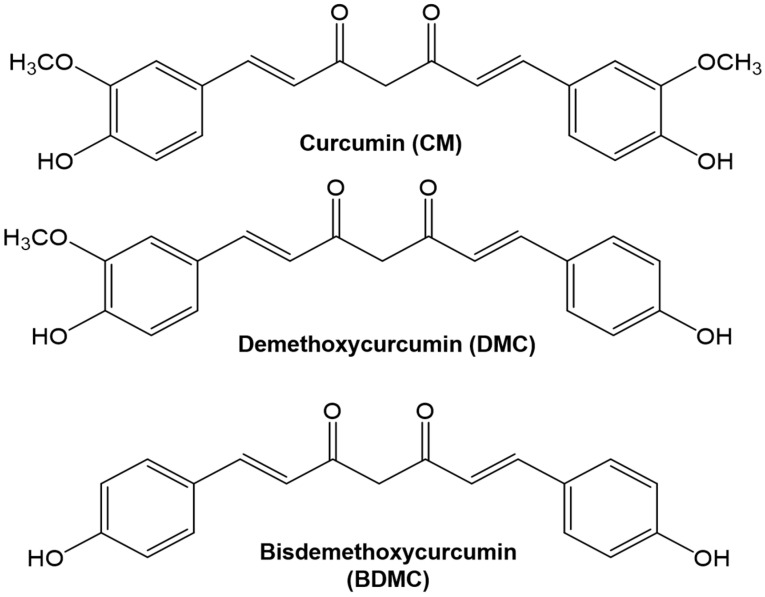
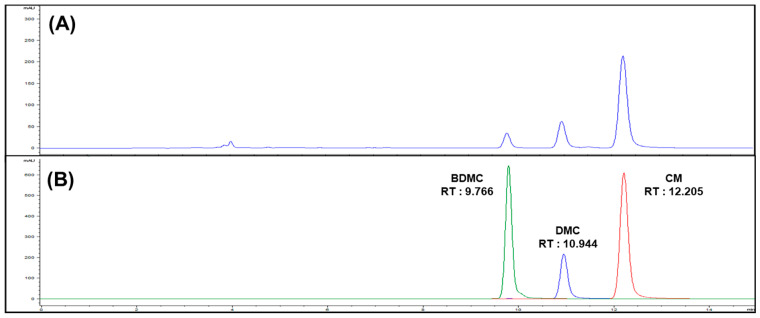
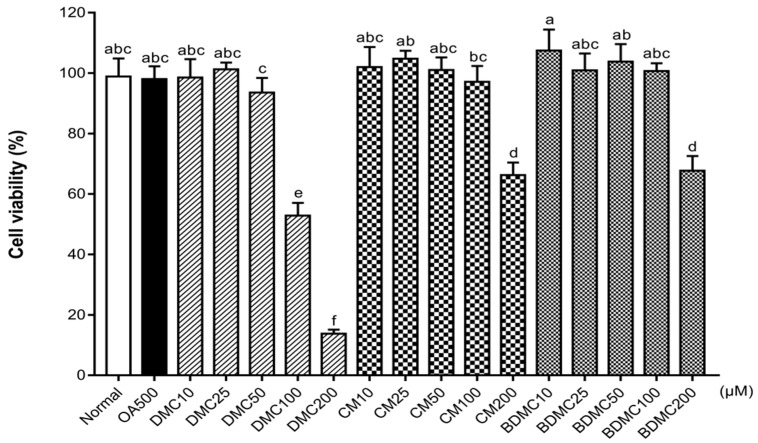
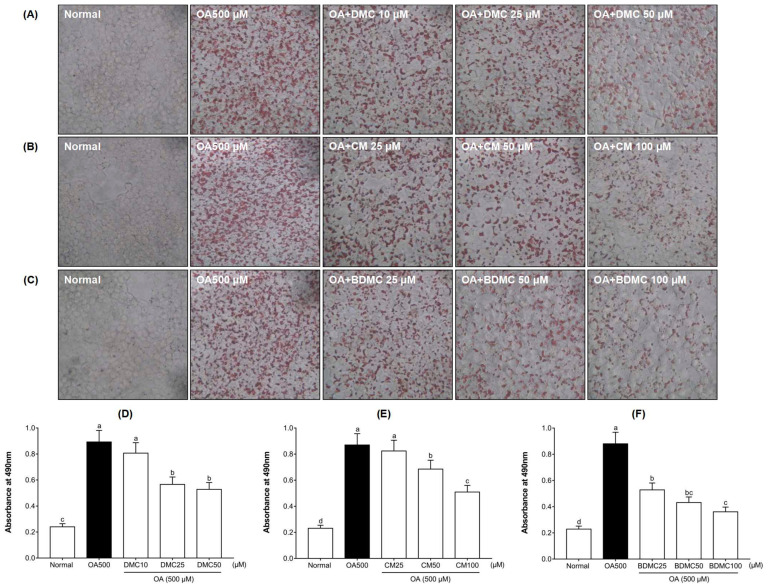
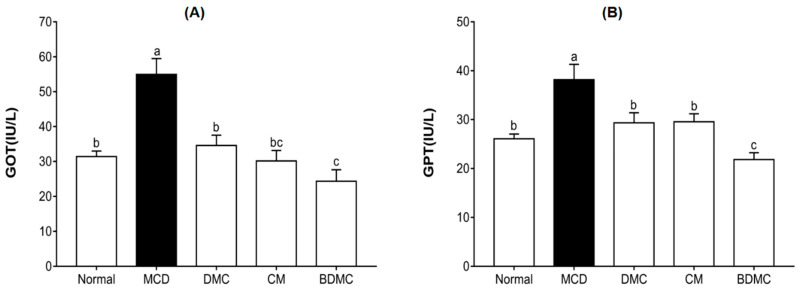
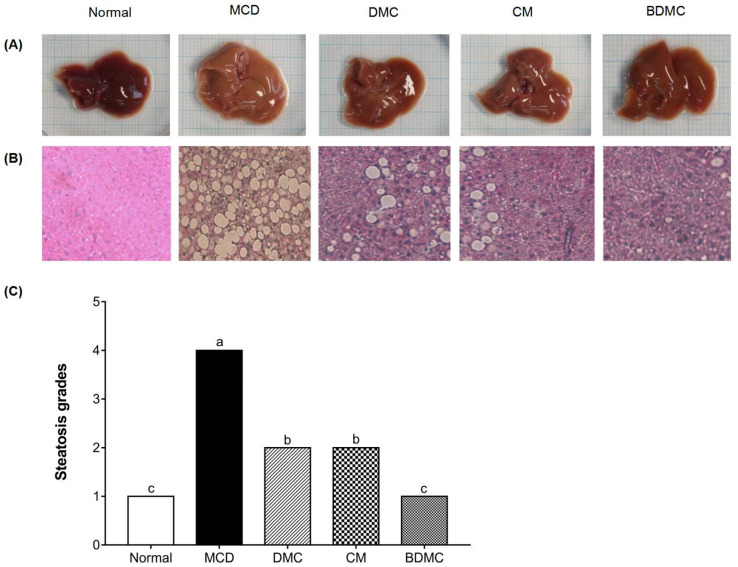
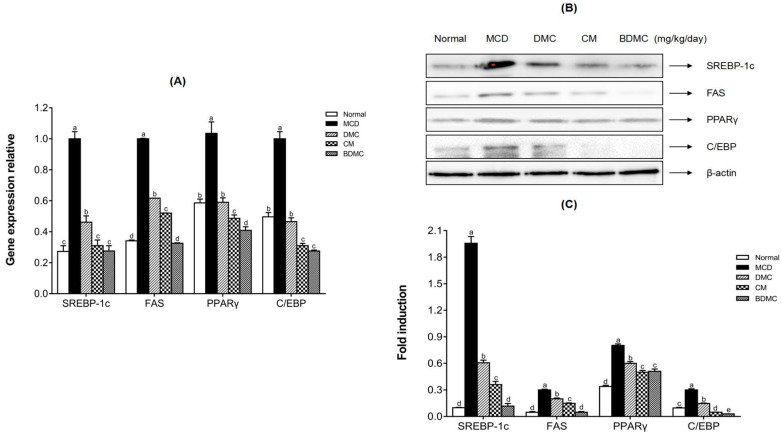
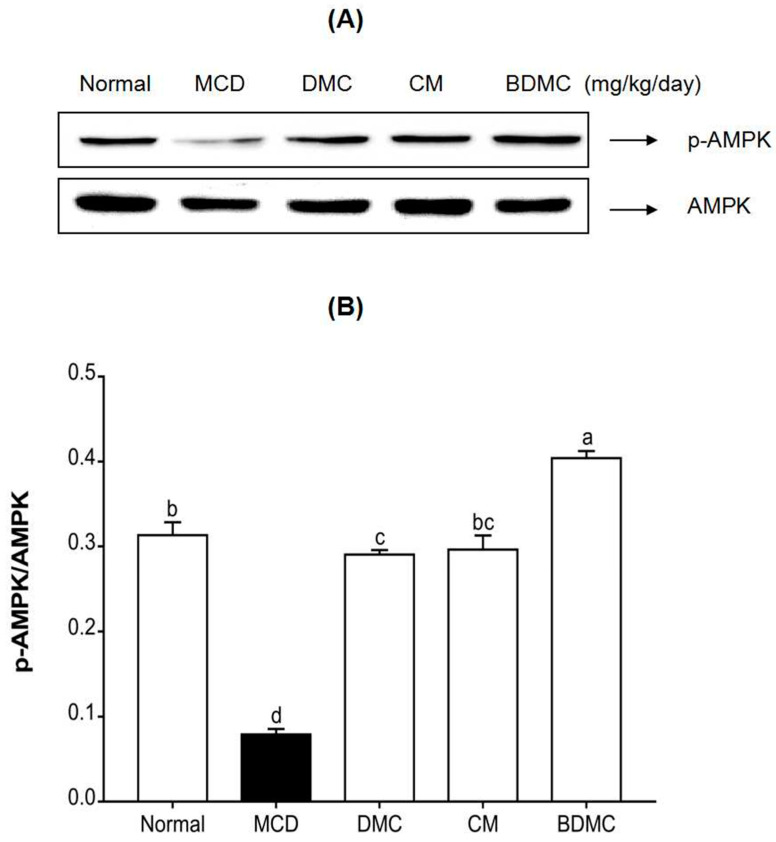
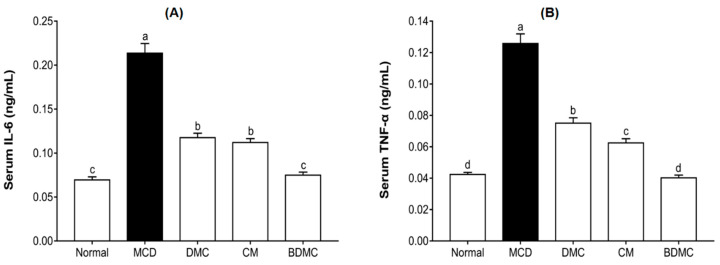
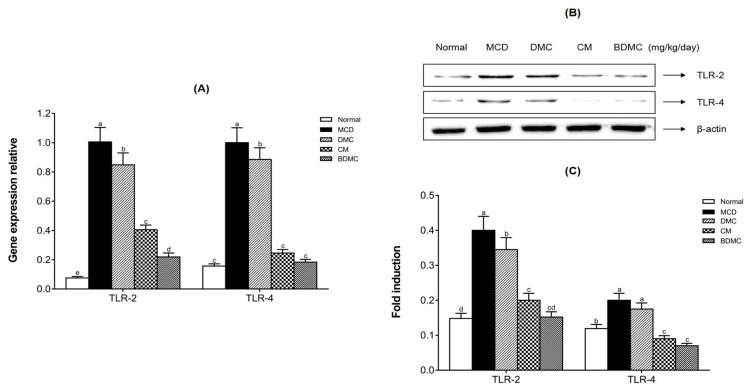
Curcumin (CM), demethoxycurcumin (DMC), and bisdemethoxycurcumin (BDMC) are major curcumin derivatives found in the rhizome of turmeric (Curcuma longa L.), and have yielded impressive properties to halt various diseases. In the present study, we carried out a method validation for curcumin derivatives and analyzed the contents simultaneously using HPLC with UV detection. For validation, HPLC was used to estimate linearity, range, specificity, accuracy, precision, limit of detection (LOD), and limit of quantification (LOQ). Results showed a high linearity of the calibration curve, with a coefficient of correlation (R2) for CM, DMC, and BDMC of 0.9999, 0.9999, and 0.9997, respectively. The LOD values for CM, DMC, and BDMC were 1.16, 1.03, and 2.53 ng/μL and LOQ values were 3.50, 3.11, and 7.67 ng/μL, respectively. Moreover, to evaluate the ability of curcumin derivatives to reduce liver lipogenesis and compare curcumin derivatives’ therapeutic effects, a HepG2 cell model was established to analyze their hepatoprotective properties. Regarding the in vivo study, we investigated the effect of DMC, CM, and BDMC on nonalcoholic fatty liver disease (NAFLD) caused by a methionine choline deficient (MCD)-diet in the C57BL/6J mice model. From the in vitro and in vivo results, curcumin derivatives alleviated MCD-diet-induced lipid accumulation as well as high triglyceride (TG) and total cholesterol (TC) levels, and the protein and gene expression of the transcription factors related to liver adipogenesis were suppressed. Furthermore, in MCD-diet mice, curcumin derivatives suppressed the upregulation of toll-like receptors (TLRs) and the production of pro-inflammatory cytokines. In conclusion, our findings indicated that all of the three curcuminoids exerted a hepatoprotective effect in the HepG2 cell model and the MCD-diet-induced NAFLD model, suggesting a potential for curcuminoids derived from turmeric as novel therapeutic agents for NAFLD.
Overview
The claims and statistics of this paper haven’t been checked yet.
Run the check — free, no account needed. It reads the open-access text and checks the sources it cites.
Integrity signals
Registry
Cites
Statistics
Figures
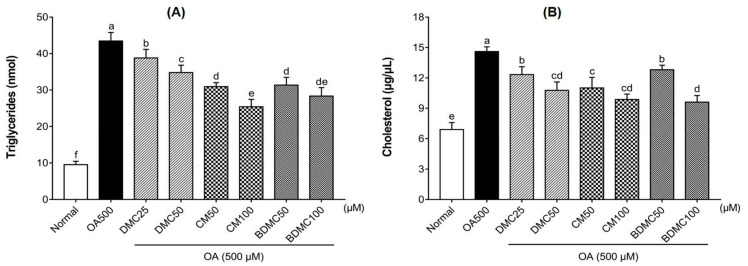
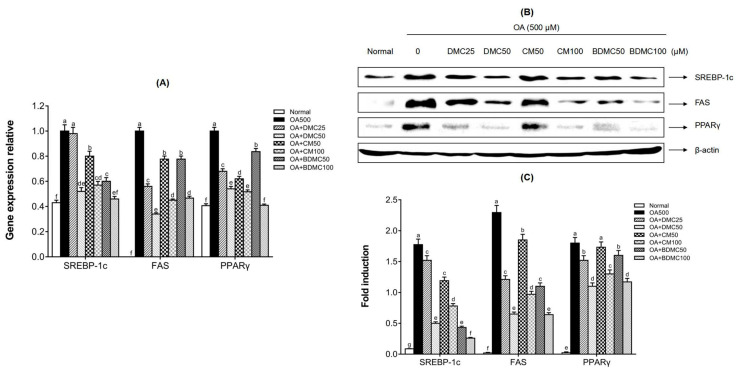
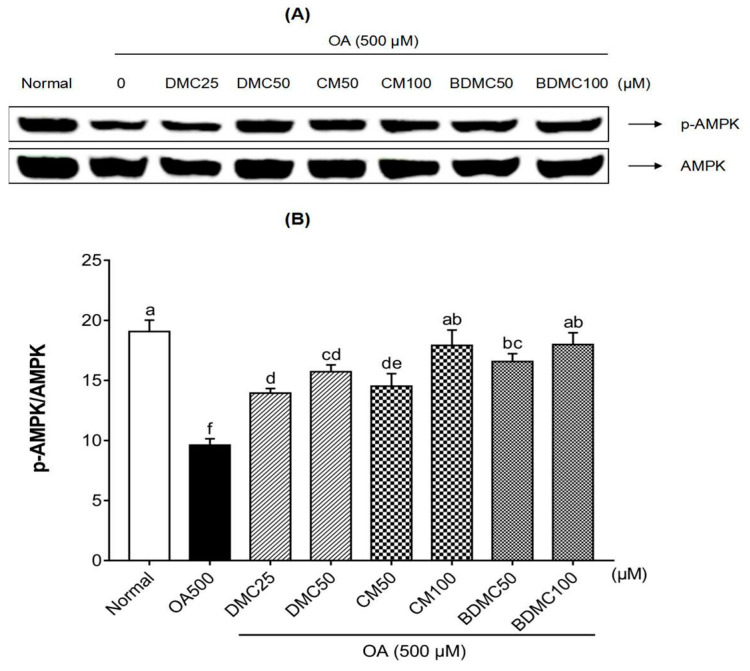
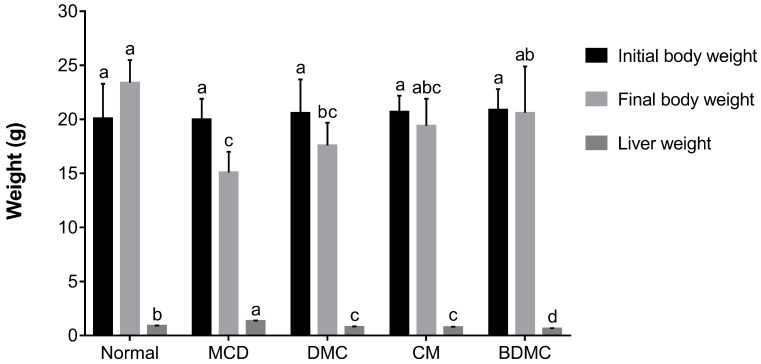
Verification
Claims the paper makes
The claims and statistics of this paper haven’t been checked yet.
Run the check — free, no account needed. It reads the open-access text and checks the sources it cites.
Claims other papers make about this one
Each is checked against this paper’s own text: does it say what the citing paper says it does?
The cited source says what the claim attributes to it.
In the citing paper
“These metabolites are considered to be good quality markers for turmeric samples, as these compounds have effective pharmacological activity [31].”
Self-check
Percentages, sums and reported differences re-computed from the paper’s own numbers.
The self-check needs the paper’s full text.
Citations
Cites
AMP-activated/SNF1 protein kinases: conserved guardians of cellular energy
Hardie, D. G. (2007) · Nature Reviews Molecular Cell Biology · doi:10.1038/nrm2249 · Cited by 2,269
Anti-tumour and antioxidant activity of natural curcuminoids
Ruby, A. J., Kuttan, G., Babu, K. D., Rajasekharan, K. N., & Kuttan, R. (1995) · Cancer Letters · doi:10.1016/0304-3835(95)03827-j · Cited by 1,070
Chemical Composition and Product Quality Control of Turmeric (Curcuma longa L.)
Li, S. (2011) · Pharmaceutical Crops · doi:10.2174/2210290601102010028 · Cited by 470
Tosello-Trampont, A.-C., Landes, S. G., Nguyen, V., Novobrantseva, T. I., & Hahn, Y. S. (2012) · Journal of Biological Chemistry · doi:10.1074/jbc.m112.417014 · Cited by 415
Boudaba, N., Marion, A., Huet, C., Pierre, R., Viollet, B., & Foretz, M. (2018) · EBioMedicine · doi:10.1016/j.ebiom.2018.01.008 · Cited by 218
Hoang, S. A., Oseini, A. M., Feaver, R. E., Cole, B. K., Asgharpour, A., Vincent, R. J., Siddiqui, M. S., Lawson, M. J., Day, N., Taylor, J. M., et al. (2019) · Scientific Reports · doi:10.1038/s41598-019-48746-5 · Cited by 195
Curcumin regulates endogenous and exogenous metabolism via Nrf2-FXR-LXR pathway in NAFLD mice
Yan, C., Zhang, Y., Zhang, X., Aa, J., Wang, G., & Xie, Y. (2018) · Biomedicine & Pharmacotherapy · doi:10.1016/j.biopha.2018.05.135 · Cited by 171
Genetic and Epigenetic Regulation in Nonalcoholic Fatty Liver Disease (NAFLD)
Campo, J. A. D., Gallego‐Durán, R., Gallego, P., & Grande, L. (2018) · International Journal of Molecular Sciences · doi:10.3390/ijms19030911 · Cited by 154
Lonardo, A., Mantovani, A., Lugari, S., & Targher, G. (2019) · International Journal of Molecular Sciences · doi:10.3390/ijms20112841 · Cited by 119
Therapeutic effects of turmeric in several diseases: An overview
Hay, E., Lucariello, A., Contieri, M., Esposito, T., Luca, A. D., Guerra, G., & Perna, A. (2019) · Chemico-Biological Interactions · doi:10.1016/j.cbi.2019.108729 · Cited by 108
Research works printed but not linked: 3
- Song, 2010, A Study on the Trend of World Traditional Medicine and Key Area of Traditional Korean Medicine(TKM) R&D, Korean J. Orient. Med., 16, 101
- Zhao, 2019, Salidroside attenuates oxidized lowdensity lipoproteininduced endothelial cell injury via promotion of the AMPK/SIRT1 pathway, Int. J. Mol. Med., 43, 2279
- Kang, 1998, Antioxidative property of turmeric (Curcuma Rhizoma) ethanol extract, Korean J. Food Sci. Technol., 30, 226
Cited by
Khan, S., Rai, A. K., Singh, A., Singh, S., Dubey, B. K., Lal, R. K., Negi, A. S., Birse, N., Trivedi, P. K., Elliott, C. T., et al. (2023) · Journal of Pharmaceutical Analysis · doi:10.1016/j.jpha.2023.04.018 · Cited by 34
“These metabolites are considered to be good quality markers for turmeric samples, as these compounds have effective pharmacological activity [31].”
BackgroundLi, Y., Deng, X., Tan, X., Li, Q., Yu, Z., Wu, W., Ma, X., Zeng, J., & Wang, X. (2024) · Frontiers in Pharmacology · doi:10.3389/fphar.2024.1343193 · Cited by 29
Self-citationKim, K.-W., Lee, Y., Yoon, D., Kim, G., & Lee, D. (2022) · BMC Complementary Medicine and Therapies · doi:10.1186/s12906-022-03825-5 · Cited by 14
Self-citationSabini, J. H., & Timotius, K. H. (2025) · Current Issues in Molecular Biology · doi:10.3390/cimb47030159 · Cited by 12
Alvarado-Noguez, M. L., Matías-Reyes, A. E., Pérez-González, M., Tomás, S. A., Hernández-Aguilar, C., Domínguez-Pacheco, A., Arenas‐Alatorre, J., Cruz-Orea, A., Carbajal‐Tinoco, M. D., Galot-Linaldi, J., et al. (2023) · Materials · doi:10.3390/ma16083020 · Cited by 13
Structural Variances in Curcumin Degradants: Impact on Obesity in Mice
Koh, Y., Hsu, H., Ho, P.-Y., Hsu, K.-Y., Lin, W., Nagabhushanam, K., Ho, C., & Pan, M. (2024) · Journal of Agricultural and Food Chemistry · doi:10.1021/acs.jafc.4c03768 · Cited by 7
Malek, S. Z., & Arasteh, A. (2025) · Molecular Neurobiology · doi:10.1007/s12035-025-05125-8 · Cited by 6
Effect of heat treatment on the secondary metabolites composition of Curcuma longa L. rhizome
Zagórska, J., & Jaworowska, A. (2024) · Current Issues in Pharmacy and Medical Sciences · doi:10.2478/cipms-2024-0020 · Cited by 5
Hart, O. B., & Reed, C. J. (2025) · Journal of Medical Sciences and Interdisciplinary Research · doi:10.51847/bmigiiu1tk · Cited by 5
Mbadiko, C. M., Ngbolua, K.-T.-N., Bongo, G. N., Matondo, A. P., Kilembe, J. T., Tshibangu, D. S. T., Tshilanda, D. D., Ngombe, N. K., Mbemba, T., & Mpiana, P. T. (2025) · Discover Chemistry. · doi:10.1007/s44371-025-00171-6 · Cited by 4
Turmeric (Curcuma longa L.): the multifaceted golden plant—insights and uses
Karthikeyan, A., Thi, C. T. D., Chin, S., Sureshbabu, A., Smirnova, E., Mohammad, M., Senthil, K., Min, T., & Kim, I.-J. (2025) · Plant Biotechnology Reports · doi:10.1007/s11816-025-01008-5 · Cited by 4
Optimization of ar-Turmerone Isolation Method from Turmeric Oleoresin using Silica Gel Adsorbent
(2022) · Letters in Applied NanoBioScience · doi:10.33263/lianbs122.053 · Cited by 4
elswai, N. (2022) · Egyptian Journal of Chemistry · doi:10.21608/ejchem.2022.139554.6136 · Cited by 4
Yoon, D., Choi, B. R., Shin, W. C., Kim, K.-W., Lee, Y., & Lee, D. (2023) · Applied Biological Chemistry · doi:10.1186/s13765-023-00844-9 · Cited by 3
Self-citationThe Effect of Curcumin on Glucolipid Metabolic Disorders: A Review
Mo, L., Wan, S., Zékány-Nagy, T., Luo, X., & Yang, X. (2024) · Food Reviews International · doi:10.1080/87559129.2024.2405654 · Cited by 2
Chahomchuen, T., Insuan, O., Thavornloha, C., Hansupalak, N., & Insuan, W. (2025) · Veterinary World · doi:10.14202/vetworld.2025.2332-2343 · Cited by 2
Anti‐Inflammatory and Antibacterial Properties of Curcuma longa Extract Against Helicobacter pylori
Kim, J. J., Kim, K., Jang, J., Kim, M., Cooray, A., Lee, Y., Lee, K. P., & Lee, D. Y. (2025) · Molecular Nutrition & Food Research · doi:10.1002/mnfr.70161 · Cited by 2
Self-citationChen, L., Tian, L., Xu, J., Liao, S., Xu, H., Li, K., Ivanova, D., Si, Y., Zhang, X., Zhang, J., et al. (2025) · Reproductive Sciences · doi:10.1007/s43032-025-01790-1 · Cited by 1
Turmeric and curcumin: From traditional medicine to modern therapeutic applications
Nadeem, A., Afzal, K., Abbas, A., Iqbal, T. B., Malik, A., Saeed, J., Zarrish, M., & Pandey, B. (2026) · JSFA reports · doi:10.1002/jsf2.70043 · Cited by 2
Precision nutrition for NAFLD: a mechanistic rationale for targeting the cytokine landscape
Ullah, A., Hu, S., & Shen, B. (2026) · Frontiers in Cell and Developmental Biology · doi:10.3389/fcell.2026.1745316 · Cited by 1
Isolation of curcumin compounds in Temulawak Rhizome (Xanthorrhiza Roxb)
Ramandha, M. E. P., & Kresnapati, I. N. B. A. (2023) · Journal Of Natural Sciences And Mathematics Research · doi:10.21580/jnsmr.2023.9.2.18189 · Cited by 1
Mbadiko, C. M., Ngbolua, K.-T.-N., Bongo, G. N., Matondo, A. P., Kilembe, J. T., Nzundu, J. P. M., Ngombe, N. K., Kapepula, P. M., Mbemba, T., & Mpiana, P. T. (2024) · Research Square · doi:10.21203/rs.3.rs-4930657/v1 · Cited by 1
Mbadiko, C. M., Ngbolua, K.-T.-N., Bongo, G. N., Matondo, A. P., Kilembe, J. T., Tshibangu, D. S. T., Tshilanda, D. D., Mbemba, T., & Mpiana, P. T. (2024) · Research Square · doi:10.21203/rs.3.rs-4441531/v1
Major phytoconstituents of temulawak (Curcuma xanthorrhiza) in hepatoprotective activity
Jumardi, J., & Wijaya, M. (2025) · Comptes Rendus Chimie · doi:10.5802/crchim.411
Kim, K.-W., Lee, Y., Yoon, D., Kim, G., & Lee, D. Y. (2023) · Figshare · doi:10.6084/m9.figshare.22613510
Self-citationAraki, S., Ueda, Y., Ayabe, H., Otsuka, R., Kohama, K., Maenishi, K., Choi, C., Moon, S., Masuda, T., Deguchi, M., et al. (2026) · Nutrients · doi:10.3390/nu18081285
余, 文. (2026) · Traditional Chinese Medicine · doi:10.12677/tcm.2026.156322
ZHANG, C., Fu, G., Zhang, Y., Jiashuo, X. I. N. G., Hang, G. A. O., & ZHANG, X. (2026) · Journal of Ethnopharmacology · doi:10.1016/j.jep.2026.122188 · Cited by 1
Curcumin: Bioavailability and therapeutic potential in metabolic disorders and chronic diseases
Ashraf, H., Ul‐Haq, I., Yıkmış, S., Abdi, G., & Aadil, R. M. (2026) · Food and Humanity · doi:10.1016/j.foohum.2026.101437
Metadata
- Authors
- Lee, Y.-S., Oh, S. M., Li, Q.-Q., Kim, K.-W., Yoon, D., Lee, M.-H., Kwon, D.-Y., Kang, O.-H., & Lee, D. Y.
- Affiliations
- Rural Development Administration (KR)
- College of Pharmacy and Wonkwang-Oriental Medicines Research Institute, Institute of Biotechnology, Wonkwang University, Iksan 54538, Korea
- Eulji University (KR)
- Wonkwang University (KR)
- Corresponding author
- Kang, Ok-Hwa
- Lee, Dae Young
- ORCID
- Venue
- Current Issues in Molecular Biology
- Publisher
- MDPI AG
- Published
- 2022-01-15
- Volume
- 44
- Issue
- 1
- Pages
- 409-432
- ISSN
- 1467-3037 (ISSN-L)
- 1467-3045
- PMC
- PMC8929050
- OpenAlex
- W4206066599
- Cited by
- 30
- References
- 65
- Citations by year
- 2026: 6 · 2025: 9 · 2024: 6 · 2023: 6 · 2022: 3
- FWCI
- 1.97
- Type
- journal article
- Language
- en
- Open access
- gold
- doi.org
- Licence
- Locations
- Current Issues in Molecular Biology (publishedVersion, cc-by)
- PubMed Central (publishedVersion, cc-by)
- PubMed (publishedVersion)
- DOAJ (DOAJ: Directory of Open Access Journals) (submittedVersion, cc-by-sa)
- Funders
- Rural Development Administration (PJ01327501)
- Topics
- Life Sciences › Biochemistry, Genetics and Molecular Biology › Molecular Medicine › Curcumin's Biomedical Applications
- Physical Sciences › Chemistry › Analytical Chemistry › Analytical Methods in Pharmaceuticals
- Life Sciences › Pharmacology, Toxicology and Pharmaceutics › Pharmacology › Saffron Plant Research Studies
- Keywords
- curcumin derivatives, demethoxycurcumin, bisdemethoxycurcumin, curcuminoids, non-alcoholic fatty liver disease, hepatoprotection, methionine-choline-deficient diet, liver lipogenesis, Toll-like receptors, inflammatory cytokines, lipid accumulation, HPLC method validation, turmeric
About these checks
Registry, retraction, Cites and statistics results are computed, not judged, with one exception: a printed reference that no index lists is read once by a model before it counts as a citation error. Claims are extracted by a model and kept only when their quote appears verbatim in the text; each cited source is then checked, with a model’s help, for whether it says what the claim relies on. Those verdicts can be wrong — read the claim’s quote and the cited source before relying on one.
Statistics and arithmetic are recomputed, not judged.
Confidence bands are shown only for fields calibrated on our annotated test set. None is calibrated yet, so no band is shown.
What counts as a claim ›How we measure confidence ›How we check this ›
Are you an author, or do you see a problem with this page? Request a review
