

Retrospective Analysis of 1168 Cases of Ovular Decidual Tissue from First-Trimester Abortions: Proposal for a Histopathological Diagnostic Framework
Open accessThe DOI matches its Crossref record; 23 of the 23 references it cites were found in a registry or an index; 1 of the 18 sources its claims cite were checked for support.
Abstract
Background: Early pregnancy loss, defined as the spontaneous loss of a pregnancy before 20 weeks of gestation or when the fetus weighs less than 500 g, remains a common obstetric complication, affecting up to 15% of clinically recognized pregnancies. Chromosomal abnormalities, particularly aneuploidies such as trisomies and monosomy X, account for 50–60% of first-trimester losses, with incidence increasing alongside maternal age. Additional risk factors include maternal medical conditions, uterine anomalies, infections, and modifiable lifestyle factors. Pregnancies conceived through assisted reproductive technologies also carry a slightly higher risk of miscarriage, often influenced by maternal age and embryo quality. Methods: Two pathologists, blinded to each other’s assessments, analyzed abortive material from patients who experienced spontaneous first-trimester abortion between January 2012 and January 2025 at Agostino Gemelli Hospital, Rome, Italy. Inclusion criteria were defined independently of patient demographics. No restrictions were applied regarding maternal age. With respect to gestational age, only first-trimester miscarriages (≤12 weeks of gestation) were considered. In cases of discordance, the case was reviewed and re-evaluated to reach a final diagnosis. Results: The findings of this study are presented as a proposed histopathological classification and diagnostic framework for first-trimester miscarriages. Specifically, a total of 1168 cases were categorized into eight distinct groups of miscarriage etiology based exclusively on the histomorphological features of chorionic villi and maternal decidua. Conclusions: Histopathological examination of products of conception is essential for confirming intrauterine pregnancy, identifying underlying maternal or fetal causes, and guiding future reproductive management, particularly in recurrent pregnancy loss. This study evaluates histopathological features of first-trimester losses, classifies findings by etiology, and proposes a practical diagnostic guide to support clinical decision-making and improve outcomes in subsequent pregnancies.
Overview
CoChat Summary
## TL;DR
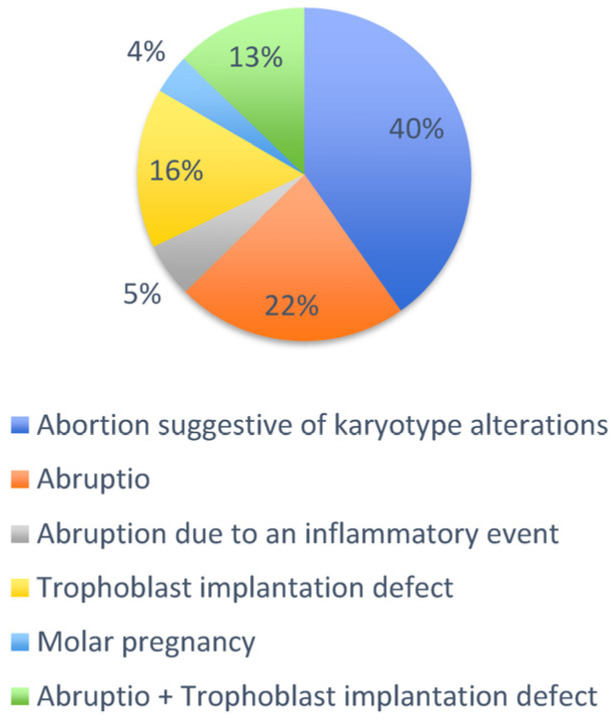
This retrospective cohort study analyzed 1,168 first-trimester abortion specimens and proposes a histopathological framework to help classify common causes of early pregnancy loss from routine tissue examination. The authors found karyotype-alteration patterns in 40.2% of cases, with 27.8% genetically confirmed, and describe characteristic morphologic patterns for implantation defects, abruption, blighted ovum, and molar pregnancies.
## Key findings
- Among the 1,168 included cases, 40.2% showed histological features suggestive of karyotype alterations; in 27.8% of all cases, a chromosomal abnormality was genetically confirmed, “primarily triploidy.”
- The mean patient age was 35.8 years and the mean gestational age was 9 weeks and 3 days.
- The paper proposes histologic patterns for major etiologies of first-trimester loss, including:
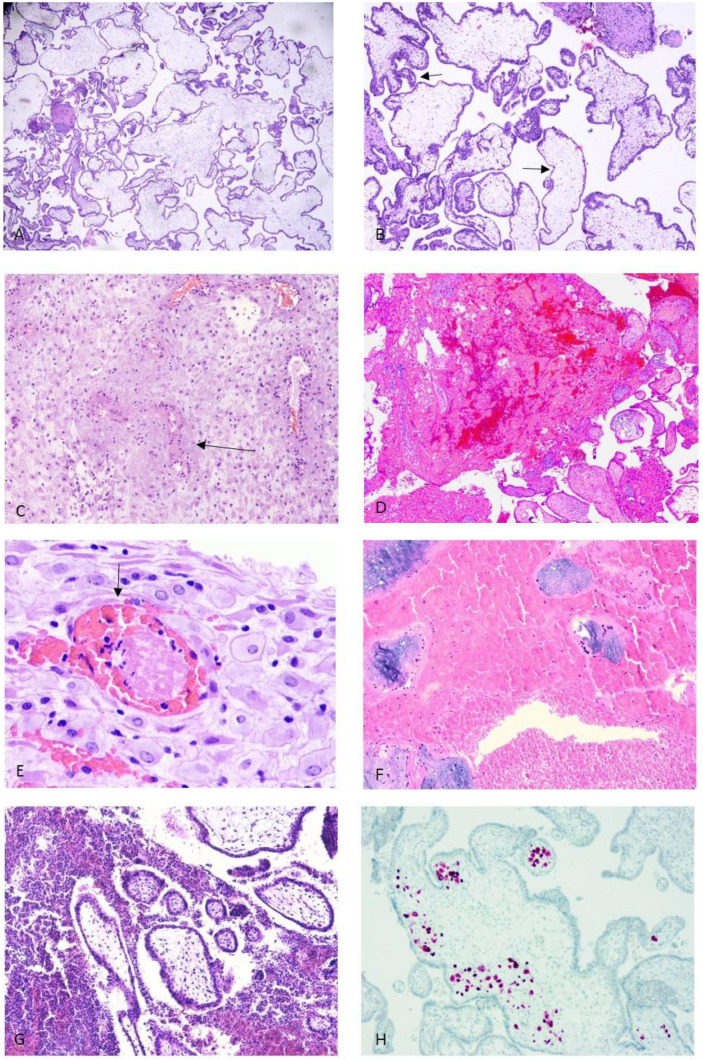
- Trophoblast implantation defect: normal villar morphology with poor trophoblast invasion and retention of muscular vessel layers in the decidua.
- Abruption: ischemic villi, intervillous blood, fibrin, thrombi, and inflammatory infiltrates when secondary inflammation is present.
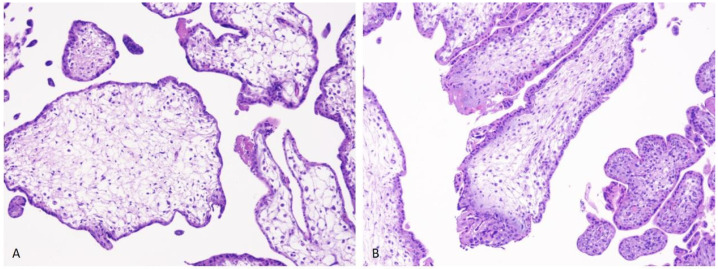
- Blighted ovum: edematous chorionic villi with irregular contours, thinned trophoblast, and absence of fetal red blood cells and embryonic residues.
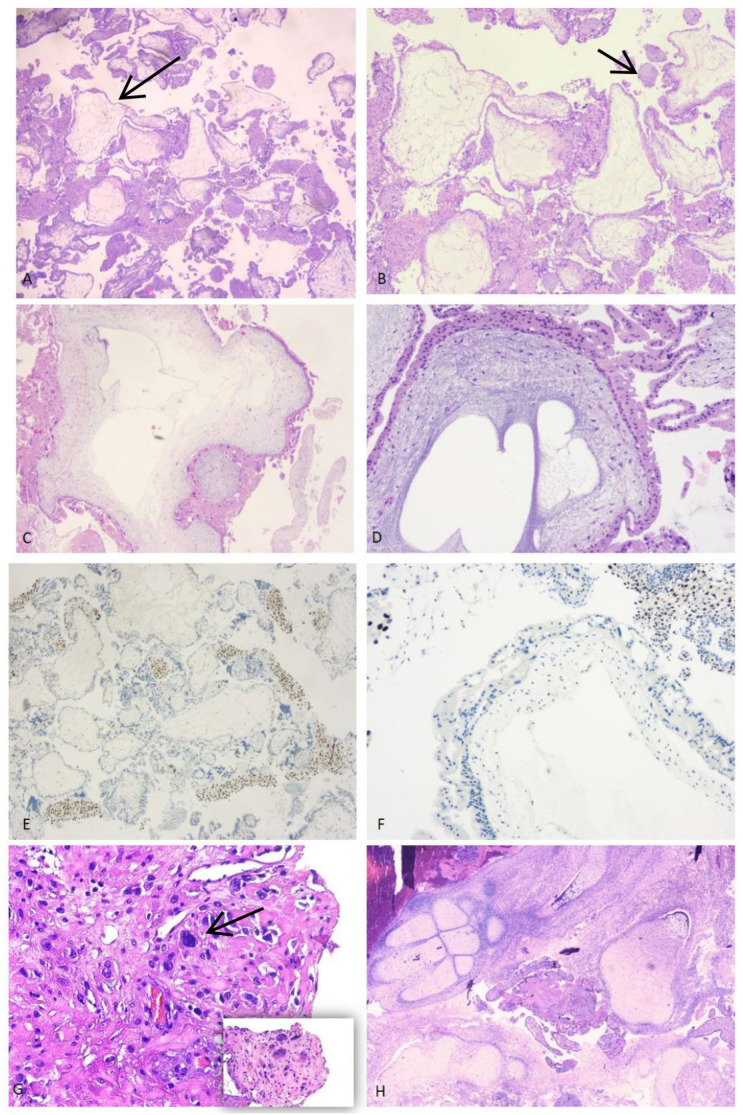
- For molar pregnancy, the authors describe diagnostic immunostaining patterns:
- Partial molar pregnancy: p57 positive in at least 10% of villous stromal cells and cytotrophoblasts.
- Complete molar pregnancy: p57 negative in cytotrophoblast and villous stroma.
## Methods
- Design: Retrospective cohort study of spontaneous first-trimester abortions collected between January 2012 and January 2025 at Agostino Gemelli Hospital, Rome, Italy.
- Sample: After excluding 708 cases of recurrent abortion, the study included 1,168 cases of abortive material from pregnancies of ≤12 weeks’ gestation with adequate tissue containing chorionic villi and maternal decidua.
- Analysis: Specimens were formalin-fixed, paraffin-embedded, sectioned at about 5 µm, and stained with H&E; selected cases had additional stains/immunohistochemistry (including p57 for suspected molar pregnancy and ancillary stains for suspected cytomegalovirus). Two pathologists independently reviewed cases, with blinded re-review and consensus discussion for discordant or uncertain diagnoses.
## Limitations
- Stated in the paper: “The principal limitation” was the lack of correlation with clinical characteristics of the patients.
- Stated in the paper: The authors note the study was intentionally focused on morphological standardization rather than clinicopathological integration.
- Evident from the text: The analysis is based on retrospective pathology specimens only, so the framework is descriptive and does not by itself establish clinical outcomes or causation.
Model-written summary. Check it against the paper before relying on it.
Integrity signals
Registry
Cites
Statistics
Figures
Verification
Claims the paper makes
1 Valid · 0 Not valid · 17 Not checked · 30 Own results and interpretations
Every source the paper cites for this claim was checked and supports it.
In the paper
“Trophoblast implantation defects (TID) can cause an early pregnancy loss.”
What the sources say
- Supportedcites [22] Fritz, 2014, Cell signaling in trophoblast-uterine communication, Int. J. Dev. Biol. source
The Abstract (page not specified) says implantation requires trophoblast cells capable of adhering to and invading the endometrium, and that defects in embryo–uterine signaling can cause implantation failure or early pregnancy loss. This supports the claim as a broad paraphrase, though the paper does not use the term “trophoblast implantation defects.” (LLM, conf=0.88)
plainstates a cause- Asserted: passes — The authors put it forward as true.
- Checkable: passes — It can be checked against evidence.
- Load-bearing: passes — The paper’s conclusions depend on it.
- Based: passes — The paper gives a reason why it holds.
- Supported
A result the paper reports from its own data — it cites no other source for it, so there is none to check. The quote shows it is in the paper.
In the paper
“After excluding 708 cases of recurrent abortion, a total of 1168 cases were included in the study.”
plainn = 1,168- Asserted: passes — The authors put it forward as true.
- Checkable: passes — It can be checked against evidence.
- Load-bearing: passes — The paper’s conclusions depend on it.
- Based: passes — The paper gives a reason why it holds.
A result the paper reports from its own data — it cites no other source for it, so there is none to check. The quote shows it is in the paper.
In the paper
“In the remaining cases, although no genetic confirmation was available, the histological characteristics did not allow allocation of the cases to any of the other categories.”
plain- Asserted: passes — The authors put it forward as true.
- Checkable: passes — It can be checked against evidence.
- Load-bearing: unclear — It is unclear whether the paper’s conclusions depend on it.
- Based: passes — The paper gives a reason why it holds.
A result the paper reports from its own data — it cites no other source for it, so there is none to check. The quote shows it is in the paper.
In the paper
“Among our cases, 40.2% showed histological features suggestive of karyotype alterations.”
hedged- Asserted: passes — The authors put it forward as true.
- Checkable: passes — It can be checked against evidence.
- Load-bearing: passes — The paper’s conclusions depend on it.
- Based: passes — The paper gives a reason why it holds.
A result the paper reports from its own data — it cites no other source for it, so there is none to check. The quote shows it is in the paper.
In the paper
“Histological findings recorded in the database enabled the formulation of a diagnostic hypothesis, categorizing the possible causes of miscarriage as follows ( Figure 2 ).”
plainstates a cause- Asserted: passes — The authors put it forward as true.
- Checkable: passes — It can be checked against evidence.
- Load-bearing: passes — The paper’s conclusions depend on it.
- Based: passes — The paper gives a reason why it holds.
7 more claims
Create a free account to see all 48 claims and to verify the 17 references still open.
- It may state two separate claims as one. 18
- Probably not a substantial claim. 30
- The quote only partly states this claim. 1
Self-check
Percentages, sums and reported differences re-computed from the paper’s own numbers.
Each contradiction between two passages listed here was confirmed by an independent check.
Rated minor: it would not touch a result — a value no result rests on, a p-value that stays on the same side of the significance level, or a conflict that is clerical, resolved elsewhere in the paper, or outside its own findings.
In the paper
“The World Health Organization defines abortion as “the expulsion or extraction from its mother of a fetus or embryo weighing 500 g or less” [ 1 ].”
“Currently, abortion is defined as a spontaneous loss of a pregnancy [ 1 ] before the fetal viability, which is considered to be before 20 weeks of gestation or when the fetus weighs 500 g or more [ 2 ].”
Citations
Cites
ACOG Practice Bulletin No. 200: Early Pregnancy Loss
(2018) · Obstetrics & Gynecology · doi:10.1097/aog.0000000000002899 · Cited by 483
Placental abruption: epidemiology, risk factors and consequences
TIKKANEN, M. (2011) · Acta Obstetricia et Gynecologica Scandinavica · doi:10.1111/j.1600-0412.2010.01030.x · Cited by 421
Human placental development and function
Cindrova-Davies, T., & Sferruzzi-Perri, A. N. (2022) · Seminars in Cell & Developmental Biology · doi:10.1016/j.semcdb.2022.03.039 · Cited by 272
Pathophysiology of histological changes in early pregnancy loss
Jauniaux, E., & Burton, G. J. (2005) · Placenta · doi:10.1016/j.placenta.2004.05.011 · Cited by 216
Diagnosis and treatment of gestational trophoblastic disease: ACOG Practice Bulletin No. 531
FORTHEAMERICANCOLLEGEOFOBSTET, SOPER, J., MUTCH, D., & SCHINK, J. (2004) · Gynecologic Oncology · doi:10.1016/j.ygyno.2004.05.013 · Cited by 180
Handbook of Placental Pathology
Faye-Petersen, O. M., Heller, D. S., & Joshi, V. V. (2005) · CRC Press eBooks · doi:10.3109/9780203489567 · Cited by 108
Early Pregnancy Losses: Review of Nomenclature, Histopathology, and Possible Etiologies
Pınar, H., Gibbins, K. J., He, M., Kostadinov, S., & Silver, R. M. (2018) · Fetal and Pediatric Pathology · doi:10.1080/15513815.2018.1455775 · Cited by 106
Prevalence of chromosomal alterations in first-trimester spontaneous pregnancy loss
Essers, R., Лебедев, И. Н., Kurg, A., Фонова, Е. А., Stevens, S. J. C., Koeck, R. M., von Rango, U., Brandts, L., Deligiannis, S. P., Tv, N., et al. (2023) · Nature Medicine · doi:10.1038/s41591-023-02645-5 · Cited by 96
Recurrent first trimester pregnancy loss: revised definitions and novel causes
Allison, J. L., & Schust, D. J. (2009) · Current Opinion in Endocrinology Diabetes and Obesity · doi:10.1097/med.0b013e3283327fc5 · Cited by 92
Cell signaling in trophoblast-uterine communication
Fritz, R., Jain, C., & Armant, D. R. (2014) · The International Journal of Developmental Biology · doi:10.1387/ijdb.140011da · Cited by 86 · cited 1×
“These defects occur when the trophoblast cells fail to implant properly into the endometrium leading to insufficient placental development [22].”
Hu, L., Du, J., Lv, H., Zhao, J., Chen, M., Wang, Y., Wu, F., Liu, F., Chen, X., Zhang, J., et al. (2018) · Reproductive Biology and Endocrinology · doi:10.1186/s12958-018-0390-6 · Cited by 74
Genest, D. R. (1995) · Human Pathology · doi:10.1016/0046-8177(95)90038-1 · Cited by 54
Ly, K. D., Agarwal, A. K., & Nagy, Z. P. (2011) · Journal of Assisted Reproduction and Genetics · doi:10.1007/s10815-011-9608-7 · Cited by 51
Pendina, A. A., Efimova, O. A., Chiryaeva, O. G., Tikhonov, A. V., Petrova, L., Dudkina, V. S., Sadik, N. A., Fedorova, I. D., Galembo, I. A., Kuznetzova, T. V., et al. (2013) · Journal of Assisted Reproduction and Genetics · doi:10.1007/s10815-013-0148-1 · Cited by 42
Medico-Legal Aspects of Abortion: Updates of the Literature
Shakhatreh, H. J. M., Salih, A. J., Aldrou, K. K. A. R., Alazzam, F. A. F., & Issa, M. S. B. (2022) · Medical Archives · doi:10.5455/medarh.2022.76.373-376 · Cited by 38
Fram, K. M. (2002) · European Journal of Obstetrics & Gynecology and Reproductive Biology · doi:10.1016/s0301-2115(02)00155-0 · Cited by 31
First trimester pregnancy loss: Clinical implications of genetic testing
Massalska, D., Zimowski, J. G., Bijok, J., Pawelec, M., Czubak‐Barlik, M., Jakiel, G., & Roszkowski, T. (2016) · Journal of obstetrics and gynaecology research · doi:10.1111/jog.13179 · Cited by 31
Atkinson, A. L., Santolaya-Forgas, J., Blitzer, D. N., Santolaya, J. L., Matta, P. G., CANTERINO, J. C., & Oyelese, Y. (2014) · The Journal of Maternal-Fetal & Neonatal Medicine · doi:10.3109/14767058.2014.927427 · Cited by 26
Placental Abruption: Pathophysiology, Diagnosis, and Management
Schneider, E., & Kinzler, W. L. (2024) · Clinical Obstetrics & Gynecology · doi:10.1097/grf.0000000000000903 · Cited by 20
First-trimester miscarriage: A histopathological classification proposal
Cardoso, R. M. A. N. N., Cardoso, P. L. N. N., Azevedo, A. P., Cadillá, J. S., Amorim, M. G. R. O. R., Gomes, M. E. R., & Pinto, J. M. N. C. (2021) · Heliyon · doi:10.1016/j.heliyon.2021.e06359 · Cited by 17
Li, F., Niu, A., Xingmei, F., Yan, Y., & Chen, Y. (2021) · Scientific Reports · doi:10.1038/s41598-021-90970-5 · Cited by 16
Giacometti, C., Bellan, E., Ambrosi, A., Dei Tos, A. P., Cassaro, M., & Ludwig, K. (2021) · Placenta · doi:10.1016/j.placenta.2021.02.010 · Cited by 11 · cited 1×
“The histopathological examination of the abortive material is crucial for the diagnosis and for the subsequent management of a patient who experienced a first trimester miscarriage [17].”
Complete hydatidiform mole in higher-order multiple pregnancies
Sileo, F. G., Giuliani, G. A., Facchinetti, F., Contu, G., Chiossi, G., & Bertucci, E. (2022) · Minerva Obstetrics and Gynecology · doi:10.23736/s2724-606x.21.05031-4 · Cited by 6
Research works printed but not linked: 3
- Emami, 2022, Correlation between clinical and laboratory parameters and early pregnancy loss in assisted reproductive technology cycles: A cross-sectional study, Int. J. Reprod. Biomed., 20, 683
- Yeasmin, 2010, Exaggerated placental site mimicking placental site trophoblastic tumor: Case report and literature review, Eur. J. Gynaecol. Oncol., 31, 586
- Algurini, 2022, Partial Molar Pregnancy With Normal Karyotype, Cureus, 14, e30934
Cited by
Still being checked.
Metadata
- Authors
- Nardi, E., & Arena, V.
- Affiliations
- Agostino Gemelli University Polyclinic (IT)
- Corresponding author
- Arena, Vincenzo
- Venue
- Diagnostics
- Publisher
- MDPI AG
- Published
- 2026-04-09
- Volume
- 16
- Issue
- 8
- Pages
- 1128
- ISSN
- 2075-4418 (ISSN-L)
- PMC
- PMC13115270
- OpenAlex
- W7152382552
- Semantic Scholar
- 35b1bea5e8122e6f105d07ad868a58b294db2e64
- Cited by
- 0
- References
- 23
- FWCI
- 0.00
- Type
- journal article
- Language
- en
- Open access
- gold
- doi.org
- Licence
- Locations
- Diagnostics (publishedVersion, cc-by)
- PubMed (publishedVersion)
- PubMed Central (publishedVersion, cc-by)
- PubliCatt (Università Cattolica del Sacro Cuore) (submittedVersion, cc-by)
- DOAJ (DOAJ: Directory of Open Access Journals) (submittedVersion, cc-by-sa)
- Topics
- Life Sciences › Immunology and Microbiology › Immunology › Reproductive System and Pregnancy
- Health Sciences › Medicine › Pediatrics, Perinatology and Child Health › Prenatal Screening and Diagnostics
- Health Sciences › Medicine › Public Health, Environmental and Occupational Health › Reproductive Health and Contraception
- Keywords
- first-trimester miscarriage, chorionic villi, histological classification, products of conception, recurrent pregnancy loss, maternal age, aneuploidy
About these checks
Registry, retraction, Cites and statistics results are computed, not judged, with one exception: a printed reference that no index lists is read once by a model before it counts as a citation error. Claims are extracted by a model and kept only when their quote appears verbatim in the text; each cited source is then checked, with a model’s help, for whether it says what the claim relies on. Those verdicts can be wrong — read the claim’s quote and the cited source before relying on one.
A language model drew the claims from the paper on 2026-10-11, under version 3 of the claim definition (model deepseek-v4.1-flash, prompt extract-v3).
A second model labelled each claim on 2026-10-11 (model jev-1.13-20260917, definition revision gold-guideline-v0.2).
Cited sources are checked with a language model’s help (gpt-6-sol).
Statistics and arithmetic are recomputed, not judged.
Confidence bands are shown only for fields calibrated on our annotated test set. None is calibrated yet, so no band is shown.
What counts as a claim ›How we measure confidence ›How we check this ›
Are you an author, or do you see a problem with this page? Request a review
Data sources
Bibliographic data: Semantic Scholar, OpenAlex, Crossref.
Contains information from the Semantic Scholar Academic Graph Datasets, made available under the ODC Attribution License (ODC-BY 1.0).
Semantic Scholar’s data is described in: Kinney, R., et al. (2023). The Semantic Scholar Open Data Platform. arXiv:2301.10140.
