

The DOI matches its Crossref record; 58 of the 60 references it cites were found in a registry or an index; none of the 3 sources its claims cite is checked for support yet.
A Bijective Image Encryption System Based on Hybrid Chaotic Map Diffusion and DNA Confusion
Open accessAbstract
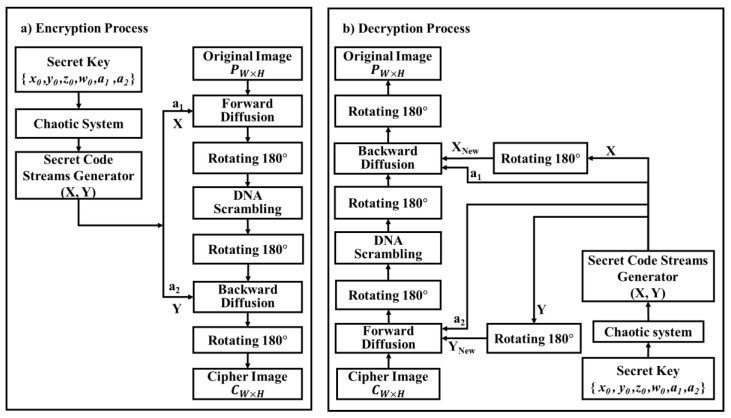
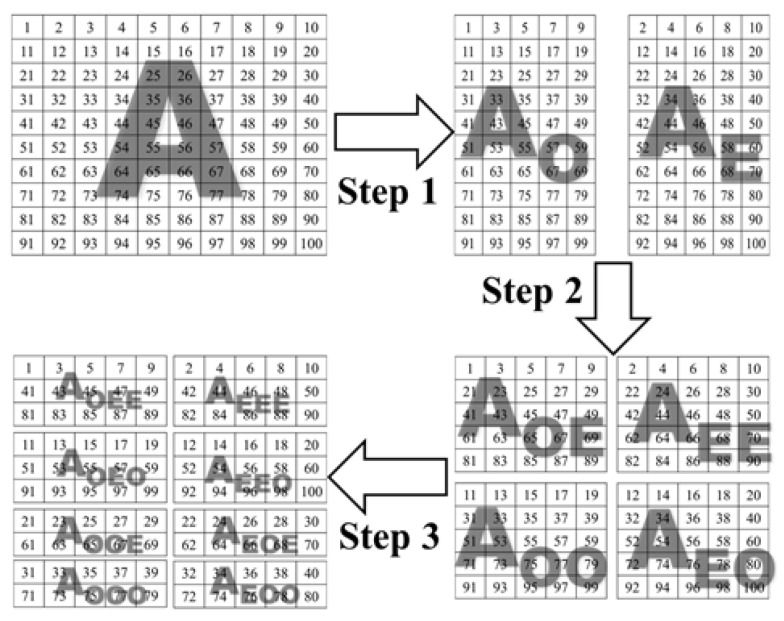
Modern multimedia communications technology requirements have raised security standards, which allows for enormous development in security standards. This article presents an innovative symmetric cryptosystem that depends on the hybrid chaotic Lorenz diffusion stage and DNA confusion stage. It involves two identical encryption and decryption algorithms, which simplifies the implementation of transmitting and receiving schemes of images securely as a bijective system. Both schemes utilize two distinctive non-consecutive chaotic diffusion stages and one DNA scrambling stage in between. The generation of the coded secret bit stream employs a hybrid chaotic system, which is employed to encrypt or decrypt the transmitted image and is utilized in the diffusion process to dissipate the redundancy in the original transmitted image statistics. The transmitted image is divided into eight scrambled matrices according to the position of the pixel in every splitting matrix. Each binary matrix is converted using a different conversion rule in the Watson-Crick rules. The DNA confusion stage is applied to increase the complexity of the correlation between the transmitted image and the utilized key. These stages allow the proposed image encryption scheme to be more robust against chosen/known plaintext attacks, differential attacks, cipher image attacks, and information entropy. The system was revealed to be more sensitive against minimal change in the generated secret key. The analysis proves that the system has superior statistical properties, bulkier key space, better plain text sensitivity, and improved key sensitivity compared with former schemes.
Overview
CoChat Summary
## TL;DR
The paper proposes a bijective symmetric image encryption scheme that combines a 4D hyperchaotic Lorenz-based diffusion process with DNA-based confusion, using identical encryption and decryption structures. The authors report strong statistical properties, a large key space of \(1.6777 \times 10^{64}\), and near-theoretical sensitivity/attack-resistance metrics on 200 × 200 grayscale test images.
## Key findings
- The proposed key space is reported as \(1.6777 \times 10^{64}\), which the authors say is large enough to resist brute-force attacks; they estimate \(2.03451 \times 10^{21}\) days to crack it with 17 billion attempts per hour.
- For the Lena example, the information entropy is reported as 7.4430 for the plain image and 7.9882 for the cipher image, close to the 8-bit ideal.
- For cipher-image sensitivity, the paper reports average values of Diff3 = 99.6150 and Diff4 = 28.4170, described as near the hypothetical values.
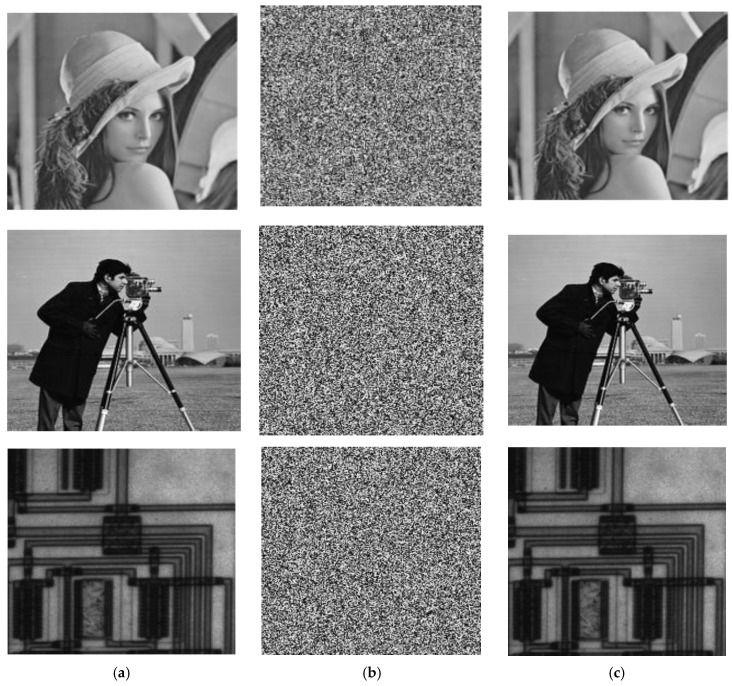
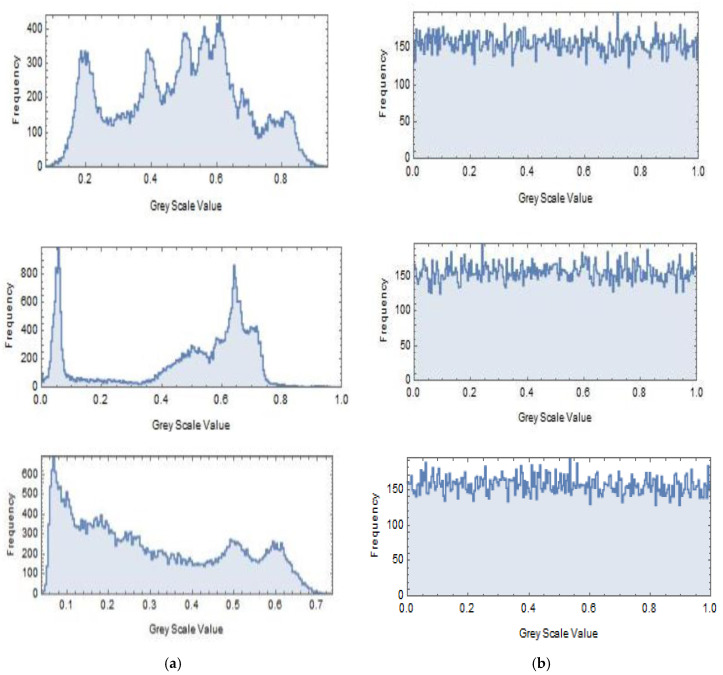
- The paper reports NPCR and UACI values near their theoretical random-image values of 99.609% and 33.464%, and says the cipher histograms are nearly uniform with chi-square test p-values greater than 0.05 for Lena, Cameraman, and Circuit.
## Methods
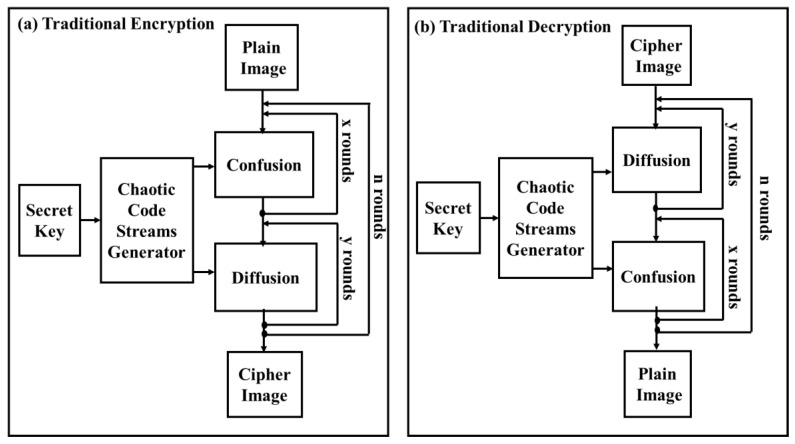
- The design is a bijective symmetric image cryptosystem with two diffusion stages and one DNA confusion stage; encryption and decryption are identical in structure and use 180-degree matrix rotations between stages.
- The sample used in simulation consists of three 200 × 200 grayscale images: Lena, Cameraman, and Circuit, implemented in Mathematica 11.
- Main analysis includes histogram analysis, chi-square testing, correlation analysis, key space estimation, key sensitivity tests, NPCR/UACI differential tests, cipher-image sensitivity tests, and entropy/local entropy evaluation.
## Limitations
- The paper’s experiments are limited to three grayscale images of size 200 × 200, so broader evidence across image types, sizes, and color images is not stated in the paper.
- The text makes evident that the security evaluation is simulation-based and does not include implementation on real communication systems or hardware testing; this is evident from the described Mathematica experiments and reported metrics, not stated as a limitation.
- The paper does not state any formal cryptanalytic proof beyond the reported statistical and randomness tests, so claims about resistance are based on measured indicators rather than exhaustive security proofs; this is evident in the text.
Model-written summary. Check it against the paper before relying on it.
Integrity signals
Registry
Cites
Statistics
Figures
Verification
Claims the paper makes
0 Valid · 0 Not valid · 2 Not checked · 44 Own results and interpretations
A result the paper states — it cites no source for it, so there is none to check. The quote shows it is in the paper.
In the paper
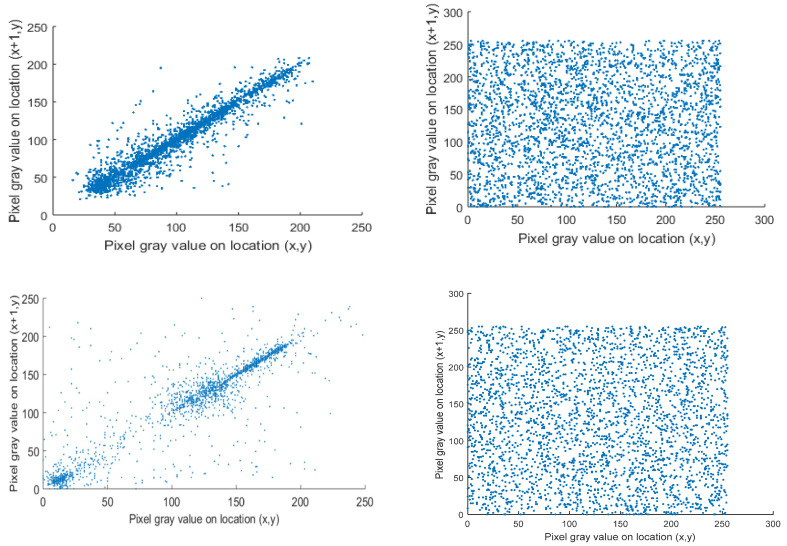
“The correlation of plain images is high and close to 1.”
§ A Bijective Image Encryption System Based on Hybrid Chaotic Map Diffusion and DNA Confusion > 5. Performance and Security Analysis > 5.2. Statistical Attacks Analysis
plain- Asserted: passes — The authors put it forward as true.
- Checkable: passes — It can be checked against evidence.
- Load-bearing: unclear — It is unclear whether the paper’s conclusions depend on it.
- Based: passes — The paper gives a reason why it holds.
A result the paper states — it cites no source for it, so there is none to check. The quote shows it is in the paper.
In the paper
“It would take 2.03451×10²¹ days to crack the systems if 17 billion attempts are tried hourly using a very high-performance machine.”
§ A Bijective Image Encryption System Based on Hybrid Chaotic Map Diffusion and DNA Confusion > 5. Performance and Security Analysis > 5.1. Key Space
hedgedstates a cause- Asserted: passes — The authors put it forward as true.
- Checkable: passes — It can be checked against evidence.
- Load-bearing: passes — The paper’s conclusions depend on it.
- Based: passes — The paper gives a reason why it holds.
A result the paper reports from its own data — it cites no other source for it, so there is none to check. The quote shows it is in the paper.
In the paper
“The histograms of the original images of Lena, Cameraman, and Circuit shown in Figure 5a are non-uniform.”
§ A Bijective Image Encryption System Based on Hybrid Chaotic Map Diffusion and DNA Confusion > 5. Performance and Security Analysis > 5.2. Statistical Attacks Analysis
plain- Asserted: passes — The authors put it forward as true.
- Checkable: passes — It can be checked against evidence.
- Load-bearing: passes — The paper’s conclusions depend on it.
- Based: passes — The paper gives a reason why it holds.
A result the paper reports from its own data — it cites no other source for it, so there is none to check. The quote shows it is in the paper.
In the paper
“So, the presented cryptosystem attains high performance by getting NPCR values and UACI values near to their hypothetical values.”
§ A Bijective Image Encryption System Based on Hybrid Chaotic Map Diffusion and DNA Confusion > 5. Performance and Security Analysis > 5.4. Differential Attack
plain- Asserted: passes — The authors put it forward as true.
- Checkable: passes — It can be checked against evidence.
- Load-bearing: passes — The paper’s conclusions depend on it.
- Based: passes — The paper gives a reason why it holds.
A result the paper reports from its own data — it cites no other source for it, so there is none to check. The quote shows it is in the paper.
In the paper
“Table 5 shows that the calculated results of Diff1, Diff2, Diff3, and Diff4 are nearly equal to their hypothetical values; these values indicators are designating that the presented scheme is very sensitive to minimal alteration in the generated secret key.”
§ A Bijective Image Encryption System Based on Hybrid Chaotic Map Diffusion and DNA Confusion > 5. Performance and Security Analysis > 5.3. Key Sensitivity Analysis
plain- Asserted: passes — The authors put it forward as true.
- Checkable: passes — It can be checked against evidence.
- Load-bearing: passes — The paper’s conclusions depend on it.
- Based: passes — The paper gives a reason why it holds.
27 more claims
Create a free account to see all 46 claims and every source verdict.
- It may state two separate claims as one. 13
- Probably not a substantial claim. 2
Self-check
Percentages, sums and reported differences re-computed from the paper’s own numbers.
Each contradiction between two passages listed here was confirmed by an independent check.
Rated minor: it would not touch a result — a value no result rests on, a p-value that stays on the same side of the significance level, or a conflict that is clerical, resolved elsewhere in the paper, or outside its own findings.
In the paper
§ A Bijective Image Encryption System Based on Hybrid Chaotic Map Diffusion and DNA Confusion > 3. Proposed Image Cryptosystem
“the initial parameters of the 4D hyperchaotic system, whose value ranges are y0∈(− 40, 40), x0∈(− 40, 40), w0∈(− 250, 250), and z0∈(1, 81)”
§ A Bijective Image Encryption System Based on Hybrid Chaotic Map Diffusion and DNA Confusion > 5. Performance and Security Analysis > 5.1. Key Space
“The value ranges were x0∈(− 40,40), y0∈(−40,40), and z0∈(1,80) each with a step size of 10−13, while the value range of w0∈(−250,250) had a step size of 10−12.”
Citations
Cites
Deterministic Nonperiodic Flow
Lorenz, E. N. (1963) · Journal of the Atmospheric Sciences · doi:10.1175/1520-0469(1963)020<0130:dnf>2.0.co;2 · Cited by 19,398
Molecular Computation of Solutions to Combinatorial Problems
Adleman, L. M. (1994) · Science · doi:10.1126/science.7973651 · Cited by 4,474
A NEW CHAOTIC ATTRACTOR COINED
LÜ, J., & CHEN, G. (2002) · International Journal of Bifurcation and Chaos · doi:10.1142/s0218127402004620 · Cited by 1,862 · cited 1×
“Other chaotic systems introduced in succession include the Chen-Lu chaos system [31] and Liu chaos system [32].”
MethodSecure integration of IoT and Cloud Computing
Stergiou, C., Psannis, K. E., Kim, B.-G., & Gupta, B. (2018) · Future Generation Computer Systems · doi:10.1016/j.future.2016.11.031 · Cited by 1,094
ON THE DERIVATION OF A “CHAOTIC” ENCRYPTION ALGORITHM
Matthews, R. (1989) · Cryptologia · doi:10.1080/0161-118991863745 · Cited by 1,044
Local Shannon entropy measure with statistical tests for image randomness
Wu, Y., Zhou, Y., Saveriades, G., Agaian, S., Noonan, J. P., & Natarajan, P. (2013) · Information Sciences · doi:10.1016/j.ins.2012.07.049 · Cited by 722 · cited 1×
“[50] have expressed a new entropy gauge to regulate the real randomness by picking the non‐overlapping blocks inside the encrypted image.”
BackgroundA chaos-based symmetric image encryption scheme using a bit-level permutation
Zhu, Z.-L., Zhang, W., Wong, K.-W., & Yu, H. (2011) · Information Sciences · doi:10.1016/j.ins.2010.11.009 · Cited by 662 · cited 1×
“Image Proposed System [51] [52] [53] [54] Lena 7.”
Image encryption using DNA complementary rule and chaotic maps
Liu, H., Wang, X., & kadir, A. (2012) · Applied Soft Computing · doi:10.1016/j.asoc.2012.01.016 · Cited by 626 · cited 1×
“[15] proposed an algorithm depending on a DNA rule merged with chaotic map.”
MethodLiu, C., Liu, T., Liu, L., & Liu, K. (2004) · Chaos, Solitons & Fractals · doi:10.1016/j.chaos.2004.02.060 · Cited by 602 · cited 1×
“Other chaotic systems introduced in succession include the Chen‐Lu chaos system [31] and Liu chaos system [32].”
BackgroundColor image encryption using spatial bit-level permutation and high-dimension chaotic system
Liu, H., & Wang, X. (2011) · Optics Communications · doi:10.1016/j.optcom.2011.04.001 · Cited by 591 · cited 1×
“A perfect cryptosystem must satisfy some performance analysis such as large key space, sensitivity to slight change in the secret key, and nearly no correlation between two consecutive adjacent pixels [21].”
BackgroundIntuitionistic fuzzy metric spaces
Park, J. H. (2004) · Chaos, Solitons & Fractals · doi:10.1016/j.chaos.2004.02.051 · Cited by 585
A color image cryptosystem based on dynamic DNA encryption and chaos
Chai, X., Fu, X., Gan, Z., Lu, Y., & Chen, Y. (2019) · Signal Processing · doi:10.1016/j.sigpro.2018.09.029 · Cited by 573
Color image encryption based on one-time keys and robust chaotic maps
Liu, H., & Wang, X. (2010) · Computers & Mathematics with Applications · doi:10.1016/j.camwa.2010.03.017 · Cited by 548 · cited 1×
“[16] examined the role of image fusion, which depends on crypto‐analysis for the encryption method and hiding the information using DNA classification combined with the chaotic map for covering the information [17].”
MethodA chaotic image encryption algorithm based on perceptron model
Wang, X.-Y., Yang, L., Liu, R., & Kadir, A. (2010) · Nonlinear Dynamics · doi:10.1007/s11071-010-9749-8 · Cited by 449
Chaos-based image encryption using a hybrid genetic algorithm and a DNA sequence
Enayatifar, R., Abdullah, A. H., & Isnin, I. F. (2014) · Optics and Lasers in Engineering · doi:10.1016/j.optlaseng.2013.12.003 · Cited by 405
A novel color image encryption algorithm based on DNA sequence operation and hyper-chaotic system
Wei, X., Guo, L., Zhang, Q., Zhang, J., & Lian, S. (2012) · Journal of Systems and Software · doi:10.1016/j.jss.2011.08.017 · Cited by 389
Image encryption using DNA addition combining with chaotic maps
Zhang, Q., Guo, L., & Wei, X. (2010) · Mathematical and Computer Modelling · doi:10.1016/j.mcm.2010.06.005 · Cited by 389
An Efficient Algorithm for Media-based Surveillance System (EAMSuS) in IoT Smart City Framework
Memos, V. A., Psannis, K. E., Ishibashi, Y., Kim, B.-G., & Gupta, B. B. (2018) · Future Generation Computer Systems · doi:10.1016/j.future.2017.04.039 · Cited by 356
Chen, J., Zhu, Z.-L., Zhang, L.-B., Zhang, Y., & Yang, B.-Q. (2018) · Signal Processing · doi:10.1016/j.sigpro.2017.07.034 · Cited by 320 · cited 1×
“Following in 2017, an efficient digital image encryption process utilizing adaptive rearrangement diffusion and an arbitrary DNA coding is presented [19].”
MethodA RGB image encryption algorithm based on DNA encoding and chaos map
Liu, L., Zhang, Q., & Wei, X. (2012) · Computers & Electrical Engineering · doi:10.1016/j.compeleceng.2012.02.007 · Cited by 301
A hyperchaos generated from Lorenz system
Wang, X., & Wang, M. (2008) · Physica A: Statistical Mechanics and its Applications · doi:10.1016/j.physa.2008.02.020 · Cited by 285 · cited 1×
“In addition, they [36,37] have reported the hyper‐ chaos Lorenz system as”
BackgroundImage encryption using a new parametric switching chaotic system
Zhou, Y., Bao, L., & Chen, C. L. P. (2013) · Signal Processing · doi:10.1016/j.sigpro.2013.04.021 · Cited by 265 · cited 1×
“Image Proposed System [51] [52] [53] [54] Lena 7.”
Brief review on application of nonlinear dynamics in image encryption
Özkaynak, F. (2018) · Nonlinear Dynamics · doi:10.1007/s11071-018-4056-x · Cited by 262 · cited 1×
“The presented algorithm is given in an accurate mathematical language with no exceptional elements and tested against the list given in [25].”
MethodGehani, A., LaBean, T., & Reif, J. (2003) · Lecture Notes in Computer Science · doi:10.1007/978-3-540-24635-0_12 · Cited by 255
Color image encryption based on Coupled Nonlinear Chaotic Map
Mazloom, S., & Eftekhari-Moghadam, A. M. (2009) · Chaos, Solitons & Fractals · doi:10.1016/j.chaos.2009.03.084 · Cited by 241 · cited 1×
“Therefore, new schemes and approaches, such as deoxyribonucleic acid (DNA) [6–8] and chaotic maps [9,10] have been utilized in modern digital image safeguarding schemes.”
BackgroundA novel image fusion encryption algorithm based on DNA sequence operation and hyper-chaotic system
Zhang, Q., Guo, L., & Wei, X. (2013) · Optik - International Journal for Light and Electron Optics · doi:10.1016/j.ijleo.2012.11.018 · Cited by 236
An image encryption method based on chaos system and AES algorithm
Arab, A., Rostami, M. J., & Ghavami, B. (2019) · The Journal of Supercomputing · doi:10.1007/s11227-019-02878-7 · Cited by 226 · cited 10×
“Algorithms UACI (%) UACI Critical Values * 0.05U +33.2824% −33.6447% * 0.01U +33.2255% −33.7016% * 0.001U +33.1594% −33.7677% Proposed 33.4205 Successful Successful Successful CCAES [41] 33.4767 Successful Successful Successful CDCP [42] 33.5752 Successful Successful Successful CHC [43] 33.4263 Successful Successful S…”
MethodInfluentialWhen an attacker meets a cipher-image in 2018: A year in review
Li, C., Zhang, Y., & Xie, E. Y. (2019) · Journal of Information Security and Applications · doi:10.1016/j.jisa.2019.102361 · Cited by 217 · cited 1×
“The algorithm utilizes a standard diffusion and confusion configuration [23].”
MethodA Pseudo DNA Cryptography Method
Ning, K. (2009) · arXiv (Cornell University) · doi:10.48550/arxiv.0903.2693 · Cited by 214
Chaos based crossover and mutation for securing DICOM image
Ravichandran, D., Praveenkumar, P., Balaguru Rayappan, J. B., & Amirtharajan, R. (2016) · Computers in Biology and Medicine · doi:10.1016/j.compbiomed.2016.03.020 · Cited by 200 · cited 1×
“Furthermore, the values are compared against the critical values as in [46,47].”
ResultA novel and effective image encryption algorithm based on chaos and DNA encoding
Wang, X., & Liu, C. (2017) · Multimedia Tools and Applications · doi:10.1007/s11042-016-3311-8 · Cited by 195 · cited 5×
“Algorithms Proposed System CCAES [41] CDCP [42] CHC [43] C‐DNA [44] HC‐DNA [45] Time 0.”
MethodInfluentialDNA Chaos Blend to Secure Medical Privacy
Ravichandran, D., Praveenkumar, P., Rayappan, J. B. B., & Amirtharajan, R. (2017) · IEEE Transactions on NanoBioscience · doi:10.1109/tnb.2017.2780881 · Cited by 182 · cited 1×
“Furthermore, the values are compared against the critical values as in [46,47].”
ResultCross-utilizing hyperchaotic and DNA sequences for image encryption
Zhan, K., Dong, W. G., Shi, J., & Yu, J. (2017) · Journal of Electronic Imaging · doi:10.1117/1.jei.26.1.013021 · Cited by 157 · cited 3×
“DNA-based methods, C-DNA [44] and HC-DNA [45], have a better noise attack performance than the previous works.”
MethodResultImage Encryption Using Josephus Problem and Filtering Diffusion
Hua, Z., Xu, B., Jin, F., & Huang, H. (2019) · IEEE Access · doi:10.1109/access.2018.2890116 · Cited by 156 · cited 1×
“[22] solving scenario‐oriented image security problems by introducing an algorithm with new technologies.”
MethodA novel image encryption–compression scheme using hyper-chaos and Chinese remainder theorem
Zhu, H., Zhao, C., & Zhang, X. (2013) · Signal Processing Image Communication · doi:10.1016/j.image.2013.02.004 · Cited by 153 · cited 2×
“Algorithms Proposed System CCAES [41] CDCP [42] CHC [43] C‐DNA [44] HC‐DNA [45] Time 0.19253 2.9 2.70264 3.17265 2.15572 0.27783 From Table 10, we can see that for 1000 pieces of images encrypting or decrypting, the execution times of different encryption schemes was listed.”
InfluentialStergiou, C. L., & Psannis, K. E. (2016) · International Journal of Network Management · doi:10.1002/nem.1930 · Cited by 140
Chaos-Based Encryption for Digital Image and Video
Li, S., Chen, G., & Zheng, X. (2006) · Auerbach Publications eBooks · doi:10.1201/9781420013450-4 · Cited by 136
An efficient image encryption scheme using lookup table-based confusion and diffusion
Chen, J., Zhu, Z., Fu, C., Zhang, L., & Zhang, Y. (2015) · Nonlinear Dynamics · doi:10.1007/s11071-015-2057-6 · Cited by 123
Image Encryption-Then-Transmission Using DNA Encryption Algorithm and The Double Chaos
Fu, X., Liu, B.-C., Xie, Y., Li, W., & Liu, Y. (2018) · IEEE photonics journal · doi:10.1109/jphot.2018.2827165 · Cited by 118
Advanced Media-Based Smart Big Data on Intelligent Cloud Systems
Psannis, K. E., Stergiou, C., & Gupta, B. B. (2018) · IEEE Transactions on Sustainable Computing · doi:10.1109/tsusc.2018.2817043 · Cited by 108
An image encryption scheme using generalized Arnold map and affine cipher
Zhu, H., Zhao, C., Zhang, X., & Yang, L. (2014) · Optik · doi:10.1016/j.ijleo.2014.06.149 · Cited by 84 · cited 1×
“Image Proposed System [51] [52] [53] [54] Lena 7.”
Algorithms for Efficient Digital Media Transmission over IoT and Cloud Networking
Stergiou, C. L., Psannis, K. E., Plageras, A. P., et al. (2018) · Journal of Multimedia Information System · doi:10.9717/jmis.2018.5.1.27 · Cited by 82
Zhang, Y., Wen, W., Su, M., & Li, M. (2013) · Optik · doi:10.1016/j.ijleo.2013.09.018 · Cited by 74
Liu, Y., Zhang, L. Y., Wang, J., Zhang, Y., & Wong, K. (2016) · Nonlinear Dynamics · doi:10.1007/s11071-016-2642-3 · Cited by 71 · cited 1×
“The chosen/known plaintext attack [48,49] can occur when an attacker chooses an arbitrary plaintext and its corresponding cipher text to distinguish the algorithm or the secret key, which allows it to decrypt any cipher text using this algorithm.”
BackgroundA construction of novel chaos base nonlinear component of block cipher
Khan, M., & Shah, T. (2013) · Nonlinear Dynamics · doi:10.1007/s11071-013-1132-0 · Cited by 71
Index-based symmetric DNA encryption algorithm
Zhang, Y., Zhu, Y., Wang, Z., et al. (2011) · International Congress on Image and Signal Processing (CISP) · doi:10.1109/cisp.2011.6100690 · Cited by 65
Zhan, K., Xie, Y., Wang, H., et al. (2017) · Journal of Electronic Imaging · doi:10.1117/1.jei.26.6.063004 · Cited by 65
Cryptanalysis and improvement of a class of hyperchaos based image encryption algorithms
Zhu, C., & Ke-Hui, S. (2012) · Acta Physica Sinica · doi:10.7498/aps.61.120503 · Cited by 50
Zhu, C., Hu, Y., & Sun, K. (2013) · JOURNAL OF ELECTRONICS INFORMATION TECHNOLOGY · doi:10.3724/sp.j.1146.2011.01004 · Cited by 40 · cited 5×
“If one bit of the input image is altered, the NPCR and UACI of traditional methods, in CCAES [41], CDCP [42], and CHC [43] are close to hypothetical values.”
BackgroundMethodInfluentialA Chaotic System Based Image Encryption Scheme with Identical Encryption and Decryption Algorithm
Zhang, Y. (2017) · Chinese Journal of Electronics · doi:10.1049/cje.2017.08.022 · Cited by 36 · cited 1×
“The step size is equal to 2 × 10⁻³ when digitizing (1) by the Runge Kutta method in the fourth order [38].”
MethodChaos-Based Encryption for Digital Images and Videos
Li, S., Chen, G., & Zheng, X. (2004) · Multimedia Security Handbook · doi:10.1201/9781420038262-4 · Cited by 34
Color image encryption using chaotic maps, triangular scrambling, with DNA sequences
Al-Mashhadi, H. M., & Abduljaleel, I. Q. (2017) · International Conference on Current Research in Computer Science and Information Technology (ICCIT) · doi:10.1109/crcsit.2017.7965540 · Cited by 31 · cited 1×
“in 2017 [20] proposed a different hybrid encryption algorithm that employs triangular scrambling where DNA mapping and the chaotic map was utilized to increase the security of the scheme.”
MethodPlaintext Related Image Encryption Scheme Using Chaotic Map
Zhang, Y. (2013) · TELKOMNIKA Indonesian Journal of Electrical Engineering · doi:10.11591/telkomnika.v12i1.3482 · Cited by 27 · cited 2×
“Contrast C1 and C2 to get two gauges named Diff1 and Diff2 using [40]”
MethodCryptanalyzing a novel image cipher based on mixed transformed logistic maps
Zhang, Y., Xiao, D., Wen, W., & Li, M. (2013) · Multimedia Tools and Applications · doi:10.1007/s11042-013-1684-5 · Cited by 25 · cited 1×
“The chosen/known plaintext attack [48,49] can occur when an attacker chooses an arbitrary plaintext and its corresponding cipher text to distinguish the algorithm or the secret key, which allows it to decrypt any cipher text using this algorithm.”
BackgroundA new image encryption algorithm based on general Chen's chaotic system
Wen-wei, O. (2006) · Journal of Central South University(Science and Technology) · Cited by 22
Dynamical analysis of the hyperchaos Lorenz system
Zhang, F., & Zhang, G. (2016) · Complexity · doi:10.1002/cplx.21758 · Cited by 6 · cited 1×
“In addition, they [36,37] have reported the hyper‐ chaos Lorenz system as”
BackgroundGenome based highly secured image using DNA cryptography and trellis algorithm
Srividhya, N., & Vino, T. (2016) · International Conference on Wireless Communications, Signal Processing and Networking (WiSPNET) · doi:10.1109/wispnet.2016.7566421 · Cited by 6 · cited 1×
“Table 1 indicates the utilized DNA eight possible encoding guidelines that satisfy complementary rubrics [39].”
BackgroundA new four-dimensional hyperchaotic Lü system and its adaptive control
Dai, H., Jia, L.-X., Zhang, Y.-B., & Shang, J. (2011) · 2011 6th IEEE Conference on Industrial Electronics and Applications · doi:10.1109/iciea.2011.5975728
Cited by
Double image encryption algorithm based on neural network and chaos
Man, Z., Li, J., Di, X., Sheng, Y., & Liu, Z. (2021) · Chaos, Solitons & Fractals · doi:10.1016/j.chaos.2021.111318 · Cited by 241
RGB Image Encryption through Cellular Automata, S-Box and the Lorenz System
Alexan, W., ElBeltagy, M., & Aboshousha, A. (2022) · Symmetry · doi:10.3390/sym14030443 · Cited by 187
A Hybrid Domain Image Encryption Algorithm Based on Improved Henon Map
Chen, Y., Xie, S.-C., & Zhang, J. (2022) · Entropy · doi:10.3390/e24020287 · Cited by 91
On the Image Encryption Algorithm Based on the Chaotic System, DNA Encoding, and Castle
Iqbal, N., Naqvi, R. A., Atif, M., Khan, M. A., Hanif, M., Abbas, S., & Hussain, D. (2021) · IEEE Access · doi:10.1109/access.2021.3106028 · Cited by 74
“According to the set of recommendations given [53], the parameters ( k , T B ) are set as (30, 1936).”
BackgroundIqbal, N., Hanif, M., Abbas, S., Khan, M. A., & Rehman, Z. U. (2021) · Journal of Information Security and Applications · doi:10.1016/j.jisa.2021.102809 · Cited by 86
Metadata
- Authors
- ElKamchouchi, D. H., Mohamed, H. G., & Moussa, K. H.
- Affiliations
- Princess Nourah bint Abdulrahman University (SA)
- Horus University – Egypt (EG)
- Corresponding author
- Mohamed, Heba G.
- Venue
- Entropy
- Publisher
- MDPI AG
- Published
- 2020-02-05
- Volume
- 22
- Issue
- 2
- Pages
- 180
- ISSN
- 1099-4300 (ISSN-L)
- PMC
- PMC7516607
- OpenAlex
- W3005148514
- Cited by
- 63
- References
- 60
- Citations by year
- 2026: 1 · 2025: 9 · 2024: 6 · 2023: 13 · 2022: 15 · 2021: 14 · 2020: 5
- FWCI
- 4.57
- Type
- journal article
- Language
- en
- Open access
- gold
- dx.doi.org
- Licence
- Locations
- Entropy (publishedVersion, cc-by)
- PubMed Central (publishedVersion, cc-by)
- PubMed (publishedVersion)
- DOAJ (DOAJ: Directory of Open Access Journals) (submittedVersion, cc-by-sa)
- Funders
- Princess Nourah Bint Abdulrahman University (100)
- Topics
- Physical Sciences › Computer Science › Computer Vision and Pattern Recognition › Chaos-based Image/Signal Encryption
- Physical Sciences › Computer Science › Artificial Intelligence › Computer Science and Engineering
- Physical Sciences › Computer Science › Computer Vision and Pattern Recognition › Advanced Steganography and Watermarking Techniques
- Keywords
- image encryption, Lorenz map, symmetric ciphers, key sensitivity, key space, differential attack resistance, Shannon entropy, image steganography
About these checks
Registry, retraction, Cites and statistics results are computed, not judged, with one exception: a printed reference that no index lists is read once by a model before it counts as a citation error. Claims are extracted by a model and kept only when their quote appears verbatim in the text; each cited source is then checked, with a model’s help, for whether it says what the claim relies on. Those verdicts can be wrong — read the claim’s quote and the cited source before relying on one.
A language model drew the claims from the paper on 2026-10-10, under version 3 of the claim definition (model deepseek-v4.1-flash, prompt extract-v3).
A second model labelled each claim on 2026-10-10 (model jev-1.13-20260917, definition revision gold-guideline-v0.2).
Statistics and arithmetic are recomputed, not judged.
Confidence bands are shown only for fields calibrated on our annotated test set. None is calibrated yet, so no band is shown.
What counts as a claim ›How we measure confidence ›How we check this ›
Are you an author, or do you see a problem with this page? Request a review
Data sources
Bibliographic data: Semantic Scholar, OpenAlex, Crossref.
Contains information from the Semantic Scholar Academic Graph Datasets, made available under the ODC Attribution License (ODC-BY 1.0).
Semantic Scholar’s data is described in: Kinney, R., et al. (2023). The Semantic Scholar Open Data Platform. arXiv:2301.10140.
