

A Holistic Investigation of the Relationship between Digital Addiction and Academic Achievement among Students
Open accessThe DOI matches its Crossref record; 149 of the 152 references it cites were found in a registry or an index, and 1 are not checked yet.
Abstract
Digital addiction (DA), an umbrella term referring to addiction to any type of digital media, such as the internet, smartphone, digital games, and social media, is a significant factor influencing students’ academic achievement (AA). Many scholars have contributed to this line of research from around the world. Nevertheless, the literature lacks a holistic investigation of how the DA–AA research field evolved, which could guide future studies. The current study aims to address this void and conducts a combined bibliometric and science mapping analysis of research addressing the relationship between DA and AA. Data were retrieved from the WoS database, considered one of the optimal databases for such studies with its comprehensive coverage of quality journals. One hundred eighteen articles were included in the final dataset and were analyzed using the SciMAT software, which allowed analysis over three consecutive periods and yielded comparable results regarding the conceptual and thematic evolution of the DA–AA domain. The results indicated an increased research interest in the topic, especially during the last five years. The science mapping analysis showed that the most-studied types of addiction were smartphone addiction for the first two periods and social media addiction for the last. Research in the DA–AA domain which focused on understanding the addictive use of smartphones during the first period, evolved to address factors such as self-efficacy or life satisfaction leading to smartphone addiction and lower grades. During the third period, the number of factors addressed gained significant variety and covered family-related and personal factors.
Overview
The claims and statistics of this paper haven’t been checked yet.
Free: it reads the open-access text and checks the first 5 claims that cite a source we can check. Create a free account to check every claim.
Integrity signals
Registry
Cites
Statistics
Figures
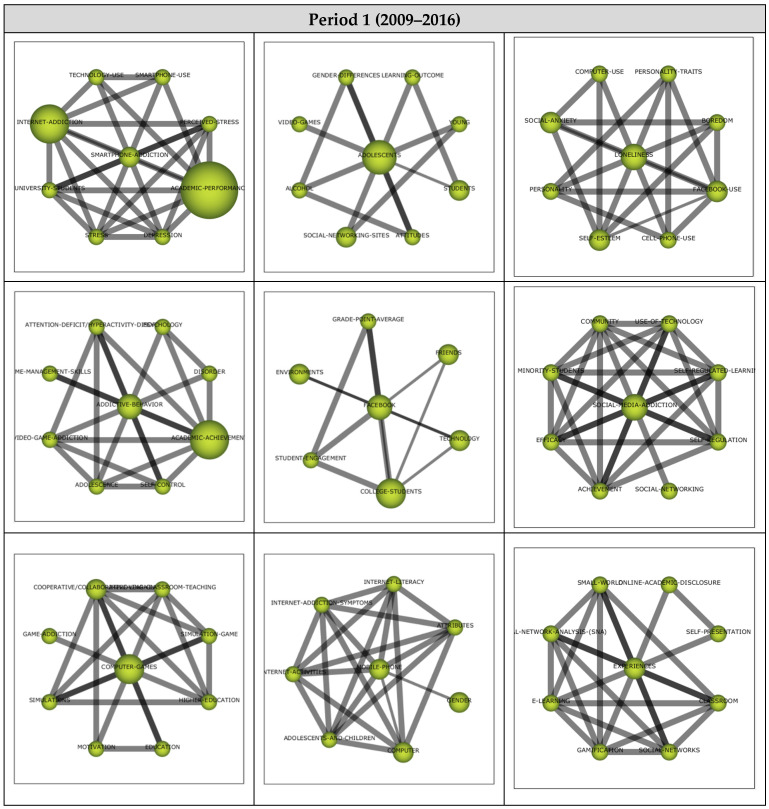
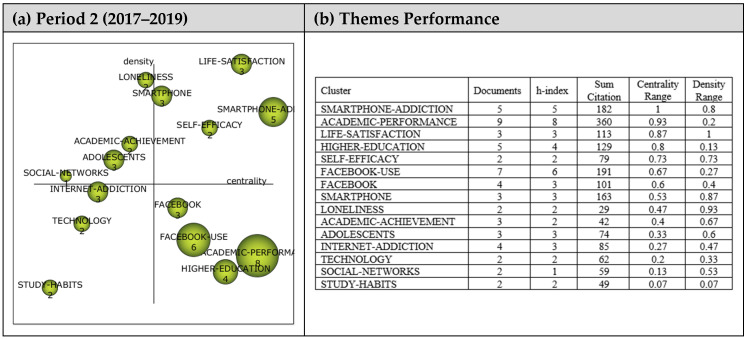
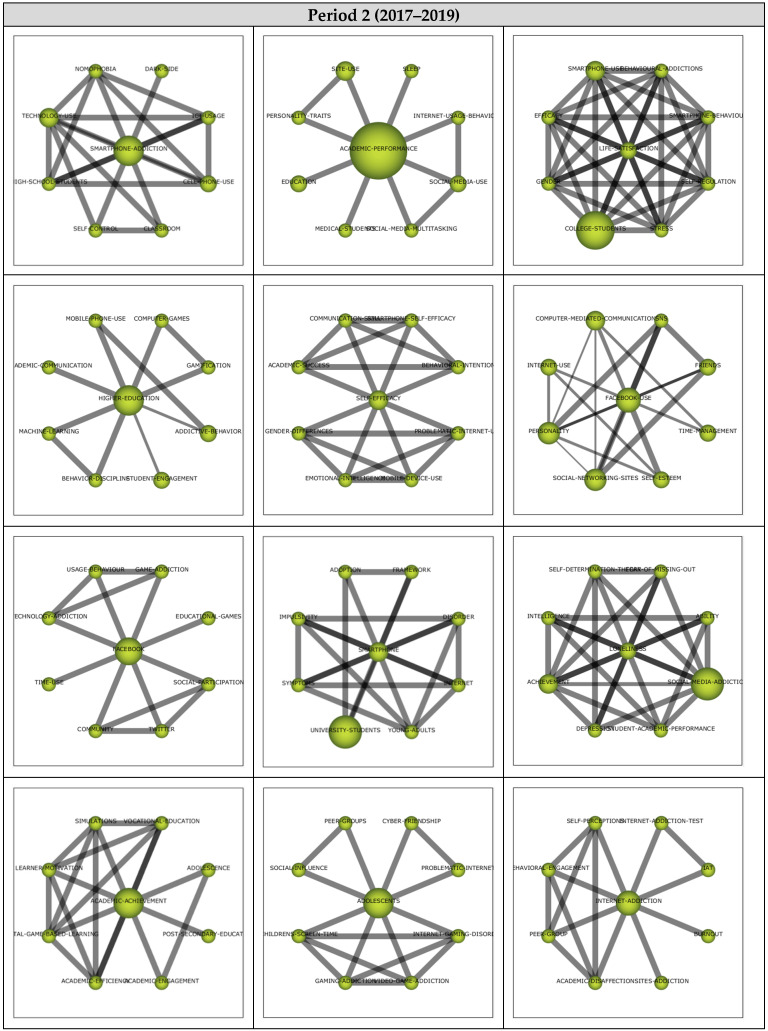
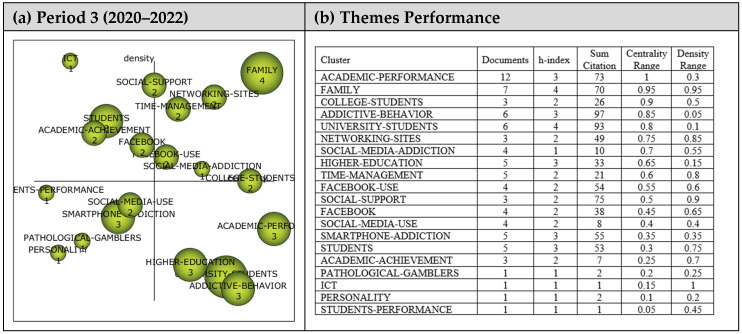
Verification
Claims the paper makes
The claims and statistics of this paper haven’t been checked yet.
Free: it reads the open-access text and checks the first 5 claims that cite a source we can check. Create a free account to check every claim.
Self-check
Percentages, sums and reported differences re-computed from the paper’s own numbers.
The self-check needs the paper’s full text.
Citations
Cites
Preferred reporting items for systematic reviews and meta-analyses: The PRISMA statement
Moher, D., Liberati, A., Tetzlaff, J., Altman, D. G., & the PRISMA Group* (2009) · Annals of Internal Medicine · doi:10.7326/0003-4819-151-4-200908180-00135 · Cited by 37,554
Bibliometric Methods in Management and Organization
Zupic, I., & Čater, T. (2015) · Organizational Research Methods · doi:10.1177/1094428114562629 · Cited by 7,495 · cited 4×
“…growth trajectory of knowledge in this field [39], providing insights into the growth of thematic interests and networks across periods of time [40,41], and establishing a scientific base for evaluating existing and forthcoming research frontiers as well as identifying the loose ends that warrant…”
BackgroundMethodInfluentialCobo, M. J., López-Herrera, A. G., Herrera-Viedma, E., & Herrera, F. (2011) · Journal of Informetrics · doi:10.1016/j.joi.2010.10.002 · Cited by 2,733
Science Mapping: A Systematic Review of the Literature
Chen, C. (2017) · Journal of Data and Information Science · doi:10.1515/jdis-2017-0006 · Cited by 1,925
Börner, K., Chen, C., & Boyack, K. W. (2003) · Annual Review of Information Science and Technology · doi:10.1002/aris.1440370106 · Cited by 1,812
Broadbent, J., & Poon, W. L. (2015) · The Internet and Higher Education · doi:10.1016/j.iheduc.2015.04.007 · Cited by 1,692 · cited 1×
“Another prevalent theme was also found to be students’ time management skills as a significant contributor to AA through supporting self-regulated learning [152–154].”
BackgroundDevelopment and Validation of a Smartphone Addiction Scale (SAS)
Kwon, M., Lee, J.-Y., Won, W.-Y., Park, J.-W., Min, J.-A., Hahn, C., Gu, X., Choi, J.-H., & Kim, D.-J. (2013) · PLoS ONE · doi:10.1371/journal.pone.0056936 · Cited by 1,670 · cited 1×
“…ever-increasing capacity to offer a multitude of utilities and applications (apps) to address everyday needs such as communication, entertainment, or networking [119], smartphones quickly became an indispensable part of many people’s lives, including children, adolescents, and young adults [120].”
BackgroundThe influence of academic self-efficacy on academic performance: a systematic review.
Honicke, T., & Broadbent, J. (2016) · Educational Research Review · doi:10.1016/j.edurev.2015.11.002 · Cited by 1,554
Connection strategies: Social capital implications of Facebook-enabled communication practices
Ellison, N. B., Steinfield, C., & Lampe, C. (2011) · New Media & Society · doi:10.1177/1461444810385389 · Cited by 1,349
Relationships among smartphone addiction, stress, academic performance, and satisfaction with life
Samaha, M., & Hawi, N. S. (2016) · Computers in Human Behavior · doi:10.1016/j.chb.2015.12.045 · Cited by 1,246 · cited 3×
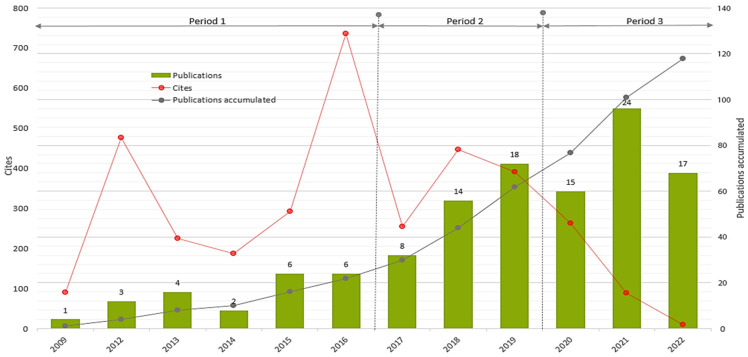
“[75] and Junco [52] were published in Computers in Human Behaviour journal and received the highest citation rate, corresponding with the results shown in Figure 2.”
BackgroundResult
Research works printed but not linked: 2
- Devi U. Dutta R. A review paper on prevalence of NOMOPHOBIA among students and its impact on their academic achievement J. Posit. Sch. Psychol. 2022 6 5397 5405
- Garfield E. Scientography: Mapping the tracks of science Curr. Contents 1994 7 5 10
Cited by
Items 101–143 of 143
Harianto, G., & Ming, D. (2025) · Advances in Mobile Learning Educational Research · doi:10.25082/amler.2025.01.014
Impact of social jetlag and chronotype on leisure activities in Brazilian high school students
Borghi, F., da Silva, P. C., Farias-Silva, E., Prado, H. M. D. A., Jório, J. A. R., & Kassisse, D. M. G. (2025) · International Journal of Educational Research · doi:10.1016/j.ijer.2025.102643
Alemerien, K. (2025) · International Journal of Interactive Mobile Technologies (iJIM) · doi:10.3991/ijim.v19i12.54427
Temporal patterns and educational use of smartphones among Algerian secondary learners
Cherif, K. M. (2025) · Educational Technology Quarterly · doi:10.55056/etq.956
(2025) · International journal for housing science and its applications. · doi:10.70517/ijhsa464696
Karim, H. H., Yusooff, F., Jailani, M. A. M., Hamid, N. B. A., & Zulkepli, M. I. S. (2025) · International Journal of Education Psychology and Counseling · doi:10.35631/ijepc.1060014
Muktiyusrina, E., & Azis, D. K. (2025) · IJGIE (International Journal of Graduate of Islamic Education) · doi:10.37567/ijgie.v7i1.4505
Problematic Social Media Use and Academic Achievement in Adolescents - A Long-Term InvestigationPreprint
Draijer, M. M. M., Międzobrodzka, E., van den Eijnden, R. J. J. M., & Kester, L. (2025) · SSRN Electronic Journal · doi:10.2139/ssrn.5934602
K-3 Teachers Implementing Blended Learning for Personalized Student Learning
Hayes, O. (2025) · ScholarWorks (Walden University)
Prevalence and Severity of Digital Addiction among Middle School Children: An Observational Study
Rewatkar, I. N. (2025) · International Journal for Research in Applied Science and Engineering Technology · doi:10.22214/ijraset.2025.76251
Erel, N. S., & Eskici, M. (2025) · International Journal of Computers in Education · doi:10.64693/ijce.1793882
Popoola, B. O., Tiamiyu, K. A., & Adewuyi, H. O. (2026) · Educational Dimension · doi:10.31812/ed.1021
Riaz, M. M. A., Azayem, A. K., Khan, A. R., El-Basyouny, N., Litvinova, O., Atanasov, A. G., & Nawaz, F. A. (2026) · Exploration of Digital Health Technologies · doi:10.37349/edht.2026.101183
Tachie-Menson, A., Essel, H. B., Baah, P. K., Johnson, E. E., Adasi, G. S., Amankwa, J. S. A., & Sarpong‐Danquah, B. (2025) · Journal of Science and Technology (Ghana) · doi:10.4314/just.v43i4.8
CAREER ASPIRATIONS AMONG MALAYSIAN YOUTH: A QUALITATIVE STUDY ON THE INFLUENCE OF TIKTOK
Mohamad, F., Ramlan, M. A. I., Rashid, F. H. A., Ismail, I. Z., & Azahari, E. H. (2025) · International Journal of Entrepreneurship and Management Practices · doi:10.35631/ijemp.832007
AI-Powered Virtual Teachers and Their Role in Developing Critical Thinking Skills
Aksin, A. (2026) · Advances in computational intelligence and robotics book series · doi:10.4018/979-8-3373-2637-5.ch008
Gezgin, D. M., Erduğan, F., Nurlu, O., Kedersiz, S., & Temel, A. (2026) · International Journal on Studies in Education · doi:10.46328/ijonse.7466
Osser, B., Toth, C., Ilia, I., Nistor-Cseppento, C. D., Bondar, L. I., Fazakas, R., Toderescu, C. D., Avram, G. A., & Osser, G. (2026) · Balneo and PRM Research Journal · doi:10.12680/balneo.2026.1011
Variations in gaming experiences, time, and spending across genres
Jo, H. (2026) · Interaction Studies Social Behaviour and Communication in Biological and Artificial Systems · doi:10.1075/is.24031.jo
Zhou, X., Amran, M. S., Tang, Y., Surat, S., & Yin, H. (2026) · Discover Psychology · doi:10.1007/s44202-026-00724-5
Hu, Y., Wu, X., Gao, F., Gao, L., & Yang, H. (2026) · Journal of Psychiatric Research · doi:10.1016/j.jpsychires.2026.05.027
Mulaudzi, I. C., Nndwamato, N. M., & Makhwathana, R. M. (2026) · Journal of Qualitative Research in Education · doi:10.54963/jqre.i47.1910
L’INSEGNAMENTO DELLE LETTERATURE ITALIANA, STRANIERE E CLASSICHE A STUDENTI ‘LIQUIDI’ / PRIMA PARTE
Balboni, P. (2026) · Italiano LinguaDue · doi:10.54103/2037-3597/31962
Islamic Educational Strategies for Preventing Social Media Addiction among Adolescents
Mirawati, M. (2026) · Journal of Islamic Educational Research. · doi:10.22452/jier.vol12no1.5
Solikhin, A. S., Asiffa, I. D., Salma, A., Ilalhaque, M., & Sabrina, M. N. (2026) · Journal of Artificial Intelligence and Engineering Applications (JAIEA) · doi:10.59934/jaiea.v5i3.2472
Validity and Reliability Study of Digital Addiction Scale for the Turkish Youth (DASY)
Göksün, D. O., Akkaya, A., DOYUMĞAÇ, İ., Çelik, S., & Serpil, H. (2026) · SAGE Open · doi:10.1177/21582440261476431
Hu, L., Cao, E., & Hu, W. (2026) · Interactive Learning Environments · doi:10.1080/10494820.2026.2691902
Yi, Z., Huang, C., Wen, Y., Liu, Y., & Ma, X. (2026) · Scientific Reports · doi:10.1038/s41598-026-65101-7
Alex, & Shahara, A. (2026) · International Journal of Education Reports · doi:10.62503/ijer.1.1.17-30
Öner, İ. E. (2026) · Participatory Educational Research · doi:10.17275/per.26.68.13.5
A review of digital addiction as a predictor in ML-based academic performance prediction
Rahman, M., Sarwar, H., Hasan, M. K., & Tin, T. T. (2026) · Social Sciences & Humanities Open · doi:10.1016/j.ssaho.2026.103593
Giblett, M. J., Jaklich, C., Andrew, B., & Lind, P. A. (2026) · medRxiv · doi:10.64898/2026.09.06.26362218
Dijital Bağımlılık: Sanal Dünyada Gerçek Tutsaklık
Şakı, S. (2026) · Özgür Yayınları eBooks · doi:10.58830/ozgur.pub1418.c5709
The Relationship between Digital Addiction and Academic Self-efficacy among College Students
Gil, J. M., Samoranos, L. J., Torres, M. L., Sabanal, D., Cantil, J. B., & Julagting, J. R. (2026) · Asian Journal of Education and Social Studies · doi:10.9734/ajess/2026/v52i103348
Akkoyun, C. N., & Akın, S. (2026) · Herkes için Spor ve Rekreasyon Dergisi · doi:10.56639/jsar.2018561
Mohamed, N. H., Lu, M. H., Hairani, N., & Sidik, M. H. S. (2026) · International Journal of Education Psychology and Counseling · doi:10.35631/ijepc.1164010
Arefnia, E. S., Damsaz, S. A., Kermani, M. Y., نیا, ا. س. ع., دمساز, س. ا., & کرمانی, م. ی. (n.d.) · Psychology of Motivation Behavior and Health
Mediation Effect of Technology Digital Addiction between Anxiety, Burnout and Academic Performance
Lazarus, D., Maraya, R., Razali, A. B., Kandasamy, S. A. L. S., & LUQMAN, M. S. (2026) · SAGE Open · doi:10.1177/21582440261463662
KILINÇ, E., GÖK, S., Kılıç, E. B., Keskin, K., Kağan, M. T. A., & Dündar, K. (2026) · AXIS World Journal of Applied Cross-disciplinary Insights · doi:10.71284/axisw.2026223
Dikmen, M., & Yildirim, A. (2026) · The Family Journal · doi:10.1177/10664807261501114
Bangari, G. N. (2026) · Technix International Journal for Engineering Research · doi:10.56975/tijer.v13i11.164555
Sorongon, G. J., Takuayan, A., Roque, J., & Naanep, N. D. (2026) · International Journal of Transformative Multidisciplinary Studies · doi:10.66074/m6b1l7r2c5m8
Metadata
- Authors
- Tülübaş, T., Karakose, T., & Papadakis, S.
- Affiliations
- Kütahya Dumlupınar Üniversitesi (TR)
- Faculty of Education, Kutahya Dumlupınar University, Kütahya 43100, Türkiye
- University of Crete (GR)
- Venue
- European Journal of Investigation in Health, Psychology and Education
- Publisher
- MDPI AG
- Published
- 2023-09-22
- Volume
- 13
- Issue
- 10
- Pages
- 2006-2034
- ISSN
- 2174-8144 (ISSN-L)
- 2254-9625
- PMC
- PMC10606161
- OpenAlex
- W4387024850
- Cited by
- 90
- References
- 152
- Citations by year
- 2026: 20 · 2025: 35 · 2024: 31 · 2023: 4
- FWCI
- 4.48
- Type
- journal article
- Language
- en
- Open access
- gold
- doi.org
- Licence
- Locations
- European Journal of Investigation in Health Psychology and Education (publishedVersion, cc-by)
- PubMed Central (publishedVersion, cc-by)
- PubMed (publishedVersion)
- Dialnet (Universidad de la Rioja) (submittedVersion)
- DOAJ (DOAJ: Directory of Open Access Journals) (submittedVersion, cc-by-sa)
- Topics
- Social Sciences › Sociology and Political Science › Impact of Technology on Adolescents
- Social Sciences › Communication › Digital Media and Philosophy
- Social Sciences › Psychology › Clinical Psychology › Sexuality, Behavior, and Technology
- Keywords
- digital addiction, academic performance, students, smartphone addiction, social media addiction, internet addiction, research trends, self-efficacy, life satisfaction, family factors, personal factors
About these checks
Registry, retraction, Cites and statistics results are computed, not judged, with one exception: a printed reference that no index lists is read once by a model before it counts as a citation error. Claims are extracted by a model and kept only when their quote appears verbatim in the text; each cited source is then checked, with a model’s help, for whether it says what the claim relies on. Those verdicts can be wrong — read the claim’s quote and the cited source before relying on one.
Statistics and arithmetic are recomputed, not judged.
Confidence bands are shown only for fields calibrated on our annotated test set. None is calibrated yet, so no band is shown.
What counts as a claim ›How we measure confidence ›How we check this ›
Are you an author, or do you see a problem with this page? Request a review
Data sources
Bibliographic data: Semantic Scholar, OpenAlex, Crossref.
Contains information from the Semantic Scholar Academic Graph Datasets, made available under the ODC Attribution License (ODC-BY 1.0).
Semantic Scholar’s data is described in: Kinney, R., et al. (2023). The Semantic Scholar Open Data Platform. arXiv:2301.10140.
